Discernment, Mailbag

The Mailbag: Celebrity Christian Hot Takes (Driscoll, Graham, Groeschel, Lewis, Lucado, Piper, Vallotton)

I get lots questions about whether or not certain pastors, teachers, and authors are doctrinally sound, and whether or not I would recommend them. I mean, lots. And, can I just say- that’s really encouraging to me. When someone asks that question, it demonstrates a) that she knows there are teachers out there who wear the label of “Christian” yet teach unbiblical things, and b) that she doesn’t want to follow one of those teachers. Having interacted with scores of professing Christian women who don’t even rise to that basic level of discernment (i.e. they blindly believe everything that calls itself “Christian” actually is), that’s huge, and I love it.

If you’ve been following the blog for any length of time, you’ve probably noticed the Popular False Teachers & Unbiblical Trends tab (in the blue menu bar at the top of this page). All of the articles and entries on that page exist because someone (usually more than one person) asked whether or not that teacher is doctrinally sound. I wish I were able to write articles on every teacher I’m asked about so I could provide you with more thorough resources, but it usually takes me several days worth of research and writing to properly assemble even the shortest of those articles, and with a family to care for, and other responsibilities, there simply aren’t enough hours in the day.

All of that means that I have to pick and choose which teachers to write about (which is generally whoever is most popular and most people are asking about) and resign myself to the fact that there are teachers I’m probably never going to get around to writing about (few have heard of them, they’re not popular in my audience demographic, they’re dead, it’s uber-obvious they’re heretics {Benny Hinn, Kenneth Copeland, Paula White, etc.}).

Recently, I’ve been asked about a slew of teachers I’m probably not going to write articles about, not because they’re not important, but because they don’t influence as many people in my audience as other teachers do. So I thought what I’d do from time to time is gather up a few and just give a quick “hot take” – a thumbs up or thumbs down as to whether or not you should follow them – based on what I already know without researching them and/or no more than a five minute Google search.

I’ll be using the criteria outlined in my article Is She a False Teacher? 7 Steps to Figuring it Out on Your Own. If you ever need to know whether or not you should avoid a certain teacher, I would encourage you to use this article as a guide, and research him or her for yourself. Vetting teachers is not difficult, it’s a skill every Christian needs to develop, you shouldn’t just take my (or anyone else’s) word for it that someone is or isn’t a false teacher, and I won’t always be around. So if you’re interested in any of these teachers, consider these hot takes a jumping off point for doing more research on your own.

๐Ÿ‘ŽMark Driscoll A definite thumbs down. Mark Driscoll is demonstrably apostate. He was charged with spiritual abuse (mostly anger, treating people poorly, abuse of power – things like that) at his former church, Mars Hill. He refused to go through the biblical process of church discipline his elders tried to enact, and instead quit and fled to another state. He now associates and yokes in “ministry” with New Apostolic Reformation heretics. Chris Rosebrough has done a yeoman’s job of biblically critiquing Mark’s numerous rebellions and calling him to repentance over the years. Click here and here for detailed information.

More evidence from Justin Peters here.

More from Gabe Hughes here.

โœ‹Billy Graham– Not someone I’m going to go around proactively recommending, but not someone I’d call a false teacher, either. I would categorize him as “generally OK-ish, but there are much better, stronger teachers you could be listening to instead”. I’ve read his autobiography and listened to several of his sermons over the years. Although I think some of his methods were biblically unwise, the basic content of his sermons and the gospel he preached was biblical overall. But you need to remember that Billy Graham was an evangelist, not a pastor, which means you’ll get the basics of the gospel by listening to him, but not much else. And if you’re already saved, while you never outgrow your need to hear the gospel, that’s not all you need. You need to grow and mature in the Word, and be taught the full counsel of God.

A couple of reasons many people wonder about Billy Graham’s theology have to do with his ecumenism (he basically embraced just about everyone who wore the label “Christian” – including the Pope) and his universalist statements (most widely known via his 1997 interview with Robert Schuller). Additionally, his daughter, Anne Graham Lotz, credits her father with heavily influencing her theology. He is said to have called her “the best preacher in the family,” despite the fact that she is a false teacher who preaches to men, yokes with other false teachers, and teaches false doctrine.

๐Ÿ‘ŽCraig Groeschel– Nope. When Chris Rosebrough has done this many Fighting for the Faith segments and sermon reviews on somebody, take it to the bank- that’s not somebody you should be following. And then you’ve got things like: Craig preaching at this Hillsong conference (which also featured Bethel Music leaders), preaching with Joel Osteen at a conference hosted by Lakewood, he’s spoken at Joyce Meyer’s women’s conference, he lets women and false teachers preach at his church, including Christine Caine (whom he calls “one of the greatest preachers of all time”) and Steven Furtick (who says in this clip that Groeschel’s church has influenced Furtick’s church {Elevation} “probably more than any other church”.)

Also, if you use the YouVersion Bible App, you might want to know that it was developed by Craig Groeschel and his church, and is still owned by his church (Life.Church), which is one of the reasons it’s not one I recommend when people ask me about Bible apps. Craig and his church earn income from this app, and so do the false teachers whose materials are featured on the app, so when you use YouVersion, you’re financially supporting false teachers and false doctrine, whether directly or indirectly.

Here is a quote from Gina (see comments section) who was a member of Life.Church for about a year:

Having now spent over a year at Craig Groeschelโ€™s LifeChurch I can attest that Craig has all the marks a false teacher. I began attending with scepticism [sic], but decided to intentionally keep an open mind. However, what I found is that Craig twists Scripture, and does not teach the Bible at all. His โ€œsermonsโ€ are nothing more than self-help couched in spirituality. He touts self-improvement and life changeโ€ฆall good things in and of themselves, but does not teach Godโ€™s Word. His altar calls are given very quickly with fast talking and โ€œdo it nowโ€ sales tactics, but with very little and sometimes no explanation of the true Gospel. Yet people are declared to be a new creation, and there is no follow upโ€ฆnone. He is unabashedly self-promoting. He promotes his books, HIS church (emphasized on purpose), and other speakers and their books/churches. He has a cult following who gets very defensive if anything is said against him. He is vehemently defended for all the good things LifeChurch does (and they do), and for all the people being โ€œsavedโ€. He has plenty of ties with NAR, not to mention ARC (?) [the Association of Related Churches]. He uses manipulative and condescending tactics on his listeners, and interjects unseemly and fleshly anecdotes. There is much hype from him and his staff during the serviceโ€ฆloads of enthusiasm. In short, he is the best motivational speaker youโ€™ve ever heard. That is not a compliment. The experience is complete with โ€œWhoever finds God?โ€โ€ฆโ€Finds LIFE!โ€ at the conclusion. Iโ€™m thoroughly disgusted and disturbed to be there, and I wonโ€™t be going back. I just have to find a way to tell my precious family. They donโ€™t see it, and it saddens me. Iโ€™ve seen zero spiritual growth since our family has been attending. It bears mentioning that I have the gift of discernment, and that I find it severely lacking in Godโ€™s people today. ๐Ÿ˜ž

โœ‹C.S. Lewis For fiction, you’re probably OK. I read my children the entire Narnia series with no real problems. I know sound brothers and sisters who have found Mere Christianity and other CSL books to be helpful, but, honestly, if you really want to study theology, I’d encourage you to steer clear and find better sources. There are questions as to whether or not he believed in evolution, universalism, the inspiration of Scripture, and penal substitutionary atonement.

๐Ÿ‘ŽMax Lucado– No. He recently embraced Jen Hatmaker as a guest on her podcast. He has preached at Lakewood (Joel Osteen), affirmed Bill Johnson (Bethel), endorses Beth Moore, wrote the foreword for Christine Caine’s book, Undaunted, etc. And the church Max pastors, Oak Hills Church, is egalitarian. In 2021, he threw the Bible and the church under the bus by apologizing to the homosexual community.

And then there’s this quote from Max during an interview with Preaching.com: I really enjoy listening to Joel Osteen. I think Joel has a unique assignment in his ministry, and thatโ€™s to cast a wide net. Heโ€™s got a different assignment and a different gift mix than, for example, a John MacArthur; and I enjoy listening to John MacArthur equally; but you can see that theyโ€™re two different types of preaching. I enjoy Joel because I think his assignment in ministry is to encourage people, and we live in a day that is so discouraged, discouraging. I enjoy John MacArthur because I thinkโ€”it seems to meโ€”his assignment is to equip the church with very detailed biblical understanding. Heโ€™d be more like a Beth Moore or a David Jeremiah; I think we need that, as well.

I’m sorry, but do you really want to be taught the Bible by someone who is so undiscerning he can’t tell the difference between Joel Osteen, Beth Moore, and John MacArthur? That he thinks Joel Osteen and John MacArthur just have different gifts and different preaching styles? And that Beth Moore, like John MacArthur, has an “assignment to equip the church with very detailed biblical understanding“?

โœ‹John PiperJohn Piperโ€™s books, sermons, and blog are mostly fine, and while I disagree with him on several points of theology, I certainly do not consider him to be a false teacher. But heโ€™s not somebody Iโ€™m going to proactively recommend, either. Hereโ€™s how Iโ€™ve answered readers in the past who have asked me about John Piper:

While I consider Dr. Piper to be a generally doctrinally sound Christian brother and agree with him in many aspects of theology, he is not someone I proactively recommend for a few reasons:

1. Dr. Piper is a continuationist. I usually limit my endorsements to cessationists  because I believe this is the biblical view of the gifts. (I do not consider otherwise doctrinally sound continuationists to be false teachers, however.)

2. Iโ€™m concerned about Dr. Piperโ€™s associations and partnerships with false teachers (which violates 2 Corinthians 6:14-18, Romans 16:17-18, and 2 John 9-11). First he appeared to embrace Rick Warren when he interviewed him and invited him to speak at the Desiring God conference in 2010. More recently, he has been a featured speaker at events like the Passion conferences where he has shared the stage with Christine Caine, Priscilla ShirerBeth Moore, and Judah Smith.

3. Dr. Piperโ€™s complementarianism seems muddled at best. On the one hand he will go so far as to say that Christian women should not be drill sergeants and police officers (which I, personally, agree with, but the Bible mentions nothing of the sort), yet on the other hand he joins in ministry with the aforementioned Caine, Shirer, and Moore who โ€“ in addition to the the false doctrine they preach โ€“ all actively and unrepentantly violate clear Scripture by preaching to men. Itโ€™s quite confusing.

Iโ€™m not going to warn people away from John Piper as a false teacher, but I canโ€™t, in good conscience, recommend him either.

Why I Don’t Read John Piper Anymore with Jon Harris

๐Ÿ‘ŽKris VallottonAbsolutely not, no way, no how. Kris Vallotton is the “Senior Associate Leader of Bethel Church and co-founder of Bethel School of Supernatural Ministry (BSSM)” which means he is a New Apostolic Reformation heretic, not a Christian, and certainly not someone any other Christian (or lost person, for that matter) should be following.


If you have a question about: a Bible passage, an aspect of theology, a current issue in Christianity, or how to biblically handle a family, life, or church situation, comment below (Iโ€™ll hold all questions in queue {unpublished} for a future edition of The Mailbag) or send me an e-mail or private message. If your question is chosen for publication, your anonymity will be protected.

Discernment

Jen Wilkin

If you are considering commenting or sending me an e-mail objecting to the fact that I warn against certain teachers, please click here and read this article first. Your objection is most likely answered here. I won’t be publishing comments or answering emails that are answered by this article.


This article is kept continuously updated as needed.

I get lots of questions about particular authors, pastors, and Bible teachers, and whether or not I recommend them. Some of the best known can be found above at my Popular False Teachers tab. The teacher below is someone I’ve been asked about recently, so I’ve done a quick check (this is brief research, not exhaustive) on her.

Generally speaking, in order for me to recommend a teacher, speaker, or author, he or she has to meet three criteria:

a) A female teacher cannot currently and unrepentantly preach to or teach men in violation of 1 Timothy 2:12. A male teacher or pastor cannot allow women to carry out this violation of Scripture in his ministry. The pastor or teacher cannot currently and unrepentantly be living in any other sin (for example, cohabiting with her boyfriend or living as a homosexual).

b) The pastor or teacher cannot currently and unrepentantly be partnering with or frequently appearing with false teachers. This is a violation of Scripture.

c) The pastor or teacher cannot currently and unrepentantly be teaching false doctrine.

I am not very familiar with most of the teachers I’m asked about (there are so many out there!) and have not had the opportunity to examine their writings or hear them speak, so most of the “quick checking” I do involves items a and b (although in order to partner with false teachers (b) it is reasonable to assume their doctrine is acceptable to the false teacher and that they are not teaching anything that would conflict with the false teacher’s doctrine). Partnering with false teachers and women preaching to men are each sufficient biblical reasons not to follow a pastor, teacher, or author, or use his/her materials.

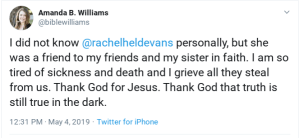
Just to be clear, “not recommended” is a spectrum. On one end of this spectrum are people like Nancy Leigh DeMoss Wolgemuth and Kay Arthur. These are people I would not label as false teachers because their doctrine is generally sound, but because of some red flags I’m seeing with them, you won’t find me proactively endorsing them or suggesting them as a good resource, either. There are better people you could be listening to. On the other end of the spectrum are people like Joyce Meyer and Rachel Held Evans- complete heretics whose teachings, if believed, might lead you to an eternity in Hell. Most of the teachers I review fall somewhere in the middle of this spectrum (leaning toward the latter).

If you’d like to check out some pastors and teachers I heartily recommend, click the Recommended Bible Teachers tab at the top of this page.


Jen Wilkin
Not Recommended

Jen is a womenโ€™s Bible study author, blogger, and conference speaker, and until 2023, when she left to focus on her own ministry, was on staff at The Village Church as the Executive Director of Next Gen Ministries (TVC’s ministry to “children and students ages 0โ€“18”).

Link / Screenshot

Jenโ€™s older books and Bible study materials have a reputation for being generally doctrinally sound. Iโ€™ve published a review of Jenโ€™s book, Women of the Wordand here is one readerโ€™s take on her book 1 Peter: A Living Hope in Christ:

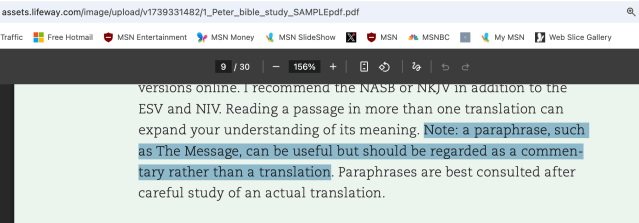
โ€œโ€ฆin the foreword Jen wrote, โ€˜a paraphrase, such as the NLT orย The Message,* can be useful but should be regarded as a commentary rather than a translation.โ€™ However, aside from that, I have found no other problems with the book at all. It is an eight week long study of 1 Peter based on the method of Bible study that she writes about inย Women of the Word. My favorite thing about this study is that it causes us to focus on what the text is telling us about God. I love how Jen Wilkin is teaching women to study the Bible properly. I wish she would be more discerning about who and what she endorses though. There are so few women who bring us solid teaching and discernment.โ€

*Please see “February 2026 Update” at the end of this article. Jen Wilkin herself brought to my attention that in later editions of this book, she removed her reference to the NLT from this sentence. She did not explain why, but my guess would be (and she has thus far not corrected me) that she removed “the NLT” because The New Living Translation is considered to be a translation, and Jen mistakenly referred to it as a “paraphrase”.

The reader’s concern (and mine, too) in mentioning this quote, however, is not that Jen mistakenly called the NLT a paraphrase, but that Jen recommended The Message as an acceptable paraphrase. You need only to click on the link above to see why this is concerning.
Also in the past, Jen limited her speaking engagements and teaching to audiences of women, which is the biblical parameter for Christian women teachers. And although her website speaking engagement request form says she is a โ€œteacher who helps womenโ€ฆโ€ she has been increasingly preaching to and instructing men in recent years.

For example, Jen’s former staff position as TVC’s “Executive Director” of children’s and student ministries, depending on the exact nature of her job responsibilities, probably (I am making a reasonable inference, as TVC’s website does not explicitly say) required her to teach Scripture to, or exercise improper authority over young men in the student ministry (which includes students through age 18) and men who teach or volunteer in the student ministry. The title “Executive Director” makes it sound as though she was over the entire ministry and everyone in that ministry was under her purview.

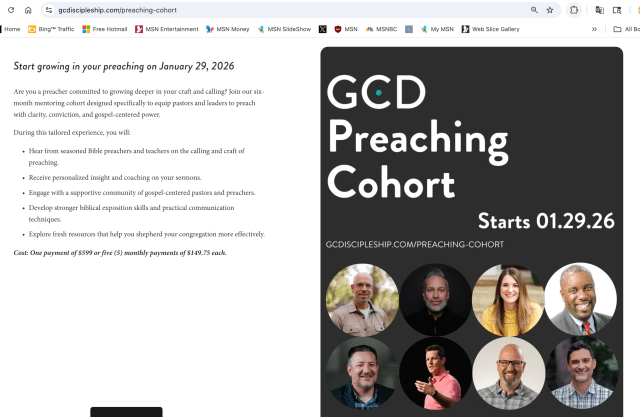
A more recent example demonstrating Jen’s increasing rebellion against Scripture regarding the role of women in the church is the Gospel Centered Discipleship “Preaching Cohort” in which Jen is a “Coach”. She (along with the other coaches) is described as a “seasoned Bible preacher and teacher,” and will be coaching pastors “on the calling and craft of preaching”.

In the past, there have also been questions about exactly where Jen stood on the biblical role of women in the church. She presented herself -and still does- as a complementarian, stating clearly that women are not to hold the office of pastor. What she did not make clear in the past, but what has become abundantly clear in recent years, is that she is (or has developed into) what’s often called a “soft” or “narrow” complementarian. This is the belief that women can do anything men can do in the gathering of the church body except hold the office of “senior pastor” – women can preach the Sunday sermon, hold any other office in the church (for many that includes the office of elder, “associate pastor,” etc.), exercise authority over men in the church, and so on. This is unbiblical. And what’s dangerous here is that Jen doesn’t call herself a “soft/narrow” complementarian, she just calls herself a complementarian, leading Christians who haven’t kept up with her to think she holds a biblical position and practice of the role of women, when she, in fact, does not.

As an example of Jen’s murkiness on the role of women, in the video* below (~32:05), she says:

“We need [women’s] visible leadership. How visible? As visible as your church’s complementarianism allows.”

This remark is at best, unhelpful, and at worst, opens the door for women and pastors to rebel against Scripture. The biblical answer to this question (aside from the fact that the church should be far more focused on servanthood than leadership) is: Women may serve in any position in the church that does not require them to preach to, teach Scripture to, or exercise authority over men, and which does not violate any other principles of Scripture.

Whatever position on the role of women Jen may have held in the past, she is now a “soft/narrow complementarian,” which is, in reality, a functional egalitarian.

In addition to the aforementioned preaching cohort in which Jen instructs pastors, she has spoken at several co-ed conferences in recent years. Give the first 15 minutes of the video below a listen*. Despite the fact that Jen’s very first remark is that she is not teaching the Bible in this session for pastors and church planters, she almost immediately goes on to quote and allude to the opening chapters of Genesis (and later in the video, other passages) and teach on them. I would challenge you to listen to what she says and ask yourself, “If I heard a pastor give this type of instruction, would I consider it a sermon/Bible lesson?” I think most of us could easily answer, “yes”. *(Unfortunately, the full length video of Jen’s complete teaching session has been removed from the internet. The video below is an excerpt of the full length video.)

(This is also the teaching session in which Jen made her infamous remarks about menstruation helping women to understand the gospel differently from men, which is not only a private and potentially uncomfortable subject to address in public – especially for an audience of men – it’s a patently ridiculous teaching. Menstruation teaches us nothing about the gospel. The two subjects are completely unrelated. Also, aside from Jen, I’ve never heard a single woman say her period helped her better understand the shedding of Christ’s blood.)

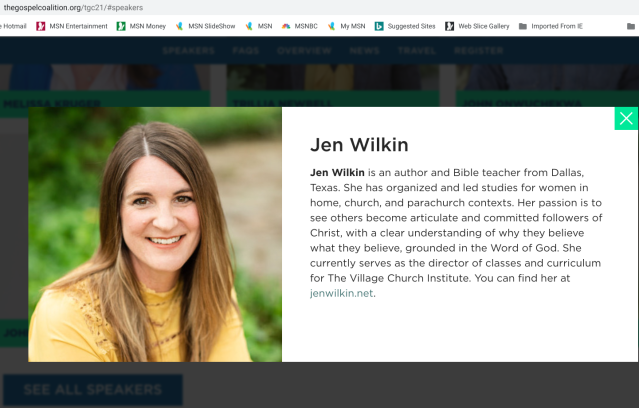
In another instance of preaching to a co-ed audience, Jen has been featured as a speaker multiple times at The Gospel Coalition’s national conference* at least as far back as 2017. (In the opening seconds of this 2017 TGC conference session, Why Itโ€™s Good that God Is Different from Us, Jen acknowledges and welcomes the men in her audience.) TGC, as many have noted, has been on a woke / social justice trajectory for years. Jen has been featured on TGC’s site numerous times.

*Jen has also been a featured speaker at TGC’s women’s conference (TGCW), not to be confused with TGC’s national conference, which is co-ed.
Again, one of the reasons it’s especially problematic for Jen to be teaching men, or to even to seem to be teaching men, is that she openly and unashamedly wears the label of complementarian. Boldly proclaiming complementarianism while teaching men muddies the waters and confuses the women who follow her as to what the Bible truly teaches about the role of women in the church. Are there times when it is technically not a violation of Scripture for a woman to speak with men in the audience? Yes (see #7 here). But weigh the impact Jen has on the church by speaking to men against the counter-evangelicultural impact someone of her stature could have by flagrantly refusing to teach men. Which would cause more people to sit up and take notice, set a better example for Christian women, and have a more biblical influence on the church?

Another concern about Jen is that she seems to be increasingly associating and appearing with false or problematic teachers.

In 2013, Jen wrote a blog post entitled, The Next Beth Moore in which she spoke glowingly of Beth Moore, her teaching, and one of her books. She has also had several friendly and/or affirming interactions with Beth on X, and has pointed women to Beth’s writing. Jen has appeared on the IF: Gathering podcast with Jennie Allen (to discuss and promote Women of the Word), and has written a devotional for Lysa TerKeurstโ€™s Proverbs 31 blog.

(Screenshots: 1, 2, 3 {page 1}, 4 {page 2})
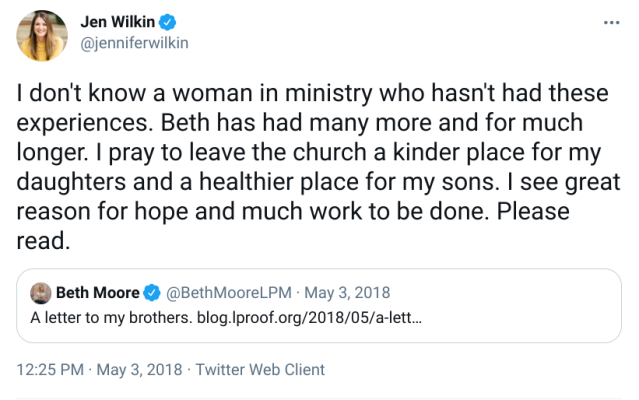
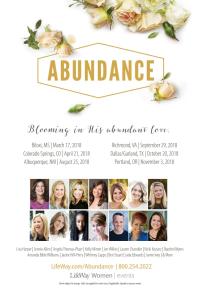
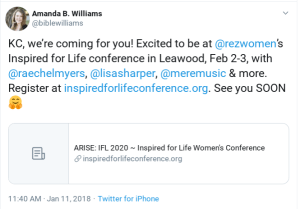
During LifeWay’s 2018 Abundance conferences, Jen appeared alongside Lisa Harper, Raechel Myers, Amanda Bible Williams, Christine Caine, Jennie Allen, Kelly Minter, Whitney Capps (of Lysa TerKeurst’s Proverbs 31 Ministries), and others.
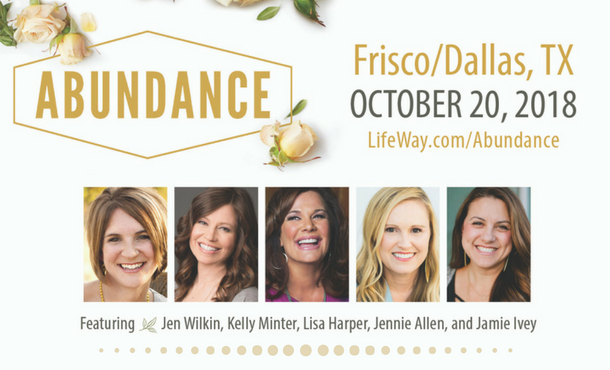
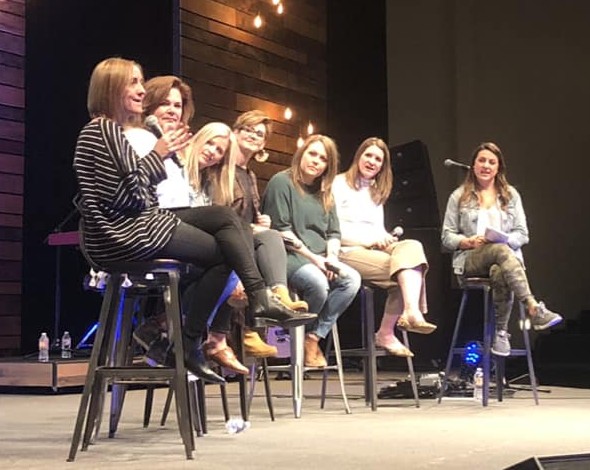
L-R: Christine Caine, Lisa Harper, Raechel Myers, Whitney Capps, Amanda Bible Williams, Jen Wilkin, Jamie Ivey

In August 2020, Jen appeared at LifeWay Women Live with Beth Moore, Priscilla Shirer, Jackie Hill Perry, Kelly Minter, Angie Smith, Jennifer Rothschild and Kristi McLelland.

LifeWay Women Live 2020 Speakers

Several years ago, Jen was added to LifeWay Women’s stable of Women’s “Bible” study authors including many of the aforementioned teachers and others. In addition to my normal concerns about someone yoking with false teachers (i.e. the Bible says not to, and disobeying God’s Word is a sin), I’m guessing LifeWay Women may have initially signed Jen in order to use her – that is, her reputation for being a doctrinally sound teacher and a complementarian – to lend credibility to the false teachers they promote. And, of course, Jen’s previously perceived good reputation has suffered by being associated with these false teachers.

In March 2021, when Beth Moore cut ties with the Southern Baptist Convention, Jen offered this glowing farewell…
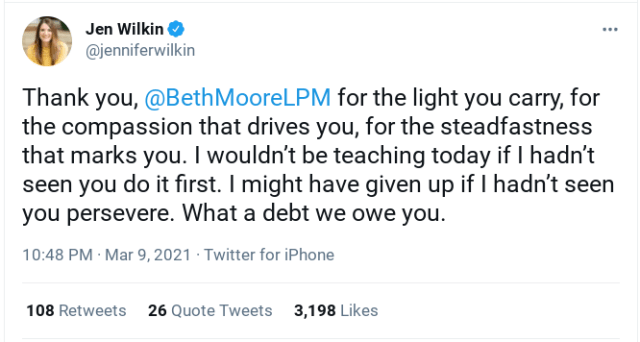
In a strange irony, in the midst of unbiblically partnering with these false teachers, in her session, The Gospel and The Future of Bible-Centered Discipleship at the 2018 Southern Baptist Convention Pre-Conference (also to a co-ed audience), Jen teaches the following…

[Biblical literacy] guards against false teaching…Basic comprehension-level mastery of the text guards against false teaching. (~30:12)

You know what our [discipleship] formula has been for the last 20 years? [We’ve said], ‘We’re going to keep making [the level of biblical teaching] lower and lower’…It is our high calling, in the face of a biblical literacy crisis, to raise the bar in an age of low expectations. (~43:40…44:39)

And yet, Jen’s level of “mastery of the text” – to the point that she is instructing people in the text and teaching them how to improve discipleship – has not sufficiently guarded her against partnering with women who are largely responsible for the bulk of false teaching aimed at women today, who don’t teach “basic comprehension-level mastery of the text,” and who have continued to lower the bar and perpetuate low expectations for biblical literacy. Jen has associated with, talked to, and listened to the teaching of these women far more than I have, I’m certain. How does she not see this?

Finally, in the same way that the influence Steven Furtick has on Lysa TerKeurst as her pastor is worrisome, Iโ€™ve seen some things over the years with Jenโ€™s pastor, Matt Chandler, and his wife, Lauren Chandler (with whom Jen has appeared at conferences; screenshot), that have given me pause.

As a member of The Village Church, Jen is pastored by Matt, and as a ministry leader there (though no longer a staff member), she works under his direction and influence. Over the past few years, Matt has publicly praised or affirmed false teachers like Ann VoskampBeth Moore, and Jesus Culture. He has raised some questions about the extent of his continuationism with His notorious “pirate ship prophecy“. He allows Bethel and Israel Houghton (Joel Osteenโ€™s former worship leader) music to be used for worship at his church. Matt allows his wife, a worship leader at TVC, to select this music, and to yoke with and be influenced by numerous false teachers. Matt and Lauren and their associations with false teachers have undoubtedly influenced Jen. Additionally, Matt’s character and personal integrity were sullied in 2022 when he had to take a leave of absence after admitting to an “inappropriate” texting relationship with another woman.

(Screenshots: 1, 2, 3. 4)

In summary, I would urge you not to follow Jen Wilkin, attend her conferences, or use her materials due to her trajectory of increasingly unbiblical teaching and behavior.


Additional Resources:

Articles on Jen Wilkin by Elizabeth Prata

Talk Back: Jen Wilkin and The Gospel Coalition at A Word Fitly Spoken

TGCW24- Mark and Avoid

Prior to February 14, 2026, this small section appeared in the above indicated area of this article:
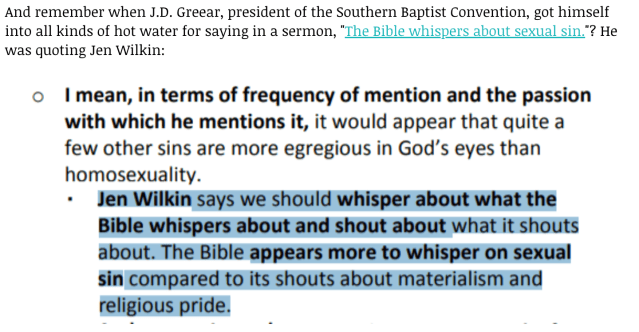
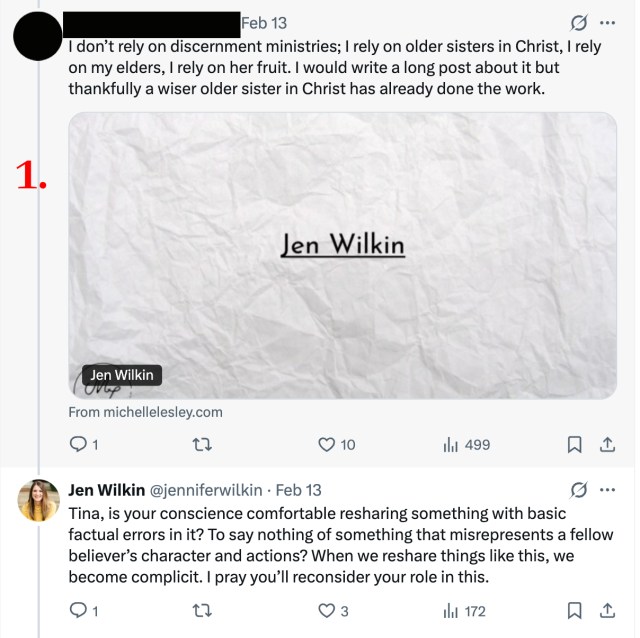
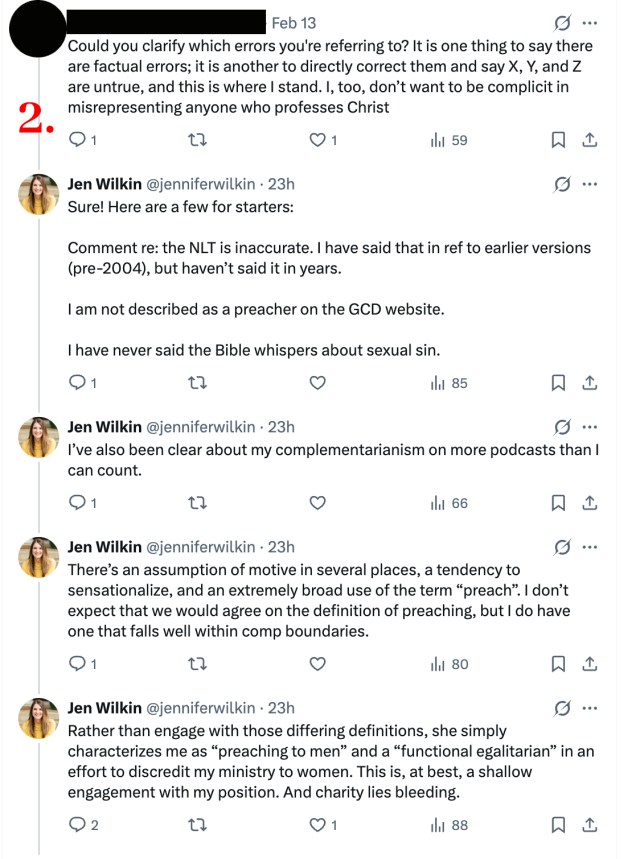
On February 13-14 Jen Wilkin and I had an exchange on X in which she said, โ€œI have never said the Bible whispers about sexual sin.โ€ (see image 2 below)

I looked into it, and Jen appears to be correct. Here’s what J.D. said:
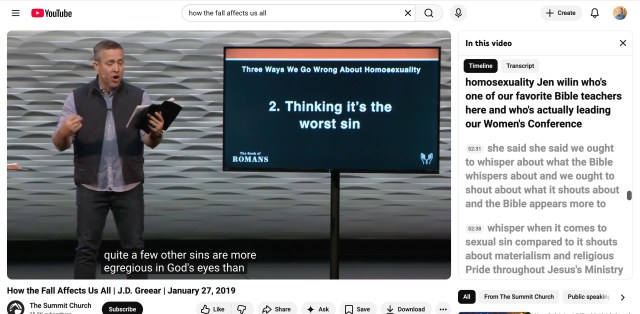
The first part of J.D.’s statement, “We ought to whisper about what the Bible whispers about and we ought to shout about what it shouts about,” was a quote of Jen. J.D. then added his own opinion, “…and the Bible appears more to whisper when it comes to sexual sin…” to the end of the quote of Jen, making it sound like the entire quote was something she said.

I apologize – to Jen and to my readers – for making this mistake, and ask your forgiveness. I hope my character speaks for itself when I assure you that this was simply a misunderstanding of an unclear statement. It was not a fabrication, nor was it done maliciously. But I am still sorry for making the mistake and for any negative consequences it resulted in for Jen or anyone else.

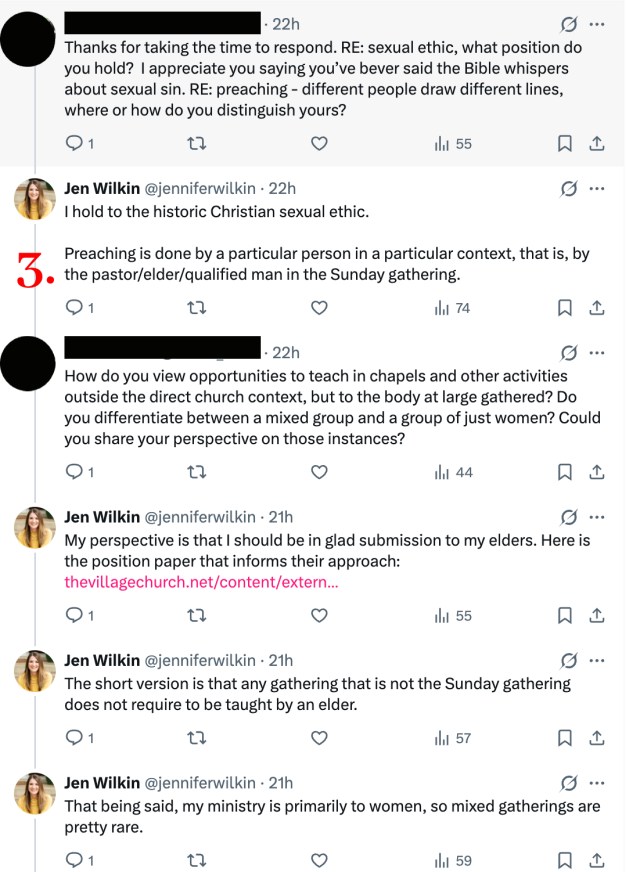
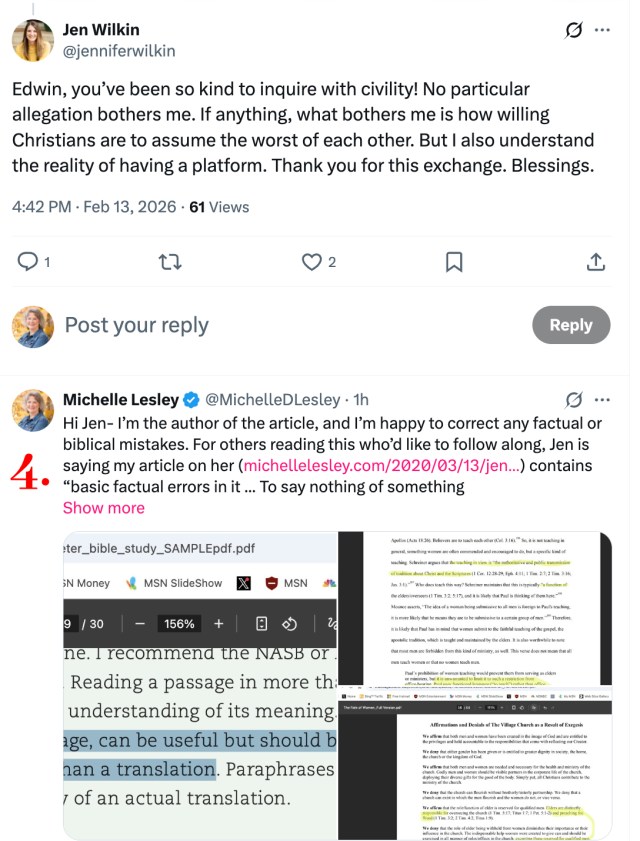
This point, however, was not the only thing Jen took issue with about this article, as you can see from the images in the slideshow above. Here is the original exchange. My response to Jen’s allegations is below in article format for ease of reading:

Hi Jen- Iโ€™m the author of the article, and Iโ€™m happy to correct any factual or biblical mistakes. For others reading this whoโ€™d like to follow along, Jen is saying my article on her contains โ€œbasic factual errors in it … To say nothing of something that misrepresents a fellow believerโ€™s character and actionsโ€.

I apologize for the length of this answer, but I wanted to address all of your concerns clearly, accurately, biblically, and citing sources:

โ€œComment re: the NLT is inaccurate. I have said that in ref to earlier versions (pre-2004), but havenโ€™t said it in years.โ€

First, this is a quote from an email I received from a reader commenting on your book 1 Peter: A Living Hope in Christ. I introduced the quote by saying, โ€œJenโ€™s older books and Bible study materials have a reputation for being generally doctrinally sound.โ€ (I also linked to a positive review on my blog of your book Women of the Word in which I actually recommended [at that time] that my readers buy themselves a copy of it. The readerโ€™s quote begins:

โ€œโ€ฆin the foreword Jen wrote, โ€˜a paraphrase, such as the NLT or The Message, can be useful but should be regarded as a commentary rather than a translation.โ€™…โ€

I checked the most recent version of your book (2024 edition; sample on Amazon), of 1 Peter: A Living Hope in Christ, and youโ€™re correct, youโ€™ve removed the part about the NLT. The quote now says, โ€œa paraphrase, such as The Message, can be useful but should be regarded as a commentary rather than a translation.โ€.ย 

My guess is that you removed โ€œthe NLT [New Living Translation]โ€ because itโ€™s considered a translation, not a paraphrase. Is that correct? If not, please feel free to explain. Iโ€™m glad to add a note to the article saying that youโ€™ve removed the phrase โ€œthe NLTโ€ from that sentence in later editions, and if you have a link to an article or other material that explains why you removed it, Iโ€™ll be happy to add that link as well.

So just to clarify here, the quote from your book (in which you mistakenly called the NLT a โ€œparaphraseโ€) actually is accurate. You are the one who changed it in later editions, presumably to correct your error. So this is not, in fact, a โ€œfactual errorโ€. The readerโ€™s quote was accurate.

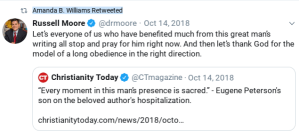
However, the primary concern here is not that you mistakenly called the NLT a โ€œparaphraseโ€ instead of a translation (if thatโ€™s why you removed the part about the NLT), or even that you recommended the NLT. The primary concern is that you recommended – and, apparently, STILL recommend- The Message, one of the worst, most grossly inaccurate โ€œparaphrasesโ€ out there, written by Eugene Peterson, who, along with mangling the text of Scripture, wrote a cover endorsement for the heresy-laden book, โ€œThe Shack,โ€ and said he would officiate a same sex wedding.

But you still cite The Message as an acceptable paraphrase to use. So that part is factually correct.


Your next concern was: โ€œI am not described as a preacher on the GCD website.โ€

Here, youโ€™re misquoting me and either misunderstanding or misrepresenting what the article actually says (so youโ€™re the one guilty of a โ€œbasic factual errorโ€ in this case).

The article contains a screenshot of the GCD (Gospel Centered Discipleship) web page picturing you and describing the event, and quotes directly from that web page. This is the actual quote from my article:

โ€œ…the Gospel Centered Discipleship โ€œPreaching Cohortโ€ in which Jen is a โ€œCoachโ€. She (along with the other coaches) is described as a โ€œseasoned Bible preacher and teacher,โ€ and will be coaching pastors โ€œon the calling and craft of preachingโ€.

The point of these two sentences is that you will be instructing pastors on how to be better pastors/preachers, when this is unbiblical and you have no place doing so. Neither of these sentences says that GCD called you, specifically, a โ€œpreacherโ€. (Additionally, albeit tangentially: just from a logical perspective, why would GCD engage someone who isnโ€™t a pastor and isnโ€™t qualified to be a pastor to instruct pastors about being better pastors? Thatโ€™s like a hospital hiring someone who isnโ€™t a doctor and isnโ€™t qualified to be a doctor to instruct doctors about being better doctors.)


Finally, you said, โ€œI have never said the Bible whispers about sexual sin.โ€

In this instance, youโ€™re correct. Hereโ€™s what I said in the article: โ€œAnd remember when J.D. Greear, president of the Southern Baptist Convention, got himself into all kinds of hot water for saying in a sermon, โ€œThe Bible whispers about sexual sin.โ€œ? He was quoting Jen Wilkinโ€ฆโ€ 

My statement was based on a misunderstanding of JDโ€™s quote in the video of his sermon. He was quoting you when he said, โ€œWe ought to whisper about what the Bible whispers about and we ought to shout about what it shouts about,โ€ but then added HIS OWN thought to the end of that quote, and HE stated his opinion that โ€œthe Bible appears more to whisper when it comes to sexual sin compared to it shouts about materialism and religious Prideโ€.

I apologize for getting that wrong. Iโ€™ll be glad to remove that small section entirely. Iโ€™ll make a note in the article, and explain publicly on social media, how I got that wrong, along with a public apology to you, both in the article and on my other social media platforms. Iโ€™m very sorry for my mistake there.


โ€œIโ€™ve also been clear about my complementarianism on more podcasts than I can count.โ€

Yes, youโ€™ve said youโ€™re a complementarian, but as I accurately explained in the article, youโ€™re not using the original definition of โ€œcomplementarianโ€. Youโ€™re using the current, twisted definition of complementarian, i.e. women can do anything in the church that men can do except hold the office of pastor. Thatโ€™s what used to be called โ€œsoft complementarianismโ€ or โ€œnarrow complementarianismโ€ and it is functional egalitarianism. Iโ€™m not the one in โ€œfactual errorโ€ here.

Calling yourself a โ€œcomplementarianโ€ and using that twisted definition is -whether you intend it to be or not, and Iโ€™m assuming โ€œnotโ€- deceptive and misleading. Itโ€™s similar (Iโ€™m using this strictly as an analogy, not accusing you of heresy) to Mormons saying, โ€œWe believe in Jesus,โ€ when the Mormon version of Jesus is very different from what Scripture says about Jesus.

Furthermore, as a Southern Baptist, Iโ€™m sure youโ€™ve heard (as have I), our leadership say regarding women preaching to men, โ€œThe function IS the office,โ€ meaning that a woman functioning in the role of pastor -i.e. preaching- is usurping the office of pastor, as Dr. Albert Molher explains here in refutation of the definition of โ€œcomplementarianismโ€ you espouse, namely, that โ€œa woman ought to be able to doโ€ฆor authorized to do everything a non-ordained man can do.โ€


โ€œThereโ€™s an assumption of motive in several places, a tendency to sensationalizeโ€ฆโ€

This is your personal, subjective opinion, not a โ€œfactual errorโ€.ย 

Youโ€™ll need to specifically quote at least one of these โ€œseveral placesโ€. And I would remind you that what you characterize as โ€œassumption of motiveโ€ the Bible would likely characterize as, โ€œout of the abundance of the heart, the mouth speaksโ€ (Luke 6:45) and/or โ€œYou will know them by their fruitโ€ (Matthew 7:16,20). But until you cite a specific โ€œassumption of motive/tendency to sensationalizeโ€ we canโ€™t know for sure, I canโ€™t apologize if something is, in fact, an unbiblical โ€œassumption of motive,โ€ or โ€œsensationalism,โ€ and this is an unsubstantiated accusation.ย 


โ€œan extremely broad use of the term โ€œpreachโ€

No broader than the Bibleโ€™s definition. The actual prohibition in 1 Timothy 2:12, as Iโ€™m sure you know, is against women โ€œteachingโ€ men. Preaching is just one form of teaching.ย 


โ€œI donโ€™t expect that we would agree on the definition of preaching, but I do have one that falls well within comp boundaries.โ€

As evidenced by the fact that you preach to men, your definition of preaching falls well within the aforementioned current twisting of โ€œcomplementarianโ€ boundaries: functional egalitarianism, which unbiblically allows women to preach to men.ย 

There is no definition of women preaching to men that falls within traditional complementarian boundaries because traditional complementarianism – which simply describes what the Bible says about the role of women in the church- does not allow women to preach to men.


โ€œRather than engage with those differing definitions,โ€

I did โ€œengage with those differing definitionsโ€. I compared your so-called โ€œcomplementarianโ€ definition of preaching to men – i.e. โ€œitโ€™s OK for women to preach to menโ€ – to Scripture. Scripture forbids this. Engagement over.


โ€œshe simply characterizes me as โ€˜preaching to menโ€™โ€ย 

I didn’t “characterize” you as preaching to men, I flat out stated a fact: You preach to men. Thereโ€™s plenty of evidence of it in the article. If youโ€™re going to preach to men why not just proudly and unashamedly say so and clearly enumerate your reasons for doing so, rather than preaching to men and then going around and saying, โ€œIโ€™m not really preaching to men, Iโ€™m really a complementarian.โ€? If itโ€™s OK for you to preach to men, you should be able to easily back up that assertion with clear, rightly handled (2 Timothy 2:15), in context Scripture.


โ€œand a โ€˜functional egalitarianโ€™โ€ย 

You are. When you function like an egalitarian by preaching to men, youโ€™re a functional egalitarian.


โ€œin an effort to discredit my ministry to women.โ€

Your โ€œministry to womenโ€ should be discredited because youโ€™re teaching them to disobey Scripture. Every time you stand up and preach to men, your behavior is teaching women (and men) that if they come to a command of Scripture they donโ€™t like (like 1 Timothy 2:12), theyโ€™re free to ignore it and disobey it. That teaching is false doctrine and a defiance of Scripture, and should, therefore, be discredited (and thatโ€™s only one of the points in the article – Iโ€™ve cited many other reasons why your ministry should be discredited).


โ€œThis is, at best, a shallow engagement with my position.โ€

No it isnโ€™t. Your position is in direct conflict with the plain and clear teaching of Scripture. Concisely demonstrating that (and linking to two other articles refuting your position and explaining at length what the Bible says about the role of women in the church) is not โ€œshallow engagementโ€.


โ€œPreaching is done by a particular person in a particular context, that is, by the pastor/elder/qualified man in the Sunday gathering.โ€

Where does the Bible specifically say that, rightly handled and in context? Chapter and verse, please.


โ€œMy perspective is that I should be in glad submission to my elders. Here is the position paper that informs their approach:โ€

Christians are first and foremost to be in glad submission to Scripture, because Scripture is infallible and perfect, and elders – as your pastor, Matt Chandler, has amply demonstrated over the last several years – are not.

So if your elders are not upholding what Scripture teaches, and you are submitting to them, both you and your elders are in disobedience to Scripture, which is the standard for Christians.

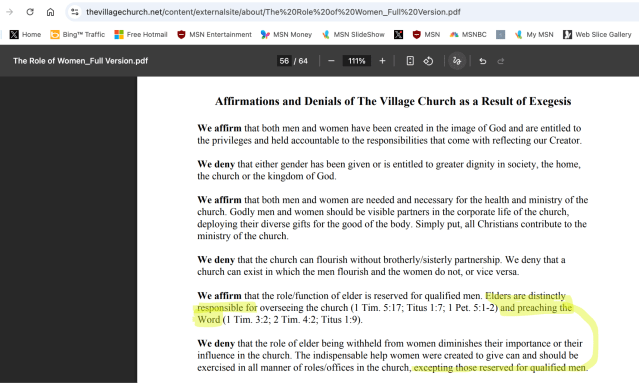
Nevertheless, in the document you cited, your own elders say this:
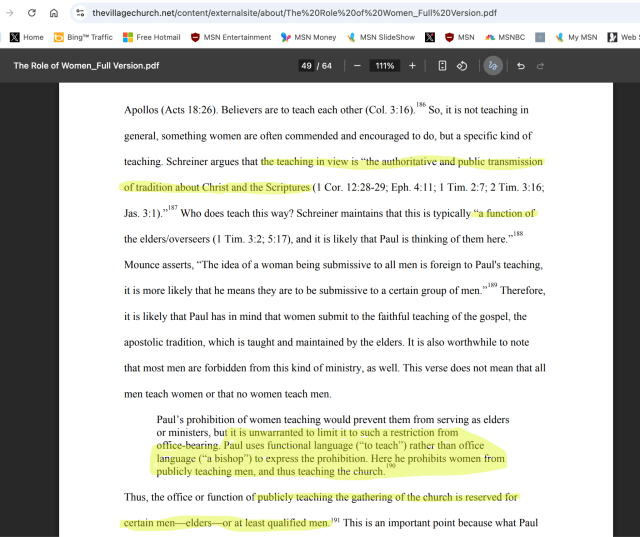
So your own elders say that publicly preaching the Word to the gathering of the church is restricted to men.

We often have to clarify to Believers and unbelievers alike that the โ€œchurchโ€ is not the building we meet in, itโ€™s the people – Christians. So whenever Christians are gathered for the purpose of worship, instruction in the Scriptures, etc., it is a gathering of the church, and the prohibition of women teaching men applies.

But, in any event, the document makes clear on p. 55 that this is the position of โ€œthe role of women at The Village Church.โ€ My article doesnโ€™t deal with you preaching at TVC, but at other gatherings of the church outside TVC, so TVCโ€™s policy for TVC is irrelevant to those events.


โ€œThe short version [of the TVC document] is that any gathering that is not the Sunday gathering does not require to be taught by an elder.โ€

I didnโ€™t see that statement or any statement similar to that in the document, but I may have missed it. What page is that on? 


โ€œThat being said, my ministry is primarily to women, so mixed gatherings are pretty rare.โ€

1. โ€œRareโ€ does not equal โ€œnot sinfulโ€. You still need to repent of preaching to men and stop doing it.

2. It doesnโ€™t look โ€œrareโ€ considering all of the instances Iโ€™ve cited in the article (and including any instances I may have missed and havenโ€™t included).

3. It isnโ€™t โ€œrare,โ€ as though you used to preach to men and no longer do. This is something youโ€™re continuing to do and currently doing. The GCD Cohort in which youโ€™ll be unbiblically instructing pastors started less than three weeks ago.


So, to summarize, you found one actual error of fact in this entire, lengthy article (which I apologized for and will gladly delete and explain to my audience). The remainder of the article – dealing with far more than youโ€™ve brought up here – is correct and is not โ€œbasic factual errorsโ€ or a โ€œmisrepresentationโ€ of your โ€œcharacter and actionsโ€.

And by implying that the article, overall, consists of โ€œbasic factual errorsโ€ and โ€œmisrepresents [your] character and actions,โ€ you have actually misrepresented my character and actions.

But all of that aside, whatโ€™s more important here is you. I care about you, and I hate to see you going down the same road that so many of your Lifeway Women compatriots – like Beth Moore, Lysa TerKeurst, Priscilla Shirer, etc. – have gone. 

I have taken a moment to pray for you, and, in love, I urge you to repent of the sins of preaching to men, yoking with false teachers, and the other things Iโ€™ve cited in the article, for the glory of God, for the good of your own soul before Christ, and for the biblical discipleship of your followers.
Discernment, Sermons

Why Your Church Should Stop Playing Bethel, Hillsong, Elevation, and Jesus Culture

If you prefer listening to reading, check out our A Word Fitly Spoken podcast episode, Discord: Why Your Church Should Reject Bethel Hillsong and Elevation Music, based on this article.


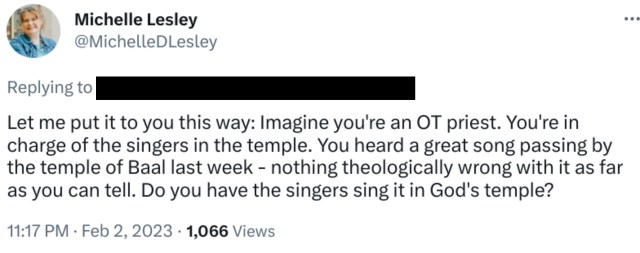
While this article deals primarily with Bethel, Hillsong, Elevation, and Jesus Culture, they are by no means the only heretical music sources to be avoided. Phil Wickham, for example, is just as prolific as these groups and his music is used by just as many churches. With his strong ties to Bethel, he should be included under the umbrella of Bethel as you consider the remainder of this article. There are numerous other unbiblical musicians who should be avoided for these same (and other) reasons. You can find a sampling of them in my article The Mailbag: False Doctrine in Contemporary Christian Music.


Justin Peters and Todd Friel discuss the theological problems with Bethel, Jesus Culture, Hillsong, and Elevation music and why your church shouldn’t use their music in this video interview: Why Your Church Shouldn’t Play Bethel and Hillsong Music.

Is it wrong to sing songs from Bethel if they are theologically correct? In this episode of Redeeming Truth, Pastors Costi Hinn, Dale Thackrah, and Kyle Swanson provide insight into the dangers of supporting ministries like Bethel [and Hillsong, Jesus Culture and Elevation Music], that have a false understanding of who Christ is.

If you are looking for theologically accurate worship music to listen to or sing in your church, they have put together a Spotify worship playlist that you can listen to. Costi has also written an excellent companion article on his blog: Should Your Church Sing Jesus Culture & Bethel Music?

Excerpted from my article The Mailbag: False Doctrine in Contemporary Christian Music

“Itโ€™s imperative for churches to be discerning about the CCM they use in worship. If Jane Churchmember hears a CCM song in church and likes it, sheโ€™s likely to Google the song (probably right there in church- Iโ€™ve done it!), find out who sings it, and begin following that artist. Worship pastors who use CCM have a responsibility to vet the artists who perform the songs they select for the worship service to make sure theyโ€™re not sending Jane into the arms of a heretic. Additionally, music costs money, and you donโ€™t want your churchโ€™s offerings supporting false doctrine.

Now, every time I address the subject of being discerning about worship music and that churches should not use worship music from heretical sources (such as Bethel, Hillsong, and Elevation) someone whoโ€™s defending using music from these heretical sources [will say]:

Well, [insert name of hymn writer here] wrote lots of perfectly biblical hymns, but he had some theological problems too, and youโ€™re not recommending we get rid of all of his hymns.

Well, first of all, maybe we should more closely examine the theology of some of our most prolific hymnists and stop using their music because of what they believed. Quick โ€“ off the top of your head, name the three we should start withโ€ฆ

โ€ฆAnd thatโ€™s what separates the errant hymnist from Bethel, et al. Most Christians, even those who prefer hymns over CCM, could probably not name three people who wrote hymns, let alone tell you anything about their theology. But if you ask the average Christian to name three top Christian artists, she could rattle them off in a second.

Most hymn writers have been dead for up to hundreds of years. They donโ€™t have Facebook pages you can follow, nobodyโ€™s playing their stuff on KLOVE, theyโ€™re not on tour to promote their latest album, they donโ€™t have thousands of followers worldwide, and their music is in the public domain, so your church isnโ€™t financially supporting them or their work. If you wanted to follow their errant theology, youโ€™d have to hit the books to research and study it. Contemporary musiciansโ€™ theology is only a click away on YouTube, social media, live streamed concerts and conferences, and on their web sites. Nobody is following dead hymnistsโ€™ false doctrine, but hordes are following contemporary musiciansโ€™ heresy.”


Excerpted from my articles on Bethel, Hillsong, and Elevation:

If you came here looking for a critique of individual [Bethel, Hillsong, or Elevation] songs, thatโ€™s not really what this is about. Everything connected to [these “pastors”] โ€“ [the “churches,” the music companies] (as entities and all individual songs), all [“church” and music] personnel, materials, programs, and events โ€“ are all fruit of the poisonous tree [of the false teacher who heads everything up]. No, you cannot biblically pick and choose songs from [any of these organizations] that donโ€™t seem to overtly violate Scripture. The Bible never tells us to โ€œchew up the meat and spit out the bones.โ€ It says:

I appeal to you, brothers, to watch out for those who cause divisions and create obstacles contrary to the doctrine that you have been taught; avoid them. For such persons do not serve our Lord Christ, but their own appetites, and by smooth talk and flattery they deceive the hearts of the naive. Romans 16:17-18

โ€œWatch outโ€ for false teachers. โ€œAvoid them.โ€ That includes everything about them: all their materials, books, events, music, social media, etc. Would the God who breathed out these words of Scripture be pleased if we ourselves, or our churches, use materials by people who โ€œdo not serve our Lord Christโ€?

Excerpted from my article The Mailbag: Potpourri (…Solid churches with heretical music…)

“We have been searching for a doctrinally sound church in the area we moved to, and unfortunately it has not been easy! The few that we have found still use Hillsong, Bethel or Elevation music. I usually cross a church off the list quickly if they sing from those artists. But like I said, now I am finding even doctrinally sound churches are throwing some of those songs in. Do you have any insight to this dilemma?”

for pastors and ministers of music: This is yet one more reason it is detrimental to your church to use music from Bethel, Jesus Culture, Hillsong, Elevation, any musician connected these groups (such as Phil Wickham, who’s very prolific and has strong ties to Bethel), or any other musician who isnโ€™t doctrinally sound (after you have thoroughly vetted him/her/them.) regardless of how biblical the lyrics of any particular song of theirs that youโ€™re using might be. You could potentially be turning away solid, mature, discerning Believers who might otherwise be interested in joining your church. The woman who sent in this question is not the first to ask me something like this โ€“ not by a long shot. This issue is increasingly of concern to Christians looking for a solid church. (For that reason, I do not list churches – even Reformed or seemingly otherwise doctrinally sound churches – on my Reader Recommended Churches list who use music from heretical sources like these.)

When a visitor walks into your sanctuary for the first time, your worship service is the โ€œfaceโ€ of your church to her. What kind of a first impression are you making? When you use music by doctrinally unsound musicians, it does not say, โ€œWeโ€™re really a doctrinally sound church โ€“ honest! We only use songs from these groups whose lyrics are biblical.โ€. It says, โ€œThis church has leaders who arenโ€™t discerning,โ€ or โ€œIf this church uses music by these heretical groups, what other doctrinal problems does it have?โ€. Why put that stumbling block out there when there is plenty of music available with biblical lyrics written/performed by doctrinally sound musicians?

And there’s another stumbling block that using this type of music puts in front of weaker brothers and sisters that you may not have realized. I have heard from a number of Christians whom God graciously saved and rescued out of the pit of “churches” similar to Bethel, Hillsong, and Elevation. They tell me that when they walk into what they think is a doctrinally sound church and hear music from these and other heretical sources, it triggers a form of spiritual PTSD. It’s traumatizing to them. They immediately become fearful that your church is mere steps from turning into one of these types of “churches.” Will they grow out of that reflexive reaction? Yes, some day, as God continues to sanctify them. In the meantime, do you want the music at your church to cause them unnecessary anxiety? I hope not.

Even for Christians who have not come out of “churches” like these but are knowledgeable about their heretical theology, using these songs in your worship service is putting a stumbling block in front of them, too. Take me, for example. I’ve studied these groups. I’ve seen their heresy and the damage they do to both the Kingdom and to the individuals who follow them. And because of that, I’ve zealously spoken out against them. If I visit your church and an Elevation song suddenly flashes up on the screen, my ability to worship is completely derailed in grief that your church would use a song from that source – especially if you know about their theology and are well acquainted with music from doctrinally sound sources that you could have used instead. I cannot sin against my conscience by singing those songs. Consider me a “weaker brother” if you like, but do you care more about me as your sister in Christ, or your “right” to use music from these sources? What about Paul’s posture in 1 Corinthians 8:9-13?

But take care that this right of yours does not somehow become a stumbling block to the weak. For if anyone sees you who have knowledge eating in an idol’s temple, will he not be encouraged, if his conscience is weak, to eat food offered to idols? And so by your knowledge this weak person is destroyed, the brother for whom Christ died. Thus, sinning against your brothers and wounding their conscience when it is weak, you sin against Christ. Therefore, if food makes my brother stumble, I will never eat meat, lest I make my brother stumble.

If this was true in Paul’s personal life, shouldn’t it surely be true of our worship services? If you wouldn’t put a Christmas tree or portrayals of Jesus in your sanctuary because it might offend a brother in Christ, why would you use worship music that causes offense to your brothers and sisters?

Finally, what is the proactively good reason for intentionally choosing music from a heretical source? In other words, when you’re selecting music for the worship service, why would you choose, say, a Hillsong song about God’s glory, or Psalm 23, or the crucifixion, when you could just as easily choose a song from a doctrinally sound source about any of those things – a source that isn’t a stumbling block to anyone, won’t give anyone the wrong impression about your church, won’t lead anyone to follow a heretical “church,” and won’t use your church’s offerings to support a heretical “church”? What makes the Hillsong song you’re choosing better than the song from the doctrinally sound source? It doesn’t seem to me that there’s a good enough reason to use songs from these sources that outweighs all the good, biblical reasons not to use them.

There is simply no good reason for a doctrinally sound church to use music from heretical sources like these.

There is simply no good reason for a doctrinally sound church to use music from heretical sources like Bethel, Jesus Culture, Hillsong, and Elevation.


Additional Resources

Stop Singing Hillsong, Bethel, Jesus Culture, and Elevation by Scott Aniol

The Mailbag: โ€œI Speak Jesus,โ€ Charity Gayle, and How to Vet Christian Music

Why I Donโ€™t Sing the Songs of Hillsong and Jesus Culture by Dan Cogan

Why Fundamental Baptist Churches Must Avoid Bethel Music by Spencer Smith

Bethel Church (Redding, CA)/Bethel Music/Jesus Culture

Hillsong/Brian & Bobbie Houston

Elevation/Elevation Music

The Mailbag: What Is the New Apostolic Reformation?

The Mailbag: Should Christians Listen to Reckless Love?

God’s Not Like, “Whatever, Dude,” About How He’s Approached in Worship

The Mailbag: False Doctrine in Contemporary Christian Music

Hillsong’s Theology of Music and Worship

Let’s Talk About the Worship Music at the [Charlie Kirk] Memorial Service… with Dawn Hill

Discernment, Guest Posts

Guest Post: Lauren Daigle and the Fruit of “Losing her Religion”

If your theology pretty much matches up with mine (as outlined in the โ€œWelcomeโ€ and โ€œStatement of Faithโ€ tabs) and youโ€™d like to contribute a guest post, drop me an e-mail at MichelleLesley1@yahoo.com, and letโ€™s chat about it.

Lauren Daigle and the Fruit of “Losing Her Religion”
by Laura M.

“It would be a sad dishonor for a child of God to be the world’s favorite. It is a very bad sign to hear a wicked world clap its hands and shout, “Well done!” to the Christian…Far be it from us to seek a crown of honor where the Lord found a crown of thorns.” ย CH Spurgeon

Lauren Daigle is a 28 year old Grammy award winner. In her short career she has won many awards, secular and Christian. She has four number one songs to date and many more at the top of the billboard charts. She has over 1 million Facebook followers, and an abundance of world tour dates that she alone headlines. Her Look Up Child album just reached double platinum. She is wildly popular in the church and on Christian radio stations.

The secular world is now also paying attention. What have they learned? This is an interview with Billboard.comย 

โ€œ’My home church is right here,’ [Lauren] says, gesturing toward the stage. โ€˜Itโ€™s right here, every night.'”

“Daigle doesnโ€™t preach, onstage or off. In between songs at the show, she told goofy stories —ย like one about her misadventures in physical therapy —ย but never mentioned Jesus.”ย 

That one interview said a lot –no church, means no pastor, no teaching, no growing…no obedience.

Sure, she is fun and cool and trendy and sincere in her desire to use her talents, but is that enough to be labeled a Christian artist? Even she does notย want to be described that way, having determined to drop the word “Christian”. Yet, Christians have her at the top of their “worship” playlists.

Should we consider her as purely secular entertainment? Christian words and a great voice filled with sincerity do not make worship acceptableย before God.

โ€œWhen we talk about worship, weโ€™re talking about something very specific, very objective, revelatory, unfolded for us on the pages of Scripture. It is not private, it is not personal in the sense that you define it yourself. It doesnโ€™t rise out of your intuition. It doesnโ€™t rise out of your experience. It doesnโ€™t rise out of your imagination. It isnโ€™t the invention from your own mind of what you want it to be. True worship is simply treating God in the way that God has commanded us to treat Him. Thatโ€™s what it is.โ€ The Kind of Worship God Desires, John MacArthur

We should have a great concern about the platform and influence that many so called “worship leaders” have in the church today. ย Many Christians incorrectly assume that if the words are not heretical and make them “feel” good, it must be acceptable worship. Lauren Daigle is growing in her platform and influence and we should take a discerning look at whether this is a wise choice for Christians. Is the fruit of Lauren’s โ€œReligionโ€ good or bad?

Her Partnerships

Here are just a few, Stephen Furtick andย Jesus Culture,ย Joyce Meyer , Hillsong, Bethel Church and hereย Lauren is leading “worship” at Bethel.

Michelle has already written much about these false teachers and churches.

Her Testimony

Can you tell what is missing? She does not start with Christ. ย Does she finish with Him?ย She was interviewed by the Young Salvationistย here (it seems they have removed it since we copied the text).ย 

The interviewer asked her,ย “Please share with our readers how you came into a relationship with Jesus Christ?”

โ€œWhen I was 15 yearsโ€“old I was diagnosed with a debilitating virus. Itโ€™s kind of funny how God sets things up, as I was super busy. I was in high school running all over the place and God stopped me โ€“ He stopped me in my tracks. I was placed on homebound rest for two years with this illness. It was during that season when I truly began to know God and His character. He gave me hope the entire time; I wasnโ€™t going through this for any reason. This wasnโ€™t just the lot I was handed in life. No, I knew, I could tell, God was setting me up for something and I needed to stay focused.

So, every morning I would get up and read my devotionals and every night before bed. Soon I started making my own devotionals. The Word was filling me up so much and during a season when I was completely alone… During that time, God would give me visions and dreams of the season that Iโ€™m walking through now!ย He affirmed me and who I was in Him. He showed me that my placement had to be with Him and He began to teach me that He was my comforter, He was my portion and He was my foundation. I was baptized when I was a little girl, raised in the church, and a part of a Christian family; but it changed from that to God being my source, my Savior.”

This is typical of many who have their own personal dream and attach God’s name to it. She did not say how she was changed and she did not once mention Christ or sin or the Cross. Did she mention reading the Bible? A Scripture perhaps? No, only visions.

Her website would surely have a larger testimony for us to read. However, I did not find one. The most “spiritual” she got was stating,

“Itโ€™s about remembering what itโ€™s like to be a child again and to look up and see the clouds, the sunset, and the stars. Itโ€™s about having hope once more. You can always come back to yourself. You can come back to the things you thought were lost. You can always come back to redemption.”

She doesn’t say anything about Christ. Instead she is pointing to childhood memories, the clouds, the sunset, stars. What is the basis of renewed hope? How does one come back to yourself?

In another interview,ย she says, (of her teen years)

โ€œAnd I kept having all of these dreams about tours, awards, charts and all of these different stages Iโ€™d be on. And I was like, โ€˜God what is this about? … Then He affirmed me...โ€ย 

From fear and uncertainty sprang resistance as Daigle made the personal decision to not pursue Christian music, despite messages from God telling her otherwise. โ€œI told the Lordโ€”yes I told Him, โ€˜Iโ€™m not going to do Christian music! Iโ€™ll sing whatever You want me to sing, Iโ€™ll do whatever you want me to do in the mainstream world, but Iโ€™m not doing Christian music.โ€™โ€

She took her personal dream of stardom and attributed it to God. ย There is much danger in this kind of mystical dream interpretation. It may have come to pass, but God does not affirm pursuit of the praise of men and I cannot say this is anything more than her pursuit of a personal desire.

The Praise of the World and Views on Sin

“The most effective servant of the Gospel of Christ crucified is crucified to the world and its applause.” ย Mike Riccardi

Lauren said, “she will not compromise her faith while traveling the world ministering to those outside of the church…She vowed that her testimony would not be destroyed in any way.”

However, this is her response to being criticized for being on the Ellen DeGeneres show. Ellen is an open and proudly lesbian woman.

โ€œI think the second we start drawing lines around which people are able to be approached and which arenโ€™t, weโ€™ve already completely missed the heart of God,โ€ Daigle said during a recent interview withย WAY-FM Radio.

Lauren missed the point, this is not about kindness it’s about being foolishly and sinfully drawn to the world and then affirming them because they have affirmed her. Jesus clearly drew lines in Matt 7.

And yet…after being on the Ellen DeGeneres show, she capitulatedย on her conviction not to compromise.

“Do you feel that homosexuality is a sin?”

After a pause, she responded: “You know I can’t honestly answer on that…I have too many people that I love that, they are homosexual, I don’t know. I actually had a conversation with someone last night about it and I was like ‘I can’t say one way or the other, I’m not God’โ€ฆ

Pastor Gabe Hughes responds to this interviewย in a short video titled,ย Lauren Daigle doesn’t know if homosexuality is a sin?

And now, not surprisingly, Lauren Daigle Takes Issue with the Label โ€˜Christian Artistโ€™

“After being in a spotlight of controversy for weeks regarding her stance on homosexuality, well-known Christian artist Lauren Daigle is now saying she doesnโ€™t consider herself a Christian artist, but simply an โ€œartist”….Interestingly enough, the young artist did not mention Jesus or God throughout the interview, sticking to general phrases like โ€œfaith,โ€ while placing a large emphasis on the importance of love.”

It is not acceptable to equivocate on sins that Christ died to save us from. ย He died for us to be reconciled to the Father, because we are without hope of saving ourselves, not for everyone to “feel” loved.

A 2019 article states,

“She admits the transition from a majority Christian audience to a more secular one has already been a โ€œrideโ€ and hints at theย negative commentsย sheโ€™s been receiving from fans and others who are concerned the singer is leaving her Christian roots.ย Daigle seems unphased by the pushback, though. โ€œRisk is the best. Risk is the most beautiful thing,โ€ she says with a smile.” source

And yet 4 years before in 2015, she said,ย 

Godโ€™s not a God of risks. He just says, โ€˜Trust me,โ€™ because He has it all under control. To us, in our human life, it looks like a risk, but Heโ€™s like, โ€˜No, Iโ€™m God. I got this.โ€™โ€ source

This Christian Post article interviews her as well, sharing,

“Daigle went on to share a story about a megachurch pastor which was asked to step down from his ministry and lost his church, after having an affair with his secretary.

Lauren said,

I could see privately that he had some things to reconcile and I just thought about the nature of the church, to push out someone that operated in humanity,” she explained. “It’s so easy to push those people away or to build the white picket fence around our ideologies that create this counterculture that completely denies just the love of Christ, the grace of Christ, the mercy of Christ, and rejects the relationship with Christ.”

Lauren has an unbiblical view of sin, it is not in her testimony, it is not calling homosexuality the abomination that the Bible does, and it sympathizes with the poor pastor who disqualified himself by the most egregious sin against his wife. These are not the words of someone who submits to the authority of Scripture.

The Bible does not mince words (1 Cor 6:11) and neither should anyone who has been washed of the sins we have been so graciously forgiven and desire this to be true of others.

She also provocatively named a song, Losing My Religion and then comments,ย 

“This is an age where I am learning, what I believe in. We have a song on there that record called ‘Losing My Religion’ and I think one of the things that I’ve learned and one of the things that I’m embracing is the freedom of taking off the checked boxes, the rules, and all those things that kind of muddy up what faith actually isโ€ฆ

Unfortunately, she has muddied her faith and is influencing many who flock to her and find the same muddy waters. This is exactly what we would expect from someone who claims that her church is her “stage”.

She excuses her decision to crossover by pointing to Avril Lavigne, Elvis Presley and Aretha Franklin because they sing a few gospel songs as well. “Thereโ€™s all these people from back in the day that did this thing as well, where they had both. And I feel like history always repeatsย itself.โ€ Billboard interviewย  Not great role models.

Remember, it is OK to be fruit inspectors, not just of false teachers but of everyone, fruit always gives evidence of the source of life. (Matt 7:17-20) We rejoice when we find good fruit and we warn when it is bad.

Lauren is leading โ€œworshipโ€ to the masses she has before her.ย She seems to love the world, clings to false teachers and obfuscates clear Biblical teaching when given opportunity to proclaim it. As Christians, would it not be better to stop supporting her and so give her the wakeup call she needs rather than the praise and attention she is getting for bad fruit? If she does have a clear testimony of saving faith why is it not front and center for us to see? ย 

Letโ€™s pray she would get off the stage and into a Biblical church to be taught well how to worship in โ€œspirit and truth.โ€ (John 4:23), and give opportunity for a pastor and church family to care for her soul. (Heb 13:17)


Laura and her husband Scott have been married 25 years and have three children. They live in a suburb of Philadelphia and NYC, where they have recently planted a church. She also writes with a few friends at Where Ordinary Life Meets Divine Truth as a ministry to the local women they are privileged to disciple.

Discernment

Discernment IS Love

I’m often accused of being “unloving” for writing in a direct or firm tone against false doctrine and other unbiblical issues in the church.

I received another such accusation recently on one of my older articles, “Nine Reasons Discerning Women Are Leaving Your Church“. I thought I’d share my response to the reader with you, because it seems there’s a misunderstanding among Christian women as to the biblical definition of love. It ain’t always “sugar and spice and everything nice” y’all…

“I donโ€™t think you have a complete understanding of the biblical definition of love. You seem to think that โ€œloveโ€ is restricted to always being sweet and nice to people. Thatโ€™s not biblical.

–Was Jesus being unloving when He cleared the temple? (Matthew 21)
–Was Jesus being unloving when He rebuked the Pharisees? (Matthew 23)
–Was Jesus being unloving when He instructed us to disfellowship unrepentant sinners from the church? (Matthew 18:15-20)
–Was Paul being unloving when he turned Hymenaeus and Alexander over to Satan so they would learn not to blaspheme? (1 Timothy 1:19-20)
–Was Paul being unloving when he anathematized anyone who preaches a false gospel? (Galatians 1:6-9)
–Was Peter being unloving when he described false teachers in 2 Peter 2?
–Was Jude being unloving when he wrote to the brothers warning them about the evils of false teachers instead of writing about the gospel?

Am I being unloving in writing this article? No. Reproof, rebuke, and biblical instruction are all part of godly love. I am demonstrating love for Christ, His Bride, and His Word by pointing out biblical error that needs to be corrected. I am demonstrating love for ignorant pastors and churches by explaining to them why their most spiritually healthy members are leaving. I am demonstrating love for the thousands of doctrinally sound Christians out there who long to attend a healthy church and canโ€™t find one because so many churches are in error in the areas I mentioned. And, I am demonstrating love for you by helping you understand what Godโ€™s definition of love is.

Is this article loving? You bet it is.”

Additional Resources:

I Canโ€™t Sit Down, Shut Up, and Play Nice

Discernment: Whatโ€™s Love Got to Do with It?