Christian women

Throwback Thursday ~ 6 Reasons Godly Women are Stronger Than Feminazis

Originally published June 12, 2015

feminazis

Gloria Steinem. Bra burning. The ERA. “I Am Woman Hear Me Roar.” Maybe you remember them, or have at least heard of them. That was the heyday of feminism. It was going to be a new era of strong, powerful women. And they’re still fighting the battle today. Never let a man get the upper hand. Sacrifice whatever you have to for a successful career. And Christian women who submit to their husbands or choose to stay home with their children are sneered at or dismissed as weak, barefoot and pregnant ignoramuses.

But as any woman brave enough to follow in the footsteps of Christ can tell you, it ain’t necessarily so. Secular feminists will never understand the kind of strength it takes to strive towards godly womanhood.1

1. Only the strongest of women can voluntarily relinquish the right to be in control.

It’s easy (at least for decisive, type A control-freaks like me) to walk into a room assess a situation, lay down the law, and expect your instructions to be carried out. It’s much harder to step back and hand off the decision-making to your husband, or to offer your input and stand aside and watch when he decides not to follow it. But God expects us to follow in the footsteps of our Savior, who voluntarily surrendered control of His very life to the men who took it from Him.

2. It takes a strong woman to trust God enough to put her life and her children’s lives into her husband’s hands.

Let’s just get real here for a minute. It can be hard to trust God sometimes. Even though we know He is perfect and has our best interests at heart, we can’t see Him or touch Him. We can’t ask Him a question and get an audible yes or no answer.

It can be even harder to trust our husbands. Even though we can see, hear, touch, and talk to them, we know all too well that they’re fallible. Sometimes they have their own interests at heart. Sometimes they mean well and still make the wrong decisions.

But God tells us to trust Him. Even when it’s hard. Even when we don’t understand what’s going on. Even when we think we could lead better than our husbands. We trust God enough to obey His word even when.

3. It takes tremendous strength to control our mouths.

James tells us “no human being can tame the tongue,” and all who have tried know how true that statement is. Still, God expects godly women to control our speech. We’re not to nag and be quarrelsome. We’re to speak wisely and kindly. Sometimes, we’re not to speak at all, but let our actions do the talking. The strength to bite your tongue or think before you speak? It’s a daily trial by fire for Christian women.

4. Godly women have to be incredibly strong to deal with the heartaches that come our way.

John once said, “I have no greater joy than to hear that my children are walking in the truth.” (3 John 4). While he was talking about his spiritual “children,” godly wives and mothers have that same joy when our husbands, children and loved ones are walking in the truth of the gospel. And unspeakable agony when they are not. We not only have to cope with the regular griefs of life that everyone experiences, we also must deal with the pain of those closest to us who rebel against Christ and His word, all the while trusting God and walking in His ways.

5. We must develop the godly strength it takes to stand against the culture.

It’s easy to do the godly thing when everybody’s rooting for you, but in a society that is openly hostile to biblical womanhood, we often (sadly, even in the church) find ourselves fighting our way upstream like so many spawning salmon. Many times, we are seen as – and called – doormats, uneducated, gullible, traitors to the cause of women’s rights. We must rely on the strength God has promised us to stand for godliness in the face of opposition.

6. Only strong, godly women can joyfully deny self and serve rather than being served.

In a “because you’re worth it” world, putting our own desires aside to serve our husbands, children, and others is utterly incomprehensible to many, and, often, even to ourselves. The flesh rears its ugly head again and again, demanding to have its every wish fulfilled by the very people God put us here to serve. It takes a mighty woman of God to do battle with that enemy, send it packing, humble herself, and tend to the needs of others. But we have been bought by the blood of a Savior who declared that He “came not to be served but to serve,” and we conform to His wishes, not our own.

They can push and nag and argue and boss and control. They can be soldiers, construction workers, CEOs, and President. They can wear the pants in their families and have cowed husbands. But the shrillest of feminazis will never know the strength it takes to be a godly woman, because what they’re attempting is miniscule compared to the high standard God calls His daughters to. And any fleshly strength they can conjure up couldn’t in a million eternities touch the supernatural, mighty, rushing force that is the power of the Holy Spirit which God promises to His own, enabling us to say, “I can do all things through him who strengthens me.”

God doesn’t call us to have dominance over men, He calls us to become like a man, the God-man, Jesus Christ. And in our feebleness and brokenness, He gives us the power to attempt that feat of greatness for His glory. That, my sisters, is where real strength lies.


1As always in my articles which mention biblical submission in marriage, my standard caveat: Please understand that this article applies to the vast majority of reasonably healthy marriages. Biblical submission has nothing to do with allowing yourself to be abused. If you are being abused please get yourself and your children somewhere safe immediately and call your pastor, the police, and/or anyone else who can help.

Sermon on the Mount Bible Study

The Sermon on the Mount ~ Lesson 5

Previous Lessons: 1, 2, 3, 4

Matthew 5:21-26

Questions to Consider

1. Briefly review the “middle parts” (ex: merciful, poor in spirit) of the Beatitudes, the “salt and light” passage, and the “heart of the law” passage in Matthew 5:1-12, 13-16, 14-20. Now read 21-26 in light of those passages.

Summarize, in your own words, the main idea of 21-26.

Divide this passage into two sections, 21-22 and 23-26. Who is experiencing anger in the first section? The second? Who is responsible for doing something regarding the anger in both sections? Can you control or change the behavior of the person you’re angry at or the person who’s angry at you? How does this passage take the focus off what the other person has done (and whether she is right or wrong), and put the focus on you and your responsibility to act in a godly way regardless of the circumstances?

In the Beatitudes, Jesus lists the traits that define Christian character. In much of the rest of the Sermon on the Mount He fleshes out what many of these character traits look like when walked out in “real life”. Which of the traits (the “middle parts” – there could be several) listed in the Beatitudes is Jesus expanding on in each of these sections (21-22, 23-26)? How?

How does ungodly anger, or a brother having something against you dim your light, and bland your saltiness? (13-16) How can crucifying your sinful anger or reconciling with an offended brother make you saltier and brighter?

2. Review from our previous lessons (links above) the idea that the Sermon on the Mount is to the New Testament / new covenant what the Ten Commandments were to the Old Testament / old covenant.

How does Jesus refer back to the Ten Commandments in verse 21? How do Jesus’ phrases “You have heard it said…but I say to you…” verbally transition the people from their focus on outward obedience to the letter of the law to zeroing in on the attitude of their hearts and the spirit of the law? Explain how refraining from sinful anger and reconciling with an offended brother is the heart of the law (17-20) behind the 6th Commandment. Connect these passages with 21-26. Where should our outward, behavioral obedience to Christ spring from?

3. Examine again the “You have heard it said…but I say to you…” proclamation. Who had the people heard it (the law) said by? Who taught them the law? How does Jesus saying, “But I say to you…” establish Jesusโ€™ supremacy over the Pharisees, scribes, priests, etc. Imagine you’re one of these Jewish leaders and you’re hearing Jesus say this. What might your initial reaction be? How does this passage on anger inform how you should respond to Jesus’ proclamation?

Recalling our Sermon on the Mount / Ten Commandments motif, how might Jesus’ “You have heard it said…but I say to you…” proclamation have evoked images of Moses as lawgiver, and signaled to the Jewish leaders and people that the better Moses was here?

Who created and gave the Ten Commandments? How did Jesus’ proclamation and the judgments He declares in verse 22 demonstrate to the Jews His authority as God and His equality with God?

4. Using your cross-references, what kind of court / prison situation is 25-26 referring to? Can you see how this type of situation fits with the situation in 23-24? Does verse 23 say you’ve actually sinned against your brother, or that you’re actually guilty of the the civil action or accusation of debt being brought against you in 25? Could these be situations in which there has been a misunderstanding, a miscommunication, or a false accusation on the part of the offended party? Why is it still your responsibility to take the initiative to make things right with the offended party?

What does making things right with others have to do with our worship (23)? Why does God basically say, “Go to your brother before you come to Me.”?


Homework

  • What is the difference between righteous anger (which is not sinful) and sinful anger? How can you tell the difference between the two? Is it possible to express righteous anger in an unrighteous / sinful way? Give an example. This week, pray that each time you get angry God will help you distinguish whether you are experiencing righteous or sinful anger and whether you are expressing that anger righteously or sinfully. If you are sinfully angry, repent.
  • Is there anyone in your life who has something against you (23-26)? Even if your conscience is clear that you haven’t actually sinned against her, be a peacemaker, take the initiative, and do everything you can to reconcile with her this week.

Suggested Memory Verse

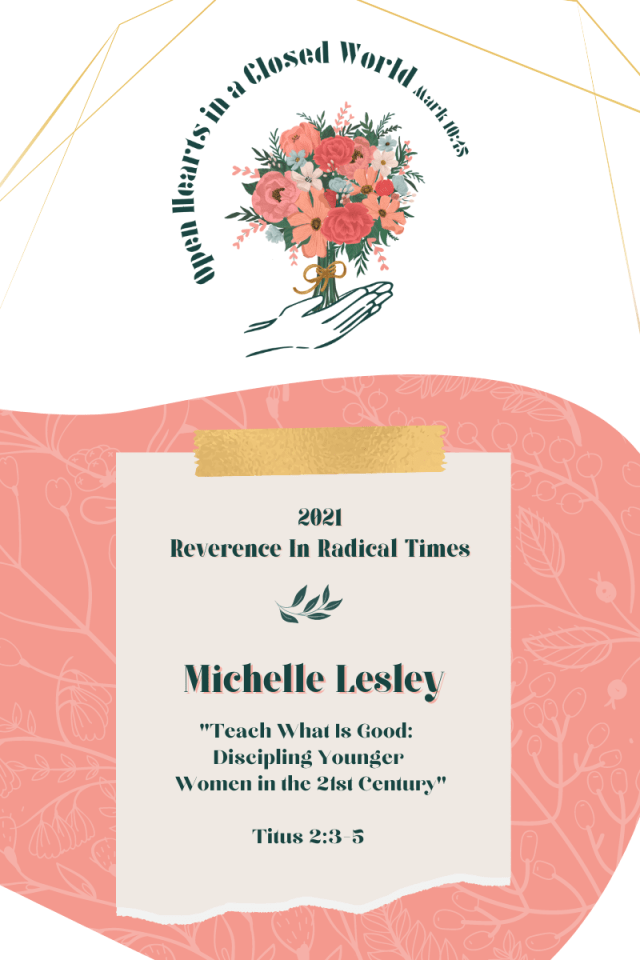
Speaking Engagements

Nashville, AR, Conference: POSTPONED

UPDATE (February 15)

Ladies- I’m so sorry to inform you that this conference has been postponed due to inclement weather. We are working on setting up another date – hopefully soon. When the details are settled, I’ll let you know here on the blog. Until then, if you know someone who was planning to attend the conference this weekend, please let her know of the cancellation. Thanks.

Ladies, if you’re in the Nashville, ARKANSAS, area (please note, this is not in Tennessee), you’re invited to attend Maranatha Baptist Church’s women’s conference on Saturday, February 20.

I’ll be speaking on discernment and living under the authority of Scripture instead of being slaves to our emotions. We’ll also have a fun Q&A session to round out the day.

The conference is free and includes a continental breakfast and lunch, but you must RSVP directly to the church (not to me – contact info above) by the…

Registration Deadline – February 13

…so the hostesses can get a good headcount for food and materials.

If Arkansas is too far away for you, check out the calendar of events on my Speaking Engagements page (in the blue menu bar at the top of this page) and see if you can find one of my conferences in your neck of the woods.

If you still aren’t able to find an event to attend, host your own! I’d love to come speak to the ladies of your church or Christian organization. Now is the time to start planning for summer and fall conferences. Need a little help planning? I’ve got tips!

I hope to see you soon at an event near you!

Holidays (Other)

50 Ways to Have a Happy (and Holy) Valentine’s Day

The world has all kinds of ideas about how you and your “significant other” should spend Valentine’s Day. Some aren’t too bad, but others are downright depraved. Want some ideas of things you and your husband, kids, friends, or church family can do together instead?1
How about these? Have fun!

Want some ideas of things you and your husband, kids, friends, or church family can do together on Valentineโ€™s Day? Check these out!

1. Invite your Sunday School class or small group over for desserts and fellowship.

2. Snuggle up under the covers and read the Old Testament book of Song of Solomon with your husband.

3. Have a get together with your single friends.

4. Visit a local tourist attraction youโ€™ve never been to before.

5. Volunteer at a crisis pregnancy center.

6. Go antiquing.

7. Go on a miniature golf date with your husband.

8. Have a snowball fight- parents versus kids.

9. Invite another couple to go to a canvas painting place.

10. Play Twister.

11. Re-read your favorite book.

12. Go for a mother-daughter mani/pedi.

13. Fingerpaint with the kids.

14. Take a nap.

15. Cook dinner with your husband.

16. Plan a family game night.

17. Have a pillow fight.

18. Go shopping with the girls.

19. Schedule a family photo session.

20. Roast marshmallows over the fire.

21. Bake cookies for some of the shut-ins in your church.

22. Trade skills. Teach your husband how to do a small task he doesnโ€™t know how to do (make a pie crust, fold a fitted sheetโ€ฆ) and let him teach you how to do something (change a tire, tie a tieโ€ฆ).

23. Play frisbee at the park as a family.

24. Play with your pet.

25. Hand out tracts and share the gospel at the mall.

26. Babysit for a single mom.

27.Get out the play dough and play with the kids.

28. Plan a family hike.

29. Host a Bible study in your home.

30. Get the whole family cuddled up on the couch and take turns with your husband telling โ€œwhen I was a kidโ€ stories to the kids.

31. Clean out a closet.

32. Watch a (clean) romantic movie with your husband.

33. Have a family haiku-writing contest.

34. Play video games with the kids.

35. Jump on a trampoline.

36. Invite a couple for dinner that you and your husband would like to get to know better.

37. Binge watch your favorite classic TV series.

38. Pray for and write a letter to a missionary as a family.

39. Check out a class or community event at your local library.

40. Plan a family vacation.

41. Look up and read every Bible verse with the word love in it.

42. Get some friends together to sing a few hymns at a nursing home.

43. Write and exchange love letters with your husband.

44. Have a tickle fight.

45. Go out to dinner at a restaurant youโ€™ve never tried before.

46. Get a facial.

47. Gather some girlfriends and volunteer at a battered womenโ€™s shelter.

48. Get a coupleโ€™s massage.

49. Flip through old photo albums with the kids.

50. Take a bubble bath.

What are some other fun
Valentine’s activities you can think of?


1Yes, I realize Valentine’s Day falls on a Sunday this year and that many of us will be in church most of the day. Some of us don’t have Sunday afternoon/evening activities at our churches and could do one of these activities later in the day, and those who do have Sunday obligations might choose to celebrate with one of these activities on another day.

Sermon on the Mount Bible Study

The Sermon on the Mount ~ Lesson 4

Previous Lessons: 1, 2, 3

Matthew 5:13-20

Questions to Consider

1. Briefly review the Beatitudes in Lesson 3 (link above).

2. Read verses 13-16. Remember that when the Bible was written, there were no chapter and verse markings and no separation between sections. The passage we know as verses 1-12 flowed directly into verses 13-16.

Make the connection between the Beatitudes and 13-16. In what ways could 13-16 be considered the culmination of the Beatitudes? How does God shaping you into all the character qualities in the Beatitudes make you into, or equip you to be, the salt of the earth and the light of the world?

Do verse 13 and verses 14-15 describe the state of saltiness and light in the positive (“Be like this.”) or in the negative (“Do not be like this.”)? List the negative and/or positive statements about each. How could someone who claims to be a Christian lose her saltiness or her light? Is Jesus talking about false converts or genuine Believers who stray into a season of sin, or both? Why?

Carefully examine verse 16. Could this apply to saltiness as well as light? If a friend asked you what this verse meant, how would you explain it to her? What if your friend then directed your attention to 6:1-4, and said, “Aha! The Bible contradicts itself! 5:16 says to let others see your good works and 6:1-4 says not to practice your good works before others.”? How would you explain to her what these two passages mean and why they are different?

3. Read 17-20 in light of 1-16, and in light of the concept from our last lesson that Jesus preaching Sermon on the Mount and the Beatitudes probably evoked comparisons to Moses coming down from the mountain and giving the Ten Commandments.

What three word phrase do most of the Ten Commandments start with? How many of the Ten Commandments end with a blessing? Compare this with the Beatitudes. Which two word phrase does each Beatitude begin with? How many of the Beatitudes end with a blessing? Compare the hard edge specificity of the Commandments (lying, murdering, idolatry, etc.) with the more open ended, less specific Beatitudes (poor in spirit, merciful, etc.) Are the Ten Commandments stated in the negative or the positive? The Beatitudes?

Imagine you’re a law and order Pharisee with all of the above on your mind. You’ve been a “no no” guy all your life. You’re worried Israel might fall back into the sins that sent them into exile in the Old Testament. And now you’re listening to this new guy on the scene preach what sounds like it might be a softer and gentler, love and peace, “hippie” version of the Ten Commandments. You have questions for Jesus. What are those questions?

How does Jesus answer your questions in 17-20? Is He preaching license or that obedience to God does’t matter? Using your cross-references in this passage, what is Jesus trying to convey to the people and to the Pharisees about righteousness and obedience? What is the heart of the Law?

Some people incorrectly think 17-20 mean that New Testament Christians must keep the Old Testament civil laws (no shellfish or mixed fabrics, put a parapet around your roof, etc.) and ceremonial laws (feasts, festivals/holidays, etc.). How would you refute that idea? What are some other passages of Scripture you might bring to bear on this question? When Jesus originally spoke these words, was He talking to Christians under the new covenant or Jews under the old covenant?

How was Jesus the fulfillment of the Law and Prophets? How had legalism so corrupted Judaism that many of the Jews, scribes, and Pharisees were unable or unwilling to accept Jesus as the Messiah – the fulfillment and culmination of the old covenant?


Homework

Consider this thought:

The prevalent false teaching of Jesus’ day was legalism, and the false teachers (Pharisees) accused Jesus and His followers of antinomianism when they taught obedience to God and His Word. The prevalent false teaching today is antinomianism, and today’s false teachers accuse Jesus’ followers of legalism when they teach obedience to God and His Word.

Do you agree or disagree? Why? How can Christians avoid both legalism and antinomianism and follow Christ obediently from a heart of love?


Suggested Memory Verse

Each week, I’ll provide a suggested memory verse from that week’s study passage. I encourage you to copy, save, or screenshot it. Use it for your screensaver or wallpaper, your social media cover photo, or print it out and stick it somewhere you’ll see it often.