Mailbag

The Mailbag: May Christian Women Wear Pants?

Originally published April 3, 2017

What are your views on women wearing pants?

For readers who are a little confused by this question, you may not be aware that there are various churches which require women and girls to wear skirts or dresses rather than pants. The local churches I’m familiar with which carry this requirement are Pentecostal and Independent Baptist, though there may be others. (Some of these churches also require women to have long hair and abstain from wearing makeup.)

The initial basis for this requirement is Deuteronomy 22:5…

A woman shall not wear a man’s garment, nor shall a man put on a woman’s cloak, for whoever does these things is an abomination to the Lord your God.

…along with the general desire to encourage God-given femininity for women and masculinity for men. Definitely a good idea these days.

But, since my opinion is of zero importance – it’s what God thinks that counts – let’s look at what the Bible says. Is it biblical for a church to make this requirement of Christian women, or, for a Christian woman to choose, on her own, not to wear pants?

Let’s tackle that last question first.

There’s nothing in the Bible that says women have to wear pants, so if you want to wear skirts and dresses all the time, you’re absolutely free to do that. What you may not do (biblically) is think, or say, that wearing skirts and dresses somehow makes you holier or more obedient to God than women who choose to wear pants- because there’s nothing about that in the Bible either.

But what about Deuteronomy 22:5?

Well, let’s take a look at that Scripture using good hermeneutical principles. We need to look at the context, culture, audience, and intent of this verse.

First we need to recognize that Deuteronomy is in the Old Testament. Right off the bat, we must keep in mind that, while there are many underlying, timeless principles in the Old Testament that still apply to Christians (usually because they are reiterated in the New Testament) the particular pronouncement of the Old Testament verse we’re reading may not apply.

Next, Deuteronomy 22 is smack dab in the middle of the Levitical law that was given as a part of the Mosaic covenant. The Mosaic covenant was fulfilled in Christ, which means its laws are no longer binding on us as Christians. We are under the New Covenant of grace through Christ. This is why you’re not sinning if you build a house without a parapet around the roof (verse 8), sow your vineyard, if you have one, with two kinds of seed (verse 9), wear fabric that’s a wool-linen blend (verse 11), or go tassel-less (verse 12). If you think Deuteronomy 22:5 prohibits women from wearing pants, a good question to ask yourself is: “Why would I feel required to obey verse 5 of Deuteronomy 22, but not verses 8-12?”

The next thing we need to look at is the actual wording of Deuteronomy 22. Does it say anything about pants or any other specific item of clothing? No. It says women are not to wear men’s clothes and men are not to wear women’s clothes. Now, keep in mind that the audience for this verse was Old Testament Israel, and that, at the time, in that culture, both men and women wore what we would technically describe today as a “dress.”
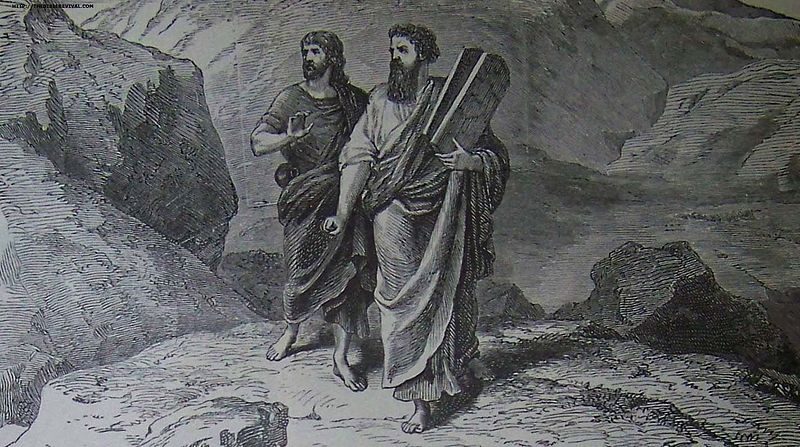
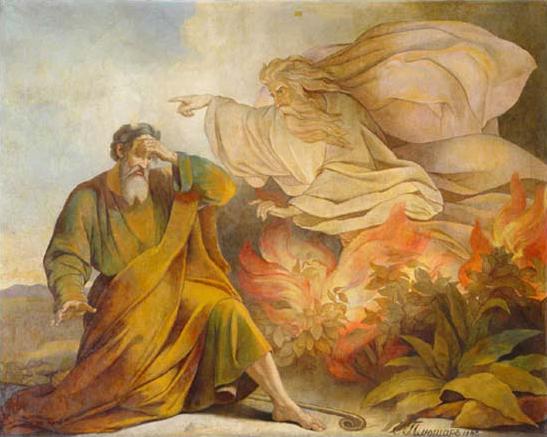
Were Moses and rest of the Israelite men – who were actually receiving this law from God at the time – sinning because they were wearing “dresses”? (And, let’s remember, Jesus dressed the same way.) Of course not. In our time and culture, they’re wearing dresses, and dresses are for women. In their time and culture, they’re wearing a garment designed for men. God has never said, “Pants are for men. Dresses are for women.” Pre-twentieth century western culture has said that. So if the men of the Bible weren’t sinning for wearing “dresses” designed for men, how could Christian women be sinning for wearing pants designed for women?

Deuteronomy 22:5 is not addressing the construction of specific garments. It’s addressing the intent of the heart. Since men and women of that culture both wore garments of similar construction (i.e. sleeves, an opening for the head, and a sheath for the torso and legs), there must have been differing accessories (veils, turbans, sashes, belts, cloaks, etc.) that clearly distinguished between male and female outfits. A woman could wear those male accessories and still be wearing a “dress,” but what would her motive for doing so have been? The only motive she could have had was to appear to others to be a man.

In other words, Deuteronomy 22:5 is not addressing American women wearing pants designed for women’s bodies, sold in the women’s department of the store, marketed to women, and purchased by women who have no intention of trying to impersonate, or appear to others to be, a man. It is addressing the sin of cross-dressing (transvestism).

And that is a prohibition that does carry over into the New Testament under the heading of sexual immorality. We are to respect and honor God’s perfect and holy decision to create us as women or men. We are not to alter our clothing, accessories, cosmetics, hair styles, gait, body language, speech patterns, lifestyles, or anatomy in order to appear to others, or ourselves, to be the opposite sex. To do so is to tell God that His decision to make you a woman or a man was wrong. That is rebellion.

So, if a church today really wants to correctly handle and apply Deuteronomy 22:5, it will do so in light of the New Testament passages on sexual immorality. The church should teach that God always makes the right decision to create someone male or female, and that to rebel against God’s perfect design by altering one’s appearance to impersonate the opposite sex is sin which needs to be repented of and forgiven by the shed blood of Christ.

Deuteronomy 22:5 is not about 21st century American women wearing pants designed for women. So, when a church prohibits women from wearing pants – even when done with the best of intentions to honor God – what they are doing is mishandling Scripture and making a law where none exists. Jesus wasn’t too happy when “church leaders” of His time did that, and our churches today shouldn’t be doing it either.

All of that being said, I’ve had the privilege of knowing and, on occasion, worshiping with some dear saints in an IFB church which required skirts for women. These folks truly loved the Lord and honored His word. Any time I attended one of their activities, I wore a skirt so as not to be a stumbling block or draw attention to myself. Churches which carry the requirement of skirts for women but are otherwise doctrinally sound should not be regarded as apostate.


If you have a question about: a Bible passage, an aspect of theology, a current issue in Christianity, or how to biblically handle a family, life, or church situation, comment below (I’ll hold all questions in queue {unpublished} for a future edition of The Mailbag) or send me an e-mail or private message. If your question is chosen for publication, your anonymity will be protected.

Uncategorized

To All My Email Subscribers: Important Privacy Issue- Please Read

WordPress has only recently made it possible for me to preview the emails you receive with my articles in them, and I just figured something out that I thought I should let y’all know about.

When you open your email and you receive one of my articles, it should look something like this at the top:

When you see this, you have the option of clicking the link and reading the article on my blog at MichelleLesley.com, or continuing to read the article in your email inbox.

If you continue reading the article in your email inbox, you’ll eventually get to the bottom where you’ll see a button that says “comment,” like this, on your phone…

…or like this on your tablet, laptop, or desktop:

Here’s what it’s important for you to know: If you hit that comment button and type something, you are not sending me a private email just between the two of us. In fact, you’re not sending me an email at all. Whatever you type goes straight to my comments queue at my blog to wait for me to approve and post it, or for me to delete it.

It is just as if you were on my blog and typed a comment in the comment box at the end of the article, knowing that your comment would be posted publicly. Those also go straight to my comments queue.

Here’s the thing: I can’t tell the difference between the two. All comments come to me looking exactly the same, whether you commented from your email or the comment box on the blog.

Why am I writing the most boring post I’ve ever written to tell you this?

Because some of you don’t seem to realize this, and I’m trying to protect your privacy. I don’t want to publish things publicly that you thought were going to remain private.

This comment appeared in my comment queue the other day…

(This is just the opening line of the comment. It went on at length and disclosed much more personal information.)

…and that’s when it finally dawned on me that some of you think you’re sending me a private email when you click “comment” on your email copy of my articles.

But here’s the thing: I can’t respond to these comments without publishing them (publicly) on the blog.

Additionally, some of your email programs don’t get along very well with WordPress, apparently, because sometimes I’ll get a comment that looks like this:

Thanks so much for this article. It reminds me of the time I went duck hunting with my dad. We would ..#$%ebTL)(^&xnRTY

Sent from my Whatever Email Platform

So I don’t even get to read your whole comment, so I don’t know how to respond.

Also, if you use a default signature on your emails, that appears in your comment as well, along with your email address, phone number, place of employment or any other information below your signature.

So, long story short…

  • Don’t click “comment” on your email copy of my articles unless you want your comment to be published publicly on the article you just read. (Clicking “like” also appears publicly on the article with your avatar.) Go to the blog and comment there instead.
  • If you use a default signature, either delete it before sending your comment, or go to the blog and comment there instead.
  • Familiarize yourself with my comment and email parameters.
  • You are welcome to send me an actual email, but please read the information here first, understand that your email probably won’t be answered, and (unless you specify otherwise) that it may be used in a future edition of The Mailbag. This is the primary way I respond to readers’ emails.

I hope this information will be helpful in protecting your privacy.

Discernment, False Teachers, Mailbag

The Mailbag: Gather25

Originally published February 27, 2024

2025 UPDATE: The article below was published in February 2024, approximately one year prior to Gather25. Yesterday (February 12, 2025), Amy and I dropped a much more detailed A Word Fitly Spoken podcast episode about Gather25, which will take place in a little over two weeks: Friday, February 28- Saturday, March 1. I encourage you to give it a listen, and warn your church, your friends, or anyone you think might be interested in attending or streaming.


Does anyone know what Gather25 is about? Is it similar to IF:Gathering?

This past weekend was IF:Gathering 2024. I shared my article about it on social media and one of my followers asked this question. I’m glad she did so I could give you a heads up and you can have a whole year to warn your church and your friends away from it.

According to its website, Gather25 is a 25 hour global simulcast of “prayer, worship, repentance, and commissioning” (i.e. sending people out under the auspices of the Great Commission, ostensibly, to share the gospel) which will take place in March 2025.

On their FAQ page it says:

“Gather25 is being organized and led by an alliance of Christian organizations: IF:Gathering, YouVersion, illumiNations, Right Now Media, and many more international ministries and churches. The original vision for Gather25 was cast by Jennie Allen.”

Jennie Allen is a false teacher and founder of IF:Gathering, an annual conference for evangelical women (and, no doubt, some men) which routinely platforms false teachers, women pastors, and women who preach to men.

YouVersion is hosted by Craig Groeschel’s LifeChurch.TV. He is a false teacher and platforms many other false teachers and women who preach to men.

The majority of the resources RightNow Media carries are from false teachers. For example, their home page – the “face” they present to the public – currently features Tony Evans, Jennie Allen, Bianca Olthoff, Francis Chan, and First Baptist Orlando.

illumiNations seems to be a Bible translation and distribution organization, which may be just fine, but I’m concerned that all of the evangelical celebrities they currently and proudly list on their home page as supporting their organization (Elevation Worship, Lecrae, Sadie Huff, Passion, IF:Gathering, MVMNT Conference, and Chris Tomlin) are false/woke teachers, or conferences and individuals that platform false/woke teachers. 

And these are just the four organizations mentioned by name on the FAQ page. There are many more sponsors, and the ones I’m familiar with are all doctrinally unsound and/or run by false teachers. This thing is absolutely saturated with false teachers.

This event is going to sucker in a lot of undiscerning pastors, because, “What could possibly be wrong with prayer, worship, repentance, and commissioning people to share the gospel? We can just set aside the ‘secondary issue’ differences we have with these people and join them.”. But Scripture forbids us from having anything to do with false teachers. And if your pastor invites these false teachers into your church via simulcast, he is disqualified from the ministry. Titus 1:9 is part of the biblical qualifications for pastors and elders:

He must hold firm to the trustworthy word as taught, so that he may be able to give instruction in sound doctrine and also to rebuke those who contradict it.

Titus 1:9

Furthermore, what sort of false gospel might these false teachers be “commissioning” people to spread? What sort of unbiblical prayer and worship practices will they lead participants in? What is the definition of “repentance” these false teachers hold to? Will they lead participants to “repent” of things like “whiteness,” refusing to baptize practicing homosexuals, oppressing women by not allowing them to be pastors, and such?

If you think your pastor might be the type to have your church participate in this event, I would recommend you start praying now, start preparing now, and prayerfully consider whether or not you should warn him about Gather25 now so that he has plenty of time to be obedient to the Titus 1:9 mandate the Lord has given him.

If not, and he throws open the doors of your church to these false teachers, he’s a hireling, not a shepherd, and it’s time to start searching for a new church.


If you have a question about: a Bible passage, an aspect of theology, a current issue in Christianity, or how to biblically handle a family, life, or church situation, comment below (I’ll hold all questions in queue {unpublished} for a future edition of The Mailbag) or send me an e-mail or private message. If your question is chosen for publication, your anonymity will be protected.
Holidays (Other), Marriage

Love and Marriage

Originally published February 11, 2022

Love is in the air….

This week is Valentine’s Day, and you’re probably being bombarded from every angle with the world’s idea of love, romance, and marriage. But what does the Bible have to say about that? And how about some “been there, done that” godly counsel from your older sisters in Christ?

Between us, my A Word Fitly Spoken podcast co-host, Amy Spreeman and I have over 60 years experience as wives. We recently sat down and recorded Love and Marriage, an episode about biblical love and godly marriage. Have you listened yet?

You might also enjoy some of my articles on marriage:

A No-Bull Marriage: Four Lessons from Mr. & Mrs. Samson

The Mailbag: I “feel led” in a different direction from my husband

9 Ways NOT to Fight with Your Husband

My Husband Brought Me Flowers Today

Marriage: It’s My Pity Party and I’ll Cry if I Want To ~ 7 Ways to Take Your Focus Off Yourself and Put it Back on Christ

Other articles on marriage

Or maybe you’re single and you’d like to hear what Scripture says to you:

Thinking about watching a romantic movie with your sweetie? Check out my review of this one: Redeeming Love: Rants, Raves, and Reviews.

And, if you’re looking for some sentimental classic CCM love songs1 for V-Day (my husband and I had the first four in our wedding :0) …

(My husband and I recorded this duet together before our wedding
and had it played during our unity candle.)

1I’m not recommending or endorsing any of these musicians. Some of them are fine. Some aren’t. Vet anybody you’re considering following.

Holidays (Other)

50 Ways to Have a Happy (and Holy) Valentine’s Day

Originally published February 11, 2021

The world has all kinds of ideas about how you and your “significant other” should spend Valentine’s Day. Some aren’t too bad, but others are downright depraved. Want some ideas of things you and your husband, kids, friends, or church family can do together instead? How about these? Have fun!

Want some ideas of things you and your husband, kids, friends, or church family can do together on Valentine’s Day? Check these out!

1. Invite your Sunday School class or small group over for desserts and fellowship.

2. Snuggle up under the covers and read the Old Testament book of Song of Solomon with your husband.

3. Have a get together with your single friends.

4. Visit a local tourist attraction you’ve never been to before.

5. Volunteer at a crisis pregnancy center.

6. Go antiquing.

7. Go on a miniature golf date with your husband.

8. Have a snowball fight- parents versus kids.

9. Invite another couple to go to a canvas painting place.

10. Play Twister.

11. Re-read your favorite book.

12. Go for a mother-daughter mani/pedi.

13. Fingerpaint with the kids.

14. Take a nap.

15. Cook dinner with your husband.

16. Plan a family game night.

17. Have a pillow fight.

18. Go shopping with the girls.

19. Schedule a family photo session.

20. Roast marshmallows over the fire.

21. Bake cookies for some of the shut-ins in your church.

22. Trade skills. Teach your husband how to do a small task he doesn’t know how to do (make a pie crust, fold a fitted sheet…) and let him teach you how to do something (change a tire, tie a tie…).

23. Play frisbee at the park as a family.

24. Play with your pet.

25. Hand out tracts and share the gospel at the mall.

26. Babysit for a single mom.

27. Get out the play dough and play with the kids.

28. Plan a family hike.

29. Host a Bible study in your home.

30. Get the whole family cuddled up on the couch and take turns with your husband telling “when I was a kid” stories to the kids.

31. Clean out a closet.

32. Watch a (clean) romantic movie with your husband.

33. Have a family haiku-writing contest.

34. Play video games with the kids.

35. Jump on a trampoline.

36. Invite a couple for dinner that you and your husband would like to get to know better.

37. Binge watch your favorite classic TV series.

38. Pray for and write a letter to a missionary as a family.

39. Check out a class or community event at your local library.

40. Plan a family vacation.

41. Look up and read every Bible verse with the word love in it.

42. Get some friends together to sing a few hymns at a nursing home.

43. Write and exchange love letters with your husband.

44. Have a tickle fight.

45. Go out to dinner at a restaurant you’ve never tried before.

46. Get a facial.

47. Gather some girlfriends and volunteer at a battered women’s shelter.

48. Get a couple’s massage.

49. Flip through old photo albums with the kids.

50. Take a bubble bath.

What are some other fun
Valentine’s activities you can think of?