Women of Genesis Bible Study

The Women of Genesis: Lesson 15- Sarah

Previous Lessons: 1, 2, 3, 4, 5, 6, 7, 89, 10, 11, 12, 13, 14

📖📖📖📖📖

Read Genesis 20

📖📖📖📖📖


Questions to Consider

1. Second verse, same as the first. Compare Genesis 12:10-20 with today’s passage. List the similarities and differences between the two incidents. Why would Abraham do this again? Why was Sarah complicit?

2. What did Abraham tell Abimelech about Sarah? (2) Why? (11) Was it true that Sarah was his sister? (12) What can we learn from this story about honesty, deception, and half truths? How did Abraham’s deception put Sarah in danger? In what way did Abraham put his own needs ahead of Sarah’s well-being? How might Abraham’s actions have damaged his relationship with his wife?

3. In what ways did Abraham’s actions demonstrate a lack of trust in God? Think back over the promises God has made to Abraham. As of Genesis 20, have any of these promises been fulfilled? Yet what is Abraham fearful of in verse 11? If God is powerful enough to open the womb of a barren woman and make a couple of senior citizens parents, is He not powerful enough to keep them safe and alive until that promise is fulfilled?

4. In what ways did Sarah have to trust God and trust her husband in this passage? Was Abraham acting in a trustworthy way? Why or why not?

5. The New Testament tells us we are ambassadors for Christ. In a similar way, Sarah and Abraham represented the one true God to Abimelech and his people. Did Sarah and Abraham represent God well? Why or why not? What did their words and actions tell Abimelech about God’s trustworthiness and His power to protect His people? How did God step in and defend His reputation to Abimelech? (3-7,17-18) What did God reveal to Abimelech – and to Sarah and Abraham – about Himself by His words and actions?

6. Examine 1 Peter 3:1-7. What do verses 5-6 tell us about Sarah’s character that might help explain why she twice went along with deceiving a king about her relationship with Abraham? Does God require Christian women to submit to our husbands if they ask us to sin? Is our highest loyalty to God or to our husbands? Is our highest obedience to God or to our husbands? Compare Abraham’s actions to verse 7. How does he measure up?

7. What word(s) would you use to describe the way Abimelech treated Sarah in verse 16? Would you use that same word(s) to characterize the way Abraham treated Sarah in Genesis 20? Why or why not?

8. What consequence had God placed on Abimelech’s household as a result of his taking Sarah? (17-18) Why do you think God chose this particular sign instead of something like boils or famine?

9. In lesson 12, we saw Hagar say of the Lord, “You are a God who sees me,” and that her son would be named Ishmael, meaning, “God hears.” At the conclusion of chapter 20, what are some ways Sarah might have finished the sentence, “You are a God who…”?


Homework

Have you ever been through a difficult or scary situation like Sarah went through that required a lot of trust in God? Now that He has brought you through it, as you look back, what are some ways you might finish the sentence, “You are a God who…”?


Suggested Memory Verse

Then God said to him in the dream, “Yes, I know that you have done this in the integrity of your heart, and it was I who kept you from sinning against me. Therefore I did not let you touch her.
Genesis 20:6

Discernment

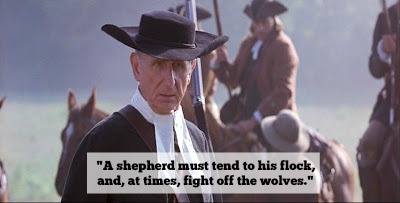
Fighting Off the Wolves

12974352_1075682862478482_4420640709694072913_n

I love pastors. I really do. As a minister of music’s wife, church member, and through involvement in other ministries, I’ve known a lot of them. They have a tough job that most of us wouldn’t take on in a million years. I pray for and encourage my own pastor and my pastor buddies regularly, and try to remind y’all to do the same from time to time. All this to say, I’m not a preacher-basher. Far from it.

But sometimes there’s a bit of a veering in a dangerous direction, like a vehicle heading towards the center line, among (some, not all) pastors who are momentarily distracted and might need a friendly “Hey, did you see that truck we’re about to crash into?” from their terrified, front seat passenger.

Color me terrified.

There are pastors out there who treat false teachers with kid gloves. They refuse to label anyone as a false teacher, or only vaguely allude to certain false teachers without naming names. I’d like to encourage those pastors to pull the steering wheel to the right and call a spade a spade. Yes, they need to use the label of false teacher soberly, sadly, and only after making sure, with hard evidence, that it is warranted, but enough with grown men of God tiptoeing around under the guise of “we don’t know what’s in that person’s heart” or “I’m afraid to be painted with the ‘mean old discernment blogger’ brush.”

Enough with grown men of God tiptoeing around under the guise of “we don’t know what’s in that person’s heart” or “I’m afraid to be painted with the ‘mean old discernment blogger’ brush.”

The Bible doesn’t say anywhere that a pastor shouldn’t call someone a false teacher and warn the flock about him just because the pastor doesn’t know for sure what’s in the person’s heart or because he’s afraid of what others might think. We are all to look at their words and their behavior and judge (that’s right, I said “judge“) whether or not they are teaching what accords with sound doctrine. And if they’re not, they need to be denounced. Not in a wild-eyed, foaming at the mouth, wingnut way, but certainly loudly and decisively as a mature man of God.

We never see Paul or Jesus or Peter or Jude or any other godly man in the Bible being over-cautious about firmly calling out those who had proved themselves to be false teachers.

We never see Paul or Jesus or Peter or Jude or any other godly man in the Bible being over-cautious about firmly calling out those who had proved themselves to be false teachers.

“Beware of the leaven of the Pharisees and Sadducees.” – Jesus, Matthew 16:11

“Woe to you, Scribes and Pharisees, hypocrites…blind guides…fools…serpents…brood of vipers.” – Jesus, Matthew 23

“For such men are false apostles, deceitful workmen, disguising themselves as apostles of Christ. And no wonder, for even Satan disguises himself as an angel of light. So it is no surprise if his servants, also, disguise themselves as servants of righteousness. Their end will correspond to their deeds.” – Paul, 2 Corinthians 11:13-15

“For certain people have crept in unnoticed who long ago were designated for this condemnation, ungodly people, who pervert the grace of our God into sensuality and deny our only Master and Lord, Jesus Christ.” – Jude, Jude 4

“They count it pleasure to revel in the daytime. They are blots and blemishes, reveling in their deceptions, while they feast with you. They have eyes full of adultery, insatiable for sin. They entice unsteady souls. They have hearts trained in greed. Accursed children! Forsaking the right way, they have gone astray.” – Peter, 2 Peter 2:13b-15a

“But even if we or an angel from heaven should preach to you a gospel contrary to the one we preached to you, let him be accursed. As we have said before, so now I say again: If anyone is preaching to you a gospel contrary to the one you received, let him be accursed.”
Paul, Galatians 1:8-9

Would pastors today be wise to use this same kind of verbiage? Maybe. Maybe not. These godly men spoke and wrote in a way that was appropriate for their time, culture, and context. Our time, culture, and context are different and may call for a different approach. But the point is, none of them were afraid to speak the truth boldly about false teachers in order to protect the sheep God had entrusted to them. And we sheep today desperately need courageous shepherds who will do the same.

Pastors, if you speak out against false teachers, there are people who will get mad at you. It’s unavoidable. But there are others who know the truth and will be cheering you on and supporting you. And there are still others you will turn back from false doctrine who will learn the truth of God’s word and love you for warning them. And their souls are worth any risk or trial.

Be encouraged, dear pastors. Be strong in the Lord. Be faithful to Him. You can do this!

Be encouraged, dear pastors. Be strong in the Lord. Be faithful to Him. You can do this!

Remember the words of your brother and fellow laborer Paul, who, after condemning false teachers in Galatians 1:6-9, may have anticipated the same backlash you might receive:

For am I now seeking the approval of man, or of God? Or am I trying to please man? If I were still trying to please man, I would not be a servant of Christ.
Galatians 1:10


Photo and quote courtesy of The Patriot. ©2000, Columbia Pictures, Inc.
Mailbag

The Mailbag: How can we get women to WANT to come to Bible study?


My church is blessed to have two strong ladies’ Bible study leaders – one during the week for those who are available and one on Saturday for those who cannot attend during the week – who have the discernment to choose biblical content, study, and lead scripturally sound discussion. My prayer is that more women in my church would have the desire to attend these Bible studies, not only learning and growing spiritually but also for fellowship with each other and drawing closer to each other. If you have any ideas for actually getting women to want to study God’s word with other women I would love to hear them.

Been there, done that. I once taught a women’s Bible study class that consistently had only one to two women in it. I think our maximum attendance was one day when we had a whopping…four. The other women of the church chose to attend the “fluffier” classes that were being offered, and many just didn’t attend at all.

There could be any number of spiritual and practical reasons women aren’t attending your (or another reader’s) Bible studies.

☞ People are extraordinarily busy these days, especially women. Jam-packed schedules are probably the main reason for your low attendance. I’ll be honest, if I worked a full time job outside the home as well as taking care of my home and family, I’d be very unlikely to attend any Bible study class besides Sunday School. I’d want to devote that time to my family or to rest.

☞ Perhaps there are more false converts in your church than you’re aware of. People who aren’t saved are not new creatures in Christ and are devoid of the Holy Spirit, so they have no organic desire to spend time in God’s Word or with God’s people beyond the minimal amount required to fulfill whatever fleshly agenda brings them to church in the first place. There’s no human way to give them the desire to attend Bible study. Only God can accomplish that by saving them.

☞ If you go to a doctrinally sound church, your ladies may feel like they get plenty of good Bible study already and what they really want is unstructured fellowship time. See my article All Word and No Play: The Importance of Fun and Fellowship in the Doctrinally Sound Church.

☞ There may be something about the teaching style or the materials, that – even though they’re doctrinally sound – are rubbing people the wrong way. Maybe the teacher lectures and your ladies want more discussion. Maybe she talks over their heads in a very academic style. Maybe the materials are too expensive or there’s something about the book that is off-putting. Maybe your church only does “canned” (workbook, DVD, etc.) studies and what your ladies really want is to study books of the Bible, or vice versa.

☞ Hopefully this isn’t the case, but if there are factions in your church, someone could be surreptitiously – out of jealousy, sowing discord, or other reasons – discouraging the women from attending.

☞ The logistics of the class might be inconvenient for some. Do you offer child care for those who need it? Is the class held on a convenient day of the week and time of day? Is your church and the room you’re using for the class accessible to women with disabilities? 

These are just a few things that came to mind. Some of them may have to do with the class or the teacher. Others have more to do with the women themselves. What can you do to encourage more women to attend?

✔ Pray – and be ready to be in it for the long haul – that God will change hearts and give the women of your church a greater desire for His Word. In the end, God is the only One who knows all of the reasons women aren’t attending Bible study, and He is the only One with the power to transform them and overcome those reasons. Pray fervently and trust Him.

✔ If you’re truly stumped as to why women aren’t attending Bible study, ask them. You could do so face to face, individually, or, with your pastor’s permission, send out an anonymous survey (you’ll probably get a better response this way) asking things like, “Is the lecture style teaching we offer a fit for you?” or “Would you be able to attend if we offered child care?”, and also leave space to write in comments. (Naturally, you would not be asking things like whether or not you should water down the theology of the class, but if you can remove a practical barrier to attendance, why wouldn’t you?)

✔ Ask your pastor for advice. He knows the heartbeat of your congregation and will probably have some valuable counsel and suggestions.

✔ Be willing to try something different in the class. If you’ve only ever done workbook studies, do a study of a book of the Bible. Maybe a Saturday class isn’t convenient for a lot of people but a Sunday class would be. “I Shall Not be Moved” is for the theology of the class, not the logistics of it.

✔ Be willing to try something different than the class. There’s more than one way to skin a cat, and there’s more than one way to do discipleship. Bible studies are awesome, but how about taking a semester off and doing some one on one Titus 2 mentoring instead? Or some unstructured “let’s just sit and chat” fellowships or ladies’ night outs? Or a prayer group? Or some outreach projects? If your ladies are already getting good preaching in the worship service and good teaching in Sunday School, it’s OK to try a discipleship method other than a Bible study class.

✔ Are you doing enough publicity well in advance of the class? You should start a minimum of 3-4 weeks before the class begins, and you should blitz with a variety of media: verbal announcements in multiple worship services, announce it in the church bulletin, newsletter, web site, and social media pages, have Sunday School classes announce it, send out a church-wide e-mail, put up fliers around the church, and encourage the ladies who are already attending the classes to personally, individually invite other women.

✔ If your pastor is OK with it, consider having one of the women who has been a faithful member of the class give a testimony (during the worship service, in the church newsletter, or wherever appropriate) about how the class has helped and blessed her, the relationships she has built through the class, etc.

In the end, the old saying is true: “You can lead a horse to water, but you can’t make him drink.” You may bend over backwards and pray your kneecaps off and you may still have a small attendance. That’s OK. That’s on God. All you are responsible for is to pray, trust and obey Him, and be faithful to Him where He has planted you. God doesn’t measure your success by how many women attend, but by your faithfulness to Him.


If you have a question about: a Bible passage, an aspect of theology, a current issue in Christianity, or how to biblically handle a family, life, or church situation, comment below (I’ll hold all questions in queue {unpublished} for a future edition of The Mailbag) or send me an e-mail or private message. If your question is chosen for publication, your anonymity will be protected.

Book Reviews, Guest Posts

Guest Post: A Review of Jennie Allen’s “Anything: The Prayer that Unlocked My God and My Soul”

If your theology pretty much matches up with mine (as outlined in the “Welcome” and “Statement of Faith” tabs) and you’d like to contribute a guest post, drop me an e-mail at MichelleLesley1@yahoo.com,
and let’s chat about it.

A Review of Jennie Allen’s
Anything: The Prayer that Unlocked My God and My Soul

by Carol Coppens

Many years ago, when I was in the 6th grade, I was taught that when doing a book report, even if I didn’t like the book, I should try to say something good about it. That was fine teaching at the time and I think it has made me a better writer, this trying to see both sides. I’m not in school any longer though and these days, I’m bound less by trying to see the good and more to pointing out the multiple errors of books like Anything. If you’re a Jennie Allen fan, you won’t like what I have to say but I can’t stay silent.

Anything is a poorly written book. It’s an irreverent book. It’s a book that will never help any woman discover the totality of God’s plan of redemption, His sovereignty, His wrath which rests on the unregenerate, nor His holy fury at those who presume to speak for Him. This is not a book that will help you to dive deep into the character of God and to know Him better but instead, Jennie’s book is a tedious, self absorbed, experience driven, hermeneutically unsound, over-stepper of scriptural boundaries, mish-mash of emotionalism and repetitive “wrecked-ness”. Here are some of the specific faults that I see.

Even in these days of relativity, where the only rule that seems to apply is that there are to be no rules at all, there are still a few that are necessary. One of the rules of basic English grammar is, if you’re going to use an adjective (remember that word from English class?) you’d better do your homework and find out exactly what that word means, in the context in which you plan to use it.

The word reckless is used multiple times in this book. Jennie describes childlike faith as living “simply, recklessly.” On pg. 97, she writes that she and her husband, “now lay in the hands of a reckless, invisible God.” Page 143 tells of her realization that people are going to think they are foolish for adopting, saying, “that goes with almost any act of recklessness, even reckless love.” Maybe she thought the word sounded powerful and kind of daring when she penned it but the definition of reckless is “without thinking or caring about the consequences of an action.”

Describe human beings as reckless as much as you like, because we all certainly can be, but when a writer uses the word reckless to describe almighty God, that person has crossed over into blasphemy and I would shudder to think that I had written such a thing about the God I will eventually have to give an account to. Some of the other words she uses to describe God are, “unsafe”, “wildly unpredictable”, “radical”, “ridiculously radical” and she also writes that “God is still not very practical.” Exactly where are the chapters and verses for these descriptions of God, Jennie?

In many places, Jennie adds words to Scripture that are not there. Space hinders me from listing them all, so one example will have to do. On page 184, she speaks for Jesus and writes, “as if he were letting us in on the secret, Jesus whispered back to his father, this will all be worth it. Wait till they are with us and see our glory. Just wait till all of this work and suffering and pouring out is over and we are in heaven together forever. Just wait.”

This conversation is, of course, recorded nowhere in Scripture but the words “do not exceed what is written”, definitely are. Jennie would do well to read and meditate deeply on that verse in 1 Corinthians 4. When we imagine that God is speaking to us apart from Scripture, we can easily be led to enter very dangerous territory.

An example of her flawed interpretations of Scripture is on page 37. Jennie quotes Hosea 2:14-17 but then she blatantly misinterprets God’s promise to restore Israel to Himself, as a “dramatic metaphor” about those of us who chase other loves. I say, leave Biblical interpreting to those who know about these things, Jennie. If you think that you’ve been given a new interpretation of these verses that no other person has ever had before, you’re just plain wrong. God was promising restoration to Israel in these verses and nothing else.

She also does emotional and hermeneutical callisthenics with God’s call to Abraham to sacrifice Isaac (pgs. 69-70). Jennie’s theory is that God was punishing Abraham for his overwhelming love for his son that, according to her, had usurped God as Abraham’s first love. If she had thoughtfully studied these Bible passages or, if she truly understood God’s plan to ultimately save His elect, she would know that the sacrifice of Isaac and the ram God substituted for the boy, was a shadow of God’s own sacrifice of His son Jesus Christ on the cross. There is no excuse for such lazy interpretation of the sacred Scriptures. In these current times, the proliferation of false and misleading doctrine abounds. Having the correct interpretation of Scripture is of paramount importance because our eternal futures depend on understanding correctly, what God is saying to us.

On page 102, Jennie asks “so how do we actually let God change us?” Finally, I thought, a good solid question after having read page after page of drivel. Can an explanation of justification and sanctification be far behind? Sadly, they weren’t even hinted at and she goes on to tell a rather horrific (as a mother I cringed) story of telling her two oldest children to climb up a cliff and jump off! For Jennie, jumping is the key. Either “jump or crawl down” and “the more we jump and see our God come alive around us, the more we jump without fear – and the bigger the cliffs get”, she says. As the Peanuts character Charlie Brown was known to exclaim, good grief!

In the final analysis, the biggest problem I had with this book (and I slogged through it twice) was my knowing that, from the time of her “vision” in the night that Jennie feels was definitely from God, the wheels of the IF: Gatherings began to turn. For those readers who still might be unfamiliar with IF, they are para-church organization, begun by Jennie, that has no scriptural basis or authority. The gatherings happen outside of the local churches and their oversight, supposedly to accomplish something, ie. discipling women, that only churches are charged to do, in Scripture. In this case, the ends do not justify the means.

Because all the women involved in IF cannot possibly be born again, spirit filled, doctrinally sound, mature women with the spiritual gift of teaching, the possibilities for unscriptural philosophies and practices entering in to local churches, families and society at large, are enormous. I see this movement as no less than a calculated move of Satan against women, a frontal attack on the sufficiency of Scripture and a throwing off of the direct commands of God, in His Word, for both married and single women. Jennie Allen might believe that her “call” to begin IF was of God, but I do not.

So, at the end of the day, would I recommend this book to anyone? Absolutely not! What I do recommend instead is simply this – read your Bible, always praying that God will illuminate your mind with His truth. Get involved with a biblically solid church and pray for God to open doors for you to serve there. There is no substitute for a godly, biblically saturated, discerning Christian woman and one only gets that way by hard work and study. The Scriptures do not open themselves to the slothful. When a woman is mature in Christ and can properly discern truth from error then and only then it will come to pass that the writings of the Jennie Allens of this world will be seen for what they truly are, rubbish.

With a grateful nod to my 6th grade English teacher, I suppose I could say one good thing about this book and that is, that it wasn’t any longer.


Carol and her husband Mike live in a small town, on the shores of Lake Erie, in Ontario, Canada. She was 49 years old when Christ called her to be His disciple. A love for the pure truth of God’s Word fuels her passion to expose false teaching and especially that kind which has women as its primary target.


ALTHOUGH I DO MY BEST TO THOROUGHLY VET THE THEOLOGY OF THose WHO SUBMIT GUEST POSTS, IT IS ALWAYS POSSIBLE FOR THINGS TO SLIP THROUGH THE CRACKS. PLEASE MAKE SURE ANYone YOU FOLLOW, INCLUDING ME, RIGHTLY AND FAITHFULLY HANDLES GOD’S WORD AND HOLDS TO SOUND BIBLICAL DOCTRINE.
Discernment, False Doctrine, False Teachers, New Apostolic Reformation, Podcast Appearances

Throwback Thursday ~ Echo Zoe Radio Guest Appearance: The New Apostolic Reformation

Originally published March 14, 2017


logo

Last week, I once again had the pleasure of sitting down and chatting with my friend Andy Olson as his guest on the Echo Zoe Radio podcast.

Click here to listen in

as we talk about the New Apostolic Reformation– their beliefs, and how NAR false doctrine can creep into your church. And don’t forget to subscribe to the podcast and follow Echo Zoe on Facebook and Twitter!


Got a podcast of your own or have a podcasting friend who needs a guest? Click the “Speaking Engagements” tab at the top of this page, drop me an e-mail, and let’s chat!