
Mailbag

The Mailbag: When is OMG a 3CV?

Originally published February 11, 2019

Is it wrong for people to exclaim โ€œOh my G-dโ€ in various situations? I have heard it said casually as well as in response to a tragedy or cry for protection. I would assume that it could be taking the Lordโ€™s name in vain in certain circumstances (e.g. Oh my G–, look at that cute kitten!) but not in others. How can I discern when it is used correctly in ambiguous situations?

That’s a great question since this phrase and its initials (OMG) are used so frequently in real life, on TV, on social media, in books… it’s everywhere! Bless you for wanting your speech to honor the Lord!

A couple of explanatory points before I give my answer:

I’m including the initials OMG because when people see or hear those initials, they understand it to mean “Oh my G–!”. I’ve heard a few Christians say that when they use the letters OMG, in their minds, the “G” stands for gosh or goodness. That’s great, but that’s not what the overwhelming majority of other people think when they see or hear those letters, and they can’t read your mind, so that’s not what it means to them.

The third Commandment (taking God’s name in vain) is not limited to this phrase and its initials. There are many ways to misuse God’s name: profanity or offhand phrases (ex: “Good L-rd!”) that include any of the Trinity’s names, taking a vow or oath in God’s name flippantly and/or not keeping it, misrepresenting God or His Word to others, etc. However, the reader is asking only about this particular phrase, so I will simply answer the question she asked.

The third Commandment is:

You shall not take the name of the Lord your God in vain, for the Lord will not hold him guiltless who takes his name in vain.
Exodus 20:7

Let’s start with a fast and dirty rule of thumb in case that’s what you need: in today’s society in general, “Oh my G–!” and OMG are virtually always used in a way that takes God’s name in vain.

There are only a couple of instances I can think of in which using this phrase is not taking God’s name in vain, and I rarely even hear them in church, let alone on the street, on TV, etc. (Readers, if you can think of others, please comment and let us know.)

There are several verses of Scripture in various books of the Bible that contain the phrase, “O my God”. (I found it interesting that Nehemiah was fond of that phrase, as were the psalmists. Those two books contain the most verses with that phrase.) Here are a couple of examples:

Remember for my good, O my God, all that I have done for this people.
Nehemiah 5:19

O my God, in you I trust; let me not be put to shame; let not my enemies exult over me.
Psalm 25:2

If you’ll examine all of these verses you might notice a few things about the way this phrase is used in Scripture that sets it apart from the way this phrase is normally used today.

First, this phrase is used to address God directly. The people saying or writing this phrase in Scripture are talking to God, not using God’s name as an exclamatory (like we would use the words Wow! or Cool!) without giving Him any thought at all.

Second, this phrase is used reverently and worshipfully. It is used to honor God and the fullness of His nature and character, not, as you mentioned, to exclaim over kittens or some other paltry earthly happening.

Third, this phrase is used in the context of prayer, much the same way we would reverently address God in prayer with phrases like “Dear Lord” or “Heavenly Father”.

(One more thing that might be of interest to my fellow grammar nerds: When you see the phrase in Scripture, it always starts with “O”. When you see it written in the common exclamatory usage, it always starts with “Oh”. That’s not an accident. It’s meant to set apart the two discrete usages. Read more here.)

So the first scenario I can think of in which saying “O my God” would not be taking God’s name in vain would be things like: if you are quoting one of these passages, singing a worship song that either quotes one of these passages or uses the phrase in the same way in which it’s used in these passages, or if your pastor uses this phrase in his sermon or prayer in the same way in which it is used in Scripture.

The second scenario is similar: If you feel comfortable using this phrase in your own private prayer time by using it in the same way in which it’s used in Scripture – speaking directly, reverently, and worshipfully to God in prayer – there’s nothing sinful or unbiblical about that.

I would discourage the use of this phrase in public prayer, though, because it could confuse the people who hear it, causing them to think you’re breaking the third Commandment even if you aren’t. Additionally, if they hear you using that phrase in prayer with no explanation they may think you’re using it in the common (OMG!) way and assume that since you’re using it in prayer it’s OK for them to use that phrase in any situation. Sadly, most people are probably not familiar with the proper, reverent way this beautiful phrase is used in Scripture.

For more on this topic, check out Cussing, Profanity, and OMG on A Word Fitly Spoken.


If you have a question about: a Bible passage, an aspect of theology, a current issue in Christianity, or how to biblically handle a family, life, or church situation, comment below (Iโ€™ll hold all questions in queue {unpublished} for a future edition of The Mailbag) or send me an e-mail or private message. If your question is chosen for publication, your anonymity will be protected.
Mailbag

The Mailbag: Potpourri (Female Bible authors?… Handling “OMG” at work… Alone in my discernment)

Welcome to another โ€œpotpourriโ€ edition of The Mailbag, where I give short(er) answers to several questions rather than a long answer to one question.

I like to take the opportunity in these potpourri editions to let new readers know about my comments/e-mail/messages policy. Iโ€™m not able to respond individually to most e-mails and messages, so here are some helpful hints for getting your questions answered more quickly. Remember, the search bar (at the very bottom of each page) can be a helpful tool!

Or maybe I answered your question already? Check out my article The Mailbag: Top 10 FAQs to see if your question has been answered and to get some helpful resources.


Did any women write any part of the Bible?

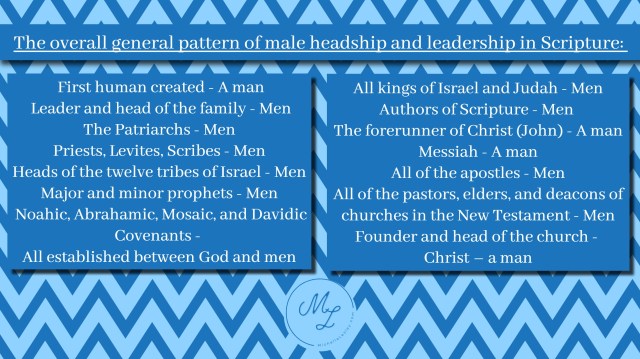
Nope. No women authored any of the books of the Bible. The main reason for this is God’s established pattern of male headship and leadership. (Additionally, women were largely illiterate at that time in history.) Because of this, we have no reason to believe that any parts or passages of any books of the Bible were written by women.

We have passages like the song of Miriam, the song of Deborah and Barak, and the Magnificat, but these wouldn’t be considered “writing part of the Bible”. They were almost certainly spontaneous songs, which the male writers of those books recorded in Scripture.

Who were the authors of the books of the Bible? at GotQuestions


If you are at work and others are constantly saying “OH MY G-D!” would you say something? It hurts my heart! It has become such a common thing, making God so disrespected.

I get it. I physically wince every time I hear it, myself.

Since this is your work environment rather than your church or a situation with family or friends, I would suggest getting some counsel from your pastor or a spiritually mature friend about how to handle this situation. It really depends on the dynamics of your workplace and your relationship with your boss and co-workers.

If you’re good friends with the people who are doing this, you may be able to take them aside and gently request that they try not to say this around you. If you have a more distant relationship with them, they’re probably not going to take too kindly to your request, and it could strain the already tenuous relationship you have with them, creating a work environment that’s even more uncomfortable for you.

Bear in mind that the most likely reason they’re saying this is because they’re lost. Lost people do lost people things. They’re not concerned about obeying Scripture, and they’ll be offended and resentful if you ask them to. If, after talking to your pastor about the situation, you feel it would be best not to speak up, perhaps you could use every occasion when they say this as a reminder to say a quick prayer for them and their salvation.

Listen to Cussing, Profanity, and OMG at A Word Fitly Spoken


Since I have been following your ministry, I have been trying to be a Berean in what I hear, read, and watch. But the more discerning I become, the more alone I feel I am!! Friends that I have for years thought were solid in their faith, love The Message, Jesus Calling, The Chosen, go to Bible Studies by either false teachers or at the very least not recommended teachers, and dismiss me when I give them resources that speak the truth about these things!! What in the world???!!

My question is, could I be too far discerning? Should I be more open to hear what they have to say? Should I too be willing to read The Message or watch The Chosen? I am really feeling alone and like Iโ€™m missing something! Whatโ€™s wrong with me Michelle?!!

Thank you for listening to me. I wonder if others have felt this way too.

Nothing is wrong with you, honey. Everything is right with you. You’re growing in maturity in Christ, in discernment, and in your knowledge of the Word. And one of the “growing pains” we go through as Christ sanctifies us is the realization that when Jesus said…

Enter by the narrow gate. For the gate is wide and the way is easy that leads to destruction, and those who enter by it are many. For the gate is narrow and the way is hard that leads to life, and those who find it are few.

Matthew 7:13-14

…He meant it. And He meant it far more than we realized the first time we read that passage. Few find the narrow gate. Some of the people we thought – due to our own lack of spiritual maturity – were Christians, suddenly aren’t. We just didn’t know it before.

This is, of course, not to say that anyone who’s ever watched an episode of The Chosen is on the express train to Hell, or that thinking Jesus Calling is awesome right now necessarily means you’re a false convert.

Remember, every genuinely born again person is being sanctified by Christ. And just because you’re not at my level of discernment yet doesn’t mean you’re not saved. And just because I’m not at your level of patience yet doesn’t mean I’m not saved. None of us are at Christ’s level of any of those things, and we won’t be, this side of Glory. God is working on each of us, at His own pace, in the area(s) He sees fit, at this moment in time.

Rather than looking at the trees of someone’s life, it can be more helpful to zoom out and look at the forest. Is she on a general trajectory of growing more Christlike, more holy, more obedient, more understanding of the Word? Or, over a substantial period of time, is she on a general trajectory of increasing disobedience to Scripture, decreasing faithfulness to the church, a worldview that’s getting less and less biblical? It’s a more accurate barometer of someone’s overall spiritual state than whether she’s spent the last couple of weeks going gaga over The Message.

Could you be too discerning? No. That’s like asking if you could be too loving, too peaceful, too gifted at teaching, or too gifted at serving.

Should you be more open to hear what they have to say? No. That is, if by “open” you mean “Should I consider doing or believing things that conflict with Scripture?”. Of course not.

But being a good listener when your friend is going on and on about the new Beth Moore study she’s attending can help a lot, because it can help you to ask her good questions. Like, “Wow, I never heard that before! Where does Scripture say that?” or “Interesting! Could we look at that passage in context together?” And the same goes for reading that heretical book or watching that blasphemous movie or TV show. If you’re mature and discerning enough not to be swayed by it, you can use what you observe to start a good discussion and teach her what the Bible really says. So yes, being more open to listening and understanding is much more valuable than the knee jerk NOOOOOOOO!!! STOPPPPPP!!! reaction we discernment-world folks can be tempted to.

Have others felt this way too? Yep. You’re looking at one. Most people with even moderate discernment feel this way at least occasionally. And I can’t tell you how many emails I’ve received from women grieved over the fact that they’re “the only discerning person in my church!”.

It’s no fun. It can be lonely. You might even need to change churches. But you’re in good company with the rest of us discernment weirdos out here, and you’re always in good company with Jesus.


If you have a question about: a Bible passage, an aspect of theology, a current issue in Christianity, or how to biblically handle a family, life, or church situation, comment below (Iโ€™ll hold all questions in queue {unpublished} for a future edition of The Mailbag) or send me an e-mail or private message. If your question is chosen for publication, your anonymity will be protected.
Sin

Throwback Thursday ~ 9 Things that Are Still Sins Whether We Agree or Not

Originally published June 19, 20159 still sins


I do it all the time, Mother, and I’ve decided something-
it’s not a sin.

I heard this line several years ago on a popular sitcom, spoken by an adult daughter to her Christian mother about a behavior the Bible unambiguously calls a sin. I mean, it’s right smack dab in the middle of the Big 10; “thou shalt not” and everything.

It’s one thing to say, “I know it’s a sin, but I don’t care. I’m going to do it anyway,” but how depraved is the world when they think they – in God’s place – are the ones who get to define what sin is? And what’s even worse is that the church has begun to adopt this audacious depravity as well, whether approving of sin by fiat or by simply ignoring God’s word and letting sin slide without rebuke.

When it comes to what’s a sin and what’s not, God made up His mind a long time ago. And He’s not changing it, regardless of what you or I or Joe Politician or Jane Celebrity might think. Maybe we all need a remedial course in hamartiology, so let’s start with the basics. These things are all still sins whether the world and the church agree with God or not:

1. Homosexuality

Let’s just get it out of the way right up front. I don’t care how many celebrity “pastors” and “Christian” authors twist God’s word to say otherwise, or how many people declare themselves to be (unrepentant, practicing) “gay Christians,” or how many homosexuals declare that God made them that way, God’s word is clear: homosexual lust and behavior are sins.

2. Abortion

Abortion is the taking of an innocent human life. We don’t murder people because they’re small or sick or inconvenient or will hinder our sucess. God didn’t say, “You shall not murder, except when…” He said, “You shall not murder.” Period.

3. Extra-Marital (Heterosexual) Sex

Adultery, fornication, whatever form it might take, if you’re not legally married to the person you’re engaging in sexual activity – up to and including actual intercourse – with, you’re sinning.

4. Cohabitation

See #3. And don’t try to whitewash it by saying you’re living together but not sleeping together. A) The Bible says we’re to flee temptation, not move in with it, and B) we’re supposed to avoid every form of evil, even the appearance of it. If you call yourself a Christian and you’re shacking up, you’re living in sin (that’s why they call it “living in sin”). Repent and move out or marry up.

5. Divorce

Yep, still a sin, except in two cases: unfaithfulness or an unsaved spouse leaving a saved spouse. In those two cases the spouse who was wronged is not sinning and is free to marry again.

6. Swearing

The air is saturated with it. Foul language coming from our TVs, music, movies, social media, and the people we’re around all day. But expletives have no place in the vocabulary of a Christian. Is your potty mouth on Saturday the same one you praise God with on Sunday?

7. Taking God’s Name in Vain

It’s gotten to the point where we think so little of casually punctuating our sentences with, “Oh my G-d,” ย or using the name of Jesus as an exclamation that pastors are even doing so from the pulpit these days. God’s name is high and holy and should be spoken only reverently and worshipfully. How can we look people in the eye and call them to repentance and faith in a Person whose name we use as a cuss word?

8. Gluttony

We have almost completely amputated gluttony from the spiritual realm by cordoning it off as merely a physical or medical issue. We’ve renamed it “overeating,” but that doesn’t change the fact that it’s a sin. God created good food for us to enjoy, but just as with all the other good gifts He gives us, He expects us to exercise Spirit-enabled self control when we receive it.

9. Female Usurpation

God makes it abundantly clear in His word that women are not to instruct men in the Scriptures or hold authority over them in the church. Women sin when they pastor churches, preach sermons in church, teach men in Sunday School classes, and hold other positions of authority over men in the church. Men, however, bear the primarily responsibility for this when they sin by failing to rebuke usurping women, or when women feel they have no other choice but to take on male responsibilities in the church because men are shirking their own duties before God.


We don’t get to decide what sin is. That’s God’s job. And all of us – whether we’ve committed one of these nine sins or not – are guilty of sinning against Him. That’s the bad news.

But, in Christianity, we never give the bad news without following it up with the good news. And, oh what wonderfully good news it is: forgiveness. Jesus paid for our sin at Calvary so that if we will only turn from it and trust Him, He will forgive us for all nine of these sins and countless others.

If we confess our sins, he is faithful and just to forgive us our sins and to cleanse us from all unrighteousness.
1 John 1:9

Mailbag

The Mailbag: When is OMG a 3CV?

Is it wrong for people to exclaim โ€œOh my G-dโ€ in various situations? I have heard it said casually as well as in response to a tragedy or cry for protection. I would assume that it could be taking the Lordโ€™s name in vain in certain circumstances (e.g. Oh my G–, look at that cute kitten!) but not in others. How can I discern when it is used correctly in ambiguous situations?

That’s a great question since this phrase and its initials (OMG) are used so frequently in real life, on TV, on social media, in books… it’s everywhere! Bless you for wanting your speech to honor the Lord!

A couple of explanatory points before I give my answer:

I’m including the initials OMG because when people see or hear those initials, they understand it to mean “Oh my G–!”. I’ve heard a few Christians say that when they use the letters OMG, in their minds, the “G” stands for gosh or goodness. That’s great, but that’s not what the overwhelming majority of other people think when they see or hear those letters, and they can’t read your mind, so that’s not what it means to them.

The third Commandment (taking God’s name in vain) is notย limited to this phrase and its initials. There are many ways to misuse God’s name: profanity or offhand phrases (ex: “Good L-rd!”) that include any of the Trinity’s names, taking a vow or oath in God’s name flippantly and/or not keeping it, misrepresenting God or His Word to others, etc. However, the reader is asking only about this particular phrase, so I will simply answer the question she asked.

The third Commandment is:

You shall not take the name of the Lord your God in vain, for the Lord will not hold him guiltless who takes his name in vain.
Exodus 20:7

Let’s start with a fast and dirty rule of thumb in case that’s what you need: in today’s society in general, “Oh my G–!” and OMG are virtuallyย always used in a way that takes God’s name in vain.

There are only a couple of instances I can think of in which using this phrase is not taking God’s name in vain, and I rarely even hear them in church, let alone on the street, on TV, etc. (Readers, if you can think of others, please comment and let us know.)

There are several verses of Scripture in various books of the Bible that contain the phrase, “O my God”. (I found it interesting that Nehemiah was fond of that phrase, as were the psalmists. Those two books contain the most verses with that phrase.) Here are a couple of examples:

Remember for my good, O my God, all that I have done for this people.
Nehemiah 5:19

O my God, in you I trust; let me not be put to shame; let not my enemies exult over me.
Psalm 25:2

If you’ll examine all of these verses you might notice a few things about the way this phrase is used in Scripture that sets it apart from the way this phrase is normally used today.

First, this phrase is used to address God directly. The people saying or writing this phrase in Scripture are talking to God, not using God’s name as an exclamatory (like we would use the words Wow! or Cool!) without giving Him any thought at all.

Second, this phrase is used reverently and worshipfully. It is used to honor God and the fullness of His nature and character, not, as you mentioned, to exclaim over kittens or some other paltry earthly happening.

Third, this phrase is used in the context of prayer, much the same way we would reverently address God in prayer with phrases like “Dear Lord” or “Heavenly Father”.

(One more thing that might be of interest to my fellow grammar nerds: When you see the phrase in Scripture, it always starts with “O”. When you see it written in the common exclamatory usage, it always starts with “Oh”. That’s not an accident. It’s meant to set apart the two discrete usages. Read more here.)

So the first scenario I can think of in which saying “O my God” would not be taking God’s name in vain would be things like: if you are quoting one of these passages, singing a worship song that either quotes one of these passages or uses the phrase in the same way in which it’s used in these passages, or if your pastor uses this phrase in his sermon or prayer in the same way in which it is used in Scripture.

The second scenario is similar: If you feel comfortable using this phrase in your own private prayer time by using it in the same way in which it’s used in Scripture – speaking directly, reverently, and worshipfully to God in prayer – there’s nothing sinful or unbiblical about that.

I would discourage the use of this phrase in public prayer, though, because it could confuse the people who hear it, causing them to think you’re breaking the third Commandment even if you aren’t. Additionally, if they hear you using that phrase in prayer with no explanation they may think you’re using it in the common (OMG!) way and assume that since you’re using it in prayer it’s OK for them to use that phrase in any situation. Sadly, most people are probably not familiar with the proper, reverent way this beautiful phrase is used in Scripture.

For more on this topic, check out Cussing, Profanity, and OMG on A Word Fitly Spoken.


If you have a question about: a Bible passage, an aspect of theology, a current issue in Christianity, or how to biblically handle a family, life, or church situation, comment below (Iโ€™ll hold all questions in queue {unpublished} for a future edition of The Mailbag) or send me an e-mail or private message. If your question is chosen for publication, your anonymity will be protected.

Sin, Throwback Thursday

Throwback Thursday ~ 9 Things that Are Still Sins Whether We Agree or Not

Originally published June 19, 20159 still sins


I do it all the time, Mother, and I’ve decided something-
it’s not a sin.

I heard this line several years ago on a popular sitcom, spoken by an adult daughter to her Christian mother about a behavior the Bible unambiguously calls a sin. I mean, it’s right smack dab in the middle of the Big 10; “thou shalt not” and everything.

It’s one thing to say, “I know it’s a sin, but I don’t care. I’m going to do it anyway,” but how depraved is the world when they think they – in God’s place – are the ones who get to define what sin is? And what’s even worse is that the church has begun to adopt this audacious depravity as well, whether approving of sin by fiat or by simply ignoring God’s word and letting sin slide without rebuke.

When it comes to what’s a sin and what’s not, God made up His mind a long time ago. And He’s not changing it, regardless of what you or I or Joe Politician or Jane Celebrity might think. Maybe we all need a remedial course in hamartiology, so let’s start with the basics. These things are all still sins whether the world and the church agree with God or not:

1. Homosexuality

Let’s just get it out of the way right up front. I don’t care how many celebrity “pastors” and “Christian” authors twist God’s word to say otherwise, or how many people declare themselves to be (unrepentant, practicing) “gay Christians,” or how many homosexuals declare that God made them that way, God’s word is clear: homosexual lust and behavior are sins.

2. Abortion

Abortion is the taking of an innocent human life. We don’t murder people because they’re small or sick or inconvenient or will hinder our sucess. God didn’t say, “You shall not murder, except when…” He said, “You shall not murder.” Period.

3. Extra-Marital (Heterosexual) Sex

Adultery, fornication, whatever form it might take, if you’re not legally married to the person you’re engaging in sexual activity – up to and including actual intercourse – with, you’re sinning.

4. Cohabitation

See #3. And don’t try to whitewash it by saying you’re living together but not sleeping together. A) The Bible says we’re to flee temptation, not move in with it, and B) we’re supposed to avoid every form of evil, even the appearance of it. If you call yourself a Christian and you’re shacking up, you’re living in sin (that’s why they call it “living in sin”). Repent and move out or marry up.

5. Divorce

Yep, still a sin, except in two cases: unfaithfulness or an unsaved spouse leaving a saved spouse. In those two cases the spouse who was wronged is not sinning and is free to marry again.

6. Swearing

The air is saturated with it. Foul language coming from our TVs, music, movies, social media, and the people we’re around all day. But expletives have no place in the vocabulary of a Christian. Is your potty mouth on Saturday the same one you praise God with on Sunday?

7. Taking God’s Name in Vain

It’s gotten to the point where we think so little of casually punctuating our sentences with, “Oh my G-d,” ย or using the name of Jesus as an exclamation that pastors are even doing so from the pulpit these days. God’s name is high and holy and should be spoken only reverently and worshipfully. How can we look people in the eye and call them to repentance and faith in a Person whose name we use as a cuss word?

8. Gluttony

We have almost completely amputated gluttony from the spiritual realm by cordoning it off as merely a physical or medical issue. We’ve renamed it “overeating,” but that doesn’t change the fact that it’s a sin. God created good food for us to enjoy, but just as with all the other good gifts He gives us, He expects us to exercise Spirit-enabled self control when we receive it.

9. Female Usurpation

God makes it abundantly clear in His word that women are not to instruct men in the Scriptures or hold authority over them in the church. Women sin when they pastor churches, preach sermons in church, teach men in Sunday School classes, and hold other positions of authority over men in the church. Men, however, bear the primarily responsibility for this when they sin by failing to rebuke usurping women, or when women feel they have no other choice but to take on male responsibilities in the church because men are shirking their own duties before God.


We don’t get to decide what sin is. That’s God’s job. And all of us – whether we’ve committed one of these nine sins or not – are guilty of sinning against Him. That’s the bad news.

But, in Christianity, we never give the bad news without following it up with the good news. And, oh what wonderfully good news it is: forgiveness. Jesus paid for our sin at Calvary so that if we will only turn from it and trust Him, He will forgive us for all nine of these sins and countless others.

If we confess our sins, he is faithful and just to forgive us our sins and to cleanse us from all unrighteousness.
1 John 1:9