Mailbag

The Mailbag: Applying Twisted Scripture to Pseudo-“Christian” Events, Ideas, and Fads

The Asbury “revival”. Jesus Revolution. Bethel. The Enneagram. IF:Gathering...

Week after week, we see the ads, the social media posts, and the news stories of the latest, greatest “Christian” thing on the horizon.

Discerning Christians speak up in our churches, with our friends, and on our Facebook pages and rightly warn about the dangerous teachings and agendas these things push.

Other concerned Christians, genuinely fearing the “baby will be thrown out with the bathwater,” push back on those warnings. And sometimes, though they often have the best of intentions, they misapply Scripture or biblical principles to do so.

During the recent furor over the so-called Asbury “revival,” I saw, and was asked about, several of those misapplied Scriptures and principles employed in defense of the idea that we shouldn’t be so quick or so willing to publicly and confidently say something is not of God.

These Scriptures and principles could be applied to a myriad of things past and present, and will surely be employed again the next time a pseudo-“Christian” event, idea, or fad pops up, so let’s take a look at them and untangle them…

These Scriptures and principles will surely be employed again the next time a pseudo-“Christian” event, idea, or fad pops up, so let’s take a look at them and untangle themโ€ฆ


In response to doctrinally sound Christians decrying the Asbury event, one genuinely concerned lady asked:

What about Scripture that says “whoever is not against us is for us” in Mark 9:38-40? How do we apply this? Only God knows their heart, and Iโ€™m sure that people did come to know the Lord because of this.

There are several points in her question I’d like to address:

What about Scripture that says “whoever is not against us is for us” in Mark 9:38-40? How do we apply this?

John said to him, โ€œTeacher, we saw someone casting out demons in your name, and we tried to stop him, because he was not following us.โ€ But Jesus said, โ€œDo not stop him, for no one who does a mighty work in my name will be able soon afterward to speak evil of me. For the one who is not against us is for us.
Mark 9:38-40

Because we know that God’s Word never contradicts itself, and Jesus never contradicted Himself or Scripture during His earthly ministry, we have to understand passages like Mark 9:38-40 within the context of the entirety of the New Testament. In this case, we understand it in light of…

Not everyone who says to me, โ€˜Lord, Lord,โ€™ will enter the kingdom of heaven, but the one who does the will of my Father who is in heaven. On that day many will say to me, โ€˜Lord, Lord, did we not prophesy in your name, and cast out demons in your name, and do many mighty works in your name?โ€™ And then will I declare to them, โ€˜I never knew you; depart from me, you workers of lawlessness.โ€™
Matthew 7:21-23 (emphasis added)

โ€ฆand…

“Why do you call me โ€˜Lord, Lord,โ€™ and not do what I tell you?”
Luke 6:46 (emphasis added)

Notice Jesus is the speaker in all three of these passages. Again, Jesus did not contradict Himself during His earthly ministry.

We have to understand that there are a great many people out there who claim to be Christians and who, at first glance, look very much like Christians, but are not living in obedience to Christ, and/or are not teaching what accords with sound doctrine. Scripture calls those people liars and false teachers.

So when Jesus says in Mark 9:38-40 and other passages, that whoever is not against Him is for Him and vice versa, He’s defining “for Him” as someone who’s genuinely regenerated, obedient to Scripture, and teaching sound doctrine. Everybody else, regardless of what they might claim, is against Him according to Scripture.

You might think of it like this. When the disciples came to Jesus and said, “We tried to stop those guys because they aren’t part of our group,” and Jesus said, “Don’t. They’re still ‘with’ us,” it would have been similar to Him saying, “Don’t stop them. They’re doctrinally sound Presbyterians. We’re doctrinally sound Baptists. We preach the same gospel. We’re on the same team.”.

What He would not have been saying would have been something like, “It’s OK that they’re [Catholic, Mormon, prosperity gospel, New Apostolic Reformation, or any other heretical religion that claims to worship Jesus]. They say they love Me, so don’t stop them. Maybe some good will come out of this and a few people will get saved.”

Every week during his pastoral prayer, my pastor leads us to pray for a sister church in the area, and in his prayer, he always says, “Lord, we thank you that we are not the only expression of a Bible believing, God honoring, Christ exalting, Spirit filled church in this area.”

It’s kind of like that.

Only God knows their heart…

That’s not an excuse for failing to exercise discernment as Scripture commands us. God doesn’t require us to know other people’s hearts. He does require us to evaluate their observable behavior and teaching, compare it to Scripture, and stay away from it, warn others about it, and eradicate it from the church if it’s false.

“Only God knows their heart” is not an excuse for failing to exercise discernment as Scripture commands us.

Furthermore, Scripture tells us we do know their hearts:

The good man out of the good treasure of his heart brings forth what is good; and the evil man out of the evil treasure brings forth what is evil. For his mouth speaks from the abundance of his heart.
Luke 6:45

โ€œBeware of the false prophets, who come to you in sheepโ€™s clothing, but inwardly are ravenous wolves. You will know them by their fruits. Are grapes gathered from thorn bushes or figs from thistles? Even so, every good tree bears good fruit, but the bad tree bears bad fruit. A good tree cannot bear bad fruit, nor can a bad tree bear good fruit. Every tree that does not bear good fruit is cut down and thrown into the fire. So then, you will know them by their fruits.
Matthew 7:15-20

And by this we know that we have come to know Him, if we keep His commandments. The one who says, โ€œI have come to know Him,โ€ and does not keep His commandments, is a liar, and the truth is not in him; but whoever keeps His word, truly in him the love of God has been perfected. By this we know that we are in Him: the one who says he abides in Him ought himself to walk in the same manner as He walked.
1 John 2:3-6

We can’t read people’s minds, but we certainly can know their hearts when their words and actions demonstrate what’s in their hearts.

…and Iโ€™m sure that people did come to know the Lord because of this.

1. That’s speculation on your part. Is it possible some people did get genuinely saved at this event? Yes, but we don’t have any proof of that. It’s an assumption.

2. The only way someone could have gotten saved at this event is if she heard the biblical gospel of law and grace, sin and repentance, and Jesus’ vicarious life, death, burial, and resurrection explicitly preached or explained. Here’s the biblical gospel. Was it proclaimed and explained at this event? If not, no salvations took place.

3. That idea is pragmatism. People come to Christ in all sorts of horrible situations and under all sorts of horrible teaching. People came to Christ in concentration camps, while they were still Muslims, in Catholic “churches,” while working as prostitutes, while practicing homosexuality, etc. The fact that people get saved while in those horrible situations or under that horrible teaching doesn’t magically make those situations and that teaching good. It means that God is so good and powerful and merciful that, through the power of His Word, He can save someone out of those situations and teaching.


But if even one person got saved, wasn’t it worth it?

Let me begin my answer to that question with another question.

Did you know that several medical procedures that have saved the lives of many people were discovered in World War II concentration camps by performing torturous experiments on inmates? Does the fact that those medical procedures have helped so many people justify the torture the Nazis inflicted on their victims?

Of course it doesn’t. Neither does one person (or even a bunch of people) getting saved excuse, nullify, justify, or make sin and false teaching “worth it”.

Stop and take a few moments to meditate on how high, and holy, and worthy of all honor, glory, majesty, praise, and reverence is God, the almighty King of the universe. Think about the excruciating pain Jesus went through on the cross, and the agony of having every drop of God’s wrath against sin poured out on Him. So that He might bear your sin and mine. So that we could be forgiven and free and saved from an eternity in Hell.

How could we ever say that the sewer slime of committing any sin against that God is “worth it,” no matter what the outcome might be?

No. A blasphemy-fest isn’t “worth it”. God doesn’t consider false teaching “worth it” if someone gets saved. He’s perfectly capable of saving everyone He means to save without such events.


You discerning Christians speaking out against this event should just back off like Gamaliel suggested in Acts 5 and let it play out. If it’s not of God, it will come to nothing.

So in the present case I tell you, keep away from these men and let them alone, for if this plan or this undertaking is of man, it will fail; but if it is of God, you will not be able to overthrow them. You might even be found opposing God!โ€
Acts 5:38-39

{Be sure to read that passage in its entirety (Acts 5:17-42), so you can get the context and all the details.}

Sisters, we’ve got to get it through our heads that the book of Acts is largely historical narrative like Genesis or Judges or Nehemiah. Not only that, it is also a historical narrative of transition from Old Testament Judaism to New Testament Christianity. Many of the things we read about in Acts are not to be understood as normative of, or instruction to the church today. (Those sorts of things are mainly in the pastoral epistles – 1&2 Timothy and Titus.)

Such is the case with the Gamaliel passage in Acts 5. This is a descriptive passage (it simply tells us what happened), not a prescriptive passage (instructions for us to follow). And be thankful for that, because the disciples get beaten a lot in Acts 5.

Nowhere in God’s didactic instruction to the New Testament church does He tell us to back off an event or teacher that claims to be “Christian” and just let things play out. Nowhere. Instead, we repeatedly see instruction throughout the New Testament (and even the Old Testament) to be wise and discerning, test the spirits, and have nothing to do with false teachers, either as individuals or the church.

We also have to take into account that Gamaliel was a Pharisee who was still hanging out with the rest of the Council. Know what that means? He wasn’t a Believer. You take Gamaliel’s advice, and you’re taking the advice of a lost person – over God’s instructions – about how to handle a situation in the church.

Gamaliel is not the hero of this story. If he were, he would have believed the gospel the disciples proclaimed, and prevented the Council from beating them and forbidding them to preach. And he probably would have suffered the same consequences the disciples suffered.

Gamaliel isn’t the hero of this story. If he were, he’d have believed the gospel the disciples proclaimed, and prevented them from being beaten & forbidden to preach. And he probably would have suffered the same fate as the disciples.

Finally, though Gamaliel, in his limited experience, could cite a couple of instances in which this rubric seemed to work, we have the advantage of looking back across much more history, over many more years, and in many more places, and we can see that his advice doesn’t always work. How long has Islam been hanging around? Hinduism? Mormonism? Buddhism? Catholicism? Certainly none of those religious movements are of God, and still, here they all are.

Don’t take Gamaliel’s advice in these situations, submit to God’s instructions to the church.


Be careful that you are not calling what is of God as not. Very serious thing to do.

It may not always be meant this way, but this kind of warning can come across as a veiled threat.

Be careful you are not calling something “of God” when it is not. That is also a very serious thing to do, especially if what you’re basing your conclusion on is your feelings, opinions, experiences, and out of context, misapplied Scripture, rather than on rightly handled, in context Scripture.


God can bring good out of anything!

Of course He can. God is out for His glory and the good of His people. But that doesn’t make the situation or false teaching itself good or excusable or that we shouldn’t warn against it if it’s bad. Scripture says the opposite.

When God sovereignly brings something good and holy out of a bad or sinful situation, it doesn’t mean that bad or sinful situation is good and holy. It means God is good and holy.

For example: A Mormon who studies her Bible and/or is evangelized can get genuinely saved while still in Mormonism. (And God will save her out of Mormonism.) That doesn’t make Mormonism Christian or good or biblical. That means God is good and merciful and kind.

When God sovereignly brings something good and holy out of a bad or sinful situation, it doesn’t mean that bad or sinful *situation* is good and holy. It means *God* is good and holy.

Be ready. The next “Christian” thing is just around the corner. Study your Bible and be prepared to correctly apply rightly handled Scripture as you carefully evaluate it according to God’s Word.


If you have a question about: a Bible passage, an aspect of theology, a current issue in Christianity, or how to biblically handle a family, life, or church situation, comment below (Iโ€™ll hold all questions in queue {unpublished} for a future edition of The Mailbag) or send me an e-mail or private message. If your question is chosen for publication, your anonymity will be protected.

Discernment, False Doctrine, False Teachers

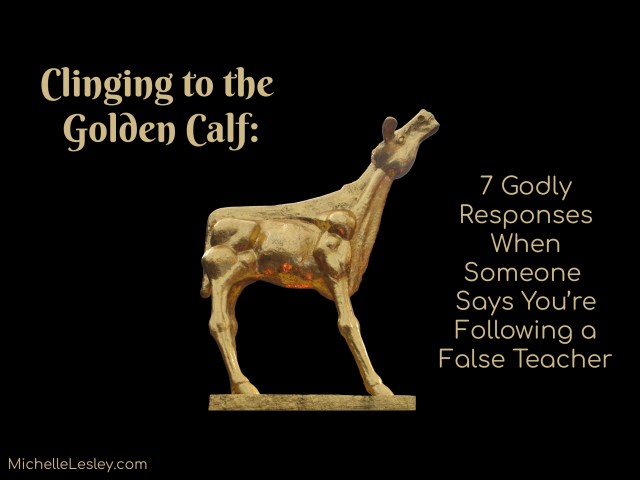
Throwback Thursday ~ Clinging to the Golden Calf: 7 Godly Responses When Someone Says You’re Following a False Teacher

Originally published January 16, 2015

Ever heard of Jeroboam? If you’ve read your Old Testament, the name probably rings a bell, but, let’s face it, it’s hard to keep all those Jeroboams, Rehoboams, Ahinoams, and Abinoams straight, right? Well, let’s read a little bit about Jeroboam:

And Jeroboam said in his heart, โ€œNow the kingdom will turn back to the house of David. 27 If this people go up to offer sacrifices in the temple of the Lord at Jerusalem, then the heart of this people will turn again to their lord, to Rehoboam king of Judah, and they will kill me and return to Rehoboam king of Judah.โ€ 28 So the king took counsel and made two calves of gold. And he said to the people, โ€œYou have gone up to Jerusalem long enough. Behold your gods, O Israel, who brought you up out of the land of Egypt.โ€ 29 And he set one in Bethel, and the other he put in Dan. 30 Then this thing became a sin, for the people went as far as Dan to be before one. 31 He also made temples on high places and appointed priests from among all the people, who were not of the Levites. 32 And Jeroboam appointed a feast on the fifteenth day of the eighth month like the feast that was in Judah, and he offered sacrifices on the altar.

1 Kings 12:26-32a

The Kingdom of Israel had just split into the southern kingdom of Judah and the Northern kingdom of Israel. Jerusalem, where the temple is located, is in Judah. Jeroboam (king of Israel) figures that if his people continue traveling to Jerusalem for feasts and sacrifices, they will eventually turn their loyalty back to the the kingly lineage of David (aka: Judah, 26-27) and heโ€™ll lose both his kingdom and his head. So, in order to keep the people inside the borders of Israel and control them, he makes a couple of golden calves (which somebody should have remembered turned out badly the last time that was tried {Exodus 32}) for them to worship at either of two convenient locations, Bethel, in the southern part of Israel, and Dan in the northern part. Jeroboam, leading the way, had the Israelites simply transfer their feasts and sacrifices that they would have offered to God to these golden calves. It’s a fascinating story that you can read more about here if you’re interested.

So why am I going on and on about Jeroboam?

Because Jeroboam’s story is so similar to something that is happening in the visible church today. He was a well known personality who led God’s people to worship an idol which he told them was God. And God’s people went along with it, transferring their worship from the one true God to the golden calf called “God.”

There are a ton of Jeroboams out there today. Some of you reading this might be following one of them and worshiping the idol their false theology tells you is the God of the Bible. And in the same way that a man of God came along and rebuked Jeroboam for his blasphemy, a man or woman of God might come along and call out the Christian celebrity you’re following, or take you aside -out of love and concern- and let you know that person is a false teacher.

I hope you won’t respond like Jeroboam did. He was so angry, he tried to kill the prophet. But sadly, I have seen this type of response (at least verbally) many times, especially from women, when faced with the fact that their favorite Bible teacher or author is preaching a false gospel.

So, what’s a godly way to respond when someone tells you you’re following a false teacher?

1. Consider the source and listen.

If you know the person who’s telling you this, think about her godliness and character. Is she generally a godly person? Does she know her Bible well? Does she show love and concern for others? Is she trustworthy? A godly person of good character has no reason to toss out wild and unfounded accusations, especially if you’re her friend and it might offend you. In fact, she’s probably scared to tell you.

But even if it’s a stranger on a blog saying Celebrity Bible Woman is a false teacher, hear her out and make sure you understand what the issues are. Remember, what she’s saying might be true, but you’ll never know if you immediately write her off.

2. Listen for content, not tone.

There are some discerning people out there who will bring you flowers and candy and hold your hand as they gently tell you the person you’re following is a false teacher, and then there are discerning people whose tone or manner might rub you the wrong way as they’re delivering the news. Don’t let the way something is said turn you off to the content of what is being said. Don’t sacrifice truth on the altar of tone.

3. Keep your emotions in check.

It’s tempting to let our feelings take charge when we’re receiving bad news, but you aren’t going to be able to evaluate the content of what the person is saying if you’re consumed by rage or hurt. It might help to remind yourself of your relationship to the teacher/author in question. Do you even know her personally? It’s not like someone is leveling accusations against your child, spouse, or best friend. Put your emotions aside and let reason and clear thinking rule the day.

4. Don’t blindly believe the messenger.

You don’t have to -nor should you- believe everything you hear just because it quotes a Bible verse or wraps itself in the label “Christian”. That applies to both the person who tells you you’re following a false teacher and the alleged false teacher herself. Listen carefully to what the person has to say, make sure you understand it, then get out your Bible and get to work. Are the issues the person has raised biblical? What does God’s word have to say about these issues? Is the person you’re following violating Scripture? If so, choose to stop following the false teacher because the Bible -not a person- tells you to do so. People are fallible. God’s word is not.

5. Don’t shoot the messenger.

It’s been my experience that women who are loyal devotees of false teachers can be some of the most vicious people in the world if you dare to question their idol. I have had women verbally rip me to shreds, threaten me, call me names, accuse me of “judging,” and tell me I’m what’s wrong with Christianity for politely pointing out from Scripture that someone is teaching false doctrine. Ladies, we give Christian women as a whole a bad name when we act like that. More importantly, that kind of behavior is a reproach to Christ, and never appropriate for someone who calls herself a Christian.

6. Defend from Scripture, not opinion,
emotion, or personal preferences.

It is downright embarrassing when a person is shown that Celebrity Bible Woman is violating a certain Scripture, and her only argument is, “But I just LOVE her! She’s such a great teacher and helps me understand the Bible so well!” If it were really true that Celebrity Bible Woman is such a great Bible teacher, her followers ought to be able to  prove -from Scripture- that what Celebrity Bible Woman is doing or teaching isn’t unbiblical. The bottom line is that Scripture is our ultimate authority, not our opinions, not our personal preferences, not how much we love a certain teacher. For a Christian, if something comes up against the Bible, the Bible wins. Period. So, if you’re going to defend Celebrity Bible Woman, defend her from Scripture. And if you can’t, why are you still following her?

7. Love Christ more than you
love your favorite teacher.

If someone shows you from Scripture that your favorite teacher, author, or pastor is teaching false doctrine and you ignore that warning because you are so enamored with that teacher, then what you’re saying is that you love that teacher more than you love Christ and His word. Jesus said:

Whoever loves father or mother more than me is not worthy of me, and whoever loves son or daughter more than me is not worthy of me.

Matthew 10:37

Your parents. Your children. They’re the people you love most in the world. If Jesus says you can’t love them more than you love Him, do you think it’s going to be OK with Him if you love your favorite Bible teacher more than you love Him? It’s not. Love Christ above all else, and cut that false teacher out of your life.

It can be difficult to hear that you’re following a false teacher. You like her. She makes you feel good. You think you’re doing great in your walk with the Lord. It’s hard to give all that up. But we must be careful that we never put our feelings for a person above Christ and His word. If someone tells you you’re following a false teacher, don’t brush her off or attack her. She’s most likely coming to you out of love and concern for you and for the body of Christ. Check out what she’s saying against the Bible. And if she turns out to be right, stop following that false teacher and thank her. Because a person who rescues you from an enemy of Christ is truly your friend.

Discernment Bible Study

New Bible Study Kickoff and Title Pic Contest

Happy Wednesday, Ladies! It’s time to kick off our next Bible study:

…..with a fun title pic contest!

What does the Bible say about discerning between true and false doctrine? How does God regard false teachers, and how are we to deal with them in our personal lives and families, and as the church?

Have you ever read the book of Job? When we think about Job’s story, our minds usually turn to the theme of suffering, and how to suffer well as Christians, but did you realize another major theme of the book of Job is discernment? Job’s three friends come to him in his suffering and comfort him with … false doctrine. Job is well on his way to believing them when his true friend, Elihu, steps in and, though he’s not perfect, does his level best to correct them.

The theme verse for this topical study in discernment comes from Elihu’s speech in Job 34:

Hear my words, you wise men, and give ear to me, you who know; for the ear tests words as the palate tastes food. Let us choose what is right; let us know among ourselves what is good.

Job 34:2-4

This 11-15 lesson study will help us to be wise women who pay attention to what God says about discernment and how to avoid false doctrine. It will show us how to test words as the palate tastes food. It will teach us to know what is good, so we can choose what is right.

But before we get started studying, how about a little fun?

You’ve probably noticed that I design a title picture for most of the Bible studies I write. Here are a few past title pics I’ve designed myself:

But sometimes, I like for us all to share in your creativity. Y’all have sent in some beautiful and creative entries in our past title pic contests – indeed, the title pics for The Sermon on the Mount, The Women of Genesis, Living Stones, Imperishable Beauty, and other studies, were all designed by readers – so, once again, I wanted to get some of you involved in the design process for our new study.

You can see the rest of my Bible study title pics as well as those designed by my readers at the Bible Studies tab in the blue menu bar at the top of this page. Take a moment to look them over to get a feel for my style and the general appearance I like my title pics to portray.

If you enjoy and have a knack for photo editing, or you know someone who does, I’m accepting submissions for title pictures for the Choose What Is Good study. If your submission is chosen it will be used each week of the study, and you’ll be credited (name and website, if any) by watermark. I’d love to be able to offer a huge cash prize, but, hey, we’re small potatoes here. This is just for fun and maybe a little publicity for your site, if you have one.

Contest Guidelines

โ˜™ Ladies only. Sorry guys! :0)

โ˜™ You must use images that don’t require attribution. Pictures you’ve taken yourself are fine, as are images from sources such as Pixabay, Pexels, Freely, Unsplash, StockSnap, or other stock photo web sites. Please include the image source web sites you use along with your submission. (You cannot just grab and use any old picture off the internet. Photographers own their images and usually require permission, attribution, and often a fee, for their use.)

โ˜™ Title pics should be landscape (a horizontal rectangle) with a width of 2000-4000 pixels and proportionate height. I prefer JPG images, but PNG is fine, too, if necessary.

โ˜™ Your title pic must contain the full title of the study: Choose What Is Right: A Study in Discernment (Be sure to double check your spelling, capitalization, and punctuation. You can omit the colon after “Right” if “Choose What Is Right” and “A Study in Discernment” are not on the same line. See my image above. Notice that “in” is the only word not capitalized in this title.).

โ˜™ Since I use the title pic background image for each lesson’s suggested memory verse, please send a blank copy (no words on it) of the picture you’re using along with the title pic you design.

โ˜™ If your submission is selected, I’ll be glad to watermark it with your website address (please submit your picture without any watermarks) if you have one, as long as your web site doesn’t conflict with my statement of faith or my beliefs outlined in the Welcome tab.

โ˜™ Deadline for submissions is 11:59 p.m., Monday, February 27, 2023.

โ˜™ E-mail your title pic submission along with a blank copy of your image, your full name, web site address (if any), and the source(s) you used for your image(s) to MichelleLesley1@yahoo.com. You are welcome to submit as many images as you like.

โ˜™ Please don’t be offended if your submission isn’t selected. If I peruse all the submissions and I’m just not “feeling it,” I may still elect to design one of my own.

โ˜™โ˜™โ˜™โ˜™โ˜™

Feel free to share this around with friends who have an interest in photo editing. If you want to take a whack at it for fun but don’t know where to start, play around with Be Funky, PicMonkey, or Canva and see which one works best for you.

Think about how the Bible describes and defines discernment, Scripture’s posture toward false doctrine, and the necessity of sound doctrine, and try to capture one of those themes in your image.

Happy designing!

Mailbag

The Mailbag: Asked and Answered

The Lord’s richest blessings to you, readers. It is an honor and a joy to serve you in Christ. Welcome to all the newbies and to you seasoned veterans of the blog.

Because some of y’all are new, you aren’t yet aware of all of the resources here to help you. Or maybe you’ve been around a while and haven’t noticed something that might be helpful. Let’s remedy that!

First, if you’re new (or if you’ve never read it), check out Blog Orientation for New Readers and Old Friends. It’s like a CliffsNotes intro to the blog.

Second, be sure to familiarize yourself with all of the tabs in the blue menu bar at the top of the page. That’s where I keep the info I’m most frequently asked about.

Third, there’s a search bar at the bottom of every page (and one in the blue menu bar at the top of every page) which might help you find what you need.

Fourth, if you don’t find your question answered in one of these ways or below, you might want to check previous Asked & Answered articles and The Mailbag: Top 10 FAQs.

And finally, let me get you new readers some answers to the questions several of you have asked. Some of you long time friends may have missed these along the way, so I hope they’ll be helpful to you, too!


What is your take on having a โ€œlife verseโ€ or favorite verse? People ask this frequently and I can never tell them one specific verse as there have been many verses through many situations that have been special to me.

I think you’ve hit on an important part of the answer. Life is constantly changing, and the Word addresses all of those various needs and situations. Who could banner or cling to only one verse in the midst of all of that, and why would anyone want to? I’ve answered this a bit further -with Scripture- in my article…

My “Life Verse”


Hi! Iโ€™m looking for sound doctrine Spanish women teachers.

It’s always encouraging to hear from women who want to make sure they’re consuming sound doctrine! Don’t limit yourself to women teachers, though, especially when the language barrier is probably already severely limiting your choices. There are far more doctrinally sound male pastors and teachers out there than female, with far more resources.

From my article: The Mailbag: Potpourri (Christian romance novelist, home schooling sons, Spanish resourcesโ€ฆ)

I would check Grace to YouLigonier, and HeartCry Missionary Society (Paul Washer). I know they all have books and resources (sermons, articles, etc.) in Spanish, and if you canโ€™t find exactly what youโ€™re looking for on the site, you can contact them directly, and they can point you in the right direction.


My husband and I have gone to a โ€œcontemporaryโ€ Christian church for 12 years. The music isnโ€™t our preference but weโ€™ve overlooked it because the teaching was solid; however, after recently learning the truth about Bethel, Hillsong and Elevation, weโ€™ve discovered other false teaching with the use of IF: Gathering for women and Orange curriculum for children/youth. We plan to talk with the lead and administrative pastors who are also elders very soon. Should we stay to see what happens or do we have the freedom to leave now? Thank you.

I’m so sorry the leadership of your church is doing this.

You should stay until you’ve talked with the pastors and elders. If they clutch their pearls, gasping, “Oh dear, we had no idea these were false teachers! Please give us more information so we can eradicate false doctrine from our church!” well, praise God, stay, and help them.

But in my experience, when false doctrine and false teachers have infiltrated a church to this extent, the leadership of the church are either so biblically ignorant and lazy that they don’t know what constitutes false doctrine, or they simply don’t care that they’re feeding poison to their congregation, and they will dig in their heels and try to make you the bad guy for confronting them. They care more about scratching the itching ears of the people who fill the pews with what’s easy and popular than they do about pleasing God. They’re committing pastoral malpractice by shirking their Titus 1:9 mandate. And all of this disqualifies them from the office of pastor / elder, no matter how solid the teaching seems (don’t think that their theology and teaching isn’t affected by this). I do not envy them the day that they will stand before God and answer to Him for their shoddy shepherding.

If you find this to be the case when you talk to your pastors and elders, feel free to leave and find a doctrinally sound church. You’ve done all you can and all God requires of you.

Here are a few resources that may help you and others in similar situations:

The Mailbag: How should I approach my church leaders about a false teacher theyโ€™re introducing?

Popular False Teachers & Unbiblical Trends

The Mailbag: When is it OK to leave a church thatโ€™s begun embracing false doctrine?

The Mailbag: How to Leave a Church

Searching for a new church?


My husband is Catholic and comes from a deeply Catholic family tradition. I have recently started attending a Bible-teaching church on my own. Outwardly, he approves. I prayed over this subject yet still wrestle with it and wonder if I am being disobedient. I would appreciate wisdom on this.

I know this is a really difficult situation. May the Lord comfort you and give you wisdom. Sadly, situations like this – in which the husband is either unsaved and / or wants to go to a heretical or unbiblical “church” and the wife craves a doctrinally sound church – are not uncommon. Here are a couple of cases I’ve addressed in the past:

The Mailbag: A Lost Husband, a Saved Wife, and an Apostate Church

The Mailbag: My husband wants to stay at an unbiblical church.

No, you are not being disobedient, either to your husband (especially since he says he approves) or to God.

What are your other options? The only two I can think of in your situation would be going to Catholic services with your husband or not going to church at all. Both of those would be wrong.

God is quite clear all over Scripture that He doesn’t want His people anywhere near false doctrine or false teachers, and that’s what Catholicism is. It’s an anti-biblical, non-Christian religion. It is one of the accursed “another gospels” of Galatians 1:6-9. You no more belong at a Catholic service than at an altar of Baal or in the temple of Artemis.

Yet God commands you (and all Believers) not to forsake assembling with the local church.

So you can’t go to services with your husband. You can’t not go to church at all. Your only other option is to do what you’re doing – find a doctrinally sound church and go without him. What other choice do you have?

Here are some additional resources that may help:

Basic Training: 7 Reasons Church is Not Optional and Non-Negotiable forย Christians

Roman Catholicism: Mass Confusion at A Word Fitly Spoken

Truth and Love โ€“ with Mike Gendron at A Word Fitly Spoken


I do appreciate your post. One question – in hearing God speak. I have heard God speak to me. I have felt prompted and convicted. From what I am seeing on your website, it seems as if you are saying that is unbiblical. Can you please clarify and provide scripture for that? Also, just recently when reading the Christmas story, I noted that Joseph was warned in a dream. Trying to reconcile with what you are saying.

That’s a great question, and it sounds like God is growing you in discernment and the knowledge of His written Word. That’s wonderful!

First, let’s make sure we’re on the same page about “hearing God speak”. When I use that terminology, I’m talking about things like, “I audibly heard God speak to me and tell me to buy the red car instead of the blue one,” or “God spoke to me in a dream and told me I’m going to marry a guy named Todd.”. Direct, specific, extra-biblical revelation. God doesn’t do that today.

I’m not talking about things like, “I was praying and suddenly felt convicted over the lie I told yesterday, so I repented,” or “I keep seeing or hearing, in various places, this particular Bible verse about trusting God, and it has really made me think about my lack of trust in God. So now I’m praying and studying Bible passages about trusting God more.”. God does do that today. Those are just a couple of ways the Holy Spirit guides us. That type of thing is not what I mean when I say that “hearing God speak” is unbiblical. We need to be careful that we’re not conflating the biblical with the unbiblical.

You say you’ve heard God speak to you. Was it the first way I mentioned, direct, specific, even audible extra-biblical revelation? If so, how do you know – as a matter of objective fact – that it was God? Think of it this way – if you had to prove in a court of law that it actually was God speaking to you, what evidence would you offer?

Because I’ve never encountered someone who said God spoke to her in that way who had anything to offer up as “proof” that it was God other than her subjective feelings or opinion, or the purported intensity of the experience. In other words, just because you believe something to be true doesn’t mean it is, and just because you had a really intense experience doesn’t mean your interpretation of said experience is correct, especially when those things contradict Scripture, which extra-biblical revelation does.

God Himself tells us that His written Word is sufficient for everything we need. Extra-biblical revelation undermines the biblical doctrine of Scripture’s sufficiency. Here are some resources that help explain:

Basic Training: The Bible Is Sufficient

Thatโ€™s Enough! The Sufficiency of Scripture at A Word Fitly Spoken

Isnโ€™t the Gospel enough? (The Sufficiency of Scripture) at A Word Fitly Spoken

How Does the Holy Spirit Lead Us? at A Word Fitly Spoken


Do you have a list of the biblically solid women writers you would recommend? I’m compiling a list of resources for our women’s event table. I have some…but I thought you might have some I hadn’t thought about.

Yep! See that blue menu bar at the top of this page? Click on “Recommended Bible Teachers“.

I’m so glad you want to provide doctrinally sound resources for your ladies! (As I mentioned above, I strongly recommend that women not limit themselves to women authors and teachers. There are far more doctrinally sound male authors and teachers out there with far more resources available. Your event table might be a great place to introduce your ladies to some of them!)


I thought this might be a common question, so maybe you can point me to something you have already written on this topic…

You came to the right Mailbag. :0)

I was given [a heretical] book from a well meaning, but undiscerning family member. Do you recommend throwing it directly into the trash

That is definitely one option (especially since you mentioned you’ve discussed these problematic doctrinal issues with her before). I’ve discussed several methods of disposing of heretical books in this article:

The Mailbag: Potpourri (Soul Ties, SBC Communion, Women in childrenโ€™s ministry, Heretical bookย disposal)

(I know the book you were given wasn’t a false teacher’s study Bible, but I’m going to throw in an article that deals with disposing of those, too, for other readers: The Mailbag: Asked andย Answered (July 5, 2021).)

[Or do you recommend] offering to read through it together with the family member so we can discuss the problems in it, maybe reading through it on my own and then discussing the key problems? My husband and I have addressed this topic with the family member before, but I guess it didn’t stick. They attend a church that loves Bethel music and they have shared sermons with us that are borderline Word of Faith stuff, which is when we have addressed the issue with them before.

If she is willing to sit down with you and discuss it – calmly, rationally, Bibles on the table – then please do take the time to do that. (Wouldn’t it be amazing if God used you as He brings her out of darkness and into His marvelous light!) If things start out well but then seem to be getting a little heated, you can always say, something like, “Why don’t we take a break from this for now and pick it up another time? How about some ice cream?”. Or, if she shuts down the conversation: “We don’t have to talk about this if you don’t want to, but if you ever have any questions or decide you’d like to talk about it, my door is always open.”.

Here are some resources I hope will help:

Words with Friends: How to contend with loved ones at A Word Fitly Spoken

The Mailbag: How should I approach my church leaders about a false teacher theyโ€™reย introducing? (this is obviously about dealing with church leadership, but many of the principles remain the same when dealing with friends)


Can you provide insight on what blasphemy against the Holy Spirit is which will not be forgiven?ย In Mathew 12.

Can do!

The Mailbag: What Is the Unpardonableย Sin?


If you have a question about: a Bible passage, an aspect of theology, a current issue in Christianity, or how to biblically handle a family, life, or church situation, comment below (Iโ€™ll hold all questions in queue {unpublished} for a future edition of The Mailbag) or send me an e-mail or private message. If your question is chosen for publication, your anonymity will be protected.

Celebrity Pastors, Discernment

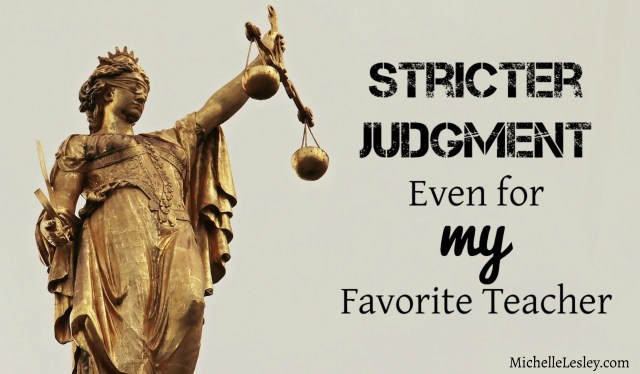
Throwback Thursday ~ Stricter Judgment, Even for MY Favorite Teacher

Originally published September 29, 2017

Itโ€™s a funny thing that itโ€™s so easy for us to see the far away faults and foibles of others, but the ones in our own hearts โ€“ the sins and hypocrisy we know most intimately โ€“ are constantly in our spiritual blind spot. Jesus understood this all too well and admonished us to make sure our own hands are clean before taking the tweezers to the mote in a sisterโ€™s eye.

Often, itโ€™s not that weโ€™re ignoring the plank thatโ€™s obscuring our vision, weโ€™re just not even aware that itโ€™s there. When I evaluate my own heart to confess my sins to the Lord, the ones that weigh heaviest on my spirit are not those that I know Iโ€™ve committed and need to repent of, itโ€™s the ones Iโ€™m sure are lurking somewhereโ€ฆ but I canโ€™t quite put my finger on them.

One of the subtle hypocrisies theologically orthodox, blameless and upright, discerning Christians can have trouble seeing in ourselves is our failure to hold our favorite pastors and teachers to the same biblical standards we apply to other pastors and teachers.

We correctly criticize Steven Furtick and Beth Moore for palling around with the likes of Joyce Meyer and T.D. Jakes, but when Lauren Chandler speaks at IF:Gathering several years in a row, co-hosts a summer Bible study with Beth Moore, and publicly declares her desire to meet Christine Caine, suddenly, itโ€™s โ€œtouch not mine anointedโ€ just because sheโ€™s married to our darling Matt1?

What if John MacArthur decided it would be a good idea to invite Joel Osteen to speak at ShepCon next year?

Or it came to light that Elisabeth Elliot preached to men?

Or you found out Paul Washer was a drunkard?

Would you make excuses for them? Sweep this stuff under the rug and continue to listen to their sermons and read their books without batting an eye?

Pastors and teachers donโ€™t get a pass on sin just because theyโ€™re Reformed, or discerning, or have a virtually unblemished record of doctrinal soundness, or because theyโ€™re โ€œone of the good guys.โ€

Pastors and teachers donโ€™t get a pass on sin just because theyโ€™re Reformed, or discerning, or have a virtually unblemished record of doctrinal soundness, or because theyโ€™re โ€œone of the good guys.โ€ If theyโ€™re called to account, and they repent and strive toward holiness, hallelujah! Thatโ€™s what God requires of all Christians โ€“ that we walk before Him blamelessly and bear fruit in keeping with repentance. But if they unrepentantly persist in sin despite biblical correction, thereโ€™s a problem there- with their own hearts, and with ours, if we knowingly turn a blind eye to their willful disobedience just because theyโ€™re our favorites.

God makes it clear throughout His Word that pastors, teachers, and others in positions of spiritual leadership bear a grave responsibility to set a godly example for those who look to them for teaching and guidance. And, in certain ways, God requires a higher standard for those in spiritual leadership than He requires of Christians He has not called to lead.

โ€ฆNo man of the offspring of Aaron the priest who has a blemish shall come near to offer the Lordโ€™s food offerings; since he has a blemish, he shall not come near to offer the bread of his God. He may eat the bread of his God, both of the most holy and of the holy things, but he shall not go through the veil or approach the altar, because he has a blemish, that he may not profane my sanctuaries, for I am the Lord who sanctifies themโ€ฆ
Leviticus 21

โ€ฆAnd Moses said to Aaron and to Eleazar and Ithamar his sons, โ€œDo not let the hair of your heads hang loose, and do not tear your clothes, lest you die, and wrath come upon all the congregation; but let your brothers, the whole house of Israel, bewail the burning that the Lord has kindled. And do not go outside the entrance of the tent of meeting, lest you die, for the anointing oil of the Lord is upon you.โ€ And they did according to the word of Mosesโ€ฆ
Leviticus 10:1-11

Let no one despise you for your youth, but set the believers an example in speech, in conduct, in love, in faith, in purity.
1 Timothy 4:12

Show yourself in all respects to be a model of good works, and in your teaching show integrity, dignity, and sound speech that cannot be condemned, so that an opponent may be put to shame, having nothing evil to say about us.
Titus 2:7-8

not domineering over those in your charge, but being examples to the flock.
1 Peter 5:3

Brothers, join in imitating me, and keep your eyes on those who walk according to the example you have in us.
Philippians 3:17

Be imitators of me, as I am of Christ.
1 Corinthians 11:1

But if that servant says to himself, โ€˜My master is delayed in coming,โ€™ and begins to beat the male and female servants, and to eat and drink and get drunk, the master of that servant will come on a day when he does not expect him and at an hour he does not know, and will cut him in pieces and put him with the unfaithful. And that servant who knew his masterโ€™s will but did not get ready or act according to his will, will receive a severe beating. But the one who did not know, and did what deserved a beating, will receive a light beating. Everyone to whom much was given, of him much will be required, and from him to whom they entrusted much, they will demand the more.
Luke 12:45-48

you then who teach others, do you not teach yourself? While you preach against stealing, do you steal? You who say that one must not commit adultery, do you commit adultery? You who abhor idols, do you rob temples? You who boast in the law dishonor God by breaking the law. 
Romans 2:21-23

Not many of you should become teachers, my brothers, for you know that we who teach will be judged with greater strictness. 
James 3:1

As the passages above allude to, sound doctrine, while crucial, is not Godโ€™s only requirement for pastors and teachers. They are also required to rebuke those who contradict sound doctrine (not befriend them or join them on the conference dais). And Paul outlines the numerous behavioral requirements for pastors, elders, and deacons not once but twice, even going so far as to say that deacons must โ€œprove themselves blamelessโ€ and that โ€œan overseer, as Godโ€™s steward, must be above reproach.โ€ Right theology does not excuse wrong behavior.

Right theology does not excuse wrong behavior.

Why, then, when Godโ€™s standards for those who lead are so high, are we quick to sweep aside unrepentant wrongdoing by the teachers we hold most dear, sometimes even holding them to lower standards than we would hold ourselves? โ€œI would never preach to men, but Iโ€™ll give Teacher X a pass on it.โ€ โ€œThereโ€™s no way Iโ€™d partner with a false teacher, but itโ€™s not a big deal that Preacher Y does it.โ€

The Jesus who says โ€œbe perfect as your Heavenly Father is perfect,โ€ who says that even one sin is one sin too many, is not a God who is OK with His people glossing over disobedience. God wants sin dealt with, repented of, and forsaken, especially in those who lead, because receiving correction and repenting of sin sets a rare and phenomenal biblical example for Christians to follow.

The Jesus who says โ€œbe perfect as your Heavenly Father is perfect,โ€ who says that even one sin is one sin too many, is not a God who is OK with His people glossing over disobedience.

Do we go off the deep end and reject a trustworthy teacher the first time she does something a little iffy? Of course not. But should we step back, keep a closer, more objective eye on her and her trajectory as time goes by to see if she corrects her course? Yes. Should we stop following her if she continues to dive deeper and deeper into sin with no signs of turning around? Even if sheโ€™s always been doctrinally sound? Even if sheโ€™s complementarian? Even if she attends a church with a good theological reputation? Even if weโ€™ve enjoyed all of her books thus far? Definitely.

Letโ€™s shed some light on those blind spots our favorite teachers occupy and let our highest loyalty be to Christ, His Word, and His standards for leadership.


ยนSadly (click link on Lauren Chandler’s name), since the original publication of this article, Matt Chandler should no longer be “our darling Matt,” either.