Church, Throwback Thursday

Dis. Grace.: Responding Biblically to Church Scandal

It happened again last week. Another scandal. Another high profile pastor stepping down from the ministry in disgrace. Another family broken. Another church stunned and bereft.

And itโ€™s not just the money grubbing televangelists anymore, either. This was one of the theological good guys. Sadly, pastors and Christian leaders โ€“ both those in the public eye and those right around the corner โ€“ seem to be dropping like flies these days. Adultery. Financial sin. Pornography. Abuse. Fraud. The list of sinful behavior goes on and on, leaving a wake of destruction in its path and giving Christ and His bride a black eye in the process.

So, what is the biblical response to scandals like these for Joe and Jane Christian? We view the situation through the lenses of Romans 8:28:

And we know that for those who love God all things work together for good, for those who are called according to his purpose.

How can God use this scandal, awful as it is, for my good and the good of my brothers and sisters in Christ? Itโ€™s an opportunity to learn, teach, and minister in so many ways:

Fully grasp the destructive power of sinโ€ฆ

Imagine the agony the pastorโ€™s sin is creating in so many lives. What must his wife be going through? His children? His church? What about his own relationship with God? What about the lost people he was trying to win to Christ? What about the fact that his career may be over and he may lose his house?

Itโ€™s been said that sin destroys completely and completely destroys. Itโ€™s a good time to reflect on the fact that sin is not something to be trifled with. Count the cost. Would it be worth it to you to commit the same sin in your own life?

Realize your need for Christโ€ฆ

โ€œThere, but for the grace of God, go I.โ€ โ€œTherefore let anyone who thinks that he stands take heed lest he fall.โ€ (1 Corinthians 10:12) โ€œPride goes before destruction, and a haughty spirit before a fall.โ€ (Proverbs 16:18)

Donโ€™t fall into the trap of thinking youโ€™re better or holier than the person who sinned, therefore, you would never do what he did. Instead, let his sin push you towards the cross, realizing that youโ€™re just as weak and susceptible to temptation as he is. Let it amp up your prayer life and drive you to cling to Christ and His word lest you fall into sin.

Dive into Godโ€™s wordโ€ฆ

What does the Bible say about the sin in question? Learn what Godโ€™s word says. Apply it to your life, your work, or your marriage. Teach it to your children. Share it with those in your circle of influence. Build up your brothers and sisters in Christ so they might stand firm against temptation.

Implement safeguardsโ€ฆ

People donโ€™t just wake up one day and decide to commit adultery or embezzlement or whatever. Every sin starts with a wayward thought, which, when left unchecked (or entertained), snowballs into action. What could the scandalized pastor have done, practically, to prevent his sin? What are some concrete, proactive steps you can take to guard against sin in your life? Maybe your husband should hold the credit cards or you should cut ties with that certain male friend. Donโ€™t wait for sin to find you. Build some walls before it arrives.

Use the scandal as a springboard for prayerโ€ฆ

Pray for those involved in the scandal. Ask God to protect you, your husband, and your loved ones from that particular sin. Realize that your own pastor and church staff are tempted to sin every day, pray for them regularly, and let them know youโ€™re praying for them.

Practice the Golden Ruleโ€ฆ

What if you were the one who sinned? How would you want people to talk about and treat you and your family? Call a sin a sin, but letโ€™s remember, when it comes to scandals, to watch our words and actions, and treat others the way we would want to be treated.

Use the scandal as an opportunity to share the gospelโ€ฆ

Inevitably, some lost people will see pastoral sin as one more candle in their โ€œChristians are just a bunch of hypocritesโ€ cake. Donโ€™t be embarrassed if an unbeliever approaches you with this line of fire (and whatever you do, don’t try to make light of or justify the pastorโ€™s sin). Own it. Admit it. โ€œYouโ€™re right. This guy sinned. He needs to repent and be forgiven by Christ. He needs to make things right with the people around him. Just like me. Just like you. By the way, Christ was crucified for sinners like him and me and you. Have you ever repented of your own sin and trusted in Christโ€™s death, burial, and resurrection as the payment for your sin? Mind if I tell you how?โ€

Repent and Forgiveโ€ฆ

Itโ€™s hurtful when someone you trust and look up to lets you down. But because weโ€™re sinful humans living in a broken world, itโ€™s going to happen. The pastor who sinned needs to repent. When he does, the people around him need to forgive, even though there will probably still be disciplinary consequences to his actions. Is there sin in your life that you need to repent of and face the consequences for? Is there someone who has sinned against you that you need to forgive? God extends the grace of forgiveness to repentant sinners and the grace to forgive to their victims. Repent. Forgive.


Scandals among Christian leaders are heartbreaking, disappointing, embarrassing. But the God who sent His only Son to the cross to turn sinners into saints has a wonderful way of taking offenses and turning them into opportunities for His kingdom.

Parenting

12 Techniques for Raising Bible-Saturated Kids

Phew. Thatโ€™s a pretty tall order, isnโ€™t it? God may have said this through Moses to Old Testament Israel, but His words are just as relevant for 21st century Christian parents. God wants our children immersed in His Word as they go about their daily lives. Ephesians 6:4 reminds fathers that they are to bring their children up โ€œin the discipline and instruction of the Lord,โ€ and as moms, we have the joy of supporting our husbands in that venture by bringing Scripture and prayer to bear on all those little daily โ€œwalk by the wayโ€ moments. But how? Here are some practical ways Iโ€™ve discovered for capturing those teachable moments and pouring Godโ€™s Word into them.

Capture those teachable moments with your kids and pour Godโ€™s Word into them!

1.
Set an example.

Be faithful to your own Bible study and prayer time. Let your children โ€œcatch you in the actโ€ from time to time. Share with them what youโ€™re learning from Godโ€™s Word, things youโ€™re praying about, things youโ€™ve asked God to forgive you for, etc.

2.
Train your children to have their own
daily Bible study time.

You might be surprised at how early you can start developing this godly habit in your child. With an infant, you might simply take a few minutes of her morning feeding to read aloud from your Bible and pray. With a toddler, you can regularly set aside five or ten minutes (when sheโ€™s not tired or hungry) for her to sit down and look at pictures in a childrenโ€™s Bible, maybe while youโ€™re sitting nearby with your own Bible, modeling for her. As children get a little older and can read, you can set aside a block of time before their bedtime for individual Bible study and prayer. When theyโ€™re very small, children arenโ€™t going to understand much from the Bible (although they will surprise you sometimes!), but they will still be absorbing some valuable things: the Bible is an important book, God is the top priority in my family, and God and His Word should be preeminent in my life.

3.
Establish a regular time of family worship at home.

If your husband is a believer, be careful not to usurp his leadership in this area. It is ultimately His responsibility to lead his family in worship. Help each other think of ways to make your family worship time age appropriate for the children, and support your husband as he teaches Godโ€™s Word. Also, understand that with children comes chaos. (My four children who are still at home range in age from 11 to 19, and I still have to remind them to quiet down and stay on track during family worship.) Itโ€™s going to happen. Just tuck and roll and donโ€™t give up.

4.
Sing.

Who cares if you canโ€™t carry a tune in a bucket? God doesnโ€™t, thatโ€™s for sure. Sing some hymns while youโ€™re washing the dishes. Sing along with some worship music (doctrinally sound, of course) in the car. Music is a great way to get Godโ€™s truths into your childโ€™s heart and mind.

Music is a great way to get Godโ€™s truths into your childโ€™s heart and mind.

5.
Conversation Prayer

During our family worship time, we used to go around and share prayer requests, then one or two people would pray. We found that the children were either forgetting the prayer requests or we would have to spend time writing them down. So now we often do what we have dubbed โ€œconversation prayerโ€. One parent will say a brief opening prayer, and then the โ€œfloor is openโ€ for anyone to say a (or several) one or two sentence prayer about whatever is on his heart (โ€œPlease help me do well on my math test tomorrow,โ€ or โ€œLord, please save Grandmamma.โ€). When it seems like everyone is finished, the other parent says a closing prayer.

6.
What is God up to?

Sometimes itโ€™s hard for children (and even adults) to recognize and remember the ways God is answering prayers and working in their lives. When our children were smaller, I put up a piece of posterboard on the wall of the breakfast room with the title โ€œWhat is God up to?โ€ at the top. Whenever God answered something we had been praying about, provided for us, moved in our lives in some way, or blessed us, we made a little note about it, along with the date. It had big things โ€“ like my daughter getting saved โ€“ as well as little things โ€“ like my son finally learning to tie his shoes. It helped my children to recognize Godโ€™s sovereignty over all areas of our lives, that He does answer prayer, and that He gets the glory for everything.

Help your children recognize Godโ€™s sovereignty over all areas of our lives, that He does answer prayer, and that He gets the glory for everything.

7.
Letโ€™s pray about this.

Your children are going to struggle with things. Theyโ€™re going to have times of rejoicing and times of sorrow. There will be times when they have disobeyed and need to repent of their sin. What better opportunities to teach them to take everything to God in prayer? Teach them how to ask God for help when something is too hard. Teach them to thank God for blessing them and ask Him to comfort them when theyโ€™re sad. Show them how to ask God for forgiveness when theyโ€™ve done wrong.

8.
Sprinkle life with Scripture.

(In order to do this, youโ€™re going to have to know Scripture, so be sure to be faithful to your own study of Godโ€™s Word.) When you see a beautiful sunset, talk about how God created the sun and moon. When your child is kind to someone, praise him and tell him God wants us to be kind to others. When you discipline him, show him his sin from Scripture, and talk about repentance and Godโ€™s forgiveness.

9.
Memorize Scripture together.

There is a wonderfully wide variety of Scripture memory resources out there. My children were all involved in a Scripture memory program at church when they were small, and we worked on their memory verses together at home. Our home schooling curriculum, at the kindergarten level, had a 26 verse Scripture memory program in which we memorized a verse beginning with each letter of the alphabet. Seeds Kids Worship is a fantastic program with word for word Scripture songs and other great resources. There are even apps that can help. And you can always make up your own fun programs, songs, and contests to help the whole family memorize Godโ€™s Word.

10.
Ask questions.

โ€œWould God be pleased with the way youโ€™re acting? How do you know?โ€ โ€œWhat does the Bible say about the way we should treat each other?โ€ โ€œWhat does the Bible say about _____?โ€ Questions like these get your children thinking. They take your children from simply reading and hearing Godโ€™s Word to applying Scripture to their lives and recognizing that they must submit to it.

Take your children from simply reading and hearing Godโ€™s Word to applying Scripture to their lives and recognizing that they must submit to it.

11.
The Gratitude Game

Forget the tablets and the radio. This is a great way to harness that down time in the car (or anywhere else) and use it to teach your kids about prayer and thankfulness. Itโ€™s kind of like playing โ€œI Spy.โ€ Just look out the window and take turns thanking God for what you see: โ€œThank You, God, for making birds.โ€ โ€œThank You for ice cream.โ€ โ€œThank You for police officers who help us.โ€ Or pray for people as you pass by various buildings. โ€œGod, please help the sick people in that hospitalโ€ฆhelp the pastor of that church do a good job of preaching Your Wordโ€ฆprovide homes for the people in that shelterโ€ฆโ€ We also made it a habit to pray for victims of accidents or tragedies whenever we saw an ambulance or fire truck.

12.
Kiddievangelism

Our kids need to see us sharing the gospel with people as a normal part of everyday life, and we need to explain to them why itโ€™s so important. Thereโ€™s an easy way to get your kids personally involved, too, especially when theyโ€™re small: tracts. Get some doctrinally sound tracts (my favorites are from Bezeugen) and let your child leave one in the waiting room at the doctorโ€™s office, on the table when you leave McDonaldโ€™s, or hand one to the cashier at the store. Iโ€™ve had people turn me down when I offer them a tract, but whoโ€™s going to refuse an adorable three year old? Get them started on a lifelong habit of sharing the gospel wherever they go.

Get your children started on a lifelong habit of sharing the gospel wherever they go.


As Christian parents itโ€™s our responsibility before God to train our children in the Scriptures, prayer, and godliness. If we slow down and ask God to direct us, He will show us all kinds of ways we can teach them diligently to our children, when we sit in our houses, and when we walk by the way, and when we lie down, and when we rise.

What are some fun or unique ways youโ€™ve found
to pour Godโ€™s Word into your childrenโ€™s everyday lives?

Prayer, Throwback Thursday

After This Manner Therefore Pray

Prayer. It seems so simple- just talk to God. But when itโ€™s time to actually do it, there can be a million questions. What should I pray about? How long should I pray? Do I have to say โ€œTheeโ€ and โ€œThouโ€? Eyes opened or closed? Do I have to be on my knees? Should I speak aloud or pray silently?

Itโ€™s nothing to be ashamed of. The disciples lived with Jesus. Heard Him pray. Watched Him pray. And they still had to ask Him, โ€œLord, teach us to pray.โ€ Jesus graciously answered their request with what we now call โ€œThe Lordโ€™s Prayerโ€ or โ€œThe Model Prayer.โ€ Thereโ€™s one version of it in Luke where Jesus teaches the disciples personally, and another, expanded version in Matthew 6:9-13 in the Sermon on the Mount, the version weโ€™ll be looking at today.

Even after all these years, and after hundreds of books and sermons on prayer, Jesusโ€™ simple teaching is still the best way to make sure weโ€™re โ€œdoing prayer right.โ€ When we submit the way we pray to His instruction, we can be sure weโ€™re praying the way He wants us to pray. So how can we follow the Lordโ€™s Prayer in our own prayer lives? Letโ€™s take a look.

Pray then like this:

This may not seem like a very important phrase โ€“ after all, itโ€™s not even in the body of the Lordโ€™s Prayer โ€“ but itโ€™s actually vital to our understanding of modeling our prayers after the Lordโ€™s Prayer. Notice Jesus didnโ€™t say, โ€œrepeat after Meโ€ or โ€œrecite these exact words.โ€ He said โ€œpray like this.โ€ The NASB renders this phrase as, โ€œPray, then, in this way.โ€ KJV says, โ€œAfter this manner therefore pray.โ€ And the NIV has, โ€œThis, then, is how you should pray.โ€

The point? Jesus gave the Lordโ€™s Prayer as an outline for prayer or as a sample prayer, not a specific set of words to recite every time you pray. While itโ€™s fine to sincerely pray โ€“ and mean โ€“ the exact words of the Lordโ€™s Prayer, we must guard against the โ€œvain repetitionโ€ of โ€œempty phrasesโ€ Jesus had warned the disciples about just two verses earlier. Mindlessly rattling off the words of the Lordโ€™s Prayer out of habit or so you can check prayer off your daily โ€œto doโ€ list is not prayer. Instead, try using each phrase of the Lordโ€™s Prayer as a guide to how you should approach Him in prayer.

โ€œOur Father in heaven, hallowed be your name.

Take some time to worship God and praise Him just for being Him. Contemplate how high and holy He is and how lowly you are in comparison. Think about, and thank Him for some of His attributes that we find in Scripture- His goodness, justice, compassion, omnipotence, wrath, mercy, and grace. You might even want to sing a hymn or song โ€“ like โ€œHoly, Holy, Holyโ€ or โ€œGod Is So Goodโ€ โ€“  that focuses on Godโ€™s holiness or other attributes.

Your kingdom come,

Do you long for Christ to return? Itโ€™s OK to tell Him that and to take some time to focus on the joy that will be ours in eternity. Christ is coming back (hopefully today!) to gather His people, weary of this sin sick world, to Himself. But remember, He will ONLY be taking people who know Him as Savior and Lord. Is there someone you need to share the gospel with? Someone you desperately desire to see saved? This is a great time to pray for that person and ask God to give you the opportunity, and the right words, to share with her.

Your will be done, on earth as it is in heaven.

In Heaven, God is always glorified, always praised, and always obeyed. Wouldnโ€™t it be great if that were the case on earth? Well, itโ€™s not, because of sin. Is there an area of obedience youโ€™re struggling with? Ask God to help you with it. Pray that God will help your children to be obedient to you and your husband. Pray that God will strengthen your husbandโ€™s obedience to Him in his areas of weakness. Pray that your loved ones, boss, and elected officials will make the decisions God wants them to make. Ask God to guide your pastor, elders, and church members, and pray that they will be obedient to His word and His leading.

Give us this day our daily bread,

Here, we recognize and thank God that He is our provider. Even the smallest things in life, like a simple loaf of bread, only come to us because God provides them. He wants us to put our trust in Him, not a paycheck, for our needs. A great passage to go along with this verse is Philippians 4:6-7:

do not be anxious about anything, but in everything by prayer and supplication with thanksgiving let your requests be made known to God. And the peace of God, which surpasses all understanding, will guard your hearts and your minds in Christ Jesus.

God doesnโ€™t want us to worry about the things we need. He wants us to trust Him. When we take our needs to Him in prayer, we are declaring our trust in Him to take care of us โ€“ in His way and in His time โ€“ and that is where our peace comes from.

Notice, too, the words โ€œthis dayโ€ and โ€œdailyโ€ in this verse. They show us that prayer is an all day, every day affair. God wants us to keep coming back to Him in prayer again and again. It helps us recognize our dependence on Him.

These words also help us to focus our prayers on what we need today. Itโ€™s OK to pray about future events, but sometimes focusing on future โ€œwhat ifsโ€ can tempt us to worry, and, as Jesus says later in Matthew 6, โ€œdo not be anxious about tomorrow, for tomorrow will be anxious for itself. Sufficient for the day is its own trouble.โ€ (34)

And forgive us our debts, as we also have forgiven our debtors.

Repentance time. Did you notice that this verse (12) is the culmination of a sentence that began in the previous verse (11)?  โ€œGive us this day our daily bread, and forgive usโ€ฆโ€ Repentance for our sin and asking God to forgive us is also also an all day, every day affair. But, praise God, so is His mercy to forgive! Lamentations 3:22-23 reminds us:

The steadfast love of the Lord never ceases;
    his mercies never come to an end;
they are new every morning;
    great is your faithfulness.

Take this time to confess your sin and ask God to cleanse you and forgive you. And be sure to ask Him to show you any bitterness you may be harboring in your heart against someone. Forgive that person and ask God to help you make things right with her. Consider the magnitude of your sin against God. If God has forgiven you of your sin against Him, who are you to hold a grudge against someone who has sinned against you?

And lead us not into temptation, but deliver us from evil.

Sin. Itโ€™s always lurking around just waiting to ensnare us again, isnโ€™t it? Think about the sins you struggle with. Ask God to show if there are any changes you can make in your life to stay away from temptation to those sins. Pray that He will strengthen you to be obedient to Him when you canโ€™t avoid tempting circumstances, and ask Him to show you the godly way out of every situation, which He has promised to provide. Pray for Godโ€™s protection from evil people or circumstances and ask Him to protect your family and  church.

For thine is the kingdom, and the power, and the glory, for ever. Amen.

The KJV includes this phrase at the end of the Lordโ€™s prayer, but it isnโ€™t in the earliest and most reliable biblical manuscripts (from which modern versions such as the ESV are translated). But since its meaning and intent is thoroughly supported by other Scriptures, thereโ€™s certainly no harm in including it as part of the model for your prayer time.

Acknowledge and thank God for His sovereignty over all things, His power, His glory, and His eternality. Ask Him to help you live in such a way that others will see these attributes of His. Submit yourself to Christ and pray that God will help you to follow Him humbly and honorably.

Eyes open or closed? On our knees or not? Jesus didnโ€™t address those kinds of things, so we have a certain amount of liberty in those secondary issues. Jesusโ€™ desire is that we stay in constant communion with Him in prayer, humbly honoring Him, praising Him, thanking Him, repenting of sin, and depending on Him for our every need. So, letโ€™s pray then, like this.


Additional Resources:

Articles on Prayer

Sweet Hour of Prayer Bible Study

Episodes about Prayer at A Word Fitly Spoken

Wednesday's Word

Wednesday’s Word ~ Joel 1

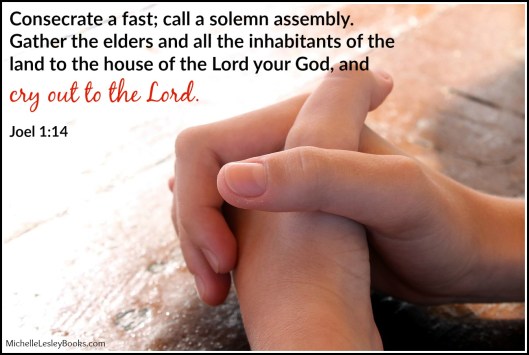
joel 1 14

Joel 1

The word of the Lord that came to Joel, the son of Pethuel:

2ย Hear this, you elders;
ย ย ย ย give ear, all inhabitants of the land!
Has such a thing happened in your days,
ย ย ย ย or in the days of your fathers?
3ย Tell your children of it,
ย ย ย ย and let your children tell their children,
ย ย ย ย and their children to another generation.

4ย What the cutting locust left,
ย ย ย ย the swarming locust has eaten.
What the swarming locust left,
ย ย ย ย the hopping locust has eaten,
and what the hopping locust left,
ย ย ย ย the destroying locust has eaten.

5ย Awake, you drunkards, and weep,
ย ย ย ย and wail, all you drinkers of wine,
because of the sweet wine,
ย ย ย ย for it is cut off from your mouth.
6ย For a nation has come up against my land,
ย ย ย ย powerful and beyond number;
its teeth are lions’ teeth,
ย ย ย ย and it has the fangs of a lioness.
7ย It has laid waste my vine
ย ย ย ย and splintered my fig tree;
it has stripped off their bark and thrown it down;
ย ย ย ย their branches are made white.

8ย Lament like a virgin wearing sackcloth
ย ย ย ย for the bridegroom of her youth.
9ย The grain offering and the drink offering are cut off
ย ย ย ย from the house of the Lord.
The priests mourn,
ย ย ย ย the ministers of the Lord.
10ย The fields are destroyed,
ย ย ย ย the ground mourns,
because the grain is destroyed,
ย ย ย ย the wine dries up,
ย ย ย ย the oil languishes.

11ย Be ashamed, O tillers of the soil;
ย ย ย ย wail, O vinedressers,
for the wheat and the barley,
ย ย ย ย because the harvest of the field has perished.
12ย The vine dries up;
ย ย ย ย the fig tree languishes.
Pomegranate, palm, and apple,
ย ย ย ย all the trees of the field are dried up,
and gladness dries up
ย ย ย ย from the children of man.

13ย Put on sackcloth and lament, O priests;
ย ย ย ย wail, O ministers of the altar.
Go in, pass the night in sackcloth,
ย ย ย ย O ministers of my God!
Because grain offering and drink offering
ย ย ย ย are withheld from the house of your God.

14ย Consecrate a fast;
ย ย ย ย call a solemn assembly.
Gather the elders
ย ย ย ย and all the inhabitants of the land
to the house of the Lord your God,
ย ย ย ย and cry out to the Lord.

15ย Alas for the day!
For the day of the Lord is near,
ย ย ย ย and as destruction from the Almighty it comes.
16ย Is not the food cut off
ย ย ย ย before our eyes,
joy and gladness
ย ย ย ย from the house of our God?

17ย The seed shrivels under the clods;
ย ย ย ย the storehouses are desolate;
the granaries are torn down
ย ย ย ย because the grain has dried up.
18ย How the beasts groan!
ย ย ย ย The herds of cattle are perplexed
because there is no pasture for them;
ย ย ย ย even the flocks of sheep suffer.

19ย To you, O Lord, I call.
For fire has devoured
ย ย ย ย the pastures of the wilderness,
and flame has burned
ย ย ย ย all the trees of the field.
20ย Even the beasts of the field pant for you
ย ย ย ย because the water brooks are dried up,
and fire has devoured
ย ย ย ย the pastures of the wilderness.


The Holy Bible, English Standard Version Copyright ยฉย 2001 by Crossway Bibles, a publishing ministry of Good News Publishers.


Questions to Consider:

1. What is the purpose or theme of the book of Joel? Which genre of biblical literature (epistle, historical narrative, wisdom, etc.) is it? To whom was the book written? What do verses 2-3 indicate about the gravity of the situation the rest of the chapter describes?

2. What was the natural disaster that fell on the land? (4) Which crops were affected? (10-12) How were theย land and livestock affected by the natural disaster in verse 4? (18-20)ย What doesย Joel 2:12-14ย suggest might be the reason Israel is experiencing this hardship?

3. What were two major aspects of Israel’s life the famine was detrimental to? (16) How were “joy and gladness [cut off] from the house of our God”? (9) How might a natural disaster, war, or other major catastrophe affect your church? In what ways would worship be affected?

4. How was Israel to respond to the famine? (13-14, 19) Who was to lead the way in lamenting and crying out to God? What should our response be when trouble or disaster strikes? What are some ways pastors can lead the way when a catastrophic event impacts the church?

5. What does this chapter teach us about God’s sovereignty? His judgment? How does this chapter hint at the intensity and the dreadfulness of God’s final judgment on the earth?

Sanctification, Throwback Thursday

Throwback Thursday ~ Six Cliches Christians Could Can (Or at Least Re-think)

Originally Published March 29, 2014


Have you ever noticed we use a lot of expressions without giving much thought to their origin or what they really mean? For example, why do we use the phrase, “in a (pretty) pickle” to mean “experiencing a difficult situation”?

Here are six cliches we often use as Christians that could stand to be replaced or at least re-thought:

1795610_10153768796270386_733462403_n1. Preach the gospel. If necessary, use words.
Itโ€™s necessary. Use words. While our behavior should certainly prove out our testimony, nobodyโ€™s going to see us working at a soup kitchen or eschewing barhopping and somehow magically understand that he has broken Godโ€™s law and needs to repent and put His faith in Christโ€™s death, burial, and resurrection for the forgiveness of his sin unto eternal life. That has to be explained. Clearly. By us. From the Bible. With words.


tombstone-159792_6402. Rest in peace/God rest his soul
If the person who died was saved, heโ€™s already resting in peace by the time you can get these words out. (2 Corinthians 5:6-8)

If the person who died wasnโ€™t saved, unfortunately, heโ€™s in a place of eternal torment and suffering, and no amount of asking God to rest his soul will give him a respite. Worse, when Christians say this about someone they know was not saved, they reinforce the false idea many lost people have that the dead are โ€œrestingโ€ in some sort of spiritual coma, or that they simply cease to exist (annihilationism) , or that everybody automatically goes to Heaven (universalism).

Maybe โ€œIโ€™m praying for you,โ€ or โ€œIโ€™m bringing you dinner,โ€ would be better.

and speaking of which…


th3. Sending positive thoughts/energy your way.
Thoughts and energy are not things you can wrap up in brown paper, haul down to the post office, and mail to somebody. You canโ€™t send them and the other person canโ€™t receive them, and they canโ€™t actually accomplish anything, and everybody knows this. But, commendably, atheists, New Agers, and other non-Christians wanted to have something compassionate to say to people who are hurting, and since they canโ€™t say, โ€œIโ€™m praying for you,โ€ this is the best they can do.

Christians, weโ€™ve got something better. We canย say, “I’m praying for you.”ย We have an open line to the almighty God of the universe who is listening to us and can actually do something about the situation. Pray for that hurting person. Put your arms around her. Listen to her. Do whatever you can to help. Show her Jesus, not empty words.


RNR084. Christianity isnโ€™t a religion, itโ€™s a relationship.
The only people running around today saying that Christianity is not a religion are Christians. Everybody else in the world considers Christianity a religion. And up until this little humdinger materialized, so did Christians.

Usually, what people mean by this is that true Christianity is not an institutionalized system of rote obedience to dead and meaningless rituals. Itโ€™s a reconciliation with the only true God by means of being redeemed by His Son, Jesus Christ, who propitiated and expiated Godโ€™s wrath against us in our sin through His death, burial, and bodily resurrection, and is, therefore, a dynamic and living interpersonal relationship.

But thatโ€™s too long to fit into a tweet or a hashtag.

Our relationship with God through Christ is our religion- the only true religion. And thatโ€™s not a bad thing.


ttgpt231112b5. Donโ€™t judge someone just because he sins differently than you do.
I find this one confusing, but I think the sentiment behind this is something along the lines of, โ€œI may be an adulterer, but youโ€™re not any less of a sinner just because you only tell the occasional white lie.ย  Therefore, you have no right to call me to repentance.โ€

This is a lovely casserole of simultaneous truth and falsehood, and it all hinges on the word โ€œjudging,โ€ which has been tossed around so much that even Christians scarcely know what it means anymore. No, weโ€™re not to berate someone for his sin while pompously pretending weโ€™re sin-free. All have sinned,ย after all, and if we say we have no sin, we lie. But does that mean we should never call anyone to repentance? Of course not! Weโ€™re to walk in repentance ourselves and seek to help the lost find forgiveness in Christย andย help our Christian brothers and sisters who have fallen into sin to be reconciled to Christ.ย Scripture doesn’t say we can never call people out of sin because we have a log in our own eye. It says firstย remove the log andย thenย help your brother.


69475_10102578902186220_955102342_n6. God loves you and has a wonderful plan for your life.
This is actually true, itโ€™s just that our idea of a โ€œwonderful planโ€ doesnโ€™t always match up with Godโ€™s idea of a โ€œwonderful planโ€.

Our desire is to be healthy, wealthy, and blissfully comfortable with never a family problem, fender bender, lost love, or bankruptcy. Godโ€™s desire is for us to be holy. He wants to root the sin out of our lives, show us how to be completely dependent on Him, lead us to trust Him more, build our character and endurance, give us boldness to share the gospel, make us kinder and more merciful, teach us what it means to extend grace and forgive. Most of those lessons are learned only through hardship and suffering. Just ask the apostles or the early church martyrs or our brothers and sisters being persecuted across the globe today.


What are some expressions Christians commonly use that you think we should replace or re-think?