Discernment

I Can’t Sit Down, Shut Up, and Play Nice

“She’s at it again, going off the deep end about some church or Christian celebrity who does things just a little differently. She’s so nit picky, judgmental, and divisive. Why doesn’t she just shut up and be nice?”

That’s what I imagine most of my friends on my (personal) Facebook page are thinking whenever I post something about the latest false doctrine or false teacher. Maybe that’s what you think, too. “Ugh. One of those dreaded discernment bloggers.”

I don’t consider myself a discernment blogger, but rather a discipleship blogger. Discernment (warning against false teachers and false doctrine) is part of discipleship, but so is missions and evangelism, Bible study, and assorted “Christian living” topics, all of which I try to cover in balance.

Nobody seems to mind those latter topics, but a lot of people get their noses out of joint when I call attention to a false teacher, an unbiblical doctrine or practice, or an apostate “church.” I have been asked why I hate women. I’ve been told I’m what’s wrong with Christianity. And, I’ve been called every name in between for pointing out “Christian” teachers, doctrines, and “churches” that behave and teach in ways which directly contradict Scripture.

Who needs that? Who needs the hassle and emotional stress of being attacked, especially when you’re not even getting paid for it? Why don’t I just drop the discernment portion of my blog and social media and blow rainbows and unicorns up everybody’s skirt? It’s certainly a formula that works for other bloggers who choose to go that route, and everybody would be happier.

Well, let me tell you a little story.

I recently shared the gospel with someone who claimed to be a Christian. Why would I do that? If she says she’s a Christian, she must be one, right? Wrong. Before I shared the gospel with her, I asked her to explain her understanding of the gospel to me. Instead of talking about repenting of her sin and placing her faith in Christ’s death, burial, and resurrection to save her from her sin, she gave me a laundry list of ways she was a good church member and all the activities she had ever participated in at her church. The name of Jesus did not come up once, nor did the cross, sin, nor repentance.

In case she had misunderstood my question, I then gave a very simple, biblical explanation of the gospel. She proceeded to tell me how wrong that was according to the teachings of her church. You see, all her life, this lady has belonged to an apostate church that teaches a false gospel of works righteousness (your own good works make you righteous before God, instead of Christ’s work on the cross).

This is a very real lady who really believes she’s a Christian who’s going to spend a very real eternity in Hell unless she repents and believes what the Bible says about salvation. Which is not what her so-called church is teaching her.

That’s why I do discernment work. Because real people’s eternities are at stake. False doctrine is not some trivial little difference of opinion over nothing issues in the church like pews versus chairs or what color the sanctuary carpet is. I’m not being judgmental or hateful over unimportant preferences.

People are dying and going to Hell forever
because they’ve been taught false doctrine. 

And sometimes I wonder if anybody gets that.

So, if that’s what’s so important, why don’t I limit myself to writing about “first tier” issues like works righteousness or the deity of Christ which directly affect a person’s salvation? Does it really matter if churches allow practicing homosexuals to be church leaders or allow women to preach to, teach, and exercise authority over men?

Yeah, it does. Because if you take a look at churches that have their first tier issues wrong, they took their initial steps down the road to that destination by compromising and disobeying Scripture on issues, such as homosexuality and female usurpation, which are indirectly related to salvation. In other words, by the time the cancer has metastasized, it’s too late. Early detection, early cure.

Galatians 5 and 1 Corinthians 5 put it like this:

A little leaven leavens the whole lump.

In the same way that a couple of teaspoons of yeast leaven my entire batch of dough and a few cancer cells will grow and spread throughout the whole body, so, a little false doctrine, if left unchecked, will spread throughout the local Body of Christ and eventually kill it.

I care about y’all. I care about your churches. I don’t want to see a single person damned or church turn apostate. It absolutely breaks my heart when I encounter women who don’t know the gospel or have a complete misunderstanding of Scripture simply because that’s what they’ve been taught by a so-called church or a “Christian” celebrity that they trusted. These things should not be. Christ loves you and wants you to have a right relationship with Him and a right understanding of Him and His word. And I couldn’t live with myself – or Him – if I didn’t tell you that.

My voice and my platform are small. I don’t reach the millions of people the false teachers on the shelf at your local Christian bookstore reach. I am flawed and far from perfect. But I will continue to do everything I can, as biblically as I can, where I am and with what God has given me, to reach the women God places in my path in real life an on line with the glorious truth of His word.

Eternities are at stake. The church is at stake. I can’t sit down, shut up, and play nice.

Obedience

Faultfinders Contending With the Almighty

faultfinders

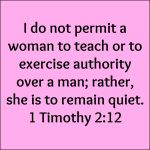
Nobody could ever accuse Christianity of being easy. A religion that tells you to die to self and take up your cross daily is no walk in the park. And there’s no magical moment in this life when you’ve suddenly “arrived” at the top level of spiritual 1 tim 2 12maturity where everything in the Bible makes perfect sense, your prayer life is phenomenal every day, obeying Christ’s commands is a breeze, and you’re floating around on a little cloud of holiness.
We are all messed up, muddling through, and constantly battling the flesh, from the person who got saved five minutes ago to the theologian who’s been walking with the Lord for decades.

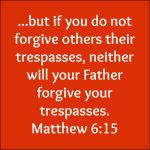
It’s hard enough to obey the Scriptures we embrace – love one another, be kind, be matt 6 15truthful – but then we encounter Scriptures that, for whatever reason, we butt heads with. Scriptures to which our initial, fleshly reaction is, “No way. I’m not doing that.” We argue with them. We look for loopholes and ways we can get around them. We reason out all sorts of caveats as to why that Scripture doesn’t apply to us or why we don’t have to obey it.
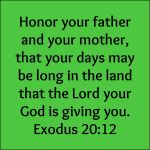
My parents hurt me deeply. There’s no way I’m going to honor the people who did that to me.

God gave me a special gifting and called me to preach. It doesn’t matter that I’m a woman.

Why should I forgive him? He’s never even said he’s sorry!

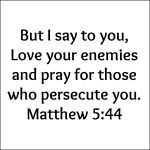
You have no idea how badly she hurt me. I’ll never be able to love her or pray for her.

ex 20 12There’s no denying it, sometimes obeying a certain Scripture will be the hardest thing we ever do. But slaves to Christ are not given the option of saying “no” to their Master. If you’ll look in your Bible at the verse you’re struggling against, you’ll notice there’s no asterisk next to it that says, “except you.”

When we approach one of God’s commands to Christians and decide we’re not going to obey it because we don’t want to or shouldn’t have to or it’s too hard, what we’re really doing is setting ourselves above the Bible in judgment of it and coming to the conclusion that we know better 1 pet 3 1 2than God.

Yeah, that’s not a good idea. Especially for Christians.

Ever read the book of Job? Job went through some pretty awful stuff. Stuff that I certainly would have argued against and questioned God about just like he did. And yet, despite all of Job’s suffering, God didn’t give him a pass.

And the Lord said to Job:
“Shall a faultfinder contend with the Almighty?

He who argues with God, let him answer it.”

Then Job answered the Lord and said:
“Behold, I am of small account; what shall I answer you?

I lay my hand on my mouth.
I have spoken once, and I will not answer;
twice, but I will proceed no further.”
Job 40:1-5

 And how does this grab you?

But who are you, O man, to answer back to God? Will what is molded say to its molder, “Why have you made me like this?” Has the potter no right over the clay, to make out of the same lump one vessel for honorable use and another for dishonorable use?
Romans 9:20-21

Do you get the sense from these verses, which address very different situations, that God isn’t crazy about people questioning His sovereignty, His decisions, or His word, regardless of their circumstances?

God is God. We are not.

God sets the rules for Christianity, not “everyone doing whatever is right in his own eyes.”

matt 5 44Lots of times we think we have to “feel comfortable” with a certain Scripture if we’re to obey it, but the truth is just the opposite. When we say, “Lord, I don’t want to do this, but I’m going to do it anyway because I love You and Your word says so,” guess what happens? God begins to change our hearts. In time, He helps us grow to embrace the Scriptures we once rejected. He helps us to love others and see them through His eyes.

Yes, it is going to be hard. There are going to be times when we have to grit our teeth, hold our noses, and obey Christ even when everything inside us screams, “NO!

But we have a precious Savior who has promised to help us be content in any circumstance and will give us the strength to do anything He puts in front of us.

I can do all things through him who strengthens me. Philippians 4:13

I’ve fought. I’ve cried. I’ve whined, “I can’t!” And every time God has brought me back to this verse that says, “Yes, you can, and I’ll help you.” And you know what? He did.

Obedience is hard, but Christ is worth it.

1 John Bible Study

Am I Really Saved?: A First John Check Up ~ Lesson 9: Wrap Up

1 John Study

Am I Really Saved? A First John Check Up
Lesson 9: Wrap Up

Previous Lessons: 1, 2, 3, 4, 5, 6, 7, 8

Examine yourselves, to see whether you are in the faith. Test yourselves. Or do you not realize this about yourselves, that Jesus Christ is in you?—unless indeed you fail to meet the test!
2 Corinthians 13:5

It’s been quite a journey through the book of 1 John! I hope you have taken the time to honestly examine your heart and your behavior against Scripture to discover whether or not you are truly in Christ.

I want to be sure that I stress once again that the checkpoints we’ve covered in the previous lessons are not things to strive to accomplish in order to earn salvation or to work your way onto God’s good side. You can’t do that. It’s impossible. Salvation is by grace through faith in Christ alone. All of the things we have looked at are the naturally occurring fruit of a person who has already been born again. (Remember our little oak tree/apple tree illustration from lesson 3?)

If you think you might be unsaved or a false convert (someone who thought she was saved, or claimed to be saved, but actually isn’t), you can know Christ as Savior today. Confess to God that you are a sinner, and turn away from your sin. Ask Christ to forgive you for your sin. Believe in Christ’s death, burial, and resurrection as payment for your sin so that you would not have to pay for it yourself with an eternity in Hell, and ask God to save you. You might wish to watch this video and the “Good News” video in the sidebar to your left. And, of course, you’re welcome to contact me with any questions.

I also want to be sure to stress to those who genuinely are born again that you are not going to be perfect in any of these areas this side of Heaven. And that doesn’t mean you aren’t saved. John’s intent in writing this letter was not for you to freak out over the sin you committed yesterday or the fact that your progress in one area seems to be slower than in other areas. He wants you to look back over the direction of your life since you were saved and see if you’re generally growing in holiness and towards more Christlikeness.

I’ve mentioned before that, when I was a kid, a popular question for youth leaders to ask was, “If you were arrested for being a Christian, would there be enough evidence to convict you?” I think that’s a good schematic to use for 1 John. As you come to the conclusion of the study, realize that you aren’t “convicted” on the basis of one or two isolated checkpoints. Rather, ask yourself, does the preponderance of the “evidence” gleaned from the checkpoints point me, beyond a shadow of a doubt, to a verdict of “saved” or a verdict of “not saved”? How would you vote if you were on the jury that was deciding the case of “Am I Really Saved?”

Here, for your convenience, are the 19 checkpoints we’ve looked at in the previous lessons:

Checkpoint 1: Do I walk in the light or the darkness? (1 John 1:6-7)

Checkpoint 2: Do I confess or deny my sin? (1 John 1:8-10)

Checkpoint 3: Do I keep God’s commands? (1 John 2:3-6)

Checkpoint 4: Do I hate others? (1 John 2:9-11)

Checkpoint 5: Do I love worldliness? (1 John 2:15-17)

Checkpoint 6: Do I want to be faithful to a doctrinally sound church? (1 John 2:18-20)

Checkpoint 7: Do I believe in the Jesus of Scripture? (1 John 2:21-25)

Checkpoint 8: Do I practice righteousness? (1 John 2:29)

Checkpoint 9: Do I make a practice of sinning or righteousness? (1 John 3:4-10)

Checkpoint 10: Do I love my brothers? (1 John 3:10-15)

Checkpoint 11: Am I bearing the fruit of love? (1 John 3:18-22)

Checkpoint 12: Do I keep the ultimate commandment? (1 John 3:23-24)

Checkpoint 13: Do I follow false teachers? (1 John 4:1-6)

Checkpoint 14: Is my motivation for love Christocentric? (1 John 4:7-12)

Checkpoint 15: Do my words and actions confess Christ? (1 John 4:13-15)

Checkpoint 16: Am I afraid of God’s judgment? (1 John 4:16-21)

Checkpoint 17: Do my love for God and my love for His people testify to each other? (1 John 5:1-3)

Checkpoint 18: Have I “overcome the world”? (1 John 5:4-5)

Checkpoint 19: Do I have God’s testimony of Christ and eternal life in my heart? (1 John 5:6-12)

It’s my prayer that, as you walk away from this study today, you will do so in full assurance and joy that you do, indeed, know Christ as Savior. Remember, that’s the whole point of the book of 1 John:

I write these things to you who believe in the name of the Son of God that you may know that you have eternal life. 1 John 5:13

Additional Resources:

How can we know if our faith is real? by John MacArthur

How Do I Know If I Am Really Saved? by Costi Hinn

Assurance: “How Can I Know I’m Really Saved?” at Things Above Us

Parenting, Throwback Thursday

Throwback Thursday ~ The 10 Commandments of Parenting- 2

Originally published March 2, 200810 Commandments Parenting 2

2.

Thou shalt put God first in thine own life.

“You shall love the LORD your God with all your heart and with all your soul and with all your might.” Deuteronomy 6:5

Christians were designed by God to glorify Him, and the way we do that is for Christ to have preeminence in every aspect of our lives. It’s kind of like having your car in the proper alignment. When you’re a Christian and you’re striving after God’s heart for your life, even when problems arise, things tend to go much more smoothly and peacefully. God comes first, and everything falls in line behind that. If you’re a Christian walking in disobedience to God’s word or trying to do things in your own strength instead of depending on Christ, there is going to be an undercurrent of feeling out of whack (because, let’s face it, things are out of whack), like you’re spinning your wheels. You’re likely to be more irritable, fearful, and confused.

From which of these spiritual places do you want to come when relating to and rearing your children? Which is more beneficial to you and to them? Which is more pleasing to God?

When you’re obeying God and staying in His word and in prayer every day, He is working in you to make you more Christlike. More patient, more kind, more conformed to His image. He’s making you a better daughter to Him, a better wife to your husband, a better mother to your children, a better friend to those around you, a better employee to your boss.

It’s the Army’s slogan, but I think it fits Christianity so much better: “Be all that you can be.” And that can only be done in Christ, because without Him, we are nothing. Pursue Christ first- to glorify God, for your own good, and to better serve your family.

1 John Bible Study

Am I Really Saved?: A First John Check Up ~ Lesson 8: Testimony

1 John Study

Am I Really Saved? A First John Check Up
Lesson 8: Testimony
Please Read: 1 John 5

Previous Lessons: 1, 2, 3, 4, 5, 6, 7

Examine yourselves, to see whether you are in the faith. Test yourselves. Or do you not realize this about yourselves, that Jesus Christ is in you?—unless indeed you fail to meet the test!
2 Corinthians 13:5

1 John 5:1-3

Am I Really Saved? Checkpoint 17: Do my love for God and my love for His people testify to each other?

Everyone who believes that Jesus is the Christ has been born of God, and everyone who loves the Father loves whoever has been born of him. By this we know that we love the children of God, when we love God and obey his commandments. For this is the love of God, that we keep his commandments. And his commandments are not burdensome. 

John starts off chapter 5 by reminding us of the central truth of the gospel (which we covered in lesson 4): only those who believe that Jesus is the Messiah, as defined by Scripture, are truly born again. Before anything else matters, you’ve got to get that right, or you’re not a Christian.

John then moves our focus back to yet another facet of love that characterizes a Christian: the intertwining, inseparability of love for God and love for His people.

  • According to the last half of verse 1, all who love the Father also love whom? According to verse 2, how do we know we love God’s people? Do these two verses demonstrate circular reasoning or an unbreakable connection between loving God and loving His people? How?
  • What are some ways your love for God is shown by the way you love others, and vice versa?
  • Why is obeying God’s commandments evidence that we love Him and are saved? (3)
  • What does it mean that Christ’s “commandments are not burdensome”? (3) How can we understand this statement in light of Matthew 24:1-4 and 11:28-30?

1 John 5:4-5

Am I Really Saved? Checkpoint 18: Have I “overcome the world”?

For everyone who has been born of God overcomes the world. And this is the victory that has overcome the world—our faith. Who is it that overcomes the world except the one who believes that Jesus is the Son of God?

  • What does it mean to “overcome the world”? How can these verses shed some light on the meaning of this phrase? Does this mean Christians will always be victorious over temptation?
  • How does our faith enable us to overcome the world? (4) How, and from whom, do we get faith? Who is the object of our faith?
  • According to verse 5, is it possible for non-Christians to live in a condition of victory over sin?
  • Think back over your spiritual history. Can you see evidence of growth in the area of resisting temptation and putting sin to death? Do you give in to the same temptations now, and as often, as you did when you were first saved?

1 John 5:6-12

Am I Really Saved? Checkpoint 19: Do I have God’s testimony of Christ and eternal life in my heart?

This is he who came by water and blood—Jesus Christ; not by the water only but by the water and the blood. And the Spirit is the one who testifies, because the Spirit is the truth. For there are three that testify: the Spirit and the water and the blood; and these three agree. If we receive the testimony of men, the testimony of God is greater, for this is the testimony of God that he has borne concerning his Son.10 Whoever believes in the Son of God has the testimony in himself. Whoever does not believe God has made him a liar, because he has not believed in the testimony that God has borne concerning his Son. 11 And this is the testimony, that God gave us eternal life, and this life is in his Son. 12 Whoever has the Son has life; whoever does not have the Son of God does not have life.

Think about all the things you’ve read about Jesus in the Bible, particularly, in the four gospels. Whose testimony about Jesus are you reading and believing? For the most part, we’re reading the eyewitness testimony of the apostles – human beings – that Jesus was indeed the Christ. Wouldn’t it be great if we also had some testimony about Jesus’ deity and authority from God, personally, first hand? Well, we do, as John explains in this passage. We find God’s testimony to the deity and authority of Jesus externally, through His baptism (water) and through his death, burial, and resurrection (blood).

Remember what happened right after Jesus’ baptism?

And when Jesus was baptized, immediately he went up from the water, and behold, the heavens were opened to him, and he saw the Spirit of God descending like a dove and coming to rest on him; 17 and behold, a voice from heaven said,“This is my beloved Son, with whom I am well pleased.” Matthew 3:16-17

We see the testimony of the Holy Spirit as His presence rests on Jesus, and we hear the verbal testimony of God the Father authenticating and commending Jesus. The third Person of the Trinity, Jesus Himself, testified to His own deity and messiahship by living a perfect life, dying a perfect death on our behalf, and rising again, conquering death. These are all tangible, observable testimony from God about who Jesus is. Everyone can witness this external testimony from God- both Believers and non-believers. All you have to do is read the Bible. But what about internal testimony, inside our hearts and spirits?

  • Look at the first sentence of verse 10. How does God’s testimony move from the merely external to internal and personal? What does the remainder of verse 10 say about who can experience having the testimony of God about Jesus “in himself”? Does everyone have this inner witness, or only Christians?
  • According to verse 11, what is the culmination of believing in “the testimony that God has borne concerning his Son”? Who has eternal life (12), Believers or non-believers?
  • Do you have the internal testimony of God about Jesus? Are you confident you have received the eternal life God promises Believers? (Note: This is very subjective. Most false converts are certain they are Believers possessing eternal life based on what they “feel” in their hearts or spirits. This checkpoint focuses on the negative aspect of this issue rather than the positive. In other words, if you know you do not believe in the external testimony about Christ and have no internal testimony from God about Christ or security about your eternity with Him, there is no reason to think you are a Believer. The “feeling” that you are a Christian and that you have eternal life, by itself, is not proof that you are actually saved.)

1 John 5:13-20

In these last few verses, John is giving final instructions, wrapping it up, and bringing it on home. He beautifully restates his reason for writing the epistle in verse 13:

I write these things to you who believe in the name of the Son of God that you may know that you have eternal life.

God wants Christians, those who believe in the name of the Son of God, to know that we are safe and secure in Christ. He doesn’t want us to be afraid of His wrath or wonder if we will spend eternity in Heaven or Hell. He wants that settled and for us to be at peace.

When we’re settled in that knowledge and peace, we can be confident that God hears us when we pray and answers us when we pray in accordance with His will.

Additionally, when we are secure in Christ, we are able to intercede and intervene when our brothers and sisters are caught in sin. Sadly, sometimes a genuine Believer can be so entrenched or caught up in willful, unrepentant sin that God – at His own sovereign discretion – will take her life in order to protect His holy name, her victims, the church, or for other reasons known only to God. This is the “sin leading to death” that John mentions.

Blessedly, this is usually not the case for Believers – John, again, reminds us that Believers don’t make a practice of sinning – and we can pray for that person, help her get out of her sin (not leading to death), and help restore her to a right relationship with Christ and the church.

Finally, when have assurance of our salvation, we have the understanding that we are from God and that the world is under the power of Satan. Therefore, we should not take part in idolatry, but, rather, “know him who is true; and we are in him who is true, in his Son Jesus Christ. He is the true God and eternal life.”


This week we’ve looked the final three checkpoints in our “Am I Really Saved?” study (But don’t go anywhere, our last lesson is next week!):

Do my love for God and my love for His people testify to each other?

Have I “overcome the world”?

Do I have God’s testimony of Christ and eternal life in my heart?

Saved people’s love for God is reflected in their love for His people, and their love for His people is evidenced by their love for, and obedience to God. Their God-given faith in Christ, gives them the victory over sin and worldliness. God gives them peace and security by testifying in their hearts that Jesus is the Christ and that they have eternal life.

Unsaved people cannot genuinely love God’s people because they do not love God. Since they have no faith in Christ, they are part of the world’s system, and it is impossible for them to live in victory over sin. Despite any emotional experiences or feelings they may have, unsaved people do not have the testimony of Christ in their hearts or the assurance of eternal life.

Additional Resources:

1 John 5– Matthew Henry’s Commentary

Victory in Jesus by Kevin DeYoung

The Sin Unto Death by John MacArthur

True or False? A Study in 1 John– at Naomi’s Table (lessons 17-20)