Christian women, Guest Posts, Parenting

Avoiding the Creepers: Six Ways to Raise a Biblically Strong Woman

If someone were to ask you, โ€œWhat kind of person do you want to raise your daughter to be?โ€ how would you answer? Caring? Independent? Loyal? Kind?

Iโ€™m betting none of us would answer โ€œweak,โ€ โ€œburdened with sins,โ€ โ€œeasily led astray by her passions,โ€ or โ€œunable to arrive at a knowledge of the truth.โ€ Yet in these last days in which we find ourselves, thatโ€™s exactly what many good-hearted Christian mothers with nothing but the best of intentions are raising their daughters to be. Itโ€™s not that they want their daughters to grow up to be spiritually weak or led astray by sin or unbiblical teaching, itโ€™s just that they lack the skills and tools necessary for properly training their daughters in the Scriptures and godliness.

Maybe youโ€™re one of those moms. You want to train your daughter to be a wise, godly, discerning woman, but youโ€™re not quite sure how. Hey, we all have those areas of our lives that we need a little help with. As an older mom myself, maybe I can lend a hand.

My daughter is almost twenty, and while sheโ€™s nowhere near perfect, by the grace of God, she is a godly young lady. Looking back, there are many things my husband and I did wrong as parents. But God, in His mercy, covered our failures and saw all of us through as He taught us through His Word how to raise a biblically strong woman.

6 Ways to Raise a Biblically Strong Woman

1. Set an example.

Our daughters learn by watching us. Faithfully study your Bible, pray, attend church, obey Godโ€™s Word, submit to your husband, repent and ask forgiveness when you sin, and serve others and your church together.

2. Learn, and teach your daughter, good hermeneutics.

Hermeneutics is just a fancy word for rightly handling Godโ€™s word. Use a reliable Bible translation. Understand Scripture in its immediate and overall context. What was the authorโ€™s intended meaning, his audience, genre, and culture? Point your daughter to Christ as you study Godโ€™s Word together.

3. Find a doctrinally sound church, join it, and attend faithfully as a family.

Study Godโ€™s Word and compare everything thatโ€™s preached and taught to Scripture (in context). Does your churchโ€™s teaching line up? Then be committed to attending every single week, not just when you feel like it or when thereโ€™s nothing better to do. Instill in your daughter a love for, and a commitment to, the church.

4. Fight the fluff.

Unfortunately, many of the most popular preachers, teachers, and Christian authors (including womenโ€™s Bible study authors) teach and write things that may sound good and make us feel good, but are in direct conflict with Scripture. These are the very people Paul was speaking of in 2 Timothy 3. Teach your daughter to follow only trustworthy teachers whose theology is in line with Scripture.

5. Bring prayer and Scripture into every situation.

She canโ€™t find her favorite doll? Kids picking on her at school? She wants to wear clothes that barely cover her? Discuss what the Bible say about these things. Pray together about them. Lead your daughter into prayer and Scripture as part of daily life, and it will teach her that God is to have authority over every aspect of our lives and that we are to obey Him in all things.

6. Teach her how to share the gospel.

If youโ€™re not sure how to properly present the gospel to someone, learn. You canโ€™t lead your daughter to Christ if you canโ€™t share the gospel with her. If your daughter is already saved, make sure she knows how to correctly share the gospel with friends and loved ones. The Great Commission was the last instruction Christ gave us before leaving earth, and we are all to be about the business of carrying it out until He returns.

The 2 Timothy passage at the beginning of this article is our commission to guard our households against ungodly ways and people โ€“ even those who may falsely call themselves Christians โ€“ who might creep in and steal our daughtersโ€™ hearts and minds away from Christ. He has charged us to train them in godliness, and we must faithfully answer His call to raise wise, discerning, and biblically strong women of God.

What advice would you offer moms who want to raise
biblically strong women?


And for all you boy moms, be sure to check out…

Six Ways to Raise a Godly Man

Wednesday's Word

Wednesday’s Word ~ Numbers 25

num 25 3


Numbers 25

While Israel lived inย Shittim,ย the people began to whore with the daughters of Moab.ย 2ย These invited the people to the sacrifices of their gods, and the people ate and bowed down to their gods.ย 3ย So Israel yoked himself to Baal of Peor. And the anger of theย Lordย was kindled against Israel.ย 4ย And theย Lordย said to Moses,ย โ€œTake all the chiefs of the people andย hangย them in the sun before theย Lord,ย that the fierce anger of theย Lordย may turn away from Israel.โ€ย 5ย And Moses said toย the judges of Israel,ย โ€œEach of you kill those of his men who have yoked themselves to Baal of Peor.โ€

6ย And behold, one of the people of Israel came and brought a Midianite woman to his family, in the sight of Moses and in the sight of the whole congregation of the people of Israel, while they wereย weeping in the entrance of the tent of meeting.ย 7ย When Phinehasย the son of Eleazar, son of Aaron the priest, saw it, he rose and left the congregation and took a spear in his handย 8ย and went after the man of Israel into the chamber and pierced both of them, the man of Israel and the woman through her belly. Thus the plague on the people of Israel was stopped.ย 9ย Nevertheless,ย those who died by the plague were twenty-four thousand.

10ย And theย Lordย said to Moses,ย 11ย โ€œPhinehas the son of Eleazar, son of Aaron the priest, has turned back my wrath from the people of Israel, in that heย was jealous with my jealousy among them, so that I did not consume the people of Israel inย my jealousy.ย 12ย Therefore say,ย โ€˜Behold, I give to him my covenant of peace,ย 13ย and it shall be to him and toย his descendants after him the covenant ofย a perpetual priesthood, because he was jealous for his God and made atonement for the people of Israel.โ€™โ€

14ย The name of the slain man of Israel, who was killed with the Midianite woman, was Zimri the son of Salu, chief of a father’s house belonging to the Simeonites.ย 15ย And the name of the Midianite woman who was killed was Cozbi the daughter ofย Zur, who was the tribal head of a father’s house in Midian.

16ย And theย Lordย spoke to Moses, saying,ย 17ย โ€œHarass the Midianites and strike them down,ย 18ย for they have harassed you with theirย wiles, with which they beguiled you in the matter ofย Peor, and in the matter of Cozbi, the daughter of the chief of Midian, their sister, who was killed on the day of the plague on account of Peor.”


The Holy Bible, English Standard Version Copyright ยฉ 2001 by Crossway Bibles, a division of Good News Publishers.


Questions to Consider:

1. What verse 1 mean when it says, “the people began to whore with the daughters of Moab”?

2. Why was God angry with Israel (v.3)?

3. How does 2 Corinthians 6:14-18 relate to Numbers 25:1-5?

4. Why does God not want His people to fraternize with unbelievers?

5. Is this chapter a descriptive or a prescriptive passage? How can we know that this passsage is not telling us it is all right for Christians to kill idol worshipers today?

Bible Study, Book Reviews

Blog Swap ~ “Women of the Word”- A Book Review

blog swap

It’s time for another awesomeย blog swap! Blog swaps give me the opportunity to share other talented bloggers with you, plus offer you fresh content that’s a great supplement to our regular fare here. If you’d like to do a swap, click on the link above for more information.

Today, I’m excited to be swapping with a new blogger, Michele, of Living Our Days. Michele is a wife, mom, and grandmother. When she’s not home schooling or working in her garden, she is reading tons – and I meanย tons –ย of books, which she writes helpful reviews of.ย Living Our Days also includes a great variety of Michele’s poetry, Christian Living articles, and helpful material for her ladies’ Sunday School class, which is currently studying the book of Nehemiah.

I was so glad to read Michele’s insightful review of Jen Wilkins’ excellent book, Women of the Word.ย I have recommended it many times to women who long to rightly divide God’s word but aren’t quite sure how to do so.

capture3-1

“I canโ€™t recall the last time I devoured a book in one evening, but thatโ€™s what happened with Women of the Word. Iโ€™m sure the reason is Jen Wilkinโ€™s laser focus on the topics that (after my family) are most important to me โ€” knowing the Bible and teaching the Bible. I found the book to be immediately relevant and useful, not only in my teaching ministry, but also in my personal study.”

Want to learn how to be a better student of God’s word? Hop on over to Living Our Daysย and check out Michele’s article,ย Women of the Word by Jen Wilkin: A Book Review, and then head over to Amazon and get yourself a copy!

Have you read Women of the Word?
What did you think of it?

Blog Swap Disclaimer: Christian bloggers who participate in Blog Swaps have submitted an acceptable statement of faith to me. Although I do my best to thoroughly vet the theology of the bloggers I swap with, it is always possible for things to slip through the cracks. Please make sure any blogger you follow, including me, rightly and faithfully handles God’s word and holds to sound biblical doctrine.
Apologetics, Idolatry, Justice, Old Testament, Sunday School, Tough Passages

Tackling Tough Issues: Genocide in the Old Testament ~ Sunday School Lesson ~ 3-9-14

sunday school

These are my notes from my ladiesโ€™ Sunday School class this morning. Iโ€™ll be posting the notes from my class here each week. Click here for last week’s lesson.

Through the Bible in 2014 ~ Week 10 ~ Mar. 2-8
Numbers 16-32
Tackling Tough Issues: Genocide in the Old Testament

Genocide: Itโ€™s defined (by dictionary.com) as, โ€œthe deliberate and systematic extermination of a national, racial, political, or cultural group.โ€ This week in our reading, we dealt with a passage in which God commanded the Israelites to kill nearly all of the Midianites, even those we might consider โ€œinnocent.โ€ Was God being cruel or capricious? How could a loving God command such a thing?

Numbers 31:1-18
This is the first time (but wonโ€™t be the only time) weโ€™ve seen God command Israel to wipe out a certain nation or people group. How do we make sense of this?

1. Hermeneutics principle: Clear passages interpret unclear passages. (2 Timothy 2:15)
Simply put, biblical hermeneutics is the proper application of 2 Timothy 2:15- a systematic and careful way of diligently studying Godโ€™s word so as to rightly understand and handle it. One of the principles of hermeneutics is that when you have a passage thatโ€™s confusing or could possibly be interpreted in more than one way, you dig into other biblical passages that address the same issue, but more clearly. In Numbers 31 we see a situation that is confusing because it seems like God is being cruel or unfair. We need to take a look at some clearer passages to help us understand this one.

2. What do we know about the nature and character of God?
On the surface of this passage, God seems to be acting in a way that goes against what we know about Him from the rest of the Bible. That thought itself tells us that the rest of the Bible describes God in certain ways, and that โ€œcruelโ€ and โ€œunfairโ€ are not among those certain ways. We also know that, because God is perfect, He never goes against His own character. How does the Bible describe God?

God is good. (Psalm 100:5)
Some people go so far as to declare that (because God has commanded genocide) God is evil. But Godโ€™s word clearly states in many places that He is good.

God is love. (1 John 4:8)
As parents, itโ€™s easy to understand that there are many different ways our love for our children plays out. We smile and hug our children to express our joy in them. We cuddle and comfort them when theyโ€™re hurt. We play and celebrate with them. We sacrificially provide for them. But we also love them in โ€œtoughโ€ ways sometimes. We discipline them when theyโ€™ve disobeyed. We yank them out of harmโ€™s way to protect them. We take them for vaccinations to prevent them from getting sick. We lock the doors to keep bad guys from getting to them. Godโ€™s love for us is similar. He loves His children in many ways, some of them, โ€œtough loveโ€ ways.

God is patient. (Romans 2:4, 1 Peter 3:20, Psalm 103:14)
God made people, so He understands that we are โ€œdust,โ€ weak, and completely vulnerable to sin. He extends patience and kindness to people over and over again to lead them to repentance and faith in Him. He exhibits patience for a very long time before He executes judgment.

God takes no pleasure in the death of the wicked. (Ezekiel 18:23,32, 2 Peter 3:9)
Going back to the parent/child analogy, no good parent gets joy out of punishing her children. We would much rather the child obey so that we can be at peace with each other, love them in the โ€œnon-toughโ€ ways, and because obedience is whatโ€™s best for the child. Godโ€™s love for people is infinitely deeper than our love for our children. He never wants to punish people for their sin, but rather wants them to repent and turn to Him. He has even mercifully provided us a way to be rescued from the punishment for our sin: He punished His own Son on the cross in our place! God is patient with disobedience and rebellion, but eventually, as any good parent would, He has to punish it.

God is just. (Genesis 18:25, 1 Peter 2:23)
God is the only completely just judge because of His omnipresence (Heโ€™s present everywhere, always) and His omniscience (all knowingness). He sees every action, even those where there is no other witness, and He knows every secret motive and intent of the heart. Because of this, all of His โ€œverdictsโ€ are always right.

3. How do these character traits fit in with and explain Godโ€™s command to destroy most of the Midianites?

Genocide is evil. Doesnโ€™t that make God evil? (Deuteronomy 32:39)
No. Genocide is evil when unjust, sinful men take it upon themselves to kill people for evil and selfish reasons. God is, by definition, good, so if He initiates the judgment of genocide, it cannot be evil. As mentioned above, He is abundantly patient before He exercises judgment, and, due to His omniscience and omnipotence, His verdicts are always just. Therefore, when God uses genocide, it is not evil, nor is He.

What had the Midianites done to be worthy of Godโ€™s judgment? (Numbers 31:16, 22:6-7, Revelation 2:14, Isaiah 14:12-15)

Note the locations of Midian, Moab, and Shittim.

Note– 31:3 makes clear this is Godโ€™s judgment on Midian, not Israel deciding on its own to annihilate them. God used Israel to carry out his sentence of judgment.

King Balak of Moab and the leaders of Midian conspired to pay Balaam to curse Israel (22:6-7). When Balaam couldnโ€™t curse them, he instructed Balak to entice Israel into idolatry instead (Rev. 2:14).

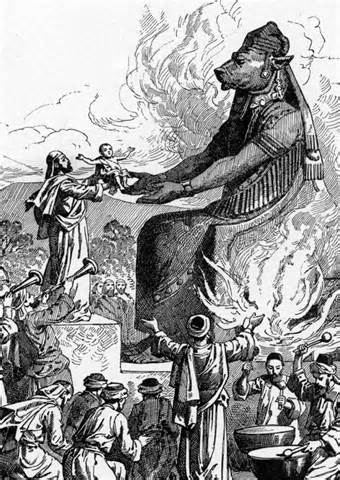
Moab and Midian worshiped Baal. According to mythology, Baal was son of the chief god, El, but rose to power above El, who was considered weak and impotent. (This is very similar to the story we read in Isaiah about how Satan fell.) Baal was a fertility god, so โ€œworshipโ€ consisted of sexual perversion including prostitution, and, often, the sacrifice of the first born thson. The religion of Baal took everything good and holy from Godโ€™s story (Godโ€™s name- El-elyon, El-shaddai, Satanโ€™s attempt to overthrow God, Satanโ€™s contempt for God, and Godโ€™s sacrifice of His firstborn Son) and turned it inside out for Satanโ€™s glory. This is what the Midianites were strategically drawing Israel into so that they could either defeat them or turn them into allies.

God showed His goodness by deciding to put an end to evil. He showed His love for Israel by protecting them from both Midianโ€™s schemes and from idolatry and its consequences. God showed His justice by punishing the rebellion of Midian.

Why didnโ€™t God just warn Midian and Israel to stop their evil ways? (Numbers 25, Exodus 20:2-6, Leviticus 26:30, Deuteronomy 4:3)
He did. And, he started with Israel, not Midian. Israel knew better. God had repeatedly told them idolatry was a gross sin (1st and 2nd Commandment) and that it was punishable by death (Lev. 26:30). He had all the Israelite chiefs impaled who had led the people into idolatry. He sent a plague that 1898234_10152272211290761_266294837_ndestroyed the 24,000 people who had bowed the knee to Baal. And, He showed, graphically, through Phinehas that God would not tolerate Israel joining itself to Midian. Finally, he gave the Midianites a taste of what was to come when He had Israel attack (but not annihilate) them at the end of chapter 25.

God would have much preferred both Israel and Midian repent of their idolatry than to put any of them to death here or in chapter 31. He was patient with them and continued to let them live and experience common grace in order that they might repent and turn to Him.

Why did God command Israel to kill โ€œinnocentโ€ women and children? (Psalm 51:1, Romans 3:10, 6:23, Samuel 12:22-23)
Note– Those women and children were not innocent. Every human is born in sin and rebellion against God.

The married women would have been adults, just as responsible for their sin of idolatry as the adult males who were killed. Had they been permitted to live, they would have continued to train their children in the ways of Baal worship, and the problem would have remained.

Though the male children may have suffered for a moment, we believe that they are in Heaven with Christ. Had they lived, they would have grown up (trained by their mothers) to be Baal worshipers, and as heads of their households, would have re-instituted Baal worship in Midian. Midian would have remained a threat (even more so because of the desire for revenge on Israel) militarily and in tempting Israel to idolatry.

The unmarried, young girls were allowed to live and marry Israelite men (even though they, too, were supposed to have been killed 31:15) because they would have had to conform to their husbandsโ€™ religion, the worship of Yahweh.

God showed His goodness in protecting the Israelites from Midian, in taking the male children to Heaven, and in sparing the young girls and allowing them to come to know Him through their marriage into Israel.

Godโ€™s exercising genocide on a people is a difficult issue to come to terms with. And, if itโ€™s difficult for us, we can only imagine how difficult it must be for God. He created these people. He loves them and desires to save them so much that He sent His Son to rescue them from His wrath. Genocide is not a flippant decision by a God who kills people casually, but a heart rending last resort for putting an end to evil so rampant that the people will not turn back from it.

Additional Resources:
What is Biblical Hermeneutics? by GotQuestions.org

Who Was Baal? by GotQuestions.org

Bible, Bible Study, Church

Context Message Me

gettysburg-veterans-public-domainYesterday, I saw several friends and organizations re-posting this articleย (and others like it) on Facebook. The gist of the article is about teaching the Gettysburg Address to students in a “stand alone” sort of way without teaching that it has anything to do with the Civil War. ย As a teacher myself, this seems utterly ridiculous to me. How can students grasp the full meaning, depth, and impact of the Gettysburg Address without knowing the history and events that led up to it, who wrote and delivered it, the people to whom it was delivered, and why it was delivered? Yes, a few things can be gleaned merely from the text itself, but is that all we want our students to learn about the Gettysburg Address? Are we satisfied for them to merely skim the surface of this document and leave with a superficial (and likely, incorrect) understanding of it, or do we want them to dig in and learn all they can about it?

And then it hit me:

What many of us would not abide in the classroom,
we embrace in the sanctuary.

Week after week, many Christians sit under pastors and Bible teachers who fail to preach and teach God’s wordย in context.ย A verse from one book is thrown in here, a half verse from another passage, there, like so many sprinkles on top of an ice cream sundae.

No mention is made of the historical (pre-Exile or post-Exile?) or cultural (Was this written to Jews or Gentiles?) context of the passage.

Prescriptive (thou shalt/shalt not do X) passages are conflated with descriptive (here’s what happened to this particular guy) passages, leading to confusion over law, grace, and precisely what it is that God wants from us.

Promises that were never meant for 21st century Christians (because they were written only to a specific person(s) at a specific time) are ripped away from their intended audience and plastered, bait and switch style, onto you and me. (I’ve always wondered why Jeremiah 29:11 is preached as applying to today’s Christians, but verses such as Jeremiah 29:17-19 are not.)

Pastors and teachers treat individual Bible verses and brief passages as “stand alone” items rather than showing how they fit into the immediate context of the surrounding passage and book, while simultaneously neglecting to show how those Bible tidbits fit into the broader, complete story of the gospel revealed across both Testaments.

Pastors and Bible teachers, myself included (and, believe me, I’ve failed many times in this area, too) are to care for those who sit under our teaching by doing our best to handle God’s wordย correctlyย (2 Timothy 2:15) and by preaching and teaching, as Paul put it, “the whole counsel of God” (Acts 20:26-27). May we as teachers not merely skim the surface of God’s word, but proclaim the Truth, the whole Truth, and nothing but the Truth. And may our hearers demand nothing less.