Welcome to another “potpourri” edition of The Mailbag, where I give short(er) answers to several questions rather than a long answer to one question.
I like to take the opportunity in these potpourri editions to let new readers know about my comments/e-mail/messages policy. I’m not able to respond individually to most e-mails and messages, so here are some helpful hints for getting your questions answered more quickly. Remember, the search bar (at the very bottom of each page) can be a helpful tool!
Or maybe I answered your question already? Check out my article The Mailbag: Top 10 FAQs to see if your question has been answered and to get some helpful resources.
A comment left on my Rock Your Role FAQs article…
How would this apply within marriage? My husband does not read the Bible..he claims to believe in God, but I don’t actually see him seeking. Is it wrong for me to share with him what I learn or read in my Bible? Thank you for your advice!!
I know that having an unsaved or less spiritually mature husband can be really difficult. I’m sure this is a question many of my readers are struggling with.
When you say, “How would this apply within marriage?” I’m not really sure if “this” means a specific question and answer within that article or if “this” means the biblical prohibition against women teaching men, in general. I’m going to go with the latter since I can’t guess the former. :0)
The biblical prohibition against women teaching the Bible to men has a very specific context: the gathering of the church body. Your marriage is not the gathering of the church body.
It is perfectly fine and biblical for you to share what you’re learning from the Bible with your husband if he is open and receptive to it. But, and this is important, it is also perfectly fine and biblical for you not to share what you’re learning from the Bible with him if he is not open and receptive to it, if it makes him angry, or if he tells you to stop nagging or preaching at him.
A lot of women in the New Testament church were in the very same position. They were saved, and their husbands were not. First Peter 3:1-6 was written just for them, and for you. I would recommend studying that passage as well as 1 Corinthians 7:16, Ephesians 5:22-33, and Proverbs 31:10-31 to guide your own behavior as a godly wife. And, if you think it would be helpful, you may want to work through my Bible study on biblical womanhood.
My article The Mailbag: Can I share the gospel with my unsaved husband? is another good resource. If you need help presenting the gospel to your husband, check out the What must I do to be saved? tab in the blue menu bar at the top of this page.
One more suggestion: Think about making an appointment with your pastor for some biblical counsel on being a gospel influence on your husband. You may want to also ask him to point you to (or you may already know) a godly older woman in your church who has walked faithfully through the situation of having an unsaved husband, and who can disciple you through this.
Do you have any information about the generational sin/curses teaching? I’d love to understand if this is a false teaching and if it is…understand what the Bible really says. I don’t buy into the fact my great great grandma was sinful and that is why someone in the family is messed up.
You’re correct, this idea is diametrically opposed to what Scripture teaches. Certainly our children can be hurt or negatively impacted by the sins we commit. They can learn sinful behavior from watching us sin. And we are all sinners by nature. But children don’t genetically inherit a particular sin(s) – say, for example, profanity or adultery – from their parents. And God doesn’t punish us for the sins of our parents or ancestors.
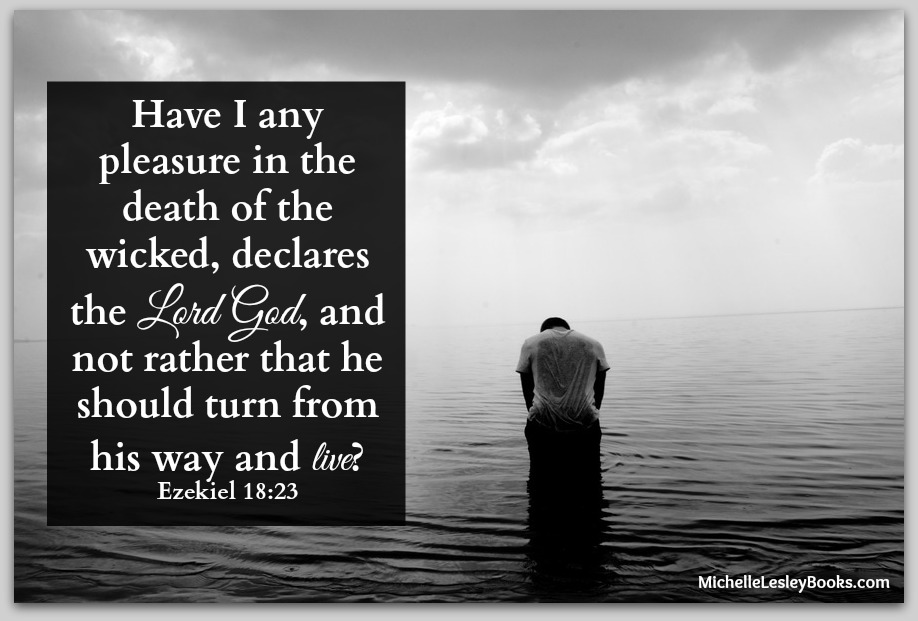
The absolute best resource for refuting this false idea is Ezekiel 18. It is so beautifully clear and such a wonderful picture of the gospel smack dab in the middle of the Old Testament. Give it a good study.
Additionally, we released a podcast episode a while back called What Do We Do with the Guilt of Generational Sin? that may help.
Does “The moon turning to blood” refer to what we consider a “blood moon”?
Not as it pertains to being a sign of Jesus’ return, no. I think you’ll find this article and this article to be helpful.
Do you think it’s possible for God to “honour” a women’s preaching that is bringing people to Christ?
This is really two separate questions about women preaching. Let’s break it down:
1. Can God graciously save someone, despite the fact that he’s sitting under a woman who’s sinning by pretending to be a pastor? Yes. He also saves people who are currently Mormons, currently being abused, etc. God can save anyone despite someone else’s sin.
2. Does the fact that God saves someone who’s under the influence or authority of someone who’s sinning mean that God approves of or honors the sin being committed? No. God doesn’t honor people for sinning.
God doesn’t honor or approve of Mormon false teachers just because someone happens to hear enough actual Bible to get saved while still in Mormonism. Mormonism is still idolatry, and that Mormon leader is still committing the sin of teaching false doctrine. Or, let’s say a pastor is secretly abusing his son. If the son gets saved during one of Dad’s sermons does that mean God honors or approves of the abuse? Of course not. It’s a display of God’s mercy and grace that God still saves people despite other people’s sin.
The same applies to someone who gets saved despite sitting under a woman who’s sinning by pretending to be a pastor.
Additionally, granting for argument’s sake that she’s actually preaching the biblical gospel, the fact that the woman “pastor” got that part right doesn’t excuse or make up for her sin of rebelling against God’s Word. If I work in a soup kitchen all week long, but every Saturday I go out and murder somebody, we know that my good works during the week don’t outweigh, excuse, or make up for the sin of murder. I still need to repent of being a murderer, and the woman “pastor” still has to repent from rebelling against God’s Word regarding her role in the church.
I was widowed a year ago, and a divorced man asked me to marry him but my pastor said it was absolutely forbidden. Can you please help me with this issue? The entire world is divorced!
Let me first offer my condolences for the loss of your husband. I can’t imagine how difficult that must be.
Have you asked your pastor to explain why* he said this? I’m not exactly sure of his reasoning, so let me just offer a few general thoughts.
One reason your pastor might have said this is that he holds to what’s called the permanence view of marriage. This view essentially says there are no biblical grounds for divorce (for anyone) and, thus, no biblical allowance for remarriage.
On the other hand, he may believe (as I, and many other Christians do) that, while reconciliation of a marriage is always the first and best goal, and that, in most cases, divorce is a sin, there are certain circumstances (chiefly adultery and abandonment) in which the Bible allows for divorce as a last resort. If that’s the case, depending on the circumstances of your gentleman friend’s divorce, your pastor may be saying that his divorce was not biblical, and, therefore, the two of you should not marry.
Finally, your pastor may have reasons aside from the divorce that would cause him to tell you not to marry this gentleman. Perhaps your pastor knows that he isn’t saved, that he is cheating on you, that he’s engaging in criminal activity, etc. I hope that’s not the case, but that’s the only other possibility I could think of.
I would suggest you talk to your pastor about this, hear him out on his reasoning, and compare his reasoning to rightly handled, in context Scripture. It could very well be that he’s offering you good, biblical counsel. Or…not.
*Readers, I’m not faulting anyone for asking me a question like this, but I often receive questions about why a certain person – whether it’s a false teacher, your husband, your pastor, a friend, whoever – did or said something, or what he meant by what he said or did. Generally speaking, I have no way of knowing why a particular person said or did a particular thing or what it meant. I can only speculate. If you want to know why someone did or said something, or what he meant, it’s best to go to that person and ask him or her directly.
If you have a question about: a Bible passage, an aspect of theology, a current issue in Christianity, or how to biblically handle a family, life, or church situation, comment below (I’ll hold all questions in queue {unpublished} for a future edition of The Mailbag) or send me an e-mail or private message. If your question is chosen for publication, your anonymity will be protected.