Guest Posts

Guest Post: How to Do Biblical Self-Counseling

If your theology pretty much matches up with mine (as outlined in the โ€œWelcomeโ€ and โ€œStatement of Faithโ€ tabs) and youโ€™d like to contribute a guest post, drop me an e-mail at MichelleLesley1@yahoo.com,
and letโ€™s chat about it.

How to do Biblical Self-Counseling
by Lara d’Entremont

I can be far too dependent upon others for growth and change. When a problem, question, decision, or sin becomes apparent in my life, my first step is to run to the comfort of others and seek their help. Thereโ€™s nothing inherently wrong with this; believers within the body of Christ are meant to support and build one another up. Galatians 6:1-2 says, โ€œBrethren, even if anyone is caught in any trespass, you who are spiritual, restore such a one in a spirit of gentleness; each one looking to yourself, so that you too will not be tempted. Bear one anotherโ€™s burdens, and thereby fulfill the law of Christโ€ (NASB).

However, the book of Galatians doesnโ€™t end there. If we keep reading, we find an interesting exhortation: โ€œFor if anyone thinks he is something when he is nothing, he deceives himself. But each one must examine his own work, and then he will have reason for boasting in regard to himself alone, and not in regard to another. For each one will bear his own load.โ€ (vv. 3-6).

So while fellow believers are to help, support, exhort, and encourage us, there comes a time when we must bear our own load and deal with our own sins. While your fellow sisters in the faith may be able to point sin out to you, give you advice to overcome it, keep you accountable, and pray for you, there comes a point where you need to step up and actually do something. We cannot rely on other people to change us and fix our issues. We need to do biblical self-counseling.

This is what Paul called, โ€œWorking out your salvation with fear and tremblingโ€ (Philippians 2:12). In other words, this is our side of sanctification. In realizing all this, I was intimidated. If you are feeling that same overwhelm, donโ€™t panic; I have a few steps to help you.

Step One | Choose an Issue to Work On

It may be tempting to become distressed by all the sins in your life and feel hopeless (at least thatโ€™s what I often experience). But we canโ€™t allow that to discourage us. Instead, simply choose ONE issue to attack.

Once you choose your sin or issue, find a journal and write out this problem in detail, explaining what it is, when it shows up, what causes it, and why you should stop it. I would also suggest doing some biblical research and finding a few Bible verses to support your decision and writing them down to memorize in the future.

At this point, you should also be confessing to those who have been effected by this problem, especially God. Heโ€™s the one our sin is truly against, and we must own up to it. Remember, โ€œIf we say that we have no sin, we are deceiving ourselves and the truth is not in us. If we confess our sins, He is faithful and righteous to forgive us our sins and to cleanse us from all unrighteousnessโ€ (1 John 1:8-9 NASB).

Step Two | Create a Thought Journal

You will want to create a thought journal in which you track when the problem shows up. Here is a list of things you could include in your thought journal:

  • The temptation/sin/emotional issue
  • The circumstance:
    • What happened?
    • Who was involved? What did they do and/or say?
    • How did you respond? (To the people and/or situation)
  • The unbiblical thought & response
    • What did you want in that situation?
    • What did you get that you didnโ€™t want in that situation?
    • What were your sinful thoughts in this situation?
    • What was sinful about how you responded? (provide Scripture)
  • The biblical thought & reaction: (provide Scripture for each answer)
    • How could you have reacted biblically?
    • How could you have changed your thinking to be biblical?

Answering questions like these will help you to see if there are any common denominators in your problem and help you root out the true root sin. For example, you may realize that your anxiety comes up whenever thereโ€™s a financial issue, which then leads you to realize that you love money too much. Knowing that, you can now better attack the sin; rather than managing your anxiety symptoms, you can work on loving money less.

If you would like a journal for your specific issue, you can find a few like that here.

I suggest keeping this journal during the entire process so you can see how you are improving on the issue as you go.

Step Three | Develop a Plan of Action

Now that we have a sin to attack and are learning what the root cause may be, we need to determine a biblical plan of action.

Start with choosing a few Bible verses to memorize. People sometimes undervalue the power of memorizing Scripture, but it is a great tool for overcoming sin. The Psalmist knew this: โ€œYour word I have treasured in my heart, that I may not sin against Youโ€ (Psalm 119:11 NASB).

Important Side Note: Please make sure you donโ€™t take a random verse and rip it out of context. Instead, study the passage and make sure it means what you have interpreted it to mean. This will also be helpful in both your memorization and conquering your issue.

Along with the Bible verses, find some biblical material to read on the subject. When I was working at my anxiety, I read Trusting God by Jerry Bridges, which taught me why I did not need to fear but instead trust God wholly. I suggest looking for resources on ACBCโ€™s approved reading list.

Through doing those steps, you should be able to create a put off (sins to stop) and put on (righteous actions to start) list. If you were struggling with anger, your list may look like this:

Put Off:

  • Angry outbursts
  • Impatience
  • Listening to angry music
  • Hitting things
  • Unkind words

Put On:

  • Kindness & patience
  • Trusting God with how people react
  • Praying in moments of anger

Finally, find at least two or three accountability partners to keep you on track. This doesnโ€™t mean confessing to two people who will never bring this up again. Find people who will be intentional and love you enough to ask, โ€œDid you sin today? Did you remember to put on patience?โ€ Find people who will remember you in prayer and are mature in their faith to provide biblical guidance.

Step Four | Rely On God

At this point youโ€™re probably feeling one of two things:

  1. Easy enough! Iโ€™ll be on my way to overcoming this sin on my own in no time.
  2. Itโ€™s too much! Iโ€™ll never be able to do all this on my own.

Neither of these feelings are biblical or helpful to the self-counseling process. Consider Paulโ€™s words to the Philippians: โ€œSo then, my beloved, just as you have always obeyed, not as in my presence only, but now much more in my absence, work out your salvation with fear and trembling; for it is God who is at work in you, both to will and to work for His good pleasureโ€ (2:12-13 NASB).

To the person who thinks this is easy and will be finished before the end of the week, remember that you are a depraved sinner incapable of change on your own. You are utterly dependent on God in this. That means itโ€™s in His timing and His power. So put off your pride and conquer your sin with reverent โ€œfear and tremblingโ€ knowing that it is โ€œGod who is at work in you, both to will and to work for His good pleasure.โ€

To the discouraged person, you are right that you cannot do it on your own! Congrats on humbly recognizing your own inability. Now, find courage and confidence, because you have the Holy Spirit working in you. Consider 2 Corinthians 12:9, โ€œBut he said to me, โ€˜My grace is sufficient for you, for my power is made perfect in weakness.โ€™ Therefore I will boast all the more gladly about my weaknesses, so that Christ’s power may rest on me.โ€ Find your boast in your weakness, realizing that your ability to conquer sin is found in the power of God.


Lara d’Entremont is a child of God, a wife, and Biblical Counselor in training. Having been made new by God and completely transformed by Him, her desire is to point others back to that same gracious Saviour. Find more of Lara’s writing at her blog, Renewed in Truth.


ALTHOUGH I DO MY BEST TO THOROUGHLY VET THE THEOLOGY OF THE BLOGGERS WHO SUBMIT GUEST POSTS, IT IS ALWAYS POSSIBLE FOR THINGS TO SLIP THROUGH THE CRACKS. PLEASE MAKE SURE ANY BLOGGER YOU FOLLOW, INCLUDING ME, RIGHTLY AND FAITHFULLY HANDLES GODโ€™S WORD AND HOLDS TO SOUND BIBLICAL DOCTRINE.
Discernment, False Doctrine, Guest Posts

Guest Post: A Reader’s Review of Wellspring Group

If your theology pretty much matches up with mine (as outlined in the โ€œWelcomeโ€ and โ€œStatement of Faithโ€ tabs) and youโ€™d like to contribute a guest post, drop me an e-mail at MichelleLesley1@yahoo.com,
and letโ€™s chat about it.

Yesterday, I published a new discernment article which included Wellspring Group. I did not find enough information online to be able to make a recommendation on whether or not this ministry is doctrinally sound. I subsequently heard from a reader (who wishes to remain anonymous) who has had some personal experience with this organization and agreed to share her thoughts. Though I have no reason to doubt her word, neither can I vouch for her as I do not know her personally. This information is provided for your consideration, and to give you some things to watch for, should your church decide to take part in this program.

Objections to the Wellspring Process and Theology

Questionable interpretation of Scripture to fit the Wellspring model and process.

Proverbs 4:23 is the key verse for the Wellspring process of living wholeheartedly. The NIV translation is used, which says โ€œAbove all else, guard your heart, for it is the wellspring of life.โ€ The whole Wellspring โ€œprocessโ€ focuses on needing to understand our heart, that God is found in the deepest desires of our heart. This concept is not found anywhere in Scripture.

The Bible doesnโ€™t describe God as being at the depth of our desires (in fact Jeremiah (17:9) said the heart is wicked and deceitful above all things, and beyond cure, and who can understand it?)

We are to love the Lord with all our heart, mind, soul and strength (Luke 10:27), which indicates our whole being, not four different levels of our heart.

The NASB reads, โ€œWatch over your hearts with all diligence, for from it flows the springs of life.โ€ When reading over Proverbs 4 in context we see that wisdom is the focus, not the desires of our heart. Wisdom is the thing we need to guard because from wisdom comes [abundant] life.

Verse 23 has to be pulled out of context to fit the Wellspring concept. The heart becomes the focus (and then an entire โ€œprocessโ€ is built from that assumption) when wisdom is real the focus of the passage. The Bible indicates that wisdom is what will provide the abundant life for us, not a deep and exhaustive understanding of our heart and its desires.

The manual says, โ€œFollow your desires deep enough and you will find God and the image of God in you.โ€ Where is this found in Scripture?

Hebrews 12:1 describes the โ€œcloud of witnessesโ€ and is understood by participants as people who have died who are watching us, as well as our โ€œdomainโ€ – the community of people we are in contact with in our life. Biblically, the cloud of witnesses is not a group of people in Heaven watching us, they are believers who have passed on who witnessed the truths of Scripture and Jesus. Hebrews 11:39-40 describes who these people are. (How this plays out in the Wellspring process is described below under the Fellowship concept.

The cloud of witnesses is the group of people listed in Hebrews 11, โ€œthe great Hall of Faithโ€. The author of Hebrews ends chapter 11 with his main point for listing them, โ€œthey gained approval through their faith and didnโ€™t receive what was promised because God provided something better.โ€

Chapter 12 begins with โ€œThereforeโ€, i.e. because God provided something better than fulfilling the promises He made to these people during their lifetime, we โ€œlay aside every encumbrance and the sin which so easily entangles us and run with endurance the race set before us.โ€

The point of 12:1 is not that the cloud of witnesses will protect us and whisper to us and propel us into Godโ€™s story. The manual includes, โ€œPraying the Four Realitiesโ€ citing, โ€œI see the Communion of Saints surrounding me and cheering me on to persevere all the way to the final Consummation.โ€ Biblically they are not a group of people cheering us on, their lives left us a legacy to be followed.

The โ€œFellowshipโ€ concept.

The Fellowship is described as consisting of the Trinity, the Body of Christ, the Word of God in Scripture and the Communion of Saints (the cloud of witnesses). A circular drawing in the manual indicates that all four parts of the Fellowship are equal. Supposedly this โ€œFellowship desires to protect you.โ€

The communion of saints, whether defined as Wellspring does or as the Bible does, ARE NOT equal with the Trinity.

The Battle for Your Heart manual describes this Fellowship as one entity, having characteristics of personality:

โ€œThe Fellowship is pursuing you.โ€

It is suggested that we interact with this โ€œentityโ€, โ€œAbove all else, do whatever it takes to cooperate with the Fellowship that desires to protect you.โ€

This entity supposedly motivates us, โ€œThe Fellowship not only desires to protect you but also to propel you into your part of the Story as an intimate ally.โ€

This entity supposedly talks to us – members are asked after viewing a clip from the movie Bagger Vance, โ€œWhat do you hear the Fellowship whispering to you through this scene?โ€ Later in the manual the same question is asked after viewing a clip from Good will Hunting. (If by โ€œwhisperโ€ they merely means โ€œteachโ€ then why doesnโ€™t he use the word teach? Why make it creepy?)

The Fellowship supposedly โ€œwalks with usโ€ โ€“ on the website under a description of the Womenโ€™s program it says this, โ€œItโ€™s a rigorous, demanding experience that opens up your whole hearts, gives you clear path to change and connects you to The Fellowship that will walk with you into your part of Godโ€™s Larger Story.โ€

Participants are told that The Fellowship through Godโ€™s voice will give you a new name โ€“ this is a misconstruing of Revelation 2:17. Jesus will give us a new name after He returns. This indicates that we can receive personal revelation from Jesus, which is not Scriptural.

The manual states โ€œThe only way you can win that Battle (for your heart) and live in your part of the Story that is yours and yours alone is through intimately engaging with the Fellowship that desires to protect you and propel you into that Story.โ€

Again, this is not Scriptural. That statement follows this one, โ€œonly through your heart can you discover and live in your part of Godโ€™s Story.โ€ Wellspring has missed the emphasis of the Bible – that we are to understand God by studying Scripture (not our heart) and then to think and behave by following Jesusโ€™ example and the illustrations presented by the lives of people who did what pleased God.

Exclusivity – which is bound to cause division among people, between the Wellspringers and the nonWellspringers who donโ€™t understand the lingo and are not โ€œliving out of their whole heartโ€.

They indicate that the deeper life is only found through Wellspring. The creator of Wellspringclaims that rarely do people learn to live out of their โ€œwhole heartโ€ without the Wellspring process. This quote is found on the website under the Process for Women, โ€œThere is something in the life of every woman that fuels her deepest desires โ€“ for relationship, for value, for connecting with her destiny. The Bible calls this hidden source of life a wellspring. Few find it. But for those who do, a world of change is possible. The Battle for the Heart process helps you discover this wellspring in your own life.โ€

Wellspring alone. People are encouraged not to do any other small groups besides Wellspring – on the website under FAQs there is a question, โ€œCan I participate in this process and another small group at the same time?โ€ The answer says thatโ€™s up to them but โ€œmany find that they need to back off of another group for a year in order to fully engage in the Battle for the Heart process.โ€ So does that mean no other Bible study is needed? That should send up warning flags. It has been observed that many of the participants drop out of Bible studies in order devote all their time to studying the Wellspring concepts, which is NOT a Bible study.

Wellspring has the secret. (Very gnostic) The manual states that โ€œunless you understand the context of this Story (Godโ€™s Larger Story) and where you are in it, you will be confused, disoriented, effectively taken out of the battle.โ€ The booklet doesnโ€™t describe what this Larger Story is, so obviously you have to attend the retreat to gain this information if you donโ€™t want to be confused, disoriented, etc. The Larger Story is described in the workbook as something you can only find by living โ€œwholeheartedlyโ€ out of the four levels of your heart. And unless you learn the Wellspring process you wonโ€™t be able to do that.

The manual states, โ€œWe can only be fully human as we experience the redemptive love of Christ at all four levels of our hearts and then express that love from all four levels of our hearts.โ€ Unless you take the WS courses you wonโ€™t know what the four levels are because they are not taught in the Bible.

Completely new vocabulary. This can cause two groups at church โ€“ those who understand the vocabulary and those who do not. Throughout the entire booklet there is new vocabulary that no one will understand unless they go to the retreat. There isnโ€™t enough information in the booklet to define this vocabulary and it is used very differently from biblical language.

Godโ€™s Larger Story. What is larger than the story of redemption through Jesus and learning to live according to His commands and by His example? You have to attend the retreat to find out what this larger story is and how you fit into it.

Implication that a church is insufficient without the inculcation Wellspring process.

People are encouraged on the website to get their churches involved as partners with Wellspring after they attend all four retreats.

Under the FAQs the question is asked, โ€œWhy consider the Battle for the Heart Community Process?โ€ The answer shows the reader their absolute need for this process (that canโ€™t be found anywhere else but Wellspring), โ€œWhen leaders are not living from their whole hearts (defined biblically as their thoughts feelings, desires and choices), their lives suffer, their relationships suffer, and their service in the body of Christ is hindered.โ€ Then several examples are listed of what this looks like:

โ€œPeople will talk about the love of God, but donโ€™t experience that love in a way that results in significant, sustained change.โ€

โ€œAchieve objectives, but often with significant collateral relational damage.โ€

โ€œUnconsciously seek approval from God through performance instead of
performance flowing out of love for God and being loved by God.โ€

โ€œLive in marriages where they are committed to their spouses, but there is little true intimacy, and they become โ€œroommates on the way to heaven.โ€

โ€œBecome unable to effectively experience and express their own emotions and desires or effectively experience the desires and emotions of those they love the most.โ€

While some of those statements may be true in some peopleโ€™s lives, Wellspring is not the only place to find healing in these areas, yet the website indicates that โ€œfew find itโ€ aside from learning and following the Wellspring concepts. The Word of God is what changes us, โ€œFor the Word of God is living and activeโ€ฆโ€ Hebrews 4:12a ESV.

Implied insufficiency of Scripture.

Film clips are used during the courses to illustrate the four levels of the heart and the elevator model of the heart. The manual states, โ€œTo assist you in getting in touch with all four levels of your heart we will ask questions after film clips and in your team meetings designed to help you go down the elevator.โ€

This is a huge red flag – The films they show clips of are made by Hollywood and rarely based on Scriptural principles. While they can have good illustrations about life, they should not be substituted for the Word of God when we are trying to grow closer to God.

The manual states that connecting on all four levels is really only possible with other Wellspring attendants, as implied in the manual, โ€œKnowing your own heart at all four levels is the foundation for effectively connecting with others at all four levels of their heart.โ€

Again, this is secret knowledge that only those that attend Wellspring will gain, implying that the Bible alone is not sufficient for learning how to effectively connect with others.

The Bible is not the only source of Wellspring ideas, the manual states that โ€œThe Battle for the Heart draws upon ancient spiritual disciplines, such as reflective reading of Scripture, contemplative prayer and the power of intimate fellowship, and places them in an organic structure.โ€

The website at one time recommended reading books by John Eldridgeโ€™s and David Benner, who are both followers of โ€œmysticโ€ Christianity.

Overall, the Wellspring program encourages an unhealthy focus on self. Supposedly we find God from intense introspection, understanding an unbliblical concept of our heart and its four levels, searching within our deepest desires and through watching movie clips to gain insight. All of that is NOT what Scripture teaches.

Basic Training, Church

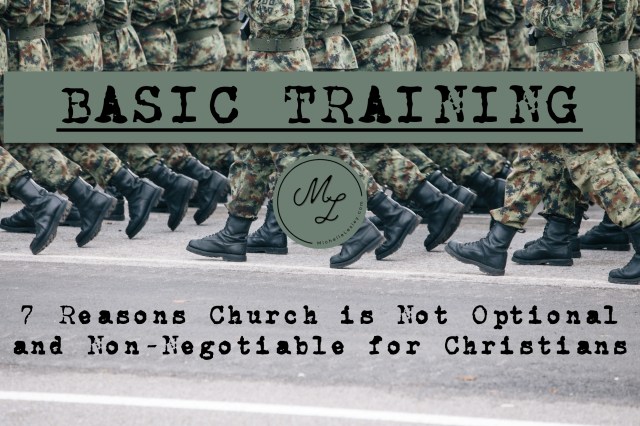
Basic Training: 7 Reasons Church is Not Optional and Non-Negotiable for Christians

For more in the Basic Training series, click here.
It’s a disturbing trend that’s spreading like the plague among evangelicals who claim to be Believers:

“I’m a Christian but I refuse to attend church.”

These aren’t people who can’t attend church due to health reasons, caring for an ill or disabled loved one, who have no other choice but to work some Sundays, or who live in an area with no reasonably doctrinally sound church to attend. They’re people who could get plugged in to a decent local church, but intentionally shun the body of Christ.

Usually, the decision to opt out of church boils down to one of two scenarios: a) a Believer who was hurt by a previous church and yet isn’t ready to risk being hurt again or b) someone (often a false convert) who doesn’t grasp the concept that being joyfully joined to a local body of believers is part of what defines someone as a Christian.

I can tell some of y’all have already fired up your e-mail programs or mentally formulated a corrective comment. Hang on, and please read what I’m about to say so we’re all on the same page here. I am not saying, have never said, and will never say that attending church, joining a church, serving at a church, or being baptized into a church is what saves a person, even in part. Going to church doesn’t make you a Christian. Everybody with me? Scripture is clear that salvation is by grace alone through faith alone in Christ alone, and that good works, such as church attendance, play zero part in a person’s salvation.

What I am saying is that one of the signs, or fruits, that someone is already saved is that she has a heartfelt love and affection for the things of God, which includes the gathering of the saints for fellowship, worship, encouragement, and edification. For a Believer, love for the bride of Christ is a natural extension of loving Christ, Himself. A Believer doesn’t have to be talked into attending church; there’s no place on earth he or she would rather be.

For a Believer, love for the bride of Christ is a natural extension of loving Christ, Himself. A Believer doesn’t have to be talked into attending church; there’s no place on earth he or she would rather be.

We’ve all been in difficult situations with difficult people at church that can hurt, sometimes deeply – believe me, I’ve been there – and can leave us in need of taking a few Sundays off to recover, or possibly the need to change to a healthier church. But if you’ve harbored antipathy toward the church, as a whole, for years, have never taken joy in fellowshipping and worshiping with fellow believers, don’t see any particular need for gathering with the Body, or are generally apathetic in your attitude toward church, you’re in a very dangerous place, spiritually, and you need to question your salvation. Those are symptoms of being lost, not fruit of being saved.

For Christians, being joined to a local church is not optional and non-negotiable. Why?

1. God Says So

Just in case the entirety of the Bible isn’t clear enough that God wants His people meeting together for fellowship, worship, and the Word, He says so very bluntly in Hebrews 10:24-25:

And let us consider how to stir up one another to love and good works, not neglecting to meet together, as is the habit of some, but encouraging one another, and all the more as you see the Day drawing near.

The HCSB puts it this way: “not staying away from our worship meetings, as some habitually do,” and NASB says: “not forsaking our own assembling together.” God says we are not to neglect, stay away from, or forsake, the meeting of the church body. For anyone who claims to be a Christian, that reason alone ought to be good enough. When God tells us to do something, we do it. Period.

2. The Church is God’s Plan for Christians

God doesn’t need or want your help devising the best methodology for your life and growth as a Christian. He already has a plan. He already established that plan. That plan is the church. There’s no plan B nor any cafeteria-style options. If you’re a Christian, God’s plan for you is to be a faithful part of a local body of Believers. The Bible never suggests that it’s OK for you to be a “Lone Ranger Christian.” There are no explicit statements to this effect, nor even one example of a New Testament Christian who lived life apart from the church. The New Testament assumes Christians will be part of a church. If not, the majority of Matthew through Revelation would be moot. If you reject membership in the local church, you’re rejecting God’s Word and His way in favor of your own way.

If you reject membership in the local church, you’re rejecting God’s Word and His way in favor of your own way.

3. Jesus Values the Church

You claim to love and follow Jesus, right? Well, Jesus founded the church. Jesus is the head of the church. Jesus loves the church. Jesus died for the church. Jesus is the Savior of the church. Jesus nourishes, cherishes, and sanctifies the church. How could anyone claim to love and follow Jesus and yet cavalierly toss aside something He values so much that He laid His life down for it? If you really love Jesus, you’ll value the things He values, and, clearly, He values the church.

If you really love Jesus, you’ll value the things He values, and, clearly, He values the church.

4. Being Joined to the Church Is an Indicator of Salvation

First John 2:18-19 makes no bones about it. Forsaking the church is an indicator that you’re not saved:

…now many antichrists have come…They went out from us, but they were not of us; for if they had been of us, they would have continued with us. But they went out, that it might become plain that they all are not of us.

Want to make it plain that you’re not of Christ? Step one is to leave the church.

5. The Church is the Dispensary for the Word and the Ordinances

The preaching and teaching of God’s Word. Baptism and the Lord’s Supper. In order to preserve their purity and sanctity, God established a hierarchical structure of ecclesiastical authority and placed the responsibility for administering Scripture and the ordinances with the church, not isolated individuals. Do we have women’s Bible studies and Sunday School classes? Of course. But only under the oversight of our pastors and elders, as an outflow of, and in keeping with, the preaching and teaching ministry of the church. Do we share the gospel with the lost we encounter during the week? You bet! Our churches enable us to do so by training us in the Word, and we bring new Believers back to our churches so that they may be discipled.

6. The “One Anothers”

Love one another. Comfort one another. Forgive one another. Serve one another. Bear one another’s burdens. Confess your sins to one another and pray for one another. Have you ever stopped to think which people “one another” is referring to? It’s easy to see when you look at these verses in context. It’s our brothers and sisters in Christ. All of the New Testament “one anothers” are written to the church. You need brothers and sisters to minister the “one anothers” to you, and your brothers and sisters need you to minister the “one anothers” to them. We cannot properly carry out the “one anothers” outside the church because they were meant to be practiced first and foremost within the church.

We cannot properly carry out the “one anothers” outside the church because they were meant to be practiced first and foremost within the church.

7. Sheep Need Shepherds

The Bible often uses sheep as a metaphor for God’s people. And since we know that God is the author of Scripture, we know God handpicked that metaphor to describe us. Ever notice that God never describes a sheep wandering off on its own as though that were a good thing?

All we like sheep have gone astray; we have turnedโ€”every oneโ€”to his own way;
Isaiah 53:6a

I have gone astray like a lost sheep; seek your servant,
Psalm 119:176a

When he saw the crowds, he had compassion for them, because they were harassed and helpless, like sheep without a shepherd.
Matthew 9:36

What do you think? If a man has a hundred sheep, and one of them has gone astray, does he not leave the ninety-nine on the mountains and go in search of the one that went astray?
Matthew 18:12

Sheep who leave the flock to make their own way in the world are in danger from wolves, the pitfalls of sin, and any number of other perils, especially the trials and tragedies of life. I can’t tell you how many e-mails I’ve received from distraught Christian women in dire personal circumstances who desperately need pastoral counsel. Sadly, when I tell them I’m not equipped to help them with such a complicated problem from so far away and that they need to make an appointment with their pastor for one on one, face to face counseling, the response is often, “I haven’t been going to church. I don’t have a pastor.”

We need the protection of the sheep pen, the brotherhood of the flock, and the leadership of our shepherds, our pastors, to help guide us. God knew we needed those things. That is one reason He established the church and created the position of pastor. Christ is our Good Shepherd, but until He returns, He has appointed godly men to watch over and protect the flock in His absence:

When they had finished breakfast, Jesus said to Simon Peter, โ€œSimon, son of John, do you love me more than these?โ€ He said to him, โ€œYes, Lord; you know that I love you.โ€ He said to him, โ€œFeed my lambs.โ€ He said to him a second time, โ€œSimon, son of John, do you love me?โ€ He said to him, โ€œYes, Lord; you know that I love you.โ€ He said to him, โ€œTend my sheep.โ€ He said to him the third time, โ€œSimon, son of John, do you love me?โ€ Peter was grieved because he said to him the third time, โ€œDo you love me?โ€ and he said to him, โ€œLord, you know everything; you know that I love you.โ€ Jesus said to him, โ€œFeed my sheep.
John 21:15-17

And he gave…the shepherds and teachers, to equip the saints for the work of ministry, for building up the body of Christ,
Ephesians 4:11-12

So I exhort the elders among you…shepherd the flock of God that is among you, exercising oversight, not under compulsion, but willingly, as God would have you; not for shameful gain, but eagerly; not domineering over those in your charge, but being examples to the flock. And when the chief Shepherd appears, you will receive the unfading crown of glory.
1 Peter 5:1-4

You can’t shepherd yourself. That internet pastor you listen to – even the most doctrinally sound one – can’t shepherd you. You need to be part of a flock led by a shepherd who knows you and cares for your soul.

Do you take joy in gathering regularly with your brothers and sisters in Christ for worship, the Word, the ordinances, building one another up, and serving one another? If not, the solution is not to leave the church altogether. The solution is to examine your heart against Scripture to discover whether or not you’re truly saved, and then to find a healthy church you can pour yourself into. Christ has given believers the local church as a blessing and a benefit, not a burden and a bore. Love and embrace this precious gift He has lavished on you.


Additional Resources

Searching for a new church?

What the Bible Says About Church Membership

Six Ways Not to Forsake the Assembly 

7 reasons worshipers need the church at The Cripplegate

Mailbag #49: Home Groups Over Church at 9Marks

My Jesus, I Love You; Your Bride I Despise! at Reformation21

Why You May Be Tempted To Neglect Your Church by Tim Challies

Five Essential Reasons for Christians to Gather in Public Worship at Ligonier

Prioritize Your Church by Tim Challies

Is a โ€œChurchless Christianโ€ an Oxymoron? at Ligonier

The Plight of Churchless Christians at The Cripplegate

40 reasons to be part of a local church at The Cripplegate

Church Attendance Is Not Optional on the G3 Podcast

Is it Necessary for Me to Join a Local Church? at G3 Ministries
Basic Training, Bible, Bible Study

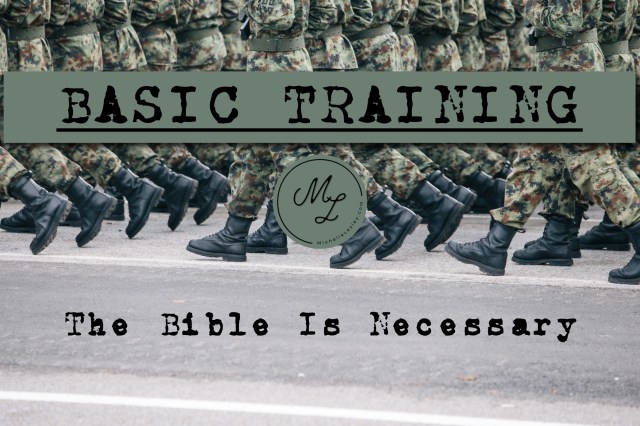
Basic Training: The Bible is Necessary

For more in the Basic Training series, click here.

Then Jesus was led up by the Spirit into the wilderness to be tempted by the devil. And after fasting forty days and forty nights, he was hungry. And the tempter came and said to him, โ€œIf you are the Son of God, command these stones to become loaves of bread.โ€ But he answered, โ€œIt is written, โ€œโ€˜Man shall not live by bread alone, but by every word that comes from the mouth of God.โ€™โ€
Matthew 4:1-4

I have not departed from the commands of His lips; I have treasured the words of His mouth more than my daily food.
Job 23:12

More to be desired are [the words of God] than gold, even much fine gold; sweeter also than honey and drippings of the honeycomb.
Psalm 19:10

I have a question for you. Try to answer it within three seconds.

Where’s your Bible? (Not the one on your phone or computer- your real Bible.)

Were you able to answer in three seconds because you read it today and remember where you left it when you were finished? Because it stays on your night stand and rarely gets opened? Did it take longer than three seconds because you frequently carry it around with you and can’t remember where you most recently left it?

The point of the question isn’t really where your Bible is in geographical relationship to you, but where you are in relationship to your Bible.

David said God’s word was more valuable to him than gold, even much fine gold.

Job said he treasured God’s word more than his daily food.

Jesus hadn’t eaten a bite in over a month, and He still valued every word that comes from the mouth of God over bread.

If someone put a stack of fine gold in front of you and said you could have it as long as you hardly ever read your Bible, would you take it?

What if you had gone without food for forty days and someone offered you a loaf of bread in exchange for your agreement to put your Bible away and open it only rarely? Could you withstand the temptation?

I’d like to believe I would choose God’s word over a stack of gold or even life-sustaining food. But when I think about all the lesser things I sometimes choose to do instead of setting aside time to study God’s word…

…television
…social media
…reading
…sleeping
…hobbies

…well, I can’t help but wonder:

Do I really value God’s word as deeply as He wants me to?

We need God’s word. It is more necessary to us, spiritually, than food is to us, physically. Yet many Christians unintentionally starve themselves spiritually, thinking a “meal” or two of Scripture at church every week (if they actually attend every week, that is) is enough to sustain them. It’s not. We need to feast on God’s written Word every single day.

We need to know who God is

Saved people are in a one-on-one, personal relationship with God. But how can you have a relationship with someone you don’t really know? How can you love Him, please Him, or enjoy spending time with Him if you know nothing about Him? His character, His attributes, His likes and dislikes, the way He operates – these are all integral to knowing this God who created and saved us. And in His infinite love, God has chosen to reveal all these things about Himself in a book we call the Bible.

We need to know who we are

Just as an employee can’t rightly relate to her employer if she doesn’t understand her role, her place, and her responsibilities, we can’t rightly relate to God unless we understand both who He is and who we are in relationship to Him. We need to understand that He is God and we are not. That He is perfect in holiness and righteousness and we are depraved from the womb. That we are sinners in need of a Savior, created for the purpose of bringing glory to God, servants of the most high King. The only place to learn all of this, and more, about who we are, and where we stand with God, is in the pages of His word.

We need to know what God wants from us

What does God want me to do with my money? How can I be a godly wife if my husband is unsaved? Does God think it’s important for me to go to church? Is it always a sin to lie? Is it wrong to watch pornography? In addition to being a revelation of the nature and character of God, the Bible is also an intensely practical book, instructing Christians on issues of every day life and helping us to understand how God wants us to think, act, and speak. God knows we have questions and in His kindness and mercy has provided all the answers we need in Scripture.

We need to hear from God

While the idea and practice of “hearing God’s voice” is unbiblical, the desire to commune with God- to visit with Him as a loved one – is not. We only have to look back to the Garden of Eden to see that God’s perfect design was for people to fellowship with Him. Because of the Fall, we can’t do that face to face this side of Heaven. For now, we talk to God through prayer and worship. He talks to us through His written Word. Constant communion with God deepens our love for Him and increases our Christlikeness.

More than daily food. More than gold. More than any earthly pleasure, wisdom, or experience, we need God’s word. And we need it every day, all the days of our lives.

Doctrinally Sound Teachers

Even More Biblically Sound Blogs and Podcasts by Christian Women

even-more-blogs-podcasts

This article has been updated and moved. You can now find it at:

Doctrinally Sound Christian Women to Follow โ€“ 3