Discernment

Tara Leigh Cobble, The Bible Recap, & D-Group

If you are considering commenting or sending me an e-mail objecting to the fact that I warn against certain teachers, please click here and read this article first. Your objection is most likely answered here. I won’t be publishing comments or answering emails that are answered by this article.


This article is kept continuously updated as needed.
I get lots of questions about particular authors, pastors, and Bible teachers, and whether or not I recommend them. Some of the best known can be found above at my Popular False Teachers tab. The teacher below is someone I’ve been asked about recently, so I’ve done a quick check (this is brief research, not exhaustive) on her.

Generally speaking, in order for me to recommend a teacher, speaker, or author, he or she has to meet three criteria:

a) A female teacher cannot currently and unrepentantly preach to or teach men in violation of 1 Timothy 2:12. A male teacher or pastor cannot allow women to carry out this violation of Scripture in his ministry. The pastor or teacher cannot currently and unrepentantly be living in any other sin (for example, cohabiting with her boyfriend or living as a homosexual).

b) The pastor or teacher cannot currently and unrepentantly be partnering with or frequently appearing with false teachers. This is a violation of Scripture.

c) The pastor or teacher cannot currently and unrepentantly be teaching false doctrine.

I am not very familiar with most of the teachers I’m asked about (there are so many out there!) and have not had the opportunity to examine their writings or hear them speak, so most of the “quick checking” I do involves items a and b (although in order to partner with false teachers (b) it is reasonable to assume their doctrine is acceptable to the false teacher and that they are not teaching anything that would conflict with the false teacher’s doctrine). Partnering with false teachers and women preaching to men are each sufficient biblical reasons not to follow a pastor, teacher, or author, or use his/her materials.

Just to be clear, “not recommended” is a spectrum. On one end of this spectrum are people like Nancy Leigh DeMoss Wolgemuth and Kay Arthur. These are people I would not label as false teachers because their doctrine is generally sound, but because of some red flags I’m seeing with them, you won’t find me proactively endorsing them or suggesting them as a good resource, either. There are better people you could be listening to. On the other end of the spectrum are people like Joyce Meyer and Rachel Held Evans- complete heretics whose teachings, if believed, might lead you to an eternity in Hell. Most of the teachers I review fall somewhere in the middle of this spectrum (leaning toward the latter).

If you’d like to check out some pastors and teachers I heartily recommend, click the Recommended Bible Teachers tab at the top of this page.


Tara-Leigh Cobble, or “TLC” as she likes to be called, “began her ministry as a singer-songwriter, performing her own songs and leading worship around the globe. After her first book was published, she added speaking to her repertoire. As a musician, writer and speaker, she spent more than a decade touring internationally before creating D-Groups and finding a home and community for herself in Dallas, Texas.”

More from Tara-Leigh’s bio: “I started D-Group (Discipleship Group) [with] a handful of college students in 2009 and it has grown into 250+ groups around the world…I love to speak to audiences about God and His Word, and I’ve written a few books with an aim to point others toward Him through my story as well as their own. I also write and host a daily podcast called The Bible Recap, which aims to keep people connected to reading the Bible when they’re tempted to quit for lack of understanding, as well as a daily radio show called The God Shot.”

In late 2021 / early 2022, requests started flooding in for me to review Tara-Leigh, mainly due to the fact that many were preparing to begin a “read through the Bible in a year” plan in January. They wanted to know if the suddenly popular program, The Bible Recap (TBR) – Tara-Leigh’s brief daily podcast “recapping” each day’s reading in a one-year chronological reading plan – was doctrinally sound and whether or not they should use it. To that end, I began listening to TBR and researching it, Tara-Leigh, and D-Group.

The Bible Recap (TBR)

I listened to about two dozen of the first 60 episodes of the “year 4” TBR season, making notes along the way. In each 5-10 minute episode, Tara-Leigh briefly summarizes that day’s reading and adds a few comments, ending with a “God Shot” – a point from the reading that stood out most to her, personally.

For the most part, I didn’t hear much that was biblically problematic in the TBR episodes I listened to. But someone spending eight minutes basically reiterating the primary facts from a passage of Scripture and getting it mostly right isn’t an automatic indicator that she’s doctrinally sound. False teachers can do that. Atheists can do that. Perfectly doctrinally sound pastors and teachers can do that. People everywhere on the spectrum between those two extremes can do that.

There were several times I thought that the way Tara-Leigh worded something wasn’t necessarily wrong, but also wasn’t as clear or precise as it should have been, and that people who were new to reading the Bible (a significant portion of her target audience) could have easily misunderstood. I didn’t make any notes on those instances because they didn’t rise to the level of false doctrine, and we’ve all had times when we could have worded something better.

I did make some notes on several other points. Here are just a few:

  • Day 002 episode: โ€œWe donโ€™t want to scream where Scripture whispers.โ€œ An unfortunate choice of words, or was she echoing the sentiment from J.D. Greear – “We ought to whisper about what the Bible whispers about and we ought to shout about what it shouts about.” – that Southern Baptists in the know are all too familiar with? (TBR does include resources from Greear.)

    โ€œGod let Noah know that this was only the beginning of their relationship.โ€œ (Referring to Genesis 6:18). This is probably just a poor choice of words meant to indicate that this was the beginning of the Noahic covenant, or that God was reassuring Noah that he wasnโ€™t going to die, but this is technically incorrect. Noah already had a relationship with God. Thatโ€™s indicated by the fact that God had a conversation with Noah in 6:13-22, and it’s also why God found Noah to be the only righteous person on earth.
  • Day 003 episode: After the flood, the earth was not โ€œmuddy and grossโ€œ as Tara-Leigh describes it. Genesis 8:13-14 is clear that the land dried up completely. Furthermore, in the flood, God re-created the earth. It may not have had the holy perfection of Eden since this was post-Fall, but the God who deemed His Creation “good” in Genesis 1 didn’t re-create a chaotic and disheveled world that looked like a natural disaster had just hit it, either.
  • Day 008 episode: “Are there times when God speaks to us? I believe God’s Spirit does give impressions to His children. After all, one of His names is ‘Guide’…Saying, ‘God told me X,’ carries a lot of certainty with it. I’d be more likely to say it this way, ‘I feel like God was saying X,’ or, ‘I feel like God was impressing this on my heart.’.

    Tara-Leigh is teaching extra-biblical revelation here because she’s a continuationist (more below). Extra-biblical revelation undermines the doctrine of the sufficiency of Scripture. Of course, God guides us. And the way He guides us is through His all-sufficient written Word, as He tells us Himself. Reading, believing, following, and obeying the written Word God the Holy Spirit breathed out is being led, or “guided,” by God.

    Furthermore, all throughout Scripture, when God spoke, there was absolute, stake your life on it certainty. If you weren’t certain it was God speaking to you, you’d better keep your mouth shut or risk execution. If you were certain it was God speaking to you, you’d better open your mouth and boldly proclaim exactly what He said, or risk execution. If the holy God of the universe is speaking to you, you dare not mealy mouth or equivocate. And if He’s not, you dare not say He is. There’s no fence-sitting on this one.

    Finally, this “I feel” language again undermines the sufficiency of Scripture, and reinforces an all too common false doctrine in the church: believing, trusting, and obeying our subjective feelings and personal experiences over God’s written Word. And because that is a place and position only Scripture should occupy, that false doctrine, believed and practiced by so many, is idolatry. (Hear me clearly: I’m not saying that Tara-Leigh believes in, practices, or holds to this form of idolatry herself, only that this type of “I feel” language reinforces this sort of idolatry that others cling to.)
  • Day 043 episode: Tara-Leigh talks about the glory of God filling the tabernacle as a cloud, and the fact that Moses could not go into the tabernacle because of that glory cloud. She says there was a โ€œdensityโ€œ to Godโ€˜s glory, and gives the example that she has never been in a plane that had to fly above a cloud because it could not physically pass through the cloud.

    This passage does not mean that Godโ€™s glory was a tangibly impassable barrier, like a brick wall. It means that God’s manifest glory was so magnificent and intensely powerful that it was too overwhelming for Moses to go into the tabernacle. Itโ€™s possible Tara-Leigh didnโ€™t mean to convey that God’s glory was physically tangible, but I think thatโ€™s what most people are going to take away from what she said.

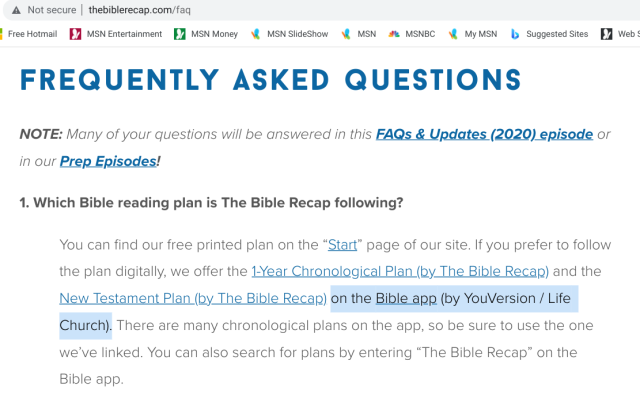
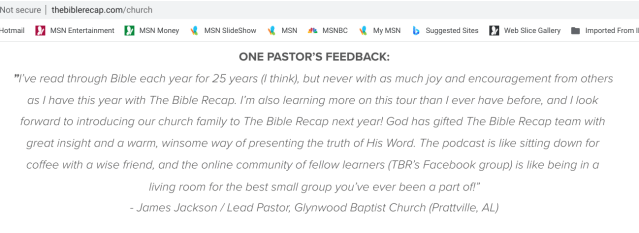
TBR recommends and partners with the YouVersion app. Although many people do not realize that YouVersion was created by and is maintained by false teacher Craig Groeschel’s LifeChurch.tv (it also features devotions and other materials by numerous false teachers), Tara-Leigh apparently does, and has partnered with YouVersion by platforming TBR there:
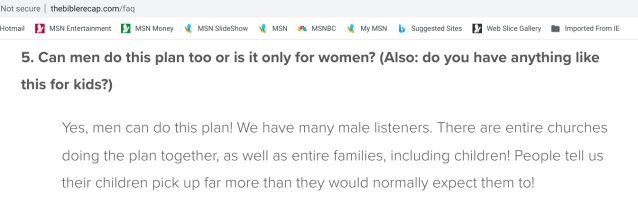
Tara-Leigh teaches the Bible to men, without reservation, through TBR. It is one thing for a woman to have a Bible teaching program or materials specifically for women available to the public and not be able to control who uses it. It is another thing all together to welcome and encourage men to be taught by a woman, especially in the gathering of the church body. This just validates and encourages the sin of women violating Scripture by teaching men.
TBR frequently features The Bible Project videos and podcast episodes in its episode show notes as supplementary materials, and TBP overviews of each book of the Bible are used exclusively. To be fair, many supplementary materials from doctrinally sound sources are provided, but they’re provided right alongside materials from false and/or problematic sources like Tim Keller (Day O16), Kay Warren (Day 038), J.D. Greear (Days 050, 323, 352), The Village Church (Matt Chandler’s church, Days 125, 291- Sam Alberry, 317), The Gospel Coalition (Days 133- Article: Did David Rape Bathsheba? answer: “David was a rapist.”, 213, 260, 277 & 352- Thabiti Anyabwile, 286, 315, 322, 323, 336, 345, 363) Skye Jethani (341).

D-Group

D-Group = Discipleship Group. We are men’s and women’s discipleship and Bible study groups that meet weekly in homes around the world.” D-Groups are gender specific and meet for eight sessions of study per year. Each session lasts six weeks and centers around a different book or curriculum. (D-Group is discrete from The Bible Recap, related only by the fact that Tara-Leigh heads up both.)

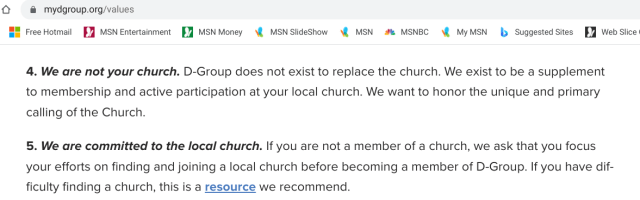
D-Group exists in three venues: church groups, home groups not connected to churches, and online groups. Commendably, in policy, D-Group requires that participants be members of, or actively seeking membership in a local church, and discourages participants from treating D-Group as a substitute or replacement for the local church…
…but the very fact that it establishes and encourages home groups and online groups not connected to a local church undercuts this commitment in practice. No doubt there are many online and home group members who eschew or are lax about membership in a solid local church, considering D-Group to be their church instead. Indeed, the Why D-Groups page of the website says that one of the results of being involved in a D-Group is: “And those who lack rich relationships with other Christians have found a place of encouragement and challenge.” Although it’s certainly not wrong to be encouraged and challenged by Christian friends outside your local church, the primary “place” this sort of thing should be happening is in the context of your local church. Additionally, group leaders are trained by the D-Group organization, not by the local church. Again, this sort of training should be taking place in the local church and under the authority of the pastors and elders there.

It’s an unbiblical structure and methodology. Discipleship proper is to take place within the context of and under the authority of the local church, not in parachurch ministries or groups, and certainly not in online “groups”. There is no provision, allowance, or instruction for parachurch discipleship in the New Testament. And if D-Group is Reformed, and as committed to “living out the truths revealed by God in Scripture” as they claim to be, they should already know this and work through local churches exclusively.

D-Group holds to continuationism (which explains Tara-Leigh’s aforementioned stance on extra-biblical revelation, and TBR resources from continuationists such as John Piper, The Village Church, etc.), and cites The Village Church’s position paper on continuationism as part of their Beliefs.

D-Group claims to be complementarian, but, apparently, they mean – without clearly saying so – so-called “narrow” or “soft” (essentially: anything goes except women as senior pastors) complementarianism. As I’ve explained in the past, so-called “soft/narrow complementarianism” is not complementarianism, but functional egalitarianism.

Under the Beliefs section of D-Group’s Resources page, two of the resources cited on complementarianism are from The Village Church and Mary Kassian. TVC is where Jen Wilkin, who preaches to men at conferences and other events is on staff as the director of family and student ministries, and where pastor Matt Chandler has publicly praised women who preach to men, like Beth Moore. The short TVC article cited isn’t very substantive, and merely states that they don’t allow women to be elders. I briefly reviewed the Mary Kassian article when it first came out in 2016. Long story short, she believes it’s OK for women to preach to and teach men except in the Sunday worship service (unless it’s Mother’s Day or another special event, then it’s OK).

Tara-Leigh herself preaches to and teaches men in person at her speaking engagements (see below).

D-Group is governed by women. Of the 36 members of D-Group’s “team,” all but four are women. These four men are under the authority of – among other women – founder and CEO Tara-Leigh, of course, as well as a female “Theology + Content Director”. This is not a direct violation of Scripture, since the D-Group organization is not a gathering of the church, but this does align with and point to their “soft complementarianism” posture.

D-Group recommends many of the same false and/or biblically problematic teachers and resources as The Bible Recap, and more:

In the Diversity and Racial Reconciliation section of D-Groups Beliefs page, resources are cited from woke and racialist sources such as Eric Mason, Latasha Morrison’s Be the Bridge, and The Witness, a list of theological works by black theologians and pastors, including Jarvis Williams, Anthony Bradley, Thabiti Anyabwile, and Raphael Warnock, the horrifyingly liberal “pastor” and Democrat senator who endorses the torture and murder of unborn children. (The Witness also includes a book on homiletics written by a woman.)

The LGBTQIA section includes resources from Living Out founder, Sam Allberry, and Jackie Hill-Perry.

I don’t want to overstate this point, but it’s worth noting. Are worldly terms and constructs like “diversity,” “racial reconciliation,” and “LGBTQIA” congruent with a doctrinally sound Christian ministry? Where does the Bible use these terms or teach such constructs?

Tara-Leigh Cobble

As founder and leader of TBR and D-Group, Tara-Leigh’s theology concerning continuationism, functional egalitarianism, extra-biblical revelation, and social justice issues is evident.

In addition to her organizations holding to a functional egalitarianism position, Tara-Leigh personally teaches men via her speaking engagements.
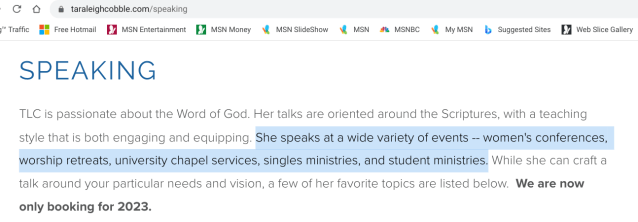
The following two videos are currently featured on her website’s “Speaking” page, as exemplars of her teaching.

Tara-Leigh preaching at a co-ed retreat (Tara Leigh Cobble INTV Retreat | October 26, 2018)

Tara-Leigh speaking at The Nines (the NINES 2019 – Loving Scripture, Biblical Literacy, & the Future of the Church | October 31, 2019 – Men clearly audible in the audience throughout). The caption on this video on Tara-Leigh’s website reads: “TLC speaking to pastors at The Nines Conference (Buckhead Church, Atlanta) about the future of the church.”

Unfortunately, Tara-Leigh also has an affinity for false teachers and false doctrine.

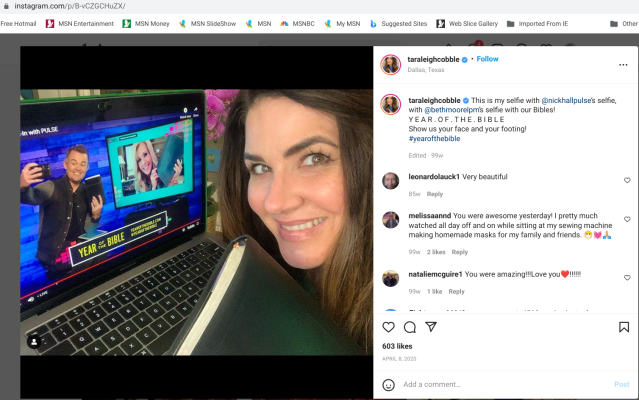
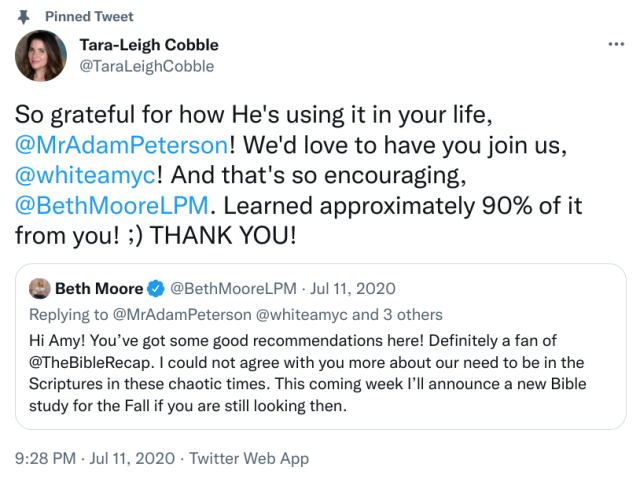
This is the pinned tweet – the first thing you see – on Tara-Leigh’s Twitter account. Apparently, Beth is a “fan” of TBR and Tara-Leigh “learned approximately 90%” of her Bible teaching from Beth Moore.
Excitedly posing with Beth Moore

…for this event featuring a number of false and biblically problematic teachers including Beth Moore and Priscilla Shirer.

Tara-Leigh appeared on the She Reads Truth podcast.
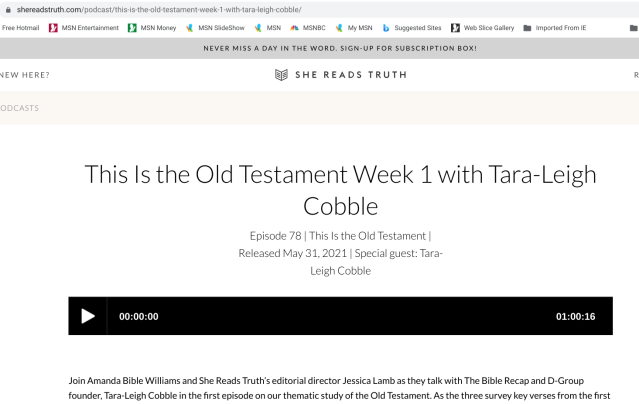
Here, she calls Jennie Allen one of her “favorite” leaders.

And since she brought it up in this post, I’d like to address another issue here. Tara-Leigh refers to her own “therapist” and also says, “I canโ€™t think of a teacher/preacher I respect (in modern times) who hasnโ€™t openly talked about seeing a licensed therapist…I believe in it so much that Iโ€™ve even paid for therapy for my team members. Itโ€™s VITAL.”

While everyone faces difficulties from time to time, and some of those difficulties are intense enough that a time of pastoral or biblical counseling is needed, routine or ongoing “therapy” from a “licensed therapist” (which, in the common vernacular, and at “trauma” events like this one, usually refers to a secular psychiatrist, psychologist, or other mental health professional) is no more “VITAL,” or even indicated, for normal, healthy individuals – even for non-Christians – than a weekly trip to the doctor for someone who isn’t sick.

The idea that Christians, across the board, need to be in therapy on a regular basis as though that’s normal or vital is found nowhere in Scripture, and undermines the Bible’s teaching that Scripture alone is sufficient for life and godliness.

Tara-Leigh’s notes from a “conversation” with “black and white Christian leaders and pastors” about “what the church’s role might look like in the midst of our current civil rights movement.”. You’ll notice the concepts of white privilege, systemic or “covert” racism, that white people need to “just listen,” etc. (Several pages. You’ll need to scroll through.)


Tara-Leigh seems like a very nice person with a sweet heart and genuine motives. She has some good ideas, and I’d like to be able to heartily recommend her to you. But unfortunately, even though she’s much closer to the “Nancy Leigh DeMoss Wolgemuth / Kay Arthur” end of the spectrum than the “Joyce Meyer / Rachel Held Evans” end of the spectrum that I mentioned in the introduction, I can’t proactively recommend her or any of her ministries or materials to you either. There are better people you could be listening to.


Additional Resources:

โ˜ž Since the original publication of this article, a number of readers have asked if there is a program similar to TBR that takes followers through a chronological Bible reading plan with a daily recap of each day’s reading. I am not aware of any other program or podcast exactly like that, but let me give you a couple of resources.

  • In 2014, I led my ladies’ Sunday School class through the chronological plan and taught a weekly lesson selected from that week’s reading. If that’s of interest, you can always find those lessons at the Bible Studies tab in the blue menu bar at the top of this page (at the very end under “Miscellaneous”).
  • My friend, Pastor David Schrock, has recorded a podcast for daily readings through the New Testament called Via Emmaus on the Road (also on Spotify and Apple Podcasts). It’s in canonical (Matthew – Revelation) order, but God arranged the New Testament canon much more chronologically than the Old Testament. (Plus, if you want to, you can follow a chronological plan and just look up the podcast for each day’s passage.). (David wants you to know that he plans to re-record the episodes on Matthew to improve the sound editing, but if you listen “as is” the sound does get better after the first month.)

โ˜ž Other readers have said they were listening to TBR, but stopped when something seemed “off” to them. Now, they just use the TBR podcast episode titles to tell them which passage to read for the day. There’s certainly nothing wrong with that, but if you’d like something that’s a little less cumbersome, I’ve got a printable of the entire year’s readings for you. Every year around New Year’s I publish a “round up” of Bible reading plans. The chronological plan is always first on the list because I recommend it so highly. Go to the Bible Studies tab and click on “Bible Reading Plans,” then click the link on #1, and print it, bookmark it, screenshot it, etc.

Mailbag

The Mailbag: Husbands, pastors, and mentors- Which roles do they play in a Christian woman’s life?

Originally published January 20, 2020

I have three questions that are kind of related to each other:

1 Corinthians 14:35 says women should ask their husbands questions at home; how does this fit with women mentoring other women in Titus 2?

Where does a husbandโ€™s role end and where does the role of a godly older woman begin in terms of teaching younger women?

Are there areas where a pastorโ€™s authority trumps a husbandโ€™s authority?

Thank you for your help.

These are really awesome questions. I love it when women ask questions that demonstrate that they’re digging into Scripture and thinking deeply about the things of God. It’s so exciting to me!

(Before I begin answering, let me just stipulate, as I usually do in articles about marriage, that the following statements assume a normal, relatively healthy, average marriage, not abusive marriages, extremely aberrant marriages, etc. Also, it’s not my intent to leave out my single sisters, but the reader asked specifically about married women, so that’s how I’m answering the questions.)

So let’s take each question separately…

1 Corinthians 14:35 says women should ask their husbands questions at home; how does this fit with women mentoring other women in Titus 2:3-5?

The first thing we need to do when we’re addressing questions like this is to look at each of these passages in context. This is a very simple study skill that will clear up nearly all instances of supposed contradictions in Scripture.

Read 1 Corinthians 14:26-40. What is the venue for Paul’s instructions in this passage? In other words, is he telling people how to behave at home? At work? At the movies? Look at the key phrases in verses 26 (“when you come together”) and 28,33b-35 (“in church”). Paul is giving instructions for how an orderly worship service is to be conducted. He is not making a blanket statement that any time any woman wants to know anything about Scripture or God or life in general that the only person she can ever ask questions of is her husband. What he’s saying is that in order to avoid chaos in the worship service, women are to sit down and be quiet during the preaching and teaching, rather than interrupting to comment or ask questions (one of the reasons Paul says this is that the women in the Corinthian church were doing just that – interrupting the preaching and teaching with questions and comments). If you read further in chapter 14, you’ll notice he places similar restrictions on prophesying and speaking in other languages to prevent chaos and confusion during the worship service. I’ve discussed this passage in further detail in my article Rock Your Role ~ Order in His Courts: Silencing Women?

Now read Titus 2. What’s the main idea of this chapter? Is it the same as the main idea of 1 Corinthians 14 – instructions for an orderly worship service? No. Verse 12 gives a nice summary of chapter 2: “renounce ungodliness and worldly passions, and to live self-controlled, upright, and godly lives in the present age.” That’s what this chapter is about. “Titus, here’s what your church members (and you) are to do and how they’re to conduct themselves as they go about the business of living as Christians in this world and in community with one another.” The older women teaching and training the younger women in verses 3-5 is not taking place during the worship service, but as these women go about daily life with one another. Today, this kind of teaching and training takes place in women’s Bible study classes, women’s fellowship groups, and in one on one discipleship, not in, nor instead of, the gathering of the whole church for worship.

So as we can see when we examine the context of both passages, 1 Corinthians 14:35 and Titus 2:3-5 are not in conflict, they’re actually in harmony, addressing two distinct ways women are to conduct themselves in two completely different venues.

Where does a husbandโ€™s role end and where does the role of a godly older woman begin in terms of teaching younger women?

I don’t think it’s really that discrete and linear, i.e. the husband teaches this list of topics the wife needs to be taught about and the godly older woman teaches that list of topics she needs to be taught about, and never the twain shall meet. It’s a much more informal and “whatever is needful at the moment” type of thing. Additionally, it’s going to vary from marriage to marriage. Some women have unsaved husbands. Some women are newly saved with husbands who have been saved for decades. Some husbands and wives are very private about everything, some are very open to others. So the balance between who (husband or older woman mentor) teaches what, and how much, and when, is going to look different in every marriage.

I would just offer a few guidelines:

โ€ข After your relationship with Christ, if you’re married, your highest allegiance is to your husband. He should be your best friend and first confidant, not a woman who’s mentoring you (or even your mother, sister, or female best friend). He should never feel like he’s in competition for your time, interest, or affinity with the woman who’s mentoring you, or that you esteem her on the same (or, perish the thought, higher) level of loyalty or emotional intimacy with him. If you’ve gotten that close to your mentor, you’re too close. Turn your attention toward your husband.

โ€ข Along those same lines, always keep in mind that God instructs you to submit to your husband, not your mentor. The only time you should ever follow your mentor’s advice over your husband’s desires is if your husband is asking you to do something the Bible clearly calls sin and your mentor is advising you to obey Scripture instead. (But even in that case, you’re not really choosing your mentor over your husband, you’re choosing to obey God rather than to sin.)

โ€ข There are some things that are private between a husband and wife that shouldn’t be shared with anyone, including a mentor. Which things? Again, that’s going to vary from marriage to marriage, but a few no no’s might include the private details of your sex life, your finances, and anything your husband would be embarrassed for someone else to know. Talk with your husband and ask if there’s anything he would rather you didn’t share with your mentor.

Are there areas where a pastorโ€™s authority trumps a husbandโ€™s authority?

It really depends on what you have in mind when you ask that question.

If you’re talking about personal decisions made between a husband and wife, let’s say, for instance, whether or not to move to a certain part of town or whether or not the wife should take a part time job, it is not the pastor’s place to step in and overrule the husband’s decision, nor should the pastor have any expectation that the couple would obey any edicts he issues. If the couple goes to him for counseling or asks for his advice, he can certainly give it, but we never see any place in Scripture where a pastor has authority over another family’s decisions. The husband is responsible before God for leading his family, not the pastor.

But if you’re talking about a situation in the church, then yes, a pastor’s (or the elders’) authority – assuming he’s abiding by Scripture – trumps a husband’s authority, and pretty much every other church member’s authority as well. For example, a husband does not have the authority to walk up to the pastor and say, “I’m going to let my wife preach the sermon next Sunday,” or “My wife is going to take over this Sunday School classroom and use it as her personal office.”. If a husband were to say something like that, the pastor is well within his authority as shepherd of the church to say, “Oh no she’s not.”. The buck stops with the pastor when it comes to how the church runs, and he is responsible before God for making godly decisions for the church.

I’m aware that there are aberrant, fringe “churches” (many of them are some stripe of New Apostolic Reformation or extreme legalism/fundamentalism) out there in which the “pastor” has ultimate authority over every decision a family makes: where they live, how many children they have, what to name their children, whether and where each spouse should work, etc. If you’re in a so-called church like that, leave immediately and find a doctrinally sound church to join. A church doesn’t plunge to that depth of spiritual abuse without succumbing to other dangerous false doctrines along the way.


If you have a question about: a Bible passage, an aspect of theology, a current issue in Christianity, or how to biblically handle a family, life, or church situation, comment below (Iโ€™ll hold all questions in queue {unpublished} for a future edition of The Mailbag) or send me an e-mail or private message. If your question is chosen for publication, your anonymity will be protected.

Sermons

Dale Johnson ~ An Intro. to Biblical Counseling

Image courtesy of ACBC.

This past Sunday at church, we had a guest speaker during the Sunday School hour. Since we’ll be hosting ACBC training soon, Dale Johnson, Executive Director of ACBC (the Association of Certified Biblical Counselors) presented to us a very helpful, encouraging, and biblical introduction to the concept of biblical counseling and soul care.

If you’re not familiar with biblical counseling, the term might sound like it’s just another name for “Christian counseling” or a regular therapist who happens also to be a Christian. But both of those tend to use traditional secular psychological methods. Biblical counseling is a whole ‘nother animal. It’s more like what some have described as “deep dive discipleship,” or correctly applying the authoritative, sufficient Word of God to your problematic situation. You can learn more, find a certified biblical counselor near you, and find out about becoming a certified biblical counselor at the Biblical Counseling Resources tab in the blue menu bar at the top of this page.

If you’re in, or can get to, the Baton Rouge, Louisiana area this spring, and you’d like to attend the ACBC training sessions, click here. Other upcoming training sessions are being held soon in Kentucky, Tennessee, South Carolina, and California. If none of those are close enough to you, contact ACBC for more information on training. We all counsel others every day. Why not make sure the counsel we give them is biblical?

Click here to listen to Soul Care by Dale Johnson

Church

Throwback Thursday ~ Is It Really All Our Fault?

Originally published July 15, 2016

all our fault

“If the church would just _________,
the world would flock to us.”

“The world is in the state it’s in because
the church has fallen down on the job.”

Over the past few years, I’ve been hearing and reading statements like these more and more frequently. But are they true? Is the world really in such sad shape as a result of the failings of the church?

Yes!…and…no.

It is absolutely true that the visible church – everything that wears the label “church” or “Christian,” whether or not it’s biblical Christianity – has a lot to be ashamed of. Westboro. TBN. Homosexual church leaders and members. Pastors caught in adultery. Child molestation scandals. Female “pastors.” All manner of demonic behavior masquerading as “worship,” blasphemously attributed to the “Holy Spirit.”

Even churches with an orthodox statement of faith – which, to onlookers, seem to be doing fine, biblically – water down the gospel in the name of being seeker sensitive, use materials produced by false teachers, invite false teachers to speak at their conferences, fail to evangelize, place women in unbiblical positions of leadership, have pastors and teachers whose main form of teaching is eisegesis and pandering to felt needs, fail to provide for the needs of their members and their surrounding community, focus on fun and silliness in their youth and children’s ministries instead of Scripture and holiness, allow members to gossip, backbite, and exercise selfishness, fail to practice church discipline, make their worship services into irreverent entertainment-fests, have “pastors” who are little more than stand up comedians, and have largely biblically ignorant congregations.

Some churches are spiritually healthier than others, but nobody’s getting out of this one with clean hands. Even the healthiest church is doing something wrong in some little nook or cranny. And as Christ’s bride, it is incumbent upon us, whenever we discover those nooks and crannies, to repent, set things right, and do things biblically as we move forward.

Christ loved the church and gave himself up for her, that he might sanctify her, having cleansed her by the washing of water with the word, so that he might present the church to himself in splendor, without spot or wrinkle or any such thing, that she might be holy and without blemish. Ephesians 5:25b-27

That’s Christ’s vision of the church. A vision all churches fall woefully short of. And when the church fails in any area, it does contribute to the downhill slide of the world, because it is not being the city on the hill Christ wants it to be, and it is producing individual Christians (or false converts) who aren’t being the salt and light Christ wants them to be.

But is it fair to lay all the world’s woes and sinfulness at the doorstep of the church? Is it really true that if we would just clean up our act in this area or on that issue that we’d magically see an influx of pagans begging, “Sirs, what must I do to be saved?”

No, it isn’t.

The world isn’t steeped in sin because of the failings of the church. The world is steeped in sin because of the Fall.

Look back over history. The world was vicious and depraved long before the church ever came on the scene. And, for that matter, long before God set apart and established Israel as His chosen people. (Hello? The ante-diluvian world? Sodom and Gomorrah? Ancient Egypt? Baal and Molech worship?)

Examine any era in the last two millenia when you think the church was doing a better job than it is now and take a look at the society that church was situated in. The New Testament church? It was surrounded by a world of war, oppression, torture, debauchery, sexual deviance, slavery, misogyny, poverty, famine, and child abuse.

The head of the church, Jesus Christ, spent over thirty years physically present on this earth. We know He conducted His ministry perfectly. Not once did He fail to preach the gospel or provide for people’s needs or fall short in any other way. He even went so far as to lay His life down for the sin of the world. And what impact did that have on His immediate society? Did all the Pharisees repent and temple worship was restored to godliness? No. Did Rome stop ruling the world with an iron fist? No. Did acts of sedition and perversion and persecution suddenly disappear? No. In fact, some of those things actually got worse during and after Jesus’ time.

Just like He prophesied.

You see, Jesus didn’t say, “Be more like Me and the world will come running,” or “The church can solve the ills of the world.” He said:

If you were of the world, the world would love you as its own; but because you are not of the world, but I chose you out of the world, therefore the world hates you. John 15:19

Indeed, all who desire to live a godly life in Christ Jesus will be persecuted, while evil people and impostors will go on from bad to worse, deceiving and being deceived. 2 Timothy 3:12-13

The more the church and individual Christians look and act like Christ, the more world will hate, persecute, and ostracize us.

The church is not going to fix all the evils of society. And it’s not fair to lay that burden of responsibility – one that even Jesus’ earthly ministry didn’t accomplish – on believers who genuinely love their Savior and want to serve Him. Holding out the stick and carrot of a utopian world to the church – if only we’ll get our act together – does nothing but breed hopelessness, despair, and futility in the pews.

Does the church have a lot of repenting to do? Yes. Are there right hands we need to chop off and right eyes we need to gouge out in order to facilitate obedience to Christ? You bet. Should we be exponentially more proactive and passionate about preaching the gospel and meeting the needs of a lost and dying world? Absolutely.

But we do not do those things because we’re failing the world. We do those things out of love for and faithfulness to Christ. Christ is our goal, not a changed world. Christ is the prize we’re to fix our eyes on, not a society that behaves itself. Christ is the finish line we press toward, not domestic tranquility and morality.

Christ.

Because if it’s the church’s job to set the world right, we’re doomed. The world sins because the world is made up of sinners. And the world will continue to sin – even if every church on the planet suddenly becomes perfect – because the world is made up of sinners. But if the church’s highest attainment is love for Christ, faithfulness to Christ, and obedience to Christ, then we are successful in God’s eyes regardless of what the world around us looks like.

Let’s be faithful and trust God to handle changing the world.

Discernment

Celebrate Recovery

If you are considering commenting or sending me an e-mail objecting to the fact that I warn against certain teachers or ministries, please click here and read this article first. Your objection is most likely answered here. I won’t be publishing comments or answering emails that are answered by this article.


This article is kept continuously updated as needed.


I get lots of questions about particular authors, pastors, Bible teachers, ministries, and evangelical fads and trends, and whether or not I recommend them. Some of the best known can be found in the blue menu bar at the top of this page at my Popular False Teachers tab. The ministry below is one Iโ€™ve been asked about recently, so Iโ€™ve done a quick check (this is brief research, not exhaustive) on it.

Below are the biblical criteria I use when deciding whether or not to recommend a teacher, ministry, etc.

Generally speaking, in order for me to recommend a teacher, speaker, author, or ministry, he/she/it has to meet three criteria:

a) A female teacher cannot currently and unrepentantly preach to or teach men in violation of 1 Timothy 2:12. A male teacher or pastor cannot allow women to carry out this violation of Scripture in his ministry. The pastor or teacher cannot currently and unrepentantly be living in any other sin (for example, cohabiting with her boyfriend or living as a homosexual). A ministry or trend cannot allow or encourage any of these things.

b) The pastor, teacher, ministry, or trend cannot currently and unrepentantly be partnering with, yoked to, or frequently appearing with false teachers. This is a violation of Scripture.

c) The pastor, teacher, or ministry cannot currently and unrepentantly be teaching false doctrine.

I recommend against any teacher, ministry, or evangelical trend that violates one or more of these biblical tenets.

If you’d like to check out some pastors and teachers I heartily recommend, click the Recommended Bible Teachers tab in the blue menu bar at the top of this page.


Celebrate Recovery
Not Recommended

Celebrate Recovery (CR) was created by John Baker, a member of false teacher Rick Warren’s Saddleback “Church”. It was “born out of the heart of Saddleback Church” with Rick’s approval and under his oversight, and, as you might expect, is fraught with unbiblical issues at nearly every turn. In the U.S. and abroad, over 35,000 churches and many secular organizations and businesses now offer Celebrate Recovery programs, and over 5 million people have completed CRs “Step Study” program.

CR is open to professing Christians as well as the lost (in the CR program at Saddleback, non-Christians make up over 70% of CR participants – see below), and is modeled after secular 12 step programs (ex: Alcoholics Anonymous). Adapting worldly means and methods for use in the church (though characteristic of Saddleback) is not biblical. The biblical means for helping a lost person deal with addiction is to call him to repent and believe the gospel, and, if he gets saved, disciple him in obedience to God’s Word. The biblical means for helping a saved person who is committing the sin of drunkenness is to follow the steps of church discipline (beginning with a one on one call to repentance and restoration) commanded in Matthew 18, and if he repents, disciple him in obedience to God’s Word.

That CR adapts worldly means and methods is abundantly evident below in the video introduction to CR (found on the CR website’s What is Celebrate Recovery? page):

  • Notice Johnny Baker (son of founder John Baker) and his wife Jeni start with the typical AA introduction: Johnny: “Hi, I’m Johnny and (rather than “and I’m an alcoholic”) I struggle with…” Jeni: “Hi Johnny!”.
  • Rather than finding their identity in Christ who has graciously saved them out of their sin, they identity themselves by their pet sins and/or problems. This teaches people to see themselves (and presents them to others) as helpless and non-responsible victims rather than victors through Christ.
  • The terms they use to identify themselves are secular and psychologized (“addiction” “co-dependency” “adult child of family dysfunction”) rather than biblical (the sin of drunkenness, fear/idolatry of man, and sinful family relationships, bitterness, unforgiveness, or whatever “adult child of family dysfunction” actually means. Jeni defines this term at the 5:30 mark as growing up in a “dysfunctional family that caused hurt in your life…which I think we pretty much all have.” That definition doesn’t do much to clear things up).
  • In the caption “PastorS of Celebrate Recovery” there are two biblical issues: First, Celebrate Recovery is not a church, it’s a parachurch ministry (if it’s functioning as a church, that brings us to three biblical issues with this caption). Biblically, only churches have pastors. If what is meant by “pastors” is that they are “directors” of CR divisions (as the CR website’s Our Team page says) then that is what the caption should say rather than adulterating a biblical term which has a specific meaning.

    Second, Scripture expressly forbids women from serving as pastors.

    And all of that is in the first nine seconds of this 21 minute video.

Another issue made plain in the video is that Celebrate Recovery teaches a false gospel:

At 3:24ff, speaking to lost people, Johnny gives an incomplete (and partially false) presentation of the gospel as a means of differentiating secular recovery programs from CR. Notice the number of times he says “We believe…” instead of “the Bible says…” or simply stating the terms of the gospel as irrefutable fact. This leaves room for lost people to infer, “These are their beliefs, but they don’t have to be mine.”

The facts Johnny states about Jesus’ life and that He sent the Holy Spirit are technically correct, but what’s missing? Repentance and faith. No mention is made of personal repentance of sin or placing one’s faith in Christ – as the Bible defines it – anywhere in this video. In this particular segment, Johnny skips directly from “Jesus died as a sacrifice for our sin, rose again, and lives now,” to “He sent the Holy Spirit to live inside of us.” That is a false gospel. The indwelling Holy Spirit is a sign, seal, and guarantee of our salvation, and salvation does not take place without the repentance of sin and placing one’s faith in Christ.

Johnny goes on to say that “that [the indwelling Holy Spirit] is what gives us the power to find healing from our hurts, hang-ups, and habits”. But the lost people he’s talking to do not have the indwelling Holy Spirit to help them because they’re still lost, because CR’s “gospel” doesn’t call them to repent and believe.

Further evidence of CR’s false gospel can be found near the end of the video. At 20:11ff, Johnny quotes Romans 3:23, and then proceeds to define sin as “mistakes”. That’s unbiblical. A “mistake” is accidentally calling your son by your daughter’s name, or taking the wrong exit off the interstate, or forgetting to carry the one. Mistakes are, by definition, unintentional and usually morally neutral. Sin is always immoral and frequently intentional. We are born with a sinful nature, but we also choose to sin.

Johnny further describes sin as “hurting other people” and “other people hurting us,” and that’s partially true, but that’s where he stops. Again, this is unbiblical. Sin is primarily rebellion against God. God taught us this way back in Psalm 51 where David, repenting of his sin with Bathsheba said, “Against You [God], You only, have I sinned and done what is evil in Your sight.” God is the first, last, and ultimate object of our sin.

You’ll probably also notice that even though Johnny uses the word “sin” a few times, he never speaks in biblical terms about everyone’s need to repent of their sin. Rather the terminology he uses is “hurts, hang-ups, and habits” (instead of “sin”) and “healing from your hurts” (instead of “repentance”). This likely stems from the idea in secular recovery groups like AA that alcoholism is a “disease” you need to “heal” and “recover” from like the flu or the chicken pox.

This medical model of sin is completely unbiblical because it removes personal culpability and responsibility for sin, i.e. you can’t help “catching” alcoholism (the sin of drunkenness) any more than you can help catching the flu. Nowhere does Scripture suggest that we need to “heal” and “recover” from sin. Jesus commands us to repent.

Sin is breaking God’s law and rebelling against the holy God of the universe. That’s not the same thing as a “mistake” or “hurting/being hurt by others” or “hurts, hang-ups, and habits”. And we don’t need to “heal” from our sin, we need to repent of it, forsake it, and mortify it.

Finally, Johnny (probably not even realizing he’s doing so) substitutes CR for the biblical gospel. Follow what he’s saying:

All have sinned >> sin = mistakes/hurting others/others hurting us >> we’ve all made mistakes/hurt others/others have hurt us >> “that means all of us qualify for Celebrate Recovery”

Whereas the Bible says:

All have sinned >> sin = rebellion against God >>
we all qualify for the gospel

Celebrate Recovery is not the gospel, nor a substitute for the gospel, for drunkards or drug addicts or anyone else. The gospel is the gospel. And the gospel is what we all need.

Another dangerous and unbiblical component of this concept of “sin is hurting others” is that the CR “gospel” conflates sinning against others with being sinned against under the banner of “hurts”. There is an enormous difference between a man getting drunk and beating his wife half to death and a wife who has been beaten half to death by her drunkard husband.

The Bible puts those two people in two different categories and addresses them discretely and justly. The man has sinned. The wife has been sinned against. The man needs to be brought to justice and repent. The wife needs to be cared for, helped to heal, and ultimately, to forgive.

CR throws both the husband and the wife into the same category because it doesn’t have a biblical definition of sin. The husband needs to “heal” and “recover” from his “addiction” and whatever “hurts” led him to “hurt someone else”. The wife needs to “heal” from being hurt by someone else. Treating the one who sinned and the one sinned against as though they’re the same by placing them in the same “recovery” program is damaging to both because it teaches the sinner he’s not responsible for his actions and has no need to repent, and it teaches the one sinned against that she’s no different from the one who sinned against her.

Now let’s take a look at some of the unbiblical 8 Principles and 12 Steps of the Celebrate Recovery program:

It’s a little confusing as to why CR has both 12 Steps and 8 Principles of recovery, but if I’m understanding it correctly, CR’s 12 Steps are designed to be sort of a bridge to assimilate people already familiar with the 12 steps of secular recovery groups (such as AA) into CR. CR’s 12 Steps are almost identical to the secular 12 steps. (The most noticeable difference is that the phrase “God, as we understand Him” has been changed to simply, “God”.)

The 8 Principles are CR’s own so-called “Christ centered” version of the secular 12 steps, supposedly based on the Beatitudes, and following the acrostic “R-E-C-O-V-E-R-Y”. But the ideas in the 8 Principles are very similar to the ideas in the secular 12 steps. So similar, in fact that each Principle is followed by a notation as to which of the 12 steps it corresponds to. For example, Principle 5 (“V” in the acrostic) corresponds to steps 6 and 7 of the secular 12 steps. And, although it should go without saying, the Beatitudes aren’t about hurts, addictions, or recovery.

So, on the macro-level, CR has taken a worldly philosophy and attempted to “Christianize” it slightly in order to appeal to the lost, which, again is typical of the way Saddleback – the original seeker driven “church” – tends to operate, and which, as I mentioned earlier, is unbiblical.

But what about the micro-level of the individual Principles?

Principle R1, the first half of V, and E2 aren’t bad. It would be better if CR actually cited and explained the Scriptures that teach these concepts and used biblical terminology, but overall these small snippets of the 8 principles are mostly aligned with Scripture. 2.5 principles. Out of 8.

Principle E1 is problematic:

Earnestly believe that God exists, that I matter to Him and that He has the power to help me recover.

Believing that God exists, that you matter to Him, and that He’s powerful is not the same thing as being born again by repentance and faith in Christ. Not by a long shot. The Egyptians at the Red Sea believed in God’s existence and power. The prophets of Baal all believed in God’s existence and power (right before Elijah slaughtered them all). And they definitely mattered to God, just not in a good way.

The issue here is that the unbeliever is not indwelt and empowered by the Holy Spirit to resist and flee from sin. It’s not that God isn’t powerful, it’s that as an unbeliever you don’t have access to, or a right to that power.

Principle C is another big nope:

Consciously choose to commit all my life and will
to Christโ€™s care and control.

Biblically, there’s no such animal. As an unbeliever, you cannot just make a fleshly decision of the will to commit all of your life and will to Christ’s care and control. It cannot be done without repentance, faith, and regeneration in response to the biblical gospel.

Principle O:

Openly examine and confess my faults to myself,
to God, and to someone I trust.

Sins. “Sins” is the word you’re looking for, not faults. Faults are not equivalent to sins. “Confess your sins to one another,” is what the Bible says. And while confession is a good thing, it’s not the same thing as repentance. A murderer can confess his crime, but feel completely justified in having done it, and be perfectly willing to do it again if given the chance. Repentance is grieving from the heart that you have sinned against a holy God, wishing you had never done it, and striving never to do it again. Also, look who comes first here in this line of confession – not God, but self.

The second half of principle V

Voluntarily submit to any and all changes God wants to make in my life and humbly ask Him to remove my character defects.

As I said above, the first half isn’t bad. The second half isn’t going to work for lost people because it doesn’t biblically identify their problem, which is sin, not “character defects”. And God is not going to remove their sin without repentance and faith in Christ. And if they’re trying to circumvent repentance, faith, and the biblical gospel in order to steal what they want from God, they’re not asking “humbly,” they’re asking pridefully.

Principle R2 is great if you’re saved, since all Christians are supposed to be doing these things anyway…

Reserve a daily time with God for self-examination, Bible reading, and prayer in order to know God and His will for my life and to gain the power to follow His will.

But not so great if you’re in the majority of CR participants who are lost. “The natural person does not accept the things of the Spirit of God, for they are folly to him, and he is not able to understand them because they are spiritually discerned,” 1 Corinthians 2:14 (emphasis, mine) tells us. And a lost person cannot “gain the power to follow His will” without the indwelling Holy Spirit.

Principle Y takes us back into false gospel territory:

Yield myself to God to be used to bring this Good News to others,
both by my example and my words.

Hold the phone, Henrietta. “This Good News” – capital G, capital N? What “Good News”? The “Good News” of Celebrate Recovery? That is out and out heresy. (And God doesn’t “use” people to bring heresy to others except as a judgment against them.) The only capital G, capital N “Good News” is the Good News of the biblical gospel, which CR has repeatedly failed to present and instead has substituted its own false gospel which is devoid of sin, faith, and repentance.

A final point to consider, and not a minor one, is the fact that Celebrate Recovery is embraced by the world. Contrary to what the powers that be at CR think, that is not a good thing. From the History of Celebrate Recovery page on the CR website:

“Celebrate Recovery is the number one outreach ministry at Saddleback Church, with over 70 percent of its members now coming from outside the church….Celebrate Recovery is not just growing in churches, but in recovery houses, rescue missions, universities, and prisons around the world. New Mexico was the first state to adopt Celebrate Recovery into its state prison system and now has Celebrate Recovery pods in all its state prisons. In August 2004, Celebrate Recovery was announced as Californiaโ€™s state-approved substance abuse program for prisons...We are part of a movement that God is blessing.”

God does not “bless” heresy and worldliness. And if we’re walking in obedience to Scripture and preaching and teaching the true biblical gospel the world will hate us, not love us. I’ll just let Scripture speak to those points:

If the world hates you, know that it has hated me [Jesus] before it hated you. If you were of the world, the world would love you as its own; but because you are not of the world, but I chose you out of the world, therefore the world hates you. John 15:18-19

Do not be surprised, brothers, that the world hates you. 1 John 3:13

They are from the world; therefore they speak from the world, and the world listens to them. 1 John 4:5

You adulterous people! Do you not know that friendship with the world is enmity with God? Therefore whoever wishes to be a friend of the world makes himself an enemy of God. James 4:4

I am astonished that you are so quickly deserting him who called you in the grace of Christ and are turning to a different gospelโ€” not that there is another one, but there are some who trouble you and want to distort the gospel of Christ. But even if we or an angel from heaven should preach to you a gospel contrary to the one we preached to you, let him be accursed. As we have said before, so now I say again: If anyone is preaching to you a gospel contrary to the one you received, let him be accursed. For am I now seeking the approval of man, or of God? Or am I trying to please man? If I were still trying to please man, I would not be a servant of Christ. Galatians 1:6-10

These findings barely scratch the surface of Celebrate Recovery’s means, methods, and philosophy, but I think Christians who value sound doctrine will agree that this information is more than sufficient to warn people away from this unbiblical “ministry”.

If you aren’t a Christian and you need help with any sort of addiction or other problem, let me give you step 1 of Jesus’ program for addressing that: Repent and believe the gospel. Once you’re saved (or if you’re already saved as you’re reading this), find a doctrinally sound church, make an appointment with your pastor, and ask him to point you to someone who can disciple you in obedience to God’s Word. (If you absolutely can’t find a doctrinally sound church in your area, you could seek out an ACBC certified biblical counselor.)

The question is not, “Does Celebrate Recovery ‘work’?”. That’s pragmatism. The question is, “Is Celebrate Recovery biblical?”. And the answer to that question is a resounding no. Celebrate Recovery’s very foundations are unbiblical, and Jesus stressed just how crucial biblical foundations are:

Everyone then who hears these words of mine and does them will be like a wise man who built his house on the rock. And the rain fell, and the floods came, and the winds blew and beat on that house, but it did not fall, because it had been founded on the rock. And everyone who hears these words of mine and does not do them will be like a foolish man who built his house on the sand. And the rain fell, and the floods came, and the winds blew and beat against that house, and it fell, and great was the fall of it.

Matthew 7:24-27

Additional Resources

An Analysis of Celebrate Recovery Addictions Program at the Association of Certified Biblical Counselors (ACBC)

I am not thoroughly familiar with the websites below. I do not endorse anything on these sites that deviates from Scripture or conflicts with my beliefs as outlined in the โ€œWelcomeโ€ or โ€œStatement of Faithโ€ tabs in the blue menu bar at the top of this page.

A Way Which Seemeth Right at The Berean Call (This link is not a blanket endorsement of this blog or author, only this particular article.)

Celebrate Recovery (several articles, plus many more resources on secular/Christian recovery) at The Way R122 Ministries