Family, Mailbag

The Mailbag: Stay at Home Dads?


What is the Biblical view of men fulfilling womenโ€™s roles? I.e. staying home and managing the household, caring for small children, etc. while the woman works outside the home to provide for the family?

Super question! It’s not a cut-and-dried easy answer, though. There are a lot of things to take into consideration.

The first thing we need to consider is, of course, what the Bible says about this issue. And when we look at what the Bible says about human behavior, we need to look at two things: the heart and the actions. The Bible does forbid and command a lot of actions, but God is also clear that He judges the heart. It is possible to do the right thing with the wrong motives and the wrong thing with the right motives. We want to make sure we have right motives that lead us to do the right thing.

And Samuel said, โ€œHas the Lord as great delight in burnt offerings and sacrifices, as in obeying the voice of the Lord? Behold, to obey is better than sacrifice, and to listen than the fat of rams. For rebellion is as the sin of divination, and presumption is as iniquity and idolatry. 1 Samuel 15:22-23a

For the Lord sees not as man sees: man looks on the outward appearance, but the Lord looks on the heart.โ€ 1 Samuel 16:7b

The first question we need to ask ourselves is, “Is there an explicit command that the husband must leave the house and go to work every day to financially support the family, a command that he absolutely cannot stay at home and manage the household and raise the children, or a command that a wife may not work outside the home or support her family financially?”

I have not found any specific, in context, “thou shalt/thou shalt not” commands along those lines. And there’s a reason for that. God beautifully designed the Bible to be applicable and relevant to all people, across all cultures, in all time periods. So there are some universal commands in the Bible that apply to everybody, everywhere, in every time. For example: It is a sin to murder whether you’re young or old, male or female, smart or dumb, ugly or pretty, rich or poor, living in the Middle East or Polynesia or Antarctica, in 3271 B.C., A.D. 0, or A.D. 2019. Murder is always a sin, no matter what.

But God has not chosen to make that same pronouncement about the financial support of the family and who should work inside or outside the home. If we examine all of the Scriptures that mention men and women working, we can see a general overall pattern that points to the wisdom, in most cases, of wives doing most of the household management and child-rearing, leaving husbands free to concentrate primarily on bringing home the bacon, but God has not chosen to make this a universal command.

(I’m sure many readers are thinking, “But what about Titus 2:5, saying women are to be ‘workers at home’?” First, this is not a command that women are never to work outside the home (keep reading for more Scripture about women working and contributing to the support of their families). Second, if you’ll examine that verse in context (2:2-10), you’ll notice that this passage deals with people’s character, not careers. This can be easier to see if you compare Titus 2:3-5 with 1 Timothy 5:3-16, especially v.6, 13-14. Women are not to be lazy, idlers, and busybodies, they are to be hard workers, glorifying God in their work. In first century culture, this nearly always meant marrying, raising children, and managing their households, because this was virtually the only culturally appropriate venue available to them in which to work. Titus 2:5 is primarily about working hard to the glory of God, not primarily about where that work is performed. Does this mean all Christian women are free to abandon their children and homes in favor of working outside the home just because they feel like it? Of course not. As we’re about to see, that goes back to having a godly motive, going with the grain of the way God generally created women if at all possible, and discerning what is pleasing to the Lord in the circumstances in which He has placed your family. Which is exactly the type of character Titus 2 and 1 Timothy 5 teach that Christian women are to have.)

Why did God not make this a command? Because in His sovereignty, over time, God has allowed or created different types of cultures to develop at the macro level, and different sorts of circumstances to occur in the lives of various individuals at the micro level.

In our culture, with regard to supporting a family, it is typical for a husband to get up Monday through Friday, leave the house, work for someone else for eight hours, receive a paycheck, and return home.

Although that was true for some families, particularly city-dwellers, during Bible times, it was far less the norm than it is today. Think about the types of work most often mentioned in the Bible. It was a much more agrarian society. Dads usually worked their land and livestock as an extension of their home, and moms and any children who were old enough had their chores around the “farm” as well. The whole family worked together to provide necessary sustenance, and dads had much more direct oversight over their children on a day to day basis than a 21st century dad who leaves home and goes to the office every day.

But even in situations in which there was a family business (such as Joseph being a carpenter) the sons usually grew up learning the business under the direct tutelage of their fathers. And though the daughters were being trained at home to learn how to be good wives, it is reasonable to assume that they and their mothers helped out with the business as needed in a culturally appropriate way.ยน There was much more integration of work and family in that culture, giving fathers more contact with their children during the day.

There are also passages in the Bible that help us to see that bringing in income was not strictly relegated to men and child-rearing was not strictly relegated to women. In Proverbs 31, we see a wife and mother conducting business and contributing to the support of her family. We see Deborah “working outside the home”. We find that Lydia was, in some way, a merchant. And we do not see the Bible condemning these women as ungodly for contributing to the support of their families or performing some kind of work outside the home. Quite the opposite, in fact – the “Proverbs 31 woman” is, to this day, held up as the ideal wife and mother for godly women to emulate.

Furthermore, we often see passages in Scripture that lay the ultimate responsibility for instructing, disciplining, and properly bringing up children at Dad’s feet, not Mom’s. Read the first nine chapters of Proverbs. This is a father, not a mother, training up his son. And take a look at Ephesians 6:4 (Fathers…bring [your children] up) and Colossians 3:21 (Fathers, do not provoke your children…).

So there is no explicit biblical command about only husbands supporting the family financially and only wives managing the household and raising the children. We need to make sure we separate out what is biblical and what is cultural when it comes to the roles of husbands and wives.

As I mentioned, in addition to God sovereignly creating/allowing different cultures on the macro level, He has also created/allowed, on the micro level, varying life situations for various families. Dads who are disabled or have medical conditions that are more conducive to staying home with the children than having a job outside the home. Men who have had very limited educational and job opportunities who fall in love with and marry women already established in lucrative careers. And, especially in these modern times, Dads who are able to work from home while caring for the children. These and other scenarios can be contributing factors when it comes to which spouse works outside the home (If, indeed, working outside the home as someone else’s employee is necessary for either spouse; working from home or starting your own home-based business is an option many families overlook).

So there are a lot of external, and sometimes unavoidable, cultural and personal circumstances at play in each family’s decision-making process. But what about the internal factors at play? This brings us back to the motive of the heart.

What is the husband’s motive for wanting to stay home with the children? Is it because he’s lazy (lemme just take a moment to say this: if you’re lazy, raising children and managing a household isn’t the job for you) and just wants to shirk responsibility? Because he’s so arrogant or headstrong that he refuses to submit to a boss’s authority? Because he wants to live in luxury on his wife’s salary rather than cutting expenses and living more modestly on what he is able to earn so she can stay at home?

What is the wife’s motive for wanting to work outside the home while her husband manages the household and raises the children? Is she a feminist out to make a statement or further an agenda? Does she pridefully feel that the day to day job of wife and mom is beneath her? Is she finding her identity in her position, her income, or the praise of men instead of finding her identity in Christ?

These are wrong reasons for doing what might, financially, actually be the right thing. But as I said, as Christians, we need to make sure we have right motives leading us to do the right thing. And what is the right motive in this, or any other, decision-making process?

Walk as children of light (for the fruit of light is found in all that is good and right and true), and try to discern what is pleasing to the Lord. Ephesians 5:8b-9

Husbands and wives each need to repent of any wrong motives they may have harbored in their hearts, walk in Christ as children of light, sit down together, pray for God to give them wisdom, examine all the factors at play in their situation, and try to discern what is pleasing to the Lord in the situation He has sovereignly placed them in.

For most families in our culture, what this typically ends up looking like is that the husband is the main breadwinner and the wife is the main manager of the household and children. And part of the reason for this is that God has generally wired men to desire to go out and conquer the world, and He has generally wired women to desire to keep the home fires burning. So if there aren’t any circumstances that force a couple to go against that grain, it’s usually wisest for Dad to be the primary financial supporter of the family and Mom to be the primary manager of the family. But there are going to be godly exceptions to the rule, and we need to be sure we’re not assuming people are in sin just because they don’t fit what’s usually the norm.


ยนCertainly there were other types of work/employment in Bible times, I’m just using these primary two to demonstrate my point.

If you have a question about: a Bible passage, an aspect of theology, a current issue in Christianity, or how to biblically handle a family, life, or church situation, comment below (Iโ€™ll hold all questions in queue {unpublished} for a future edition ofย The Mailbag) or send me anย e-mail or private message. If your question is chosen for publication, your anonymity will be protected.

Complementarianism

Mythbusting Complementarianism: 4 Truths Egalitarians Need to Know About Complementarian Women

I am often frustrated in my role as a complementarianยน woman. I am not frustrated by what God teaches in the Bible about my roles in the home and the church. I am not frustrated in carrying out those roles. I am not frustrated by complementarian men.

I am frustrated by egalitarians – most of the ones who have crossed my path, anyway – because of the incorrect assumptions they make about me and other complementarian womenยฒ.

And it’s not just that the assumptions are wrong, it’s that the assumptions are often hypocritically, “log in the eye,” wrong. Then, they turn around and use these false assumptions as reasons to fight against complementarianism. But the reasons don’t exist. They’re shadow boxing. Fighting against a ghost. If you’re going to fight for something, your fight should at least be based on legitimate reasons.

I’m under no delusions that this article will change the hearts and minds of egalitarians, but if I could, here’s what I’d try to help them understand…

1.
It’s a spiritual issue.

I know this isn’t going to be popular. I know I’m going to be called judgmental and harsh and any number of other printable and unprintable names, but I’m going to say this anyway because this is the crucial element on which this entire complementarian vs. egalitarian argument rests.

This is a spiritual issue. It’s not an oppressors versus victims issue, it’s not about power or position or circumstances or legalism or casting off shackles. It’s not about any of those visible, tangible, surface level things we think it’s about. This goes beyond the earthly realm and has its foundation in the invisible, spiritual realm. The reason you hold the positions and opinions you hold as an individual is based on one thing – your relationship with God. This is a me versus God issue. Do you love and obey God as a genuinely regenerated Christian, or do you reject Him and rebel against His commands as someone who is still lost?

The Bible makes crystal clear from Genesis to Revelation that people who genuinely know and love God obey Him, and that if you don’t obey Him, you don’t know Him or love Him. Over and over and over again we see this through Israel’s countless cycles of idolatry and the prophets calling them to repentance in the Old Testament, to John’s near broken-record repetition of the theme in the New Testament. Scripture is clear. Love of God and obedience to God are inextricably and irreducibly intertwined.

And by this we know that we have come to know him, if we keep his commandments. Whoever says โ€œI know himโ€ but does not keep his commandments is a liar, and the truth is not in him, but whoever keeps his word, in him truly the love of God is perfected. By this we may know that we are in him: whoever says he abides in him ought to walk in the same way in which he walked. 1 John 2:3-6

Additionally, if you’re not saved – a “natural man” – the things of God are folly to you. It’s not that you’re smarter or enlightened or have a different opinion than those who obey Scripture. It’s that you’re spiritually incapable of accepting, embracing, and obeying what God has told you to do. That’s why you see those of us who do as fools.

The natural person does not accept the things of the Spirit of God, for they are folly to him, and he is not able to understand them because they are spiritually discerned. 1 Corinthians 2:14

Let me say it plainly. If your general trajectory in life is to consistently find yourself angered by, indifferent to, or unable to accept the plain meaning of Scripture, and your heart persists in fighting back against God’s Word even if you’ve been biblically corrected, you are almost certainly not saved.ยณ That’s not me saying that. That’s a whole lot of Scripture saying that. Regardless of how saved you feel. Despite what you may claim to be. No matter what people have told you about your salvation. God says loving Him equals walking with Him toward embracing, loving, and obeying His commands. And that includes His commands about the roles of men and women.

This is the fundamental reason most egalitarians disagree with most complementarians. It’s usually not that either side doesn’t understand what the other side stands for. It’s that both sides generally doย understand what the other side stands for and they reject the other side’s view because of where they are, spiritually.

(Addendum: After I published this article, a few people responded who seemed to misunderstand what I’ve said in this paragraph. Let me see if I can clarify:

1) You’ll notice I’ve used words/phrases (“most egalitarians,” “general trajectory,” “almost certainly,” etc.) indicating that this is a broad, general principle, not something that is universally deterministic about every single individual who has ever had an egalitarian-esque thought cross her mind.

2) I amย not saying that holding to an egalitarian viewpoint is what makes someone unsaved. Rejecting the gospel is what makes someone unsaved. What I am saying is that most people who are already false converts gravitate toward the egalitarian viewpoint as a fruit of the pre-existing condition of being unsaved. It is a logical fallacy to turn that statement around and assume I mean the converse to be true.

3) I certainly believe it is possible for genuinely regenerated Christians to have good faith, incorrect interpretations or understandings of Scripture – starting with me. When my husband and I picked out wedding vows 26 years ago, I flatly refused to use any set of vows that said I would “obey” him and only grudgingly agreed to a set that used the word “submit” instead. Embarrassingly, in our wedding video, you can clearly hear me hesitate before repeating that part of the vows. About 10-15 years ago I held a position of local denominational leadership that I’m only now beginning to see I probably, in some respects, shouldn’t have held. One reason for that is that on two or three occasions the position required me to speak to local congregations during their midweek services on a biblical topic which could not be properly addressed without explaining Scripture. Do I think I was unsaved because I thought those things were OK at the time? Of course not. But I’ll tell you this – over time, the Holy Spirit convicted me of those things and I repented. And as I’ve grown in Christ my rebellious attitudes and misunderstandings of those Scriptures and others have increasingly come under submission to God’s Word.

That’s the kind of thing we’re talking about here – the general biblical principle that saved people are on a trajectory of increasing holiness and Christlikeness. Lost people are on a trajectory of increasing disobedience and rebellion (and not strictly with regard to egalitarian ideas). It is possible to be a saved, simul justus et peccator,ย growing in holiness, desiring to please the Lord, Christian and get some non-soteriological things wrong along the way, in good faith, in the process of growing. What is not possible is for someone to be genuinely regenerated and live in a general attitude of heart-rebellion against God, His Word, and His ways (His ways in general, not strictly egalitarianism) in favor of doing life on her own terms. I don’t know how to make that more clear. That is what the Bible teaches.

4) I clearly made the statement that this article pertains to “most of the [egalitarians] who have crossed my path”. I guess what I did not make clear is that most of the egalitarians who have crossed my path have not been the small minority of genuinely regenerated Christians who have made a good faith error about Scripture’s teaching on the role of women as they’re growing in Christ. That might be your experience, but it has not been mine.ย Most of the egalitarians who have crossedย my path have clearly been of the vast majority of egalitarians who have come to that position, as I explained above, as aย result of being false converts. And it shows in their demeanor as they mock the authority of God’s Word in general, lash out in rage, blaspheme, swear, and slander, and generally display the opposite of the Fruit of the Spirit.

5) As I’ve stated many, many times in my articles, theย Bible is our authority as Christians, not a pastor or Christian leader who holds a particular position, not your loved ones who are in error but you’re certain they love Jesus, not any church or denominational structure or position that conflicts with Scripture – theย Bible. If you are going to argue against a biblical principle, you need to support your argument with rightly handled, in contextย Scripture, not examples of fallible human beings – however godly or well-intentioned they might be. Scripture is our standard, not people.)


2.
Complementarianย women don’t feel
oppressed and downtrodden.

Obviously I can’t speak for every complementarian woman out there, but I can say that of the dozens of women I know personally and the thousands who have followed me online for the last eleven years, and speaking for myself, I have never met a single, genuinely regenerated, complementarian woman who felt diminished, held back, chained up, or walked all over by the role God lays out for us in Scripture.

Do we sometimes sin by thinking and acting selfishly? Yep. Have there been husbands, pastors, and other men who have sinned against us? Of course. Do we have a bad day from time to time? Naturally. But none of that changes our delight in ourย role itself.ย Even people who have their dream jobs have nightmare moments, but there’s still nothing on the planet they’d rather do. Nothing that makes them feel more alive and fulfilled. And that’s generally how complementarian women feel about ourย job – maybe even more so, because it’s not just a job, it’s a calling from God Himself. And nobody has a better Boss than we do.

We don’t need your pity, egalitarians, any more than a kid in a candy store needs to be pitied. And we don’t need to be rescued, just like you wouldn’t think of trying to rescue a child from Disneyland. We’re not sitting around saying, “Woe is me,” and feeling like we’re losing out on life. For us, keeping God’s commands about our role is a delight and a joy, because we love Him:

For this is the love of God, that we keep his commandments. And his commandments are not burdensome. 1 John 5:3

for I find my delight in your commandments, which I love. Psalm 119:47

No one is happier, more fulfilled, or more content in life than the Christian who is living in the will of God by obeying Him. No one is more miserable than a false convert who is trying to obey God through sheer force of will, or a genuine Christian living in disobedience to God’s commands.

And if all of that seems foreign or ridiculous, folly or foolishness to you, unfortunately, you’re bearing out the biblical truth I explained in section 1 of this article.


3.
Complementarian women aren’t brainwashed.

Probably the most hypocritical sexist viewpoint of egalitarians is that they assume that Christian women couldn’t possibly have come to the complementarian worldview via our own study, intellect, will, and choice. We must have been brainwashed into it by sexist, misogynistic, abusive complementarian men. But if we could somehow manage to understand the viewpoint delivered by our egalitarian saviors, we’d see the light, cast off the shackles, and be set free from all that’s holding us back.

I’m not making that up. That’s essentially the diatribe I received from one of Beth Moore’s followers recently (and I’ve heard it plenty of times before). Beth had said on Twitter that the reason she was receiving so much pushback from Christians following her announcement that she would be preaching the Sunday morning service at a local church was because sexist men were just trying to protect their positions and power. To which I responded, “What about the pushback you’re receiving from complementarian women? Are we sexist and trying to protect positions and power, too?” No, her follower angrily replied, you’ve just be brainwashed by those men.

If egalitarians can’t see how arrogant, hypocritical, and sexist it is to stand on a pedestal and declare that they’re the ones who will empower women, ensure that women are heard and valued for their independent ideas and unique contributions, and then turn around and condescendingly assume that women who have used those very independent minds they themselves tout to reach a non-egalitarian conclusion are brainwashed, I’m at a loss as to how to explain it. It’s like trying to prove water exists to someone who’s sitting in a lake while drinking a glass of ice water.

Complementarian women are not brainwashed into our worldview. We are convinced by the study of Scripture and our love for God that His plan for men and women is best, beneficial, and a blessing.


4.
Complementarian women aren’t
limited or lesser, we’re specialists.

Oh, that poor cardiologist! He’s so limited in his profession. If only he could be a General Practitioner!

I just feel terrible for that guy – he only practices civil law! He doesn’t know what he’s missing by not also practicing criminal, personal injury, estate, real estate, corporate, family, and malpractice law!

If you ever had the misfortune of hearing someone say something so ridiculous, you’d probably think she was a little off her nut. In the professional world, we normally regard specialty positions as more prestigious than more generalized positions (not that that’s right – general medicine, law, etc. are equally important). Specialists usually go to school longer and have a unique skill set for a unique segment of the population. General practitioners don’t have the luxury of focusing on a more narrow field of study. They have to be a jack of all trades – all things to all people.

But somehow, for egalitarians, that concept doesn’t translate to complementarianism. In the complementarian church, male pastors, elders, and teachers are the general practitioners. Women are the specialists. We specialize in discipling women and children, because we have a unique, God-given skill set for ministering to that unique segment of the population. God has given us the luxury and freedom to concentrate on this population He has called us to serve without the added burden of also having to teach, disciple, and oversee men.

It’s much the same in the complementarian home. The husband is like the CEO of the family. The buck stops with him. Every. single. buck. The house. The wife. The kids. The car. The yard. The bills. Everybody’s health. The extended family. The spiritual leadership. Church involvement. Provision. Decisions. Everything is ultimately on his shoulders. This leaves the wife free to specialize in being the COO of the family – day to day, boots on the ground operation of the household – an equally important position, which, again, she has a unique, God-given skill set for carrying out. While she and her husband certainly work together, God has given her the freedom and the luxury of passing everything that’s not under her purview up the chain of command for someone else to deal with. If she needs something in order to do her job, she has someone to turn to to provide it.

The egalitarian worldview looks down on women who specialize in discipling women and children in the church and being the chief operating officer in the home. Our teaching only has value if there are men in the audience, which reeks of sexism. As if men are the standard, the high bar to be set, the only ones whose mere bodily presence can validate a woman’s teaching and suddenly make it worthwhile. Who cares about teaching women and children? Men are the important ones. Our role at home is only a worthy and important one if we’re the ones calling all the shots at the macro level. Never mind that things actually have to get done and be overseen at the micro level in order for every member of the household, including the CEO, to live, grow, and flourish.

Specialties aren’t limiting or lesser. There’s an equally prestigious and necessary place for GPs and specialized medicine. For general law and specialty law. For CEOs and COOs. For complementarian men and complementarian women.


The egalitarian view does not value women as women. It only values women who are cheap knock-offs of men. Complementarians are the ones who value women as a separate, and equally significant, unique creation of God – not measured by how well we can imitate a man, but measured by how well we live up to all God created us to be as women. And we’re supposed to feel oppressed, limited, and lesser by that? We’d have to be brainwashed to love a worldview that values us for what we are, not for clawing and scraping toward some impossible standard and state of being God never created us to reach?

When you set men up as the standard and tell women they have to measure up to men to have any value, what you are is not egalitarian. What you are is sexist.

No thanks. I’ll take the complement.

ยนThanks to the advent of everything-but-the-pastoral-office “soft complementarianism” I should probably add an adjective, like “biblical complementarian,” but I’m not ready to concede the term yet. Complementarian means you embrace the full biblical teaching of the roles of women and men. If you compromise on that, you’re a functional egalitarian. We only need two terms.
ยฒEgalitarians make incorrect assumptions about complementarian men, too, the main one being that they’re sexist, misogynistic, even abusive. Please. I’ll let complementarian men speak to that themselves, or this article will be way too long.
ยณSometimes people who are genuinely saved worry that they’re not. If you’re concerned about your salvation, I encourage you to work through my studyย AM I REALLY SAVED?: A 1 JOHN CHECK-UP,ย and make an appointment with your pastor if you need counsel.
Complementarianism, Mailbag, Rock Your Role

The Mailbag: Counter Arguments to Egalitarianism

What are some of your favorite counter-arguments to egalitarian theology? 

Such a great question for a plethora of reasons. One important reason is that it’s a hot topic right now that needs to be dealt with biblically in order to silence the lies and to make onlookers aware that the Bible does address this issue with the correct answer. Another reason is that, when you think through an issue via an apologetics, “point-counterpoint” framework, it really helps solidify in your mind, and give you confidence in, what the Bible has to say about the issue.

So let’s start off with some basics…

If “egalitarian” is a new term for you, let’s nail down what egalitarianism is and what complementarianism is. Both have to do with the issue of women’s roles in the church and in the home.

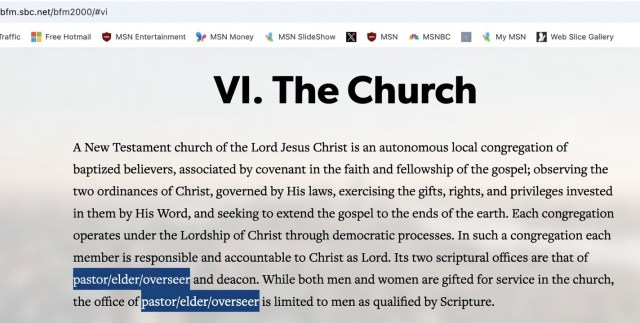
Egalitarianism is the anti-biblical view that women can do anything men can do in the context of the church and home. Women can be pastors, elders, heads of denominations, preach whenever, wherever, and to whomever they want, and they don’t have to submit to their husbands.

Complementarianism is the biblical view that women and men are of equal value and worth in salvation and in the imago dei, but have different, yet equally important roles in marriage and the church. Complementarians embrace the Bible’s teaching that women are privileged to portray the relationship of the church to Christ by graciously and joyfully submitting to our husbands. Complementarians honor and respect the high calling and unique gifting women have to disciple other women and to raise up the next generation of godly men and women by discipling our own, and other, children. Because this is such a weighty and arduous responsibility, we consider it a blessing that God has not also burdened us with the responsibility to preach, teach the Scriptures to men, or exercise authority over men in the context of the gathering of the church. Rather, we encourage the men who have been given this responsibility, leaving godly women free and unfettered to carry out the ministry God has given us.

Currently, there is a movement afoot to establish a third position regarding this issue. It’s often called soft complementarianism – an attempt to straddle the fence, make everybody in both camps happy, and have your cake and eat it too. There are a variety of beliefs among those who choose this label. Many would argue, for example, that a woman may not hold the office of pastor (i.e. she can’t be on staff as the pastor of a church), but it’s perfectly OK for her to guest preach the Sunday morning sermon. At least on Mother’s Day.

Let’s dispense with soft complementarianism right now. It is a position of compromise between the biblical and the anti-biblical. Compromising with sin has never been a biblical stance for God’s people to take. Ever. The Bible tells us “a little leaven leavens the whole lump.” You don’t have to consider yourself a full-blown egalitarian to infect the church with ungodliness. Just a little compromise, a little leaven, a little dab’ll do ya. And that little dab never makes the church or individual Christians more godly, more biblical, or more Christlike. It always leads to more compromise and greater ungodliness.

Furthermore, we don’t treat other sin and rebellion this way. No one would dream of saying, “I hold to a soft view of adultery. Only actual extra-marital sex is off the table. Kissing, touching, dating other people – that’s all fine.”

For those who would argue that complementarianism vs. egalitarianism is a secondary theological issue, I would argue vehemently that it should not be categorized this way. Egalitarianism is sin because it is rebellion against God’s Word. And it is extremely detrimental when high profile complementarians unhelpfully classify it as a “secondary issue”. I know all they mean when they say that is that it is not part of the ordo salutis or a linchpin doctrine of soteriology. But when Christians hear “secondary issue” what they think is, “Oh, this is an issue where both sides have genuine biblical support like pre/post/a- millennialism or credo/paedo baptism. We can just agree to disagree and both sides are biblical.” Nobody thinks that about adultery, murder, gossip, lying or any other sin, and we need to be more careful in our terminology lest we give people an opening to think that way about egalitarianism.

Rebelling against God’s commands regarding the role of women is either a sin or it is not. There is no middle ground, so so-called soft complementarianism is not a biblically legitimate position to take. If you’re a “soft complementarian,” you’re a functional egalitarian. And if you’re a Christian who’s toying with this idea, I urge and encourage you to repent, love Christ and His Word more than you love the world and its ideals, and unashamedly embrace and promote what the Bible says about the role of women.


The next foundational issue we need to explore is whom we’re addressing when we make these apologetic arguments.

There are only two kinds of people in the world: saved people and unsaved people. Which means there are only two kinds of people who hold the egalitarian view: saved people and unsaved people.

The Bible is abundantly clear that saved people have the mind of Christ. That means we think the way Jesus thinks and we view the world and the church the way Jesus views the world and the church. We deny ourselves, putting aside whatever we might want or think, and we submit, as Jesus did, to “It is written…“. Additionally, obedience (or lack thereof) to the commands of Scripture is an indicator of whether or not someone actually belongs to Him. In fact, God says if you claim to be a Christian and you habitually and unrepentantly walk in disobedience to, and rebellion of heart against, His commands, you’re a liar, and you don’t know Christ.

What this means in practical terms when dealing with any biblical issue – egalitarianism, evolution, abortion, homosexuality, etc. – is that a sizable portion of the people on the unbiblical side of the issue are unsaved. Because a saved person has the mind of Christ, she will embrace, believe, and obey God’s Word regarding these issues and come out of these unbiblical camps, and an unsaved person will continue to fight for the unbiblical position. A new or previously poorly discipled Christian may need to be taught what Scripture says about these things, and it may take some time for her to come to grips with God’s commands, but her nature is to fight her flesh to submit to God’s Word, not to make provision for her flesh to fight against God’s Word.

Why do we need to understand this crucial foundational concept in debating this issue? Because people who are unsaved regard the things of God as foolishness and they cannot accept them no matter how much you explain Scripture to them or how much sense you make. This is a spiritual issue that requires a spiritual solution – the Holy Spirit must save the person and open her eyes to the truth of His Word. Often, what the person you’re arguing with needs most is the gospel, not an argument about a theological issue. And you will need to be careful and wise to discern when your apologetics are helpful and effective with someone who truly wants to learn and accept the biblical view, and when it’s time to gather up your pearls, step out of the pigpen, and go home until the Holy Spirit does His good work in her heart.

So I guess all of the above would be my primary apologetic argument against egalitarianism: If you’re truly saved, the fruit of your new nature in Christ will be to forsake and repent of any opinions or positions you hold that conflict with Scripture and submit to, love, and obey God’s commands. If you’re not saved, your opinion doesn’t really matter when it comes to how the church is run because the church is the body of Christ – Believers – not the house of unbelief.


Another argument I’m fond of is what I call the “let’s take a stroll through the Bible” argument, because it addresses so many arguments about 1 Timothy 2:12 that it’s almost a “one size fits all” argument:

But the Bible only says one time that women can’t preach to men!

That was just Paul, as a human, saying women can’t teach men, not God.

That passage is about wives taking authority over their husbands, not about women preaching to or exercising authority over men in the church.

That instruction only applied to the women of the Ephesian church at that particular time.

Look at the overall general pattern of male headship and leadership in Scripture. First human created? A man. The Patriarchs? As the word implies โ€“ all men. Priests, Levites, Scribes? Men. Heads of the twelve tribes of Israel? Men. Major and minor prophets? Men. All kings of Israel and Judah? Men. Noahic, Abrahamic, Mosaic, and Davidic Covenants? All established between God and men. Authors of Scripture? Men. The forerunner of Christ? John the Baptist โ€“ a man. Messiah? A man. All of the apostles? Men. All of the pastors, elders, and deacons of churches in the New Testament? Men. Founder and head of the church? Christ โ€“ a man. Leader and head of the family? Men. Now which fits better with this pattern, women preaching to, teaching, and exercising authority over men in the church, or women not preaching to, teaching, and exercising authority over men in the church?

It’s not just one verse. The entirety of Scripture backs up 1 Timothy 2:12. Which means it wasn’t just Paul’s human idea, just for the women of Ephesus, or just about wives and husbands. Male headship and leadership in God’s foundational institutions – family and church – has been God’s idea, God’s plan since the dawn of Creation (as 1 Timothy 2:13-14 clearly explains). It’s much harder for someone claiming to be a Christian to throw out the whole Bible than to sweep one verse aside.


Another argument that often needs to be made is explaining the difference between descriptive and prescriptive passages of Scripture, because one of the most common arguments egalitarians will make is, “Look at Deborah! Look at Priscilla! Look at the women at Jesus’ tomb! Look at the women Paul commends in Romans 16! They were all in some sort of leadership or teaching position, so that means women can do anything in the church that men can do!” No. No it doesn’t.

Broadly speaking, there are two main types of Scripture: descriptive and prescriptive. Descriptive passages describe something that happened: Noah built an ark. Esther became queen. Paul got shipwrecked. These passages simply tell us what happened to somebody. Prescriptive passages are commands or statements to obey. Donโ€™t lie. Share the gospel. Forgive others.

If we wanted to know how to have a godly marriage, for example, we would look at passages like Ephesians 5:22-33, 1 Corinthians 7, and Exodus 20:14,17. These are all passages that clearly tell us what to do and what not to do in order to have a godly marriage.

What we would not do is look at Davidโ€™s and Solomonโ€™s lives and conclude that polygamy is Godโ€™s design for marriage. We would not read about Hosea and assume that God wants Christian men to marry prostitutes or adulteresses. We would not read the story of the woman at the well and think that being married five times and then shacking up with number six is OK with Jesus.

And when looking for instruction about the role of women in the church, we look to clear, prescriptive passages which tell us what to do and what not to do, not descriptive passages about various women in the Bible. Descriptive passages may support, but never trump, the clear instruction of prescriptive passages.

(Excerpted from my article Oh No She Di-int! Priscilla Didnโ€™t Preach, Deborah Didnโ€™t Dominate, and Esther Wasnโ€™t an Egalitarian. I’ve also addressed each of the women often trotted out in defense of the sin of role-busting in this article.)


Some try to make the argument that it’s OK for a woman to preach or teach Scripture to men if she’s doing it “under her husband’s/pastor’s authority”. Excerpted from my article Fencing off the Forbidden Fruit Tree:

When God tells us (in context, rightly handled, correct covenant, etc., of course) not to do something and we do it anyway, that is sin, right? Only God has the authority to say what is sin and what is not. No one โ€“ not your pastor, your husband, your parents, your best friend, the Pope, nobody โ€“ has the authority to tell you that itโ€™s OK to do something God has said is sin. That authority belongs to God alone.

Try inserting any other sin into that situation. Does your husband, pastor, etc., have the authority to tell you itโ€™s OK to lie? Cuss? Covet? Of course not. And why would they even consider doing such a thing?

If you were to ask your husband and pastor to show you from Scripture where God says itโ€™s OK for them to allow you to teach men, they would quickly realize that they are not basing their decision on Scripture (because there is no Scripture that allows them to do this), but on their own opinion that itโ€™s OK.

When God says “no,” no man has the right to say, “yes.” 


And there’s the “You don’t know Greek, so you don’t know what that passage really means. I do.” fallacy.


Some have tried to make the argument that 1 Timothy 2:12 is mistranslated – that “woman” and “man” should be translated as “wife” and “husband” – and that this passage isn’t prohibiting women from teaching men at all, it’s really about marriage. The short answer to that is: hogwash. If you’d like to read the longer version, check out my article The Mailbag: Potpourri (…Mistranslating 1 Tim. 2:12…) (second question).


And finally, if a Christian struggles with the biblical argument against egalitarianism, God has graciously given us a real-time, tangible, visible argument against it. Take a look at all the once doctrinally sound Christian churches and denominations that are now apostate – the ones that embrace homosexuality, New Apostolic Reformation heresy, preach morality or liberal politics instead of the gospel, etc. They all followed the same pattern. The very first step they took on the road to apostasy was “soft complementarianism”: letting women teach co-ed Sunday school classes, preach on Mother’s Day, hold committee positions that placed them in biblically improper authority over men, and so on. The next step was full blown egalitarianism: allowing women to be elders, ordaining women as pastors, placing women in unbiblical denominational leadership positions. Next came embracing homosexuality: extending church membership to unrepentant, practicing homosexuals (and now, transgender people), ordaining them, and allowing them to serve in any and every position of church and denominational leadership, including the pastorate. And the final step is abandoning the gospel and the authority and sufficiency of God’s Word altogether. It happened to the Lutherans, the Episcopalians, the Methodists, the Presbyterians, scores of non-denominational churches, and now it’s happening to Southern Baptists. Not a single church or denomination that has embraced egalitarianism has become holier, truer to God’s Word, or more spiritually healthy. They have all ended up dead eventually, and the true Christians in those churches and denominations have left to form biblical churches and denominations.

Egalitarianism is anti-biblical, harmful to men, women, and the church, and dishonoring to God. We may not be able to convince every egalitarian to repent and embrace what God’s Word says about the role of women, but it’s important to think through this issue in a biblical way, and using an apologetic framework is a great way to do that.

Additional Resources:

Rock Your Role Series

Jill in the Pulpit

Oh No She Di-int! Priscilla Didnโ€™t Preach, Deborah Didnโ€™t Dominate, and Esther Wasnโ€™t an Egalitarian

Women Preaching: Itโ€™s Not a Secondary Doctrinal Issue

All Things Being Equal

Rock Your Role FAQs

Fencing off the Forbidden Fruit Tree

The Mother of All Rebellions: Having a Woman Preach on Mother’s Day

Ten Things You Should Know About 1 Timothy 2:11-15 and the Relationship Between Men and Women in the Local Churchย at The Council on Biblical Manhood and Womanhood (CBMW) This is a refutation of the most common egalitarian arguments against the plain meaning of 1 Timothy 2:11-15.

The Paul-Side Gambit: How A Proper Understanding of Apostolic Authority Defeats Womenโ€™s Ordination by Chris Rosebrough


If you have a question about: a Bible passage, an aspect of theology, a current issue in Christianity, or how to biblically handle a family, life, or church situation, comment below (Iโ€™ll hold all questions in queue {unpublished} for a future edition of The Mailbag) or send me an e-mail or private message. If your question is chosen for publication, your anonymity will be protected.

Mailbag

The Mailbag: Potpourri (Prayer quilts, Discouraged husband, Jesus Calling at the CPC…)

Welcome to another โ€œpotpourriโ€ edition ofย The Mailbag, where I give short(er) answers to several questions rather than a long answer to one question. I also like to take the opportunity in these potpourri editions to let new readers know about my comments/e-mail/messages policy. Iโ€™m not able to respond individually to most e-mails and messages, so here are someย helpful hintsย for getting your questions answered more quickly.ย Remember, the search bar can be a helpful tool!

In these potpourri editions of The Mailbag, I’d also like to address the three questions I’m most commonly asked:

“Do you know anything about [Christian pastor/teacher/author] or his/her materials? Is he/she doctrinally sound?”

Try these links:ย 
Popular False Teachersย /
ย Recommended Bible Teachersย /ย search bar
Is She a False Teacher? 7 Steps to Figuring It Out on Your Own
(Do keep bringing me names, though. If I get enough questions about a particular teacher, I’ll probably write an article on her.)

“Can you recommend a good women’s Bible study?”

No. Here’s why:
The Mailbag: Can you recommend a good Bible study for women/teens/kids?
The Mailbag: โ€œWe need to stop relying on canned studies,โ€ doesnโ€™t mean, โ€œWe need to rely on doctrinally sound canned studies.โ€.

“You shouldn’t be warning against [popular false teacher] for [X,Y,Z] reason!”

Answering the Opposition- Responses to the Most Frequently Raised Discernment Objections


Wondering if you’ve ever commented on “Prayer Quilt Ministries” that some churches have. I was visiting a church recently that had an announcement in the bulletin for those interested to visit the lobby and “tie a knot in a prayer quilt”. On the church’s website the prayer quilt page says, “Gather to help press, pin, cut, sew or design prayer quilts. These are tied with prayer when given away to someone suffering from lengthy or devastating illness.”ย It’s probably a good work to make a quilt for someone who needs it, but what about the “prayer & tying of knots” issue?

Great question! I think it probably depends on the church’s theology. If it’s a New Apostolic Reformationย type of church that believes that touching these quilts and praying while tying the knots in them will heal the recipients or somehow transport some sort of spiritual mojo to them in the warp and woof of the fabric, then that’s false doctrine and it needs to be done away with. That would be kind of like those magic “prayer cloths” that televangelists used to send out if you would only send them a “seed offering”.

However, if the church is doctrinally sound (which your e-mail indicated is the case), it’s very unlikely that it’s anything sinister like that. It sounds to me like the quilts themselves are just a kind ministry to hurting people. It reminds me of the story ofย Dorcas. “All the widows stood beside [Peter] weeping and showing tunics and other garments that Dorcas made while she was with them.”

The purpose of the knots is probably two-fold. First, it encourages church members to pray for the recipients of the quilts, and gives them a touchstone of having done so. Second, the recipient is probably told that every knot on the quilt was tied by someone who prayed for her.ย I think the knots are probably sort of like the stonesย we sometimes see Israel setting up in the Old Testament, or even baptism – a physical reminder of a spiritual moment. It’s an encouragement both to those who tie them and the recipients.

And if that’s as far as it goes, I don’t think that’s unbiblical. In fact, I think it is a great ministry for women to get involved in, it reaches out to people with the love of Christ, and if a Bible or gospel tract is included (I hope!), it’s a form of evangelism. All good and biblical things.


I am married and have a struggle with my wife about our roles. It’s been hard dealing with this. I get more respect from my Starbucks barista than I do at home.

The whole girl power thing is really not bad if it doesn’t come at the expense of men. But it’s gone too far, it’s kinda like idol worship now.

I’m going to be honest I know a lot of men that are tapping out. Young men don’t want to get married, older men can’t afford their wives’ lifestyles. Divorced men are ruined and spiraling down out here. It’s bad… Real bad.

You may never read this, but I hope you keep up the good fight. Not many people, much less women even look at us men as anything more than walking ATM’s and fix it guys. Thank you for making a bold move in the opposite direction. God be with you and keep you.

Every once in a while I get a heartbreaking e-mail like this from a husband. Sadly, there’s usually nothing I can do for them. Their wives are not the type who would care what I had to say even if I could talk to them.

But ladies, I’d like to ask you to do something for our friend here. Would you take just a moment and pray for him, his marriage, and his wife? And, if you wouldn’t mind, would you leave a comment under this article letting him know you’ve prayed for him and offering any words of encouragement you’d like? Thank you.


I volunteer at a Crisis Pregnancy Center that regularly gives away not only Bibles (good) but also Jesus Calling (bad!). I have been researching and note-taking a compilation of what you point out so that I can gently and lovingly bring this to the attention of the director of the center. I am not very confident however that she and others in authority will see the problem. It might be worth noting that my job at the center is strictly data input. I do not see any patients so therefore I myself do not ever have an occasion give a patient a Jesus Callingย devotion. But should I not volunteer here if others continue to do so?

Way to be thinking theologically! This is the kind of thing we will all have to be thinking through more and more as the days grow darker, and it’s important that we think them through biblically.

Wow, it hurts my heart to hear that a CPC is doing this. These women are already in a difficult situation and instead of helping them with the truth of Scripture this CPC (and probably others out there) is feeding them false doctrine when they’re at their most vulnerable.ย 

Approaching the director kindly is the best first step, remembering that the vast majority of Christians simply don’t know what false doctrine is or the extent to which it has infected Christian materials. For most people, it never occurs to them that something sold at a Christian store might not be biblical. It’s my prayer that the director will listen and be convicted to stop using these materials in favor of doctrinally sound ones. When you go in to talk to her, you might want to have a couple of suggestions in mind for alternative materials. This tract from Living Waters might be a fit. Wretched has a great little gospel booklet calledย Don’t Stub Your Toe. Or you might contactย Pre-Born!ย or another pro-life ministry you trust and ask for ideas.

But if the director brushes off your concerns, you’ll need to make a decision about whether or not to continue to work there. If you are married, the first thing you need to do is discuss this with your husband and find out what he thinks. If he tells you what he’d like you to do, you’ll need to abide by that. But even if he leaves the decision up to you, he will probably have some helpful wisdom and insight. You might also wish to bounce this off your pastor, an elder, or a godly friend.

Since you’re not the one purchasing the books or handing them out, I believe you could still work there – if your conscience allows. I would recommend that you pray about it and ask God to give you the wisdom to make a godly decision.


I need some direction. Iโ€™ve been teaching/sharing Godโ€™s Word at a nursing home for over two years on Sunday mornings. We have mostly women, but there are two men who join us. I was asked by the nursing home to lead our little church because they havenโ€™t been able to find any men willing to do it. Thatโ€™s my dilemma, I know Paul said he wouldnโ€™t allow a woman to teach men, I donโ€™t know how to handle this. I myself am not part of any other church, so I donโ€™t have a pastor to help. Iโ€™ve reached out to some churches, but no one is getting back to me. Since we canโ€™t find a man willing to lead, am I okay to keep doing what Iโ€™m doing?ย 

That is quite the dilemma! Let me see if I can help.

You started your e-mail by saying, “I need some direction,” so I hope you’ll be open to some direction that’s in a bit of a different direction than the one you’re asking about.

It’s wonderful that you’re wanting to help out at the nursing home and teach God’s Word. We need more women in mercy ministries like this, and I’m sure you’re a joy and a blessing to the ladies. But I’m afraid there’s a bigger issue you need to deal with than whether or not to be teaching at the nursing home.

You need to find a doctrinally sound church, become a member of it, and attend and serve it faithfully. Church membership, fellowship, and service are not optional for Christians (Basic Training: 7 Reasons Church is Not Optional and Non-Negotiable for Christians).

The Bible knows nothing of unchurched Christians, and serving at the nursing home is not a reason not to be joined to a local church. You could always serve at the nursing home on Sunday afternoons after worshiping at your own church, or serve on another day. If you’re asking around at churches for someone to volunteer on Sunday mornings, this is why you’re not getting much of a response – you’re contacting churches. Pastors and their church members are supposed to be in church on Sunday mornings, not somewhere else.

I know you might be thinking that your group of ladies at the nursing homeย is your church because you called it “our little church”. It might be an awesome group of ladies with super close fellowship, but what you have there is a women’s Bible study class, not a church. It doesn’t have a pastor, elders, or deacons. It doesn’t have a membership, so there’s no mechanism for church discipline. Nobody is giving offerings or serving the Body. You’re not performing the ordinances of baptism and the Lord’s Supper (I hope). This is not a church.

Have you ever been on an airplane and noticed that when the flight attendant gives the safety instructions, she always tells you to put on your own oxygen mask first before assisting others with theirs? It’s good advice in this situation too. Right now, you’re disobeying Scripture by not being joined to a local church, so you’re setting a sinful example for your ladies while simultaneously teaching them that they need to obey God’s Word. Put your mask on first. Repent and join a local church. You also need to be sitting under good preaching and teaching at your own church so you’ll have something to give these ladies andย to keep your own theology on track so you can make sure what you’re teaching them doesn’t veer off into false doctrine. Put your mask on first. You can’t help other people breathe if you’re passing out from lack of oxygen. Finally, joining a local church will fix the problem you mentioned of, “I don’t have a pastor to help.” If you’ll put your mask on first by finding a good church to join, youย willย have a pastor, elders, deacons, and lots of other men to help.

When we do things God’s way, in God’s order, most of the secondary things, like your dilemma about the men at the nursing home, tend to fall into place. Tell you what. You find a good church to join – maybe one of the ones you contacted for help (check out the “Searching for a new church?” tab at the top of this page if you need it) – get plugged in, and ask your pastor for some help with this. If he can’t or won’t help you, write me back, and we’ll go from there, OK? I’ll bet you won’t need to.


If you have a question about: a Bible passage, an aspect of theology, a current issue in Christianity, or how to biblically handle a family, life, or church situation, comment below (Iโ€™ll hold all questions in queue {unpublished} for a future edition ofย The Mailbag) or send me anย e-mail or private message. If your question is chosen for publication, your anonymity will be protected.

Mailbag

The Mailbag: My husband wants to stay at an unbiblical church.

There are unbiblical things happening in my church. I want to leave and find a better church. My husband wants to stay. Do I submit to him and stay at this church or go against his wishes and find another church to join by myself?

I receive some variation of this question several times a year, which absolutely breaks my heart. Normal, everyday disagreements in marriage are hard enough, but when it’s something this important that involves such a huge part of your life, it can be excruciating.

It’s also an impossible question for me to answer a) since I’m so far removed from the situation, and b) because every situation is different. All I can do is ask some questions and provide some resources that may help as you make your decision.

โ—Š Is the issue at your church actually unbiblical? Just because you don’t like something (the genre of music, that women wear pants to this church, that there are/aren’t age-segregated activities, etc.) doesn’t necessarily mean it’s unbiblical. Search the Scriptures. Is what is happening at your church clearly violating a chapter and verse, rightly handled, in context passage of Scripture?

โ—Š Are you fairly certain your husband is saved? Does he usually make godly decisions as he leads your family? The answers to these questions may give you some insight into your husband’s perspective on this church and help you understand his side of things better.

โ—Š Is this a “We must obey God rather than men” situation? Carefully examine that passage. Scripture has always been clear that we are to obey those in authority over us, and the apostles knew it. The only reason they disobeyed the authorities is because the authorities commanded them to do something that clearly conflicted with God’s Word. Is that the situation you’re in at this church? If not, Scripture is clear that you’re to submit to your husband.

โ—Š Don’t underestimate how greatly your submission could impact your husband. Scripture says it can make such an impression that God can even use it as a tool to draw unsaved husbands to Himself for salvation. If submission can soften an unsaved man’s heart toward salvation, perhaps it could soften your husband’s heart toward finding a better church.

โ—Š Is it possible that in obeying God’s instruction to submit to your husband in this circumstance God is keeping you in this church in order to give you an opportunity to serve Him by bringing biblical truth to bear on the unbiblical situation (in a godly way, of course)? Sometimes the solution to a problem at church is not to cut and run, but to roll up your sleeves and get to work.

โ—Š Submitting to your husband doesn’t mean you can’t pray for him and the situation at church. You should definitely be praying that your husband is making the right decision and that God will change his heart and mind if not. You should also be praying that you would have the right heart in this situation, praying for your children if they are also in the church, and praying that God would change the situation at church. Pray fervently about everything.

โ—Š Have you and your husband actually sat down and talked this through? If not, set aside some uninterrupted time in a pleasant environment, and carefully, prayerfully, and objectively (no histrionics) explain – citing clear Scripture – what is bothering you about the church. And then listen to what your husband has to say in response. If he is anything like my husband, he’ll probably bring up at least one good point you hadn’t thought about, but need to.

โ—Š Would it be helpful to bring in a third party to bounce the situation off of? Maybe a pastor friend you both trust, a spiritually mature couple you’re friends with, your parents or in laws, even a biblical counselor? Sometimes a fresh, objective set of eyes and ears can help.

โ—Š Is there a solution you and your husband can work out besides the two options of you staying or leaving? Do some brainstorming. Is the unbiblical situation at your church self-contained enough that you could arrange your attendance habits in order to avoid it? (For example: The women’s ministry only offers classes using materials by false teachers. Solution: You don’t have to attend those classes. Or, you could volunteer to teach a class that studies a book of the Bible. The “contemporary” service at your church uses Bethel and Hillsong music. Solution: Maybe your husband would compromise and go to the “traditional” service with you that only uses hymns.) Maybe your husband works a lot of Sundays and would be OK with you going to another church on those Sundays. Perhaps the two of you could reach a compromise of going to the doctrinally sound church you like every other Sunday, and the old church the rest of the time. What about a trade off? “If you’ll switch to this new church for me, I’ll do ____ for you.” Think outside the box, ask God for wisdom, discuss it with your husband, and see what you can come up with.

โ—Š Keep the perspective that God is using this situation in your life (your husband’s too) for his glory and your good. Maybe God will use this situation to grow your trust in Him, to strengthen your prayer life, to give you more practice in submitting to your husband, or to train you in the Scriptures. Whatever His purposes, He is doing it for a good reason. He loves you. He hasn’t forgotten you. He hasn’t abandoned you. He’ll bring you through this.

Conflict over church can be rough on a marriage, and the solution is not always easy. Pray without ceasing, obey God’s Wordseek godly counsel, and trust God to lead you.


If you have a question about: a Bible passage, an aspect of theology, a current issue in Christianity, or how to biblically handle a family, life, or church situation, comment below (Iโ€™ll hold all questions in queue {unpublished} for a future edition of The Mailbag) or send me an e-mail or private message. If your question is chosen for publication, your anonymity will be protected.