

A Few Good Men, Again!: 10 Doctrinally Sound Male Teachers


Here are a few of my favorite recent online finds…

Here’s something helpful that came out of the TGC Women’s Conference earlier this summer, the 9Marks at 9 breakout session Women and the Local Church. Karen, Keri, Bev, and Abigail discuss what makes a church, the importance of the local church, what makes a healthy church, practical things you can do to help your church become healthy, prioritizing the local church, and the impact your commitment to the church makes on your children.

Wretched has, not one, but two freebies for you! Download the gospel booklet Don’t Stub Your Toe or The Biggest Question video (also available in Spanish) and share them on social media or via e-mail with friends who need to hear the gospel. You might even enjoy reading and watching them yourself!

Pastor Allen Nelson has written a helpful seven-part review and response to Rachel Held Evans’ new book, Inspired: Slaying Giants, Walking on Water, and Loving the Bible Again. It’s over at the Things Above Us blog, and it’s entitled God-Breathed: A Response to Rachel Held Evans’s View of Scripture. If you’re unfamiliar with Rachel, you can read more about her here, where I have also linked Allen’s article series.
 At night or in the morning? Commentaries or journaling? “In January 2018, Crossway surveyed over 6,000 readers, asking questions about their Bible reading habits.” They’ve given us some of the results of that survey in a nifty little infographic, How Do You Read the Bible?
Yet she will be saved through childbearing—
if they continue in faith and love and holiness, with self-control.
1 Timothy 2:15
Have you ever wondered what that verse means? WordBoard explains with the Boardies video What Does She Will Be Saved Through Childbearing Mean?
Here are a few of my favorite recent online finds…
 Want to memorize Scripture, but you need a little help or don’t know where to start? Check out the Scripture Typer Bible Memory System. Use verses you’ve already decided you want to memorize, or get some suggestions from Scripture Typer. Type in and practice your verses until you have them memorized, and Scripture Typer will keep everything nice, neat, and organized for you. Scripture Typer is available online, or in an app for Android, Kindle, iPad, or iPhone.
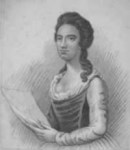 “Among English Baptists of the eighteenth-century, Anne Dutton was known as ‘the most theologically capable and influential Baptist woman of her day’.” I had never heard of Anne before, but I found this little piece about her, Lessons from the Life and Ministry of Anne Dutton by Joshua Mills over at Servants of Grace to be charming and encouraging. Take a moment to read about one of our foremothers in the faith.
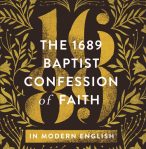
Being a “1689er” myself, I just loved this modern English version of the Second London Baptist Confession of Faith, put together by Dr. Stan Reeves of Founders Ministries. Dr. Reeves has stayed true to the original LBC as much as possible, only clarifying and updating archaic verbiage when necessary. (You can compare with the original 1689 version here.) Give The 1689 Baptist Confession of Faith in Modern English a read. You might even want to study the Scriptures it references during your Bible study time.
 For regular readers, it’s no secret I’m a big fan of Josh Buice and his blog, Delivered by Grace. A few months ago, Josh started adding quizzes to his stellar lineup of blog articles, and I hope he keeps them coming. Quizzes can be a fun and helpful way to get us thinking through various issues and pointing out areas in which we need to study more. Take Josh’s most recent quiz, Biblical People—How Much Do You Know?, and find out how much you know about the people of the Bible. (And click here to check out any previous quizzes you might have missed!)

I would like to start a Christian blog, but have had a few online encounters with others that have heightened my concern about revealing information about myself on the internet. Could you tell me…
1. Have you ever had someone personally and maliciously attack you?
2. Do you think it is wise to use your real name, or is it best to use a pen name and stay anonymous online?
3. Should Christians expect attacks online and persevere through them? Or is there ever a time it is wise to pull back in the face of personal attacks?
I’m so sorry you’ve had some negative experiences with others on the web. We always want to act in a Christlike way when we deal with people, even online, and that includes using wisdom about how close we allow them to get, balanced with being genuinely concerned and caring. Here are a few thoughts along those lines. I hope they’re helpful.
I have been blogging for ten years. I’ve had scores of people (mostly disgruntled disciples of false teachers, but a few atheists, too) call me every name in the book and blame me for the demise of Christianity in blog comments, emails, and social media comments and private messages. A handful of times, due to their disagreement with something I’ve written (or the fact that I’m a woman who writes on biblical topics at all) people have rudely questioned whether or not my husband is doing his job as the spiritual leader of our home. But that has been the extent of it.
Insults, slander, and social persecution, even from those claiming to be Christians, come with the territory when you stand firmly for biblical truth. It’s just something you have to get used to, remembering where it’s coming from and how to handle it biblically. However, if somebody crosses the line from a nasty e-mail or ugly blog comment to threatening or interfering with your life, that’s harassment and/or stalking, and that’s a crime and should be reported to the police. You can’t be too careful these days.
I think part of the reason I haven’t experienced many problems with readers is that I’ve tried to exercise reasonable caution about the information I share online.
Obviously, I use my real name, first and last, on my blog and social media accounts. There are two schools of thought about this among bloggers.
Some bloggers blog simply for the pleasure of writing and sharing their writing with whoever else happens to enjoy it. It’s not necessary for people to be able to contact them personally, they’re not trying to earn money from blogging or build an audience to please a publisher, and maybe they even have concerns that the thoughts they express in their blogs would negatively impact their careers, their churches, or their relationships. In those instances, many people choose to blog anonymously or use only their first names. When I first started out over at Blogspot, I was just writing for pleasure, and, though I wasn’t particularly trying to keep my name a secret, the title of my blog was Bread and Water rather than my name. I just thought it was catchier :0)
But some bloggers use their blogs and social media accounts as an extension of or supplement to other ministries, and, thus, need to have their real name out there. That’s where I am now. When my book was first published, my publisher wanted me to get my name out there so we could sell more of my books, schedule speaking engagements and book signings, and any number of other promotional and publicity activities. I was as much the product as the book was. So I moved over to a broader blogging platform here at WordPress, changed the title of the blog to my name and started opening social media accounts in my name in order to build my audience and create name recognition. I still do speaking engagements, interviews, and podcast appearances, so I’ve just kept the title of the blog the same even though my book is now out of print.
But while I do use my real name, there are other measures I take to at least try to make it a little more difficult for the crazies to find me (If somebody is crazy, and internet savvy, enough, they can find you no matter how careful you are.). I do not mention – either publicly or in e-mails or private messages – the name of my church or the location of other public places I frequent, the name or location of my husband’s business, my grown children’s locales or employers, nor would I mention the name of my younger children’s school if I didn’t home school them.
I generally limit my personal Facebook account to people I know personally or network closely with online, and I rarely make my posts public. The rest of my social media accounts are public, and I try to be careful about the information I disclose on them. I have a separate e-mail account for my blog and social media accounts, and I never give out my “real” e-mail address. I also do not get into personal conversations about myself in e-mails with people I don’t know, nor get into protracted e-mail conversations with them. And if someone is being ugly on one of my social media accounts and doesn’t settle down after a warning, she gets banned or blocked.
Another way to prevent sticky situations before they happen is not to give angry or unbalanced-sounding people a forum. I have a policy of refusing to publish comments or answer e-mails and messages that are obviously angry and argumentative. (See my comments policy under the “Welcome” tab at the top of this page. Please feel free to use it as a guide when formulating a policy for your own blog.) Usually, when people realize they won’t have a platform for arguing, they give up and go somewhere else.
In your situation, I would first recommend talking things over with your husband. Ask what he thinks about you starting a blog and any concerns he may have, and be sure you’re abiding by whatever he says. If you have security or privacy concerns and are basically just writing for pleasure, an anonymous blog might be the best way to go. I’d also recommend creating a new, dedicated e-mail account for it, and putting some precautions and policies in place, similar to the ones I’ve mentioned, before getting started. If you want to develop personal relationships, help people with their problems, or disciple other women, do so one on one within the safety and confines of your church.
Fellow bloggers-
Any advice for this reader? Please comment below!
If you have a question about: a Bible passage, an aspect of theology, a current issue in Christianity, or how to biblically handle a family, life, or church situation, comment below (I’ll hold all questions in queue {unpublished} for a future edition of The Mailbag) or send me an e-mail or private message. If your question is chosen for publication, your anonymity will be protected.
Here are a few of my favorite recent online finds…

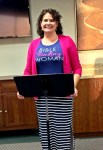 Thanks to my sweet friend Kesha over at Bible Thinking Woman for giving me a heads up on all the great t-shirts and other products available at her online boutique, Eternal Gift Store! The BTW shirt she kindly sent me is super soft with an eye-catching design. Check out all their products and give BTW a follow on Facebook or Twitter.
 Does your church collect Operation Christmas Child shoe boxes at Christmas time? Amy Medina and her husband Gil are missionaries in Tanzania, and she has written two startling articles at Everyone Needs a Little Grace in Their Lives about being on the receiving end of OCC shoe boxes. There’s corruption, evangelism dilemmas for missionaries, and often, no gospel. I urge you to read Opening Up Christmas Shoe Boxes: What Do They Look Like On the Other Side? and Sometimes the Starfish Story Doesn’t Work, and maybe pass them along to your pastor now, while there’s still plenty of time to decide whether or not your church should participate in OCC this year.
Who doesn’t love an online quiz? Here’s a Simple Bible Doctrine Quiz from Josh Buice at Delivered by Grace that will test your knowledge of basic theology.
 If you’re a Sunday School or Bible study teacher, or even just for your personal daily Bible study time, The Hero of the Story is a really helpful new podcast from The Gospel Project featuring my friend Aaron Armstrong and co-host Brian Dembowczyk that will help train you to teach and/or study the Bible better. (So far, it is not specific to The Gospel Project Sunday School curriculum, so your church doesn’t have to use that literature in order for the podcast to make sense.) You can listen on line as well as get all the appropriate podcast links at the link above.
 My Sunday School class has a breakfast rotation. Last week it was my turn to bring breakfast, so I made a doughnut bread pudding. When I mentioned it on Twitter, a lot of people seemed interested in the recipe, so I thought I’d share it here. I use this bread pudding recipe, substituting glazed doughnuts for the bread. I leave out the raisins, cut the sugar a little (since the doughnuts are glazed), and top it off with a a cream cheese buttercream icing drizzle (melt a little butter and cream cheese, add a dash of vanilla and a spritz of water, stir in powdered sugar until it’s the right consistency) when it’s done.
