Apologetics, Bible

Without Apology: 7 Reasons Not to Be Ashamed of the Hard Parts of the Gospel

7-not-ashamed

I am not ashamed of the gospel…

Romans 1:16 is such a great verse, isn’t it? And one of the things that’s great about it is that we can all agree on it. I mean, no self-respecting Christian would dream of saying she’s ashamed of the gospel, would she? It’s a rallying cry for evangelism and for standing against persecution. Of course we’re not ashamed.

In theory. But in practice?

You see, the gospel is the good news of salvation. And, while we don’t tend to share the entire Bible when we share the gospel with someone, the good news starts in Genesis with a holy God who created a perfect world, and moves on to the first people who messed everything up with their sin, a whole bunch of subsequent people who couldn’t be faithful to God and keep His Law, Christ and His redemption of sinners, and the Revelation of the hope of His return at the end of time. So, “the gospel” really stretches from the front cover of your Bible to the back cover.

Are there any parts of it you shy away from in evangelism, discipleship, or teaching?

What about the atheist you’re witnessing to who denigrates your God for committing genocide in the Old Testament?

Were you afraid to speak up the last time you were the only Creationist in a room full of evolutionists?

Have you ever seen some poor pastor or male teacher tiptoe his way through the minefield of a passage on marital submission or the biblical role of women in ministry lest the wrath of church ladies befall him?

Are you reluctant to be known as someone who believes and will unequivocally say that homosexuality and other deviant sexual behavior is a sin?

Hey, we’ve all been there and failed. These are tough passages for sinners to hear, after all! When they come up, we should certainly approach them wisely and lovingly with people, but we should take care never to wish these things (and others) weren’t in Scripture, feel embarrassed about them, apologize for them, or act as though we have to make excuses for God about them. We need to be just as willing, bold, kind, and comfortable saying, “The world did not evolve, God created it,” and “You must repent of homosexuality along with all your other sin,” as we are saying, “God is love.” Why?

1. The Bible is God’s word.

Scripture is the very words of the God of the universe. It’s not a storybook or a policy and procedure manual dreamed up by men. Scripture is God speaking to us. To be ashamed of any part of His word is to be ashamed of Him, what He has done, and who He is. We dare not.

2. The Bible glorifies God.

The mere existence of Scripture brings honor and glory to God. No other god has spoken personally, so magnificently, and in a living and active book, to his people. The Bible brings glory to God when His people believe and obey it. We exemplify His goodness and holiness to a watching world. And even when the Bible isn’t believed and obeyed, God is glorified by showing us in His word that His way is right and perfect and man’s way is not.

3. The Bible is perfect.

God didn’t leave anything out of the Bible or put anything extra in that shouldn’t be there. The Bible is perfect just the way it is. God doesn’t need us to help Him out by editing it. If He wanted it to say something different, it already would.

4. The Bible is right.

When God’s word says something is a sin, it is right. When God’s word tells us He, in His holiness, did something we think is unfair or distasteful, it is right. When God’s word requires us to do something, it is right. When someone balks at what the Bible says, it’s not the Bible that’s wrong. It’s that person’s sinful flesh that thinks it knows better than God what is good, appropriate, loving and fair. If a person comes up against the Bible, the Bible does not bend. That person bends. The knee. To God. If you are standing on the rightly divided word of God, you can be confident that you are in the right because the Bible is right. There’s no need for reticence.

5. The Bible is a blessing.

If you’ve ever studied the history of how you got the Bible sitting on your coffee table, you know just how amazing it is that you own one. Thousands of years, scores of writers, so many people who were martyred for penning it, protecting it, and translating it. How could we be ashamed of such a precious gift from God Himself?

6. The Bible is good for us.

God put those tough passages in the Bible because they’re good for you. And they’re good for the person who’s foaming at the mouth over the one you’re trying to explain to her, right now, too, she just doesn’t know it yet. God is a kind and loving Father who always does what is best for us. Those difficult passages would not be in the Bible if God didn’t want them there to benefit us in some way.

7. The Bible is useful.

 I can’t say it better than Scripture itself does:

All Scripture is breathed out by God and profitable for teaching, for reproof, for correction, and for training in righteousness, that the man of God may be complete, equipped for every good work. 2 Timothy 3:16-17

God uses every verse of Scripture – even the hard ones – to save us, grow us, conform us to His will, equip us, and reveal Himself to us. Why would we deny those saving, growing words to people who desperately need to hear them by shying away from them just because they’re difficult to say or unpleasant to hear?

Steve Lawson once said, “The Bible is not hard to understand. It is just hard to swallow.” And he’s so right. It’s not difficult to understand the concept that wives should submit to their husbands or that the God who sovereignly gave people life has every right to take it away. What’s difficult for us is to humble ourselves and cede control to Someone else. We think we know best. We want to run things and make the rules. We don’t want to submit to God’s authority.

In the end, there really aren’t any tough passages. There are only passages that come up against tough hearts. Tough hearts that need to be broken by the gospel, that they might repent of their sin and be forgiven by a great and merciful God.

And that’s nothing to be ashamed of.
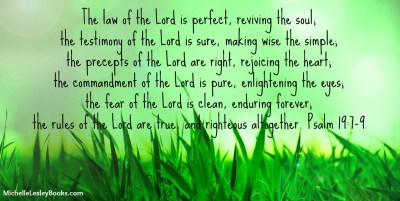
ps-19-7-9

Sin, Throwback Thursday

Throwback Thursday ~ 9 Things that Are Still Sins Whether We Agree or Not

Originally published June 19, 20159 still sins


I do it all the time, Mother, and I’ve decided something-
it’s not a sin.

I heard this line several years ago on a popular sitcom, spoken by an adult daughter to her Christian mother about a behavior the Bible unambiguously calls a sin. I mean, it’s right smack dab in the middle of the Big 10; “thou shalt not” and everything.

It’s one thing to say, “I know it’s a sin, but I don’t care. I’m going to do it anyway,” but how depraved is the world when they think they – in God’s place – are the ones who get to define what sin is? And what’s even worse is that the church has begun to adopt this audacious depravity as well, whether approving of sin by fiat or by simply ignoring God’s word and letting sin slide without rebuke.

When it comes to what’s a sin and what’s not, God made up His mind a long time ago. And He’s not changing it, regardless of what you or I or Joe Politician or Jane Celebrity might think. Maybe we all need a remedial course in hamartiology, so let’s start with the basics. These things are all still sins whether the world and the church agree with God or not:

1. Homosexuality

Let’s just get it out of the way right up front. I don’t care how many celebrity “pastors” and “Christian” authors twist God’s word to say otherwise, or how many people declare themselves to be (unrepentant, practicing) “gay Christians,” or how many homosexuals declare that God made them that way, God’s word is clear: homosexual lust and behavior are sins.

2. Abortion

Abortion is the taking of an innocent human life. We don’t murder people because they’re small or sick or inconvenient or will hinder our sucess. God didn’t say, “You shall not murder, except when…” He said, “You shall not murder.” Period.

3. Extra-Marital (Heterosexual) Sex

Adultery, fornication, whatever form it might take, if you’re not legally married to the person you’re engaging in sexual activity – up to and including actual intercourse – with, you’re sinning.

4. Cohabitation

See #3. And don’t try to whitewash it by saying you’re living together but not sleeping together. A) The Bible says we’re to flee temptation, not move in with it, and B) we’re supposed to avoid every form of evil, even the appearance of it. If you call yourself a Christian and you’re shacking up, you’re living in sin (that’s why they call it “living in sin”). Repent and move out or marry up.

5. Divorce

Yep, still a sin, except in two cases: unfaithfulness or an unsaved spouse leaving a saved spouse. In those two cases the spouse who was wronged is not sinning and is free to marry again.

6. Swearing

The air is saturated with it. Foul language coming from our TVs, music, movies, social media, and the people we’re around all day. But expletives have no place in the vocabulary of a Christian. Is your potty mouth on Saturday the same one you praise God with on Sunday?

7. Taking God’s Name in Vain

It’s gotten to the point where we think so little of casually punctuating our sentences with, “Oh my G-d,”  or using the name of Jesus as an exclamation that pastors are even doing so from the pulpit these days. God’s name is high and holy and should be spoken only reverently and worshipfully. How can we look people in the eye and call them to repentance and faith in a Person whose name we use as a cuss word?

8. Gluttony

We have almost completely amputated gluttony from the spiritual realm by cordoning it off as merely a physical or medical issue. We’ve renamed it “overeating,” but that doesn’t change the fact that it’s a sin. God created good food for us to enjoy, but just as with all the other good gifts He gives us, He expects us to exercise Spirit-enabled self control when we receive it.

9. Female Usurpation

God makes it abundantly clear in His word that women are not to instruct men in the Scriptures or hold authority over them in the church. Women sin when they pastor churches, preach sermons in church, teach men in Sunday School classes, and hold other positions of authority over men in the church. Men, however, bear the primarily responsibility for this when they sin by failing to rebuke usurping women, or when women feel they have no other choice but to take on male responsibilities in the church because men are shirking their own duties before God.


We don’t get to decide what sin is. That’s God’s job. And all of us – whether we’ve committed one of these nine sins or not – are guilty of sinning against Him. That’s the bad news.

But, in Christianity, we never give the bad news without following it up with the good news. And, oh what wonderfully good news it is: forgiveness. Jesus paid for our sin at Calvary so that if we will only turn from it and trust Him, He will forgive us for all nine of these sins and countless others.

If we confess our sins, he is faithful and just to forgive us our sins and to cleanse us from all unrighteousness.
1 John 1:9

Colossians Bible Study

Colossians: Lesson 7

Previous Lessons: 1, 2, 3, 4, 5, 6

Colossians 4:7-18

Tychicus will tell you all about my activities. He is a beloved brother and faithful minister and fellow servant in the Lord. I have sent him to you for this very purpose, that you may know how we are and that he may encourage your hearts, and with him Onesimus, our faithful and beloved brother, who is one of you. They will tell you of everything that has taken place here.

10 Aristarchus my fellow prisoner greets you, and Mark the cousin of Barnabas (concerning whom you have received instructions—if he comes to you, welcome him), 11 and Jesus who is called Justus. These are the only men of the circumcision among my fellow workers for the kingdom of God, and they have been a comfort to me. 12 Epaphras, who is one of you, a servant of Christ Jesus, greets you, always struggling on your behalf in his prayers, that you may stand mature and fully assured in all the will of God. 13 For I bear him witness that he has worked hard for you and for those in Laodicea and in Hierapolis. 14 Luke the beloved physician greets you, as does Demas. 15 Give my greetings to the brothers at Laodicea, and to Nympha and the church in her house. 16 And when this letter has been read among you, have it also read in the church of the Laodiceans; and see that you also read the letter from Laodicea. 17 And say to Archippus, “See that you fulfill the ministry that you have received in the Lord.”

18 I, Paul, write this greeting with my own hand. Remember my chains. Grace be with you.


The Holy Bible, English Standard Version Copyright © 2001 by Crossway Bibles, a publishing ministry of Good News Publishers.


Questions to Consider:

1. What is the theme or purpose of this passage? With what sort of tone (rebuking, emphatic, compassionate, etc.) does Paul close out this epistle? Thinking back over the previous lessons, give a 3-5 sentence synopsis of Colossians in your own words.

2. List the people Paul mentions by name in this passage, noting the words of praise he has for each. Paul did not take those who served with him in ministry for granted. Are you thankful for those who serve in the various ministries of your church? What are some ways you can show appreciation to others who serve in ministry alongside you (and over you) at your church?

3. What else do we know about Tychicus, Onesimus, Aristarchus, Mark, Barnabas, Epaphras, Luke, Demas, and Archippus? How can cross-referencing give us a fuller picture and better understanding of a passage we’re studying?

4. Examine and describe the ministry roles each person in this passage fulfilled in the Body of Christ in light of 1 Corinthians 12:4-7. How does Colossians 4:7-18 demonstrate the need for various people to carry out various “services and activities”? How does this passage show value for a variety of servanthood roles and ministries, even those we might consider small or unimportant? Think about your church and Christianity at large. Do we place a greater value on those who serve in “spotlight” (“important”) roles compared to those who serve in obscure (“unimportant”) roles? How does 1 Corinthians 12:12-31 speak to this?

5. Note the words “encourage your hearts” (8), “they have been a comfort to me” (11), “struggling on your behalf in his prayers” (12), and “the church in her house” (15). How were encouragement, comfort, prayer, and hospitality crucial to the early church? Are they just as crucial to the church today? Is your church particularly strong or weak in any of these areas? How could your church improve in these areas?

Homework:

How can you serve your church in the areas of encouragement, comfort, prayer, and hospitality? Think of one specific thing you can do for your church or a particular person in your church in each of these four areas, and do them over the next week. For example:

Monday: Write an e-mail encouraging my pastor.
Tuesday: Visit one of my church’s members who is hospitalized or a shut-in.
Wednesday: Pray through my church’s prayer list.
Thursday: Invite the lady who visited my church on Sunday for coffee.

Colossians Bible Study

Colossians: Lesson 6

Previous Lessons: 1, 2, 3, 4, 5

Colossians 3:18-4:6

Wives, submit to your husbands, as is fitting in the Lord. 19 Husbands, love your wives, and do not be harsh with them. 20 Children, obey your parents in everything, for this pleases the Lord. 21 Fathers, do not provoke your children, lest they become discouraged. 22 Bondservants, obey in everything those who are your earthly masters, not by way of eye-service, as people-pleasers, but with sincerity of heart, fearing the Lord. 23 Whatever you do, work heartily, as for the Lord and not for men, 24 knowing that from the Lord you will receive the inheritance as your reward. You are serving the Lord Christ. 25 For the wrongdoer will be paid back for the wrong he has done, and there is no partiality.

4:1 Masters, treat your bondservants justly and fairly, knowing that you also have a Master in heaven.

Continue steadfastly in prayer, being watchful in it with thanksgiving. At the same time, pray also for us, that God may open to us a door for the word, to declare the mystery of Christ, on account of which I am in prison— that I may make it clear, which is how I ought to speak.

Walk in wisdom toward outsiders, making the best use of the time. Let your speech always be gracious,seasoned with salt, so that you may know how you ought to answer each person.


The Holy Bible, English Standard Version Copyright © 2001 by Crossway Bibles, a publishing ministry of Good News Publishers.

Questions to Consider:

1. Refresh your memory on the main themes of Colossians so far, noticing how they build on one another:

  • Chapters 1-2- Here’s a correct Christology (who Christ is, what He did, and why)
  • Chapters 2-3- Now that you believe a correct Christology, you’ve died to the world and live to Christ.

Finish the theme of today’s passage:

  • 3:18-4:6- Now that you’ve died to the world and live to Christ, here’s how to__________

2. Notice the structure of verses 3:18-4:1. Do you see a pairing, relationship-wise in verses 18-19, 20-21, 22 & 1? List the relationships (first word of each verse) in each of these pairs of verses. Whom does Paul address first in each of these pairings, the subordinate person or the person in authority? How might this emphasize the responsibility of the subordinate person to act in a godly way in the relationship?

3. Examine the instructions to the subordinates (wives, children, bondservants) in verses 18, 20, 22-24. How does Paul connect submission and obedience to earthly authority with the wife’s, child’s, and bondservant’s relationship to the Lord? Who are we truly serving and obeying when we submit to the authorities God has placed over us? What are the blessings of submission to authority? Examine the instructions to the authorities (husbands, fathers, masters) in verses 19, 21, 1. Does God reassure the authorities in the same way He reassured the subordinates? Is 4:1b (“knowing that you…”) a reassurance or a warning/example to follow? What does this say about the weight of responsibility those in authority have to act in a godly way? Compare this passage to Ephesians 6:1-9 to get a fuller picture of what God is saying here.

4. What does it mean to “continue steadfastly” and “be watchful” in prayer? (2) Paul again mentions “thanksgiving” in verse 2 (See question 5 in lesson 5, link above). Do you make thanksgiving a regular part of your daily prayer life? Why is thanksgiving such an integral part of the Christian’s life? What prayer request does Paul make to the Colossian church? (3-4) Think of all the other things Paul, in prison, could have asked them to pray for him. What does this tell us about his priorities? How could you pray verses 3-4 for yourself, loved ones, your pastor, missionaries, etc.?

5. Recalling that this is an epistle to the church, who are the “outsiders” Paul refers to in verse 5? How would you explain Paul’s instructions in verses 5-6 to another Christian? How do these instructions apply to the church? To individual Christians? Think of an “outsider” in your life who needs to hear the gospel. Give one specific way each that you could a) walk in wisdom toward this person, b) make the best use of your time with this person, c) use gracious, “salty” speech with this person, and d) answer this person.

Homework:

This passage and the Ephesians 6 passage I linked to above are (among others) often used by critics of the Bible to support their accusation that God is in favor of slavery. Is this true? Do some further study on the Bible’s stance on slavery:

The Apostle Paul and Slavery

Doesn’t the Bible Support Slavery?

Does the Bible Condone Slavery?

Colossians Bible Study

Colossians: Lesson 5

Previous Lessons: 1, 2, 3, 4

Colossians 3:1-17

If then you have been raised with Christ, seek the things that are above, where Christ is, seated at the right hand of God. Set your minds on things that are above, not on things that are on earth. For you have died, and your life is hidden with Christ in God. When Christ who is your life appears, then you also will appear with him in glory.

Put to death therefore what is earthly in you: sexual immorality, impurity, passion, evil desire, and covetousness, which is idolatry. On account of these the wrath of God is coming. In these you too once walked, when you were living in them. But now you must put them all away: anger, wrath, malice, slander, and obscene talk from your mouth. Do not lie to one another, seeing that you have put off the old self with its practices 10 and have put on the new self, which is being renewed in knowledge after the image of its creator. 11 Here there is not Greek and Jew, circumcised and uncircumcised, barbarian, Scythian, slave, free; but Christ is all, and in all.

12 Put on then, as God’s chosen ones, holy and beloved, compassionate hearts, kindness, humility, meekness, and patience, 13 bearing with one another and, if one has a complaint against another, forgiving each other; as the Lord has forgiven you, so you also must forgive. 14 And above all these put on love, which binds everything together in perfect harmony. 15 And let the peace of Christ rule in your hearts, to which indeed you were called in one body. And be thankful. 16 Let the word of Christ dwell in you richly, teaching and admonishing one another in all wisdom, singing psalms and hymns and spiritual songs, with thankfulness in your hearts to God. 17 And whatever you do, in word or deed, do everything in the name of the Lord Jesus, giving thanks to God the Father through him.


The Holy Bible, English Standard Version Copyright © 2001 by Crossway Bibles, a publishing ministry of Good News Publishers.

Questions to Consider:

1. Remember the “therefore” rule we learned in lesson 4 (link above)? “If, then…” in verse 1 serves the same function as “therefore” and should be treated the same way. Go back and quickly refresh your memory of chapter 2 (especially verses 13-14, 20-23). Because of what Paul said in chapter 2, what is he now saying the church should do? (1-2)

2. How do verses 1-4 echo what Paul taught in chapter 2 with regard to a) focusing on temporal, earthly things (2:16, 21-22) versus focusing on Christ and eternal things, and b) what we die to and live to? What are the “things that are above” (1-2) and why are we to set our minds on them (3)? Does verse 2 support or refute the old cliché, “You’re too heavenly minded to be any earthly good.”? How does being heavenly minded make us better at earthly things?

3. Paul has talked a lot in chapters 2 and 3 about what Christians are to live to and die to. Which phrases in verses 5,8, and 9 reinforce the idea of dying to something? Which phrases in verses 7,10,12, and 14 reinforce the idea of living to something? List the things we are to die to, or put off, and the things we are to live to, or put on. Examine the dichotomies of live to/die to, put on/put off, earthly things/heavenly things, and compare these to 2 Corinthians 5:17. How would you sum up this whole general concept in one or two sentences? How does your life before and after salvation measure up to this biblical principle that Jesus is the dividing line between the old life and the new?

4. Compare verse 11 to Galatians 3:28. What do these verses mean? How does the idea expressed in verse 11 serve as the reason (notice the word “then” in verse 12) for what Paul goes on to say in verses 12-17? What can we learn about Christian unity from this passage?

5. Paul talks about giving thanks or being thankful in verses 15, 16, and 17. Considering the persecution and problems of the first century church, why would Paul emphasize being thankful? What did the Colossian church have to be thankful for? Why is it important today for us, as individuals and as churches, to be thankful? How does giving thanks to God set our minds “on things that are above, not on things that are on earth”?


Homework:

Re-read verse 16. During your quiet time this week, sing a “psalm, hymn, or spiritual song with thankfulness in your heart to God” every day.