Bible Study, Mailbag

The Mailbag: “We need to stop relying on canned studies,” doesn’t mean, “We need to rely on doctrinally sound canned studies.”.

ย In my recent article,ย 4 Ways Weโ€™re Getting Womenโ€™s Discipleship Wrong, and How We Can Get it Right!, one of the points I mentioned is that we’ve equated women’s discipleship with purchasing a celebrity Bible teacher’s DVD/workbook package and parking women in front of a TV instead of training older women in the local church to teach younger women straight from the Bible.

The idea that we have to use pre-fab studies instead of teaching straight from the Bible is so deeply embedded in our evangelical DNA that nearly every time I write an article or social media post saying we need to kick this habit and get back to straight Bible teaching, what some readers seem to hear is that we need to use doctrinally sound pre-fab studies. (And they proceed to recommend materials by the handful of doctrinally sound women authors who are out there.)

That’s not what I’m saying. I know there are (a few) doctrinally sound pre-fab studies out there. I’m saying we need to totally revamp the way we do women’s Bible study and detox ourselves from our addiction to studies written by authors outside of your local church, who don’t know the women of your church, and who aren’t there for the women of your church – even if those authors are doctrinally sound.

A variation of this question came up again (from a very kind sister who genuinely cares about the ladies in her church and the teaching they receive) in response to the aforementioned article. I share it here, along with my response, to a) help continue to hammer on the idea that we do not have to use canned studies, there’s another, better way, and b) to give you a few ideas of how to stop being so dependent on canned studies in your own church.

I have found some good DVDโ€™s that have been a real encouragement and have fostered true growth in our women. [List of doctrinally sound DVD studies.] While direct teaching is wonderful sometimes the women who teach in our church find themselves in limiting life circumstances…I would love to hear of some DVDโ€™s that youโ€™d recommend, not as a daycare/babysitter for women, but that contain good teaching for times when we want to be in the Word but cannot take the time to adequately prepare.

Iโ€™m glad there have been some doctrinally sound DVDs youโ€™ve been encouraged by, and, just to clarify, Iโ€™m not saying every DVD on the market features a false teacher (but the vast majority of them do).

Iโ€™m not trying to sound harsh, but I think you might have missed the point of section 3 [of the article]. The whole point is that we need to stop relying on pre-fab studies and teach/study straight from the Bible, and youโ€™ve responded by asking me which DVDs I recommend. I donโ€™t. I recommend teaching/studying straight from the Bible. (Iโ€™ve explained more here, if it would be of interest.) Your question kind of proves my point about how deeply ingrained the โ€œcannedโ€ Bible study mindset runs. Itโ€™s not a question of whether or not there are doctrinally sound DVDs on the market, the issue is that we need to study the Bible itself, and we need teachers in the local church who are trained to teach straight from the Bible.

โ€ฆgood teaching for times when we want to be in the Word but cannot take the time to adequately prepare.

Iโ€™m not sure whom youโ€™re referring to regarding not having time to prepare. If youโ€™re talking about a teacher, she should step down if she doesnโ€™t have time to adequately prepare. Thatโ€™s part of being a teacher (I address that at length in the first article linked below section 3). If she canโ€™t commit to preparing, she shouldnโ€™t be teaching.

If youโ€™re talking about students in a Bible study class- if they have time to watch a DVD, they could spend that same time period reading and discussing a passage out of the Bible.

Again, I donโ€™t mean to sound unkind or anything like that, and I do appreciate your question, but we really need to get away from the pre-packaged studies and simply pick up the Bible itself and study it.

Thanks for your response. I guess I didnโ€™t clarify that I was wondering if there were studies that youโ€™d recommend during times when the teachers we have donโ€™t have time to properly develop a lesson. Your post just spurred that question in my mind though I know that wasnโ€™t your intent. It takes me an average of six hours to prepare to teach a lesson and if Iโ€™m in a temporary place of not having time to adequately study for a couple of months we like to continue learning even if it is just from a sound teacher via DVD. Being from a smaller church in a depressed area where women are expected to work, it can be difficult to always have an available teacher. But the women do minister to each other in a word based way.

I definitely understand that womenโ€™s ministry is not done biblically in many cases. Your posts contain lots of good info. Thanks for what you do! 

Thanks for understanding. Here are a few things Iโ€™d recommend instead of falling back on a DVD.

1. Get one or two more women trained to teach, and have a rotation of teachers. That takes the burden off of one person and is also helpful if you get sick, go out of town, have an emergency, etc. It would also give each teacher a longer time period between lessons she has to teach, so she would have more time to prepare. It might not be the easiest thing in the world to get that in place, but prioritizing Christ and His ways rarely is. He never promised us easy, but He did promise to help us. Ask for His help and have your class pray about the situation, too.

2. If thereโ€™s some sort of out of the ordinary, rare emergency that has kept you from preparing, simply go in to class, read the passage together, and discuss it verse by verse.

3. If itโ€™s been impossible to prepare, turn that class period into a prayer meeting. Frankly, it would be beneficial as we need far more small group prayer meetings in the church. You might even want to purposely schedule your class that way, say, lessons for three weeks, prayer meeting on the fourth week, or something like that.

4. Make use of my studies at the Bible Studies tab at the top of this page. If you need a โ€œone and doneโ€ type of lesson in a pinch, look under โ€œWednesdayโ€™s Wordโ€ toward the bottom of the page. Read the passage with the class and use the questions for discussion. All of my studies are free to download, print out, and distribute.

These are the kinds of things teachers have done for centuries until DVD players were invented. Thereโ€™s really no reason to ever have to fall back on a DVD. Like I said, if you can watch a DVD, you can read a passage of Scripture and discuss it.

Additional Resources

The Mailbag: Can you recommend a good Bible study for women/teens/kids?

McBible Study and the Famine of God’s Word

Bible Study

Bible Studies


If you have a question about: a Bible passage, an aspect of theology, a current issue in Christianity, or how to biblically handle a family, life, or church situation, comment below (Iโ€™ll hold all questions in queue {unpublished} for a future edition of The Mailbag) or send me an e-mail or private message. If your question is chosen for publication, your anonymity will be protected.

Biblical Womanhood Bible Study

Imperishable Beauty: Lesson 7- The Beauty of Knowing and Loving God’s Word

Previous Lessons: 1, 2, 3, 4, 5, 6

Read These Selected Scriptures

In lesson 6, we took a look at membership in the Body of Christ – both the church catholic, and the local church – and how that membership is part of our identity in Christ. Today, we’ll examine loving and being good students of God’s Word as a component of biblical womanhood.

Questions to Consider

1. Examine the Mark 12 passage. Verses 29-30 are often called what, according to the section title above the passage? What are the two main verbs (the two things we’re told to do) in The Great Commandment? (29-30) What does God command His people to “hear”? Why does the command to “hear” come before the command to “love”? How do God’s people today “hear” about the one true God and learn how to “love” Him?

What does it mean to love God with all your mind? Compare and contrast loving God with your mind to loving God with your heart, your soul, and your strength. Respond to this statement: “Pursuing God with our minds – studying the Word, learning theology, etc., – is one of the ways we love God.

2. Read the 2 Peter passage, focusing on what it says about knowledge. How has God “granted to us all things that pertain to life and godliness”ย  – “through” what? (3) How do we get this knowledge? Where do we find God’s “precious and very great promises,” and what do we receive “through” these promises? (4) How does verse 8 sum up the goal of the knowledge of God in conjunction with the characteristics in verses 5-7? What does all of this teach us about the importance of pursuing the knowledge of God through His Word?

3. Who was 2 Timothy written to? By whom? For what purpose? (Choose aย Bible Book Background, if needed, to refresh your memory.) Does that mean this passage isย onlyย applicable to pastors, orย especially to pastors, but also to all Christians? Look closely at verse 15. Explain how you can “rightly handle the word of truth” in your own daily life and context. To whom does verse 15 say we either present ourselves as approved workers, rightly handling the word of truth, or present ourselves in shame if we are not? Is rightly handling the Wordย primarilyย for the glory of God, or for the good of man? What are the consequences for ourselves and others ofย not handling God’s Word correctly, according to 14,16-18?

4. Psalm 119 might be the perfect Scriptural example of the knowledge of God’s Word leading to a greater emotional affection for God. Instead of studying each verse of this psalm individually, read it as a whole unit, noting along the way the importance the psalmist places on the Word of God and what studying Scripture led to in his heart and his relationship with God. Notice also, his expression of emotion, and his love and affection for God.

As women, we’re sometimes prone to being ruled by our feelings, and we often rightly cite Jeremiah 17:9ย as evidence that we should not trust our feelings over God’s word. What does Psalm 119 teach us about feelings, emotions, and affections that are fueled by God’s Word?

5. Explain why knowing and loving God’s Word is an integral part of biblical womanhood.


Homework

Many Christian women pit the idea of loving God with our minds (“head knowledge”) against the idea of loving God with our hearts/souls (“heart knowledge”), often leaving the impression that pursuing God intellectually is inferior to, different from, and sometimes even less feminine, than an affectionate, emotional love for God. According to the Mark 12 passage, is this a fair assessment or a false dichotomy? How can loving God with all your heart lead to loving God with all your mind, and vice versa? Evaluate your love for God in terms of how you love Him with your heart, your soul, your mind, and your strength. Write down any weaknesses in any of these areas and ask God to strengthen you. Write down any growth you’ve seen in any of these areas, and praise God for growing you.


Suggested Memory Verse

Your testimonies are my heritage forever,
for they are the joy of my heart.
Psalm 119:111

Biblical Womanhood Bible Study, Reformation Day

Imperishable Beauty: RefHERmation Day Bonus Lesson

Previous Lessons: 1, 2, 3, 4, 5, 6

Happy Reformation Day!

For those of us working through this study in real time*, today is Reformation Day. I recently commended (again) to my readers Rebecca VanDoodewaard’s excellent book, Reformation Women, and I thought, “What better way to celebrate Reformation Day and biblical womanhood than to combine the two?”. So, today, we’re going to take a look at some women in Reformation history and in biblical history who exemplified biblical womanhood by influencing others toward godliness.

(*If you’re behind in your lessons, it’s OK to use this week as a catch up week and save today’s lesson for another day.

*If you’re working through this study or teaching it to a class at a later date you may want to skip this lesson, use it as supplementary or bonus material, or leave it for the end of the study.)


Choose any of the women below and read their stories (click on their names). Then consider the following questions:

1. In what ways did this woman exemplify biblical womanhood in her culture, context, circumstances, family situation, or church?

2. Which godly character traits or Fruit of the Spirit were especially obvious in her life, words, and actions?

3. Which Scripture passages come to mind as you read this woman’s story? In what ways did she live these Scriptures out (or fail to live them out)?

4. Are there any instances of sin in this woman’s story? If so, how can you learn from what she did wrong and avoid this sin in your own life?

5. How does this woman set a godly example that you can apply to your own life?

6. In what ways did this woman point someone to Jesus, serve the Kingdom, or help God’s people?

Women of the Bible

Esther

Ruth

Abigail

Deborah and Jael

Miriam

Mary

Priscilla

Lydia

Dorcas

Women of the Reformation

Catherine dโ€™Bourbon

Jeanne Dโ€™Albret

Marguerite de Navarre

Katharina Schutz Zell

Anna Adlischweiler

Anna Reinhard

Katharina von Bora Luther


Homework

Think of some ways you can bloom where God has planted you to serve your family, your church, and the Kingdom as a woman of the modern day Reformation.

Biblical Womanhood Bible Study

Imperishable Beauty: Lesson 6- The Beauty of Membership Identity

Previous Lessons: 1, 2, 3, 4, 5

Read These Selected Scriptures

In lesson 5, we learned about finding our identity in Christ. To find our identity in anyone or anything else is idolatry. Today, we’re exploring membership in the Body as part of our identity in Christ.

Questions to Consider

1. In previous lessons (see links above) we learned that we were created by God, in the image of God. We also learned that, as Believers, our personal identity – who we are at the deepest inner level of our own being, and how we see ourselves – is found in Christ. But there’s no such thing as an isolated Christian individual. (1 Corinthians 12:14) Read 1 Corinthians 12:27 and Romans 12:5 from today’s passages. What is another aspect of our identity in Christ?

2. According to the Colossians passages, what is another name for the “body”? Look up the word “church” in a concordance. What is the first verse in the Bible to mention the word “church”? Who spoke this verse? In what ways does this verse demonstrate that Jesus is the founder, builder, owner, and sustainer of the church?

3. There are two different ways the term “church” is most frequently used in the Bible and by Christians today: a) the church catholic (small “c”, not Roman Catholic) or universal, and b) the local church. What is the difference between these terms? Describe your membership as a Believer in both the church catholic and the local church.

4. How do you become a member of the church catholic? (1 Corinthians 12:13) Is this baptism at the moment of salvation visible or invisible? Spiritual or tangible? How does visible water baptism into membership in the visible local church outwardly symbolize your invisible baptism in the Holy Spirit into the invisible church catholic? Have you beenย baptizedย as your first step into local church membership? Why were you baptized, or why haven’t you been baptized?

5. Consider the metaphor of individual Christians as “body parts” (1 Corinthians 12, Romans 12) in terms of actual parts of a human body. Explain the metaphor in detail – how are the parts connected to the body? How/where do the parts get their nourishment? How do the parts know what to do and when to do it? How can the parts help or hinder other parts and the body as a whole? Who/what is the “command center” of the body?

6. What does 1 Corinthians 12:14-20 teach us about how we should view ourselves as a member of the body? What is God’s purpose in teaching us this view of ourselves – to build up our egos? Explain verse 18 as it applies to you and to other church members. What does 1 Corinthians 12:20-27 teach theย church about how we should view individual members? What does it mean to be a church member who is “weaker” (22), “less honorable…unpresentable” (23)? What provisions does God – and do we – make for those members? (23-24) How does this contribute to unity in the church? (25-26)

7. Consider the 1 Corinthians passage and the Romans passage together with regard to how individual members contribute to the workings of the Body. Describe the heart attitude God wants us to have, and the approach He wants us to take as we serve the church. How do the concepts of unity, cooperation, and humility flesh themselves out as we work with fellow church members to serve the Body?

8. Sometimes we encounter a sister in Christ who is so passionate about her particular gifting or area of ministry that she pressures other church members to be as passionately involved in that ministry as she is, or she seems to look down on Christians who don’t have the same gifting she has. How would you use today’s passages to disciple her?


Homework

Is membership in the church catholic or the local church optional for Christians? If you answered yes to either, cite the Scriptures supporting your answer.

Give my articleย Basic Training: 7 Reasons Church is Not Optional and Non-Negotiable for Christiansย (and the articles in the “Additional Resources” section) a read. Explain in your own words why God wants Christians to be members of a doctrinally sound local church. Need to find a doctrinally sound church? Want to know what to look for in a healthy church? Explore the resources at theย Searching for a new church?ย tab at the top of this page. (You can also recommend any doctrinally sound churches you have a personal connection with.)


Suggested Memory Verse

Now you are the body of Christ and individually members of it.ย 
1 Corinthians 12:27

Random Ramblings Ruminations Resources

Random Ramblings, Ruminations, and Resources


Some days you wake up and you just don’t know what to write about, and it’s a beautiful fall day – which is rare as hens’ teeth in south Louisiana – and you just don’t feel like writing, anyway. Writer’s block: it’s the bane of a blogger’s existence.

I have a Google Docs file I’ve entitled “Scratch Pad”. Whenever I get a good idea for an article, I jot down the gist of it there. Then, when it’s one of those “meh” weeks when I’m not overwhelmingly passionate about anything in particular, I can thumb through those ideas for some inspiration.

It’s one of those “meh” weeks.

I started sifting through my scratch pad, and I noticed some of those article starters had been on the list for a while, mostly because they could really be addressed in a paragraph or two and didn’t need to be stretched out into a whole article.

(Are you bored, yet? I feel like you’re bored. I’m already bored and I’m the one writing this thing.)

So today is going to be a “clean out the fridge” day with some short random ramblings and ruminations on a variety of topics, with maybe a helpful resource thrown in here and there if I think about it. I’m just going to set it all out there on the counter and, hopefully, you’ll see something that looks appetizing.

This may or may not become a regular (monthly or every other month or whenever) feature. I don’t know. It depends on how often I wake up feeling “meh” and whether or not y’all like it, so shoot me some feedback on this one, and we’ll go from there.

Helloooooooo? Is anybody still with me?

I see that hand!

Here we go…

The apostle Paula

There’s this…lady…on Twitter. She’s very sincere and passionate about her theology – most of which seems to be pretty doctrinally sound. I have no doubt that she has the best of intentions with her tweets, and that she’s a sister in Christ, but…well, let’s just say she has some…um…issues…which, at this point, she’s not willing to be discipled out of. She’s kind of a Servus Christi meets Steven Anderson meets Westboro (so EVERYTHING SHE TWEETS IS IN ALL CAPS AND VERY EXTREME AND INTENSE) but with fairly decent theology.
A while back, she asked me something along the lines of (I forgot to bookmark her question to me) what I thought of the way she presented the gospel to the lost (which included a lot of in depth Reformed theological concepts). This was my answer to her, in case it might be helpful to you…

OK, everything you’ve said is technically biblically correct and that’s really good! But it’s not just about having the facts right. If you want to be an effective witness you have to have the facts right AND the right approach. And I know you want to be effective- also good!

If I could just offer you a few things to think about:

–Reformed theology is great. I believe it. I think everybody should believe it. But lost people aren’t going to get it (1 Corinthians 2:14). They aren’t going to understand terms like sheep, elect, justification, etc., and thatโ€™s OK. They can learn that after theyโ€™re saved. I would suggest finding a way to simplify – not water down – just explain things in a simpler way that even a child could understand: “God is perfect and holy. You’re not because you’ve sinned by lying, coveting, etc. The punishment for sin is an eternity in Hell. Jesus paid the penalty for your sin by His death on the cross, burial, and resurrection so you don’t have to spend eternity in Hell. If you turn sorrowfully from your sin and trust in His finished work on the cross, He will save and forgive you.” Something like that.

–It could just be the way you’re coming across on Twitter, and maybe you don’t sound like this in real life, but you’re coming across as judgmental and condemning rather than, “I love you and I can’t bear the thought of you continuing in this life or in eternity without Jesus.” Most people today are really looking for somebody to love them. Itโ€™s like the old saying goes: โ€œPeople donโ€™t care how much you know until they know how much you care.โ€

–I think it would be better to leave off the persecution partย [she had included something in the gospel presentation about how Christians should expect to be harshly persecuted], NOT because it isnโ€™t true, but because repentance and trusting Christ is overwhelming enough for the moment. Persecution is not something we hide and we definitely donโ€™t go the other way and tell people everything will be awesome if they get saved, but you donโ€™t want to put a fire hose up to the mouth of a baby who can barely handle a bottle, either.

She didn’t agree with me, said I was peddling a seeker-driven, watered down gospel that would send people to Hell, and decided she needed to harass me on a regular basis, so, unfortunately, I had to part ways with her. Eh, what can you do?ย ๐Ÿคท

A book report

My reading habits have been terrible over the past couple of years. I blame social media and TV. (Embarrassingly, that’s one of the main reasons that, with extremely rare exception, I don’t write solicited book reviews.)

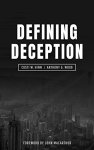
But I had been wanting to get my hands onย Costi Hinn’s and Anthony Wood’s book,ย Defining Deception,ย ever since it first came out. I finally got around to ordering it, I just finished reading it, and now I want to commend it to you.

It’s good. Get it. Read it.

If your church uses Bethel or Jesus Culture music, give a copy to your pastor and minister of music. (Actually, get all of your pastors copies anyway. It’s Pastor Appreciation Month, and I don’t know a pastor who doesn’t love a good book.)

First of all, it’s short. I mean, if it were any shorter, it would be a booklet, not a book. So even if you’re a reading schlub like me, you could finish it in under a week. Some of you book nerds could sit down and finish it in a couple of hours.

It’s basically a primer on the New Apostolic Reformation, using Bethel as the iconic NAR exemplar (which it is). You get a history of the NAR including key figures in its founding and growth, an explanation of the theological problems and heresies within the movement, a brief course in basic pneumatology, several appendices which answer more specific questions readers might have, and more. And it’s all helpfully written at a level any Joe or Jane in the pew without a seminary degree can understand.

This NAR garbage is making its way into average churches like yours. Read up and be prepared.

Hearing voices

Remember earlier this year when Vice President Pence had made some sort of comment about God speaking to him and The View’sย maven of mockery, Joy Behar, chortled:

“Itโ€™s one thing to talk to Jesus, itโ€™s another thing for Jesus to talk to you. Thatโ€™s mental illness…โ€

(I told you some of this stuff had been sitting in the hopper for a while.)

It pains me to have to say this because I despise everything Joy stands for, as well as her smug, derisive, self-righteous, condescending, supercilious, insulting attitude toward anything conservative or Christian, but unless Brother Mike was talking about God speaking to Him through Scripture…

…she was technically right.

Ouch. That hurt more than I thought it would.

Now, hang on before you start hurling those stones at me. I’m not saying that otherwise sane people who think they’re hearing God speak to them are mentally ill. They’re theologically wrong, but they’re not insane.

Here’s where she’s technically correct. In the era in which Joy came of age – before everybody and their dog started receiving extra-biblical revelation – if you were hearing voices in your head that nobody else could hear, whether you said it was God, or the devil, or Elvis talking to you, you were carted off to to a nice little institution and sedated. Heavily.

I happen to know this because when I was working on my bachelor’s degree in psychology (toward the end of that era), I did a lot of course work in abnormal psych (no idea where I was going with that, I just found it gruesomely interesting) and hearing non-existent voices telling you what to do was one of the criteria that pointed toward a formal diagnosis of schizophrenia or psychosis.

I don’t know if Joy or anybody else mentioned that, but that was my first impression of her comment about mental illness. I’ve been saying the same thing ever since I was in college- if Christians keep claiming they’re hearing God speak audibly to them, the world is going to start thinking they’re crazy. Because when it comes down to the price of eggs, there’s no outwardly demonstrable difference between observing a sane person hearing God tell her what to do and observing a schizophrenic hearing God tell her what to do. In the world’s eyes- why are we calling the first person a Christian and the second person insane?

Just one more reason to stick toย sola Scripturaย and the sufficiency of Scripture.

Is there an echo in here?

Sometimes I think social media has warped people’s brains.

Let me ask you something: If a pugnacious stranger knocked on your front door and started yelling at you, insulting you, and spewing all kinds of unbiblical garbage, would you welcome him into your living room with a humble smile on your face and put up with being treated that way on the off chance that you might learn something from his perspective on the issue, or to prove to others how open-minded you are?

Yeah, I wouldn’t either. In fact, I’d lock the door and probably call the police.

And yet those very people (and various SuperChristians who are apparently way more spiritually mature than I am, at least in their own opinion) demand that that kind of behavior be graciously tolerated and accepted on Twitter and Facebook, sneeringly accusing those of us who either refuse to engage with them, or block them, of living in a little “Christian bubble” or “holy huddle” or “echo chamber”.

Look, if you’re on social media for the purpose of verbally abusing people who think differently from you or to argue with strangers, I guess that’s your business (although if you claim to be a Christian you need to stop doing those things and repent), but that’s not whyย I’m on social media.

I’m on social media to keep up with far away friends and family, to promote my ministry, to help people I can help (who want to be helped), and to network and fellowship with like-minded Believers.

I’ve had lots of wonderful conversations with kind and polite people – Believers and unbelievers – who see things differently than I do, and I’m all for that.

But I’m not going to engage with rude, abusive people who are out looking for a fight. I’m just not. That would ruin the enjoyment I get out of social media. And if you want to call that “living in an echo chamber”, go right ahead. That doesn’t shame me in the least. I have nothing to prove about my level of open-mindedness and there’s nothing in Scripture that says I have to engage with people like that or subject myself to their abuse in order for God to consider me loving or tolerant or open-minded. The End.

A plea to the pastors

One of my recent Twitter threads:

Pastors- The women of your church need to be taught how to properly handle/study the Bible itself. Not Bible study books/DVDs – the Bible.

Many of them are so biblically ignorant I can’t explain to them why their favorite teacher is a false teacher because they have no frameย of reference for comprehending such a thing and therefore just assume I’m (or anyone else who warns them is) being mean and hateful. They believe anything the false teacher says, not because she’s biblical, but because they like her and she makes them feel good.

For. the. love. please stop depending on canned studies (even the few doctrinally sound ones out there) in your women’s Bible study/Sunday school classes and get someone to teach who actually knows how to teach God’s Word and can teach them how to study God’s Word for themselves at home.

They are falling for false doctrine either because no one has properly taught them the gospel and they’re false converts or because they don’t know enough of the Bible to know that what they’re hearing conflicts with God’s Word. I can’t even simply tell women to compare whatย they’re hearing to Scripture because they have no idea what that means, why they should do it, or how to do it.

Don’t just assume they know the gospel or know their Bibles or are getting what you’re preaching. Some of them are not. A lady I know recently told me howย excited she was about the new Joyce Meyer book she had just ordered. This was after three years of her faithfully sitting under doctrinally sound preaching. You’ve got to be intentional and proactive and make sure they are being properly trained in God’s Word.

I know I’m preaching to the choir with most of the pastors who follow me and are already doing a great job of training the women in your church. But if you could just double check to make sure. Please. We’re losing a generation of women to “feel-ology” and it breaks my heart.

McBible Study and the Famine of Godโ€™s Word

Bible Studies