Previous Lessons: 1, 2, 3, 4, 5, 6, 7, 8, 9, 10
Responding Biblically to the News that You’re Following a False Teacher
Today’s Scripture passages are embedded in the body of the study. Please click the links in each question.
Questions to Consider
Throughout this study we will be looking at various passages of Scripture rather than working our way through a book of the Bible verse by verse. Because of that, we will need to be extra vigilant to rightly handle these passages in context. I will always attempt to provide the context you need for understanding these passages correctly, but if you need more clarity please feel free to read as much of the surrounding text as you need to – even the whole book, if necessary – in order to properly understand the passage presented.
Someone loves you enough to risk her relationship with you to show you from Scripture that your favorite pastor, author, or evangelical celebrity is a false teacher. How will you respond?
1. Whether or not your favorite author or teacher actually is a false teacher, try to imagine how you would feel if someone told you that person is a false teacher. What would be your initial gut level reaction or emotions?
Consider these passages, keeping in mind your answer to the question above. The Bible often describes the heart as the seat of our “passions” or deep seated emotions. What do these passages tell us about the nature or quality of our heart/passions/emotions? Why should we not be enslaved to our passions? As born again Believers, whose slaves are we? Should we, as Believers, react to any situation – including being told we’re following a false teacher – out of raw, fleshly emotion? How, and with what character traits, do these passages (particularly the last four) describe the way we’re to use our minds to think and respond to life’s circumstances?
Summarize what you learned from these passages into Principle 1 for responding to the news that you’re following a false teacher:
I will respond to the news that I’m following a false teacher by:
2. Study these Scriptures. If someone tells you you’re following a false teacher, should you just blindly believe that person and take her word for it? Be aware that there are biblically demonstrable false teachers, false converts (people who think they’re Christians, but aren’t), and doctrinally unsound “discernment ministries” out there who will tell you, due to their own unbiblical beliefs, that some of today’s most godly, doctrinally sound pastors and teachers are false teachers. How can you know if you’re dealing with someone like that or if it’s a doctrinally sound, discerning Christian warning you against someone who really is a false teacher? What do these passages say to do? How can, for example, a video of a woman preaching to men, or a book or sermon excerpt of someone teaching false doctrine serve as “witnesses” or “evidence” supporting the charge that someone is a false teacher?
Summarize what you learned from these passages into Principle 2 for responding to the news that you’re following a false teacher:
I will respond to the news that I’m following a false teacher by:
3. Examine these passages. Once you have thoroughly searched the Scriptures (rightly handled and in context) and find that the charges your friend has brought against the teacher are true – she really is a false teacher as demonstrated by Scripture – what should you do about continuing to follow and receive teaching from that teacher? What if you find that – according to rightly handled, in context Scripture – the charges are unbiblical, and the teacher you’re following is not a false teacher? Review your answers to questions 1 and 2. How should you respond, point by point, to the allegations that have been made? How did Jesus respond to Satan’s temptations and unbiblical ideas in Matthew 4:1-11 (hint: see 4a, 7a, 10a)? Did Jesus respond with an emotional outburst or personal, subjective opinions?
Summarize what you learned from these passages into Principle 3 for responding to the news that you’re following a false teacher:
I will respond to the news that I’m following a false teacher by:
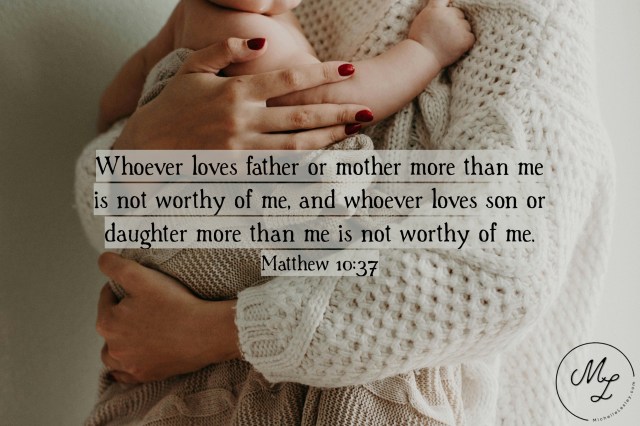
4. Often, women who follow false teachers feel as though they are in a loving, bonded relationship with those teachers. Examine these Scriptures. What do they teach us about loving Christ compared to loving other people? Does Christ allow us to love those who are most dear to us – our parents and our children – more than we love Him? What does He say about people who do? If we can’t love even our closest family members more than Christ, what do you think He would say about loving your favorite author or teacher more than you love Him? If you don’t love Christ enough to obey Him and stop following your favorite false teacher, what does that say about your love for that teacher versus your love for Christ? How are false teachers a test of our love for and obedience to God? Will you pass the test?
Summarize what you learned from these passages into Principle 4 for responding to the news that you’re following a false teacher:
I will respond to the news that I’m following a false teacher by:
5. Sometimes when someone finds out she has been following a false teacher, she feels betrayed and deeply hurt (as well she should). She wonders how she’ll ever again be able to trust a spiritual authority figure. “If I was duped by this teacher,” she thinks, “what’s to keep me from being duped by the next teacher? I’m not putting myself through that again.” Sadly, at this most vulnerable point, she gives up on church, pastors, and Bible teachers altogether and adopts a “just me and Jesus” perspective.
God’s people as His sheep is a major motif of Scripture. Read these passages. Why do sheep need a good shepherd? How does a shepherd protect and provide for the sheep? How does being in a flock, in the safety of a sheepfold protect a sheep? What happens to a sheep when it strays away from the flock? Does God ever, in these passages or any other you know of, speak as though a sheep being separated from the flock is a good thing?
The majority of the New Testament is about the church. Just off the top of your head (or search for church in a concordance), name 5-6 aspects of church life the New Testament teaches us about. Does the New Testament ever teach us about how to live and grow in Christ as “Lone Ranger Christians” or “just me and Jesus” Christians who are not joined to a local church? Why not? Is it fair to say that God’s perspective, as the Author of the New Testament, is that there is no such thing? If membership in a local church were optional or no big deal to God, why would He have spent so much time and effort establishing it, instructing it, and caring for it?
Why does God command us to be faithful members of a local church? Thinking back to your answers about the sheep, how do the church, and godly, doctrinally sound pastors and elders protect and provide for Christians?
In what ways can a good, doctrinally sound church help someone whom God has delivered from the clutches of false doctrine or a false teacher?
Summarize what you learned from these passages into Principle 5 for responding to the news that you’re following a false teacher:
I will respond to the news that I’m following a false teacher by:
6. Summarize your five principles into a paragraph or two about responding biblically to the news that you’re following a false teacher.
Homework
- Read (and listen) more on the passages and topics from today’s lesson:
Words with Friends: How to contend with loved ones at A Word Fitly Spoken
The Mailbag: How should I approach my church leaders about a false teacher they’re introducing? (the same principles apply to approaching a friend about a false teacher she’s following)
Women and False Teachers: Why Men Don’t Get It, and Why It’s Imperative That They Do
Basic Training: 7 Reasons Church is Not Optional and Non-Negotiable for Christians
- Do you have a friend or loved one who is following a false teacher? Set aside some focused time in prayer this week to pray for her and for how you might talk to her about it. Consider each of the five principles you wrote in today’s lesson. Is there anything you can do to make it easier for her to respond in those biblical ways?
Suggested Memory Verse