Church, Discernment

Throwback Thursday ~ Nine Reasons Discerning Women Are Leaving Your Church

Originally published July 24, 2015

Earlier this week, Thom Rainer, president and CEO of LifeWay, pubished a blog article entitled Six Reasons Why Women May Be Leaving Your Church. Although I am not particularly a fan of Dr. Rainer (due to his allowing materials from false teachers to be sold at LifeWay), I thought this article was a good one, and I agreed with several of the issues he raised, especially, that these issues need to be addressed by church leadership.

As a ministry wife and someone in the field of women’s ministry myself, I, too, have noticed women leaving the church. Not just women in general, but a certain subset of church-attending ladies: discerning women. While Scripture is pretty clear that we can expect women (and men) who are false converts to eventually fall away from the gathering of believers, why are godly, genuinely regenerated women who love Christ, His word, and His church, leaving their local churches?

While Scripture is pretty clear that we can expect false converts to eventually fall away, why are godly, genuinely regenerated women who love Christ, His word, and His church, leaving their local churches?

1.
Eisegetical or otherwise unbiblical preaching

Discerning women don’t want to hear pastors twist God’s word. The Bible is not about us, our problems, and making all our hopes and dreams come true. We don’t want to hear seeker-driven or Word of Faith false doctrine. We don’t need self-improvement motivational speeches or a list of life tips to follow. We want to hear a pastor rightly handle God’s word from a trustworthy translation and simply exegete the text.

2.
The worship hour has become a variety show

Skits, guest stars, movie clips, dance routines, rock concerts, elaborate sets, light shows, and smoke machines. We didn’t sign on for Saturday Night Live on Sunday. This is supposed to be church. Get rid of all that junk, turn the lights on, give us solid preaching, prayer, and some theologically sound songs we can actually sing, and maybe we’ll stick around.

We didn’t sign on for Saturday Night Live on Sunday. This is supposed to be church.

3.
Women in improper places of church leadership

The Bible could not be more clear that women are not to be pastors, instruct men in the Scriptures, or hold authority over men in other capacities in the church. If your church has a female pastor, worship leader, or elders, or if women are teaching and leading men in Sunday school, small groups, or from the platform in the worship service, or if women are heading up certain committees, departments, or ministries which place them in improper authority over men, you’re disobeying Scripture, and we don’t want to help you do that by attending your church.

4.
Children are being entertained, not trained

There’s nothing wrong with a bit of play time or crafts for younger children, but we want our children trained in the Scriptures, not entertained for a couple of hours. We want their teachers to open God’s word and read and explain it to them at a level they can understand. We want them memorizing verses, learning to pray, and demonstrating an age-appropriate comprehension of the gospel. We want them to understand that church is joyful, yet, serious, not a Jesus-laced party at Chuck E. Cheese. We need church to bolster the Scriptural training we’re giving our kids at home.

5.
Women’s “Bible” Studies

The majority (and I don’t use that term flippantly) of churches holding women’s Bible studies are using materials written by Beth Moore, Priscilla Shirer, Joyce Meyer, Lysa TerKeurst, Sarah Young, and others who teach unbiblical ideas and false doctrine. Not minor denominational differences of opinion. Not secondary and tertiary unimportant issues that can be overlooked. False doctrine. While we long to study God’s Word with other women, discerning women will not sacrifice sound doctrine nor the integrity of Scripture to do so.

While we long to study God’s Word with other women, discerning women will not sacrifice sound doctrine nor the integrity of Scripture to do so.

6.
Ecumenism

Is your church partnering with other “churches” whose orthodoxy and/or orthopraxy are at odds with Scripture? “Churches” which approve of homosexuality or female pastors, or which hold to an unbiblical soteriology (grace plus works, baptismal regeneration, Mary as co-redemptrix with Christ, etc.)? Are you partnering with those who deny the biblical Christ altogether such as Muslims, Jews, Jehovah’s Witnesses, Hindus, Mormons, or Buddhists? Discerning women know Scripture forbids yoking ourselves to unbelievers and we want no part of it.

7.
Ageism

Look around at your pastor and staff, your lay leadership, your music team, the “face” of your church. How many of those people are over 40? Usually, discernment and spiritual maturity come through walking with the Lord over many years, yet, increasingly, by design, churches are run by twentysomething pastors, staff, and other leadership, who are often spiritually immature and/or lack the wisdom and life experience that come with age. The staff is often specifically structured this way in order to attract young people to the church. The counsel and wisdom mature, godly men and women have to offer is brushed off as old fashioned, and middle aged and older church members feel alienated and unwanted. While there are those among the twentysomething set who are godly and growing into maturity, discerning women value the wisdom and teaching of their godly elders.

8.
The “troublemaker” label

Discerning women who see unbiblical things happening in their churches and stand up for what God’s Word says about biblical ecclesiology and teaching are often vilified and labeled as troublemakers. We are called haters, threats to unity, complainers, gossips, negative, and a myriad of other scornful names. All this for wanting things done according to Scripture. Can you blame us for shaking the dust off our high heels and leaving?

Discerning women are often vilified and labeled as troublemakers. Can you blame us for shaking the dust off our high heels and leaving?

9.
Spineless or stiff-necked pastors

Discerning women have little respect for, and find themselves unable to submit to the authority of pastors who see people in their churches acting overtly sinful or propagating false teaching yet are so afraid of confrontation that they will not set things right. By the same token, we cannot continue to attend a church in which we bring scriptural evidence of false teaching or sin to the pastor and he outright denies the biblical truth we present to him. We cannot be members of churches in which pastors will not submit to Scripture or carry out biblical mandates.

Frequently, the discerning women you see tearfully leaving your church have been there for years. Sometimes they leave your church because it was never doctrinally sound to begin with, and God has opened their eyes to this as they grow and mature in Christ. Sometimes they leave because false doctrine and unbiblical practices have crept in and taken over a church that was once a refuge of trustworthy biblical teaching. Either way, these things should not be.

Maybe it’s not that discerning women are leaving the church, but that the church is leaving them.

Maybe it’s not that discerning women are leaving the church, but that the church is leaving them.


Additional Resources

Rock Your Role articles
Searching for a new church?

Podcast Appearances

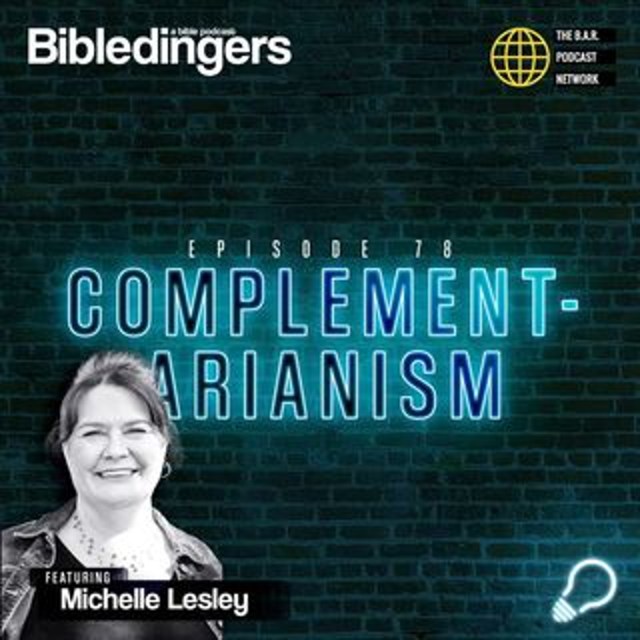
Podcast Guest Appearance – Bibledingers

Don’t worry, this episode was not about complementing Arians! :0)

It was so great to sit down and chat with my new friends Ryan and Nick over at Bibledingers recently!

We talked about all things complementarian – the biblical foundation for the complementarian position, the Scriptures egalitarians twist to try to justify their position, godly women in the Bible, and the crucial roles women play in the church and the home. The guys even had some great words of wisdom for all you husbands out there!

Listen in here or check out episode 78 of Bibledingers on your favorite podcast platform!

Be sure to visit the Bibledingers website for blog articles, videos, gear, and all the Bibledingers’ social media links. Subscribe and follow!


Articles / resources mentioned or touched on in the episode:

Rock Your Role: All Things Being Equal

Rock Your Role article series

The Mailbag: Counter Arguments to Egalitarianism


Got a podcast of your own or have a podcasting friend who needs a guest? Need a speaker for a womenโ€™s conference or church event? Click the โ€œSpeaking Engagementsโ€ tab in the blue menu bar at the top of this page, drop me an e-mail, and letโ€™s chat!

Mailbag

The Mailbag: Asked and Answered

Good morning, readers. It is an honor and a joy to serve you in Christ. Welcome to all the newbies and to you seasoned veterans of the blog.

Because some of y’all are new, you aren’t yet aware of all of the resources here to help you. Or maybe you’ve been around a while and haven’t noticed something that might be helpful. Let’s remedy that!

First, if you’re new (or if you’ve never read it), check out Blog Orientation for New Readers and Old Friends. It’s like a CliffsNotes intro to the blog.

Second, be sure to familiarize yourself with all of the tabs in the blue menu bar at the top of the page. That’s where I keep the info I’m most frequently asked about.

Third, there’s a search bar at the bottom of every page (and one in the blue menu bar at the top of every page) which might help you find what you need.

Fourth, if you don’t find your question answered in one of these ways or below, you might want to check previous Asked & Answered articles and The Mailbag: Top 10 FAQs.

And finally, let me get you new readers some answers to the questions several of you have asked. Some of you long time friends may have missed these along the way, so I hope they’ll be helpful to you, too!


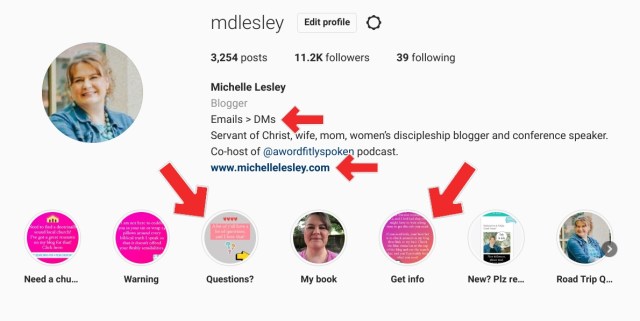
[Instagrammer asks a question in the comments or DMs me a question]

I love my Instagram followers! Most of you are very sweet and kind, and you ask some really smart questions!

But a lot of you a) don’t seem to know that I have a blog, and b) aren’t familiar with how I use Instagram and how I do correspondence. I totally get that. A lot of you are new and Instagram seems to have a high turnover, and a much higher “hit or miss” with posts than other social media platforms. (Plus, I’m a weirdo and don’t use Instagram the way most influencers do. I mainly use it to tell you what’s on the blog each day.)

So, let me try to help. If you’ve commented or DM’d me a question and I haven’t answered, I would encourage you to watch “Questions” and “Get Info” in my highlights. (In fact, you might want to watch “Need a church?” “Warning,” and “New?” too.)

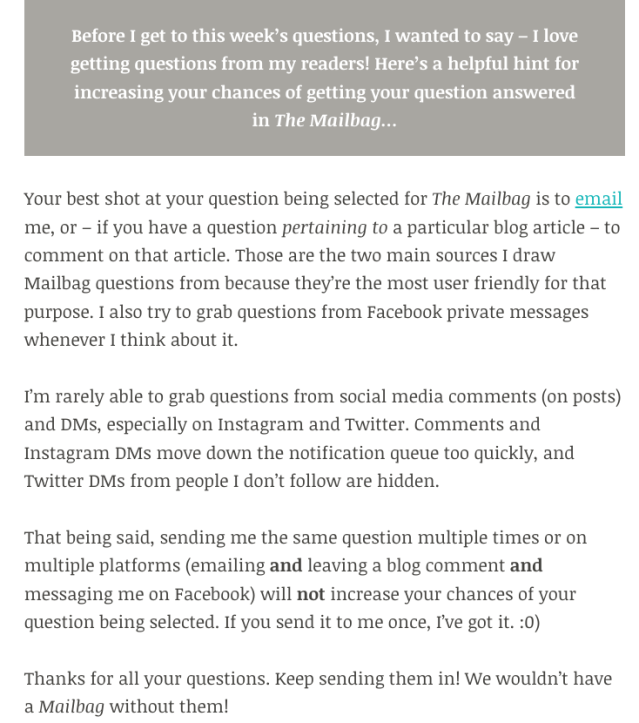
This is included in the “Questions?” highlight from a Mailbag article. I think it will be helpful to all of my social media and blog followers.


I’m in the market for a new Bible. What would you recommend? I really appreciate your ministry!

Thank you so much for your kind words. And thank you to all my followers who take a moment to encourage me with your comments. As you might imagine, and have probably witnessed, I catch a lot of flak via email and social media from people who don’t like or misunderstand things I’ve said and written. The encouragement is greatly needed and appreciated.

You’re right on time with your question! Amy and I answered it on a recent Glad You Asked episode of the podcast, and that answer was largely based on my blog article The Mailbag: Which Bible Do You Recommend?


God bless you, I wanted to reach out to see if you do Bible studies or if you know any through Zoom with other ladies.

It depends on what you mean by “do Bible studies”. If you’re asking whether or not I teach Bible studies in a video or livestream format, the answer is no, for two reasons. First, at the moment, I don’t have time. Second, I really think you should be meeting in person with a small group for Bible study – ideally with women from your own church and with oversight from your pastor. I understand there are situations in which that isn’t possible, but that is the ideal I want to encourage women toward. God’s plan is the in person assembling of the local church, not Zoom.

I do write Bible studies, though. They are all free, all suitable for groups or individuals, and all designed to teach you how to study or teach straight from the text of Scripture. If you’re new to that idea, I would encourage you to find a friend or a small group of friends, pick one of my studies, and work through it together.

You can find all of my studies and more helpful resources at the Bible Studies tab in the blue menu bar at the top of this page.

And speaking of Bible studies…

Are your Bible studies able to print off?!

Yes. Click the “Bible Studies” link above for all the info and instructions.

Can you recommend a good daily devotional book for a 17-year-old girl? Our granddaughter is having surgery in a few days and I was hoping to send her a little get well soon package and I would like to include a devotional.

What a blessing to have a godly grandma! I’m sorry, but, on principle, I don’t recommend what I call “canned” Bible studies and devotionals. I recommend that Christians read and study straight from the text of Scripture. (You can read more about why at the “Bible Studies” link above, and in my article The Mailbag: Can you recommend a good Bible study for women/teens/kids?.)

May I make a suggestion? Instead of a devotional, how about a new Bible? Or perhaps you could find a small “for those recovering from illness/surgery” gift book of selections from the Psalms, or a “coffee table” type book that is mostly artwork or photography, accompanied by Bible verses. There are also “Bibles” that are Psalms and Proverbs only. (Just make sure all of these books use a reliable translation of Scripture.) If you want to go a little higher tech, consider an iTunes gift card so she can download her favorite (doctrinally sound) Christian music, or a subscription to AGTV.


The womenโ€™s group of the church that we are attending will be doing a Priscilla Shirer simulcast. I have read your article about Ms. Shirer and have decided to abstain from attending the event. How do I lovingly but truthfully tell the women in this group why I am refusing to attend and why I feel this is not someone whom we should be promoting? (unless of course, Ms. Shirer has changed her stance since your article was written). My husband and I believe [our pastor] to be of sound doctrine [but] I am certain that he is oblivious to P. Shirer. [I] hope that you can help me โ€œfind the right wordsโ€ to discuss this with those involved.

I am so sorry this is happening in your church. I have been in exactly that situation, so I know what it’s like.

Here are a couple of articles I think will be of help:

The Mailbag: How should I approach my church leaders about a false teacher theyโ€™reย introducing? I would suggest approaching your women’s ministry leader (or whoever is most immediately in charge of the simulcast) first, then working your way up the chain of command until you’ve spoken to the pastor, if necessary.

The Mailbag: Should I attend the โ€œBibleโ€ study to correct falseย doctrine? (I know you’ve already decided not to attend the simulcast, but I think some of the info in this article will still be helpful.)

Just a note to all of my readers on the “unless she ‘has changed her stance since your article was written'” part: You’ll notice at the top of my article on Priscilla it says, “This article is kept continuously updated as needed.” (I think I’ve remembered to put this at the top of all of my articles on particular teachers? If I missed one, let me know.) Translation: “Yes, I originally wrote this article in 2015, but I go back and update it – fix links, add or delete info, etc. – whenever I feel it’s necessary.”.

If any teacher I’ve ever written an article about genuinely gets saved, repents of her false teaching, etc., I promise you, unless I’m somehow Providentially hindered, you will hear about it from me ASAP. That is not something I’m going to neglect to update you on (and rejoice with you about!) immediately. In the meantime, you can safely assume that the information in my articles is still accurate and applicable and that the teacher is either still status quo with the info in the article, or has gotten worse.


I have several Bible apps, and recently you gave info in one of your mailbags that YouVersion app is not recommended, and knowing now what I didn’t know then, I uninstalled it. I did find it easy to navigate and the search capability was good, but I no longer want anything to do with it. If you could kindly lead me to one that is as user friendly, I need an app that you recommend that is as simple as me. Lol

I like to keep things simple, too. I hope you’ll find my article My Favorite Bible & Studyย Apps to be helpful.


Our church has a mixed adult Sunday school. My conviction has been silence as I do not want the appearance of teaching men. I am discouraged as most of the responses in the hour of teaching is from the women in the group even though our church only allows men to be in teaching positions. I would genuinely like to hear your thoughts on this. I have appreciated your podcast and website information.

I know it can be discouraging when it seems like men are being less manly or exhibiting less leadership than we would hope. I would encourage you to kindly talk to your pastor or elders about your concerns and ask for some insight as well.

In this particular situation, it may be wise to answer fewer questions, or make fewer comments than you normally would, not because you would be teaching (or even giving the appearance of teaching), but because it might give the men more space to get a word in edgewise. If this dynamic is really problematic, I wonder if it might be helpful to split the class into a men’s class and a women’s class. Perhaps that way the men would feel more comfortable contributing. Maybe that’s something you can discuss with your pastor or elders.

I’ve explained why women answering questions and participating in the discussion in a co-ed Sunday School / Bible study class isn’t teaching men or a violation of Scripture in my article Rock Your Role FAQs #4.


If you have a question about: a Bible passage, an aspect of theology, a current issue in Christianity, or how to biblically handle a family, life, or church situation, comment below (Iโ€™ll hold all questions in queue {unpublished} for a future edition of The Mailbag) or send me an e-mail or private message. If your question is chosen for publication, your anonymity will be protected.

Titus Bible Study

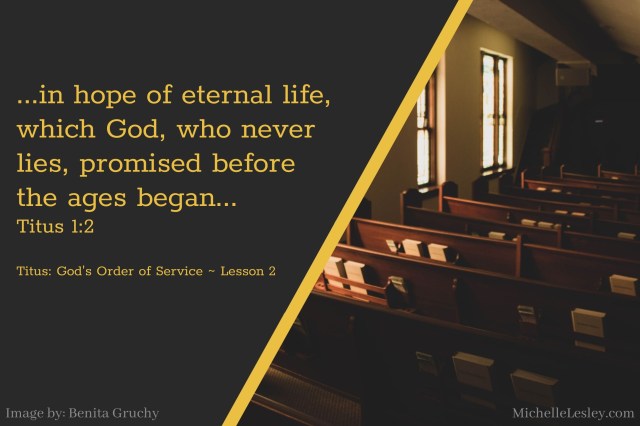
Titus: God’s Order of Service ~ Lesson 2

Welcome, ladies! Just a reminder,ย please do not skip Lesson 1ย (link below). Not only will it answer any questions you may have about the study itself, but if you want to study Titusย properly, you must do the background work contained in Lesson 1.

Previous Lessons: 1

Read Titus 1:1-5

Questions to Consider

1. Review your notes from last weekโ€™s introductory lesson. What are some things to keep in mind as you begin to study the text of Titus today?

As we study the book of Titus, I will sometimes refer to the author as Paul (e.g. “What was Paul teaching pastors in v.6?”) and, often, as God (e.g. “How does God encourage church members in v.7?”). I don’t mean for this to be confusing. My purpose is two-fold: 1) To combat the popular false teaching that anything a biblical author wrote that we don’t like was simply that author’s human opinion, not God’s, 2) To constantly remind us that all Scripture was breathed out by God, not fallible humans, and, as Christians, we are obligated to believe and obey every word of it. If you’re confused, it might help to think of it this way: God is the author of Titus; Paul is the writer of Titus.

2. Examine verses 1-3. Recall from the introductory lesson which genre of biblical literature Titus is (Law? Prophecy? Poetry? etc.). Today, when we write a letter, especially a business letter, we normally close it with our signature and credentials. For example:

Sincerely,

Joe Smith
Acme Widgets, Inc.
Vice President of Doohickeys – Southeastern Division

In first century culture, the style was to open the letter with one’s name and credentials. Compare verses 1-3 with these greetings of other epistles. What are some similarities and differences you notice?

Even our abbreviated modern signatures/credentials, like the example above, give the reader some very important information about the person writing the letter. What type of information can you glean about “Joe Smith” from the signature/credentials above? In what ways is it similar to the type of information in verses 1-3?

Go back to verses 1-3, and break them down. What information do you learn about Paul from his opening signature/credentials?

  • Who is the letter from? (1a)
  • What is his position, and why is he qualified to write this letter? (1a, 3b)
  • What are his three general purposes for this letter? (1b, 2a)
  • By Whose authority does he write this letter? (2-3)
  • What is his view of God’s nature and character, God’s authority, and his relationship to God? (1-3)

3. Let’s go back (see #2 above) to God’s three general purposes for having Paul write this letter. Explain each of these purposes in your own words. How do each of these purposes apply to pastors and elders today?

You’re obviously not a pastor or an apostle, training pastors, or leading a church, but as you’re discipling your children or other women or children in the church, are there biblically appropriate ways in which you can apply each of these purposes? How do you disciple them…

  • for the sake of their faith
  • in their knowledge of the truth, which accords with godliness, and
  • in the hope of eternal life?

4. Revisit verses 1-3 and meditate on the vastness and depth of the faith, the truth, the hope of eternal life, and God’s sovereignty these verses describe. Then consider Paul’s statement, “the preaching with which I have been entrusted by the command of God our Savior”. Do you think Paul felt the weight of that responsibility? Do you feel a similar weight of responsibility when discipling your children or other women and children?

5. Examine Paul’s greeting in verse 4. To whom is this epistle addressed? What is Paul’s relational dynamic with Titus? Notice the picture God paints of that relational dynamic. He doesn’t characterize it as a “master (Paul) / slave (Titus)” relationship or “boss / employee” or even “teacher / student,” but as what? Why do you think that is? What does that metaphor indicate about Paul? About Titus? How does this connect back to Paul’s authority and credentials (see #2 above) for writing this letter?

Go back to verses 1-2. Is it fair to say that this epistle is also addressed to the church? Why or why not?

Why does God use the metaphor of family (“my child in the faith,” “brothers and sisters,” today, we even speak of “my church family,” etc.) in Scripture to characterize the church? Do you have a “true child in the faith” relationship with someone? How does that relationship compare to Paul’s relationship with Titus?

How does “Grace and peace from God the Father and Christ Jesus our Savior” set the tone for the letter, reiterate Paul’s God-given authority in writing the letter, and reference part of the Trinity?

6. Take a look at v.5. Why did Paul leave Titus in Crete? What does Paul mean by “put what remained into order”? What’s a phrase we might use in today’s vernacular to say the same thing? Why did Titus need to appoint elders “in every town”? (You might want to review your notes from lesson 1 – link above.) How would appointing elders have given the churches in Crete structure and order?


Homework

Orderliness. Structure. Hierarchy. This is a major underlying theme of the book of Titus. Spend some time before our next lesson meditating on God’s orderliness, and the structures and hierarchies He has set up in nature, the family, the church, government, etc. Why is orderliness important to God? Why does He think orderliness is so necessary for us that He built it into the fabric of the universe? Jot down your thoughts. Make a list of at least five verses or passages of Scripture that talk about orderliness, structure, or hierarchy. Consider these verses and your thoughts on God’s orderliness in relationship to the church. Why is it important to God that our churches be orderly? Is your church orderly? Does it need to be more orderly? How could it be more orderly according to Scripture?


Suggested Memory Verse

Social Media

Memeology 101

A little lagniappe post for this week! Judging from some of the social media comments I’ve been getting lately, it’s time to run this friendly refresher again. Enjoy! :0)

Originally published September 24, 2019

I post a lot of memes on my social media pages, mostly Facebook and Instagram. I usually post four Bible verse memes every weekday morning on Facebook and other miscellaneous memes at various times on all my social media platforms. Over the course of the last couple of years, Iโ€™ve gotten some critical comments about a few of these memes, which, I think, stem mostly from misconceptions people have about what a meme is and the general understanding of the function of memes on social media. Iโ€™d like to try to clear up some of those misconceptions today.

Memes- Definition and Function

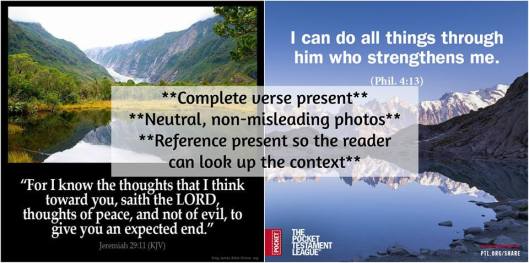
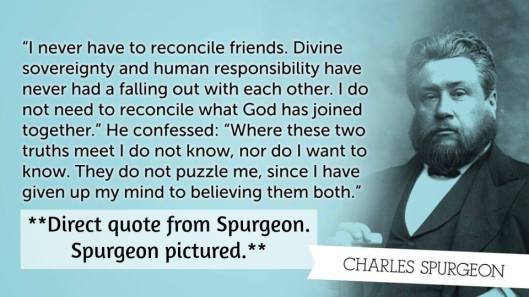
A meme is simply a picture with words superimposed on it (usually a couple of sentences, max), like the ones in the collage above, that you see on social media. The function of a meme is to convey a brief thought, quote, or joke. Memes are not books, articles, theses, or even long Facebook posts. They are not meant to exhaustively cover every aspect of the thought they present. Reading a meme is kind of like eating one grape (or even reading one verse of Proverbs!). The grape is good and nutritious in and of itself, but it is not: a bunch of grapes, a full meal, a well-balanced diet, or the buffet at Golden Corral. It is simply a grape. Appreciate it for what it is and donโ€™t criticize it for not being something it isnโ€™t.

Bible Verse Memes (BVMs)

The criticism I most often receive about Bible verse memes (a picture with a Bible verse on it) is that the verse is not in context. Of course itโ€™s not in context. Thatโ€™s the nature of a meme- it contains only a brief thought or quote (which is why you donโ€™t usually see an extraordinarily long verse {like Esther 8:9} on a meme, either).

BVMs are not meant to be a Bible study, sermon, or exegesis of a passage of Scripture. The daily BVMs I post are to jog your memory about passages youโ€™ve already studied or to pique your interest in studying the passage surrounding the verse on the meme. When I post a BVM, I do my best to make sure of three things: a) the meme contains a whole, not partial, verse, b) the meme contains the reference so you can look up the context for yourself, c) the picture that goes with the verse does not suggest a misleading meaning to the verse.

Interestingly, the only verses I seem to receive the “out of context” criticism about are Jeremiah 29:11 and Philippians 4:13. (Shouldnโ€™t we want all Bible verses to be in context?) I’m fully aware that many Christians out there, and even false teachers, use these verses out of context. The fact that many people misunderstand or twist these verses to fit their own agendas does not negate the fact that these are still Holy Spirit-breathed portions of the Bible. I refuse to surrender these verses to those who abuse them by declining to post them. Godโ€™s Word is Godโ€™s Word, and even one verse can stand on its own, qualitatively, as the Word of God. The reader is the one who has the responsibility to look up those verses and understand and use them in context.

Christian Quote Memes

Going back to the grape illustration, the thing to remember is that a meme is not meant to exhaustively cover every aspect of the thought it presents. If I post a meme that says, โ€œThe grass is green,โ€ that does not mean:

  • Only grass is green
  • Everything in the world is green
  • There arenโ€™t other things in the world that are other colors
  • I hate things that arenโ€™t green
  • Grass should never be mowed, fertilized, watered, etc.
  • Grass can’t be other colors because you could dye it or set it on fire

Also, simply stating that the grass is green does not obligate me to explain photosynthesis, suggest landscaping techniques, or debate zoysia versus Kentucky bluegrass. Thereโ€™s certainly a time and a place to go into detail about issues (which I do every day on the blog), but it is also okay to make simple, true, stand alone statements without having to comment on every intricate aspect of the topic.

People Pictured in Memes

This is something you kind of have to get a feel for through exposure to memes, but Iโ€™ll do my best to explain.

Sometimes a meme uses a picture of a person because the words on the meme are a direct quote from that person. Other times, the words on the meme poke fun at or allude to the person pictured. Still other times, the words on a meme have nothing to do with the beliefs, personality, or actions of person pictured in the meme, rather, that picture was selected because of the look on the personโ€™s face, the way he is posed, etc.

If youโ€™re confused as to whether or not the person in the picture is being quoted, you can always Google the quote to find out. If youโ€™re familiar with the person in the picture and know he would never say the words on the meme, itโ€™s fair to assume the words are either poking fun at/alluding to the person in the picture, or that the picture was chosen for the visible appearance of the person, not for his beliefs, personality, actions, etc.

I canโ€™t speak for everyone who shares memes, but the rule of thumb for my social media pages is that you will never see me positively quoting or promoting the beliefs of someone whoโ€™s well known to be a false teacher or otherwise theologically aberrant by biblical standards. So if you see a meme on my page that contains a picture of a famous false teacher, a non-Christian actor, politician, etc., it should be a given that I am not promoting his or her false beliefs. The meme is making another point, which you will need to glean from context or ask politely about.

Attribution

Except for BVMs, I create most of the memes I share. But with regard to BVMs and other memes I haven’t created, I see them – shared by a friend or a page I follow – in my social media timeline and I share them, just like you do. Most of the time I don’t share them immediately. They sit in my file for days, weeks, or even months before I get around to sharing them.

At that point, I usually can’t remember where I found them, so I can‘t type out a caption crediting the person who made it (if I even know). (If you design memes and you want credit for them, my advice is to watermark the meme with your name or website.) So, if you see me share a meme with no attribution, I’m not in any way trying to plagiarize it or claim that I made it any more than you would be if you shared a meme like that. All of the memes I create are watermarked with my website address (see collage above). If you see me share one that doesn’t have my website on it, you can safely assume I did not create it.

“I don’t get it.” and “What you should have said was…”

Often, when a theological meme is metaphorical or a brief quote, you may not initially grasp its meaning. My advice? Re-read it more carefully and keep thinking about it. Think about what the Bible says compared to what the meme says. If you’ve made a good faith effort to think things through and you still don’t get it, share the meme on your social media page and ask others what they think it means (then, be sure to listen only to your doctrinally sound, spiritually mature friends!).

Many of my memes are designed to make you use critical thinking skills and ponder the related Scriptures rather than spoon feed you something obvious. That’s why I don’t write a fourteen sentence explanation of everything I mean and don’t mean on a meme. That’s what blog posts and Bible studies and podcasts are for. Going back to our grape illustration: A meme is a grape, not a textbook on the horticulture of grapes. Use the brain God gave you and ponder the grape rather than demanding an encyclopedia article on grapes.

Sharing

I’m frequently asked by social media followers if they may have permission to share a meme (or an article, post, etc.) I’ve posted. Yes! I’m honored that you would want to. Sharing is the nature of social media. Generally speaking, you do not need to ask permission to share something that a public figure has posted publicly on social media. We like it when you share our stuff. It gets our material out to more people. And since my material is sound doctrine, the Bible, and the gospel, I want to get it out to as many people as possible. Consider this blanket permission to everyone who might ever want to share something of mine: Share away! No need to ask permission! :0)

The only thing you can’t do when sharing is to remove attributions (for example: cropping out the watermark of my web address on the memes I create) in order to intentionally present my work as your own or someone else’s. That’s called plagiarism, which is a fancy word for lying and stealing. And those are sins. But simply sharing a public post, attributions in tact, with your social media friends is not plagiarism, and you don’t need to ask permission.

If you’d like to peruse all the memes I’ve created, check out my Memes board on Pinterest.1

I hope this helps clear up any misunderstandings you may have about any of the memes I post on social media. Memes are just little nuggets that are meant to be humorous or thought provoking. Let’s let them be what they are, not expect them to be what they’re not.


1The oldest memes on that board (the ones toward the bottom) are still watermarked with my old web address (MichelleLesleyBooks.com). I’m in the process of editing them to reflect my current web address (MichelleLesley.com), and re-releasing them. I’m totally fine with you sharing a meme watermarked with the old address, but if there’s one you want to share that you need edited to the new address before you share it for whatever reason, just let me know, and I’ll fix it as fast as I can.