Christian women, Ministry

Mary and Martha and Jesus and Women’s Ministry

You remember the story. Jesus comes to Mary and Martha’s house. Martha’s Pinteresting up the place while Mary sits at Jesus’ feet to listen to Him teach. Martha gripes to Jesus that Mary should help her and Jesus says no because it’s better for her to listen to Him than fold napkins into the shape of swans or whatever. Moral of the story- Martha needs to relax and not let other things distract her from Jesus.

That’s a good, true, and important takeaway from this passage, and one that we would all do well to heed.

But did you ever stop to think that Mary and Martha aren’t the main characters in this story? Jesus is. Jesus is the main character in every Bible story, so our primary focus should always be on Him: what He said and did and was like.

Did you ever stop to think that Mary and Martha aren’t the main characters in this story? Jesus is.

What was Jesus teaching that day at Mary and Martha’s house? The passage doesn’t tell us the topic He was speaking about, but we are privy to a very important lesson He imparted through the scenario with Mary and Martha. A lesson about the way God loves and values women.

Remember how women were generally regarded at that time? They didn’t have much more value than livestock, furniture, or a man’s other possessions. They were considered intellectually inferior, they weren’t formally educated, and their legal and social standing were often tenuous at best. They could not go beyond the Court of the Women at the temple for worship. There was even a traditional prayer Jewish men recited in which they thanked God for not making them a woman, a Gentile, or a slave. Women were low man on the totem pole, so to speak.

And that’s where we find Martha. She wasn’t doing anything wrong that day. In fact, in her culture, she was doing everything right. If anything, Mary would have been the one viewed as being in the wrong because the teaching was for the men, and it was the women’s job to bustle around taking care of all the hospitality duties. Martha knew this. Mary knew this. Jesus knew this. Everyone else present knew this. Martha must have wondered why someone hadn’t yet shooed Mary out of the living room and into the kitchen. So her statement to Jesus in verse 40, “Lord, do you not care that my sister has left me to serve alone? Tell her then to help me,” was probably not just, “I need another pair of hands,” but also a bit of, “Mary is forgetting her place. This isn’t what proper women do.”

Oh yes, it is.

Whatever else He might have been lecturing about that day, that was one of the lessons Jesus taught Mary, Martha, the rest of their guests, and Christendom at large.

Women aren’t second class citizens in the Kingdom of God. We are precious and valuable to Him. He has important, worthwhile work for us to do – His way – in the body of Christ. And He wants us trained in His Word in order to carry out that work.

How did Jesus teach that lesson?

First, He allowed Mary to stay and receive His teaching (39). (We see this echoed in God’s instruction to the church in 1 Timothy 2:11: “LET a woman learn…”) It hadn’t slipped Jesus’ mind that she was sitting there. He could have told her to leave, but He had no intention of doing so. Jesus wanted Mary there. He wanted to teach her and to have her learn God’s word from Him.

Next, when someone tried to take Mary away from hearing and being trained in God’s word, Jesus – God Himself – answered with a resounding NO. This “will not be taken away from her,” Jesus said. Mary, and Martha too (41), could arrange centerpieces or turn a cookie into a work of art any time or never. But this, the teaching of God’s Word, was urgent. Vital. Jesus didn’t want either of them to miss it by focusing on the trivial things they thought they should be pursuing.

And He doesn’t want us to miss it either, ladies.

Jesus pulled women out of the craft room and into the study. Is the women’s ministry at your church trying to pull them back?

Jesus pulled women out of the craft room and into the study. Is the women’s ministry at your church trying to pull them back?

Is the women’s events page on your church’s web site filled exclusively with painting parties, fashion shows, ladies’ teas, and scrapbook sessions?

Does your women’s ministry do canned “Bible” studies authored by women who offer nothing but personal stories, experiences, and false doctrine?

Are the Marys in your church who want to sit at the feet of Jesus and hear His word rightly handled and taught being scolded by the Marthas for not staying in their place and embracing the banality the women’s ministry is doling out?

Are the Marys in your church who want to sit at the feet of Jesus and hear His word rightly handled and taught being scolded by the Marthas for not staying in their place and embracing the banality the women’s ministry is doling out?

Is this it? Is this all women are good for in the church- fluff and false doctrine?

Jesus didn’t think so.

Let’s have our women’s ministries train women in the full scope of biblical womanhood. Let’s be serious students of God’s Word by picking it up and studying it like mature women. Let’s get equipped to teach and disciple other women who are babes in Christ. Let’s share the gospel with the lost. Let’s learn how to train our own children in the Scriptures and be the ones to raise the bar for what the kids at our church are being taught. Let’s roll up our sleeves and get our hands dirty ministering to those who are ill, in prison, lonely, poor, elderly, considering abortion, experiencing crisis; who have wayward children, problems in their marriages, a parent with Alzheimer’s, or have lost a loved one.

Is this it? Is this all women are good for in the church- fluff and false doctrine?

Women are worth more and capable of more than the bill of goods they’re being sold by “Christian” retailers suggests. More than cutesy crafts and fairy tales masquerading as biblical teaching. Let’s put the “ministry” – ministry of the Word and ministry to others – back in “women’s ministry.”

Women are worth more and capable of more than the bill of goods they’re being sold by “Christian” retailers suggests.

Sanctification, Throwback Thursday

Throwback Thursday ~ Six Cliches Christians Could Can (Or at Least Re-think)

Originally Published March 29, 2014


Have you ever noticed we use a lot of expressions without giving much thought to their origin or what they really mean? For example, why do we use the phrase, “in a (pretty) pickle” to mean “experiencing a difficult situation”?

Here are six cliches we often use as Christians that could stand to be replaced or at least re-thought:

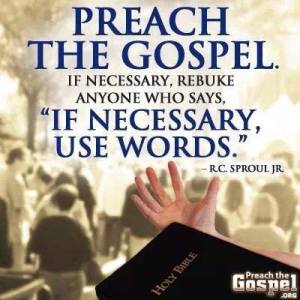
1795610_10153768796270386_733462403_n1. Preach the gospel. If necessary, use words.
It’s necessary. Use words. While our behavior should certainly prove out our testimony, nobody’s going to see us working at a soup kitchen or eschewing barhopping and somehow magically understand that he has broken God’s law and needs to repent and put His faith in Christ’s death, burial, and resurrection for the forgiveness of his sin unto eternal life. That has to be explained. Clearly. By us. From the Bible. With words.


tombstone-159792_6402. Rest in peace/God rest his soul
If the person who died was saved, he’s already resting in peace by the time you can get these words out. (2 Corinthians 5:6-8)

If the person who died wasn’t saved, unfortunately, he’s in a place of eternal torment and suffering, and no amount of asking God to rest his soul will give him a respite. Worse, when Christians say this about someone they know was not saved, they reinforce the false idea many lost people have that the dead are “resting” in some sort of spiritual coma, or that they simply cease to exist (annihilationism) , or that everybody automatically goes to Heaven (universalism).

Maybe “I’m praying for you,” or “I’m bringing you dinner,” would be better.

and speaking of which…


th3. Sending positive thoughts/energy your way.
Thoughts and energy are not things you can wrap up in brown paper, haul down to the post office, and mail to somebody. You can’t send them and the other person can’t receive them, and they can’t actually accomplish anything, and everybody knows this. But, commendably, atheists, New Agers, and other non-Christians wanted to have something compassionate to say to people who are hurting, and since they can’t say, “I’m praying for you,” this is the best they can do.

Christians, we’ve got something better. We can say, “I’m praying for you.” We have an open line to the almighty God of the universe who is listening to us and can actually do something about the situation. Pray for that hurting person. Put your arms around her. Listen to her. Do whatever you can to help. Show her Jesus, not empty words.


RNR084. Christianity isn’t a religion, it’s a relationship.
The only people running around today saying that Christianity is not a religion are Christians. Everybody else in the world considers Christianity a religion. And up until this little humdinger materialized, so did Christians.

Usually, what people mean by this is that true Christianity is not an institutionalized system of rote obedience to dead and meaningless rituals. It’s a reconciliation with the only true God by means of being redeemed by His Son, Jesus Christ, who propitiated and expiated God’s wrath against us in our sin through His death, burial, and bodily resurrection, and is, therefore, a dynamic and living interpersonal relationship.

But that’s too long to fit into a tweet or a hashtag.

Our relationship with God through Christ is our religion- the only true religion. And that’s not a bad thing.


ttgpt231112b5. Don’t judge someone just because he sins differently than you do.
I find this one confusing, but I think the sentiment behind this is something along the lines of, “I may be an adulterer, but you’re not any less of a sinner just because you only tell the occasional white lie.  Therefore, you have no right to call me to repentance.”

This is a lovely casserole of simultaneous truth and falsehood, and it all hinges on the word “judging,” which has been tossed around so much that even Christians scarcely know what it means anymore. No, we’re not to berate someone for his sin while pompously pretending we’re sin-free. All have sinned, after all, and if we say we have no sin, we lie. But does that mean we should never call anyone to repentance? Of course not! We’re to walk in repentance ourselves and seek to help the lost find forgiveness in Christ and help our Christian brothers and sisters who have fallen into sin to be reconciled to Christ. Scripture doesn’t say we can never call people out of sin because we have a log in our own eye. It says first remove the log and then help your brother.


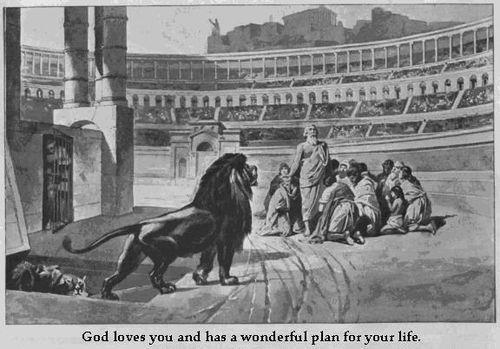
69475_10102578902186220_955102342_n6. God loves you and has a wonderful plan for your life.
This is actually true, it’s just that our idea of a “wonderful plan” doesn’t always match up with God’s idea of a “wonderful plan”.

Our desire is to be healthy, wealthy, and blissfully comfortable with never a family problem, fender bender, lost love, or bankruptcy. God’s desire is for us to be holy. He wants to root the sin out of our lives, show us how to be completely dependent on Him, lead us to trust Him more, build our character and endurance, give us boldness to share the gospel, make us kinder and more merciful, teach us what it means to extend grace and forgive. Most of those lessons are learned only through hardship and suffering. Just ask the apostles or the early church martyrs or our brothers and sisters being persecuted across the globe today.


What are some expressions Christians commonly use that you think we should replace or re-think?

Wednesday's Word

Wednesday’s Word ~ Hosea 1

hosea 1 10Hosea 1

The word of the Lord that came to Hosea, the son of Beeri, in the days of Uzziah, Jotham, Ahaz, and Hezekiah, kings of Judah, and in the days of Jeroboam the son of Joash, king of Israel.

When the Lord first spoke through Hosea, the Lord said to Hosea, “Go, take to yourself a wife of whoredom and have children of whoredom, for the land commits great whoredom by forsaking the Lord.” So he went and took Gomer, the daughter of Diblaim, and she conceived and bore him a son.

And the Lord said to him, “Call his name Jezreel, for in just a little while I will punish the house of Jehu for the blood of Jezreel, and I will put an end to the kingdom of the house of Israel. And on that day I will break the bow of Israel in the Valley of Jezreel.”

She conceived again and bore a daughter. And the Lord said to him, “Call her name No Mercy, for I will no more have mercy on the house of Israel, to forgive them at all. But I will have mercy on the house of Judah, and I will save them by the Lord their God. I will not save them by bow or by sword or by war or by horses or by horsemen.”

When she had weaned No Mercy, she conceived and bore a son. And the Lord said, “Call his name Not My People, for you are not my people, and I am not your God.”

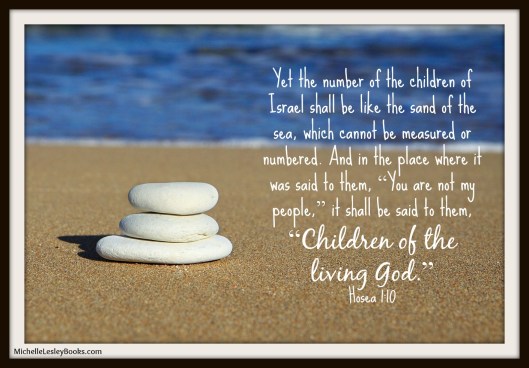
10  Yet the number of the children of Israel shall be like the sand of the sea, which cannot be measured or numbered. And in the place where it was said to them, “You are not my people,” it shall be said to them, “Children of the living God.” 11 And the children of Judah and the children of Israel shall be gathered together, and they shall appoint for themselves one head. And they shall go up from the land, for great shall be the day of Jezreel.


The Holy Bible, English Standard Version Copyright © 2001 by Crossway Bibles, a publishing ministry of Good News Publishers.


Questions to Consider:

1. Who wrote Hosea? What is the theme or purpose of the book? Which genre of biblical literature (wisdom, epistle, prophecy, history, etc.) is Hosea? What important background information about Hosea and this book can we glean from verse 1?

2. In verses 2-3 is God telling Hosea to commit a sin by marrying “a wife of whoredom”? (see interpretive challenges for help) Does this passage give Christians permission to sin in order to carry out God’s plans or proclaim His word?

3. How was Hosea’s marriage a picture of Israel’s sin? (2) Whom did Hosea represent in this picture? Whom did Gomer represent? What was the sin Israel had committed that God called “whoredom”? Do you see evidence of this sin in your life that you need to repent of? Do you see how God considers it “adultery” against Him?

4. Which attributes of God are portrayed in the names of the three children? (4-9) What was God saying to Israel through each of the names of the children? Do these attributes and messages conflict with other attributes we know to be true of God, such as mercy, forgiveness, compassion, and love?

5. Why does Paul quote from Hosea 2:23 and 1:10 in Romans 9:19-28? How does he tie the two passages together, and what is the point he’s trying to make?

Guest Posts

Guest Post: The Ministry of Encouragement

If your theology pretty much matches up with mine (as outlined in the “Welcome” and “Statement of Faith” tabs) and you’d like to contribute a guest post, drop me an e-mail at MichelleLesley1@yahoo.com, and let’s chat about it.

michael coughlin encouragement

The Ministry of Encouragement
by Michael Coughlin

How well do you have to know someone before you can speak truth into their life? I had a phone call today with a testimony I wanted to share with you that helps answer that question.

But first, some background information is required. In 2015, I traveled to Indianapolis to assist Sports Fan Outreach International in preaching the gospel to the Final Four fans. I was speaking with another evangelist when he introduced me to his friend, Pam. Pam open air preached, he said. I don’t recall exactly how the conversation went, but I was asked what I thought of that.

Here is where conventional (or dare I say ‘worldly’?) wisdom dictates that I ought to have offered Pam a cup of Starbucks and gotten to know her situation better. Maybe she’d had a childhood with an abusive father, or had been saved from hearing a woman preacher, right? Surely that insight, as well as building her trust in me was paramount to simply telling her what the Scripture teaches, right?

Well, as you can guess, I disagree. Not that making friends with folks and ‘being relational’ is bad, but I just didn’t have time for that. I was on the streets intending to reach the lost with the gospel and found myself in the conversation. So I gently but firmly explained that I do not believe a woman should preach and shared a couple reasons from Scripture.

She received my explanation and told me that she generally didn’t disagree. Her issue was that, although she thought women ought not preach, the lack of male preachers getting out and doing the work dictated that someone had to. So, in what seemed like an earnest attempt to please the Lord and do His work, she started preaching.

Again, without having more than a 6 minute relationship with her at this point, I explained to her that she was doing exactly what Sarah did when she gave Hagar to Abraham in order to produce the promised child. Sarah, having been given a promise by God, did not see how God would fulfill the promise, so she took the matter into her own hands. Sarah (and Pam), genuinely believed this is how God’s promise would be fulfilled. I don’t pray for a job and then not send out resumes. Simply “relying on God” isn’t an excuse for inaction. But in this case, Sarah (and Pam), had gone outside of the lines God has drawn for us to accomplish things. Sarah committed sin by giving her husband another woman, and Pam was sinning by violating God’s command to women not to preach. In each case, they were not acting wisely. Truly trusting in God is knowing He will fulfill His purposes, and that it will not be by asking His followers to sin. (Note: but He will USE His followers’ sin to accomplish His good will, Rom. 8:28).

Our time together ended amicably. The phone call I had today revealed that God used that conversation in Pam’s heart and she has given up preaching. She continues to evangelize and hand out tracts. In other words, God used the proclaiming of His truth in Pam’s life, by the power of the Holy Spirit –despite the lack of nuance I could afford in my speech and relationship we had time to build. Pam was able to receive my words because Pam was humble and my words were true. It really had nothing to do with my kindness or my desire or ability empathize with Pam, although God may have used those things as well.

As you can imagine, I was greatly encouraged by this in the Lord. (Philemon 20)

There are three primary takeaways I want you, the reader, to think about in regards to this story.

First, I did not need to build a relationship with Pam to speak truth into her life. My reliance on the inerrancy, infallibility and sufficiency of Scripture was the only requirement. Now, that is never an excuse to act ungodly. We also trust that as God gives us opportunities to interact with people, He will use the sanctification we’ve received to that point as part of the relationship. So it is possible I actually was kind and compassionate, etc., my point is that those things aren’t the same as the power of God’s Word to pierce hearts (Acts 4:12).

Secondly, you never know how God is working in someone’s life when you are not there. We are very “seeing” oriented. Sometimes God does a good work when you are not looking. So don’t lose hope. I didn’t need to be in Pam’s life daily or weekly or actually ever for God to use His Word to effect a wonderful change in her.

Finally, I cannot explain how greatly encouraged I was by this anecdote. I spend my life preaching and teaching, discipling and being discipled, and I can tell you the “apparent” success is often bleak. Even joyful moments are often overshadowed by an “I can never do enough” attitude. I hear of a person responding to something positively and I can recall dozens of situations that never appeared to improve. I need this kind of encouragement. So did Paul. So do you. And so does someone in your life. Someone you know needs to know how their work for Jesus Christ has had a good result. Someone needs to know you are thinking of them and praying for them.

While writing this post, I got an email from someone I don’t know too well that said, “Brother, Just thinking about you and praying for fruits of your labors. God bless you brother.” I can only imagine there is someone in your life that needs a similar message. It may prevent you from having to deal with a situation such as I have linked to here.


Michael Coughlin is a street evangelist from Ohio. He and his wife, Erin have 5 children. You can find him on Twitter, at his blog, or on Sermon Audio.


ALTHOUGH I DO MY BEST TO THOROUGHLY VET THE THEOLOGY OF THE BLOGGERS WHO SUBMIT GUEST POSTS, IT IS ALWAYS POSSIBLE FOR THINGS TO SLIP THROUGH THE CRACKS. PLEASE MAKE SURE ANY BLOGGER YOU FOLLOW, INCLUDING ME, RIGHTLY AND FAITHFULLY HANDLES GOD’S WORD AND HOLDS TO SOUND BIBLICAL DOCTRINE.
Guest Posts

Guest Post: What I Want in a Church

If your theology pretty much matches up with mine (as outlined in the “Welcome” and “Statement of Faith” tabs) and you’d like to contribute a guest post, drop me an e-mail at MichelleLesley1@yahoo.com,
and let’s chat about it.
lisa engel church

What I Want in a Church
by Lisa Engel

1. I need the FULL counsel of God preached. I don’t need a preacher who tip-toes around certain parts of the Bible because he’s afraid to offend or appear judgmental (to those who don’t understand Matthew 7 in its context)

2. I want a church whose preacher and (male) elders warn the flock about apostasy and wolves in sheep’s clothing. They need to instill the importance of discernment because the internet and broadcast television, especially, are rampant with heretical teachings.

3. I want a church that isn’t focused on appealing to my flesh and “feelings”. I don’t need a “seeker-friendly” church. Church is a meeting place for the believer, no? We are there to be equipped to go out and seek the seekers and THEN bring them into the fold. What people are fed is what they’ll return for. The main thing needs to be the main thing and it mustn’t be entertainment and amusement.

4. After sound preaching, I need fellowship, accountability, sharpening, edification, and hopefully rebuke when necessary.

5. I’d like women’s Bible studies to be overseen by the male leaders of the church. I believe they need to use biblical discernment regarding study materials the women use. (This goes for any material any other group within the church might use) Too often, women choose their own material and choose the latest fad study that can likely be from a false teacher. And what’s wrong with just studying the Bible on its own anyway???

6. I’d like a church library where books are reviewed and discerned BEFORE being made available to the flock. There are a LOT of heretical books on the market that fill church library shelves. This shouldn’t be! Books on meditation and extra-biblical revelation are rampant. Warnings regarding so-called “Christian films” would be wise too. People are feeding on all sorts of heresy outside of their local church. Why not ongoing classes on discernment and how to to be good Bereans?

7. I need a prayer-minded church, not one where it’s more about potlucks.

8. I need a church that knows doctrine matters and makes clear their views on theology.

9. My church needs to be clear on where it stands on social issues such as gay marriage and the sanctity of life. The flock needs to hear preaching on such subjects from time to time. Too often the pulpit never touches on these things. It’s very important these days for a pastor to speak out on the issues of the day. It would be nice if the church, on its webpage, would acknowledge that it believes in the sanctity of life and traditional, biblical marriage.

10. God is Sovereign. I need my church to understand this.

11. Easter eggs and bunnies. We are to be in the world and not of it. Isn’t there enough of the Pagan Easter celebration in the world? Why on Earth would a church host Easter egg hunts??? To get the unsaved kids and their families in the church door? A terrible marketing scheme, wooing people with something OTHER than Gospel message. Is not the Gospel message enough without having to incorporate the nonsense of eggs and bunnies? It makes zero biblical sense. But churches will find a way to incorporate the eggs and bunnies into the Gospel message because they obviously don’t think the Gospel message can stand on its own. Churches only add to the confusion in doing Pagan celebrations. Scrap the eggs and bunnies for the Cross.

12. Yoga. Christianized yoga. Whatever twisted name it is given, a church that supports this Eastern religion practice is ignorant. I wouldn’t attend a church where this was endorsed or offered, any way it’s labeled.


Lisa is a wife, mom and grandma who loves her Lord Jesus Christ and wants to contend as earnestly as she can for the faith.


ALTHOUGH I DO MY BEST TO THOROUGHLY VET THE THEOLOGY OF THE BLOGGERS WHO SUBMIT GUEST POSTS, IT IS ALWAYS POSSIBLE FOR THINGS TO SLIP THROUGH THE CRACKS. PLEASE MAKE SURE ANY BLOGGER YOU FOLLOW, INCLUDING ME, RIGHTLY AND FAITHFULLY HANDLES GOD’S WORD AND HOLDS TO SOUND BIBLICAL DOCTRINE.