Mailbag

The Mailbag: Potpourri (Christian romance novelist, home schooling sons, Spanish resources…)

Welcome to another “potpourri” edition of The Mailbag, where I give short(er) answers to several questions rather than a long answer to one question. I also like to take the opportunity in these potpourri editions to let new readers know about my comments/e-mail/messages policy. I’m not able to respond individually to most e-mails and messages, so here are some helpful hints for getting your questions answered more quickly. Remember, the search bar can be a helpful tool!

In these potpourri editions of The Mailbag, I’d also like to address the three questions I’m most commonly asked:

“Do you know anything about [Christian pastor/teacher/author] or his/her materials? Is he/she doctrinally sound?”

Try these links: 
Popular False Teachers /
 Recommended Bible Teachers / search bar
Is She a False Teacher? 7 Steps to Figuring It Out on Your Own
(Do keep bringing me names, though. If I get enough questions about a particular teacher, I’ll probably write an article on her.)

“Can you recommend a good women’s Bible study?”

No. Here’s why:
The Mailbag: Can you recommend a good Bible study for women/teens/kids?
The Mailbag: “We need to stop relying on canned studies,” doesn’t mean, “We need to rely on doctrinally sound canned studies.”.

“You shouldn’t be warning against [popular false teacher] for [X,Y,Z] reason!”

Answering the Opposition- Responses to the Most Frequently Raised Discernment Objections


I was saved in 2011 and am seeking direction on how to live my new life in Christ. Prior to my conversion, I was a romance writer (think: Harlequin). The writing bug still haunts me. I love writing and I’m attempting to write a Christian romance novel. I don’t feel like writing Christian non-fiction would be a fit for me. I have a strong creative desire for writing and graphic design. Is there a place for my fiction work for women? I’m praying about it. Any thoughts you have would be welcomed and helpful in how I pray about it.

Aw, a kindred spirit! Maybe that’s why this question warmed my heart so much, or maybe it’s because it’s profoundly touching and encouraging to hear from any Christian woman who is genuinely seeking how she can best glorify God with the gifts He has given her.

As I was contemplating your question, my husband’s favorite verse kept coming to mind:

So, whether you eat or drink, or whatever you do, do all to the glory of God.
1 Corinthians 10:31

The verse itself is appropriate to the situation, but so is its immediate context. Whatever we do – whether it’s something as significant as our vocation or as mundane as eating supper – we should do it in a way that glorifies God, represents Him well to others, and leads people toward Christ.

How many Christian romance novels have you ever read that do those things well? Not many, I’m guessing.

One of the ways the Holy Spirit leads us is by the way He has wired us. God has fearfully and wonderfully created each one of us with unique talents and abilities. We are bent toward some things and away from others. It brings honor to God when we submit to the way He created us and use the gifts He has given us to serve others and to serve and glorify Him. Perhaps your bent toward writing fiction is God’s way of leading you to write fiction that glorifies Him and points people to Christ, and to do it well. That’s something you could pray about.

As you plan out your next storyline, ask yourself some questions like:

✏ Is there a way I can pull back the curtain on God’s glory here?
✏ How can I point the reader to Christ in this scene?
✏ Is there a (rightly handled, in context) passage of Scripture I can add here?
✏ How can this character set a biblical example (of what to do, or not to do) for the reader?
✏ How would I summarize how this finished product brings glory to God and points the reader to Christ?

I would encourage you to continue praying and asking God for wisdom and guidance. Take advantage of every opportunity (writing-related or not) He sends your way, and steward it for His glory. You might also find my article The Mailbag: Christian Fiction Recommendations to be of interest.

And don’t forget: Look back over the parables in the gospels. Jesus authored a lot of God-glorifying “Christian fiction”! :0)


For mothers who homeschool their sons, what are some ways to get more masculine influence during daily school lessons (when fathers are usually at work)?

Honestly, and speaking as a mom who has home schooled three sons, I wouldn’t worry about it unless your husband is absent from the home (military, work travel, etc.) for extended periods of time or doesn’t come home at night until the kids are already in bed.

I mean, think about it, the typical family structure since the dawn of Creation has been for Mom to stay at home and raise and nurture the kids (girls and boys) and for Dad to go out and tend the crops or make the widgets or close the business deals, and there’s nothing in the Bible that indicates that your boys will be lacking male influence because of this. The manliest men in Scripture were raised this way. Jesus was raised this way.

If your sons are spending time with Dad when he comes home in the evening and on weekends, if he’s reading them stories and throwing the ball around with them and taking them to monster truck rallies and having them help rake the leaves and wash the car and things like that, they’re going to be just fine.

I would encourage you to instead steward your energies toward walking out in front of your sons what it looks like to be a godly woman, because that’s part of God’s ingenious plan of giving boys such a close relationship with their mothers during their formative years. Every day, you are training them up to be godly men and husbands by showing them the kind of woman they should be looking for in a wife, and how their future wives and children should be treated.

Don’t worry, and entrust your boys to the Lord. He will take care of all of you.

You might find my article The Mailbag: How Can Christian Moms Raise Godly Men? to be helpful.

(And not to leave out moms of girls, here’s Avoiding the Creepers: Six Ways to Raise a Biblically Strong Woman)


My new daughter-in-law is learning English, but her first language is Spanish. I’d like to give her some good, doctrinally sound books and resources in Spanish. Where can I find these?

I would check Grace to YouLigonier, and HeartCry Missionary Society (Paul Washer). I know they all have books and resources (sermons, articles, etc.) in Spanish, and if you can’t find exactly what you’re looking for on the site, you can contact them directly, and they can point you in the right direction.

And keep an eye on the comments section of this article. I’m sure my readers can suggest some great resources in Spanish, too.

Thanks for being such an awesome mother-in-law!


I am Lutheran. My church is very Scripture-based. I have been asked to run for church council for education. Do you think it is against Scripture?

Hello, you lovely Lutheran lady! I’m afraid I am too ignorant of what a Lutheran church council for education does to say whether or not it’s against Scripture.

I’m intrigued by the idea of “running” for a position of service in the church. I’m not sure actual campaigning for the position is in keeping with doing things decently and in order, but I guess that would depend on how it is done. And perhaps what you mean by “running” is that you’ve been nominated and you have to be approved by a vote of the church, but there’s no actual campaigning involved? I can’t see any biblical problem with that.

But I’m guessing the main thrust of your question is whether or not a woman should be serving in this position. As I said, I don’t know how this council functions, so I can’t give you a thumbs up or down. The best I can do is to tell you that as long as the position doesn’t require you to teach Scripture to men, exercise authority over men, or do anything else that’s unbiblical, and as long as your husband (if you’re married) is OK with you filling the position, it should be fine.

Let me offer you a couple of other resources that might be helpful:

1. Check out my articles Jill in the Pulpit and Rock Your Role FAQs. They may help give you a better idea of whether or not you should take the position.

2. My go-to guy for all things Lutheran is Chris Rosebrough. He is a doctrinally sound Lutheran pastor and host of the Fighting for the Faith podcast. I would recommend you contact him. He does a bit of traveling, so if he’s not able to get back to you right away, I would suggest you join the Facebook group that supports Fighting for the Faith and ask your question in that group. There are oodles of good solid Lutheran members who could probably help.


I’m praying for you…Here’s an encouraging word of Scripture…Here’s how God has used your writing to work in my life…

I have the best readers in the world – the best. I can’t imagine that any other writer has readers who are sweeter and more encouraging than y’all are. Hardly a day goes by that one of you doesn’t love me well by dropping me a few words that are so much kinder than I deserve.

I just want you to know that, while you may not think that’s much of a ministry, it is. It keeps me going and keeps me sane on the days when all the crazies are attacking and I feel like quitting. Your kindness matters. And I know it matters to all the other  people in your life that you’re being kind to, too – your family members, your friends, your co-workers, even strangers on the street. Don’t grow weary in the well-doing of ministering encouragement to others. It matters.

I just wanted to take this opportunity to say thank you to everyone who has offered me gracious words over the years. You are very much appreciated and loved.


If you have a question about: a Bible passage, an aspect of theology, a current issue in Christianity, or how to biblically handle a family, life, or church situation, comment below (I’ll hold all questions in queue {unpublished} for a future edition of The Mailbag) or send me an e-mail or private message. If your question is chosen for publication, your anonymity will be protected.
Guest Posts, Holidays (Other), Reformation Day

Guest Post: The Reformation – An Invitation to the Gospel

If your theology pretty much matches up with mine (as outlined in the “Welcome” and “Statement of Faith” tabs) and you’d like to contribute a guest post, drop me an e-mail at MichelleLesley1@yahoo.com,
and let’s chat about it.

The Reformation: An Invitation to the Gospel
by Matt Shown

For most, October 31 is about costumes and candy. But something far more frightening and weighty is also celebrated on that day. October 31 is Reformation Day. On October 31, 1517, a hammer strike would echo through centuries – in fact, the echo is still reverberating today. In 1517, Martin Luther would nail his ninety-five theses to the church door in Wittenberg, Germany sparking the Protestant Reformation that shaped Christian history.

The Reformers sought to bring the church back under the authority of God’s Word. This wasn’t to say tradition had no value, but rather that the sole “God-breathed” authority for any believer was not the word of Popes or councils, but the words of the Bible. The Reformers echoed the conviction of Jesus when He responded to the Sadducees in His day, “Have you not read what was said to you by God?” (Matthew 22:31). The words on the pages of Scriptures were God’s very Word- God breathed and sufficient to equip believers to do every good work (2 Timothy 3:16-17). Sola Scriptura – that Scripture alone is the supreme authority for faith and practice was the formal, or foundational, principle that sparked the Reformation.

But there was a second principle – a material principle- that dealt with the content of the gospel. This material principle was called sola fide. Sola fide was the confession that faith alone was the way in which mankind can be in right relationship with God. By grace alone through faith alone in Jesus Christ alone mankind can be justified, which means to be set in a right relationship with God. Romans 4:5 tells us, “And to the one who does not work but believes in him who justifies the ungodly, his faith is counted as righteousness.” John 3:16, the most popular verse in the Bible, reminds us, “For God so loved the world, that he gave his only Son, that whoever believes in him should not perish but have eternal life.”

Many misunderstand what sola fide means because we misunderstand what faith is. Faith is not a blind leap into the dark. Faith isn’t separate from repentance of sin (Mark 1:15). Faith isn’t simply beliefs in our head, but transformation of our head, heart, and will. Biblical faith is conviction rooted in assurance (Hebrews 11:1, Romans 4:21). It isn’t the empty profession that James 2 illustrates. Faith isn’t walking an aisle at church on Sunday and walking in darkness Monday through Saturday. Saving faith is conviction rooted in assurance that God’s Word is true. It is marked by a transformation of self (2 Corinthians 5:17).

Jesus illustrates saving faith in parable about a tax collector and the Pharisee. Luke tells us he told this parable to those who trusted in themselves that they were righteous, and we may be surprised what self-righteousness looks like. Both men entered the temple to pray, and the Pharisee gave lip service to God’s grace, “God, I thank you that I am not like other men, extortioners, unjust, adulterers, or even like this tax collector. I fast twice a week; I give tithes of all that I get” (Luke 18:11-12). He recognizes God’s grace, yet ultimately found hope in his own works. While the tax collector displays reverence toward God by bowing his head and praying a simple prayer, “God, be merciful to me, a sinner!” The Pharisee recognizes God’s grace, the tax collector relied on it. It was the one who relied on God’s grace, through faith, that went home justified, not the man who simply gave lip service to grace while trusting in himself.

This is an illustration of why the Reformation matters. The church was making men into Pharisees rather than into justified tax collectors. The message of the Reformation was to cease simply recognizing grace, and to instead rely on it. The message was a confession of mankind’s ungodliness, God’s incomprehensible holiness, and the sufficiency of Jesus’ cross and empty tomb to save!

The Reformation is an opportunity to, by faith alone, rely on God’s grace. It is an opportunity to trust the promises of God in His Word because the Bible is enough for us. It is an opportunity to let go of unbiblical traditions and to embrace the apostolic traditions found in the pages of God’s Word. The Reformation is an invitation to the reader who may not have assurance of their relationship with God. It is an invitation to assurance through faith in Jesus Christ.

“How can I be right with God?” There is no more important question. It is that question that ignited the Reformation and it is a question all of us must answer.


Matt Shown has served as a bi-vocational pastor and church revitalizer for the past 4 1/2 years. He loves God’s Word, good preaching, and Mac N Cheese. He is married to his incredible wife Dana. Matt received his Master of Divinity degree from the Southern Baptist Theological Seminary. He blogs at http://www.ShowntheWay.Wordpress.com.

Speaking Engagements

Report Back: Cruciform Conference

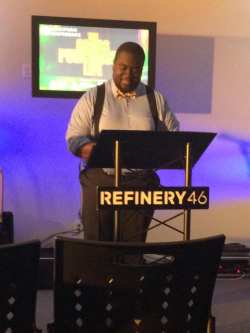
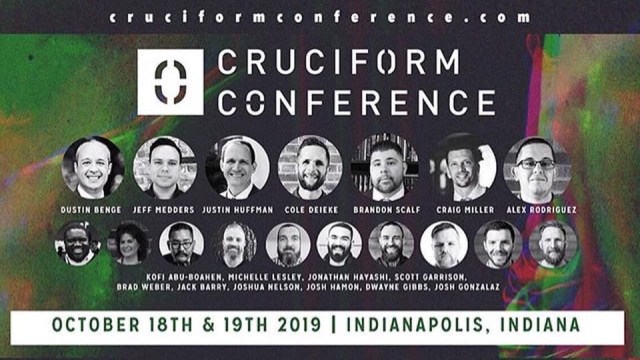
What a joy it was to help kick off the first annual Cruciform Conference last weekend in Indianapolis, Indiana!

I spI wIth mI lIttle I
somethIng’s mIssIng from Indy’s welcome to vIsItors!

The theme of Cruciform this year was The Cross Purchased Life. We were treated to wonderful cross-centered preaching from a number of pastors, speakers, and godly men, including a couple of my Twitter friends…

Dustin Benge                                           Kofi Adu-Boahen

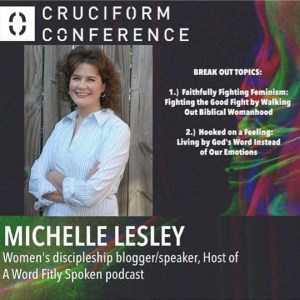
I had the honor of teaching two breakout sessions just for women.

Faithfully Fighting Feminism:
Fighting the Good Fight by Walking Out Biblical Womanhood

Click here for the session outline handout.


Hooked on a Feeling:
Living by God’s Word Instead of Our Emotions

Click here for the session outline handout.


One of my favorite parts of conferences is meeting social media friends face to face. Bunking with Michael and Erin Coughlin for two days was so much fun. They were so kind and hospitable, and I owe them a million thanks for treating me like a queen. If you’ve been around the blog a while, you may recall that Michael has written several guest posts for me. He also writes for the Things Above Us blog and hosts the Things Above Us Roundtable podcast which Michael interviewed me for during the conference. And Erin does everything else. It was a delight to get to know this sweet sister in Christ!

Erin and me

L-R: Michael Coughlin, Amy (whose last name I can’t remember, but who was such a blessing to drive me to the airport!), me, Erin

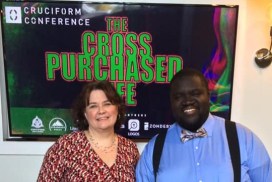

with Dustin Benge                                      with Kofi Adu-Boahen

with Kofi and Michael

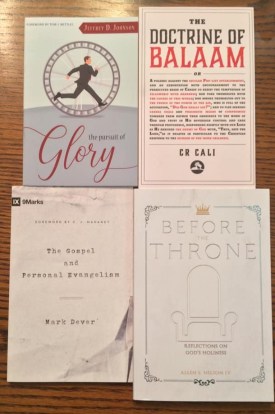
And, of course, what’s a conference without books? Thanks so much to Cruciform, Michael, and Allen Nelson for these lovely gifts. (You can read a review of Before the Throne here, if you like.)

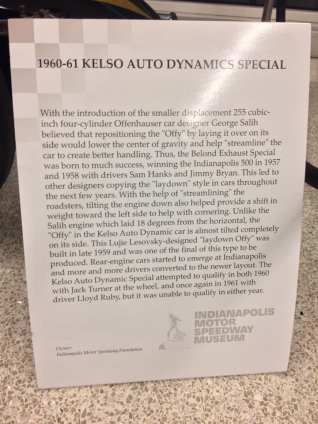
I was in Indianapolis less than 48 hours, and most of that was at the conference, so I didn’t have time to do any touristy stuff. For all you Indy Car fans, here’s a display that was set up in the airport on loan from the Indianapolis Motor Speedway Museum:

Normally, when I go on a trip, in lieu of buying souvenirs, I try to have a meal of whatever food is iconic to that area (clam chowder in Cape Cod, Chicago deep dish pizza, etc.). I’m clueless as to what sort of cuisine is iconic to Indiana, but we found a phenomenal little local taqueria that you simply must visit if you’re ever in Indianapolis: Paco’s Taqueria. (Like I said, I was in Indy less than 48 hours and we had two meals at Paco’s. It was that good.) Traditional style tacos, quesadillas, and lots of other choices made by folks who know how those dishes are supposed to be cooked. I can highly recommend the shrimp, ground beef, and chicken tacos, but everything looked and smelled wonderful. I am officially obsessed with these tacos.


All too soon, the conference was over and it was time to head back home. But I’m so excited to announce that I’ll be speaking at next year’s Cruciform Conference along with Justin Peters, Justin Huffman, and more great men of God (to be announced at a later date) that you won’t want to miss! You’ve got almost a year, so start making plans now to attend October 23-24!

Many thanks to those of you who helped make this trip possible!


If your church or organization is ever in need of a speaker for a women’s event, I’d love to come share with your ladies as well. Click here for more information.


Photo Credits

Cruciform Conference video and promo pics- Courtesy of Cruciform Conference

Photos of friends at the conference- Some of these were taken by Michael or Erin Coughlin, but I can’t remember which ones. Probably the good ones.

Photo of tacos- Courtesy of Paco’s Taqueria on Facebook

All other photos by Michelle Lesley

Prayer Bible Study

Sweet Hour of Prayer: Lesson 8

Previous Lessons: 1, 2, 3, 4, 5, 6, 7

Read Luke 11:1-13, Matthew 6:5-13

The Lord’s Prayer/Jesus Teaches About Prayer

Questions to Consider

1. To acclimate yourself to the books of Luke and Matthew, choose a Bible Book Background to review.

2. Considering that the disciples were all good Jewish boys who had been praying all their lives, why do you think they asked Jesus to teach them to pray? (11:1)

Compare Luke’s version of the Lord’s Prayer (2-4) to Matthew’s version (9-13). What is “missing” from the Luke version?

3. Go through each verse of the Matthew version and explain what Jesus means for us to pray about in that verse:

9-

10-

11-

12-

13-

Now write your own personal prayer in your own words that follows the general pattern of each verse. For example, instead of “Our Father in heaven, hallowed be your name,” your prayer might begin, “Heavenly Father, I praise Your holy name.”

Are the things Jesus instructs us to pray about mostly spiritual needs or physical/tangible needs? Why? How might it change the perspective of your prayer life to focus more on the spiritual than the physical/tangible when you pray?

Is it OK for us to pray for or about things that aren’t included in the Lord’s prayer? Safety on a trip? Healing for a friend? Giving thanks? Praying for your pastor? How do we know it’s OK to pray for those things if Jesus said, “Pray like this,” and those things are not included in His model prayer? (hint: Think about other NT verses about prayer, and remember who the author of Scripture is.)

4. Carefully examine Matthew 6:5-8. What is Jesus teaching us here about public prayer? What does He mean when He says “they have received their reward”? (5) Is Jesus forbidding public prayers, or is He teaching us to examine the motive of our hearts when we do it? With what motive of heart should we approach public prayer?

Have you ever seen a modern day version of “heaping up empty phrases”? (7) What did it look like? (Ex: Praying the rosary? Speaking in “tongues”?) How can we avoid heaping up empty phrases in our own prayer life?

If our Father knows what we need before we ask (8), what is the point of praying? How does the act of asking God to provide for our needs and work in our lives humble us, grow us in dependence on God, and help us align ourselves with God’s will and purposes? Could these be the purposes of prayer rather than giving God a “to do” list?

5. Study Luke 11:5-8. What topic is this mini-parable about? Who does the friend with the bread represent? Who does the man pestering the friend represent? What makes the man so persistent? What does this tell us about our own neediness, desperation, and dependence on the grace of God, and how should this drive us to persist in prayer?

How would you characterize the attitude of the friend with the bread? (7-8) Is Jesus trying to teach us that God considers our persistent prayers bothersome or annoying, or that He will, in aggravation, give us what we want so we’ll go away? Compare the annoyed friend with the heart of God in verses 9-13, and finish this sentence: “If even an irritated pagan will give the man what he wants…(hint: see v. 13).

6. Study Luke 11:9-13, and explain how this is “the rest of the story” about prayer that Jesus started in 5-8. Compare the asking, seeking, and knocking of God in verses 9-10 to the asking, seeking, and knocking of the man in verses 5-8.

Compare the child asking the father motif in 11-13 to the first verse of the Lord’s prayer in both the Luke (2) and the Matthew (9) version. Did OT Jews approach God in prayer as “Father” (you may wish to examine the OT prayers in our previous lessons, links above)? Why is Jesus teaching the disciples (and us) to approach God as “Father”? What is He trying to teach us about the nature and character of God, our relationship with Him through Christ, and prayer?


Homework

Read my article After This Manner, Therefore Pray and model your prayers after The Lord’s Prayer this week.

These gents do a lovely job on the hymn Teach Me to Pray, Lord. I thought you might enjoy it. (I am not familiar with the church itself other than this brief description, so you will need to vet it for yourself if you want to know more.)


Suggested Memory Verse

Mailbag

The Mailbag: Should I attend seminary?

I’ve been tied up speaking at the Cruciform conference this past weekend.
I hope you’ll enjoy this article from the archives.

Originally published November 13, 2017


For the past few months, I’ve felt a strong desire to attend seminary. After a lot of prayer, Scripture reading, and reaching out to my pastor and trusted, older, Godly friends for counsel, I began the process of applying [to a doctrinally sound seminary].

I’m in my early 30s, have never been married, and have no children. I lead middle school youth girls, women, and children in various classes at church, and work as a part time staff member in my church. I have a strong desire to pursue further education, and to teach and lead women and students. I am incredibly excited at the prospect of going to seminary.

I would like to know your thoughts about how a woman might know for sure she is being called to full-time ministry and what part attending seminary should or could play in that.

Great question, and one I wish more doctrinally sound women were asking!

Some might wonder, “What is the point of a woman getting a seminary degree if she can’t, biblically, become a pastor, elder, or exercise authority over men in the church?”. Because there are tons of other ways women can serve the Body of Christ, maybe in parachurch ministries or missions or as an author, or maybe by simply striving for godly excellence as a Christian woman, wife, mom, or church member.

Learning as much as you possibly can about the Bible, the church, and Christianity is never a waste, even if you don’t go into some sort of formal, paid position of ministry. If you’re a woman with time and resources on your hands, I’d encourage you to consider taking a seminary class or two, or even getting a degree, just for all the valuable things you’ll learn. Some seminaries will allow non-students to audit courses. Others offer degree and certificate programs specifically designed for women, online degree programs, and free online (non-degree) classes. A couple of good ones to check out are Southern Baptist Theological Seminary and Reformed Theological Seminary. The Master’s University, while not a seminary, offers many courses and degree programs which are open to women. (The Master’s Seminary does not admit women as their scope is limited to preparing men for the pastorate.) Ligonier Ministries doesn’t offer a seminary degree program, but does offer many theologically rich online classes.

Whether you opt for a non-credit online course or move into campus housing and pursue a degree, be sure you keep your discernment radar on high alert, even at a doctrinally sound seminary. Believe it or not, even multi-degreed seminary professors can lack discernment or teach unbiblical doctrine. Don’t be intimidated by a string of letters and decades of experience behind someone’s name. If what he’s saying doesn’t match up with rightly handled, in context Scripture, he’s wrong.

Now let’s address a few of the more specific points the reader mentioned:

I think we way over-mysticalize this whole “call to ministry” thing. We think there’s got to be some kind of supernatural “road to Damascus” experience that we can point back to and say, “There! That’s the moment God ‘called’ me into ministry!”. But the Bible doesn’t really talk about a call to ministry in those kinds of terms. Remember, the account of Paul’s (and other Bible characters’) conversion and call experience is descriptive, not prescriptive. The prescriptive passage looks like this:

The saying is trustworthy: If anyone aspires to the office of overseer, he desires a noble task. 1 Timothy 3:1

No mention of God speaking to you or a particular feeling or goose bumps or feeling “a peace about it.” Scripture just says if a man has the desire to be a pastor, that’s a good and noble goal. Just an objective statement of fact. So, by the same underlying principle, if a woman wants to dedicate her life to full time ministry, that’s a good desire.

The next step is to see if you’re biblically qualified to be in full time ministry. Simply wanting to be in ministry does not mean you should be in ministry or that God thinks you’re qualified to be in ministry. A few biblical passages any woman considering seminary or a career in ministry should consider:

📖 1 Timothy 2:11-15 You cannot, without sinning, pursue the office of pastor, elder, associate pastor, or any other position which requires you to teach Scripture to men, or hold authority over men, in the gathered body of Believers. If you’re a woman who’s going to seminary in order to pursue such a position, you are already biblically disqualified from ministry.

📖 Galatians 5:22-23 How’s your fruit looking? If your life generally doesn’t reflect the Fruit of the Spirit, you’re probably not ready for seminary or ministry. (In fact, you might want to examine yourself against Scripture to see if you’re really saved.)

📖 1 Timothy 3 and Titus 1 These may be qualifications specifically for pastors, elders, and deacons (which are all offices restricted to men) but the underlying principles would extend to anyone in a position of Christian leadership, and nearly all of them apply to Christians in general. Indeed, Paul says in 1 Timothy 3:15 that he is writing these things so that “you may know how one ought to behave in the household of God.”

📖 Genesis 2:18, Ephesians 5:22-33, Titus 2:3-5, 1 Timothy 3:4-5 If you are married and/or have children, Scripture is clear that it is your primary calling to be a helper to your husband, raise godly children, and manage your household well. Any seminary classes or degrees or ministry positions you pursue may not interfere with or impede your first calling. Additionally, if your husband objects to you attending seminary or pursuing a career in ministry, Scripture mandates that you submit to him and respect his decision.

📖 1 Corinthians 7:32-35 If you’re single with no children, God has given you the precious gift of being able to serve and focus solely on Him, and it may be the perfect time for you to attend seminary or serve Him in full time ministry. 

If you have a strong desire to attend seminary or pursue a career in ministry and you meet the biblical qualifications, the next step is exactly what our reader has done: pray about it, search the Scriptures, seek wise counsel, consider and evaluate the ministry you’re already doing in your church (If you don’t already love being a faithful, serving member of a local church, why on earth would you want to go to seminary or into full time ministry?), realize that there are a lot of things about ministry that are difficult and that seminary doesn’t prepare you for, and if you still want to go to seminary or seek out a ministry position, trust God to guide you and go for it.

Yes, it really is that simple. Desiring to dedicate your life to the service of our Lord or to study more about Him in seminary is a good and God-pleasing desire. If you can accomplish those goals within the parameters Scripture has laid out for godly women, why wouldn’t you pursue it?


If you have a question about: a Bible passage, an aspect of theology, a current issue in Christianity, or how to biblically handle a family, life, or church situation, comment below (I’ll hold all questions in queue {unpublished} for a future edition of The Mailbag) or send me an e-mail or private message. If your question is chosen for publication, your anonymity will be protected.