Remember Anna? She’s one of our often overlooked sisters from Scripture. As with Elizabeth, we don’t usually hear much about Anna, except sometimes, once a year, at Christmas.
When Jesus was about a month old, Mary and Joseph took Him to the temple to fulfill the requirement of the Levitical law of purification. And that’s where they encountered Anna.
Now, just a little lagniappe here, the purification ceremony where we meet Anna was completely separate from Jesus’ circumcision ceremony.
Circumcision took place when the baby was eight days old, probably in the parents’ home or possibly in the local synagogue (the synagogue was sort of a “branch campus” of the temple in towns that were outside of Jerusalem). Mary would not have been able to enter the synagogue in Bethlehem or the temple in Jerusalem for Jesus’ circumcision since she would still have been ceremonially unclean from His birth.
The purification ceremony that made her ritually clean again took place when Jesus was 33 days old at the temple in Jerusalem. A sacrifice was offered for Mary’s cleansing and Jesus was dedicated to the Lord. (see Leviticus 12)
I spell this all out because, if you’re like me, and you hear the Luke 2 account of Jesus’ birth every year, you tend to let it wash over you without really thinking about it. I never really gave much thought to the fact that these were two different events in two different places until I was studying about Anna.
And Luke 2 presents all of these events in kind of a machine gun fashion so it can practically feel like everything in that chapter is happening on the same day, and we can conflate things we shouldn’t. For example, many people think that Simeon and Anna were married just because their stories appear back to back in Luke 2. As we’re about to see, that wasn’t the case.
Let’s take a look at Anna’s story:
And there was a prophetess, Anna, the daughter of Phanuel, of the tribe of Asher. She was advanced in years, having lived with her husband seven years from when she was a virgin, and then as a widow until she was eighty-four. She did not depart from the temple, worshiping with fasting and prayer night and day. And coming up at that very hour she began to give thanks to God and to speak of him to all who were waiting for the redemption of Jerusalem.
Luke 2:36-38
Anna had a lot of strikes against her in life:
She was a woman. In Anna’s day, women were “low man on the totem pole” so to speak. They were regarded as less than men in practically every way- intelligence, abilities, worth, and so on. They couldn’t testify in court because their testimony wasn’t considered credible. And, maybe you’ve even heard of the daily prayer that Jewish men still say today, thanking God for not creating them a gentile…a slave…or a woman.
She was a widow, and possibly childless. A woman of that time without a husband or grown children to take care of her would have been in very real danger of poverty.
She was old. Average life expectancy in Anna’s day was 55. She was 84. When you’re 84 in ancient times with no modern medicine, you’re feeling it.
So, Anna was a woman, she was a widow, and she was old. She had some disadvantages. But Anna didn’t let those things stop her from serving the Lord full throttle. In fact, she took some of those supposed disadvantages and put them to work for her.
Anna didn’t let disadvantages stop her from serving the Lord full throttle. In fact, she took some of those supposed disadvantages and put them to work for her.
If Anna had had a husband to care for or children to raise, she wouldn’t have had the time or the energy to serve the Lord full time. And she wouldn’t have had the opportunity either, because no one in that culture would have thought it appropriate for a woman with a husband and children to abandon them to stay in the temple.
Also, in a culture that respected its elderly, it’s likely that more people – especially younger women – would have listened to her than if she had not been so advanced in years.
So Anna turned these disadvantages into opportunities. And what did she do with those opportunities? She used them to serve God and to tell people about Jesus.
That’s what the Christian life is all about – serving God and telling others about Jesus – whatever your station in life.
Maybe you’re single like Anna, and God has blessed you with the time and freedom to serve Him full time – or at least fuller time than you’d otherwise be able to.
Maybe you do have a husband and children- and God has given you the opportunity to serve Him by serving them: pouring the gospel into your children, being a godly helpmate to your husband, and being a faithful, serving member of your church.
Maybe you’re older, and instead of using your golden years for travel or hobbies or shopping, God is leading you to teach younger women or throw yourself into ministry in some way.
Anna’s example to us is to bloom where God plants us and grab hold of every opportunity to serve Him and tell others about Jesus.
Anna’s example to us is to bloom where God plants us and grab hold of every opportunity to serve Him and tell others about Jesus.
Sometimes I think that if Elizabeth’s story had happened back in the Old Testament, we’d spend much more time on it than we do and be much more amazed by it than we are. Instead, we kind of tend to regard her as a footnote in the Christmas story, overshadowed by the story of Jesus’ incarnation.
And I’m sure Elizabeth is totally fine with that. Like her own son said, “He must increase, but I must decrease.”
But Elizabeth’s story is a rich gift to Christ’s birth narrative, adding wonder and awe to the divine beauty of the tale. It is also God’s gift to us as Christian women, giving us a sister in Christ to look up to and learn from.
Elizabeth’s story is a rich gift to Christ’s birth narrative, adding wonder and awe to the divine beauty of the tale.
In the days of Herod, king of Judea, there was a priest named Zechariah, of the division of Abijah. And he had a wife from the daughters of Aaron, and her name was Elizabeth. And they were both righteous before God, walking blamelessly in all the commandments and statutes of the Lord. But they had no child, because Elizabeth was barren, and both were advanced in years.
Luke 1:5-7
Elizabeth was righteous before God. She walked blamelessly in all the commandments and statutes of the Lord. Like you and me, she wasn’t perfect. She still fell into sin. But because she loved the Lord, she repented, and strove to live her life to please Him.
But Elizabeth also knew sorrow. She and Zechariah had no child. She had been barren for all of her childbearing years, and now she was elderly – some scholars estimate at least 60 years old – and long past menopause.
If you or someone you know has ever experienced the heartbreak of infertility, you know just how painful that is. And in biblical times, culture added insult to injury in a lot of ways. It was assumed any infertility was a problem with the woman, when today we know that men can also be infertile.
Because children are a blessing from the Lord and the fruit of the womb is a reward, and because God sometimes closed the wombs of certain women in Scripture as a result of sin – it was often assumed that if you weren’t having children you were cursed by God, or your barrenness was some sort of punishment for sin.
And in addition to all of that, in that day and time, women were “low man on the totem pole” so to speak. They were regarded as less than men in practically every way- intelligence, abilities, worth, and so on. They couldn’t testify in court because their testimony wasn’t considered credible. And, maybe you’ve even heard of the daily prayer that Jewish men still say today, thanking God for not creating them a Gentile…a slave…or a woman.
So, practically the only way women of that time could achieve a modicum of respect and status in society was by marrying well and by having sons. And, though she did marry well, Elizabeth didn’t have any children.
Try to imagine being a woman of Elizabeth’s time, having all of that on your shoulders, and having virtually no power to do anything about it.
Do you think you might be a little bitter toward God?
“Lord, my husband’s a priest! We can’t go around having people think you’ve cursed us.”
“We’ve been serving You all these years, and all we’ve asked for is a baby. You owe us.”
“You’re not going to give me the one thing I want most in life? Forget it – there are plenty of other gods to worship. I’ll go serve one of them.”
But not Elizabeth. Elizabeth just kept getting up day after day, trusting the Lord, serving the Lord, obeying the Lord.
Elizabeth just kept getting up day after day, trusting the Lord, serving the Lord, obeying the Lord.
And let’s not forget, we know the rest of the story. We know God is going to miraculously open Elizabeth’s womb and she’ll be the mother of John the Baptist. We know she’s going to be one of the first people to learn the good news of the Messiah. We know she’s going to be celebrated and famous across the world once her story gets into Scripture.
Elizabeth didn’t know that. For all those years faithfully following and trusting the Lord, she didn’t know any of that. For all she knew, she was going to die childless and in obscurity, quickly to be forgotten even by those who knew her. And yet she still chose to walk faithfully with the Lord.
Elizabeth was faithful to God because of who God is, not for what she could get out of Him. She served God to get more of God, not to get the goodies.
But look what happens next…
Now while [Zechariah] was serving as priest before God when his division was on duty, according to the custom of the priesthood, he was chosen by lot to enter the temple of the Lord and burn incense…And there appeared to him an angel of the Lord standing on the right side of the altar of incense…the angel said to him, “Do not be afraid, Zechariah, for your prayer has been heard, and your wife Elizabeth will bear you a son, and you shall call his name John.
Luke 1:8-9,11,13
Zechariah has the great honor of entering the temple and burning incense. Suddenly – a miracle! Gabriel, who stands in the very presence of God Himself, has brought the amazing news that Elizabeth – barren and past her time – is going to give birth to the forerunner of the Messiah.
And Zechariah doesn’t believe it.
But Elizabeth does…
Thus the Lord has done for me in the days when he looked on me, to take away my reproach among people.
Luke 1:25
Elizabeth believed God.
In those days Mary arose and went with haste into the hill country, to a town in Judah, and she entered the house of Zechariah and greeted Elizabeth. And when Elizabeth heard the greeting of Mary, the baby leaped in her womb. And Elizabeth was filled with the Holy Spirit, and she exclaimed with a loud cry, “Blessed are you among women, and blessed is the fruit of your womb! And why is this granted to me that the mother of my Lord should come to me? For behold, when the sound of your greeting came to my ears, the baby in my womb leaped for joy. And blessed is she who believed that there would be a fulfillment of what was spoken to her from the Lord.”
Luke 1:39-45
The newly pregnant Mary comes for a visit. The Holy Spirit reveals to and through Elizabeth that the baby Mary is carrying is the Messiah. And, once again, in great humility, Elizabeth believes Him: “Who am I, that my Lord should come to me?” Elizabeth wondered.
Indeed – who are any of us, that our Lord should come to us?
Elizabeth did not seek out Jesus. He came to find her. So, we who were dead in our sins and trespasses did not seek Him. He came to us, to seek and to save that which was lost.
Now the time came for Elizabeth to give birth, and she bore a son. And her neighbors and relatives heard that the Lord had shown great mercy to her, and they rejoiced with her. And on the eighth day they came to circumcise the child. And they would have called him Zechariah after his father, but his mother answered, “No; he shall be called John.”
Luke 1:57-60
It’s a boy! What a joy-filled day it must have been. This wasn’t just any birth. It was God’s promise fulfilled. It was God’s mercy to Elizabeth, His blameless – yet not sinless – and undeserving child. It was God’s blessing to Elizabeth, His faithful servant. The same kind of mercy and blessings He shows us, His faithful, yet undeserving sons and daughters. The same way He fulfills His promises to us.
The time quickly came to circumcise and officially name the baby. Tradition dictated that he be named after Dad: Zechariah. But Elizabeth believed all that God had revealed about this baby to the point that she put her foot down, broke with tradition and insisted, along with her husband, that the baby be named John. It wasn’t about what she wanted. It wasn’t about what others thought was best. It was all about God, and what He wanted.
All of these unbelievable things happening to Elizabeth, yet Elizabeth believes God. Obeys God. Trusts God. She trusted and obeyed God all of those years when He said no, and she believed and obeyed Him after He said yes.
Elizabeth trusted and obeyed God all of those years when He said no, and she believed and obeyed Him after He said yes.
May we, as godly women, be daughters of Elizabeth: Believing God through the unbelievable. Trusting Him in times of uncertainty. Obeying Him in the face of opposition.
Christmas always comes with some drama. Ripped from the pages of Facebook, here’s the epic saga of my tree decorating of 2013…
Plugged in every strand of lights to make sure they were working before putting them on tree. Plugged in every individual strand of lights to make sure they were working after putting each on tree. Decorated tree. Plugged in tree. Everything fine for about 15 minutes.
Entire tree goes out.
Went searching for problem strand. Determined it was one of two strands at bottom of tree.
Figured out which one it was.
Carefully disentangled said strand from branches and ornaments. Discovered kids had hung ornaments on light strand. Discovered that 10 year old, despite a lifetime of instruction, is still hanging multiple ornaments on a single branch like so many bunches of ripe cherries. Discovered it is much easier to take lights off a tree when there are no ornaments on it. Discovered a 44 year old spinal column ain’t what it used to be.
Plugged new strand of lights into end of previous working strand. No worky.
Prayed.
Contemplated tree with no lights on bottom branches. Imagined offspring in years of therapy due to improperly lit tree.
Prayed again. Considered that this was probably the stupidest prayer God had ever heard.
Replugged a different way. Worky. Restrung working strand of lights. Yay. Tree is now completely lit.
Stepped back and discovered side of tree -heretofore unnoticed- looked like a giant had taken a bite out of it (disproportionately short branches). Decided to rotate tree so “bald spot” would be in back.
20 degrees- bald spot still visible.
45 degrees- bald spot still visible. Tree protests being moved by dropping two large jingle bells on my head.
90 degrees- bald spot in back, but now all front ornaments are in back and back ornaments are in front. Also, all breakable ornaments are now dangling precariously over bare tile floor in back instead of over padded tree skirt in front. Some appear ready to commit ornament suicide any moment.
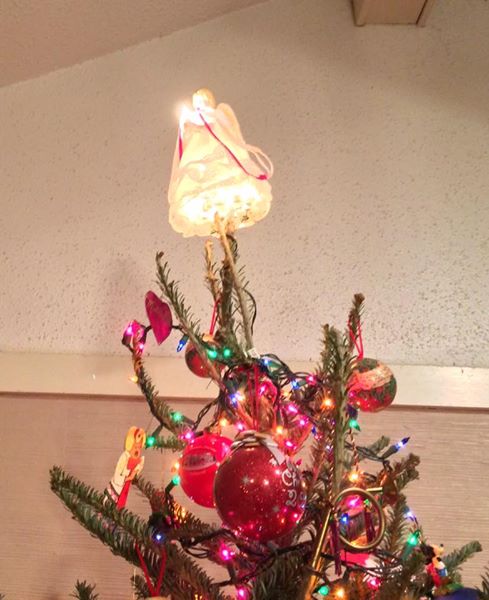
Redecorate approximately 40% of tree. Discover angel topper now at right face instead of facing front. Climb on hearth to rotate angel. Tree drops more jingle bells.
Due to rotation, tree is now too close to couch. Perform origami on spinal column again and attempt to slide tree closer to fireplace. Foot of tree stand gets hung up on edge of a tile. Tree sways but stays in tact.
Operation “Outsmart Christmas Tree” complete. Merry Christmas to me :0)
2016 Update:
Tree shopping and decorating
My husband says the angel looks like it’s about to launch into orbit!
Oh no, not again!
Fixed!
2018 Update:
Still not the picture perfect tree, but we love it!
2020 Update
This year all the lights stayed on, but the tree ended up being a little shorter than we liked, so I wrapped up a milk crate like a present and the tree stand is sitting on top of it. Also, the angel topper that we’ve had since we got married gave up the ghost a couple of years ago, so we had to replace her with a new one whom we’ve affectionately dubbed “disco angel” due to her LED lighting. (Yes, I know real angels don’t look like that. Don’t @ me. :0)
2021 Update
We always grab a snack or dessert after tree shopping. This year it was Mexican ice cream!
The tree looks pretty much the same this year as it did last year, so I thought I’d show you some of my favorite decorations instead:
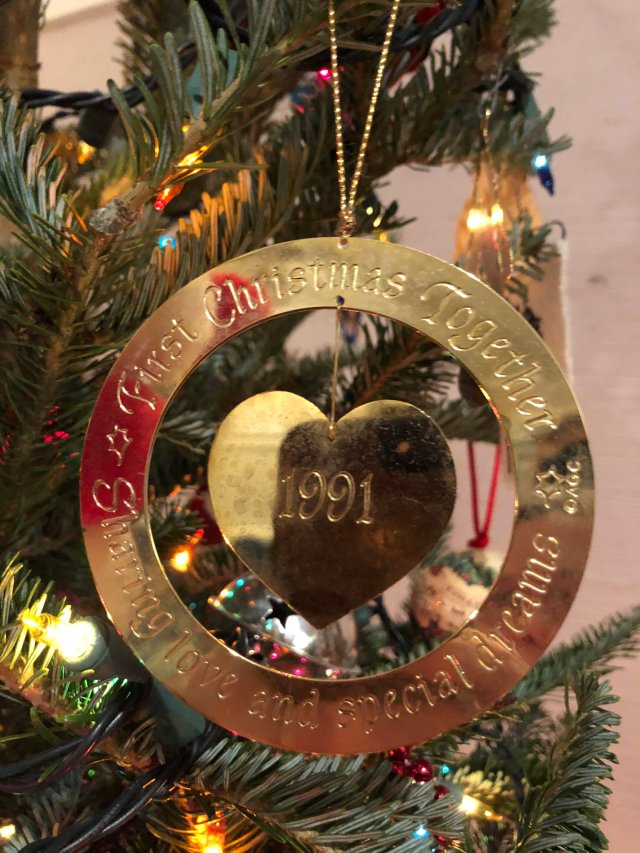
The first ornament that was “ours”. We bought it the Christmas before we got married.
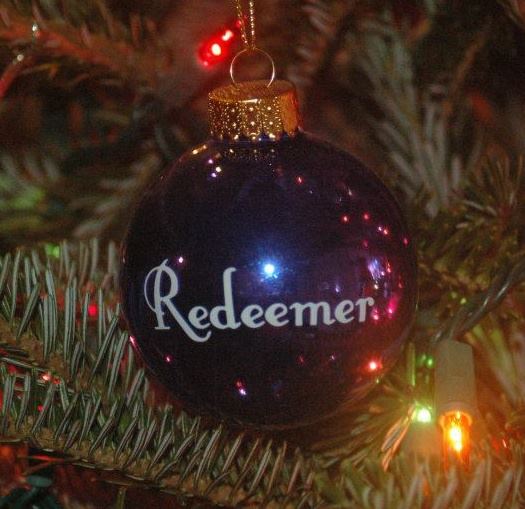
There are 6 red, green, and purple balls in this “Names of Christ” set: Redeemer, Lord, Savior, Emmanuel, Jesus, and Christ.
All the Lesley stockings. I love the birdhouses my husband built. As we keep adding members to the family, we’re going to need a longer mantel!
2022 Update
This could, conceivably, be the last Christmas any of the kids will go with us to pick out the Christmas tree. The last two in the nest are 19 and 20 respectively, with full time jobs and their own activities to attend to.
Christmas ornaments from travels to various conferences this year.
2023 Update
The Lesley Way is for everybody to pick out and advocate for the tree he or she thinks is best. Then, Dad (who’s the one who actually has to trim it), makes the final decision. Mom has veto power, but, since Mom would be happy with almost any tree in the place, and since we all have similar taste in trees, it’s rarely exercised. This year, we picked Laura’s tree.
Probably one of my favorite Christmas tree pictures ever.
Bonus pic of my husband and me goofing off at our local Christmas parade. Every Southern girl needs a big, floppy Ouiser hat to keep the sun at bay!
2024 Update
This year was the very first time we have ever gone Christmas tree shopping without at least two of our children. It’s one of those things that most couples experience when they first get married, and here we are, after almost 32 years of marriage doing it for the first time! We have always loved picking out a tree together as a family, but this was a different kind of fun – a “date day”!
My dad passed away this past January, so after the funeral we spent some time helping my mom sort, donate, and downsize some things. She very kindly allowed my girls and me to go through all of her Christmas decorations and take the ones we wanted. I’m so glad we will all have these precious heirlooms and the memories that go with them. I have been waiting almost a year to hang them on my tree. Wanna see?
If you’re around my age, you might remember decorating glass balls like this. Elmer’s glue and glitter, baby! We all had one with our name on it. These are my mom’s and dad’s, which will henceforth hang on my tree. My husband’s and mine – new this year, and purchased on a trip to a retreat I spoke at – aren’t quite as elegant, but we like them.❤️💚❤️💚
Before there was “Elf on the Shelf,” there was elf on the tree. Circa the 1960’s, I’m pretty sure.
The three glass balls, the gold filigree Star of David, and the aqua/silver tinsel Koosh Ball-looking thingie, my parents bought in sets in Germany when my dad was stationed there before I was born, so they are all about 56-57 years old. My sister and I used to have great fun throwing those tinsel thingies at the tree, and I kept the tradition when I decorated this year! We got the straw stars when the Army moved us to New Mexico when I was a child, so those are probably 45-50 years old. We threw those too, but they didn’t stick as well as the tinsel ones. :0)
It looks like the middle section isn’t lit as well as the upper and lower sections, but that’s just because the branches are a lot thicker right there.
2025 Update
Our second year searching for our Christmas tree as empty nesters! We think this year’s tree is the best shape and size we’ve ever gotten!
I did have issues with the lights again this year. They were all working when I put them on the tree, and then a strand and a half went mysteriously dark. But here’s the wisdom of age for you – this year, I didn’t take the lights off the tree. I shoved the infernal quitter strands all the way back to the trunk where they’d be invisible and went out and bought a new 250 light string to replace them.
I was pretty happy until I reached for an ornament tote – which I had already gone through this year, mind you – and found four brand new boxes of lights that I’d bought at an after Christmas clearance sale sometime within the last few years.🤨
Oh well.
I thought you might enjoy this little video I made. It was for a Christmastime women’s meeting at my church (so I’ve clipped out the first few seconds for privacy reasons). We all brought something to demonstrate how we “keep Christ in Christmas” in our homes.
Merry Christmas! Welcome to another “potpourri” edition of The Mailbag, where I give short(er) answers to several questions rather than a long answer to one question.
Or maybe I answered your question already? Check out my article The Mailbag: Top 10 FAQs to see if your question has been answered and to get some helpful resources.
What do you think about having decorated Christmas trees in the sanctuary / on the platform at church?
It’s a great question, because we want every aspect of our worship services – even the decor – to honor God and be conducive to worship.
Assuming they’re tastefully decorated in an understated way, I don’t personally have any problem with a Christmas tree at the front of the sanctuary for decoration. I’ve seen some lovely ones that were decorated with all white ornaments of biblical symbols (crosses, doves, stars, etc.). I don’t really see any theological difference between a Christmas tree, a holly garland, candles, poinsettias, flowers on the altar every week, ficus trees, potted plants, backdrops, banners, or any other tasteful, reverent, non-distracting piece of decor. They’re just inert objects that somebody thought would spruce things up a bit (yeah, I went there) and make the space pretty. There’s nothing wrong with that. I mean, have you read God’s instructions for the design of the tabernacle and the temple? Lots of flowers and tapestries and gold and all kinds of other pretty stuff. God invented beauty. He is OK with His house being beautiful as long as that beauty honors and points to Him.
God invented beauty. He is OK with His house being beautiful as long as that beauty honors and points to Him.
But there’s something else we need to take into consideration…
All things are lawful,” but not all things are helpful. “All things are lawful,” but not all things build up. Let no one seek his own good, but the good of his neighbor.
1 Corinthians 10:23-24
We have good brothers and sisters in Christ in our churches whose consciences, for various reasons, just can’t handle Christmas trees. And having Christmas trees in the sanctuary would distract them from worship. So you know what we do to love and honor them? We lay aside our “right” to have Christmas trees on the platform and either don’t decorate or find another way to decorate. Many churches have found lots of different ways to tastefully decorate for Christmas that don’t involve Christmas trees.
Does Jeremiah 10:3-4 (and other passages) prohibit Christmas trees?
The short answer is no. It should be obvious to anyone who reads Jeremiah 10:3-4 in context that the passage is talking about the crafting of wooden idols, not Christmas trees. And other passages – such as Deuteronomy 12:2, which refer to idol worship taking place under “every green tree” – don’t prohibit Christmas trees either, despite the fact that “every green tree” sounds like “evergreen tree”. These passages, read in context, are all referring to a location where idol worship takes place.
I have a statue of Joseph and Mary holding baby Jesus. It’s in a corner year round in my living room. As a former Catholic, I’m questioning myself if I should even have it at all?
Let’s first focus on the fact that you don’t have to buy, keep, or display any decoration for any reason. If it makes you uncomfortable, you can get rid of it. If you no longer have room for it, you can get rid of it. If it clashes with your couch, or takes too long to dust, or the dog has chewed Joseph’s toes off, you can get rid of it. This is your house. You get to decide how to decorate it (within biblical parameters, of course: e.g. no pornographic images, no profanity, no Buddha statues, etc.)
I’d suggest praying about it and even discussing it with your pastor, if you like, and certainly with your husband if you’re married. You may want to prayerfully consider…
When you arrive at the biblical answers to those questions, you’ll know whether or not to keep it or let it go.
(If you’re concerned that the statue might be a violation of the second Commandment, you might want to check out my article Nativity Scenes and the Second Commandment.)
I haven’t seen any of your articles that specifically mention what kind or types of ornaments we should decorate our Christmas trees with. While it’s certainly a personal preference for everyone, I just wanted to get your input about them. Through the years I’ve seen many trees with favorite sports team ornaments to baby or pet pictures, cartoon characters, White House ornaments, angels, snowmen, snowflakes, and many more. While these may not have intended to be anything other than a person’s preference, shouldn’t everything we do even regarding this, be done to honor and point to Christ in celebrating His birth and life? Are decorations that have nothing to do with Jesus, or who He is, wrong?
I think you answered your own question very well. It’s a matter of personal preference. If you’d like for all of your Christmas decorations to point to Christ, that would be a lovely way to honor Him and celebrate His incarnation.
Other sorts of decorations (again – as I mentioned in my answer to the previous question – within biblical parameters, of course: e.g. no pornographic images, no profanity, no Buddha statues, etc.) are also fine.
A few little nuggets to think about:
When you decorate for Thanksgiving, does everything you put out have a Bible verse on it, or in some way explicitly point to Christ? Or do you maybe decorate with pumpkins, turkeys, stalks of wheat, a cornucopia, etc.?
We are supposed to be living testimonies to Christ 24/7. Does every item of clothing or jewelry you wear have a Bible verse on it or in some way explicitly point to Christ?
I don’t ask these questions to discourage you from using only Christ-centered decorations at Christmas – as I said, that’s totally fine – but rather to help you think through why this concern would be restricted to Christmas and not apply to other situations or times of the year. We don’t want to be accidentally hypocritical, but rather, biblically consistent with our beliefs and practices.
You’re absolutely right that everything we do should “be done to honor and point to Christ”. But as Christians, that’s not primarily about the exterior trappings of our lives like decorations, jewelry, or clothing. We honor and point to Christ by living in the world He created and being obedient to Him in our thoughts, words, and actions. And it’s OK with Him for us to do that while wearing hoop earrings and the promotional t-shirt we got from the grand opening of a local chicken joint, or putting an LSU Tigers ornament on our Christmas tree. To be “in the world, not of the world,” as the old saying goes.
Honoring Christ is not primarily about the exterior trappings of our lives like decorations, jewelry, or clothing. We honor Christ by living in the world He created and being obedient to Him in our thoughts, words, and actions.
I thought you might enjoy this little video I made. It was for a Christmastime women’s meeting at my church (so I’ve clipped out the first few seconds for privacy reasons). We all brought something to demonstrate how we “keep Christ in Christmas” in our homes. Maybe it will give you an expanded perspective on decorations.
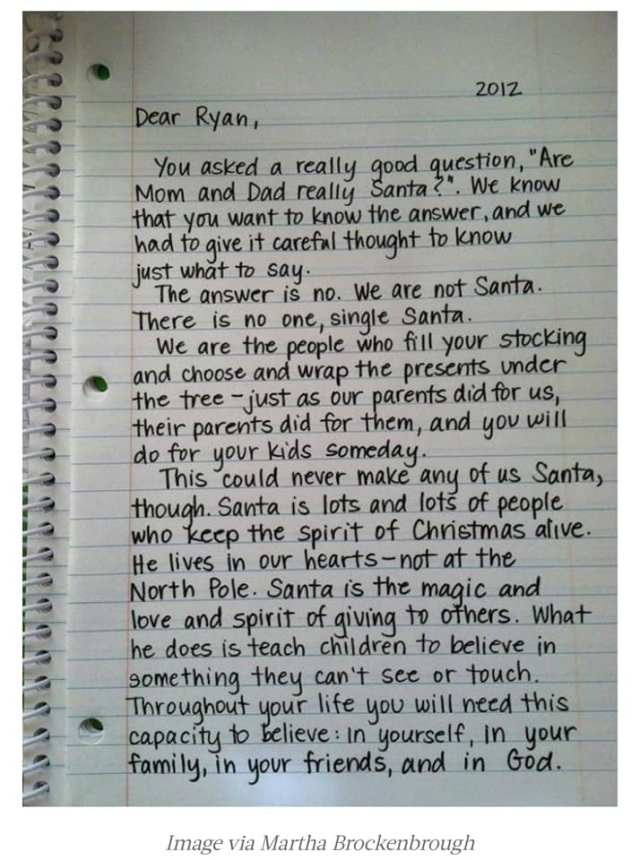
This image was shared on Facebook (not by the person credited for the image) as a response to my article The Mailbag: What should we tell our kids (and grandkids) about Santa Claus?. I would encourage you to read my article for the context of my response. (Since she simply posted the image without any explanation, I tried to give her the benefit of the doubt that she was sharing this as an example of what not to teach your children about Santa Claus, but unfortunately, that turned out not to be the case.)
Thanks for sharing. This is a great example of what not to do. I don’t know if these parents are Christians or not, but they have taken a really unbiblical approach. There’s no such thing as some sort of spirit of Santa Claus, so they’re still lying to their child.
And to say that Santa “lives in our hearts” is actually worse than telling their child Santa is a real, discrete person. It’s not only going to confuse Ryan more when his parents start talking to him about inviting Jesus into his heart (“What? You said Santa lives in my heart. Isn’t it going to be crowded in there?”), it’s just as blasphemous for Santa to take Jesus’ place in the heart as it is to ascribe omniscience to Santa (as I explained in the article).
And the parting thought that believing in Santa, whom you can’t see, will help you to believe in God, Whom you can’t see is unbelievably blasphemous and unbiblical. It elevates Santa above God and trivializes all God has done to reveal Himself to man, especially the life, death, burial, and resurrection of Christ.
I’m sure the parents were trying to be loving to their child and cushion the blow that Santa isn’t real, but they did it at the cost of the glory of God, the truth of Scripture, and the opportunity to lay a biblical foundation for their child’s future salvation. That’s an expensive Santa Claus.
I’m sure the parents were trying to cushion the blow that Santa isn’t real, but they did it at the cost of the glory of God and the truth of Scripture. That’s an expensive Santa Claus.
This is why you don’t lie to your children about Santa Claus. It’s unbiblical for all the reasons I gave in the article, and when you come up with solutions like this to finally tell your child the “truth” without hurting his feelings, that’s unbiblical too.
Christmas Music
What do you think about the Christmas song, The Little Drummer Boy? I’ve always loved that song but I recently read an article stating that we shouldn’t sing it because it’s not biblically true.
It depends on what the article means by “not biblically true”. If they mean it conflicts with, denies, or twists Scripture in some way, I don’t see that in the lyrics. If they simply mean there’s no mention in Scripture of a little drummer boy visiting Jesus as a baby, that’s correct.
However, it’s reasonable to assume friends, family, and possibly even curious strangers (spurred on by the shepherds’ amazing story) visited Jesus and His parents in the days after His birth. In fact, for such a corporate and family oriented society, it would have been unthinkable that only the shepherds, and later, the wise men, ever visited them.
Could one of those visitors have been an impoverished little boy who wanted to play a song for Jesus on his drum? And Mary consented? And Jesus smiled? I don’t see why not. None of that conflicts with Scripture, and it’s all within the realm of possibility (except for the ox and lamb keeping time – I’ve never known a barnyard animal with good rhythm).
Did the article you read mean that “we” (as in the congregation, choir, soloist) shouldn’t sing that song in the worship service because it isn’t drawn from Scripture? I would fully agree with that. All of the elements of our worship services should be drawn from, and centered on the Word.
But as far as personal or family use goes, if the song makes you uncomfortable in some way, you don’t have to sing it or listen to it. (It’s certainly not one of my favorites.) I guess the decision you would have to make is whether you’re only comfortable with songs that come straight from Scripture or whether you can be comfortable with a song about something that could have happened, but isn’t in Scripture. And either way is totally fine. It just depends on your heart and your conscience.
Is there anything biblically wrong with singing Christmas hymns during worship? Our church refuses and only reserves them for our Christmas service. Just odd to me. But they decorate with a big ole Christmas tree and wreaths in the sanctuary.
No, there’s nothing biblically wrong with singing Christmas hymns in the regular worship service. I’ve never heard of a church that reserves them only for the Christmas service (especially a church that sees nothing wrong with decorating for Christmas) but there’s nothing unbiblical about that either. I would encourage you to kindly, gently, and lovingly ask your pastor about it.
Christmas-Related Activities
I’m a member of a doctrinally sound church. That’s why it was a little confusing when all of a sudden, from the pulpit, they announced that we were going to have a float in our upcoming Santa Claus Parade.
When one brave soul asked why we would participate, the answer was: we need to look at the “greater good” – it’s getting the gospel out – which we are doing with tracts and Christmas candy.
While I was happy to be a part of printing off the material in hopes of getting it into the hands of as many people in our city, I won’t be participating in handing it out in the parade.
Am I wrong to feel this way? I know I should be asking our Pastors about this – but frankly, after that one person asked, she was told that we were going through with it…that they valued her “opinion” on the matter – but that they (as well as the Deacons that discussed the matter), see nothing wrong with participating in such an event. Why couldn’t we have a “booth” that was away from the parade route, and hand out literature there, instead of “being in the thick of things…”
(You didn’t say exactly how your church is going to distribute the tracts and candy, but in our local Christmas parade, the float riders throw their candy and other goodies to the watching crowd, so that’s the assumption I’m working under with my response.)
It’s always a good thing to carefully think things through whenever we bump elbows with the world. We want to impact the world with the gospel, but we want to be careful not to become worldly. “In the world, not of the world” as the saying goes.
But from everything you said in your email, I’m going to have to go with your pastors on this one. (In fact, I’ve been recommending for years that churches participate in Christmas parades as an evangelistic outreach.) It sounds to me like they’re taking hold of a golden opportunity to share the gospel and let people in the area know about your doctrinally sound church. Isn’t that what we’re supposed to do as Christians? “Go ye into all the world, and preach the gospel to every creature.”?
If you’re going to share the gospel with sinners, you have to go where sinners are.
If you’re going to share the gospel with sinners, you have to go where sinners are. And if you’re invited by the sinners, so much the better. The parade organizers have invited your church to participate, or, at least they haven’t told your church it can’t participate. Why would your church not joyfully accept that invitation? Your area may be progressive, but it’s not so progressive that they’ve banned churches from participating in the Christmas parade (wouldn’t that be hypocritical?) yet.Jesus said, “We must work the works of Him who sent Me while it is day. The hour is coming when no man can work.”. We’ve got to take advantage of these gospel opportunities while we still have them.
I wrote to you in my letter not to associate with sexually immoral people— not at all meaning the sexually immoral of this world, or the greedy and swindlers, or idolaters, since then you would need to go out of the world.
And as Jesus reclined at table in the house, behold, many tax collectors and sinners came and were reclining with Jesus and his disciples. And when the Pharisees saw this, they said to his disciples, “Why does your teacher eat with tax collectors and sinners?” But when he heard it, he said, “Those who are well have no need of a physician, but those who are sick. Go and learn what this means: ‘I desire mercy, and not sacrifice.’ For I came not to call the righteous, but sinners.”
1 Corinthians 5:9-10, Matthew 9:10-13
Why couldn’t we have a “booth” that was away from the parade route, and hand out literature there, instead of “being in the thick of things…”
Because the parade is where the people are! If you’re there to share the gospel, why wouldn’t you want to be “in the thick of things”? “Yes, we’d like to come to your parade and share the gospel, but please put us in an out of the way area where fewer people will be.”? Hon, I am not trying to be harsh with you, believe me, but I say this to you in sisterly love: Most of the people who will be at that parade are on their way to an eternity in Hell. Have you really thought about that? Does that not grieve you? Don’t you want to rescue as many of them as possible with the gospel? An out of the way spot? Jesus said:
You are the light of the world. A city set on a hill cannot be hidden. Nor do people light a lamp and put it under a basket, but on a stand, and it gives light to all in the house. In the same way, let your light shine before others, so that they may see your good works and give glory to your Father who is in heaven.
Matthew 5:14-16
Your pastors are trying to set your church on a hill and shine the gospel forth from it. Don’t ask them to put it under a basket. From everything you’ve said, they’re good, trustworthy doctrinally sound pastors. You don’t have to personally hand out materials at the parade (you wouldn’t have to even if you were 100% on board with all of this), but trust them and submit to their leadership.
Obey your leaders and submit to them, for they are keeping watch over your souls, as those who will have to give an account. Let them do this with joy and not with groaning, for that would be of no advantage to you.
Hebrews 13:17
If you have a question about: a Bible passage, an aspect of theology, a current issue in Christianity, or how to biblically handle a family, life, or church situation, comment below (I’ll hold all questions in queue {unpublished} for a future edition of The Mailbag) or send me an e-mail or private message. If your question is chosen for publication, your anonymity will be protected.
Christmas – there’s no other holiday in which music plays such a major role. And what a blessing that so much of the music of Christmas centers around the incarnation of our Savior! At no other time of the year are you likely to turn on a secular radio station or walk into a store and hear songs about Jesus. It’s one of the things that makes Christmas music so special.
Here’s a collection of all my favorites – and many you’ve suggested! I’ll continue adding more songs as the years go by, so let me know your nomination for the best Christmas songs of all time in the comments!
(Note: I do not necessarily endorse all of the songwriters or performers listed below, the churches/organizations they represent, any other songs they may have written or performed, or their theology. If you decide to follow any of these people or groups, check out their theology first to make sure it’s biblical.)
1. Hark the Herald Angels Sing
This one is my all time favorite because of the awesome gospel theology wrapped in ribbons of beautiful wording. Just a few of my favorite phrases:
God and sinners reconciled Veiled in flesh the godhead see, hail th’ incarnate deity Mild, He lays His glory by, born that man no more may die Born to raise the sons of earth, born to give them second birth
2. It’s About the Cross
This is my favorite “non-carol” Christmas song. The beginning of the story is wonderful and great, but it’s the ending that can save you and that’s why we celebrate. The incarnation of Christ has always been about the cross and the resurrection.
3. Handel’s Messiah
Yes, I know it’s way more than one song, but, having performed it several times, I can honestly say I love the whole thing. Much of it is Scripture (verbatim) set to some of the best music ever written for a choir. Phenomenal.
4. Glorious Impossible
One of the more recent Christmas songs out there, it’s chock full of allusions to Scripture and the gospel.
5. Angels We Have Heard on High
It adequately handles the Christmas narrative, but I have to admit, I love this song for the chorus. It has a beautiful, intricately-woven, nearly ethereal sounding harmonic structure, and a simple, yet profound message: “Glory to God in the highest.”
6. Jesus, What a Wonderful Child
6. Jesus, What a Wonderful Child– Sometimes a great song is packed with good theology, and sometimes a great song expresses one simple idea. Jesus, What a WonderfulChild is one of the latter. If you’ve read the title, you’ve got the main idea. Plus, it’s just a lot of fun!
7. Sweet Little Jesus Boy
I love how this song captures the idea that when Jesus came the first time, “we didn’t know who You were.” And nobody does it like Mahalia Jackson.
8. Christmas Offering
This song draws the parallel between the offerings of the wise men and our offering of worship, the gift our King most desires.
9. Christ is Born
I know, I know, it’s twangy and most people don’t like Southern Gospel music. That’s OK, I do. And you’ve gotta love a Christmas song that starts out with the Fall of Man.
10. Rejoice with Exceeding Great Joy
This is another one that made the list because of the music. The lyrics are a simple retelling of the journey of the magi, but the music just takes you right out to the desert and plops you down on a camel’s back.
11. Joy to the World
As Christians, many things in this life bring us sadness and discouragement: grief over our sin, prodigal children, death of loved ones, persecution, suffering. There is no better antidote to our sorrows than to focus on the joy we have in Christ. This is a beautiful, classical-style rendition of Joy to the World.
12. Light of the Stable
I love this song’s upbeat focus on Jesus as Light, King, and Savior. I can almost imagine myself in Bethlehem, bowing down before my infant King.
13. Silent Night
What Christmas music collective would be complete without Silent Night? Does your congregation sing this hymn at your Christmas Eve service or other special worship times? Grace Community Church does, and they sound just lovely.
14. Come on Ring those Bells
Were you even a Christian in the 80’s if you didn’t have Evie’s Christmas album? This song probably sounds cheesy to younger ears today, but approaching the birth of Christ as “the greatest celebration of them all” definitely has a nice ring to it. (Yes, I went there. :0)
15. Go Tell
There’s an undeniable evangelism motif in the story of Christ’s birth. Gabriel told Mary about Jesus. The angels told the shepherds the good news. And the shepherds…well they told everyone what they’d witnessed. That’s the theme of this Great Commission toe-tapper: GO. TELL.
16. O Little Town of Bethlehem
In the eyes of the world, Bethlehem was nothing special. It wasn’t the center of commerce or the seat of governmental power. It was just a little town of no consequence. Until…Jesus. This song, sung so delightfully by these four brothers in Christ, reminds us that Jesus is what makes the ordinary… extraordinary.
17. Beautiful Star of Bethlehem
In a magnificent use of metaphor, this song casts Jesus Himself as the beautiful “star” of Bethlehem. And indeed, for Believers, Jesus is that “star divine,” lighting and guiding the way “unto the land of perfect day,” when we finally see Him, in all of His glory, face to face.
18. Ordinary Baby
Jesus was fully God, but sometimes we forget that He was also fully man. And not just fully man, but an ordinary, nondescript man. He was approachable, not elite. Personable, not intimidating. Accessible to kings and paupers alike. The Erwin siblings deliver this simple song with smooth and mellow charm.
19. We Are the Reason
The tradition of Christmas time gift giving is an homage to the gifts the wise men gave Jesus. But what about the “greatest gift of our lives” that Jesus gave us? He gave all He could give to us: His life, forgiveness of sin, salvation. Avalon handily dusts off this CCM classic and freshens it up for a 21st century audience.
20. O Holy Night
Christ, the thrill of hope, entered our darkened world on that holy night so long ago. As the soft, plaintive melody gradually swells into a great and glorious crescendo, we are reminded of how long the world pined away in sin and error, punctuated by the resplendent arrival of her Savior and King, much the same way we await His second coming today.
21. Sing We the Song of Emmanuel
One of the reasons I’m not crazy about contemporary Reformed worship hymns as a genre is that so many of them sound like funeral dirges. There’s no joy. They’re slower than Christmas. Not this one. This is a song about a joyful event that actually sounds joyful. Hope alive, let the gospel ring! Sing it with joy in your heart and a smile on your face!
22. He Who Is Mighty
Another contemporary one I’ve grown to love in recent years. A modern day Magnificat. Indeed, Christ has “shattered the darkness and lifted our shame,” and Holy is His name.
New This Year!
23. O Come All You Unfaithful
The author of this song explains that her inspiration for the lyrics came from singing O Come All Ye Faithful at church during a particularly difficult Christmas season when she felt very unfaithful. But I would argue that Christians are simultaneously the faithful of O Come All Ye Faithful and the unfaithful of this song.
We are the barren and waiting ones who have nothing, and for whom Christ was born, and that is precisely why we joyfully and triumphantly come and adore Christ the Lord.
Bonus Nomination: Best Christmas Album
This is largely a nostalgic, rather than theological, nomination. My favorite Christmas record album growing up was Have a Happy Holiday with Lorne Greene. If you appreciate a classic, masculine baritone, you’ll want to grab a copy. (I still have mine!)