Ministry, Worship

Real Ministers of Music’s Wives of Anychurch, U.S.A. ~ Part 1

four-women-walking-in-a-line-holding-handsI’ve been married to a minister of music for over 20 years. My husband has served at many different churches in a variety of capacities: on staff, interim, supply, revivals, conferences, retreats, etc. Over those 20+ years and in those various capacities, I’ve observed a number of things about him, pastors, church musicians, and congregations from a unique vantage point.

Now, with a little help and a lot of input from a few sister minister of music’s wives, it’s true confessions time. Time for us to tell all…

Sing, Sing a Song…
Singing is often the only opportunity church members have (besides the offering) to take an active role in worship. Let’s all take advantage of it!
congregation-worshippingThe music portion of the worship service is just that: worship and service, but sometimes we can slip into thinking of it as “filler time” before the “main event” of the sermon. If we’re spending the music time chatting with our friends, checking Facebook on our phones, knitting, or clipping our nails (sadly, yes, I’ve seen all of those happen) aren’t we robbing God and ourselves of the precious few hours per week we set aside for worship? Is it fair to God to spend the time we’re supposed to be worshiping on these kinds of distractions? God commands our worship and God deserves our worship. So, let’s give God our full attention and worship Him!

R-E-S-P-E-C-T – find out what it means to your minister of music.
The minister of music doesn’t just roll out of bed on Sunday morning, jump up on the platform, and wave his arms around for thirty minutes. He works hard during the week to plan a worship service that honors God and grows and trains the aretha-franklin-respect-1967-3congregation spiritually. He often does so amid a number of challenges: the varied talents of his accompanists, a hymn request by the pastor or a church member, bugs in the sound system, musicians going out of town, the choir soloist getting the flu. He rehearses with the instrumentalists, the praise team, the choir, and others. When he stands in front of us to lead the music, he deserves the same respect we give the pastor when he preaches or a teacher imparting knowledge or someone at work who’s making a presentation: our attention.
Someone To Watch Over Me
Singing in the choir or on the praise team kinda goes hand in hand with being a minister of music’s wife, so we’re often up on the platform near our husbands. I need to tell you a little secret:

We can see you out there.

It is incredibly encouraging to see people who are focused on Christ and engaged with Him as they’re worshiping. It’s obvious they’re communing with their Savior and thinking about Him as they sing. It makes the minister of music feel congregation-worshippinglike he’s been successful in helping them connect with the Lord in worship.

On the other hand, it’s very discouraging to see people with their hands stuffed in their pockets, not singing, or, conversely, mindlessly rattling off lyrics, and with a countenance that says, “I’d rather be at the dentist.” I once saw a televised worship service where the congregation was singing the hymn, “All that Thrills My Soul is Jesus.” It would be difficult to describe just how unthrilled most of them looked. The word “corpses” comes to mind.

Jesus said to love the Lord with all our heart, soul, mind, and strength. When we engage all four of those areas in worship, we’re not just pleasing Him by our obedience, He’s growing us into stronger, more mature Believers. And that’s the best encouragement of all for our minister of music.

Where He Leads Me, I Will Follow
We minister of music’s wives are blessed that our husbands have, for the most part, worked under pastors who are supportive and set a great example for their congregations. Pastors, you have an enormous influence on your congregation even when you’re not aware of it. And one area in which you may not be aware that church members are watching and emulating you, even when we’re not aware of it, is during the music portion of the worship service.

Your congregation can see you during the worship time, whether you’re sitting on the stage or in a pew. What you convey with your own behavior about the importance of worship, we will absorb and reflect. If you are engaged and sing heartily to the Lord, we will get the message that you hymn_singingthink God is worthy of all of our worship and we will follow suit. If you spend the worship time engaged in other activities, we will get the message that worship time is more like the coming attractions before a movie than a time to join in and commune with the Lord through what we sing.
Additionally, when your congregation is actively engaged in worship, it gets our hearts prepared to soak up the message you have for us in your sermon. So, when you’re worshiping with gusto, you’re not only setting a great example, you’re also getting people right where you want them: ready to drink in God’s word!

Part two of this article is on its way next week!

What are some things you appreciate about your
minister of music or worship leader?

Old Testament, Sunday School, Worship

Why the Law? ~ Sunday School Lesson ~ 2-22-14

sunday schoolThese are my notes from my ladies’ Sunday School class this morning. I’ll be posting the notes from my class here each week. Click here for last week’s lesson.

Through the Bible in 2014 ~ Week 8 ~ Feb. 16-22
Leviticus 11-27
Why the Law?

1620960_255339554644343_1905463723_n

 Open my eyes, that I may behold wondrous things out of your law.
Oh how I love your law! It is my meditation all the day.
I long for your salvation, O Lord, and your law is my delight.
Psalm 119:18, 97,174

When David wrote those words, his Bible consisted mainly of the Pentateuch (Genesis – Deuteronomy), the majority of which is law. Did you “behold wondrous things out of,” “love,” and “delight in” your reading of Leviticus? Why do you think God gave Israel the Law? Are Christians supposed to be obeying all these laws? If not, why is the book of Leviticus in the Bible today? While Christians are no longer bound by many of the laws of the OT the Law does show us some pretty amazing things.

 Primary Reasons for the Law

There are three types of law given in the OT:

Ceremonial (sacrifices, feasts, dietary, “daily living”, etc. laws)
Civil (“eye for an eye”, inheritance, property, etc., laws, similar to our local, state, and federal laws)
Moral (adultery, murder, lying, etc.)

Even though Christians are no longer required to keep the ceremonial and civil laws (we are still to obey the moral laws—we’ll get into the “why?” of that in another lesson), we can learn a great deal from them about the nature and character of God and His desires for His people.

For I am the Lord your God. Consecrate yourselves therefore, and be holy, for I am holy… For I am the Lord who brought you up out of the land of Egypt to be your God. You shall therefore be holy, for I am holy.” Leviticus 11:44a,45

The Law showed Israel they were a distinct people, set apart from other nations. (2 Corinthians 5:17, 1 Peter 2:9-10)
They were to be separate and different in all their ways. They were not to be like idolatrous nations in any way, and the things they ate, wore, even the way they cut their hair reflected this. As Christians, God’s grace has saved us and made us into completely new creatures in Christ. We are “a chosen race, a royal priesthood, a holy nation, a people for his own possession, that you may proclaim the excellencies of him who called you out of darkness into his marvelous light. Once you were not a people, but now you are God’s people;” Do the places we go, the things we say, the things we post on Facebook, the way we act, reflect this?

The Law demonstrates that God is holy. (Isaiah 55:8-9)
God is higher than and set apart from His people. God’s ways are not man’s ways, they are higher, which is why they are often confusing to us and hard to understand. God’s laws and His setting apart of Israel to follow His laws reflected His “otherness” and “set apart-ness.”

The Law shows that people must be holy in order to commune with a holy God (Psalm 24:3-4, Hebrews 9:22)
The cleanliness/unclean laws show that no one can have a right relationship with God unless God first makes him clean. If an Israelite became unclean he could only be made clean and restored to God through the sacrifice or offering God provided for him. We cannot make ourselves clean. It can only be done by God through the shedding of the blood of the Lamb of God (Jesus). “Indeed, under the law almost everything is purified with blood, and without the shedding of blood there is no forgiveness of sins”.

The Law shows us it can’t save us. (Galatians 3:24, Isaiah 64:6, Romans 3:9-20, Hebrews 10:1-18)
Perhaps the greatest thing the Law did for Israel (and for us) was to show them the futility of striving to keep the Law. Not that they should give up on obeying the Law (which is what they often did), but that they needed something greater than the Law to save them since they were utter failures at keeping it. The ease of breaking the laws -even unintentionally- every time they turned around shows the impossibility of keeping the Law perfectly, the extent to which sin taints every move we make, and our desperate need for God’s mercy and forgiveness, which came in the form of a Savior who would make the perfect sacrifice once for all. The Law pointed Israel and us to Jesus.

The Law showed God’s sovereignty over and care for every aspect of life (Matthew 10:29-31 1 Corinthians 10:31)
The laws governed every aspect of life from eating and drinking to illness to “that time of the month,” showing that God was to have dominion over, and be remembered, glorified, and served in, even the smallest parts of an Israelite’s life, just as in the Christian’s life today. We are to do everything His way for His glory. It also shows His attention to detail and that He is concerned about everything about us. Nothing is too small for God, and nothing gets by Him.

The Law provided a way for people to express honor to God. (John 14:15, Colossians 3:16)
While the “do/don’t do this or that” laws honor God by testifying to His holiness, righteousness, and judgment, the feasts testify to God’s provision, benevolence, mercy, forgiveness, salvation, goodness, grace, and rest. The laws allowed the people to show their honor for God through obedience. The feasts gave the people the opportunity to show their honor for God through worship, celebration, and thanksgiving. We have this same opportunity every Sunday!

The Law was a testimony to other nations about God (1 Kings 8:59-61).
God’s ways were not the ways of the false gods of the nations surrounding Israel. His Law was to cleanse and protect the people so they could enjoy fellowship with Him. The worship of false gods was strictly to appease the idols themselves. The intrinsic nature of the laws themselves and Israel’s keeping of them were a testimony to the uniqueness, holiness and glory of God to all the surrounding pagan nations. “This God is different from all the others,” they said, “This is the one true God.” In the same way, our obedience to God shows how different He is from the world’s way of doing things.


Secondary Reasons for the Law

Most of the laws had secondary, practical reasons behind them, showing us that God doesn’t just care about our spiritual state, but our physical well being as well.

Law and Order
Every society has to have a way of maintaining law and order, protecting people and their stuff, and carrying out justice. Property, inheritance, and other civil and criminal laws protected the personal rights of Israelite citizens. God’s laws about restitution and punishment of criminals show His wisdom and that He is just.

Health
Rules about which animals to eat could have served to prevent food-borne diseases, such as trichinosis, which comes from pork. The multiple laws about quarantining those with leprosy helped stop its spread to others. Recently, scientists have discovered health benefits to circumcision. We know God is a healer, and sometimes He does this in the form of prevention.

Care and Safety Net
God made sure that widows, orphans, and the disabled were cared for and not taken advantage of. His laws showed Israel how to care for the poor and make sure no one went without provision.

But before faith came, we were kept in custody under the law, being shut up to the faith which was later to be revealed. Therefore the Law has become our tutor to lead us to Christ, so that we may be justified by faith. But now that faith has come, we are no longer under a tutor. For you are all sons of God through faith in Christ Jesus.
Galatians 3:23-26

1618539_10152274032895761_806632643_n

Idolatry, Sunday School, Worship

Worship Gone Wrong, Worship Gone Right ~ Sunday School Lesson ~ 2-16-14

sunday school

These are my notes from my ladies’ Sunday School class this morning. I’ll be posting the notes from my class here each week. Click here for last week’s lesson.

Through the Bible in 2014 ~ Week 7 ~ Feb. 9-15
Exodus 30-Leviticus 10
Worship Gone Wrong ~ Worship Gone Right

Think about the last time you were invited over to someone’s house for dinner or a visit. Even if it was your closest friend’s house, did you go into her kitchen and start rearranging her cabinets so the dishes would be the way you like them? Refold her towels into thirds instead of halves? Insist on fried chicken when she had planned baked? Would you like it if your closest friend came to your house and started doing things like that?

What’s your favorite flower? Mine is pink roses, and my husband knows this very well. Would it have been loving for my husband to give me a cactus for Valentine’s Day—even though he knows I can’t stand them –because that’s the plant he likes best?

We all have a certain way we like things done at our own homes for certain reasons. We have all been given gifts that make us feel loved and cherished (and some gifts that haven’t). God is no different. When we come into His house to worship Him, we abide by His “house rules” out of love and respect for Him. We are to offer Him the worship He desires, not because it makes us happy or comfortable, but because that’s what makes Him “feel loved.”

This week’s reading was all about worship. Worship done the right way – God’s way, and worship done the wrong way – man’s way.

Worship Gone Wrong: Man’s Way (Exodus 32)

32:1-2: Worship goes wrong when we take our focus off God.
Moses didn’t bring them out of Egypt, God did. But the people’s focus was only on the temporal and tangible. They hounded Aaron to give them a god they could see and worship their own way rather than an invisible God whose ways were holy and different from theirs. They were not thinking about what God wanted but what they wanted.

32:2-14: Worship goes wrong when the pastor is more interested in pleasing the people (or himself) than pleasing God.
Rather than leading the people and holding up God’s standard for them, Aaron gave in to their base desires. Contrast this with Moses who was more interested in God’s glory, His name being honored among the heathens, and His covenant promises, than Moses’ own self interest of being made a “great nation”.

32:4-6: Worship goes wrong when we paste God’s name on man made rituals.
Notice that they essentially called the golden calf “God” and claimed that worshiping it was actually worshiping God. This was not a situation in which they were inventing a new god to worship.

32:15-19: Worship goes wrong when we break God’s law (Exodus 19-20:21).
The people had heard from the very mouth of God himself, “You shall have no other gods before me. You shall not make for yourself a carved image, or any likeness of anything that is in heaven above, or that is in the earth beneath, or that is in the water under the earth. You shall not bow down to them or serve them…” Those are the first and second Commandments! They knew God’s Law and intentionally broke it. Our worship is unacceptable to God (indeed, it isn’t worship at all) when we do it while knowingly disobeying Him. (Naked church, homosexuality affirming “churches”, female pastors.)

32:25: Worship goes wrong when we give unbelievers the opportunity to mock God.
When the people “break loose” from doing things biblically with the pastor leading the way (as in the New Apostolic Reformation movement, for example), the world rightly mocks them. As a result, many unbelievers understandably take the position, “If that’s what Christianity is, I don’t want any part of it.” This is to our shame. (This is different, however, from being mocked for upholding biblical standards, such as standing against abortion or homosexuality.)

32:26-28: Worship goes wrong when people refuse to repent of their sin (Matthew 18:15-17, 1 Corinthians 5:11-13).
The three thousand men who refused to repent of their idol worship were the problem here, not the Levites. They were given every opportunity to repent and refused. This compounded their sin by forcing their brothers into a horrific situation of having to kill them.

Today, when church members refuse to repent of their sin, God has instructed us to put them outside the fellowship (after due process). This is painful for all involved, and puts brothers and sisters who are trying to faithfully follow God’s word in the awful position of having to confront and discipline people they may dearly love. It often causes a deep wound that necessarily hinders worship.


Worship Gone Right: God’s Way

God cares about the smallest details of how we approach Him in worship. (Exodus 30, 39)
He’s not an “anything goes” God. We see this in the detailed instructions about the construction of the ark, the tabernacle, and all its accessories, right down to the recipe for the anointing oil (30) and the little pomegranates on the hems of the priestly garments (39). (We’ll also see His instructions about worship to the church in the New Testament.) If God cares this much about the little details of worship, what are some things in our worship services and other church activities that we need to think about as to whether or not they’re pleasing to God?

God takes worship seriously, and so should His people (Exodus 32, Leviticus 10, Acts 5:1-11, 1 Corinthians 11:29-30).
The results of the golden calf incident (32), the strange fire incident (10), as well as situations in the New Testament show us that the way we worship and conduct activities in the church is no trivial matter to God. When He gives instructions about worship, He means what He says. It is just as wrong for us in the New Testament church to disregard God’s instructions about the Lord’s supper, giving offerings, qualifications for pastors/teachers, etc., as it was for Nadab and Abihu to offer “strange fire” before the Lord.

This doesn’t mean we can’t experience and express joy during worship—God wants us to! But there are also times to weep over our sin, listen intently to God’s word, and pray fervently. What are some things that show that a church/church members take worship seriously?

The men who lead God’s people have a grave responsibility to lead biblically, and God’s people have the responsibility to follow them biblically. (Exodus 32, Leviticus 10, 2 Timothy 4:1-5)
Pastors are to be faithful to God and His requirements for worship regardless of what the people clamor for. When pastors give in to the sinful desires of their people, they both endorse and give their people the opportunity to sin. So long as the pastor is standing by Scripture, we are to follow his leadership and support him.

The results of worship gone right (Leviticus 9:22-24)
When worship is done biblically, the pastor is in right relationship with God. He’s in the right position spiritually to be a blessing to God’s people. God blesses the people, they see His glory, He is pleased with their worship, His presence is with them, and it generates more worship.

Prayer, Sanctification, Worship

Great Expectations

expectgreatthings-necklace (1)

Do we expect too much from God? Is that even possible?

No.

Yes.

Well, kinda.

You see, I’m not talking about expecting something and God being unable to deliver it. That’s just plain silly when talking about our omnipotent God. No, what I’m talking about is whether or not the expectations we come up with are grounded in biblical reality.

What do we mean when we talk about “praying expectantly” or coming to a time of corporate worship, study, or prayer, and “expecting God to do something”? Just what is it we are expecting God to do?

Could it be that He’s already doing something and we’re just not seeing it?

Sometimes, when we read God’s word, we expect God to do something just as “big” as He did in Moses’, Paul’s, or some other Bible hero’s life. We forget that the Bible is sort of like a “highlight reel” of the events in the lives of a handful of people that God drafted to be part of His visible activity at that moment in history.

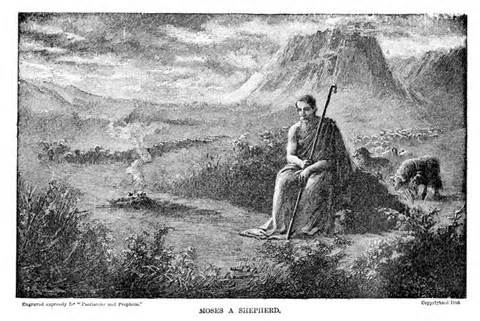
We focus on the moments Moses had at the burning bush or walking through the Red Sea, and that’s what we want, too. r643167_4468740But we forget that Moses’ life wasn’t like that every day. We forget about the eighty years he spent wandering around the desert, half in the day to day monotony of shepherding on the back side of Midian, the other half, wandering around the wilderness with the people of Israel.

Eighty years of nothing special. Day after day of ordinary. Week after week of God not “showing up” and doing something amazing. Eighty years. That’s a lifetime for most of us.

Was God any less at work in Moses’ eighty years of desert thwandering than He was when He gave Moses the Law or spoke to him face to face or sent manna? Of course not. During those days, God was protecting Moses from the heat and wild animals, providing food and shelter for him, blessing him with a wife and children, directing his steps, teaching him obedience and trust.

Just like He does for us.

Have you read a Bible passage this week that allowed you to see more of God’s glory? God is doing something. He’s revealing Himself to you.

Are you praying for someone’s salvation? God is doing something. He’s working on the heart of that person.

Did you have a place to sleep last night and food on your table today? God is doing something. He’s providing for your needs.

Do you leave church on Sundays having been fed the truth of God’s word by your pastor? God is doing something. He’s growing you to spiritual maturity.

Is it possible that we’re expecting God to do something in our lives that isn’t in His particular plan for us? You aren’t Moses, and neither am I. Neither were the million or so other Israelites Moses led out of Egypt, and neither have the billions of other people been who have inhabited earth since Creation. Moses was Moses. You are you. God doesn’t have the same plan for your life He had for Moses’ life.

And, by the way, have you ever noticed that most of the people in the Bible through whom God did something “big” were not expecting it or asking for it? Moses wasn’t expecting God to show up in that burning bush. David wasn’t asking God to do great things in his life when Samuel dropped by to anoint him as the next king. Both of them were hanging out with the sheep when God called them. Paul thought he was already an awesome servant of God when he got knocked off his high horse. Mary wasn’t expecting to be expecting. She was just a teenage girl growing up and learning how to run a household.

1 Thessalonians 4:10b-12 says:

But we urge you, brothers to do this more and more, and to aspire to live quietly, and to mind your own affairs, and to work with your hands, as we instructed you, so that you may walk properly before outsiders and be dependent on no one.

That’s what all of those Bible characters were doing when God chose them. Just regular people living regular lives doing regular work. Just like billions of other people through whom God has not chosen to do anything big and spectacular.

keep-calm-god-is-at-workBut that doesn’t mean God hasn’t been “doing something” in all of our lives. In fact, the vast majority of the work God does in our lives every single day goes unnoticed and unappreciated.

So, instead of setting our expectations on those very rare “wow factor” works of God that seem so appealing, maybe we should be asking Him to open our eyes to, and make us thankful for, all of the things He’s already doing in our lives. Instead of having great expectations of things that God has never promised us, maybe we should ask Him for, and expect Him to, do what He has promised:

Forgiveness for our sin

Christ-likeness

Provision for our needs

Endurance

The ability and opportunity to help others

Faithfulness

Humility

Patience

The opportunity to share the gospel

Because “all the promises of God find their Yes in him.” You can expect it.

Bible, Church, Creation, Discernment, Evolution, False Teachers, New Apostolic Reformation, Prayer, Word of Faith Movement, Worship

Keep On Keeping Up: 6 More Issues Christians Need Guidance About From Our Pastors ~ Part 2

14333562683841

Recently, I read a great article by Justin Peters entitled “Ignorance Is Not An Option.” I would call this article a response to that one, but it’s really more of a…well, I guess you could call it a “ricochet”. Last week, in Part 1 of this article, I discussed five current issues in evangelicalism that we folks in the pew need some guidance on from our pastors. Following are six more issues we all, pastors and church members alike, need to learn about and and keep a biblical perspective on.

Creation vs. Evolution:  Sorely missing from some pulpits these days is the exhortation to Christians that the Bible is our final authority on every issue in life and that we are called to believe God’s word- believe it intelligently, yes, but believe it, even in the face of worldly opposition. This admonition does not begin with Genesis 3, it begins with Genesis 1.  We are called to believe that God created the world and that He created it the way the Bible says He created it.

*Resources:
Answers in Genesis– From Creation apologetics to scholarly scientific articles to colleges that teach Creation to VBS curricula, you would be hard put to find a more comprehensive, gospel-centered Creation resource.
The Case for a Creator by Lee Strobel

Denominational Differences: Do you know the basics of what the major Christian denominations teach (salvation, baptism, communion, membership, etc.) and the differences between their doctrine and the doctrine of your own denomination? Are you aware that some denominations which are considered by many to be “Christian” hold to doctrines- including soteriology- that conflicts with God’s word? Are you fairly well acquainted with the doctrines of the denomination or religion that is predominant (or secondary if your own denomination predominates) in your area? Pastoral instruction on the basics of other denominational beliefs (as well as their own!) can be quite helpful as we church members relate to friends and family members or help new church members who come from a different denominational background.

Resources: 
GotQuestions.org For a brief overview of most of the major religions and denominations, type “Methodist,” “Mormon,” etc., in the search box.

For more detailed information, find the denomination’s main web site and click on their “statement of faith” or “what we believe” page (Keep in mind that there are several different “flavors” of Baptist, Presbyterian, Lutheran, etc., whose doctrines and practices may vary significantly from each other.), or get to know local pastors of other denominations and just ask what they teach.

The Word of Faith Movement:  Used almost interchangeably with the term “prosperity gospel,” anti-biblical Word of Faith concepts such as the “little gods” doctrine (we have a divine nature), health and wealth prosperity (it is never God’s will for you to be sick or poor, and if you are, it’s because of your lack of faith), positive confession (Our words have the power to create reality or speak things into existence. Conversely, negative words create negative circumstances.), and twisted teachings about tithing (“sow your seed so God will multiply it back to you”), among others, are infiltrating unsuspecting churches at an alarming rate, and many are being deceived.

Because church members are often introduced to these doctrines by seemingly innocuous, popular speakers and leaders such as Joel Osteen, Joyce Meyer, Christine Caine, Hillsong personnel, Robert Morris, John and Lisa Bevere, John Hagee, Kari Jobe, and Judah Smith, whose materials are sold at Christian stores, conferences, and web sites, church members, and even some pastors, have no way of knowing they’re encountering false teaching unless they understand sound biblical doctrine and have a modicum of discernment skills.  It is now more necessary than ever for Christians to be trained in the basics of hermeneutics and discernment. 

Resources:
A Call for Discernment by Justin Peters
Word Faith Movement at Stand Up For the Truth
Sound the Alarm: The Dangers of the Word of Faith Movement by Emmanuel Davis
A Softer Prosperity Gospel: More Common Than You Think at 9Marks

The New Apostolic ReformationHopefully, your church members have never encountered NAR leaders, doctrines, or manifestations, or, if they have, were immediately turned off by its weirdness and because it is so blatantly anti-biblical. NAR takes the Word of Faith movement, and –BAM!– kicks it up a notch. But, as a gateway drug can lead to addiction and addiction can lead to a fatal overdose, so exposure to Joel Osteen can lead to T.D. Jakes to Benny Hinn to holy laughterstrange “anointings,” glory clouds of gold dust, tremoring, false prophecy, and being “drunk in the Spirit.” This is signs and wonders on steroids.

The NAR is also largely responsible for many of the corrupt teachings on prayer (mainly through Bethel Church in Redding, California) that have become popular in recent years, such as: contemplative/centering prayer, lectio divina, the International House of Prayer, Sozo prayer, healing rooms, and soaking prayer, as well as the false teaching of dominionism.

Resources:
False Spirits Invade the Church: Part 1, Part 2, Part 3  A Documentary by Andrew Strom
Love and Death in the House of Prayer by Jeff Tietz of Rolling Stone

The Emergent/Emerging Church MovementEver heard the old joke, “The only rule is…there are no rules!” Well, replace the word “rule” with “doctrine” and you’ve got a somewhat loose definition of the emergent church. It’s a post-modern mix of ethereal non-traditionalism, feelings, experiences, and mysticism as a means of worship, anti-absolute truth, ideological inclusivism, and anything goes universalism, topped off with a heaping helping of “did God really say…?“. Everything in the Bible, from moral absolutes to the divinity of Christ to the atonement to every other jot and tittle of the Word is questioned, if not outright denied. The only doctrine is…there is no doctrine. And, unfortunately, we church members can find any number of emergent books and materials on the shelves at our local Christian bookstores.

Resources:
What is the Emerging Church? by CARM.org
Exposing the Emergent Movement by Stand Up For the Truth

Bible Translations and Paraphrases, Study Bibles, and Theme BiblesIf the members of your church are carrying the LOLCat Bible or the KLV (yes, folks, that’s the Klingon Language Version of the Bible {Thanks a lot, Aaron. I’ll never be able to unsee that.}) into the sanctuary every week, you probably need more doctrinal intervention than I’m qualified to offer. But, while there are a number of theologically sound study Bibles and theme Bibles out there, there are some that may be just as theologically off base as the gospel according to kitty cats and Star Trek. Joyce Meyer’s Everyday Life Bible, Joel Osteen’s Hope for Today Bible, Sarah Young’s Jesus Calling Devotional Bible, and T.D. Jakes’ Woman Thou Art Loosed Bible are a few that come to mind. (Notice that these are all sold on a Christian web site right alongside materials that teach sound doctrine.)

Are you somewhat familiar with the most common Bible translations being used today, and which ones are the most accurate? Do your church members understand the difference between a translation and a paraphrase? What about gender neutral Bibles? There is such a variety of Bible options available today that the members of your congregation could likely use some guidance in selecting an accurate translation for studying God’s word.

Resources: 
BibleGateway.com– Just about every Bible translation and paraphrase you can imagine, all on line, all free. Compare a few versions side by side, and, if you’re thinking of buying a new version, try it out at BG before you buy.
Comparison of English Bible Translations
Translation Comparison Charts
How the Use of Some Bible Versions Can Twist God’s Truth at The Sacred Sandwich

*The resources given are obviously not an exhaustive list. For the most part, they are resources I have used myself, found to be helpful, and trust to be generally doctrinally sound. There are many other wonderful resources out there, but our most important resource is to compare all things and people to God’s word in context.