Women of Genesis Bible Study

The Women of Genesis: Lesson 3- Eve

Previous Lessons: 1, 2

(By way of reminder, this study will be slightly different from our regular studies. We will be taking a more in depth look at the passages of Genesis that focus on the women we’ll be studying and a more generalized overview of the passages in between. Those “in between” passages may be somewhat lengthy, so instead of reprinting them here, I will be linking to those longer passages on Bible Gateway. Simply click on “Read Genesis X:Y-Z” to start reading.)

๐Ÿ“–๐Ÿ“–๐Ÿ“–๐Ÿ“–๐Ÿ“–

Read Genesis 1:26-2:25

๐Ÿ“–๐Ÿ“–๐Ÿ“–๐Ÿ“–๐Ÿ“–


Questions to Consider

1. You may wish to review Lesson 2 (link above) in preparation for today’s lesson.

2. Examine 1:26-30.ย What sets human beings apart from the rest of creation? What does it mean to be made in the โ€œimageโ€ and โ€œlikenessโ€ of God?ย What responsibilities and instructions did God give Adam and Eve when He created them?

3. What did God mean when He said that man was to “have dominion” (26,28) over the animals and “subdue” the earth (28)? Does God consider animals to be equal to people? How does man’s dominion over the earth reflect and point to God’s dominion over the universe? What are some ways Christians can glorify God as we exercise dominion over creation?

4. What did God instruct Adam and Eve to eat? (29) What were animals to eat? (30) Why do you think God needed to tell Adam and Eve what they and the animals were to eat? Why, at that time in history, did people and animals not eat meat? (Hint: 2:17c- In order to get meat, what do you have to do to another living creature?) Does this instruction still apply today?

5. Study 1:31-2:3. Did God create anything else after He created Adam and Eve? Why did God rest after creating humans?

6. Describe the ecology and horticulture of the earth (2:5-6) and of Eden (2:8-14).

7. Compare the method God used for creating Adam (2:7) to the method He used for creating Eve (2:21-22). What are the differences and similarities? God made man to tend (2:15) the ______ from which he had come (2:7). God made woman to tend (2:18) the ______ from which she had come (2:22).

8. In Genesis 1 (4,10,12,18,21,25,31) God brings each of His creative acts to completion with the statement, “And God saw that it was good.” What is the first thing in Creation that God said wasย notย good? (2:18)

9. Examine 2:18-20. Describe the void in both Adam’s life and in Creation prior to God’s creation of Eve. How did the creation of woman make Adam’s life, and Creation, whole and complete?

10. What was Adam’s job? (2:15,19) What was Eve’s job? (2:18,20)

11. What can we learn about God’s design for gender, sexuality, and marriage from Genesis 1:27-28 and 2:18,20-25?

12. Describe Eve and her world, using today’s passage as your guide. What kinds of things did she see, smell, hear, taste, and feel? What are some of the things she and Adam might have spent their days doing? What did she eat? What did she wear? How would the fact that sin and death had not yet entered the world have affected her daily life, her relationship with Adam, and her relationship with God? How would your daily life, relationships with others, and your relationship with God be different if sin and death had never entered the world?


Homework

As we learned in Lesson 2, Genesis 1:26-30 and 2:5-25 are not two different accounts of the creation of man. Rather, chapter 1 is the condensed version and chapter 2 is the expanded version. Sometimes when we’re studying historical events like this, it can be confusing to our linear way of thinking when the story is not laid out in chronological order.

On a piece of paper or in your word processor, rearrange the verses of Genesis 1:26-2:25 into chronological order.


Suggested Memory Verse

Therefore a man shall leave his father and his mother and hold fast to his wife, and they shall become one flesh.
Genesis 2:24
Women of Genesis Bible Study

The Women of Genesis: Lesson 2

Previous Lessons: 1

(By way of reminder, this study will be slightly different from our regular studies. We will be taking a more in depth look at the passages of Genesis that focus on the women we’ll be studying and a more generalized overview of the passages in between. Those “in between” passages may be somewhat lengthy, so instead of reprinting them here, I will be linking to those longer passages on Bible Gateway. Simply click on “Read Genesis X:Y-Z” to start reading.)

๐Ÿ“–๐Ÿ“–๐Ÿ“–๐Ÿ“–๐Ÿ“–

Read Genesis 1:1-2:17

๐Ÿ“–๐Ÿ“–๐Ÿ“–๐Ÿ“–๐Ÿ“–


Questions to Consider

1. What is the theme of Genesis 1 and 2? Some people think that Genesis 1 and Genesis 2 are two separate accounts of Creation. Is this true? Explain how Genesis 1 and 2 fit together.

2. Make a list of the attributes and characteristics of God you see in Genesis 1 and 2. Describe the relationship between God and His creation. In what ways do we see the creation submitting to its Creator? Examine what verses 1:2, 1:26, andย John 1:1-3ย tell us about an important aspect of God’s nature. Describe the ways we see each member of the Trinity present and involved in Creation.

3. What are some specific ways Genesis 1 and 2 stand in opposition to evolution, the Big Bang Theory, etc.? Did God leave anything imperfect or incomplete on any of the days of creation? How do the “good”ness (1:31) and perfection of Creation reflect the goodness and perfection of God?

4. What method did God use (1:3, 6, 9, 11, 14, 20, 24) for creating everything except man? What method did God use for creating man? (2:7-8) What does this demonstrate about the uniqueness of human beings as well as God’s special love and care for humans?

5. What sets human beings apart from the rest of creation? (1:26-27) What does it mean to be made in the “image” and “likeness” of God? What responsibilities and instructions did God give Adam and Eve when He created them? (1:28-30)

6. Summarize 2:7-15 in your own words. What do we learn about God, the earth, and Adam from this passage?

7. Who is God instructing in 2:15-17? Was Eve present for these instructions? What did God tell Adam in these verses? Why did God put the tree of the knowledge of good and evil in Eden if He didn’t want Adam to eat from it? How might God have been using this tree to teach Adam to trust, obey, honor, and submit to Him? What should God’s instruction about this tree have taught Adam about God’s authority and His right to rule over both Adam and all of Creation?


Homework

For the next six days, choose something God created on each one of the six days of Creation. Write down how that thing brings glory to God, how it reflects God’s nature or attributes, and how you or another Christian could use it to spread the gospel, build up the church, encourage or teach others, etc. Pray, thanking God for that part of His Creation.


Suggested Memory Verse

In the beginning, God created the heavens and the earth.
Genesis 1:1

Women of Genesis Bible Study

The Women of Genesis: Lesson 1

Welcome to our new study,ย The Women of Genesis!ย Over the next few months, weโ€™ll read through the entire book of Genesis, stopping along the way to give special attention to women like Eve, Sarah, Rachel, and others. Weโ€™ll examine their roles in biblical history, how their stories point us to Christ, and what we can learn from them as Christian women, wives, or mothers today.

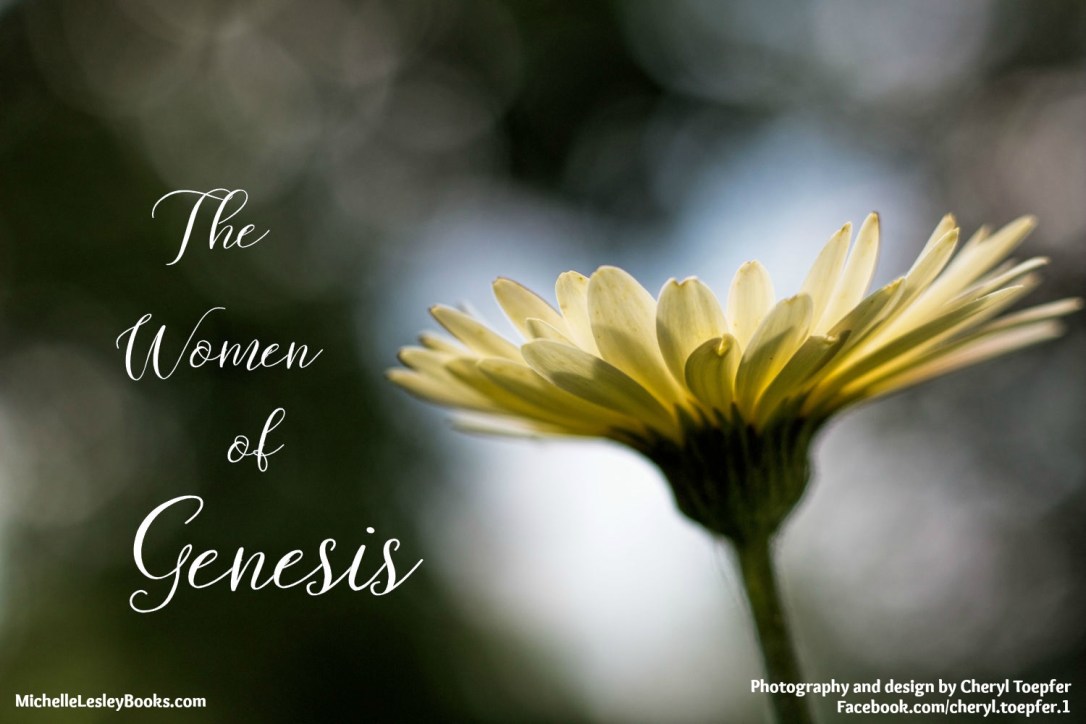
Many thanks to those who worked so hard on their entries for our title pic contest. I’ve selected the lovely image above, by Cheryl Toepfer, as the official title picture for this study. As Cheryl explains:

When I took this photo, my thought was that no matter the photo subject, the light is always the star of the show…If you notice the petals on the flower, they are marred. One is torn. But the light in the photo makes this daisy pop right out of the frame, and it’s easy to ignore its imperfections. That’s how I see the women in Genesis: marred and torn by sin, but made beautiful and useful because of their faith in God. Which is our story today as well! We are lights in the world because of Christ’s saving and sanctifying work in our lives–in spite of our sin nature!

For more beautiful photography, follow Cheryl on Facebook or Instagram.

Thanks also go to these two “honorable mention” entries:


by Trace Hanson

by Augusta Lee Branch


Introduction to The Women of Genesis

Before we begin studying a book of the Bible, itโ€™s very important that we understand some things about that book. We need to knowโ€ฆ

Whoย the author was and anything we might be able to find out about him or his background.

Whoย the audience of the book is: Jews or Gentiles? Old Testament Israelites or New Testament Christians? This will help us understand the authorโ€™s purpose and approach to what heโ€™s writing.

Whatย kind of biblical literature weโ€™re looking at. We approach books of history differently than books of wisdom, books of wisdom differently than books of prophecy, etc.

Whatย the purpose of the book is. Was it written to encourage? Rebuke? Warn?

Whatย the historical backdrop is for the book. Is Israel at war? At peace? In exile? Under a bad king? Good king? Understanding the historical events surrounding a piece of writing help us understand what was written and why it was written.

Whenย the book was written. Where does the book fall on the timeline of biblical history? This is especially important for Old Testament books which are not always arranged in chronological order.

So this week, before we start studying the actual text of the book of Genesis, we need to lay the foundation to understanding the book by finding the answers to these questions.

Read the following overviews of the book of Genesis, taking notes on anything that might aid your understanding of the book, and answer the questions below:

Bible Introductions: Genesisย at Grace to You

Overview of the Book of Genesisย at Reformed Answers

Book of Genesis at Got Questions

1. Who wrote the book of Genesis? How do we know this? What does the title “Genesis” mean in Hebrew?

2. Approximately when was Genesis written, and what is the approximate time span this book covers? Where, geographically, do the events in Genesis take place? Here are some maps (scroll down to “Genesis”) that may be helpful as you study through the book of Genesis.

3. Who is the original, intended audience of the book of Genesis?

4. Whichย genre of biblical literatureย is the book of Genesis: law, history, wisdom, poetry, narrative, epistles, or prophecy/apocalyptic? What does this this tell us about the approach we should take when studying this book versus our approach to books of other genres?

5. What is the theme or purpose of the book of Genesis?

6.ย Who are some of the main characters and what are some of the major events in the book of Genesis? How do these stories relate to the theme of Genesis?

7. What are some ways Genesis points to and connects to Jesus?

8. What else did you learn about Genesis or the setting of this book that might help you understand the text of the book better?