
Mailbag

The Mailbag: Quelling Your Quarantine Anxiety


I just wanted to say, I appreciate all that you do! I love visiting your page regularly because I have found it to be a trustworthy, biblical source.

My heart is aching to be with my church family and worship together. I’ve been BEGGING God to give pastors and elders the courage to open the doors again. I completely understand that there are several interpretations of Romans 13 and what that looks like in our current situation. I do know that the virus is a real threat and many are fearful. I do.ย 

The areas I’m struggling with are:

  • Would/when would civil disobedience be OK?
  • All the things that go along with isolation/lockdown: depression, suicide, domestic abuse, child abuse and neglect, economic crash resulting in more death and poverty, etc.
  • I see an inconsistency with believers inviting families and friends over to their homes (breaking the mandate) and yet saying that in order to uphold Romans 13 we ought to keep the church closed.
  • I look around at my fellow believers that seem to be totally content with “watching church” every week and are in no hurry to get back.
  • I’m in distress that my [young] children are growing up thinking this is normal.

I’m just trying to figure it all out and wondered if you had any light to shed on the situation. My spirit has been SO unsettled. I’m not sure if you’ve already seen this [podcast episode by a doctrinally sound theologian], but this is probably the most biblical piece that I’ve come across. I’d love to hear your thoughts.

Thank you so much for your kind words. I appreciate your passion on this issue. Some of your concerns were answered in my article The Mailbag: Why no COVID weigh-in?. Here are my thoughts on your questions and comments above;

โ€ข I totally understand your feelings about wanting to get back to church. I feel the same way, and I think most genuinely regenerated Believers would agree.

โ€ข Have you and your husband sat down and discussed all of your feelings about the issues? I know it always helps me to process my thoughts and unburden myself by talking things out with my husband.

โ€ข Have you talked to your husband about the possibility of discussing all of these things with your pastor? He can probably help alleviate some of your concerns or at least provide you with information about your own church and situation.

โ€ข I’m sensing that you’re experiencing a bit of anxiety over this issue, and it sounds like a lot of your concerns have to do with the way other people are acting and thinking. Can I make a few suggestions that may help you to be more at peace?

ยท Stop worrying about what other people are thinking, saying, and doing about all of these issues. That’s not a burden God has called you to carry. I don’t want to be so blunt as to say, “Mind your own business,” but keeping your focus on managing your own household and family will go a long way to reducing your anxiety about this.

ยท Get off social media and stop watching the news. You won’t be able to worry about how other people are responding or not responding to the issue if it’s not constantly in front of you.

ยท Keep busy. If you have free time, read a (non-COVID-related) book, learn how to knit, bake, garden, do a project with the kids. Ask your pastor if there’s anything you can do to help get things ready for meeting together again at your church (phone calls, e-mails, cleaning, etc.).

ยท Here are some Scriptures that may help:

Therefore I tell you, do not be anxious about your life, what you will eat or what you will drink, nor about your body, what you will put on. Is not life more than food, and the body more than clothing? Look at the birds of the air: they neither sow nor reap nor gather into barns, and yet your heavenly Father feeds them. Are you not of more value than they? And which of you by being anxious can add a single hour to his span of life? And why are you anxious about clothing? Consider the lilies of the field, how they grow: they neither toil nor spin, yet I tell you, even Solomon in all his glory was not arrayed like one of these. But if God so clothes the grass of the field, which today is alive and tomorrow is thrown into the oven, will he not much more clothe you, O you of little faith? Therefore do not be anxious, saying, โ€˜What shall we eat?โ€™ or โ€˜What shall we drink?โ€™ or โ€˜What shall we wear?โ€™ For the Gentiles seek after all these things, and your heavenly Father knows that you need them all. But seek first the kingdom of God and his righteousness, and all these things will be added to you. Therefore do not be anxious about tomorrow, for tomorrow will be anxious for itself. Sufficient for the day is its own trouble. Matthew 6:25-34

and to aspire to live quietly, and to mind your own affairs, and to work with your hands, as we instructed you, 1 Thessalonians 4:11

Fret not yourself because of evildoers;
be not envious of wrongdoers!
For they will soon fade like the grass
and wither like the green herb.

Trust in the Lord, and do good;
dwell in the land and befriend faithfulness.
Delight yourself in the Lord,
and he will give you the desires of your heart.

Commit your way to the Lord;
trust in him, and he will act.
He will bring forth your righteousness as the light,
and your justice as the noonday.

Be still before the Lord and wait patiently for him;
fret not yourself over the one who prospers in his way,
over the man who carries out evil devices!

Refrain from anger, and forsake wrath!
Fret not yourself; it tends only to evil. Psalm 37:1-8

โ€ข Ask God to help you stay in the mindset of trusting your pastor, praying for him, and joyfully submitting to his leadership. Remind yourself it’s not your job to set policy for your church, that’s your pastor’s/elders’ job. Also, you don’t need to concern yourself with how other pastors are handling their churches. Focus on your own church and how you can pray for and help it.

โ€ข Stop worrying about hypotheticals and what ifs (civil disobedience in the future, abuse, suicide, reasons for shutting the doors of the church, etc.). God does not require you to have the answers to those questions, and if/when they do happen, He will carry you through it then. Focus on glorifying God in what He has given you to do today.

โ€ข I have six kids ranging in age from 32 to 17, so as an older mom to a younger mom, relax. Your children are not as fragile as you think and they are not “growing up” thinking this is normal. A) It’s only been a couple of months. B) If your kids are young, I can practically guarantee you that, even if this goes on for a few more months, they’ll never remember it. Ask them when they’re in their 20s and see if I’m right. :0)

โ€ข I love the theologian you mentioned and I listen to his podcast regularly, but I know my own tendency to be fearful of the future, and I’ve noticed that when he starts “doomsaying” about how terrible things are going to get, my anxiety shoots up. He may be 100% right about everything that’s going to happen, but that doesn’t mean you have to listen to him say it if that makes you anxious. (That may be an “eye” you need to gouge out if it causes you to sin by worrying.)

You don’t have to have all the answers. It really is OK to loosen your grip, put all these unknowns in God’s hands, and trust Him to work everything out His way and in His timing – not yours – as you practice “waiting upon the Lord.”

Wait for the Lord; be strong, and let your heart take courage; wait for the Lord! Psalm 27:14
Trust in theย Lordย with all your heart,
andย do not lean on your own understanding.
In all your waysย acknowledge him,
and heย will make straight your paths.
Be not wise in your own eyes;
fear theย Lord, and turn away from evil.
It will beย healing to your flesh
and refreshment to your bones. Proverbs 3:5-8


Additional Resources

Spurring each other on! COVID-19 Quarantine Encouragement on A Word Fitly Spoken

Church was never meant to be remote: Reuniting after COVID-19 on A Word Fitly Spoken


If you have a question about: a Bible passage, an aspect of theology, a current issue in Christianity, or how to biblically handle a family, life, or church situation, comment below (Iโ€™ll hold all questions in queue {unpublished} for a future edition ofย The Mailbag) or send me anย e-mail or private message. If your question is chosen for publication, your anonymity will be protected.

Mailbag

The Mailbag: How can we get women to WANT to come to Bible study?

Originally published March 19, 2018


My church is blessed to have two strong ladies’ Bible study leaders – one during the week for those who are available and one on Saturday for those who cannot attend during the week – who have the discernment to choose biblical content, study, and lead scripturally sound discussion. My prayer is that more women in my church would have the desire to attend these Bible studies, not only learning and growing spiritually but also for fellowship with each other and drawing closer to each other. If you have any ideas for actually getting women to want to study God’s word with other women I would love to hear them.

Been there, done that. I once taught a women’s Bible study class that consistently had only one to two women in it. I think our maximum attendance was one day when we had a whopping…four. The other women of the church chose to attend the “fluffier” classes that were being offered, and many just didn’t attend at all.

There could be any number of spiritual and practical reasons women aren’t attending your (or another reader’s) Bible studies.

โ˜ž People are extraordinarily busy these days, especially women. Jam-packed schedules are probably the main reason for your low attendance. I’ll be honest, if I worked a full time job outside the home as well as taking care of my home and family, I’d be very unlikely to attend any Bible study class besides Sunday School. I’d want to devote that time to my family or to rest.

โ˜ž Perhaps there are more false converts in your church than you’re aware of. People who aren’t saved are not new creatures in Christ and are devoid of the Holy Spirit, so they have no organic desire to spend time in God’s Word or with God’s people beyond the minimal amount required to fulfill whatever fleshly agenda brings them to church in the first place. There’s no human way to give them the desire to attend Bible study. Only God can accomplish that by saving them.

โ˜ž If you go to a doctrinally sound church, your ladies may feel like they get plenty of good Bible study already and what theyย reallyย want is unstructured fellowship time. See my articleย All Word and No Play: The Importance of Fun and Fellowship in the Doctrinally Sound Church.

โ˜ž There may be something about the teaching style or the materials, that – even though they’re doctrinally sound – are rubbing people the wrong way. Maybe the teacher lectures and your ladies want more discussion. Maybe she talks over their heads in a very academic style. Maybe the materials are too expensive or there’s something about the book that is off-putting. Maybe your church only does “canned” (workbook, DVD, etc.) studies and what your ladies really want is to study books of the Bible, or vice versa.

โ˜ž Hopefully this isn’t the case, but if there are factions in your church, someone could be surreptitiously – out of jealousy, sowing discord, or other reasons – discouraging the women from attending.

โ˜ž The logistics of the class might be inconvenient for some. Do you offer child care for those who need it? Is the class held on a convenient day of the week and time of day? Is your church and the room you’re using for the class accessible to women with disabilities?ย 

These are just a few things that came to mind. Some of them may have to do with the class or the teacher. Others have more to do with the women themselves. What can you do to encourage more women to attend?

โœ”ย Prayย – and be ready to be in it for the long haul – that God will change hearts and give the women of your church a greater desire for His Word. In the end, God is the only One who knows all of the reasons women aren’t attending Bible study, and He is the only One with the power to transform them and overcome those reasons. Pray fervently and trust Him.

โœ”ย If you’re truly stumped as to why women aren’t attending Bible study,ย ask them. You could do so face to face, individually, or, with your pastor’s permission, send out an anonymous survey (you’ll probably get a better response this way) asking things like, “Is the lecture style teaching we offer a fit for you?” or “Would you be able to attend if we offered child care?”, and also leave space to write in comments. (Naturally, you would not be asking things like whether or not you should water down the theology of the class, but if you can remove a practical barrier to attendance, why wouldn’t you?)

โœ”ย Ask your pastor for advice. He knows the heartbeat of your congregation and will probably have some valuable counsel and suggestions.

โœ”ย Be willing to try something different in the class. If you’ve only ever done workbook studies, do a study of a book of the Bible. Maybe a Saturday class isn’t convenient for a lot of people but a Sunday class would be. “I Shall Not be Moved” is for the theology of the class, not the logistics of it.

โœ”ย Be willing to try something differentย than the class. There’s more than one way to skin a cat, and there’s more than one way to do discipleship. Bible studies are awesome, but how about taking a semester off and doing some one on one Titus 2 mentoring instead?ย Or some unstructured “let’s just sit and chat” fellowships or ladies’ night outs? Or a prayer group? Or some outreach projects? If your ladies are already getting good preaching in the worship service and good teaching in Sunday School, it’s OK to try a discipleship method other than a Bible study class.

โœ”ย Are you doing enough publicity well in advance of the class? You should start a minimum of 3-4 weeks before the class begins, and you should blitz with a variety of media: verbal announcements in multiple worship services, announce it in the church bulletin, newsletter, web site, and social media pages, have Sunday School classes announce it, send out a church-wide e-mail, put up fliers around the church, and encourage the ladies who are already attending the classes to personally, individually invite other women.

โœ”ย If your pastor is OK with it, consider having one of the women who has been a faithful member of the class give a testimony (during the worship service, in the church newsletter, or wherever appropriate) about how the class has helped and blessed her, the relationships she has built through the class, etc.

In the end, the old saying is true: “You can lead a horse to water, but you can’t make him drink.” You may bend over backwards and pray your kneecaps off and you may still have a small attendance. That’s OK. That’s on God. All you are responsible for is to pray, trust and obey Him, and be faithful to Him where He has planted you. God doesn’t measure your success by how many women attend, but by your faithfulness to Him.


If you have a question about: a Bible passage, an aspect of theology, a current issue in Christianity, or how to biblically handle a family, life, or church situation, comment below (Iโ€™ll hold all questions in queue {unpublished} for a future edition ofย The Mailbag) or send me anย e-mail or private message. If your question is chosen for publication, your anonymity will be protected.
Mailbag

The Mailbag: Why no COVID weigh-in?

ย Just out of curiosity, is there a reason you (like many other leaders/public figures) are choosing not to take a stand [on churches not gathering during this time, when the “right time” to open the doors again would be, etc.] one way or another, publicly? I feel as though now more than ever, we are looking to our leaders, pastors, etc for guidance on navigating this current situation and there is hardly any to be had. Why are so many choosing not to discuss it?ย I know that you have a large following, which is why I was wondering why you weren’t being more vocal.

This question was posed by one of my dear Facebook followers last week, and I thought it would be a good question to answer in The Mailbag. 

She is quite right. Other than this episode (Church Was Never Meant to be Remote: Reuniting After COVID-19) of A Word Fitly Spoken, I haven’t really addressed any of the specific issues surrounding COVID-19 nor taken sides on things like wearing masks, opening up the economy, when is the “right time” for churches to start meeting in person again, etc.

I cannot speak to why other people with platforms have or haven’t addressed any or all of these issues. I can only speak for myself. Others may have some of the same reasons I’m about to share, or they may have different reasons. If you want to know what someone else’s reasons are, you’ll have to ask him or her. Here are the reasons I haven’t publicly addressed these issues:

๐Ÿ˜ทยน I am not your leader. (I know the lady who asked the question knows that, but I think it’s important to clarify this point in case it might be fuzzy to others.) I am a content creator. My job is to provide you with doctrinally sound leisure time reading and listening material to bolster what you should already be receiving at churchยฒ. Think of this ministry as an optional, nutritious, between-meals snack, and your local church as your essential three square meals a day. You should not be looking to me or any other online personality for leadership or shepherding. That’s your pastor’s and elders’ job at the church level, your parents’ job if you’re a minor living in their home, or your husband’s job if you’re married. As I often say, it is my joy to serve you in Christ. That’s what I am to you – a servant, not a leader.

๐Ÿ˜ท I’m global. For reasons He hasn’t disclosed to me, God has chosen to make my content available on every continent on this planet except Antarctica (although I actually have one follower who has been to Antarctica – does that count? :0) That means, if I “took a stand” on various issues surrounding COVID, it would go out to all kinds of different countries and areas with all kinds of different cultures, laws, and governmental leaders. All I know is America, Louisiana, Baton Rouge. That’s what molds the way I think and form opinions about these issues, and that’s not only not necessarily applicable to someone in Pakistan, or Venezuela, or Eritrea, it could be discouraging to people in those countries, or even dangerous for them to act on my America-centric pronouncements. I mean, my goodness, my Louisiana viewpoint and advice on these issues probably aren’t even applicable to people in New York or Nebraska or Oregon.

๐Ÿ˜ทย It’s political. COVID-related issues are saturated with politics. You can’t divorce one from the other. And if you’ve followed me for any length of time, you may have noticed that I don’t get involved in political or legal issues unless they intersect directly with Scripture. I’m a “stay in my lane” kind of gal, and politics and policies are not my lane. For me, personally, for this particular ministry and what I’m trying to accomplish here, politics is an unnecessary distraction. My focus (and I realize it’s a narrow focus, and I’m OK with that) is helping to build spiritually strong, biblically literate Christian women who can strengthen their local churches and evangelize and disciple other women and children at the local church level. We’re all different body parts here, ladies. I’m going to focus on being an ear and let somebody else focus on being an eye.

๐Ÿ˜ท It’s a local church issue. When to start meeting again, whether or not to go to multiple services to spread everybody out, whether or not masks and hand sanitizer will be required, even whether or not to accept a loan from the government…these are all things (and more) that the pastor and elders of each local church will have to decide for that particular church. Every church is different. Every pastor is different. Different decisions will need to be made for different churches because these types of things are not mentioned in Scripture, they’re issues of adiaphora (Christian liberty). What difference does it make what I think if that’s not what your pastor has decided for your church? All that does is set me up in opposition to your pastor forcing you to choose between him and me. You don’t need that kind of tension in your life, and your pastor certainly doesn’t need it in his church. I’d rather say this: Whatever your pastor decides for your church, as long as it’s in keeping with Scripture, I support him, and I encourage you to joyfully submit to his leadership. That’s way more constructive and biblical than offering you my personal opinion.

Obey your leaders and submit to them, for they are keeping watch over your souls, as those who will have to give an account. Let them do this with joy and not with groaning, for that would be of no advantage to you.
Pray for us, for we are sure that we have a clear conscience, desiring to act honorably in all things. I urge you the more earnestly to do this in order that I may be restored to you the sooner. Hebrews 13:17-19

๐Ÿ˜ท I’m not the bandwagon type. Usually. Every once in a while, I’ll weigh in on whatever the hot topic du jour is, but when I do, I normally try to address an aspect of it that hasn’t been addressed by others. If I have nothing to say except the same thing everybody else is saying, I figure, “What’s the point?”. At that point, I’m just adding noise to the clamor and it’s boring. And that’s the case here- I have nothing new to add to the conversation about masks, when to go back to church, etc.

Also, I figure if I’m sick of hearing about a particular topic, you’re probably sick of hearing about it too. Several weeks ago, I posted a question on Facebook asking whether y’all wanted me to write something about COVID or write about something else. I didn’t do the math, but I got dozens of responses and it looked to me like about 98% of y’all were begging me to, “please write about something else, anything else!”. So I figured y’all are just as sick of hearing about COVID-related issues as I am.

๐Ÿ˜ท I hate dumpster fires. There aren’t words in the English language to express to you how deeply I detest social media fights (especially over non-scriptural issues) between professing Christians. Honestly, some of y’all are worse than my kids when it comes to arguing. You can’t just politely state your position, let others state theirs, and move on. No, you’ve got to argue the issue to death even when it was clear 20 comments ago that the other person wasn’t going to change her mind. If you want to do that on your social media page, have at it. But remember, when you do it on my social media page, I’m the one who has to read through all the ugly comments, feel all the angst and anger, and end up blocking people who can’t behave like godly adults. And I know that if I took sides on some of these COVID issues that’s exactly what my social media, blog comments, and e-mail would turn into- one great big dumpster fire of arguing. I know this because I’ve posted far more innocuous things and people have started arguments over those issues and even issues completely unrelated to the original topic. By refraining from offering my opinion on COVID-related issues, I prevent the distraction from and derailing of my ministry, and I keep strife, arguing, and unnecessary division off my platforms. 

๐Ÿ˜ท Because…the Bible. As I was writing this article, a few passages of Scripture came to mind:

A fool takes no pleasure in understanding, but only in expressing his opinion. Proverbs 18:2

Have nothing to do with foolish, ignorant controversies; you know that they breed quarrels. And the Lord’s servant must not be quarrelsome… 2 Timothy 2:23-24a

…and charge them before God not to quarrel about words, which does no good, but only ruins the hearers. 2 Timothy 2:14b

When words are many, transgression is not lacking, but whoever restrains his lips is prudent. Proverbs 10:19

Now, not all of these verses apply directly to the issue at hand. But I think they do enlighten us to some general biblical principles:

  • God don’t like ugly.
  • God doesn’t want us arguing. Yes, sometimes we have to contendย for the faith, but that’s completely different from quarreling over opinions and issues the Bible doesn’t address.
  • Sometimes the wisest thing a Believer can do is keep her mouth shut.


These are the reasons I have chosen not to share my position on the various controversial issues surrounding COVID-19 (as well as several other issues over the years). If you want to know what to do about a particular issue, read up on it from a reliable source, compare what you read to rightly handled Scripture and reject anything that contradicts it, ask your pastor, and follow his leadership.


ยนThe masked emojis are not my way of subtly “taking a stand” one way or the other on masks. I just find basic bullet points boring, and that was the most relevant emoji I could find for this subject.๐Ÿ˜†
ยฒI am assuming, for the purposes of this article, that you are in a doctrinally sound church, with a solid, trustworthy pastor. If you’re not, you have bigger problems than not hearing my opinions on COVID issues. Please see the “Searching for a new church?” tab in the blue menu bar at the top of this page.

If you have a question about: a Bible passage, an aspect of theology, a current issue in Christianity, or how to biblically handle a family, life, or church situation, comment below (Iโ€™ll hold all questions in queue {unpublished} for a future edition of The Mailbag) or send me an e-mail or private message. If your question is chosen for publication, your anonymity will be protected.

Church, Mailbag

The Mailbag: How can I tell if a church is doctrinally sound?

Originally published March 11, 2019


How do I know if a church is doctrinally sound? Do I base it off their statement of faith?

This is such a great question in a day when you can’t really trust that a building with the word “church” on the sign out front actually teaches and practices sound doctrine.

Because it would be impossible to cover every single aspect of doctrine that churches need to handle biblically, and because many of my readers are new to some of the deeper points of theology, what I want to do is give you some “signposts” to look for as you’re checking out a new church that will help indicate whether or not that particular church is likely to be one that handles those harder to understand points of theology in a doctrinally sound way.

First, check out these resources (and others) under my Searching for a new church?ย tab in the blue menu bar at the top of this page. These should be helpful if you’re unfamiliar with the biblical issues that a church should be handling correctly:

Looking for a Church Home?ย by Tim Challies

Church shopping? 35 Key Questions to Ask the Church at Berean Research

4 Questions to Ask Before Joining a Church by Brian Croft

How Can I Find a Good Church?ย 

Finding a New Church: Starting from Scratch

Six Questions for a Potential Church

If you are a brand new Christian and you aren’t sure what the answers to the questions in these articles should be, ask the person who led you to Christ, a pastor you know to be biblically trustworthy, or a friend who’s a mature Christian to help. You can also use the search bar at the top of this page to see if I’ve addressed your question. And, make liberal use of Got Questions? It’s a wonderful website that gives simple, biblical answers to all kinds of questions about the Bible, church, theology and other issues.

A church’s stance on many of these theological issues can be found in their statement of faith, which most churches post on their websites (often under the heading “What We Believe,” “Doctrinal Distinctives,” or something similar). While you’re on the church website, here are some other things to look for that can give you a fuller picture of whether or not the church is likely to be doctrinally sound.

โ›ช Be wary of a church with no statement of faith on their website at all, and be cautious if they have a very simplistic statement of faith with few or no Bible verses cited to support it. Generally speaking, in my experience, the longer and more detailed a statement of faith is, and the more Scripture references it has, the more likely it is to be a doctrinally sound church. (Here andย here are some typical, good statements of faith, andย this oneย is particularly detailed.)

โ›ช A fewย things to look for in the statement of faith:

โ€ขThe Trinity: You’re looking for language along the lines of, “We believe in one God in three persons.” If you see three “modes” or three “manifestations,” that’s the language of modalism, and it is not a doctrinally sound church.

โ€ขSome churches have a section of their statement of faith on spiritual gifts or the Holy Spirit and include wording indicating whether they are a continuationist (ex: “we believe all the spiritual gifts are in operation in the church today”) or cessationist (ex: “we believe supernatural gifts such as healing and tongues have ceased”) church. Generally speaking, a church is more likely to be doctrinally sound if it holds the cessationist view. (No, I amย notย saying every continuationist church is heretical. I’m strictly talking probabilities here.) If there is anything in the statement of faith that indicates that a Believer will or mustย speak in tongues in order to be saved or as a result of salvation, or that the “baptism of the Holy Spirit” occurs separately from salvation, it is not a doctrinally sound church.

โ€ขSome churches intentionally indicate that they are complementarian in the “Marriage and Family” or “Church Leadership” section of their statement of faith by stating that the husband leads the family and the wife submits to her husband, or by explaining that the roles of pastor and elder are limited to men. It’s usually a good sign when a church makes a point of saying these things.

โ›ช If you find the pastor’s name listedย here, it’s not a doctrinally sound church.

โ›ช If a church subscribes to a creed/confession/catechism you know to be biblical (ex: 1689 London Baptist, Westminster, Heidelberg, etc.) there’s a better chance they’re a doctrinally sound church.ย 

โ›ช Some churches have a page on their website where they recommend books, blogs, and other resources. If they’re recommending doctrinally sound materials by trustworthy authors and teachers (click here for a few), that can be a good sign.

โ›ช If they have a women’s ministry page, check out who’s speaking at the next conference they’re going to and who is the author of the Bible study materials they use.

โ›ช Check the staff page and make sure they don’t have women serving as pastors/elders. (Be aware that some churches are now using titles like “Coach,” “Director,” “Facilitator,” etc. to disguise the fact that women are serving in unbiblical positions of leadership. Regardless of the way the position title is worded, women are not to serve in pastoral or elder offices or in any position in which they will be teaching or exercising authority over men.)

โ›ช Check the sermon archives for a couple of things: 1) to see if they invite women or false teachers as guest preachers, and 2) does the pastor preach mainly expositorily or topically?

Keep in mind, however, that there are lots of churches out there who look perfectly doctrinally sound “on paper” but are not practicing what their website preaches. Take a look at these statements of faith for example: Lakewood (Joel Osteen), North Point (Andy Stanley), and Bethel (New Apostolic Reformation). (You can find out more about these churches/pastors here.) On the surface, and especially to those newly saved or not very familiar with the Bible, these statements of faith look fairly decent (although…notice that no Scriptures* are listed, and they are short and/or somewhat vague), but the practices of these churches may be surprising in comparison. *(Update: Since I originally wrote this article about a year ago, Lakewood has actually beefed up their statement of faith with a few Scripture references.)

Because churches’ practices and teachings often differ – sometimes significantly – from what you see in their statement of faith, you’ll have to dig deeper in order to get a better feel for the church’s doctrine. If the website posts the audio or video of their worship services, listen to several sermons. Make an appointment to go in and talk to the pastor about what the church teaches and ask any questions you might have. And visit the church for a while before joining to see how things actually go. The most a church website can do is help you weed out the churches that are definitely bad. The website cannot tell you that a church is definitely good.

If you’re looking for a new church but you aren’t sure where to start, check the church search engines and churches recommended by my readers at the Searching for a new church?ย tab in the blue menu bar at the top of this page.


If you have a question about: a Bible passage, an aspect of theology, a current issue in Christianity, or how to biblically handle a family, life, or church situation, comment below (Iโ€™ll hold all questions in queue {unpublished} for a future edition ofย The Mailbag) or send me anย e-mail or private message. If your question is chosen for publication, your anonymity will be protected.

Mailbag

The Mailbag: Potpourri (“Potty Prayers,” Women as Children’s/Worship Pastors, Solid churches with heretical music, Eternal Security)

Welcome to another โ€œpotpourriโ€ edition of The Mailbag, where I give short(er) answers to several questions rather than a long answer to one question. I also like to take the opportunity in these potpourri editions to let new readers know about my comments/e-mail/messages policy. Iโ€™m not able to respond individually to most e-mails and messages, so here are some helpful hints for getting your questions answered more quickly. Remember, the search bar (at the very bottom of each page) can be a helpful tool!

In these potpourri editions of The Mailbag, I’d also like to address the three questions I’m most commonly asked:

“Do you know anything about [Christian pastor/teacher/author] or his/her materials? Is he/she doctrinally sound?”

Try these links: 
Popular False Teachers /
 Recommended Bible Teachers / search bar
Is She a False Teacher? 7 Steps to Figuring It Out on Your Own
(Do keep bringing me names, though. If I get enough questions about a particular teacher, I’ll probably write an article on her.)

“Can you recommend a good women’s Bible study?”

No. Here’s why:
The Mailbag: Can you recommend a good Bible study for women/teens/kids?
The Mailbag: โ€œWe need to stop relying on canned studies,โ€ doesnโ€™t mean, โ€œWe need to rely on doctrinally sound canned studies.โ€.

“You shouldn’t be warning against [popular false teacher] for [X,Y,Z] reason!”

Answering the Opposition- Responses to the Most Frequently Raised Discernment Objections


I know this is going to sound silly or troll-like, but I’m serious! I have a habit of praying a quick prayer when thoughts cross my mind, like “God, please help Aunt Pam to feel better from her cold today,” or “Lord, thank You for providing that salary bonus I needed.” Sometimes those same kinds of thoughts and prayers cross my mind when I’m using the bathroom. Is that wrong? Should I wait until I get out of the bathroom to think that little prayer? What about what Deuteronomy 23:14 says about using the bathroom, “that God may not see anything indecent among you and turn away from you”?

I don’t think that’s a silly or troll-like question at all, and I’ll bet there are bunches of Christians out there who do the exact same thing and now, after reading this question, are wondering the exact same thing.

First Thessalonians 5:17 instructs us to “pray without ceasing,” which means our hearts are to be constantly oriented toward prayer even though we’re not consciously praying every moment of the day. (Kind of like your compass’ needle always points north even if it’s just sitting in a drawer not being used.) For most Christians, that means we’re intermittently speaking to God, just like you described, throughout the day as things happen, as random thoughts cross our minds, as we see various things. And this becomes such a habit (a good one!) that it doesn’t occur to us to think about where we are or what we’re doing as we utter those prayers in our hearts. Honestly, I think that mindset of reflexive prayer is pleasing to God, because it embodies what it means to pray without ceasing.

Deuteronomy 23:12-14 is part of the Old Testament ceremonial law regarding, in this particular case, the way Israel was to set up camp. When you give the law a good, thorough reading, you’ll notice that the underlying principle of most of the laws is that Israel is to be set apart and holy – different – from the pagan nations surrounding them. And He gives them laws to this effect that touch every aspect of their lives so that, at every turn, throughout the course of their day, there are little reminders, through the law, to “Be holy for I am holy.” This law is just one more of those little reminders: Don’t act like animals like the pagan nations around you, Israel, and just potty willy nilly in the street or the front yard or wherever you take a notion to. Step it up and keep your camp to a higher standard, because God is with you and you are His people.

The Deuteronomy passage is not about offending God by relieving yourself. God has seen every single time every person on the planet has ever relieved himself/herself, because God is omnipresent. If that were offensive to Him, He would not have designed your body to work that way.

Although I don’t think “bathroom time” should be the only time you pray, I don’t see anything in Scripture indicating that God considers it offensive for you to reflexively pray even though you happen to be in the bathroom at that moment. However, if it offends your sensibilities, wait until you get out of the bathroom and then pray.


Would you read 1 Tim 3 1-7 to read women can’t be “overseers/leaders/official” as in they can’t be “Children pastors” or “Women Pastors” in the church with those actual titles or even as directors? The verses only say men and state guidelines on how to choose. I’ve noticed some red flags in my church with a woman Worship Leader, which I don’t agree with since she sometimes teaches in between songs, but they are also giving women the pastor title, but only for children and women.

If I’m understanding correctly, you’re asking:

  • Is it biblical for women to hold a position of leadership over the women’s ministry or children’s ministry of a church?
  • Is it biblical for a woman to be the worship leader of a church?
  • If so, is it biblical to give those women leaders the title of, for example: “Pastor of Women’s Ministry” or “Children’s Pastor”?

Here are the fast and dirty answers. Below are a couple of links where I’ve discussed these issues in more detail.

Assuming the woman is doctrinally sound, has a godly character, her husband (if she’s married) is on board, and she’s otherwise qualified for the job, it’s fine for a woman to lead women or children in the church as long as the position she holds (which will vary from church to church) doesn’t require her to preach to or teach Scripture to men, or hold unbiblical authority over men.

No, it is not biblical for a woman to be the worship leader of a church. This is supposed to be a pastoral position.

No, churches should not give any woman on staff the title of “Pastor,” even if she isn’t violating Scripture in her position. Because Scripture doesn’t permit women to be pastors it is misleading and confusing, and will probably give people the impression that she is violating Scripture and that that’s OK. Neither should the converse be true – churches should not have women on staff in any capacity that violates Scripture (preaching to/teaching men, holding authority over men) and try to conceal that fact by giving her a title (instead of “pastor”) like “minister,” “facilitator,” “coach,” “associate,” “director,” etc.

Rock Your Role: Jill in the Pulpit

Rock Your Role FAQs (see #16, 21)


We have been searching for a doctrinally sound church in the area we moved to, and unfortunately it has not been easy! The few that we have found still use a Hillsong, Bethel or Elevation music. I usually cross a church off the list quickly if they sing from those artists. But like I said, now I am finding even doctrinally sound churches are throwing some of those songs in. Do you have any insight to this dilemma?

It can be really difficult to find a doctrinally sound church these days. Unfortunately even some churches that are fairly solid use music from these groups. The first thing I would recommend is that you check out the Searching for a new church? tab in the blue menu bar at the top of this page, just to make sure you haven’t overlooked any doctrinally sound churches in your area. There are lots of church search engines there and other resources that might help.

My counsel would be to find the most doctrinally sound church you possibly can (following your husband’s leadership, of course, if you’re married, {and assuming, in this particular case, that he’s saved}), attend for a while to get a feel for whether or not it’s a fit for your family, and set up an appointment with the pastor to ask any questions you might have (check out the articles under “What to look for in a church” at the “Searching…” tab for suggestions of questions you may want to ask). (I would recommend the appointment with the pastor regardless of how perfect the church seems.)

If the church uses Bethel, etc. music, this would be the time to gently and lovingly address it with the pastor, but let him know that this is a reason you’re a bit reticent about joining the church so he’ll understand the seriousness of the problem. I would approach the subject giving him the benefit of the doubt that he simply doesn’t know the problems with these groups (the vast majority of pastors are ignorant of things like this – they shouldn’t be, but it is what it is).

If he seems open, you might want to ask if you can send him some information. (You can find links on all three groups at the “Popular False Teachers & Unbiblical Trends” tab. Pick the 2 or 3 most convincing links for each group and send those rather than sending him the link to that tab. For someone who’s ignorant in the area of discernment, opening up that tab would be information overload, and he’ll tune it out.) If he says yes, send the links and then touch base with him again in a couple of weeks to get his reaction.

The only other counsel I would offer you is to remember that no church is perfect, and God may put you into a particular church to help it with those imperfections.

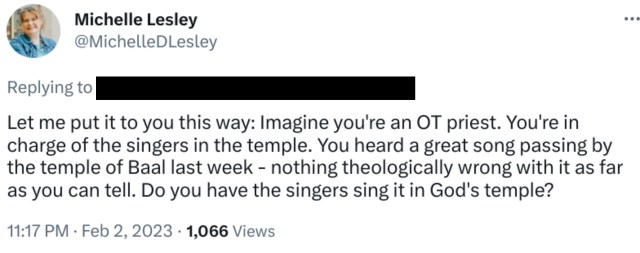
I would now like to take a moment to highlight this reader’s question for pastors and ministers of music. This is yet one more reason it is detrimental to your church to use music from Bethel, Jesus Culture, Hillsong, Elevation, any musician connected these groups (such as Phil Wickham who’s very prolific and has strong ties to Bethel), or any other musician who isn’t doctrinally sound (after you have thoroughly vetted him/her/them.) regardlessย of how biblical the lyrics of any particular song of theirs that you’re using might be. You could potentially be turning away solid, mature, discerning Believers who might otherwise be interested in joining your church. The woman who sent in this question is not the first to ask me something like this – not by a long shot. This issue is increasingly of concern to Christians looking for a solid church. (For that reason, I do not list churches – even Reformed or seemingly otherwise doctrinally sound churches – on my Reader Recommended Churches list, who use music from heretical sources like these.)

When a visitor walks into your sanctuary for the first time, your worship service is the “face” of your church to her. What kind of a first impression are you making? When you use music by doctrinally unsound musicians, it does not say, “We’re really a doctrinally sound church – honest! We only use songs from these groups whose lyrics are biblical.”. It says, “This church has leaders who aren’t discerning,” or “If this church uses music by these heretical groups, what other doctrinal problems does it have?”. Why put that stumbling block out there when there is plenty of music available with biblical lyrics written/performed by doctrinally sound musicians?

And there’s another stumbling block that using this type of music puts in front of weaker brothers and sisters that you may not have realized. I have heard from a number of Christians whom God graciously saved and rescued out of the pit of “churches” similar to Bethel, Hillsong, and Elevation. They tell me that when they walk into what they think is a doctrinally sound church and hear music from these and other heretical sources, it triggers a form of spiritual PTSD. It’s traumatizing to them. They immediately become fearful that your church is mere steps from turning into one of these types of “churches.” Will they grow out of that reflexive reaction? Yes, someday, as God continues to sanctify them. In the meantime, do you want the music at your church to cause them unnecessary anxiety? I hope not.

Even for Christians who have not come out of “churches” like these but are knowledgeable about their heretical theology, using these songs in your worship service is putting a stumbling block in front of them, too. Take me, for example. I’ve studied these groups. I’ve seen their heresy and the damage they do to both the Kingdom and to the individuals who follow them. And because of that, I’ve zealously spoken out against them. If I visit your church and an Elevation song suddenly flashes up on the screen, my ability to worship is completely derailed in grief that your church would use a song from that source – especially if you know about their theology and are well acquainted with music from doctrinally sound sources that you could have used instead. I cannot sin against my conscience by singing those songs. Consider me a “weaker brother” if you like, but do you care more about me as your sister in Christ, or your “right” to use music from these sources? What about Paul’s posture in 1 Corinthians 8:9-13?

But take care that this right of yours does not somehow become a stumbling block to the weak. For if anyone sees you who have knowledge eating in an idol’s temple, will he not be encouraged, if his conscience is weak, to eat food offered to idols? And so by your knowledge this weak person is destroyed, the brother for whom Christ died. Thus, sinning against your brothers and wounding their conscience when it is weak, you sin against Christ. Therefore, if food makes my brother stumble, I will never eat meat, lest I make my brother stumble.

If this was true in Paul’s personal life, shouldn’t it surely be true of our worship services? If you wouldn’t put a Christmas tree or portrayals of Jesus in your sanctuary because it might offend a brother in Christ, why would you use worship music that causes offense to your brothers and sisters?

Finally, what is the proactively good reason for intentionally choosing music from a heretical source? In other words, when you’re selecting music for the worship service, why would you choose, say, a Hillsong song about God’s glory, or Psalm 23, or the crucifixion, when you could just as easily choose a song from a doctrinally sound source about any of those things – a source that isn’t a stumbling block to anyone, won’t give anyone the wrong impression about your church, won’t lead anyone to follow a heretical “church,” and won’t use your church’s offerings to support a heretical “church”? What makes the Hillsong song you’re choosing better than the song from the doctrinally sound source? It doesn’t seem to me that there’s a good enough reason to use songs from these sources that outweighs all the good, biblical reasons not to use them.

There is simply no good reason for a doctrinally sound church to use music from heretical sources like these.

The Mailbag: False Doctrine in Contemporary Christian Music

Why Our Church No Longer Plays Bethel or Hillsong Music (or Elevation or Jesus Culture), and Neither Should Yours

Hillsongโ€™s Theology of Music and Worship

The Mailbag: Should Christians listen to โ€œReckless Loveโ€?


Hello there. I read your blog about Priscilla Shirer being a false teacher. Read some parts of your blog. Found your recommended preachers with sound doctrine. I don’t know what denomination you’re in. But I just wanted to ask if you believe if we can lose our salvation?

Hi there! I’m a Reformed Southern Baptist. You can read more about my denomination and my beliefs at the Statement of Faith tab and the Welcome tab (both in the blue menu bar at the top of this page.

No, I do not believe genuinely regenerated Christians can lose their salvation because that’s not what the Bible teaches. I discussed this at length, including the relevant Scriptures, in my article The Mailbag: Can unforgiveness cause you to you lose your salvation?.


If you have a question about: a Bible passage, an aspect of theology, a current issue in Christianity, or how to biblically handle a family, life, or church situation, comment below (Iโ€™ll hold all questions in queue {unpublished} for a future edition of The Mailbag) or send me an e-mail or private message. If your question is chosen for publication, your anonymity will be protected.