Bible Study

The Word on Wednesdays

Hi ladies! I hope you’ve been enjoying The Word on Wednesday Bible study lessons and resources, and that you’re looking forward to our new study as much as I am.

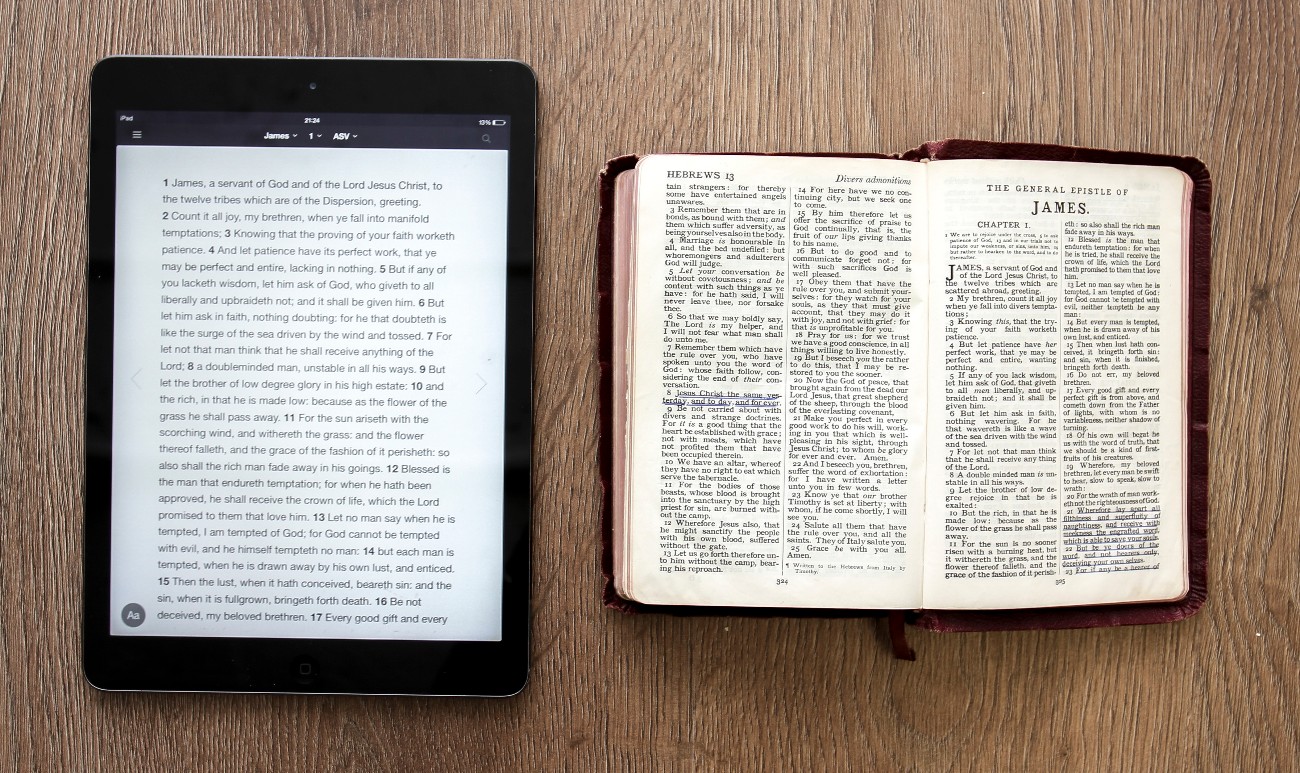
I’ve been taking a break on Wednesdays getting ready for our new study. I hope youโ€™ll enjoy it and that it will edify you as you seek to grow in Christ and His Word. (The picture above does not mean we will be studying James. :0)

Some may find the book of the Bible we’ll be studying to be an exciting challenge (a challenge I know you’re up for!), so I wanted to give you a heads up to start thinking about reference materials. You don’t have to buy or use any of these materials, but you may find them handy as you study.

If you have been considering investing in a good study Bible, this would a great time to do so, not just for our next study but to use for years to come. I personally use and highly recommend the MacArthur Study Bible (the ESV and NASB are good translations), and, although I haven’t tried it out myself, I understand the ESV Study Bible is also very good. (You might want to shop around for the best price. These are both available on Amazon and probably other retail sites as well.) If free is more in keeping with your budget, the Faithlife Study Bible app is phenomenal. It not only has very good and copious study notes, it also has maps, Bible dictionaries, articles, videos, pictures, and more. In fact I would recommend you download it as a supplementary resource even if you decide to get one of the aforementioned study Bibles – it’s that good.

If you have a good set of Old Testament commentaries, you may find those to be useful in our study. There are also a number of sites that offer free, online commentaries, Bible dictionaries, encyclopedias, and other study resources (most of these are available as apps):

Bible Gateway          Blue Letter Bible          Bible Hub

Bible Study Tools         StudyLight.org

And finally, you can always find great articles, sermons, devotions and other materials to aid your understanding of various topics and passages of Scripture at Grace to You and Ligonier.


I hope you’ll find these resources helpful as we begin our new study.

What is your favorite
study Bible, commentary, or other Bible study resource?
Share with others in the comments below!

Bible Study

The Word on Wednesdays

Hi ladies! I hope you enjoyed our most recent Bible study, The Sermon on the Mount.

Iโ€™m going to take a little break before starting our next study, so for the next several Wednesdays, youโ€™ve got some options:

๐Ÿ“– You can finish up The Sermon on the Mount or any of my other studies youโ€™re currently working on.

๐Ÿ“– You can choose a book(s) of the Bible to work through on your own.

๐Ÿ“– You can choose one of my studies to work through at the Bible Studies tab at the top of this page. (I would choose one of the shorter ones, like Colossians or Ruth rather than one of the longer ones if you’re only trying to fill the space between now and the beginning of our next study.)

๐Ÿ“– You can follow along with the sampling of “re-run” lessons and resources I’ll be posting here on the blog each week.

Here’s today’s “re-run”:

Bible Study Articles and Resources

Did you know that there are lots of resources here on the blog to help you out as you study the Bible? Below are a few favorites. Click on the link above for more.

The Mailbag: Which Bible Do You Recommend?

The Mailbag: How can I get started studying the Bible itself?

Nine Helps for Starting and Sticking to Daily Bible Study

10 Simple Steps to Plain Vanilla Bible Study

Rightly Dividing: 12 Doโ€™s and Donโ€™ts for Effective Bible Study

Bible Book Backgrounds: Why You Need Them and Where to Find Them

The Mailbag: As a newly doctrinally sound Christian, should I stopย journaling? (Taking notes on the text of Scripture.)

Bible Study, Mailbag

The Mailbag: Potpourri (Sentence diagram Bible study, Evangelism, Making teens attend church, Female pro-life speaker…)

Welcome to another โ€œpotpourriโ€ edition of The Mailbag, where I give short(er) answers to several questions rather than a long answer to one question.

I like to take the opportunity in these potpourri editions to let new readers know about my comments/e-mail/messages policy. Iโ€™m not able to respond individually to most e-mails and messages, so here are some helpful hints for getting your questions answered more quickly. Remember, the search bar (at the very bottom of each page) can be a helpful tool!

Or maybe I answered your question already? Check out my article The Mailbag: Top 10 FAQs to see if your question has been answered and to get some helpful resources.


So it is by way of this email that I ask you to pray about my request to disciple me as a young woman in accordance to Titus 2.

You are so dear, and your e-mail was so sweet. I would love to say yes, but sadly, I cannot. Please see #10 in my article The Mailbag: Top 10 FAQs.


I would love your thoughts on the study of Scripture using the sentence diagram method. I have never tried it but it does look interesting. However I do not want to get into a mess of confusion.

If reading the phrase “the sentence diagram method” just gave you a fond or traumatic flashback to 7th grade English class, then you pretty much already know what it is. It’s taking a Bible verse and diagramming it – either grammatically (with all the little lines for adverbs and adjectives and conjunctions and whatnot), or conceptually (blocking it out according to concept and how those concepts connect.

If you’d like to see an example, click here. (FYI- This link does not mean I’m recommending this site. She endorses and/or has connections to several false teachers.)

If you’re a grammar nerd or language aficionado like I am, this is method is probably right up your alley, and if you need to employ it from time to time to better understand one of Paul’s numerous lengthy run-on sentences, then go for it!

My only counsel would be, don’t make this your only method of Bible study. For the most part, you need to be reading and studying the overall meaning, concepts, and application of larger passages of Scripture, not focusing on dissecting one verse every day. It’s kind of like cooking supper. You need to focus on fixing the whole meal every night rather than pouring all your focus into mincing that clove of garlic into perfectly symmetrical cubes.


I am convicted because I have not been faithful to be a witness for the Gospel. I get tongue tied even with family! I just want to be faithful like the Apostle Paul. My problem is getting startedโ€ฆโ€ฆI know the Good News and want to share. Can you help guide me? I was invited to church and heard the Word preached and the Holy Spirit convicted me of my guilt as a sinner. Can I just invite someone to church?

What a wonderful encouragement it is to encounter a sister with a zeal for sharing the gospel! If it makes you feel any better, a lot of us have the same experience when it comes to sharing the gospel. Let me see if I can offer a little help:

  • While we are all commanded to share the gospel with the lost, there are some people who are just really gifted at it. It comes as naturally to them as breathing, they never get flustered, and they make it look easy. I’m not one of those people, but I can point you to a couple of brothers who are: Ray Comfort and Todd Friel. Head on over to the Living Waters YouTube channel and watch a few thousand videos of Ray walking up to strangers and sharing the gospel. Subscribe to Wretched on your favorite podcast platform, and listen in to the “Witness Wednesday” episodes with Todd. These are the kinds of guys you should look to and be learning from when it comes to “cold call” evangelism.
  • Remember that walking up to a stranger and verbally sharing the gospel is not the only way you can evangelize:
    1. If you have unsaved children at home, they are your primary mission field. They’re just as lost and dead in their sins as any stranger on the street.
    2. Ditto for teaching children at your church. Pour the gospel into those kiddos every week.
    3. Tracts. Get a bunch and carry them around in your purse. Leave them behind at the store, the doctor’s office, the gym, wherever you go. Hand them to people personally when the opportunity arises. I highly recommend the Bezeugen Tract Club and tracts from Living Waters.
    4. If you’re on social media, share the gospel on your timeline. Write it out in your own words, share Scripture, or share links to gospel presentations. Here’s our gospel page at A Word Fitly Spoken. It has a text presentation of the gospel and a couple of videos if you’d like to share them.
    5. It is absolutely fine to invite someone to church (assuming you go to a doctrinally sound church) or any other Christian event where the gospel will be clearly and biblically presented. I would only quibble with people who call inviting someone to church “evangelism”. That’s not evangelism. Evangelism is when you actually share the gospel with someone (which every Christian should do when the opportunity presents itself). Inviting someone to church is inviting her to a place where she’ll be evangelized.
    6. Get creative! Give my articles 10 Ways to Share the Gospel During the Holidays and 10 Fun, Practically Effortless, and Free Ways to Do Missions and Evangelism a read and see if they give you any ideas.

Additional Resource:

Rock Your Role FAQs (#11)


Should I attempt to bribe/beg/force my teenage sons to go to church? My husband is no longer attending or leading the family spiritually. My sons and I do Bible study together, but they have no other church experiences.

Wow, this is such a difficult position for you to be in. I’m so sorry. I’ve taken a moment to pray for you and your family, and I would ask everyone reading this to pause briefly and do the same.

I would strongly encourage you to set up an appointment with your pastor to discuss this. Giving wise counsel to those he pastors is part of his job. You could also more thoroughly explain your situation to him and he could give you better informed counsel than I can.

Not knowing the dynamics of your situation, the best I can tell you is that I don’t see anything in Scripture that would say it’s a sin to offer your sons something they want or to excuse them from a certain chore or something like that in exchange for them attending church.

I’m not sure “beg” and “force” are words I’m comfortable with in the parent/child relationship. You are the parent. You are the one in authority and responsible to God for your children. When you tell them to do something, they should respectfully obey you. Period. “Begging” and “forcing” shouldn’t even be part of the equation.

That being said, I think it would be good and healthy for you to sit them down and have a serious, loving talk with them, explaining that, because you love them and want what’s best for them, you want to urge them to come to church with you. You can also explain how much their attendance would mean to you (just be careful not to guilt or manipulate them). And, since you’re teaching them the Bible, you might want to spend some time on Hebrews 10:24-25. But when you’ve had this talk with them, especially if they’re older teens and not Believers, you will probably need to leave the decision up to them. This is something it would be good to get your pastor’s guidance about.

Additional Resource:

Rock Your Role FAQs (#12)


If a woman were to speak at a church on the issue of abortion, would that fall into the category of a woman exercising authority over men?

No, the issue here would be whether or not she’s preaching to men or instructing them in the Scriptures, not whether or not she’s exercising authority over them. Someone giving an informational talk on a certain topic isn’t exercising authority over anyone, regardless of the venue, the sex of the speaker or the sex of the audience.

It’s a little difficult to answer this question due to the lack of details. Is this woman simply a member of the church who wishes to address the congregation, or is she a special guest speaker from a pro-life organization? Is her talk taking the place of the Sunday morning sermon? Is she going to be going at it from a “professional” angle (ex: stats on abortion, stories about moms who chose life, pro-life legislation), or is she going to get up and preach a sermon on Psalm 139?

It would be perfectly biblical for a special guest speaker to give a professional informational talk (not preaching/teaching the Bible) in any time slot other than when the sermon usually takes place (Tuesday night, during a special Sunday luncheon, etc.). (Because a- nothing should take the place of the preaching of God’s Word, and b- you don’t want her or anyone in attendance to be confused that she’s preaching the sermon.)

It would also be fine a woman who’s a member of the church and does sidewalk counseling or volunteers at a crisis pregnancy center or even a woman who has had an abortion (and repented of it) to speak about her experiences in a “personal testimony” sort of way.

But when it’s time for biblical instruction and admonition from the Scriptures about abortion, that’s the pastor’s job.

Additional Resource:

Rock Your Role FAQs (#7,14)


If you have a question about: a Bible passage, an aspect of theology, a current issue in Christianity, or how to biblically handle a family, life, or church situation, comment below (Iโ€™ll hold all questions in queue {unpublished} for a future edition of The Mailbag) or send me an e-mail or private message. If your question is chosen for publication, your anonymity will be protected.

Bible Study, Church

Throwback Thursday ~ 4 Ways We’re Getting Women’s Discipleship Wrong, and How We Can Get it Right!

Originally published November 2, 2018
In the days leading up to Wednesday’s observance ofย Reformation Day, I directed your attention, in part, to the brave and godly women who played a part in the Protestant Reformation. A few days ago, I shared this post on my Facebook page…

…and asked:

Is the women’s Bible study you’re attending preparing you for something like this?

Of course, when I say, “something like this,” I don’t meanย only being executed for your faith. I mean something hard. Life-shattering. Devastating. The loss of your spouse. A stillbirth. Your adult child choosing the prodigal life. A terminal diagnosis. Losing your business or your job because you won’t compromise on Scripture.

And it isn’tย justย the big, life-altering things, either. What about “smaller” issues like humility, serving without resentment, gratitude, glorifying God instead of self, submitting to your husband, patience, and prioritizing your time in a godly way? What about daily life in general?

Praise God, many women can truthfully answer, “Yes,” to my question. Their churches are training them in the Scriptures and discipling them well so that they can face big or small issues in a godly, biblical way.

But if the best sellers shelf at LifeWay is anything to go by, far more women would have to answer, “No.” Something is wrong in women’s discipleship in the vast majority of evangelical churches. I see the product it creates every day: women who run their lives by their feelings instead of the Word of God, women who believe their own opinions and experiences over Scripture, women who attend every study, every simulcast, every conference, every women’s ministry activity, yet whose lives are devoid of the Fruit of the Spirit.

Our churches have far too manyย weak women, burdened with sins and led astray by various passions, always learning and never able to arrive at a knowledge of the truth. (2 Timothy 3:6b-7)

And if you’re consistently getting a defective product, you’ve got to trace the problem back down the manufacturing line to find out what’s wrong and fix it so your product won’t be defective any more.

So what’s going wrong on our discipleship assembly line, and what can we do to fix it?

1.
We’re creating false converts instead of true Believers

This is the main reason we see women who can’t or won’t deal with life’s issues – big or small – in a biblical way. They can’t because they’ve never been truly saved, despite what they may claim. And the reason many of them think they’re saved – because they’ve prayed a prayer, walked an aisle, or made a commitment to…something – is that their churches have not taught them the biblical gospel.

The biblical gospel isย not “Jesus is a nice accessory to add to your life to make it prettier, like a new purse or bracelet,” or “Jesus will heal you, give you the money you need, or do cool signs and wonders for you,” or “Jesus will help you accomplish your dreams,” or “You’re worthy. You’re enough. Jesus loves you.”

The biblical gospelย is raw and startling and offensive: You’reย not worthy because you’ve offended a holy God with your sin and rebellion. You deserve death and Hell for your crimes against the King, and there’s nothing you can do to assuage His wrath against you. It is right and good for you to feel guilty and hopeless about that. But because God is good, and worthy, and kind, and merciful, He, in the person of Jesus Christ, took the wrath and punishment you so richly deserve by suffering humiliation and dying on the cross. He endured all of that so you wouldn’t have to. Then He rose again to conquer death so you could live. So He could give you the gift of repentance and faith and credit His righteousness to your account to forgive your sin and make you right with God. You’re not enough. Jesus is enough. And praise God for that!

The Fix:

We need our pastors and teachers to fearlessly and unashamedly proclaim the hard edges of the gospel. We need to train church members to share the gospel correctly. We need to stop reassuring people living in unrepentant sin that they’re saved. If it walks like an unsaved duck and quacks like an unsaved duck, it’s most likely an unsaved duck. And that duck needs to examine herself against Scripture, maybe with the help of a mature sister in Christ, to find out where she stands with the Lord.

Basic Training: The Gospel

Am I Really Saved?: A First John Check Up

2.
We’re dealing drugs instead of fostering joy

If you look out across the landscape of evangelicalism today, you’ll notice the dynamic between women’s ministry and Christian woman bears an eerie resemblance to the dynamic between drug dealer and addict.

Women are hurting or bored or discontent or unsaved, so they bounce from women’s Bible study to women’s ministry activity to women’s fellowship to women’s retreat to get their next hit of Christianese-laced dopamine so they’llย feel better and maybe get a little escape from their circumstances. And Christian retailers, conferences, and often even local churches are right there to peddle the latest designer drug to women who can’t get enough.

Now, don’t get me wrong. There’s nothing intrinsically bad about any of those activities. In fact, assuming they’re doctrinally sound, they can all be very good things! But if we’re usingย the emotional high we get from them as a substitute for biblical joy, or if we think those things are the source of joy because that’s the dime bag we’re being sold, that’s spiritually pathological.

The Fix:

Real, biblical, satiating joy doesn’t come from an outward activity. It comes from the inner working, shaping, and sanctification of the Holy Spiritย – a concept we’veย got to get across to Christian women. Joy comes from gazing at Creation, the cross, the communion of the saints, and remembering – celebrating – all Christ has done, and will continue to do, for us and in us. Joy comes from repentance and forgiveness from sin. Joy comes from worshiping in spirit and in truth. Joy comes from unity with the brethren. Joy isn’t a temporary injection of happiness, it’s a congenital spiritual trait.

3.
We’re parking women in evangelical daycare
instead of giving them spiritual mothers

In most churches, “women’s discipleship” means the church has purchased a divangelista’s DVD and workbook package, and provided a room set up with chairs, a DVD player and monitor, and a woman to “facilitate” the class. It’s the spiritual equivalent of glorified babysitting. The kids might have some fun, be entertained, and enjoy spending time with their friends, but it’s not the same thing as having a mom.

Mom tucks you in at night. Mom listens to your stories. Mom makes you eat your vegetables. Mom kisses your bo-bos. Mom disciplines you when you’ve disobeyed. Mom pours her life into you. Mom isย there.

That Christian celebrity on the screen doesn’t even know the women of your church exist. She doesn’t know their names. She can’t comfort them when they’re sad or rejoice with them in their blessings or advise them when they need counsel. And yet, by continually feeding women a diet of celebrity studies, we teach them to idolize and become disciples of this woman they’ll never meet. They’ll never watch her serve in their church. They’ll never observe her walk through trials. They’ll never be able to pour their heart out to her over a cup of coffee or feel her arms in a warm embrace.

Christian women don’t need evangelical daycare, they need spiritual moms.

The Fix:

I know this is going to sound like a bombshell to a lot of people, but you can have a strong, healthy, thriving women’s discipleship ecology in your church without ever setting foot in a Christian bookstore. Without DVDs. Without curricula and workbooks. Because women’s discipleship isn’t about parking them in front of a TV and hoping they get something out of it.

What we need is older women who are trained to teachย the Bible and show other women how to study it on their own.ย Real life, flesh and blood, in-your-own-church spiritual moms who don’t have perfect hair and makeup and designer clothes or sparkle with charisma. Women with a few miles on them who know what it’s like to be broke or have a rebellious child or battle cancer or fight for their marriage, and can walk day by day with other women through their trials. Women who are spiritually mature and can set an example for their spiritual daughters of repentance, evangelism, servanthood, humility, prayer, and kindness. You know, the kind of womenย Titus 2:3-5 talks about?

McBible Study and the Famine of Godโ€™s Word

Women and False Teachers: Why Men Donโ€™t Get It, and Why Itโ€™s Imperative That They Do

4.
We’re teaching idolatry of self
instead of slavery to Christ

I don’t agree with that.” “That’s justย your interpretation.” “That teacher you’re calling a heretic has helped me so much!” “I don’t care what the Bible says, I like/dislike ___.”

I,ย I,ย I.ย Me,ย me,ย me. Sometimes it’s because they’re false converts. Sometimes it’s because that’s what the divangelista on the DVD is teaching them. Often, it’s a combination of both. Somewhere down the assembly line, we’re ratcheting up women’s self-esteem with how wonderful they are, that they’re God’s masterpiece, His princess, the pinnacle of awesomeness. By making them disciples of the celebrity they’re watching on the screen, we teach them to value worldly success and fame rather than humility, suffering, and serving. We appeal to women’s fleshly emotions, coddle their self-centered feelings, and in a total misunderstanding of Christian unity, validate their unbiblical opinions and experiences to make sure there’s no controversy or hurt feelings. Is it any wonder we have an abundance of Christian women for whom self reigns supreme? Who think their truth is the truth?

The Fix:

It’s totally natural for self to sit on the throne of an unsaved woman’s heart. If that’s the cause of her self-idolatry, the only solution is the gospel and God opening her heart to receive it.

But we’re doing genuinely regenerated Christian women no favors when we inundate them with homages to self. We already love ourselves too much. We don’t need the church encouraging that, we need the church to help us fight that. And the number one way the church can do that is to stop being afraid.

Stop being afraid of controversy. Stop being afraid to call the names of false teachers who are harming women. Stop being afraid to call sin, sin. Stop being afraid of hurting women’s feelings with biblical truth. Stop being afraid to correct unbiblical theology and opinions. Stop being afraid of an unscriptural definition of disunity and learn what good Christian factions are. Stop being afraid. Fear is not a Fruit of the Spirit nor an appropriate attribute of the church.

Teach women the biblical construct of being slaves of Christ, their good, kind, and merciful Master. Teach them that they are not entitled to any opinions other than their Master’s. They may not hold beliefs contrary to their Master’s Word. They may not think, feel, speak, or act in ways that displease their Master. They are to obeyย all that their Master has commanded them in His Word.ย He is the Master.ย Heย calls the shots.ย We are the slaves.ย We obey.

Basic Training: The Bible is Our Authority

Bad Fruit, Diseased Trees, and the Authority of God’s Word


There are so many ways we’re getting women’s discipleship wrong. These four points are just the tip of the proverbial ice berg. We’ve made women’s discipleship a pretty, pink tea party instead of the hard, bloody, call to die that it actually is.

Why aren’t supposedly Christian women prepared to die for Christ? We haven’t prepared them toย live for Christ.

And yet…we can! There is hope! We can fearlessly teach women theย whole gospel, theย whole counsel of God. We can rehab spiritual euphoria addicts and reorient them to biblical joy. We can ditch the DVDs and divangelistas and give women the Christian mothers in their local churches whom they so desperately need. We can devalue self-idolatry and shape and sharpen slaves of Christ.

We can. And it’s guaranteed to work, too. All we have to do is start trusting and obeying God’s Word over man’s methods, and we’ll be getting women’s discipleship right.


Bible Study

A Hard Bible for Hard Times

These days, popular women’s “Bible” studies tend to be seven lessons of fluff, feelings, and false doctrine.

This is the “anti-study”.

Roughly 20 lessons of digging into the text of what can be a challenging passage of Scripture.

I believe you’re up for the challenge, ladies. Let’s study.

A couple of days ago, I launched Ezekiel – our new Bible study here on the blog – with these introductory remarks on social media. I made it pretty clear, both in my social media remarks and the introduction to the study itself that this wasn’t going to be your typical walk-in-the-park women’s “Bible” study designed to make you feel better about yourself.

Ezekiel is a long book. There are parts of it that are going to be hard to understand. There are parts of it that, to our flesh, are going to be boring. There are cubits. Lots and lots of cubits. This is a Bible study that’s going to require extra work – probably with commentaries and study Bibles. And I’m not making any “feel good” guarantees.

And yet, I was overwhelmed by the response from so many readers: “I’m in!” “Sign me up!” “Looks like a good time!” “Excited is an understatement!”

All this about….a hard text? More work? Even as we endure Corona and quarantine, separation from loved ones, the shuttering of our churches, economic hardship, increasing persecution, racial strife, rampant crime, rioting, anarchy, and God only knows what’s next?

Yeah. Want to know why?

It’s the same reason that being bone-weary after a long day of hot, sweaty yard work feels better than the mind-numbed sleepiness you feel when you’ve been binge-watching Netflix in your pajamas all day. The same reason you feel better after a satisfying, well-balanced meal than after snarfing a dozen Oreos.

It’s what we need.

It’s what’s good for us.

It’s accomplishing something lasting.

We need a hard Bible in these hard times.

Think about the hard times the first century Christians of the New Testament went through. For refusing to offer a pinch of incense in worship to Caesar, for declaring that Jesusย aloneย – not Jesus plus the pantheon – is Lord, they were fed to the lions for sport, burned and boiled alive, crucified, beheaded, speared, beaten, stoned, whipped, exiled, and considered “the scum of the world, the refuse of all things.”

And for most of that first century, the bulk of the Scriptures Believers had access to was the Old Testament. The part that soft, milquetoasty, “I want a God made in my own image” evangelicals today want to “unhitch” from preciselyย becauseย it’s hard.

While fearing for their very lives for following Christ, our forefathers in the faith studied the God who flooded the earth for its rebellion against Him, who wiped out pagan nations for their idolatry, who sent horrific plagues upon those who defied Him, and who poured out His wrath on His own people for their sin and spiritual whoredom.

They had a hard Bible during their hard times.

To be sure, they saw, and we also see, the God of mercy, love, and grace who spared Noah, who provided His children with a land flowing with milk and honey, who rescued the Hebrews out of slavery, and who blessed all who were faithful to Him. And we know that all of Scripture – the hard to swallow parts and the easy to embrace parts, the “dig in and study hard” parts and the simple and sweet to the soul parts –ย all of Scripture is profitable.

But we need a hard Bible for hard times.

Because hard passages that make us stop and spend extra time and effort build discipline, endurance, and patience into our spirits. They make us do the hard work of digging for the nature and character of God and reward us with the treasure of knowing Him more intimately. They show us who God is in a unique way that the easy passages do not.

Feelings, fluff, and false doctrine can never accomplish those ends. They do not prepare us to endure suffering and persecution with strength and dignity, but to whine and complain and focus on the hurt. They do not teach us who God truly is in our trials and temptations, but that we can create a custom-made idol we’re comfortable with and call it “God”. They do not lead us to trust and obey God when the going gets tough, but to abandon His Word and His statutes in favor of worldly means and methods of dealing with difficulties.

Most evangelical women today are spiritually flaccid because no one – not their denomination, nor their church, nor their pastor, nor their Sunday School teachers, nor their women’s ministry leaders, nor their favorite “Bible” study authors – has ever made them do the hard work of wrestling with challenging Scriptures, overcoming them, and adding that victory to their inventory of joy in Christ.

We need to raise the bar.

We need to expect more, not less.

We need to encourage the pink side of the pew to do hard spiritual things, and cheer them on and help them as they try.

The Kingdom doesn’t need weak women who don’t know their Bibles because all they’ve been taught – and all they’ve been taught to hunger for – is feelings, fluff, and false doctrine. Because those women crumple in the face of controversy. They fall away rather than stand and fight.

The Kingdom needs strong, godly women who apply their hearts and minds to knowing and understanding God’s Word and reach down to help their weaker sisters do the same.

Hiding God’s Word in our hearts doesn’t just mean we learn the surface-level do’s and don’t’s, giving us a spiritual Post-It note reminder not to lie and steal. In order to hide something, we first have to possess it. Own it. And to own God’s Word we have to plunge in and swim in it. Breathe it in and out. Drink deeply of it. Eat the honey-sweet scroll. Let it so penetrate our souls’ DNA that when the rooster begins to crow, and the accusers point and say, “I know you. You were with Jesus,” we can plant our feet firmly and mean it when we boldly declare, “Yes. And though others may fall away because of Him, I will never fall away. Even if I must die for Jesus, I will not sin by denying Him.โ€

Because those hard times are coming.

Indeed, they are already here.

And we need a hard Bible for hard times.