Discernment

Tara Leigh Cobble, The Bible Recap, & D-Group

If you are considering commenting or sending me an e-mail objecting to the fact that I warn against certain teachers, please click here and read this article first. Your objection is most likely answered here. I won’t be publishing comments or answering emails that are answered by this article.


This article is kept continuously updated as needed.

I get lots of questions about particular authors, pastors, and Bible teachers, and whether or not I recommend them. Some of the best known can be found above at my Popular False Teachers tab. The teacher below is someone I’ve been asked about recently, so I’ve done a quick check (this is brief research, not exhaustive) on her.

Generally speaking, in order for me to recommend a teacher, speaker, or author, he or she has to meet three criteria:

a) A female teacher cannot currently and unrepentantly preach to or teach men in violation of 1 Timothy 2:12. A male teacher or pastor cannot allow women to carry out this violation of Scripture in his ministry. The pastor or teacher cannot currently and unrepentantly be living in any other sin (for example, cohabiting with her boyfriend or living as a homosexual).

b) The pastor or teacher cannot currently and unrepentantly be partnering with or frequently appearing with false teachers. This is a violation of Scripture.

c) The pastor or teacher cannot currently and unrepentantly be teaching false doctrine.

I am not very familiar with most of the teachers I’m asked about (there are so many out there!) and have not had the opportunity to examine their writings or hear them speak, so most of the “quick checking” I do involves items a and b (although in order to partner with false teachers (b) it is reasonable to assume their doctrine is acceptable to the false teacher and that they are not teaching anything that would conflict with the false teacher’s doctrine). Partnering with false teachers and women preaching to men are each sufficient biblical reasons not to follow a pastor, teacher, or author, or use his/her materials.

Just to be clear, “not recommended” is a spectrum. On one end of this spectrum are people like Nancy Leigh DeMoss Wolgemuth and Kay Arthur. These are people I would not label as false teachers because their doctrine is generally sound, but because of some red flags I’m seeing with them, you won’t find me proactively endorsing them or suggesting them as a good resource, either. There are better people you could be listening to. On the other end of the spectrum are people like Joyce Meyer and Rachel Held Evans- complete heretics whose teachings, if believed, might lead you to an eternity in Hell. Most of the teachers I review fall somewhere in the middle of this spectrum (leaning toward the latter).

If you’d like to check out some pastors and teachers I heartily recommend, click the Recommended Bible Teachers tab at the top of this page.


Tara-Leigh Cobble, or “TLC” as she likes to be called, “began her ministry as a singer-songwriter, performing her own songs and leading worship around the globe. After her first book was published, she added speaking to her repertoire. As a musician, writer and speaker, she spent more than a decade touring internationally before creating D-Groups and finding a home and community for herself in Dallas, Texas.”

More from Tara-Leigh’s bio: “I started D-Group (Discipleship Group) [with] a handful of college students in 2009 and it has grown into 250+ groups around the world…I love to speak to audiences about God and His Word, and I’ve written a few books with an aim to point others toward Him through my story as well as their own. I also write and host a daily podcast called The Bible Recap, which aims to keep people connected to reading the Bible when they’re tempted to quit for lack of understanding, as well as a daily radio show called The God Shot.”

In late 2021 / early 2022, requests started flooding in for me to review Tara-Leigh, mainly due to the fact that many were preparing to begin a “read through the Bible in a year” plan in January. They wanted to know if the suddenly popular program, The Bible Recap (TBR) – Tara-Leigh’s brief daily podcast “recapping” each day’s reading in a one-year chronological reading plan – was doctrinally sound and whether or not they should use it. To that end, I began listening to TBR and researching it, Tara-Leigh, and D-Group.

The Bible Recap (TBR)

I listened to about two dozen of the first 60 episodes of the “year 4” TBR season, making notes along the way. In each 5-10 minute episode, Tara-Leigh briefly summarizes that day’s reading and adds a few comments, ending with a “God Shot” – a point from the reading that stood out most to her, personally.

For the most part, I didn’t hear much that was biblically problematic in the TBR episodes I listened to. But someone spending eight minutes basically reiterating the primary facts from a passage of Scripture and getting it mostly right isn’t an automatic indicator that she’s doctrinally sound. False teachers can do that. Atheists can do that. Perfectly doctrinally sound pastors and teachers can do that. People everywhere on the spectrum between those two extremes can do that.

There were several times I thought that the way Tara-Leigh worded something wasn’t necessarily wrong, but also wasn’t as clear or precise as it should have been, and that people who were new to reading the Bible (a significant portion of her target audience) could have easily misunderstood. I didn’t make any notes on those instances because they didn’t rise to the level of false doctrine, and we’ve all had times when we could have worded something better.

I did make some notes on several other points. Here are just a few:

  • Day 002 episode: โ€œWe donโ€™t want to scream where Scripture whispers.โ€œ An unfortunate choice of words, or was she echoing the sentiment from J.D. Greear – “We ought to whisper about what the Bible whispers about and we ought to shout about what it shouts about.” – that Southern Baptists in the know are all too familiar with? (TBR does include resources from Greear.)

    โ€œGod let Noah know that this was only the beginning of their relationship.โ€œ (Referring to Genesis 6:18). This is probably just a poor choice of words meant to indicate that this was the beginning of the Noahic covenant, or that God was reassuring Noah that he wasnโ€™t going to die, but this is technically incorrect. Noah already had a relationship with God. Thatโ€™s indicated by the fact that God had a conversation with Noah in 6:13-22, and it’s also why God found Noah to be the only righteous person on earth.
  • Day 003 episode: After the flood, the earth was not โ€œmuddy and grossโ€œ as Tara-Leigh describes it. Genesis 8:13-14 is clear that the land dried up completely. Furthermore, in the flood, God re-created the earth. It may not have had the holy perfection of Eden since this was post-Fall, but the God who deemed His Creation “good” in Genesis 1 didn’t re-create a chaotic and disheveled world that looked like a natural disaster had just hit it, either.
  • Day 008 episode: “Are there times when God speaks to us? I believe God’s Spirit does give impressions to His children. After all, one of His names is ‘Guide’…Saying, ‘God told me X,’ carries a lot of certainty with it. I’d be more likely to say it this way, ‘I feel like God was saying X,’ or, ‘I feel like God was impressing this on my heart.’.

    Tara-Leigh is teaching extra-biblical revelation here because she’s a continuationist (more below). Extra-biblical revelation undermines the doctrine of the sufficiency of Scripture. Of course, God guides us. And the way He guides us is through His all-sufficient written Word, as He tells us Himself. Reading, believing, following, and obeying the written Word God the Holy Spirit breathed out is being led, or “guided,” by God.

    Furthermore, all throughout Scripture, when God spoke, there was absolute, stake your life on it certainty. If you weren’t certain it was God speaking to you, you’d better keep your mouth shut or risk execution. If you were certain it was God speaking to you, you’d better open your mouth and boldly proclaim exactly what He said, or risk execution. If the holy God of the universe is speaking to you, you dare not mealy mouth or equivocate. And if He’s not, you dare not say He is. There’s no fence-sitting on this one.

    Finally, this “I feel” language again undermines the sufficiency of Scripture, and reinforces an all too common false doctrine in the church: believing, trusting, and obeying our subjective feelings and personal experiences over God’s written Word. And because that is a place and position only Scripture should occupy, that false doctrine, believed and practiced by so many, is idolatry. (Hear me clearly: I’m not saying that Tara-Leigh believes in, practices, or holds to this form of idolatry herself, only that this type of “I feel” language reinforces this sort of idolatry that others cling to.)
  • Day 043 episode: Tara-Leigh talks about the glory of God filling the tabernacle as a cloud, and the fact that Moses could not go into the tabernacle because of that glory cloud. She says there was a โ€œdensityโ€œ to Godโ€˜s glory, and gives the example that she has never been in a plane that had to fly above a cloud because it could not physically pass through the cloud.

    This passage does not mean that Godโ€™s glory was a tangibly impassable barrier, like a brick wall. It means that God’s manifest glory was so magnificent and intensely powerful that it was too overwhelming for Moses to go into the tabernacle. Itโ€™s possible Tara-Leigh didnโ€™t mean to convey that God’s glory was physically tangible, but I think thatโ€™s what most people are going to take away from what she said.

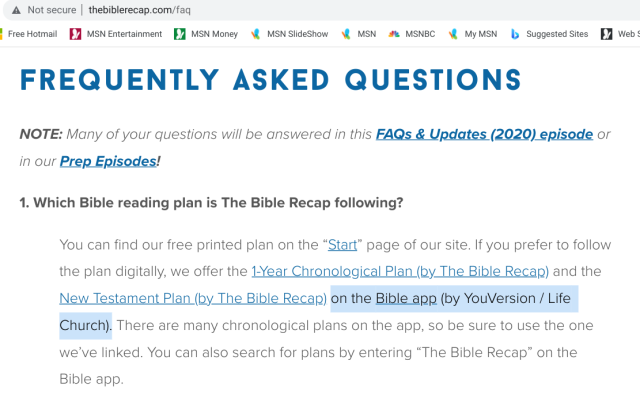
TBR recommends and partners with the YouVersion app. Although many people do not realize that YouVersion was created by and is maintained by false teacher Craig Groeschel’s LifeChurch.tv (it also features devotions and other materials by numerous false teachers), Tara-Leigh apparently does, and has partnered with YouVersion by platforming TBR there:
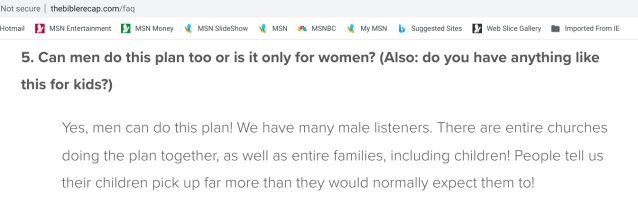
Tara-Leigh teaches the Bible to men, without reservation, through TBR. It is one thing for a woman to have a Bible teaching program or materials specifically for women available to the public and not be able to control who uses it. It is another thing all together to welcome and encourage men to be taught by a woman, especially in the gathering of the church body. This just validates and encourages the sin of women violating Scripture by teaching men.
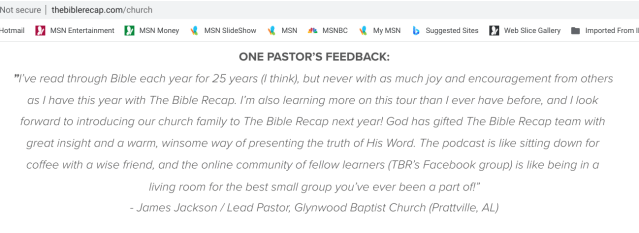
TBR frequently features The Bible Project videos and podcast episodes in its episode show notes as supplementary materials, and TBP overviews of each book of the Bible are used exclusively. To be fair, many supplementary materials from doctrinally sound sources are provided, but they’re provided right alongside materials from false and/or problematic sources like Tim Keller (Day O16), Kay Warren (Day 038), J.D. Greear (Days 050, 323, 352), The Village Church (Matt Chandler’s church, Days 125, 291- Sam Alberry, 317), The Gospel Coalition (Days 133- Article: Did David Rape Bathsheba? answer: “David was a rapist.”, 213, 260, 277 & 352- Thabiti Anyabwile, 286, 315, 322, 323, 336, 345, 363) Skye Jethani (341).

D-Group

D-Group = Discipleship Group. We are men’s and women’s discipleship and Bible study groups that meet weekly in homes around the world.” D-Groups are gender specific and meet for eight sessions of study per year. Each session lasts six weeks and centers around a different book or curriculum. (D-Group is discrete from The Bible Recap, related only by the fact that Tara-Leigh heads up both.)

D-Group exists in three venues: church groups, home groups not connected to churches, and online groups. Commendably, in policy, D-Group requires that participants be members of, or actively seeking membership in a local church, and discourages participants from treating D-Group as a substitute or replacement for the local church…
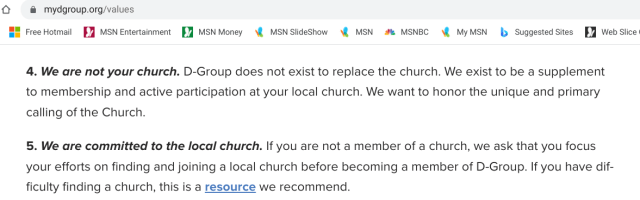
…but the very fact that it establishes and encourages home groups and online groups not connected to a local church undercuts this commitment in practice. No doubt there are many online and home group members who eschew or are lax about membership in a solid local church, considering D-Group to be their church instead. Indeed, the Why D-Groups page of the website says that one of the results of being involved in a D-Group is: “And those who lack rich relationships with other Christians have found a place of encouragement and challenge.” Although it’s certainly not wrong to be encouraged and challenged by Christian friends outside your local church, the primary “place” this sort of thing should be happening is in the context of your local church. Additionally, group leaders are trained by the D-Group organization, not by the local church. Again, this sort of training should be taking place in the local church and under the authority of the pastors and elders there.

It’s an unbiblical structure and methodology. Discipleship proper is to take place within the context of and under the authority of the local church, not in parachurch ministries or groups, and certainly not in online “groups”. There is no provision, allowance, or instruction for parachurch discipleship in the New Testament. And if D-Group is Reformed, and as committed to “living out the truths revealed by God in Scripture” as they claim to be, they should already know this and work through local churches exclusively.

D-Group holds to continuationism (which explains Tara-Leigh’s aforementioned stance on extra-biblical revelation, and TBR resources from continuationists such as John Piper, The Village Church, etc.), and cites The Village Church’s position paper on continuationism as part of their Beliefs.

D-Group claims to be complementarian, but, apparently, they mean – without clearly saying so – so-called “narrow” or “soft” (essentially: anything goes except women as senior pastors) complementarianism. As I’ve explained in the past, so-called “soft/narrow complementarianism” is not complementarianism, but functional egalitarianism.

Under the Beliefs section of D-Group’s Resources page, two of the resources cited on complementarianism are from The Village Church and Mary Kassian. TVC is where Jen Wilkin, who preaches to men at conferences and other events is on staff as the director of family and student ministries, and where pastor Matt Chandler has publicly praised women who preach to men, like Beth Moore. The short TVC article cited isn’t very substantive, and merely states that they don’t allow women to be elders. I briefly reviewed the Mary Kassian article when it first came out in 2016. Long story short, she believes it’s OK for women to preach to and teach men except in the Sunday worship service (unless it’s Mother’s Day or another special event, then it’s OK).

Tara-Leigh herself preaches to and teaches men in person at her speaking engagements (see below).

D-Group is governed by women. Of the 36 members of D-Group’s “team,” all but four are women. These four men are under the authority of – among other women – founder and CEO Tara-Leigh, of course, as well as a female “Theology + Content Director”. This is not a direct violation of Scripture, since the D-Group organization is not a gathering of the church, but this does align with and point to their “soft complementarianism” posture.

D-Group recommends many of the same false and/or biblically problematic teachers and resources as The Bible Recap, and more:

In the Diversity and Racial Reconciliation section of D-Groups Beliefs page, resources are cited from woke and racialist sources such as Eric Mason, Latasha Morrison’s Be the Bridge, and The Witness, a list of theological works by black theologians and pastors, including Jarvis Williams, Anthony Bradley, Thabiti Anyabwile, and Raphael Warnock, the horrifyingly liberal “pastor” and Democrat senator who endorses the torture and murder of unborn children. (The Witness also includes a book on homiletics written by a woman.)

The LGBTQIA section includes resources from Living Out founder, Sam Allberry, and Jackie Hill-Perry.

I don’t want to overstate this point, but it’s worth noting. Are worldly terms and constructs like “diversity,” “racial reconciliation,” and “LGBTQIA” congruent with a doctrinally sound Christian ministry? Where does the Bible use these terms or teach such constructs?

Tara-Leigh Cobble

As founder and leader of TBR and D-Group, Tara-Leigh’s theology concerning continuationism, functional egalitarianism, extra-biblical revelation, and social justice issues is evident.

In addition to her organizations holding to a functional egalitarianism position, Tara-Leigh personally teaches men via her speaking engagements.
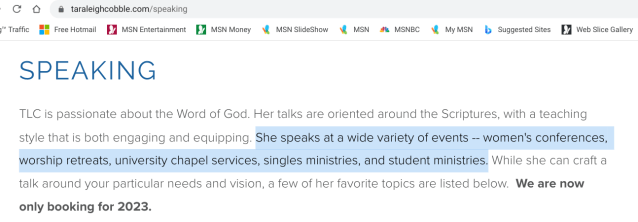
The following two videos are currently featured on her website’s “Speaking” page, as exemplars of her teaching.

Tara-Leigh preaching at a co-ed retreat (Tara Leigh Cobble INTV Retreat | October 26, 2018)

Tara-Leigh speaking at The Nines (the NINES 2019 – Loving Scripture, Biblical Literacy, & the Future of the Church | October 31, 2019 – Men clearly audible in the audience throughout). The caption on this video on Tara-Leigh’s website reads: “TLC speaking to pastors at The Nines Conference (Buckhead Church, Atlanta) about the future of the church.”

Unfortunately, Tara-Leigh also has an affinity for false teachers and false doctrine.

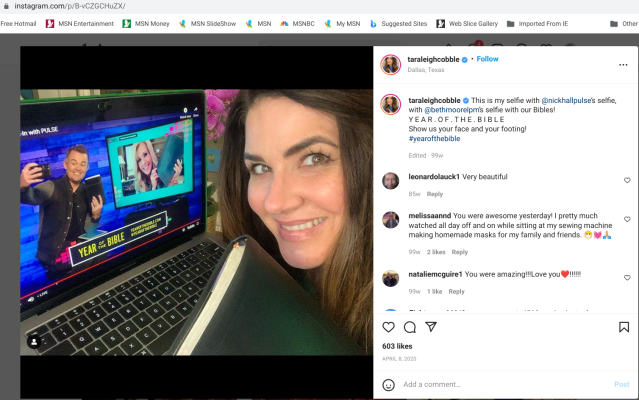
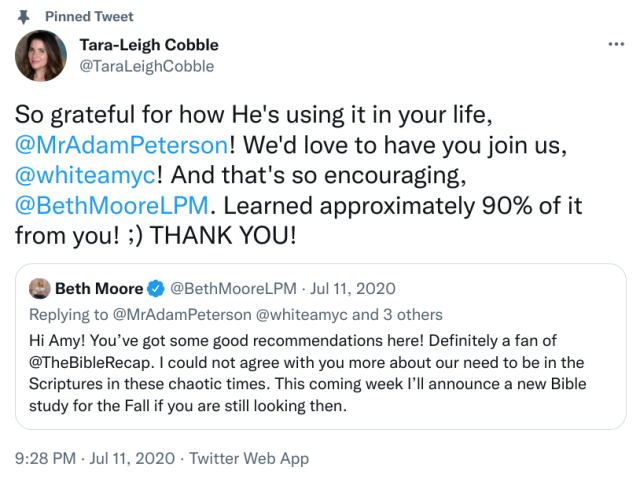
This is the pinned tweet – the first thing you see – on Tara-Leigh’s Twitter account. Apparently, Beth is a “fan” of TBR and Tara-Leigh “learned approximately 90%” of her Bible teaching from Beth Moore.
Excitedly posing with Beth Moore

…for this event featuring a number of false and biblically problematic teachers including Beth Moore and Priscilla Shirer.

Tara-Leigh appeared on the She Reads Truth podcast.
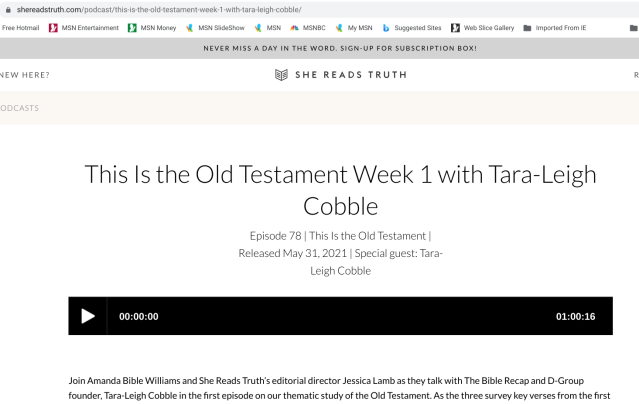
Here, she calls Jennie Allen one of her “favorite” leaders.

And since she brought it up in this post, I’d like to address another issue here. Tara-Leigh refers to her own “therapist” and also says, “I canโ€™t think of a teacher/preacher I respect (in modern times) who hasnโ€™t openly talked about seeing a licensed therapist…I believe in it so much that Iโ€™ve even paid for therapy for my team members. Itโ€™s VITAL.”

While everyone faces difficulties from time to time, and some of those difficulties are intense enough that a time of pastoral or biblical counseling is needed, routine or ongoing “therapy” from a “licensed therapist” (which, in the common vernacular, and at “trauma” events like this one, usually refers to a secular psychiatrist, psychologist, or other mental health professional) is no more “VITAL,” or even indicated, for normal, healthy individuals – even for non-Christians – than a weekly trip to the doctor for someone who isn’t sick.

The idea that Christians, across the board, need to be in therapy on a regular basis as though that’s normal or vital is found nowhere in Scripture, and undermines the Bible’s teaching that Scripture alone is sufficient for life and godliness.

Tara-Leigh’s notes from a “conversation” with “black and white Christian leaders and pastors” about “what the church’s role might look like in the midst of our current civil rights movement.”. You’ll notice the concepts of white privilege, systemic or “covert” racism, that white people need to “just listen,” etc. (Several pages. You’ll need to scroll through.)


Tara-Leigh seems like a very nice person with a sweet heart and genuine motives. She has some good ideas, and I’d like to be able to heartily recommend her to you. But unfortunately, even though she’s much closer to the “Nancy Leigh DeMoss Wolgemuth / Kay Arthur” end of the spectrum than the “Joyce Meyer / Rachel Held Evans” end of the spectrum that I mentioned in the introduction, I can’t proactively recommend her or any of her ministries or materials to you either. There are better people you could be listening to.


Additional Resources:

โ˜ž Since the original publication of this article, a number of readers have asked if there is a program similar to TBR that takes followers through a chronological Bible reading plan with a daily recap of each day’s reading. I am not aware of any other program or podcast exactly like that, but let me give you a couple of resources.

  • In 2014, I led my ladies’ Sunday School class through the chronological plan and taught a weekly lesson selected from that week’s reading. If that’s of interest, you can always find those lessons at the Bible Studies tab in the blue menu bar at the top of this page (at the very end under “Miscellaneous”).
  • My friend, Pastor David Schrock, has recorded a podcast for daily readings through the New Testament called Via Emmaus on the Road (also on Spotify and Apple Podcasts). It’s in canonical (Matthew – Revelation) order, but God arranged the New Testament canon much more chronologically than the Old Testament. (Plus, if you want to, you can follow a chronological plan and just look up the podcast for each day’s passage.). (David wants you to know that he plans to re-record the episodes on Matthew to improve the sound editing, but if you listen “as is” the sound does get better after the first month.)

โ˜ž Other readers have said they were listening to TBR, but stopped when something seemed “off” to them. Now, they just use the TBR podcast episode titles to tell them which passage to read for the day. There’s certainly nothing wrong with that, but if you’d like something that’s a little less cumbersome, I’ve got a printable of the entire year’s readings for you. Every year around New Year’s I publish a “round up” of Bible reading plans. The chronological plan is always first on the list because I recommend it so highly. Go to the Bible Studies tab and click on “Bible Reading Plans,” then click the link on #1, and print it, bookmark it, screenshot it, etc.

Mailbag

The Mailbag: Potpourri (Budgeting… Abuse and Submission… DIY Sanctification… Prayer)

Welcome to another โ€œpotpourriโ€ edition of The Mailbag, where I give short(er) answers to several questions rather than a long answer to one question.

I like to take the opportunity in these potpourri editions to let new readers know about my comments/e-mail/messages policy. Iโ€™m not able to respond individually to most e-mails and messages, so here are some helpful hints for getting your questions answered more quickly. Remember, the search bar (at the very bottom of each page) can be a helpful tool!

Or maybe I answered your question already? Check out my article The Mailbag: Top 10 FAQs to see if your question has been answered and to get some helpful resources.


Before I get to this week’s questions, I wanted to say – I love getting questions from my readers! Here’s a helpful hint for increasing your chances of getting your question answered in The Mailbag

Your best shot at your question being selected for The Mailbag is to email me, or – if you have a question pertaining to a particular blog article – to comment on that article. Those are the two main sources I draw Mailbag questions from because they’re the most user friendly for that purpose. I also try to grab questions from Facebook private messages whenever I think about it.

I’m rarely able to grab questions from social media comments (on posts) and DMs, especially on Instagram and Twitter. Comments and Instagram DMs move down the notification queue too quickly, and Twitter DMs from people I don’t follow are hidden.

That being said, sending me the same question multiple times or on multiple platforms (emailing and leaving a blog comment and messaging me on Facebook) will not increase your chances of your question being selected. If you send it to me once, I’ve got it. :0)

Thanks for all your questions. Keep sending them in! We wouldn’t have a Mailbag without them!


I was wondering if you can do a video on how a Christian housewife should budget money. I want to learn and trust in God’s will as well.

Great question! I’m much better in writing than on video, so I hope this format is OK.

Every household is unique, with a unique income, unique needs, unique bills and expenses, etc., so I can’t tell you, “Budget X% for this and Y% for that.” The best I can do is give you a few general guidelines:

  • Sit down with your husband with all your numbers: income, bills, expenses, etc. Prayerfully and thoughtfully consider how much you’re bringing in and how much you’re paying out. Do you need to earn more? Spend less? Cut out some expenditures? Save more?
  • Don’t forget to pray about and consider how much you need to set aside for your offerings at church. Christians are not under the Old Testament law of the tithe, but we are to give as generously to the church as we’re able according to what we’ve prayerfully determined in our hearts.
  • If money is tight and bringing in more income isn’t an option, a great way to be a helper to your husband would be to research ways you can reduce your bills, cut expenses, etc. Can you renegotiate your mortgage? Buy generic instead of name brands? Use coupons and shop the sales at the grocery store? Get your clothes at a thrift store instead of a boutique? Turn off the cable? Sell one of your cars?
  • If your husband doesn’t mind you discussing this with someone else, ask one of the godly older women in your church for advice. You can share the specific details with her and perhaps she can offer you some suggestions specific to your particular household.

This is just one of those things every couple has to work on together and figure out for themselves.


I read your article The Mailbag: I โ€œfeel ledโ€ in a different direction from my husband. In that article, you said:

Unless your husband is abusing you or encouraging you to do something sinful, Godโ€™s will is for you to graciously submit to his decisions.

I have always wondered why this circumstance is almost universally accepted as an exception to the principle of submission.

I don’t want to try to answer for the rest of the universe, but let me just explain my position. If a woman is being abused, priority number one is to get her to safety. And that’s going to mean getting away from her husband to a different place to live (until or unless he radically repents and gets saved, bears a lot of fruit in keeping with repentance, the two of them get extensive pastoral counseling, and so on).

What do you think an abusive husband’s immediate response to that is going to be? He’s going to be angry and demand that she come back home. That would be the first thing she would have to submit to before she submits to anything else. As a Christian, should she submit to that first demand? Of course not. He’s requiring her do a variety of ungodly things:

  • We are to be good stewards of our bodies and glorify God with our bodies. It is neither glorifying to God nor good stewardship to put your body in a situation in which you’re virtually certain it’s going to be damaged for no good reason. Putting your body in the hands of an unrepentant abuser is no more glorifying or good stewardship than jumping out of a third story window.
  • If you have children and you go back to an unrepentant abuser, you’re knowingly and intentionally putting them in danger. Godly mothers protect their children by keeping them away from danger as much as it’s within their power.
  • If you go back to an unrepentant abuser, you’re indirectly lying to him about his sin. By going back to him, you’re saying that his sin of abuse is OK, that he doesn’t need to repent or suffer any consequences for it, that you, as a Christian, approve of it, and that, by extension, God must approve of it, too.
  • Going back to an unrepentant abuser puts temptation in his way. When you’re in the home with him, he’s tempted to abuse you. When you’re not, he doesn’t have the opportunity to commit the sin of abusing you. We don’t put stumbling blocks in the paths of sinners.

These are all good, biblical reasons not to stay in an abusive situation, either. You can’t submit to someone who is sinning against you and requiring you to act in an ungodly way.


My question is how do you get out of yourself and your feelings? Yes, turn them over to God, I know this and I have but here I am still hurting and unable to find my way back to being content in all situations. Thank you for your wise words.

How do you cultivate die-to-self love and love God and others more?

Two great questions from different readers, but with the same answer: You can’t. This is something God has to work in you. You can’t sanctify yourself.

When it comes to sanctification and spiritual growth, we often cast about for a plan we can implement to start making things happen, kind of the same way that, when we want to lose weight, we reach for a diet book, join a gym, or call Jenny Craig.

Sanctification doesn’t work that way. There’s no such thing as a “get holy quick” scheme. There’s no program you can implement, book you can read, or specific behavior regimen you can initiate that will help you shed those unsightly sins and lose those pounds of character flaws. There’s nothing you can do to create growth and get the guaranteed results you’re looking for. That’s God’s job. It’s His job to grow you, and it’s His job to grow you in a way that guarantees He’ll get the results He’s looking for.

Your job is to get up every day, trust Him to do His job, and walk faithfully with Him by…

  • Studying your Bible
  • Praying- for help, for wisdom, for guidance, for strength
  • Being faithful to your church
  • Obeying the Word
  • Faith, trust, and utter dependence on God
  • Getting good counsel when you need it from godly friends and loved ones, your pastor, or spiritually mature women in your church

That’s God’s plan. His method. And it works every time it’s tried.

You might find some of the principles in my article You Donโ€™t Need *A* Book, You Need *THE* Book to be helpful on this.


I often donโ€™t know what to pray. Can you give me guidance and whether pre-printed prayers are a good idea or not and if so how they should be used. 

I’ve got tons of resources on prayer here at the blog. I hope you’ve been able to find them (using the search bar, tabs in the blue menu bar at the top of this page, or category cloud in the right or bottom sidebar) in the time since you originally asked this question.

I would recommend starting off with…

Basic Training: 8 Things You Need to Know about Prayer

After this Manner, Therefore Pray

Can We Talk?

Sweet Hour of Prayer: Learning to Pray from the People of Scripture (my Bible study on prayer)

And then you can just start plowing through all of my other articles of interest about Prayer.

There’s nothing sinful about praying a biblical, doctrinally sound pre-printed prayer back to God. The best way to do that is to pray Scripture back to God, because you know Scripture is biblical, doctrinally sound, and pleasing to God since He breathed it out. The Psalms are especially well suited for this (in fact, praying the psalms back to God is one of the components in our current Bible study, Psalm 119: The Glory of God’s Word). You might want to take a look at my article Praying Scripture, to get a feel for it.

Outside of the Bible, the only prayer book I’m familiar enough with to feel comfortable recommending is The Valley of Vision. What I would recommend it for is reading through it for an example of the things we should be praying for and about, rather than using it for reciting or actually praying the prayers in it (although, like I said, it’s not sinful if you do). Your prayers should be personal, between you and God.


If you have a question about: a Bible passage, an aspect of theology, a current issue in Christianity, or how to biblically handle a family, life, or church situation, comment below (Iโ€™ll hold all questions in queue {unpublished} for a future edition of The Mailbag) or send me an e-mail or private message. If your question is chosen for publication, your anonymity will be protected.

Forgiveness

Forgiving Like Kings and Servants

What does forgiveness really mean, biblically? Should we forgive people who haven’t repented? They’re questions all Christians have probably wondered about at some point.

What does forgiveness really mean, biblically? Should we forgive people who haven’t repented? They’re questions all Christians have probably wondered about at some point.

The parable of the unforgiving servant in Matthew 18:21-35 is really helpful for learning about the foundation and mechanics of forgiveness. As you read it, watch for the actions of the people in the story:

Then Peter came up and said to him, โ€œLord, how often will my brother sin against me, and I forgive him? As many as seven times?โ€ 22 Jesus said to him, โ€œI do not say to you seven times, but seventy-seven times.

23 โ€œTherefore the kingdom of heaven may be compared to a king who wished to settle accounts with his servants. 24 When he began to settle, one was brought to him who owed him ten thousand talents. 25 And since he could not pay, his master ordered him to be sold, with his wife and children and all that he had, and payment to be made. 26 So the servant fell on his knees, imploring him, โ€˜Have patience with me, and I will pay you everything.โ€™ 27 And out of pity for him, the master of that servant released him and forgave him the debt. 28 But when that same servant went out, he found one of his fellow servants who owed him a hundred denarii, and seizing him, he began to choke him, saying, โ€˜Pay what you owe.โ€™ 29 So his fellow servant fell down and pleaded with him, โ€˜Have patience with me, and I will pay you.โ€™ 30 He refused and went and put him in prison until he should pay the debt. 31 When his fellow servants saw what had taken place, they were greatly distressed, and they went and reported to their master all that had taken place. 32 Then his master summoned him and said to him, โ€˜You wicked servant! I forgave you all that debt because you pleaded with me. 33 And should not you have had mercy on your fellow servant, as I had mercy on you?โ€™ 34 And in anger his master delivered him to the jailers, until he should pay all his debt. 35 So also my heavenly Father will do to every one of you, if you do not forgive your brother from your heart.โ€

Matthew 18:21-35

Letโ€™s zero in on the kingโ€™s actions in verse 27: And out of pity for him, the master of that servant released him and forgave him the debt. What did the king do?

First, he had compassion for the servant who had gotten himself into something he couldnโ€™t get out of. And thatโ€™s always the case when someone sins against us – sheโ€™s done something she canโ€™t undo. She might be able to apologize, or even make some sort of restitution, but she canโ€™t go back in time and not sin against you so that things are like they used to be. Itโ€™s impossible. So we have compassion on those who are stuck in an impossible situation. We show them mercy.

Next, the king released the servant. He โ€œunstuckโ€ the servant from this impossible situation. The king made a proactive decision that he was not going to hold the servant captive to this situation of his wrongdoing any more. The king decided he was going to set the servant free from it and let him go.

Finally, the king forgave the servantโ€™s debt. He surrendered his right to exact payment from the servant, and absorbed the loss himself. He zeroed out the account. He marked the bill โ€œpaid in fullโ€. He said, โ€œWeโ€™re good. Weโ€™re square on this.โ€.

Now just to drive the point home, look at how the servant demonstrates the exact opposite – unforgiveness – with his fellow servant. Look at verse 28- โ€œ…he found one of his fellow servants who owed him a hundred denarii, and seizing him, he began to choke him, saying, โ€˜Pay what you owe.โ€™.”

He didnโ€™t release the debtor, he seized him. He didnโ€™t give up his right to exact payment from his fellow servant, he tried to extract payment – by choking him and demanding the debt be paid.

Verse 29- So his fellow servant fell down and pleaded with him, โ€˜Have patience with me, and I will pay you.โ€™

And look at this point for point antithesis of compassion, release, and forgiveness of debt in verse 30: โ€œHe refused, and went and put him in prison until he should pay the debt.โ€

The servant refused to show show the debtor compassion. The servant had the debtor put in prison, the definition of captivity, and the opposite of release. He keeps the debtor stuck in his impossible situation. Because, if youโ€™re in prison, how are you going to work to earn money to pay your debt? The servant’s attitude was, “Iโ€™m not going to absorb the loss. Iโ€™m not going to pay the cost – youโ€™re going to pay it. Even though youโ€™re stuck in this impossible situation where thereโ€™s no way to pay it. And even if there were a way, youโ€™d be incapable of paying that much.”

Isnโ€™t that whole story an amazing illustration of what it means to forgive? We show mercy and compassion. We give up our right to make the person who sinned against us pay, and we set her free from captivity to the impossible situation of us being angry or hurt at her over something she canโ€™t change.

And you know whatโ€™s even more phenomenal about this? Whoโ€™s telling this story? Jesus, right? Heโ€™s the king in this story. The King of kings. And not too long after this, Heโ€™s going to perfectly practice what He preached. Heโ€™s going to have compassion on us because we are stuck in the impossible situation of having racked up an enormous sin debt against Him that we have no way of ever paying off, and no ability to pay off that much even if there were a way.

Jesus is the king in this story. The King of kings. And not too long after this, Heโ€™s going to perfectly practice what He preached.

And that compassion is going to lead him to show mercy to us and provide us a way to get unstuck. Heโ€™s going to go to the cross to release us and forgive our debt. He sets us free from being in captivity to our impossible state of indebtedness to Him. And He doesnโ€™t just absorb the cost of our sin, He actually pays it with the currency of His own blood. He can mark the bill โ€œpaid in fullโ€ because He paid it Himself.

And thatโ€™s why we forgive others. Because Christ forgave us infinitely more.

Jesus can mark our bill โ€œpaid in fullโ€ because He paid it Himself with the currency of His own blood. And thatโ€™s why we forgive others. Because Christ forgave us infinitely more.

Now, in this story, both the first servant and the second servant repented to the person he was indebted to. But what about someone who sins against you and doesnโ€™t repent? Can you still forgive her? Should you still forgive her?1

Well, letโ€™s go back to the text. Can you adopt a posture of mercy and compassion toward the person who sinned against you, even if she doesnโ€™t think sheโ€™s done anything wrong? Even if sheโ€™s not aware of your mercy and compassion? Yes, because that mercy and compassion originate and live in your heart. Itโ€™s primarily an internal posture of the heart, whether you can pour it out externally or not.

Can you make the decision to set her free from your anger or hurt feelings? Yep. Again, thatโ€™s an internal decision and attitude of the heart before it ever becomes an external action of responding to someone who repents. Can you surrender your right to make her pay for what sheโ€™s done? Yes, you can make that decision of the heart that her bill is paid in full and she no longer owes you.

We would do well to remember…

For while we were still weak, at the right time Christ died for the ungodly. 7 For one will scarcely die for a righteous personโ€”though perhaps for a good person one would dare even to dieโ€” 8 but God shows his love for us in that while we were still sinners, Christ died for us.

Romans 5:6-8

While you were still actively sinning against Him, before you knew what sin was, before you understood you were a sinner, while you were a hater of God, Christ died for you. He showed mercy and compassion to you. He provided a way out of your impossible situation. He paid your debt in full. Romans 2:4 says that kindness is what led us to repentance.

Now, you donโ€™t know whether your kindness in forgiving someone in your heart will ever lead that person to repent, but that part isnโ€™t your business. Thatโ€™s above your paygrade. Your paygrade is to obey God and forgive in your heart. Thatโ€™s where your job stops. Itโ€™s Godโ€™s job to handle the results.

But what about forgiving a person who’s dangerous or harmful? Forgiving someone whoโ€™s unrepentant doesnโ€™t require you to put yourself into situations with that person that allow him or her to keep on unrepentantly sinning against you. For example: If youโ€™re in an abusive marriage, you can forgive your unrepentant husband in your heart while living somewhere safe. Scripture does not require you to move back in with him and give him the opportunity to keep sinning against you.

Forgiveness doesnโ€™t require the other person to repent but reconciliation does. Forgiveness is a one man job. Reconciliation is a two way street. You canโ€™t be reconciled to someone who refuses to be reconciled to you.

Forgiveness is a one man job. Reconciliation is a two way street.

Forgiveness can be difficult, but no one has sinned against us as much as we’ve sinned against Christ. Because we have been forgiven much by Christ, we should be eager to lavish that forgiveness on those who sin against us.

Put on then, as God’s chosen ones, holy and beloved, compassionate hearts, kindness, humility, meekness, and patience, bearing with one another and, if one has a complaint against another, forgiving each other; as the Lord has forgiven you, so you also must forgive.

Colossians 3:12-13

Forgiveness can be difficult, but no one has sinned against us as much as we’ve sinned against Christ. Because we have been forgiven much by Christ, we should be eager to lavish that forgiveness on those who sin against us.


1Some Christians believe it is unbiblical to forgive someone who has not repented to the person he has sinned against. My question to those Christians is, “OK, what does that look like in your heart and life?” Do you hate that person who sinned against you? Harbor bitterness against him? What if it’s someone you see regularly, like a family member, fellow church member, or co-worker? Do you give her the silent treatment? Leave the room whenever she comes in? If not forgiveness, what is your behavior toward that person and the posture of your heart toward that person?”. If you’re uncomfortable using the word “forgive” in such instances, consider some of the other verbiage I’ve used in this article such as “compassion,” “release,” or “not harboring bitterness against.” You may not be reconciled to the person until he repents, but Scripture doesn’t leave any room for holding grudges or being ugly towards others.


Additional Resources

Bitterness- Part 1 Part 2 Part 3 at Transformed with Dr. Greg Gifford

Forgiveness, Repentance, and Reconciliation at The Sword and the Trowel Podcast with Tom Ascol

Parenting

Oh, Behave! Training Your Child to Behave in Church

โ€ฆthey all walked sedately into the church. The first clang of the bell rang out when they were on the steps.

After that, there was nothing to do but sit still till the sermon was over. It was two hours long. Almanzoโ€™s legs ached and his jaw wanted to yawn, but he dared not yawn or fidget. He must sit perfectly still and never take his eyes from the preacherโ€™s solemn face and wagging beard. Almanzo couldnโ€™t understand how Father knew that he wasnโ€™t looking at the preacher, if Father was looking at the preacher himself. But Father always did know.

Fromย Farmer Boyย by Laura Ingalls Wilderยน

A hundred and fifty-ish years ago, this is how children were expected to behave in church. I love a good sermon, but Iโ€™m not sure even I could meet those behavioral expectations, and, these days, I certainly wouldnโ€™t expect my children to. But fast forward from the 1800โ€™s to 2000’s, and think about how you may have seen some children behave in church. Itโ€™s quite a bit different from Almanzoโ€™s experience, wouldnโ€™t you say?

I donโ€™t think we need to dial things back a hundred and fifty years, though. A little fidgeting, a Bible dropped loudly on the floor, a few seconds of wailing while you frantically search for the lost pacifier, a bit of jabbering, none of these things are a big deal. But neither should a toddler be allowed to run up and down the aisles of the sanctuary for the bulk of the sermon. Eight year olds do not need to be crawling around on the floor between the pews playing with toys. Twelve year olds can reasonably be expected to stay awake, sit still, and pay attention during the service.

We expect our children to obey us (and other adults) and behave properly in a variety of places: school, the grocery store, restaurants, on their sports teams, at scout meetings. Why, when the worship service is far more important than any of these, would we not require them to act appropriately in church? And when we require them to behave themselves in all these other venues but not in church, what are we teaching them about the importance of church, reverence, God?

For the past several years, the message coming from many pastors and churches has been, “Your child is welcome in church! Don’t worry if he makes noise!”. Some pastors are known to say things like, “Never mind if your baby cries! I’ll just preach louder!”. It is absolutely true that children of all ages should be made to feel welcome and loved in church, and that the entire congregation should be patient, loving, and understanding with the occasional cry, babble, or fidget. But a few parents seem to hear this welcoming attitude toward children as, “It’s fine for your child to run wild during the sermon or scream his head off for the duration of the worship service.”. That’s not the case. Allowing your child to make noise or misbehave with no attempt to address the situation is unloving and unkind to your church family who, though patient and loving, are being distracted from worship by your child. A loving church is not license for you to shirk your responsibility to them, to God, and to your child to teach him to behave appropriately in church.

But, if youโ€™ll determine in your heart to train your child, you might be surprised at all the blessings and benefits you encounter along the way.

What is appropriate church behavior?

Thatโ€™s going to vary by age. Obviously, a three year old isnโ€™t going to sit perfectly still for thirty minutes and take sermon notes. But, believe it or not, you can start (and I would strongly recommend) training your child from infancy that church is a place where we sit still, sit quietly, listen when itโ€™s time to listen, and participate when itโ€™s time to participate.

How do I train my child?

The first and best way to train your child is by modeling proper church behavior yourself. Does he see you singing enthusiastically during the worship time? Are you checking your makeup or Facebook during prayer? Are you visibly paying attention during the sermon? Constantly talking to your husband or a friend during the service? Your child will imitate what he sees and take his cues from you as to what is acceptable behavior.

Otherwise, you train your child in church the same way you would train him in any other situation. If you were at a restaurant, and your baby was crying incessantly, you would tend to his needs at the table, or, if you couldnโ€™t, you would take him out to the lobby or outside until he calmed down. The simple act of doing so begins to plant the idea in his mind that a certain level of behavior is expected in that venue.

If your school aged child wonโ€™t sit quietly in his seat at school, the teacher administers the appropriate discipline, and, possibly, you do too, at home.

Itโ€™s the same way at church. You let your child know what is expected of him behavior-wise at church, praise him when he does well, and administer discipline when he disobeys.

A few helpful hints:

Infants and toddlers:

If your church offers a nursery, thereโ€™s no shame in making use of it. As a stay at home mom, I well remember the days when church was the only opportunity I had for a small breather from my children, for adult fellowship, and for hearing Godโ€™s word without interruption.

But if you want to have your infant or toddler in church with you, thatโ€™s great! Be sure your diaper bag is well stocked with anything you might need to keep a little one relatively still and quiet. Bottles, pacifiers, small snacks that wonโ€™t make too much of a mess, some small, soft toys (such as stuffed animals or board books- maybe even a special one thatโ€™s only for Sundays) that he can quietly play with in his lap.

Try to choose a seat on the aisle near a door in case you need to make a hasty exit. Also, try to sit somewhere where any noise your child might make wonโ€™t be picked up by the pastorโ€™s (or other) microphone.

Older children:

Sometimes well meaning Sunday school teachers serve sugary snacks or other foods/drinks that might make your child jittery. If so, it may be more difficult for him to sit quietly during church. Check out the snack situation in your childโ€™s class, and serve him a breakfast that wonโ€™t give him the fidgets.

Make a bathroom/water fountain pit stop before the service a weekly habit. If your child would benefit from running a lap or two outside before the service to work off some energy, make that part of the weekly routine as well.

Dress your child appropriately, yet comfortably for church. I still remember scratchy lace on some of my childhood Sunday dresses. And sitting up against the back of a pew or chair wearing a dress that ties in the back? Absolute torture when that knot dug into my spine. Itโ€™s kind of hard to sit still when your entire outfit is conspiring against you.

Get them started on taking notes during the sermon. Give your preschooler some crayons and paper and help him listen for something in the sermon he can draw a picture of (a sheep, Jesus, an angel, a gardenโ€ฆ).

Lower elementary aged children might enjoy taking โ€œtally markโ€ notes. Make a brief list of words your child is likely to hear during the sermon (God, Jesus, Bible, Loveโ€ฆ) and instruct him to make a tally mark next to the word any time he hears it during the sermon. Some pre-readers can even attempt this if you draw a couple of small pictures instead of words (a heart for โ€œlove,โ€ a cross for โ€œJesus,โ€ etc.) Before church starts, try to guess with your child which word will get the most marks. After church, count up the marks and see if you were right. You may even want to do your own tally mark sheet during the sermon to model for your child what you want him to do.

Some churches offer a fill in the blank sermon outline in the bulletin. This is a perfect note taking activity for older children and tweens. They can also be encouraged to turn in their Bibles to all the Scriptures the pastor mentions, copy down a verse from the text of the sermon, or write down any questions that occur to them as they listen.

And, speaking of questions, another fun activity is for each family member to write down a couple of questions, and their answers, from the sermon. Then, in the car on the way home, each person gets to ask his questions. Whoever gets the most correct answers gets to pick whatโ€™s for lunch (or bragging rights, or something else fun). Itโ€™ll keep EVERYONE paying attention, and itโ€™s a great way to reinforce and discuss the sermon.

Attend church every Sunday. Not only is it biblical to attend faithfully, but children thrive on routine, and it will be easier for them to remember how to behave if theyโ€™re learning and practicing those behavior skills weekly instead of in a โ€œhit and missโ€ fashion.

Children with Disabilities

Believe it or not, I actually do have some experience in this area. For several years, I taught at two different state schools for the deaf, working with deaf students and students with multiple disabilities. After that, I worked for a couple of years as an advisor, advocate, and service provider for disabled students at a large state university. I’m not unsympathetic to parents of children with disabilities and to the issues disabilities cause.

Since there is such a wide range of disabilities that may cause noise or behavior issues in church, I can’t offer specific suggestions that would apply to every child with a disability. So let me just offer a few general thoughts:

Like every other parent, you have to address your child’s noise and behavior in a way that’s appropriate to his age and abilities, whatever those may be. Your child’s disability does not relieve you of the responsibility to train him and address his issues as best you can. Ask and trust God to help and equip you to know and do what’s right for your child.

When it comes right down to it, in church, noise is noise, and distraction is distraction, whether it’s coming from an adult who can’t stop coughing, a baby who won’t stop crying, or your child’s particular issue. When it’s in our power to address a distraction – our own or our child’s – we should make every effort to do so.

Get some wise counsel. Ask your child’s doctor, teacher, therapist, social worker, etc. for some help. Do you have a clear picture of what your child is and isn’t capable of? Are you expecting too much or too little of him? Are there any helpful suggestions they can offer for managing his issues in church? Ask other parents of children with the same disability as your child for any tips or tricks they’ve learned. What has worked? What hasn’t worked? Ask your pastor if there’s any reasonable accommodation that could be made for your child that hasn’t been, such as adjustments to the light or sound, accessibility adjustments, piping the sermon audio into an adjacent room, etc.

Get some help. Could some of your brothers and sisters at church help out in some way? Some of the suggestions in my article Providentially Hindered: Is Your Church Taking Care of Caretakers? might help, or may be a springboard for other ideas.

Training your child to behave well in church isnโ€™t easy at times. I know. I have six children and we have raised all of them in church. But if you and your husband will invest the time and effort, everyone benefits. Your pastor will be able to preach uninterrupted. Your fellow church members will be able to worship undistracted. Once your child begins to behave himself better, you will be able to focus more on the service and be less frazzled. But most importantly, your child will develop the skills necessary for hearing and paying attention to Godโ€™s word being proclaimed, and what a blessing that will be to him now, and for the rest of his life.

What are some things that have worked well
to help your child behave in church?


ยนLaura Ingalls Wilder, Farmer Boy  (New York: Harper Collins, 1933), 90-91
This article was originally published atย Satisfaction Through Christ, and has been updated and modified.
Psalm 119 Bible Study

Psalm 119: The Glory of God’s Word ~ Lesson 5

Previous Lessons: 1, 2, 3, 4,

Read Psalm 119:49-64

Recall the things from the introductory lesson that you wanted to keep in mind as you study the text of Psalm 119.

Don’t forget to read in complete sentences instead of stopping at the end of each verse.

Recall the themes you’ve been noticing in Psalm 119. Watch for those themes to be repeated in today’s and future passages. You may wish to make a list of those themes to refer to throughout this study.

Questions to Consider

1. Review your notes from last week’s lesson. Does that passage relate to this week’s passage? How? Do you notice any repeated words, thoughts, or themes?

2. Do you notice a difference in tone between this first section (49-56) and most of the previous sections we’ve studied? How would you characterize the tone of this section? The previous sections? How do our life circumstances impact our perspective of how God’s Word ministers to us? (For example: When you’re joyful, which aspect of God’s Word most ministers to you? Comfort, praise, encouragement, zeal, etc.? When you’re going through hard times?) Proverbs 25:11 tells us “A word fitly spoken is like apples of gold in a setting of silver.” How is Scripture a “word fitly spoken” to each of us, personally, no matter what we’re going through?

3. Anger is often sinful, but how is verse 53 an example of righteous, godly anger?

4. Which verses in these two sections speak to God’s attribute of dependability, being a “man of His word”? How does that bring comfort and stability to the psalmist and to us?

What is the psalmist’s response to God’s dependability? (49, 50, 57) How do you, or how should you, respond to God’s dependability to you?

As God’s people, we are to reflect to others God’s attribute of dependability. How are you doing at being dependable to others – a woman of your word? Are you punctual? Fulfill your commitments? Return correspondence in a timely manner? Follow through? What’s one practical way you could reflect God’s dependability this week? When God’s people aren’t dependable, what does that say to lost people about God?

How does the psalmist “hold God to His word” in prayer in 49, 50, and 58? It is always appropriate in our prayers to recall God’s promises to us (from Scripture) and ask Him to keep or fulfill them. How can we avoid demanding things from God that He never promised us in the first place? Have you noticed any verses or themes we’ve studied so far in Psalm 119 that speak to this?

How is asking God to keep His promises simply asking Him to be who He is?

5. Does verse 56 refer to the blessings that are a consequence of obeying God’s Word, or does it mean that the ability and desire to obey God’s Word is a blessing in and of itself? (It might help to look at this verse in a few other reliable translations.) Why is it a blessing to desire and be able to obey God’s Word? How are we able and Who gives us that desire?

6. Carefully examine 59-60. What kind of “ways” is the psalmist talking about? What is the solution to temptation and sin in…

  • 57, 59-60?
  • 58, 64?
  • 61?
  • 62?
  • 63?

How can you implement each of these in your own life to combat sin?

Consider how Jesus used the weapon of memorized Scripture to combat Satan’s temptations. Why is God’s Word such an effective weapon against temptation and sin? Why doesn’t just avoiding temptation alone – apart from God’s Word – work? Do you run to God’s Word when you’re tempted? What are some verses you could memorize and obey to help you fight temptation and avoid sinning?


Praying Psalm 119

Have you ever tried praying the psalms? I want to encourage you to try praying part of Psalm 119 back to God each week of this study. (If you’re familiar with my other studies, this will take the place of the weekly “Homework” section.)

The psalms are uniquely suited for praying back to God, both verbatim and conceptually, because they are often written as prayers – as though the psalmist is talking to God. Did you notice that about today’s passage? In which verses?

What is a concept or thought for your own life that the Holy Spirit impressed on your heart or convicted you about from today’s passage? Is there a particular verse(s), or maybe the whole passage, that you would like to pray back to God verbatim? Whatever your “prayer point” from today’s lesson, pray it at least daily until we get to the next lesson.


Suggested Memory Verse