Wednesday's Word

Wednesday’s Word ~ Amos 7

amos 7 15

Amos 7

This is what the Lord God showed me: behold, he was forming locusts when the latter growth was just beginning to sprout, and behold, it was the latter growth after the king’s mowings. 2 When they had finished eating the grass of the land, I said,

“O Lord God, please forgive!
    How can Jacob stand?
    He is so small!”
3 The Lord relented concerning this:
    “It shall not be,” said the Lord.

4 This is what the Lord God showed me: behold, the Lord God was calling for a judgment by fire, and it devoured the great deep and was eating up the land. 5 Then I said,

“O Lord God, please cease!
    How can Jacob stand?
    He is so small!”
6 The Lord relented concerning this:
    “This also shall not be,” said the Lord God.

7 This is what he showed me: behold, the Lord was standing beside a wall built with a plumb line, with a plumb line in his hand. 8 And the Lord said to me, “Amos, what do you see?” And I said, “A plumb line.” Then the Lord said,

“Behold, I am setting a plumb line
    in the midst of my people Israel;
    I will never again pass by them;
9 the high places of Isaac shall be made desolate,
    and the sanctuaries of Israel shall be laid waste,
    and I will rise against the house of Jeroboam with the sword.”

10 Then Amaziah the priest of Bethel sent to Jeroboam king of Israel, saying, “Amos has conspired against you in the midst of the house of Israel. The land is not able to bear all his words. 11 For thus Amos has said,

“‘Jeroboam shall die by the sword,
    and Israel must go into exile
    away from his land.’”

12 And Amaziah said to Amos, “O seer, go, flee away to the land of Judah, and eat bread there, and prophesy there, 13 but never again prophesy at Bethel, for it is the king’s sanctuary, and it is a temple of the kingdom.”

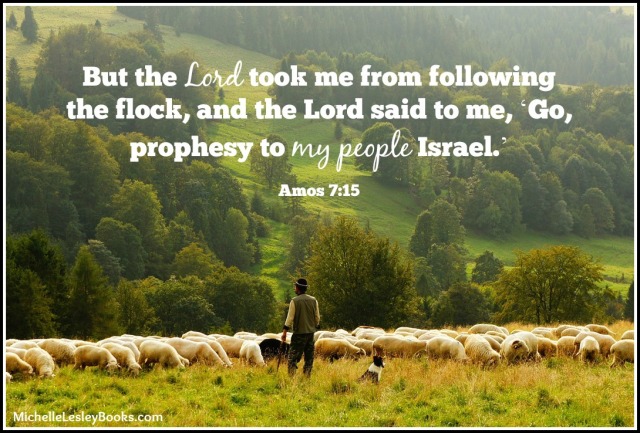
14 Then Amos answered and said to Amaziah, “I was no prophet, nor a prophet’s son, but I was a herdsman and a dresser of sycamore figs. 15 But the Lord took me from following the flock, and the Lord said to me, ‘Go, prophesy to my people Israel.’ 16 Now therefore hear the word of the Lord.

“You say, ‘Do not prophesy against Israel,
    and do not preach against the house of Isaac.’

17 Therefore thus says the Lord:

“‘Your wife shall be a prostitute in the city,
    and your sons and your daughters shall fall by the sword,
    and your land shall be divided up with a measuring line;
you yourself shall die in an unclean land,
    and Israel shall surely go into exile away from its land.’”


The Holy Bible, English Standard Version Copyright © 2001 by Crossway Bibles, a publishing ministry of Good News Publishers.


Questions to Consider:

1. Which genre of biblical literature (epistle, gospel, history, prophecy, etc.) is the book of Amos? To whom was the book written? (16) What was the purpose or theme of the book of Amos? Why is this book relevant to us as Christians today?

2. In verses 1-2 and 4, what actions did God show Amos He would potentially take against Israel (“Jacob”)? What was the reason for these actions? Which attribute(s) of God’s nature do these verses showcase?

3. Why did God relent from these actions? (2-3, 5-6) Which attribute(s) of God’s nature is showcased in these verses? What do these verses teach us about prayer and God’s response to it? Does God always prevent trials in answer to prayer? What was the plumb line God measured Israel against? (7-8) What was His judgment? (8-9)

4. Who were Amaziah and Jeroboam? (10) Why would Amaziah, a priest, oppose Amos, a prophet of God? (10, 12-13, 16) Shouldn’t they have been on the same side? How do verses 10-17 compare with Isaiah 30:8-14? Why did Israel – even the priests and other religious leaders – refuse to listen to the prophets and repent?

5. The main message Amos and other Old Testament prophets preached was for God’s people to repent of their sin and turn back to Him before God judged them. Today, there are many so-called prophets in the visible church. How would you characterize their main message? Can you think of any who preach repentance and the gospel? Did Amos meet God’s requirements for a true prophet? Do today’s “prophets”?

Christian women, Discernment

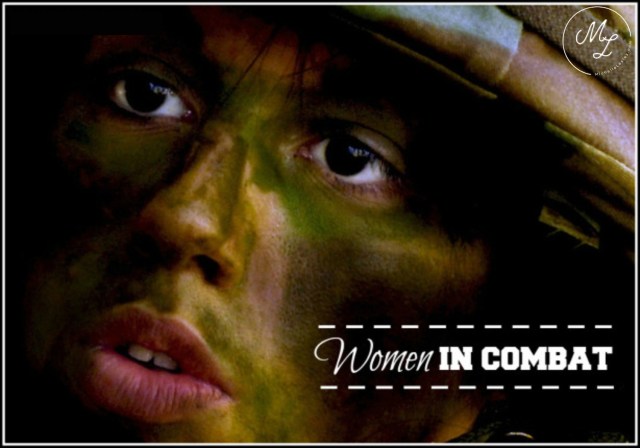
Women In Combat

Over the last few months, there’s been a lot of talk about the possibility of future U.S. military drafts including young women in addition to young men. I’ve admired godly male friends who have spoken out vehemently against this and expressed concern about the government trying to press their daughters or wives into service. Some even vowed to lay their lives down protecting their women from having to face the horrors and dangers of war.

But I wonder if these men – husbands, fathers, pastors, elders – know that many of their wives, daughters, and sisters in Christ are already in the trenches fighting off the enemy with every ounce of our strength and every weapon at our disposal.

It’s not a war for territory or political control or freedom from dictatorial tyranny.

It’s a battle for the purity of the Bride. And the souls of our sisters.

Daily. Weekly. At church. On line. In our families. We strap on our Swords, march out to the front and engage in hand to hand combat with the Enemy.

His troops: false teachers.

His weapon of mass destruction: false doctrine.

Sometimes we stand as a shield between grenade-lobbing grunts and weak sisters who don’t know how to fight, or even that they’re in a war. Who want nothing more than to knock us down into the mud as they desert our King and join our foes.

Sometimes we infiltrate the enemy camp to bring back intelligence on his troops to our commanders and generals, only to be ignored, reprimanded, or dishonorably discharged from the unit.

Sometimes we stand as guards at the walls of our churches, watching the adversary advance, sounding the alarm, and standing in stunned disbelief as our commanding officers smilingly welcome the enemy troops through the gate.

Why? Why, in a field of pink, are there so few Green Berets? Why is it that so many women are out on the front lines battling this insidious rival while most of our brothers in arms seem to be AWOL?

men1

As Steve Lawson famously said a few years ago, “Give us some men who know the truth!”*

And to that I respond with a hearty amen. But with much love and respect to Brother Steve, I would add:

Give us some men who will DEFEND the truth.

And the weak women the enemy seeks to capture.

And the strong women who should be protected, working safely away from the line of fire to support the troops and nurse the casualties back to health.

Give us men who will…

…thoroughly vet any curricula, books, or materials used by their church’s Bible study classes.

…train all of their church’s teachers to properly handle and exegete the word of God.

…take a close look at the authors of the books and blogs their wives or church members are reading and the speakers at the conferences and retreats they’re attending.

…examine the doctrine of the singers their daughters or youth listen to and the leaders of the youth camps they attend.

…speak out with godly boldness (not jerkiness- godly boldness) against false doctrine and false teachers on social media, in Sunday School, in the sanctuary, in their homes, and in every arena in which they have influence.

…join the few brave brothers who are already standing in the gap to present a united front to ward off the enemy.

Godly men on active duty in their churches, homes, and in the public square are out there. I’m privileged to know several. But they need a bigger band of brothers to join them in fighting the good fight.

We need men who will gird up, gear up, and stand up. Because some women in combat are wounded, battle fatigued, and in need of some R&R. And we can’t keep fighting this battle without a few more good men.

1 cor 16 13

*At the time this article was originally written, Steve Lawson was a doctrinally sound, trustworthy pastor and theologian. He has since committed disqualifying sin and is no longer in ministry. This mention of his name should not be construed as a current endorsement of Steve Lawson.

Wednesday's Word

Wednesday’s Word ~ Joel 1

joel 1 14

Joel 1

The word of the Lord that came to Joel, the son of Pethuel:

2 Hear this, you elders;
    give ear, all inhabitants of the land!
Has such a thing happened in your days,
    or in the days of your fathers?
3 Tell your children of it,
    and let your children tell their children,
    and their children to another generation.

4 What the cutting locust left,
    the swarming locust has eaten.
What the swarming locust left,
    the hopping locust has eaten,
and what the hopping locust left,
    the destroying locust has eaten.

5 Awake, you drunkards, and weep,
    and wail, all you drinkers of wine,
because of the sweet wine,
    for it is cut off from your mouth.
6 For a nation has come up against my land,
    powerful and beyond number;
its teeth are lions’ teeth,
    and it has the fangs of a lioness.
7 It has laid waste my vine
    and splintered my fig tree;
it has stripped off their bark and thrown it down;
    their branches are made white.

8 Lament like a virgin wearing sackcloth
    for the bridegroom of her youth.
9 The grain offering and the drink offering are cut off
    from the house of the Lord.
The priests mourn,
    the ministers of the Lord.
10 The fields are destroyed,
    the ground mourns,
because the grain is destroyed,
    the wine dries up,
    the oil languishes.

11 Be ashamed, O tillers of the soil;
    wail, O vinedressers,
for the wheat and the barley,
    because the harvest of the field has perished.
12 The vine dries up;
    the fig tree languishes.
Pomegranate, palm, and apple,
    all the trees of the field are dried up,
and gladness dries up
    from the children of man.

13 Put on sackcloth and lament, O priests;
    wail, O ministers of the altar.
Go in, pass the night in sackcloth,
    O ministers of my God!
Because grain offering and drink offering
    are withheld from the house of your God.

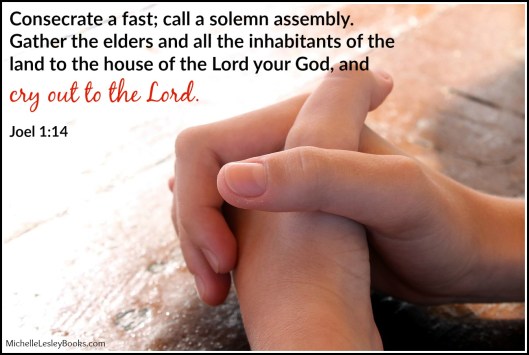
14 Consecrate a fast;
    call a solemn assembly.
Gather the elders
    and all the inhabitants of the land
to the house of the Lord your God,
    and cry out to the Lord.

15 Alas for the day!
For the day of the Lord is near,
    and as destruction from the Almighty it comes.
16 Is not the food cut off
    before our eyes,
joy and gladness
    from the house of our God?

17 The seed shrivels under the clods;
    the storehouses are desolate;
the granaries are torn down
    because the grain has dried up.
18 How the beasts groan!
    The herds of cattle are perplexed
because there is no pasture for them;
    even the flocks of sheep suffer.

19 To you, O Lord, I call.
For fire has devoured
    the pastures of the wilderness,
and flame has burned
    all the trees of the field.
20 Even the beasts of the field pant for you
    because the water brooks are dried up,
and fire has devoured
    the pastures of the wilderness.


The Holy Bible, English Standard Version Copyright © 2001 by Crossway Bibles, a publishing ministry of Good News Publishers.


Questions to Consider:

1. What is the purpose or theme of the book of Joel? Which genre of biblical literature (epistle, historical narrative, wisdom, etc.) is it? To whom was the book written? What do verses 2-3 indicate about the gravity of the situation the rest of the chapter describes?

2. What was the natural disaster that fell on the land? (4) Which crops were affected? (10-12) How were the land and livestock affected by the natural disaster in verse 4? (18-20) What does Joel 2:12-14 suggest might be the reason Israel is experiencing this hardship?

3. What were two major aspects of Israel’s life the famine was detrimental to? (16) How were “joy and gladness [cut off] from the house of our God”? (9) How might a natural disaster, war, or other major catastrophe affect your church? In what ways would worship be affected?

4. How was Israel to respond to the famine? (13-14, 19) Who was to lead the way in lamenting and crying out to God? What should our response be when trouble or disaster strikes? What are some ways pastors can lead the way when a catastrophic event impacts the church?

5. What does this chapter teach us about God’s sovereignty? His judgment? How does this chapter hint at the intensity and the dreadfulness of God’s final judgment on the earth?

Guest Posts

Guest Post: Adult Coloring and Meditation – What Every Christian Should Know

If your theology pretty much matches up with mine (as outlined in the “Welcome” and “Statement of Faith” tabs) and you’d like to contribute a guest post, drop me an e-mail at MichelleLesley1@yahoo.com,
and let’s chat about it.

jessica pickowicz adult coloring

Adult Coloring and Meditation –
What Every Christian Should Know

by Jessica Pickowicz

Last February, during our family staycation, I bought my first adult coloring book… And I even colored in it…. Phew… There. I said it. I feel so relieved to get that off my chest!

It seems a bit crazy that I would be even a little ashamed or intimidated to admit that publicly. But here it is. And right now there is an argument peppering Twitter and the blogosphere regarding Christians and the adult coloring fad. Some are mocking; others are getting offended; and still others are sitting back with popcorn in one hand and a stick in the other; poking the bear! Even I have, regretfully, thrown my hat into the ring. I say regretfully because (though hilarious) it seems somewhat petty and snarky and self-righteous to bash adult coloring. After all, as Tim Challies articulates in his recent article on the topic, it is just a hobby – like golfing, knitting, tennis, or painting “happy little trees”. Furthermore, it can very well be exercised all to the glory of God. And I, lover of adult coloring, respond with a hearty, “Amen!”

Challies is right. When it is just a hobby, adult coloring is a perfectly innocent past-time. It’s fun. It’s calming. It’s clean! It’s a great mommy alternative to the My Little Pony and Ninja Turtle coloring books when coloring with the kids. It’s even occupational and physical therapy, bringing vibrancy, joy, and art into the hands of people struggling with dementia, depression, ADHD, Autism, and those with fine-motor and sensory struggles brought on by neurological diseases such as ALS, MS, and Parkinson’s — just to name a few. By itself, adult coloring is a beautiful thing!

Sadly, what many people don’t know is that there is another fad sweeping the nation, and adult coloring books are at the heart of it. The fad is meditative coloring. And it’s infiltrating the prayer lives of Christian women everywhere.

Meditative coloring is the practice of coloring specific patterns while emptying the mind, allowing thoughts to roam free, and achieving spiritual enlightenment. Some of these specific patterns are called mandalas. Mandalas are spiritual symbols and patterns used by Eastern religions for meditation purposes “allowing the individual meditating to become one with the Universe.”¹ And it’s a challenge to find an adult coloring book that isn’t riddled with them.

Gaining popularity, a few laps ahead of meditative coloring, is the practice among Christians of contemplative prayer. I don’t have the space here to go into a detailed explanation of this heresy. But it’s important to educate yourself, and you can read about it here. With the rise of the Word of Faith movement, the Prosperity movement, the increasing popularity of women authors such as Priscilla Shirer and Sarah Young, and movies such as War Room; prayer as defined by and commanded in the Bible has been grossly shirked aside (by women especially) in favor of a more ecstatic, meditative, emotional, new-age, and downright heretical experience.

I conflate meditative coloring and contemplative prayer in this article because I feel that contemplative prayer is a very slippery slope that lends itself too easily to the practice of meditative coloring, especially with the massive output of Christian and Inspirational themed adult coloring books.

A warning to Christian women dabbling in these practices:

My aim is not to be harsh here, but I must be serious for a moment. The Bible teaches us how to pray. Moreover, it commands us to pray and meditate in very specific terms — the only right way according to God. If we are not praying as Scripture commands, we are not obeying God and are therefore in sin.

Please do not use these coloring books in conjunction with prayer and meditation, contemplative or otherwise. Do not empty your mind. Ladies, please do not sit down to color and wait for a word from
God! Please do not chant over and over (as in a mantra) a declarative “life-verse” from a page in your Scripture coloring book. Do not allow yourself to be entranced through the exercise of meditative coloring. These practices are pagan. They are the very thing Scripture warns against.

How the Bible Commands us to pray and meditate:

1. Don’t empty your mind. Fill your mind with the Truth of God’s Holy Word!

Meditation as practiced by Eastern religions is much different than the meditation commanded in the Bible. While Eastern meditation focuses on emptying the mind and a spiritual ascension into enlightenment; Scriptural meditation focuses on setting the mind on a biblical truth and a realized application of that truth.

In Romans 12:1-2, the apostle Paul instructs us not to conform with the world, but to be transformed by the renewing of our minds. Our minds are renewed through the study of His Word. We must store up His word in our hearts, and let it dwell in us richly, so that we don’t sin against Him (Colossians 3:16 and Psalm 119:11).

2. Don’t let your thoughts wander. Take your thoughts captive and put them in obedience to Christ!

When we allow our thoughts to wander, the carnal mind, which is enmity toward God (Romans 8:7) roams to fleshly desires and frightening depths; and the deceitful heart (Jeremiah 17:9) cannot discern sin on its own. Therefore, we must take our thoughts captive and put them into submission to Christ (2 Corinthians 10:5)!

So you see, a deceitful heart and a wandering mind are the perfect ingredients for a false prophetic word from God. Today, in the Church Age, God speaks to us through his Word not meditative prayer!

3. Don’t chant things over and over as a mantra. Memorize his word. Having a controlled mind is a spiritual discipline commanded in Scripture.

In Matthew 6:7, Jesus instructs, “And when you pray, do not use vain repetition as the heathen [Pagans] do. For they think that they will be heard for their many words.”

In 1 Peter 1:13, Peter instructs Christians further to “gird up the loins [the loose fabric] of your mind,
be sober, and rest your hope fully upon the grace that is to be brought to you at the revelation of Jesus Christ (See also Ephesians 6:14); and to be self-controlled and sober-minded for the sake of your prayers (1 Peter 4:7).”

4. Do not attempt to manipulate God through positive confession. Instead, ask Him.

We must not assume anything upon God. We must not treat Him like a Genie and demand His blessings according to what is right in our own eyes (Proverbs 21:2). For His ways and thoughts are higher than ours (Isaiah 55:8-9)!

In Philippians 4:6-7 Paul instructs, “Do not be anxious about anything,but in everything by prayer and supplication with thanksgiving let your requests be made known to God. And the peace of God, which surpasses all understanding, will guard your hearts and your minds in Christ Jesus.”

5. Finally, Jesus and the faithful heroes/heroines of Scripture provides us with the best models of prayer. Be imitators of them!

John 17:1-26 – Jesus’ High Priestly Prayer.
Luke 11:1-13 – Jesus teaches the disciples how to pray.
Luke 1:46-55 – Mary’s prayer, The Magnificat.
Ephesians 3:14-21 – Here, the Apostle Paul models prayer, along with many other places in the Bible.

Hebrews 12:1-2 – “Since we are surrounded by so great a cloud of witnesses, let us lay aside every weight, and the sin which so easily ensnares us, and and let us run with endurance the race that is set before us, looking unto Jesus, the author and finisher of our faith, who for the joy that was set before Him endured the cross, despising the shame, and has sat down at the right hand of the throne of God.”

Prayer is powerful when practiced as God commands in His Word. Use it wisely. For the prayer of the righteous accomplishes much (James 5:16).

All this to say, let’s keep our prayers and our coloring hobbies separate.


¹”MANDALAS, WHAT ARE THEY?” at Spiritual Awakening

Jessica is wife to New England pastor Nate Pickowicz. She is a homeschooling mom of two. She is a passionate writer who has a big heart for biblical teaching and women’s ministry.


ALTHOUGH I DO MY BEST TO THOROUGHLY VET THE THEOLOGY OF THE BLOGGERS WHO SUBMIT GUEST POSTS, IT IS ALWAYS POSSIBLE FOR THINGS TO SLIP THROUGH THE CRACKS. PLEASE MAKE SURE ANY BLOGGER YOU FOLLOW, INCLUDING ME, RIGHTLY AND FAITHFULLY HANDLES GOD’S WORD AND HOLDS TO SOUND BIBLICAL DOCTRINE.
Christian women, Ministry

Mary and Martha and Jesus and Women’s Ministry

You remember the story. Jesus comes to Mary and Martha’s house. Martha’s Pinteresting up the place while Mary sits at Jesus’ feet to listen to Him teach. Martha gripes to Jesus that Mary should help her and Jesus says no because it’s better for her to listen to Him than fold napkins into the shape of swans or whatever. Moral of the story- Martha needs to relax and not let other things distract her from Jesus.

That’s a good, true, and important takeaway from this passage, and one that we would all do well to heed.

But did you ever stop to think that Mary and Martha aren’t the main characters in this story? Jesus is. Jesus is the main character in every Bible story, so our primary focus should always be on Him: what He said and did and was like.

Did you ever stop to think that Mary and Martha aren’t the main characters in this story? Jesus is.

What was Jesus teaching that day at Mary and Martha’s house? The passage doesn’t tell us the topic He was speaking about, but we are privy to a very important lesson He imparted through the scenario with Mary and Martha. A lesson about the way God loves and values women.

Remember how women were generally regarded at that time? They didn’t have much more value than livestock, furniture, or a man’s other possessions. They were considered intellectually inferior, they weren’t formally educated, and their legal and social standing were often tenuous at best. They could not go beyond the Court of the Women at the temple for worship. There was even a traditional prayer Jewish men recited in which they thanked God for not making them a woman, a Gentile, or a slave. Women were low man on the totem pole, so to speak.

And that’s where we find Martha. She wasn’t doing anything wrong that day. In fact, in her culture, she was doing everything right. If anything, Mary would have been the one viewed as being in the wrong because the teaching was for the men, and it was the women’s job to bustle around taking care of all the hospitality duties. Martha knew this. Mary knew this. Jesus knew this. Everyone else present knew this. Martha must have wondered why someone hadn’t yet shooed Mary out of the living room and into the kitchen. So her statement to Jesus in verse 40, “Lord, do you not care that my sister has left me to serve alone? Tell her then to help me,” was probably not just, “I need another pair of hands,” but also a bit of, “Mary is forgetting her place. This isn’t what proper women do.”

Oh yes, it is.

Whatever else He might have been lecturing about that day, that was one of the lessons Jesus taught Mary, Martha, the rest of their guests, and Christendom at large.

Women aren’t second class citizens in the Kingdom of God. We are precious and valuable to Him. He has important, worthwhile work for us to do – His way – in the body of Christ. And He wants us trained in His Word in order to carry out that work.

How did Jesus teach that lesson?

First, He allowed Mary to stay and receive His teaching (39). (We see this echoed in God’s instruction to the church in 1 Timothy 2:11: “LET a woman learn…”) It hadn’t slipped Jesus’ mind that she was sitting there. He could have told her to leave, but He had no intention of doing so. Jesus wanted Mary there. He wanted to teach her and to have her learn God’s word from Him.

Next, when someone tried to take Mary away from hearing and being trained in God’s word, Jesus – God Himself – answered with a resounding NO. This “will not be taken away from her,” Jesus said. Mary, and Martha too (41), could arrange centerpieces or turn a cookie into a work of art any time or never. But this, the teaching of God’s Word, was urgent. Vital. Jesus didn’t want either of them to miss it by focusing on the trivial things they thought they should be pursuing.

And He doesn’t want us to miss it either, ladies.

Jesus pulled women out of the craft room and into the study. Is the women’s ministry at your church trying to pull them back?

Jesus pulled women out of the craft room and into the study. Is the women’s ministry at your church trying to pull them back?

Is the women’s events page on your church’s web site filled exclusively with painting parties, fashion shows, ladies’ teas, and scrapbook sessions?

Does your women’s ministry do canned “Bible” studies authored by women who offer nothing but personal stories, experiences, and false doctrine?

Are the Marys in your church who want to sit at the feet of Jesus and hear His word rightly handled and taught being scolded by the Marthas for not staying in their place and embracing the banality the women’s ministry is doling out?

Are the Marys in your church who want to sit at the feet of Jesus and hear His word rightly handled and taught being scolded by the Marthas for not staying in their place and embracing the banality the women’s ministry is doling out?

Is this it? Is this all women are good for in the church- fluff and false doctrine?

Jesus didn’t think so.

Let’s have our women’s ministries train women in the full scope of biblical womanhood. Let’s be serious students of God’s Word by picking it up and studying it like mature women. Let’s get equipped to teach and disciple other women who are babes in Christ. Let’s share the gospel with the lost. Let’s learn how to train our own children in the Scriptures and be the ones to raise the bar for what the kids at our church are being taught. Let’s roll up our sleeves and get our hands dirty ministering to those who are ill, in prison, lonely, poor, elderly, considering abortion, experiencing crisis; who have wayward children, problems in their marriages, a parent with Alzheimer’s, or have lost a loved one.

Is this it? Is this all women are good for in the church- fluff and false doctrine?

Women are worth more and capable of more than the bill of goods they’re being sold by “Christian” retailers suggests. More than cutesy crafts and fairy tales masquerading as biblical teaching. Let’s put the “ministry” – ministry of the Word and ministry to others – back in “women’s ministry.”

Women are worth more and capable of more than the bill of goods they’re being sold by “Christian” retailers suggests.