Discernment Bible Study

Choose What Is Right: A Study in Discernment- Lesson 4


Previous Lessons: 1, 2, 3,


False Teachers, God’s View, Our Response

Read These Passages


Questions to Consider

Throughout this study we will be looking at various passages of Scripture rather than working our way through a book of the Bible verse by verse. Because of that, we will need to be extra vigilant to rightly handle these passages in context. I will always attempt to provide the context you need for understanding these passages correctly, but if you need more clarity please feel free to read as much of the surrounding text as you need to – even the whole book, if necessary – in order to properly understand the passage presented.

1. Do you notice the similarities between 2 Peter 2 and Jude? Click here and read the second paragraph under “Author and Date”. What might be the reason for some of the similarities?

Make a two column chart. Examine Jude and 2 Peter 2 side by side, verse by verse. (You may want to do this with two Bibles, two devices, or a split screen on your Bible app or device.) List the verses or phrases that are strikingly similar in wording and concept. What does each mean? Why might God have emphasized a particular verse or phrase by placing it in Scripture twice?

2. To what general group of people are Jude’s (v.1) and Peter’s (1:1) letters addressed? What is Jude’s (3) appeal to the church? Why is he urging them to contend for the faith (Jude 4, 2 Peter 2:1-3)? What are some of the things that happen to a church when false teachers gain a foothold?

Do these epistles apply to you as a Christian, and to the church, today? Why? Have you (or your church) ever been urged by a pastor or teacher to contend for the faith? Why do you think that admonition is so lacking in the church and from Christian teachers today?

2. How does Jude (4a) describe false teachers entering the church? How does Peter (1) say false teachers will bring in destructive heresies? Compare this characterization to the way these passages say false teachers infiltrate the church and the home. What does this characteristic of sneakiness tell you about false teachers? Why aren’t they just open and honest with Christians and the church about what they want to teach?

3. What do Jude (4, 13) and Peter (3, 17) say is the final destiny of false teachers?

Examine 2 Peter 2:4-10. Who are the godly people mentioned in this passage and how did God deal with them? Who are the ungodly who are listed, and how did God deal with each of them? Do these ungodly people include false teachers (10, Jude 8)?

What does this tell you about how God views false teachers? How He views and protects His faithful children?

4. What are Jude (8-9) and Peter (10b-11) telling us about angels, blasphemy and the glorious ones? How does this reflect the pride and arrogance of false teachers?

What are Jude (10) and Peter (12) telling us about the ignorance of false teachers? Think about how the indwelling Holy Spirit illumines Scripture to the Christian. What might be one reason false teachers do not understand Scripture or how to properly handle it?

What is the significance of Jude’s (11) comparison of false teachers to Cain? Of Jude’s (11) and Peter’s (15-16) comparison to Balaam?

Consider the imagery in Jude’s (12-13) and Peter’s (17) comparative metaphors to false teachers. What are the characteristics of each metaphor mentioned, and how do they apply to false teachers?

5. In your own words, write a brief summary of the character of false teachers according to Peter and Jude. Do you know of any pastors or teachers who could be described this way? Who, and why?

6. What does Jude (17-23) say about how we should respond to the types of teachers he and Peter are describing?


Homework

If you’d like a little extra study on these passages, check out:

Wednesdayโ€™s Word ~ Jude

Living Stones: A Study of 1 & 2 Peter ~ Lesson 11


Suggested Memory Verse

Mailbag, Marriage

The Mailbag: What is submission?

How is biblical submission defined, with specifics?

It’s a great question that a lot of women wonder about. “Just give me a list of all of the things I need to do to be ‘doing submission,’ and I’ll do them!” Unfortunately, that’s not how this, and so many other biblical concepts, works.

“Just give me a list of all of the things I need to do to be ‘doing submission,’ and I’ll do them!” Unfortunately, that’s not how this, and so many other biblical concepts, works.

Asking “How is biblical submission defined, ‘with specifics’?” is kind of like asking someone to define “modesty” or “parenting” with specifics. A lot of those “specifics” are situation dependent and vary from family to family or person to person.

For example, you can’t make a law for Christians that a woman’s skirt must be a certain length, because the length of women’s legs vary, and the same length requirement will be modest on one woman and immodest on another. It’s the same idea with submission. It’s going to vary from marriage to marriage.

In a godly marriage1, a husband and wife come together and discuss how they’re going to handle various issues, chores, responsibilities, etc. If there’s agreement, great! But that’s not really submission because both spouses are getting what they want.

If there’s agreement, great! But that’s not really submission because both spouses are getting what they want.

When there’s an area of disagreement, both spouses offer their input. If, after discussing it, the husband comes to the conclusion that he was wrong or that it would work just as well to do things the wife’s way, then he leads the family to do things the way she has suggested.

But if, after hearing his wife out, he concludes that his way is the wisest way to do things, that’s where submission comes in. The husband is responsible before God for how he’s leading in this situation. The wife is responsible before God for maintaining a posture of heart that says, “I may think he’s wrong, but I’m going to trust God in this situation, and obey Him by putting my will aside and graciously doing things my husband’s way.” That is biblical submission whatever the specific circumstances may be.

I may think he’s wrong, but I’m going to trust *God* in this situation, and obey *Him* by putting my will aside and graciously doing things my husband’s way.

Obviously, that’s an ideal situation between a godly husband and a godly wife, but the same applies to a godly wife with an unsaved or not so godly husband. First Peter 3:1-6 and 1 Corinthians 7:12-16 are crystal clear that a wife’s godly submission can be instrumental in his salvation or sanctification.

Likewise, wives, be subject to your own husbands, so that even if some do not obey the word, they may be won without a word by the conduct of their wives, when they see your respectful and pure conduct.

For how do you know, wife, whether you will save your husband? Or how do you know, husband, whether you will save your wife?

2 Peter 3:1-2, 1 Corinthians 7:16

“But what if his way turns out to be the wrong way?” Sometimes you’re going to submit to your husband and he’s going to end up being wrong. He’s going to have to answer to God for that. You’re going to have to answer to God for whether or not you obeyed Him and submitted to your husband.

We don’t obey God only when we think that doing so will yield the results we want. We obey God’s commands every time, we leave the results up to Him, and we trust Him to carry us through and provide for us regardless of what happens. That’s called faith.

We don’t obey God *only* when we think that doing so will yield the results we want.

1If your knee jerk reaction to the word “submission” is to immediately reject this biblical command outright because there are men who abuse their wives (whether or not your husband is one of them), your attitude is not in line with Scripture. Abuse is a separate situation with a separate, biblical way of handling it that has nothing to do with biblical submission. Please note that this article is to be understood in the context of a godly (by definition, not abusive) marriage.

Additional Resources:

Why is submission so scary? at A Word Fitly Spoken

Toxic (Evangelical) Femininity

Imperishable Beauty Bible Study, Lesson 11- A Beautiful Wife

Godly Womanhood โ€“ Submission part 1  part 2

CBMW (type โ€œsubmissionโ€ into the search bar)


If you have a question about: a Bible passage, an aspect of theology, a current issue in Christianity, or how to biblically handle a family, life, or church situation, comment below (Iโ€™ll hold all questions in queue {unpublished} for a future edition of The Mailbag) or send me an e-mail or private message. If your question is chosen for publication, your anonymity will be protected.

Speaking Engagements

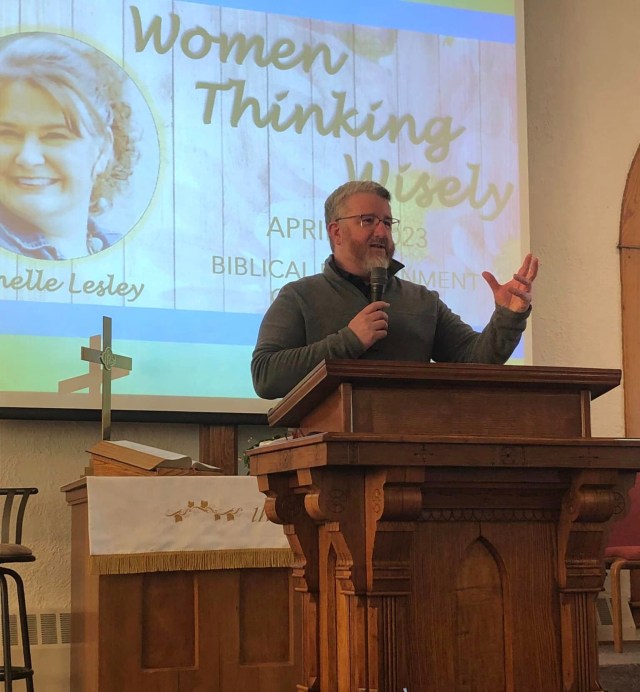
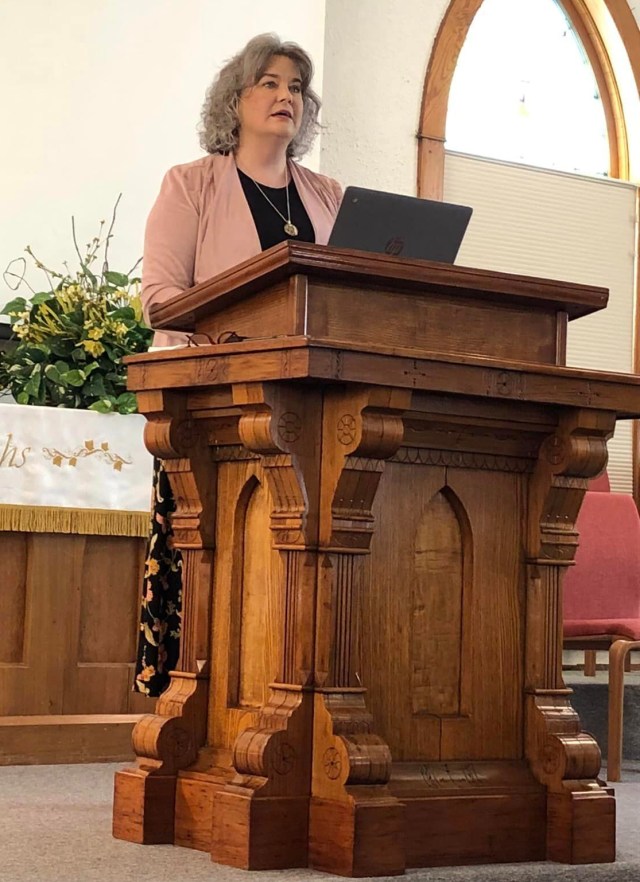
Report Back: Women Thinking Wisely Conference

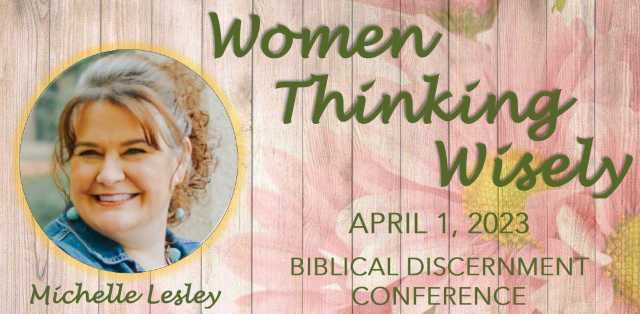
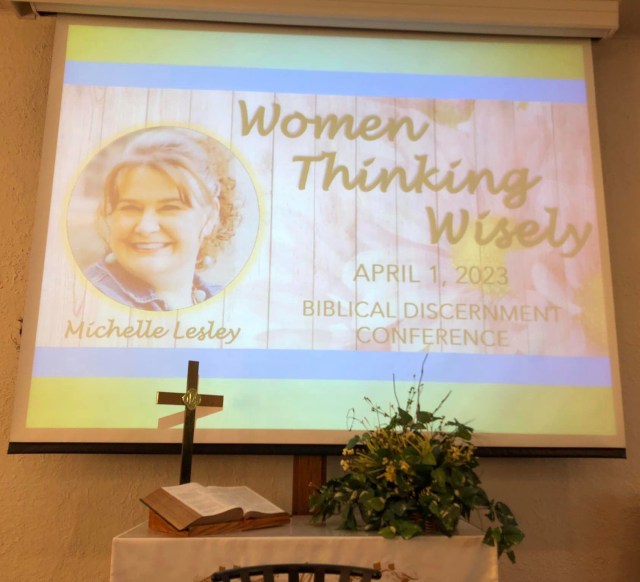
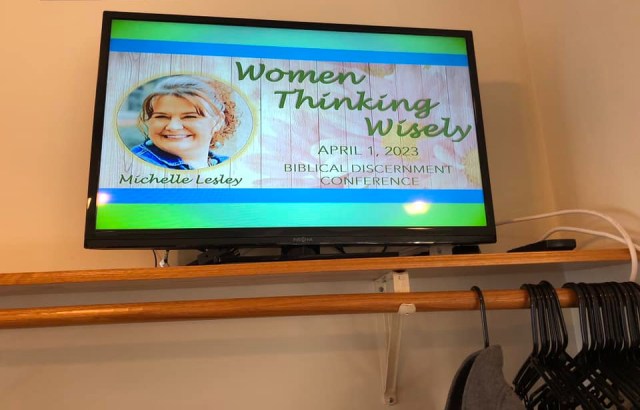
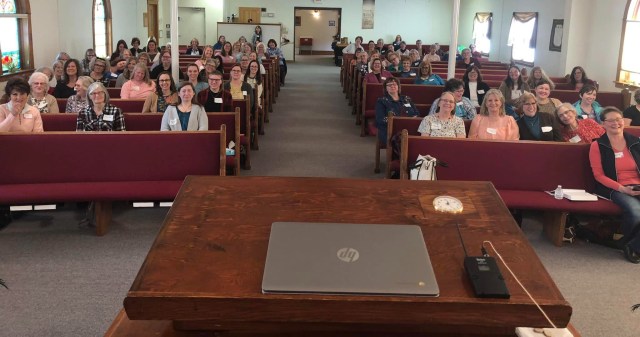
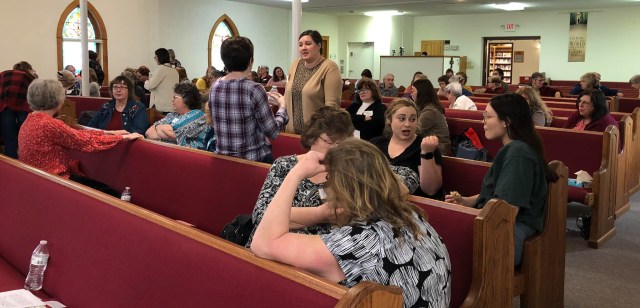
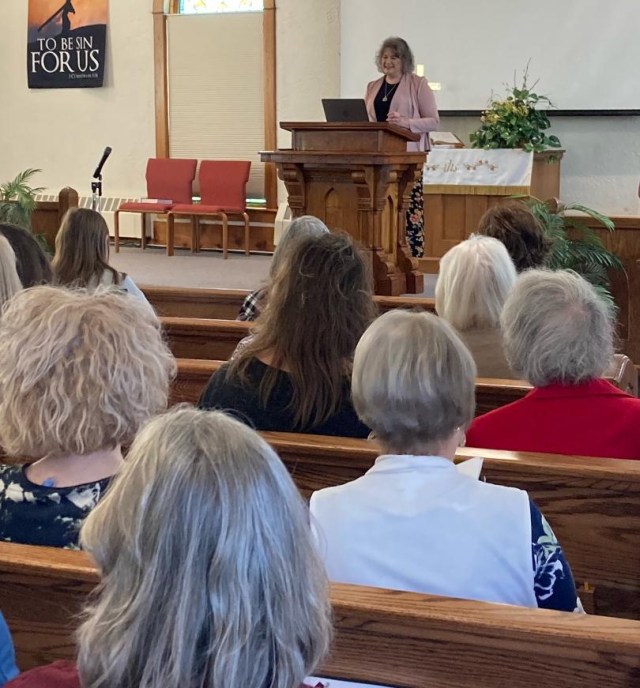
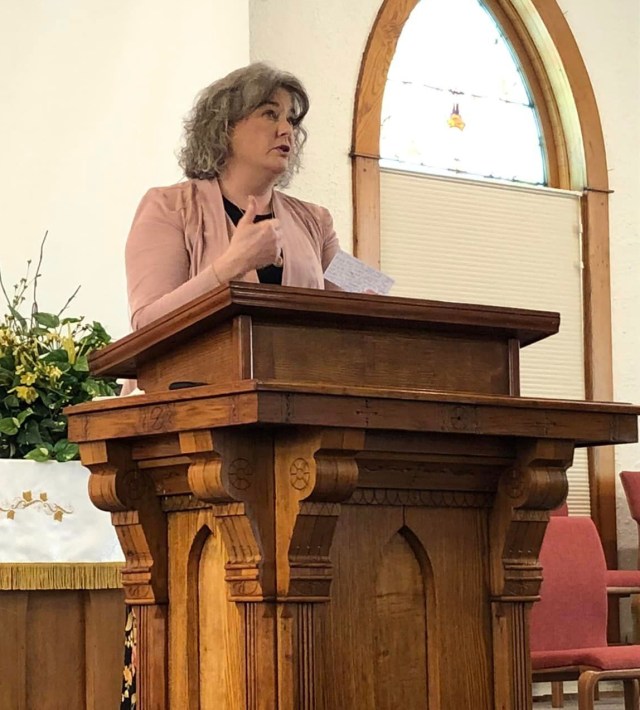
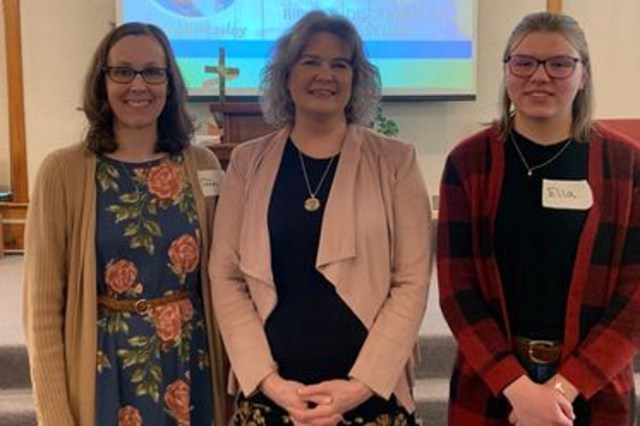
It was such a pleasure to share with the wonderful women of Greenwich, Ohio, and the surrounding area at The Ripley Church’s Women Thinking Wisely conference. TRC’s conference planning committee worked long and hard to make it a wonderful event that was enjoyed by all.

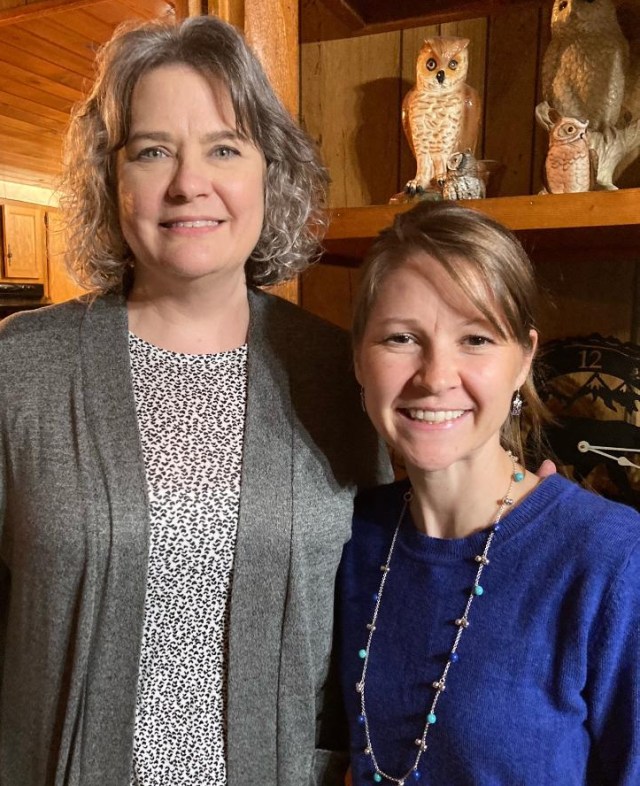
I landed in Cincinnati Friday afternoon and was whisked away to a charming little cabin by planning committee member, Jennie and her husband Bob.

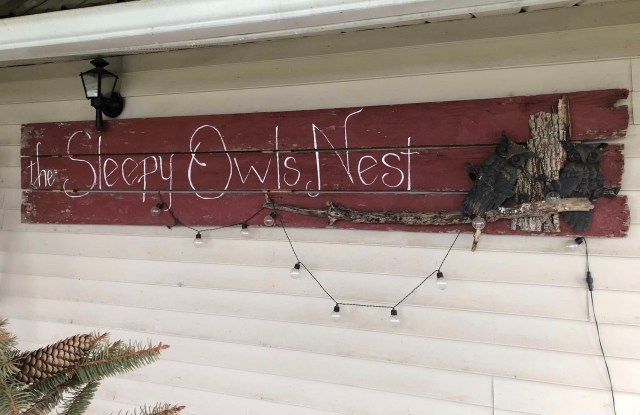
The Sleepy Owl’s Nest cabin is in Shiloh, Ohio, right in the middle of Amish and Mennonite country. I’m afraid this was the best picture of a horse and buggy I was able to capture in my brief time there!

The other members of the planning committee soon arrived at the cabin, and we had a wonderful time of fellowship around a phenomenal lasagna – one of my favorites!

At the bottom right is a picture of me with Kerri Sheldon of 4 Truth Ministry. Kerri was kind enough to write a guest post for me a few years back, and I highly recommend her book Resolute: An Unwavering Stance on the Truth of Godโ€™s Word, which she co-authored with her father, David, and on which her guest post was based. She also put together the awesome hostess bag I was honored with (bottom left) containing local favorites, Amish Country popcorn and Ohio buckeyes, and she hand painted the Ohio Christmas ornament herself! What a talented lady!

I am always amazed at the Providential ways God works through the conferences I speak at. Aside from the teaching and fellowship, sisters from the various churches represented make ministry connections and form friendships, sometimes their churches end up joining together in ministry, and sometimes attendees find the doctrinally sound church home they’ve been searching for.

I was delighted to learn that this was the case for Kerri and her family. They had been looking for a solid church in their area to join, but were unaware of The Ripley Church until Kerri saw on my blog that I would be speaking at a conference there. They started attending, and by the time I got there, Kerri and her mom, Lynn (on the far left in the top left photo) were able to greet me, not only as members of TRC, but also as members of the conference planning committee. What a nifty thing God did!

Saturday morning, it was conference time!

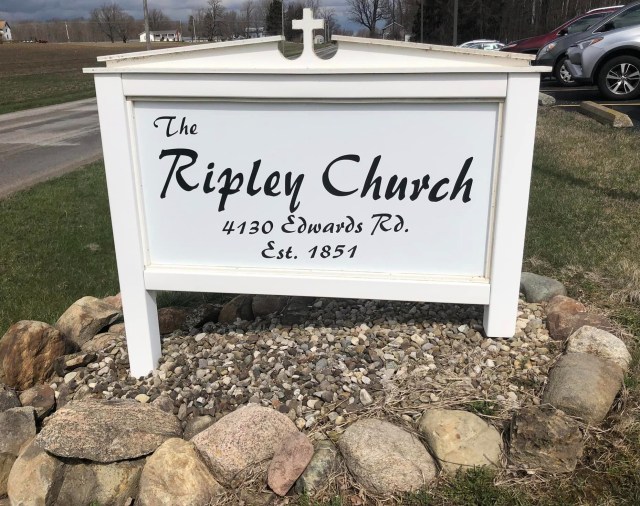
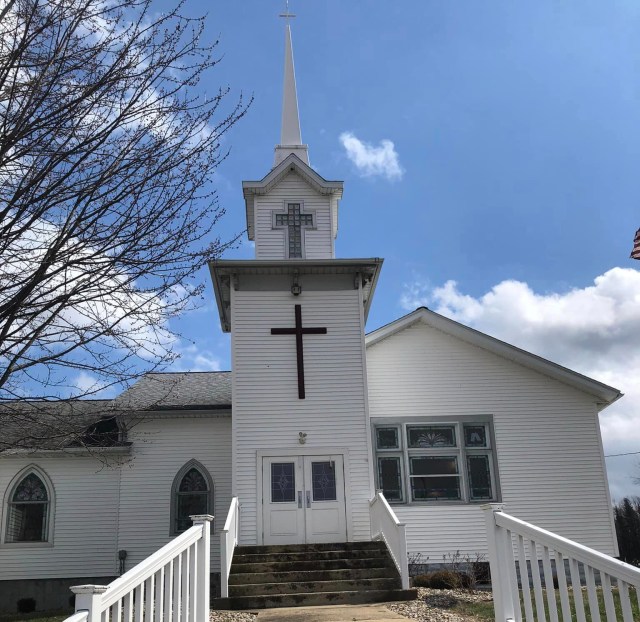
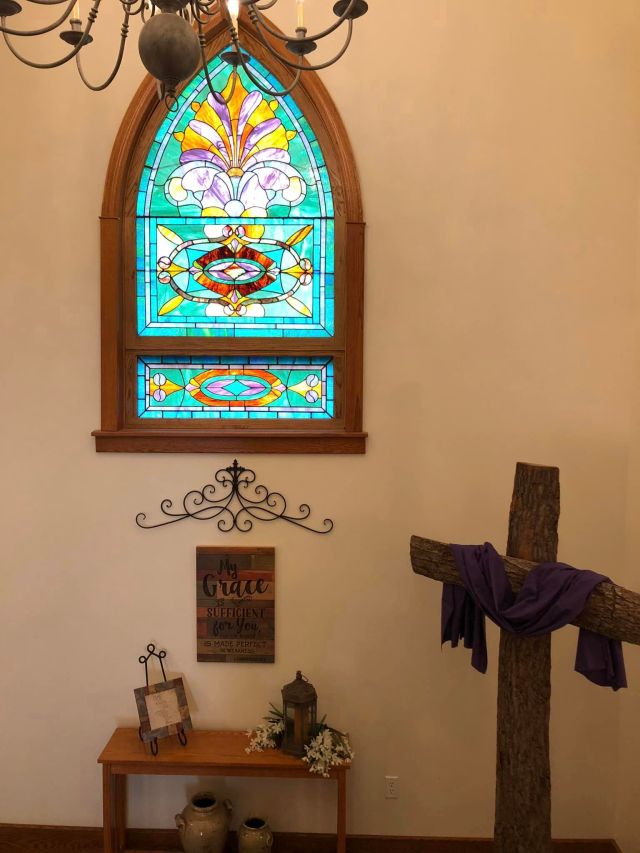
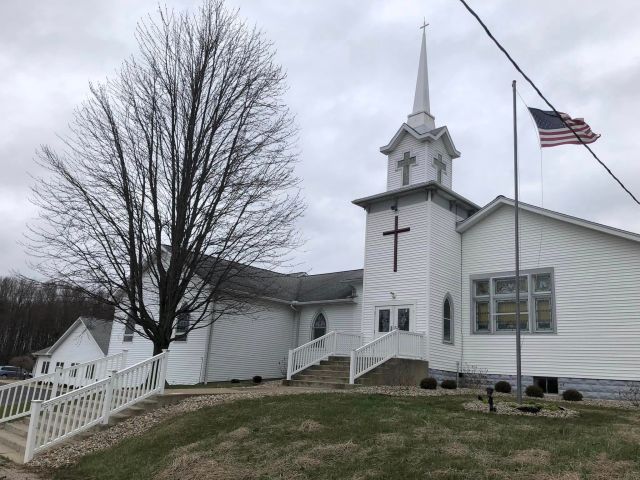
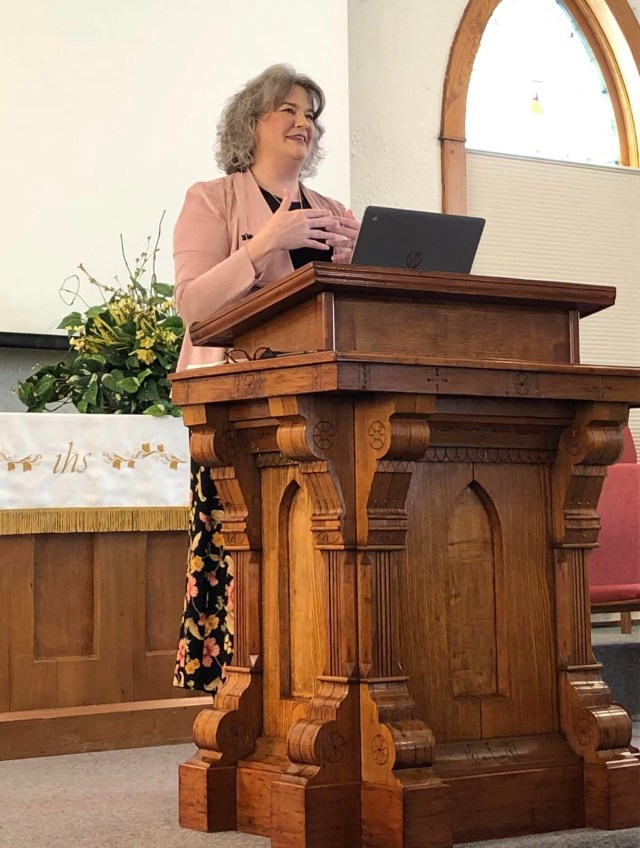
I have a special fondness for little white country churches, and The Ripley Church did not disappoint. Founded in 1851, part of the sanctuary is still the original building.

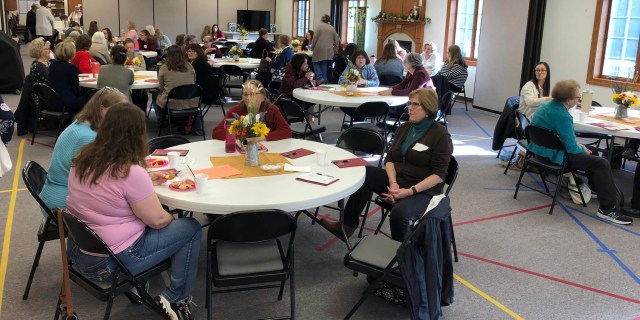
First up- check in and an energizing breakfast and fellowship time:

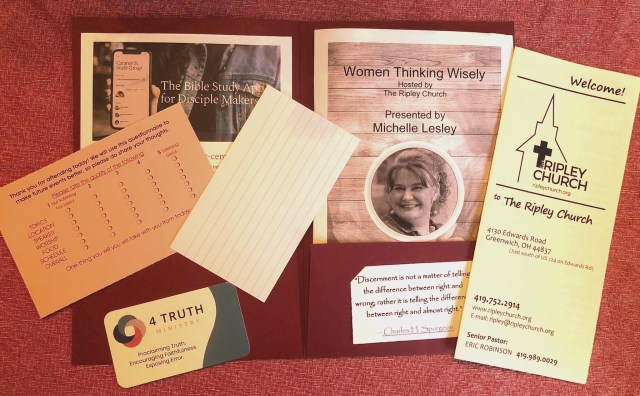
Lots of informative and themed materials greeted attendees as we moved into the sanctuary for teaching time:

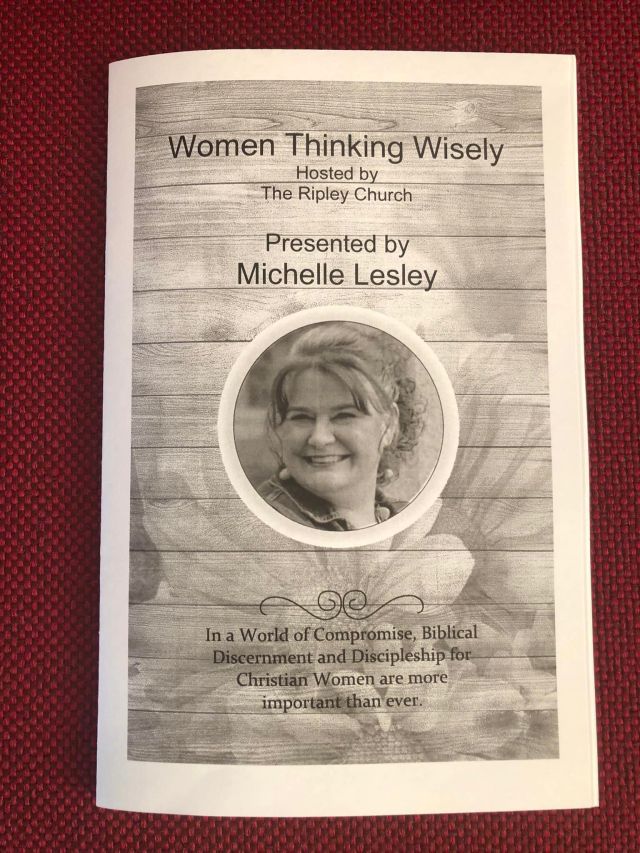
I love the thought and care that went into these helpful conference info packets. I would never be able to think of all of this. When you’re planning a conference, be sure to harness the brains of those detail-oriented sisters!

Folders included info on 4 Truth Ministry, a Bible study app, a card with a quote from Spurgeon from my session on discernment, a program, a conference evaluation card, a TRC brochure, and an index card for writing down questions for the Q&A session.

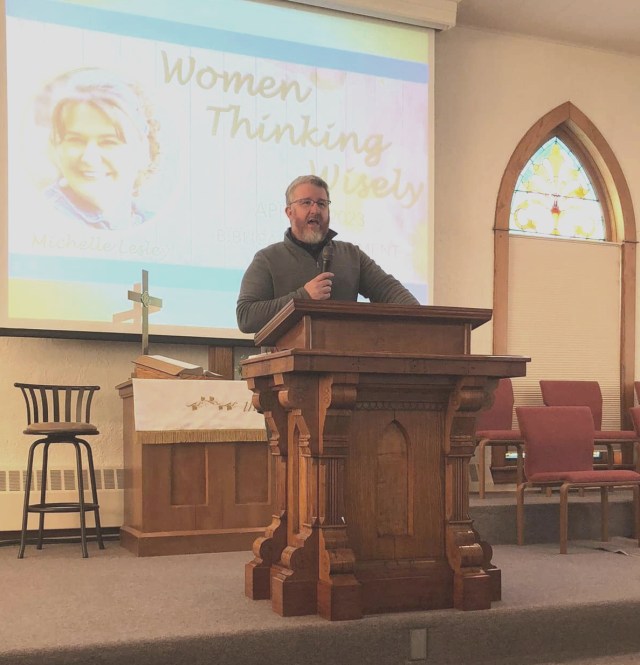
Pastor Eric Robinson was so kind to welcome the ladies and open in prayer.

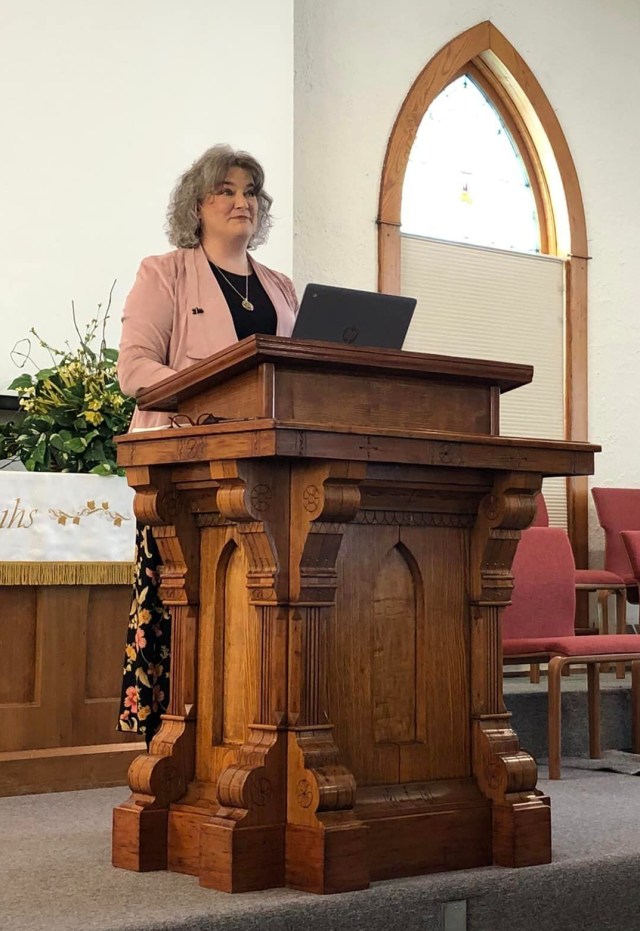
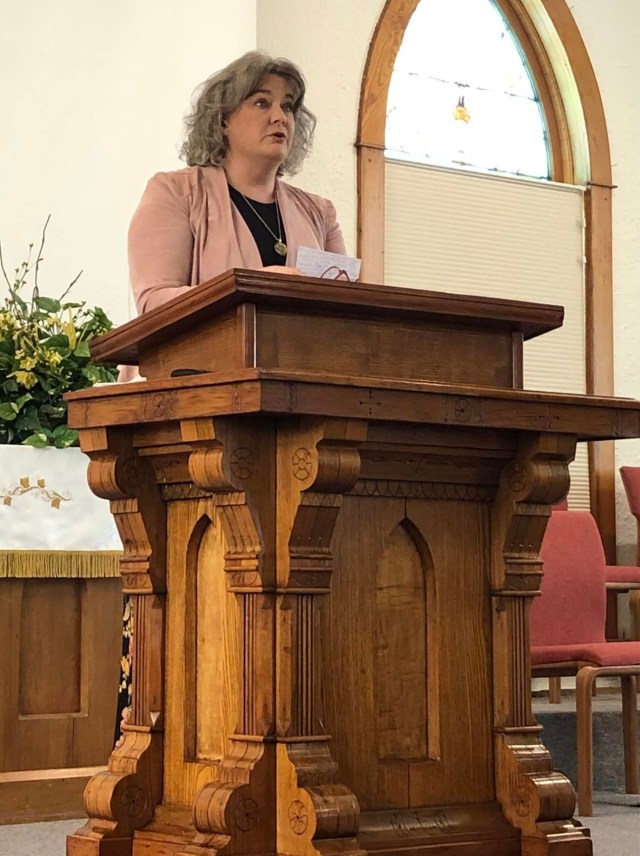
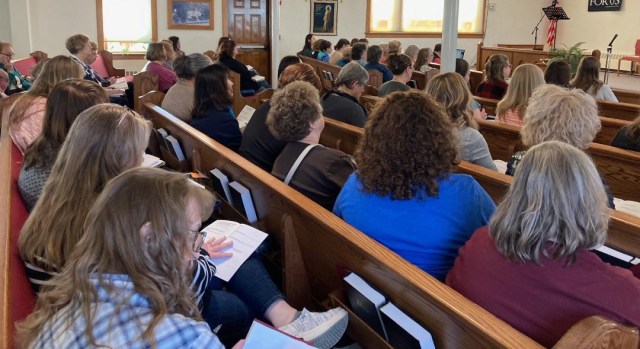
We kicked things off with Discernment 101: Learn to Discern. We talked about what discernment is, and how to use it โ€“ identifying false teachers and false doctrine โ€“ to the glory of God.

After a brief break, we moved on to session 2, Hooked on a Feeling: Living by Godโ€™s Word Instead of Our Emotions. Scripture is our authority as Christians, and we shouldnโ€™t let our feelings lead us around by the nose.

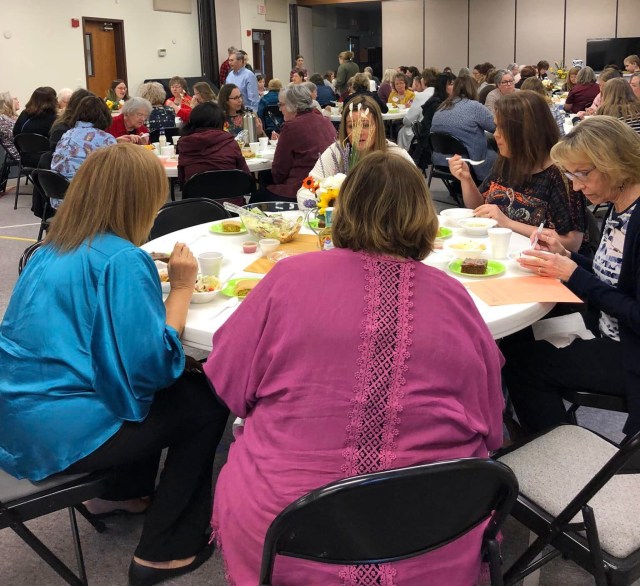
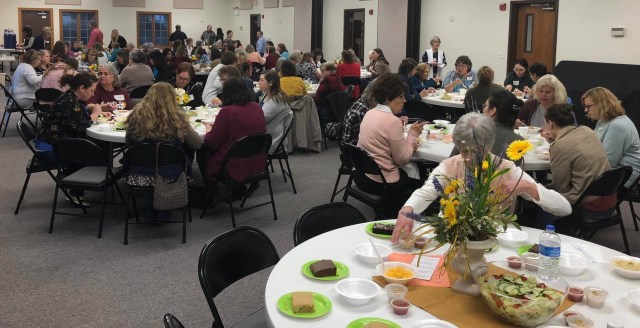
When session 2 was over, it was time for lunch: salad, a choice of hearty, delicious soups, and cake.

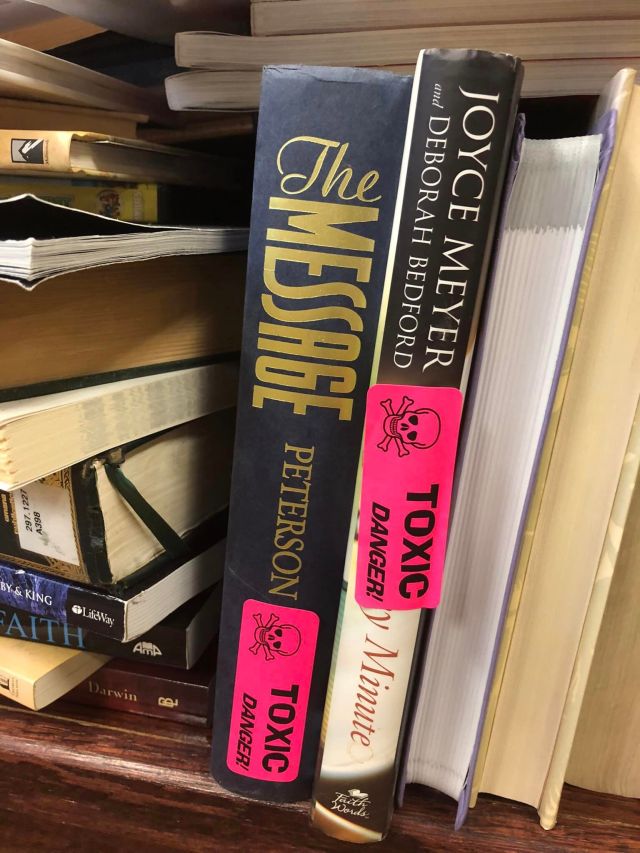
Between sessions, I had the luxury of a few moments of quiet relaxation time in Pastor Eric’s office. You can tell a lot about a pastor from his bookshelves, and I could tell – this is my kind of pastor! ๐Ÿ˜๐Ÿ‘๐Ÿ‘๐Ÿ‘๐Ÿ˜

With full tummies and fuller spirits we returned to teaching with Managing Mediaย โ€“ being wise and discerning with news, social media, movies and TV, and other media we consume.

At the end of the day, we closed things out with a stimulating Q&A session. These ladies asked some challenging questions!

It’s always great to see mothers and daughters attending together!

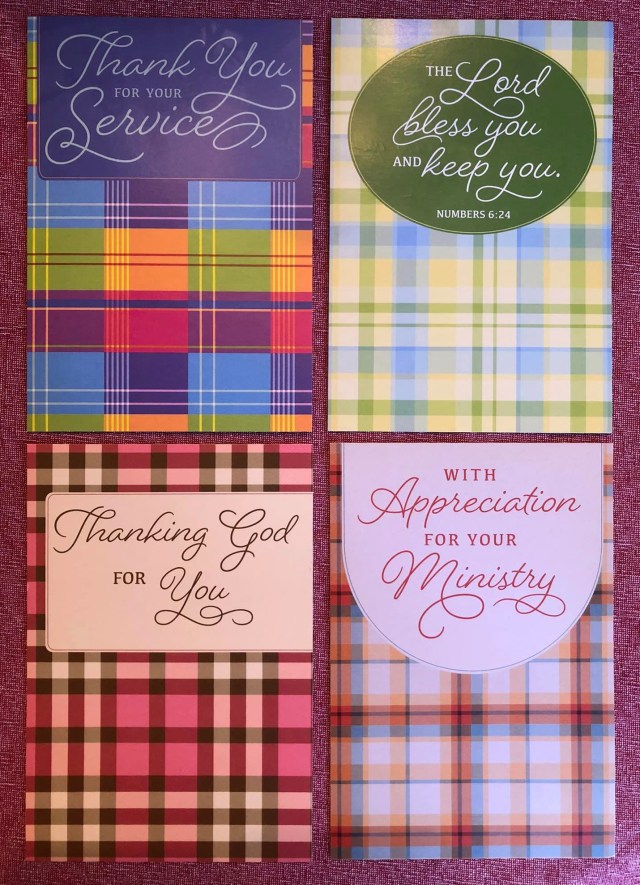
Another oh-so-thoughtful touch to this conference: the planning committee had all of the ladies sign these lovely cards to me. I cherish their kind and encouraging comments.

Once the conference was over, it was time for an early supper (so I could catch an early bedtime for my super early flight home the next day!). One of my favorite things to do when I travel is to sample the local fare.

East of Chicago Pizza got its start right down the road from Greenwich in Willard, Ohio, and is, as you might expect, billed as “the best pizza east of Chicago”. Now, I’ve had authentic Chicago pizza, so I feel safe in saying that if EoC pizza isn’t the best, it’s awfully close. Also delectable were Ballreich’s potato chips, made in nearby Tiffin, Ohio. Lemme tell ya- Ruffles ain’t got nothin’ on these babies.

All too soon, it was time to say goodbye. My deepest thanks to Bonnie, who spearheaded the conference, and who, with her husband, Don, picked me up at an unspeakable hour of the morning to drive me to the airport for my flight home. Thanks also to Jennie and Bob, Janna, the conference planning committee, and all the men and women of The Ripley Church who worked so hard to host a fantastic conference, took care of all my needs, and made me feel so welcome. If you’re ever in the area and need a good church to visit, make plans to spend the Lord’s Day with these wonderful brothers and sisters.


If your church or organization is ever in need of a speaker for a womenโ€™s event, Iโ€™d love to come share with your ladies as well. Click here for more information, or to find an upcoming event near you!


Photo Credits

Many thanks to Kerri, Bonnie, and other conference attendees who took most of the photos above. You may assume that if I’m in the picture or if it’s a good quality photo that I didn’t take it. The remaining photos were shot by me.

Discernment, False Doctrine

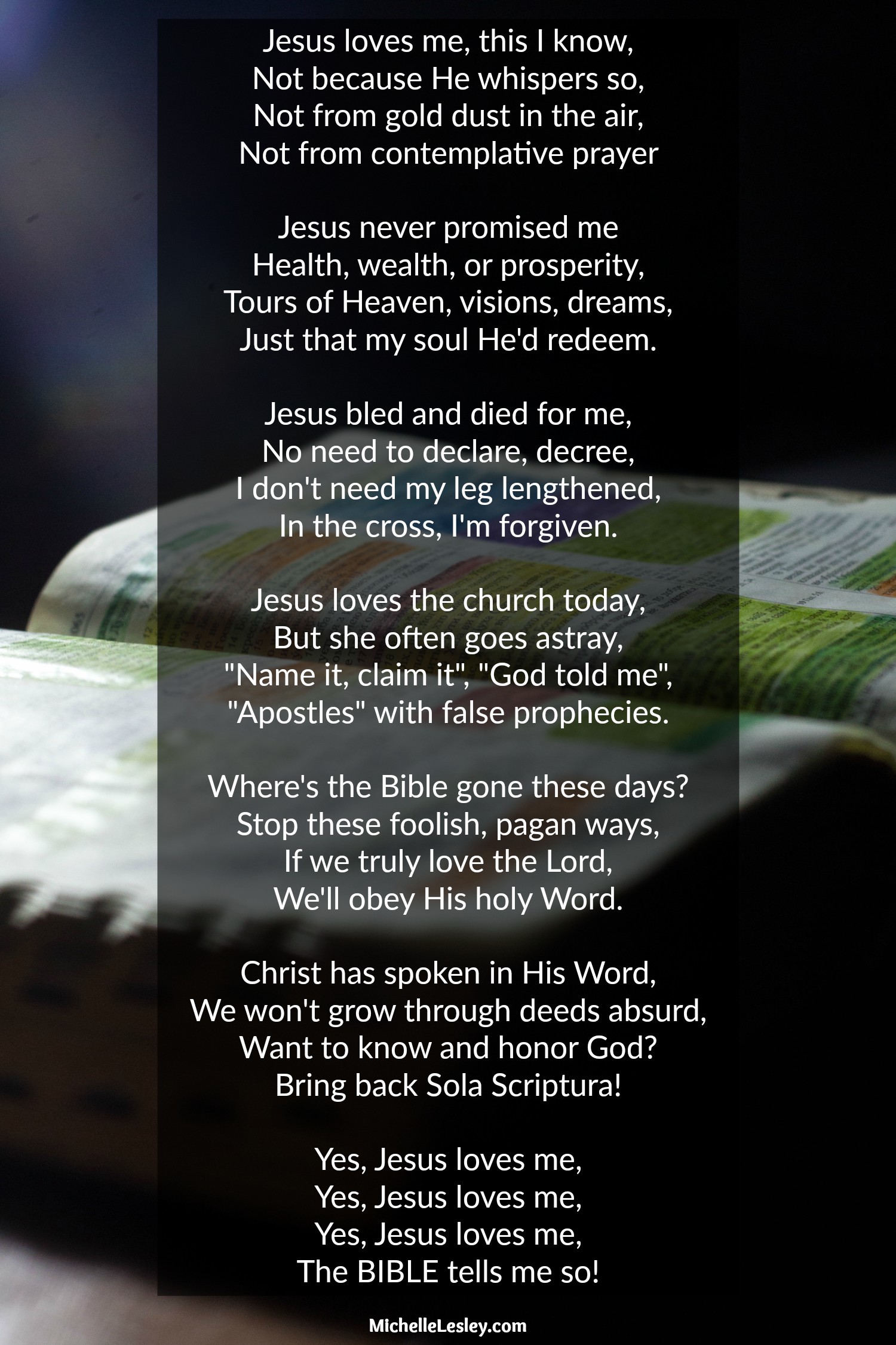
Throwback Thursday ~ Jesus Loves Me: The “Contending for the Faith” Version

Originally published March 6, 2018

Every now and then I do a little creative writing… :0)

Discernment Bible Study

Choose What Is Right: A Study in Discernment- Lesson 3


Previous Lessons: 1, 2,


What Is False Doctrine?

Today’s Scripture passages are embedded in the body of the study. Please click the links in each question.


Questions to Consider

Throughout this study we will be looking at various passages of Scripture rather than working our way through a book of the Bible verse by verse. Because of that, we will need to be extra vigilant to rightly handle these passages in context. I will always attempt to provide the context you need for understanding these passages correctly, but if you need more clarity please feel free to read as much of the surrounding text as you need to – even the whole book, if necessary – in order to properly understand the passage presented.
1. Have you ever studied the book of Judges? If you have, you know this book has a very clear theme which can be found in Judges 17:6b and 21:25b. What is that theme? What does it mean to do what is right in your own eyes? Is believing what is right in your own eyes part of doing what is right in your own eyes? How and why? As Christians, how are we supposed to live and believe? What are some ways Christians (or those who claim to be Christians) today do and believe what is right in their own eyes rather than doing and believing what is right in God’s eyes?

How do we know the difference between what is right in our own eyes and what is right in God’s eyes? What is our standard for answering that question? Our authority for life and doctrine? If this is how we’re to live and believe – submitting to the truth of God’s written Word as our authority in life and our measuring stick for evaluating right actions from wrong actions, right beliefs from wrong beliefs – is it biblical to say that this is also how teachers are to teach?

2. When you get right down to the bottom line, there are two basic ways of doing and believing what’s right in your own eyes – failing to rise to the standard of God’s Word, and going above and beyond the standard of God’s Word. Not being as restrictive as God’s Word is, or being more restrictive than God’s Word is. Too much “grace” or too much “law”.

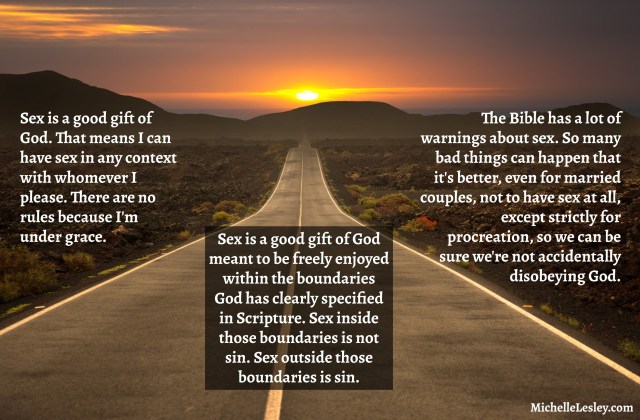
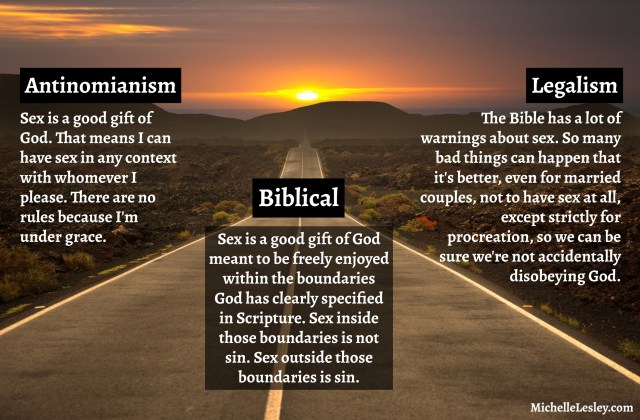
Consider this concept as applied to sex, and what the Bible says about it:

Which side of the road is the “too much ‘grace'” side? “Too much ‘law'”? Which view is the biblical view? (Notice that the biblical view is a “middle of the road” balance between the extremes of man-made “law” and “grace”. If you wander off the road you’re wandering off into darkness. The biblical view is the only one which leads to the sun (Son).)

The theological term for “too much ‘grace'” is antinomianism (also sometimes called “license” – as in, “a license to sin” – or “licentiousness”). The theological term for “too much ‘law'” is legalism (showcased in the Pharisees of Jesus’ day).

3. Antinomianism often fleshes itself out today as:

  • “I’m saved and all my sins – past, present, and future – are forgiven, so why not sin as much as I want?”
  • An “It’s no big deal!” approach to sin
  • The idea that the sin in question is actually biblical (or loving / loving your neighbor, tolerant, compassionate, “what ‘Jesus’ would do”)
  • Obeying what the Bible actually is says is legalism (“Pharisaism”).

What does the Bible say about antinomianism? What does God say about people who claim to be Believers but don’t obey Him?

What are some specific examples of antinomianism that you’ve observed in evangelicalism, in your denomination or church, in your own heart and life?

5. Legalism is most often seen today in churches or individuals who make issues of preference, conscience, or Christian liberty – which are neither prescribed nor prohibited in rightly handled Scripture – into “law”. They consider these “laws” equal to Scripture and believe that anyone who violates them is in sin. A few (generalized) examples:

What does the Bible say about legalism? What are some specific examples of legalism that you’ve observed in evangelicalism, in your denomination or church, in your own heart and life?

Would you say that antinomianism or legalism is the false doctrine most people tend towards today…

  • …in evangelicalism in general?
  • …in your denomination and / or your church?
  • …in your own heart?

6. If you believe falsely about God, sin, the gospel, etc., what impact will that have on your life and your worship?

Let’s look at some examples of unbiblical worship in Scripture. In each of these instances:

  • What was the false belief or doctrine that led these people to worship unbiblically?
  • Was this an expression of legalism or antinomianism?
  • What was God’s response to their false doctrine / false worship? How does God’s response demonstrate how seriously He takes false doctrine / false worship?

Syncretism and idolatry in the temple

Ananias and Sapphira

Nadab and Abihu

The people worship Herod

Taking the Lord’s Supper in an unworthy manner

The Pharisees’ beliefs and practices

7. Since God takes false doctrine / false worship so seriously, what is His posture toward those who teach false doctrine?

8. Some Christians believe that only aberrant soteriology – a false gospel, unbiblical teaching about how to be saved – is false doctrine. Consider these Scriptures. Is this idea biblically accurate?

9. What is false doctrine? Carefully and biblically define this term in your own words.


Homework

Today’s study includes passages from Judges and Ezekiel. You may wish to peruse the relevant parts of my Bible studies on Judges and Ezekiel. How is the state of the church today similar to the state of God’s people and the temple in Judges and Ezekiel?


Suggested Memory Verse