Complementarianism

Throwback Thursday ~ Toxic (Evangelical) Femininity

Originally published August 24, 2018

Toxic masculinity. It’s a buzzword that’s gaining momentum as it’s bandied about in pop culture like a shuttlecock over a badminton net. There’s a clinical definition of the term (which, in the ivory towers of the scholarly world is, properly, “hegemonic masculinity“):

Hegemonic masculinity is defined as a practice that legitimizes men’s dominant position in society and justifies the subordination of women, and other marginalized ways of being a man. Conceptually, hegemonic masculinity proposes to explain how and why men maintain dominant social roles over women, and other gender identities, which are perceived as “feminine” in a given society.

And then there’s the sort of similar working definition of the huddled masses: Anything a man does that others – especially women – don’t like that can, by any stretch of the imagination, be blamed on the fact that he’s a man.

If a man cuts you off in traffic, it’s not that he’s a jerk or didn’t see you, it’s toxic masculinity. If a man holds a door open for a woman, it’s not that he’s polite and helpful, it’s toxic masculinity. If a man leaves his socks on the bathroom floor, it’s not that he’s sloppy and has no home training, it’s toxic masculinity. In other words, he’s not doing these things because he’s a polite or rude or aggressive or helpful human being, it’s because he’s a man who just wants to keep women down and exercise dominance over them.

Pardon my French, but what a bunch of malarkey.

Yes, I’m sure there’s a fringe element of men out there who consciously think they’re better than women, that women shouldn’t have any rights or hold any positions of responsibility, blah, blah, blah. And you know what? They’re considered fringe kooks, and rightly so. But I’m not buying this business of these elitist gnostics telling us that every little move a man makes is a subconscious act of belittling women or exercising domination over them, and neither should you. It’s like the race-baiters who say that every single white person is racist, deep down, and this latent racism manifests itself in everything we do, from the way we tie our shoes to the breakfast cereal we buy at the store. We’re just not aware of it, supposedly.

Poppycock.

Want to know where this notion of toxic masculinity came from? It sprang from the loins of toxic feminism. Zoom out and look at the big picture. This is a manufactured concept, baptized in the (assumed) credibility of academia, designed to help women leverage power and control over men. How? By denigrating them at every turn, thereby convincing the world that men are intrinsically bad and women are good and must be elevated to prominence. Call me crazy if you want to, but it doesn’t take a prophet or the son of a prophet to look down the road and see that the feminist end game here is a matriarchal world where women rule and men drool. And there are plenty of brazen females out there who would openly and unashamedly admit this.

That, however, is not my concern. Sinners gonna sin, and God’s going to deal with them in His own way and in His own good time.

My concern is the way this attitude is fleshing (pun intended) itself out in Christian families and the visible church, and creeping into evangelical women’s (and men’s) hearts. Because, whether or not we’d like to admit it, this worldliness is advancing upon us, and we need to be aware of – and biblically approach – the facets of this issue that are already at our doorstep:

On the Top of the World Looking Down on Creation

I actually laughed out loud when reading some of the academic definitions of so-called toxic masculinity. There seemed to be an air of, “We just don’t understand it! This pattern of male dominance seems to transcend all cultures and time periods!”

Well here’s a really academic response to that: Duh.

I mean, you have to wonder if these researchers and scholars have ever said to  themselves, “I wonder if there’s a reason for that. I wonder if this tendency in men that defies time and culture can be traced back to a pinpointed source.”

There is, and it can. It’s called Creation, and God is the one responsible. God created man first and then woman. God created husbands to lead and wives to be helpers. God set up the Old Testament patriarchal society that became the nation of Israel, which was led by male tribal heads and, later, male kings. God established male leadership in the temple, and subsequently, in the church. The major and minor prophets were male, Jesus was male, the apostles were male, the writers of Scripture were male. And all of this traces back to that one moment in Genesis 2 in which God decided to create man first and hard-wire him to lead, protect, and git ‘er done. Broadlyยน speaking, the reason we see a generalยน pattern of male leadership across time and culture is because God set those wheels in motion.

As Christians, we recognize that sinful men sometimes abuse the positions of leadership God has given them, but that doesn’t negate the entire pattern and call for us to turn it on its head. We study our Bibles and embrace and submit to the way God has instructed men and women to behave in the roles He has bestowed upon us.

Come on, Baby, (Don’t) Do the Woke-Emotion

One of the components of God’s creative work that adds inexplicable beauty to this world is the tender-heartedness, passion, and empathy He built into women in a uniquely feminine way. Emotions. Feelings. God created them, and they are good. What a dreary and heartless world this would be if women didn’t bring nurturing, caring, sympathy, and love to the table. God uses us to soften the hard edges of life and make the planet pleasantly inhabitable.

But along with that good gift comes the challenge to steward it wisely and in obedience to God so that we may use it to glorify Him rather than dishonoring Him.

I see Christian women wisely stewarding their emotions to the glory of God every day as they care for their husbands and families, friends and co-workers, and serve in their churches. It is a beautiful picture of the mature fruit of biblical womanhood.

Unfortunately, I also see the exact opposite. I see (ostensibly) Christian women who scream like banshees any time their pastor preaches on the passages of Scripture dealing with women’s roles in marriage or the church. I’ve seen women who claim to believe and follow the Bible throw an everloving fit when someone points out – from Scripture – that their favorite women’s “Bible” study author is a false teacher. I see women formulating their beliefs and practices about God, worship, the Bible, their own behavior, their families, and their churches based on their own personal opinions, experiences, and feelings rather than on rightly handled Scripture.

And, just like secular feminists demand domination over men because they feel oppressed, have experienced sexism, or resent the world’s history of male dominion, I see Christian women letting their emotions rule the day as they demand unbiblical solutions to their real or perceived personal experiences with men and male leadership.

The anger, the outrage, the hurt feelings, and being offended are nearly as evident in evangelicalism as they are in society at large.

Godly women are not ruled by their feelings. We are ruled by the Bible. We make our feelings submit to and obey God’s Word. We don’t make decisions based on what we like or don’t like, or what makes us feel good about ourselves. We base our decisions on what the Bible says. When our feathers get ruffled, we take a step back and evaluate the situation with rightly handled Scripture. Maybe we’re upset because someone actually sinned against us, but maybe we’re upset because our pride or vanity was wounded, or our unbiblical notions were biblically challenged, or because God used someone to expose an idol we’re worshiping. Maybe it’s not that the other person sinned, but that we’re in sin. Those hurt feelings could be a wake up call from God to humble ourselves and repent.
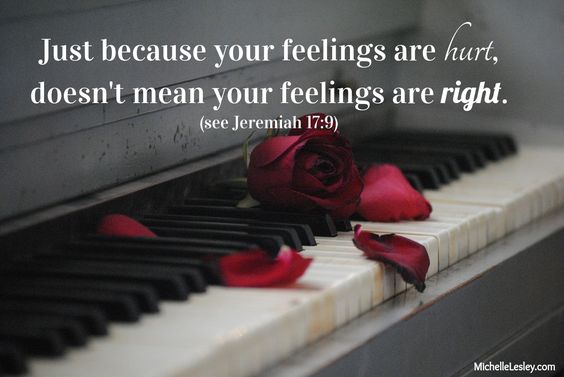
Ladies, we must learn to put our feelings aside and act on the objective truth of God’s Word instead of our fickle and deceptive emotions. If we display the same sorts of fleshly emotionalism as unsaved women, how are we being salt and light in the world, pointing the way to Christ? We’re supposed to be set apart and different from the world.

Why Can’t a Woman Be More Like a Man?

Because – speaking of salt and light – embracing and submitting to our biblical roles in the family and in the church sets us apart from the world. Now, more than ever, we have a unique opportunity to be counter-cultural – simply by obeying God’s Word.

Women being hired as pastors and teaching and exercising authority over men in the church and leading denominations and becoming popular evangelical conference speakers with co-ed audiences – that’s what the world expects because that’s the way they do things. But a Christian woman who happily puts her foot down and refuses to teach men in the church setting or joyfully insists on submitting to her husband? That’s different. It’s against the grain, not the norm.

Remember that out of the ordinary burning bush that caught Moses’ attention and he turned aside out of curiosity to investigate? And remember how, when Moses was watching it burn, wondering what in the world was going on, that God called to him out of that fiery shrub – “Follow Me.”? God can do the same thing with our obedience to Scripture.

Lost people see this anomaly of our “weird” behavior, and they want to know what in the world is going on. Why do we act differently than they do? And that’s when we get to explain it to them. We get to share the gospel. God can call to them out of our passionate burning for Christ and His Word, “Follow Me.”.

People in darkness gravitate toward light. Salt makes people thirsty. Do we care more about giving them the Light of the World and the Living Water or our own selfish and fleshly desires for power and position? Our embrace of and obedience to the biblical roles God has laid out for us as Christian women is one gateway to sharing the gospel with the lost.

Toxic femininity is worldly and fleshly. It has no place in Christian homes and churches. How do we combat it? We take up the sword. We submit to the authority and sufficiency of Scripture. We recognize that God is the authority in our lives, not self, and that we are to obey Him at any cost – even at the cost of our convenience and pleasure. We trade our desires for His.


ยนI’m well aware that there are plenty of exceptions to this generalization. I’m referring to a broad pattern across time and culture, here. There are many biblical ways women can contribute and lead in the family, society, and the church.

Psalm 119 Bible Study

Psalm 119: The Glory of God’s Word ~ Lesson 10

Previous Lessons: 1, 2, 3, 4, 5, 6, 7, 8, 9

Read Psalm 119:129-144

Recall the things from the introductory lesson that you wanted to keep in mind as you study the text of Psalm 119.

Don’t forget to read in complete sentences instead of stopping at the end of each verse.

Recall the themes you’ve been noticing in Psalm 119. Watch for those themes to be repeated in today’s and future passages. You may wish to make a list of those themes to refer to throughout this study.

Questions to Consider

1. Review your notes from last week’s lesson. Does that passage relate to this week’s passage? How? Do you notice any repeated words, thoughts, or themes?

2. As you have been studying Psalm 119, have you noticed that everything in the psalmist’s life is oriented toward God and His Word? I illustrated his God-ward orientation like this in my own notes: “Let me eat my Wheaties so I’ll have the strength to obey Your Word.” “Even when I’m brushing my teeth, I long for Your statutes.” Explain the psalmist’s desire, reflected in today’s passage, to have everything in his life: his heart, his actions, his environment, and his relationships with others, align with, be saturated with, and be enthralled with God’s Word. Compare that desire to these passages. What does it mean to glorify God in whatever we do? To desire God’s will in every circumstance? Explain the friction and tension sin – our own sin, others’ sin, and living in a fallen world – creates as it works against that desire. When and how will this conflict between sin and God’s will and His glory be resolved?

3. How is Psalm 119 – as a whole, and today in verses 132-135 – a model for our prayer life? Compare the psalmist’s prayer in this passage to the Lord’s Prayer. Would it be a right handling of God’s Word to see the Lord’s Prayer as sort of a general, condensed version of the prayers we see in Psalms, especially Psalm 119? How does this similarity in prayer from the Old Testament to the New Testament to today reflect God’s immutability – His unchanging nature?

4. Read verses 136 and 139 together. Describe the two reactions the psalmist has to others’ sin. Why does he react to others’ sin this way? List some reasons. Do you react to others’ sin (and not only sin that directly affects you) in the same way as the psalmist, and for the same reasons? What is it about our new nature in Christ that moves our hearts to view and respond to sin this way?

5. How many times are the words right, righteous, and righteousness used in 137-144? Define righteousness. Explain in your own words what each of these occurrences of right/righteous/righteousness means in this passage. Describe how the concept of righteousness “bookends” (137 & 144) this passage. Who/what is righteous? How is He/it righteous? How are we to respond to that righteousness? How does the righteousness described here help us to have confidence in God and His Word? How does it lead us to trust God and His Word?

6. Compare and contrast the reaction to sin of #4 with the righteousness of #5. How are they connected? Is it possible to have one without the other? Why or why not?


Praying Psalm 119

Have you ever tried praying the psalms? I want to encourage you to try praying part of Psalm 119 back to God each week of this study. (If you’re familiar with my other studies, this will take the place of the weekly “Homework” section.)

The psalms are uniquely suited for praying back to God, both verbatim and conceptually, because they are often written as prayers – as though the psalmist is talking to God. Did you notice that about today’s passage? In which verses?

What is a concept or thought for your own life that the Holy Spirit impressed on your heart or convicted you about from today’s passage? Is there a particular verse(s), or maybe the whole passage, that you would like to pray back to God verbatim? Whatever your “prayer point” from today’s lesson, pray it at least daily until we get to the next lesson.


Suggested Memory Verse

Speaking Engagements

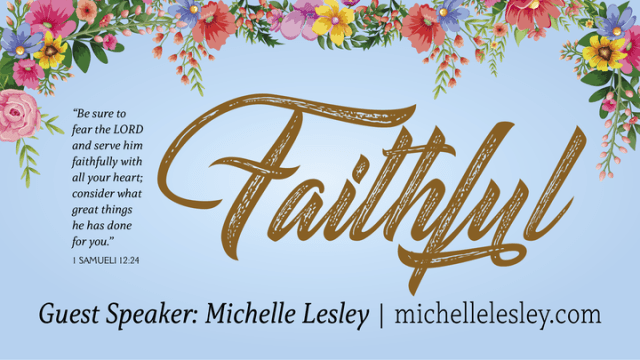
Report Back: Faithful Conference

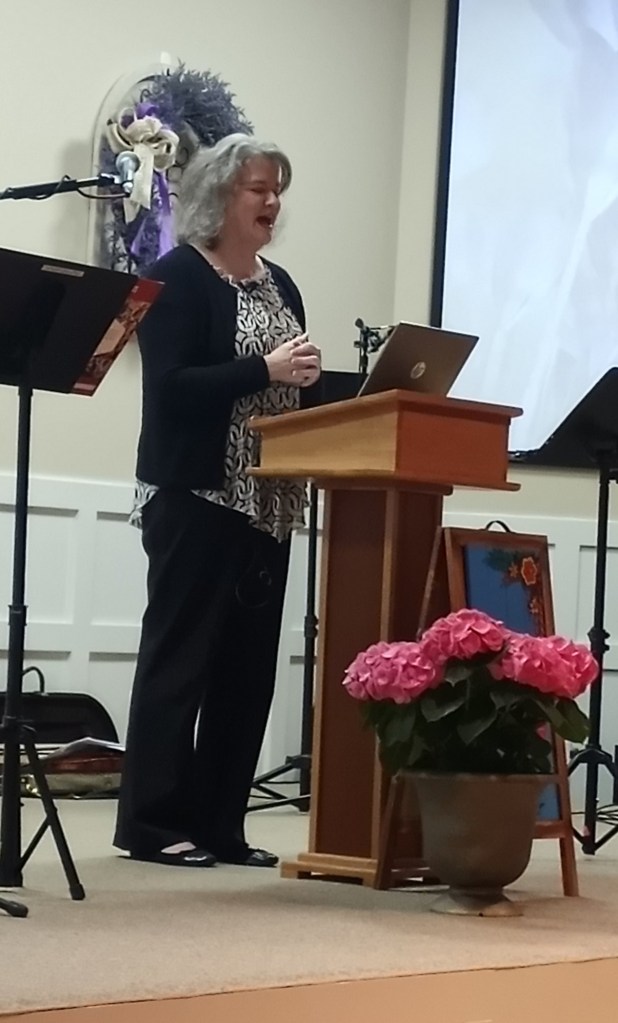
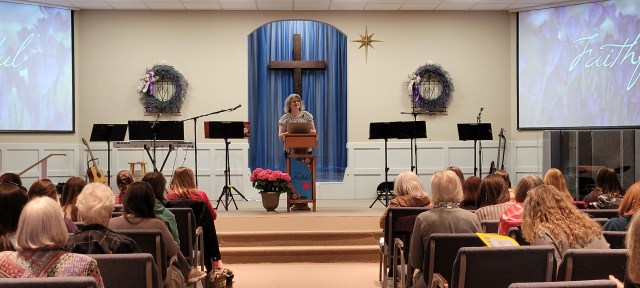
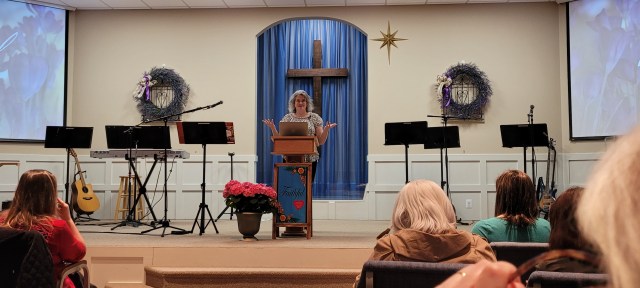
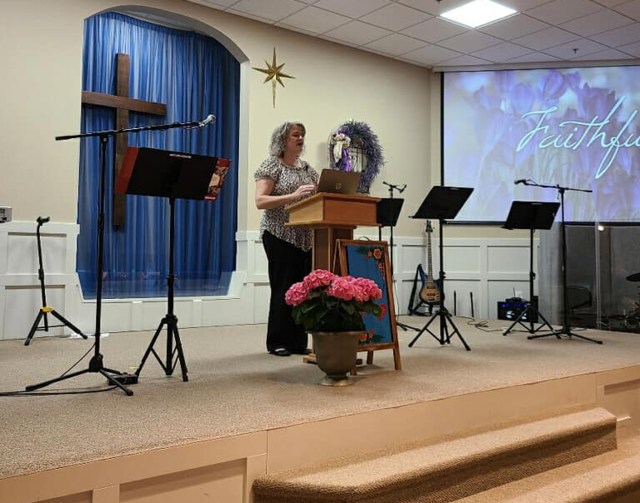
I had a wonderful time last week sharing and fellowshipping with the ladies of Providence Bible Church (and the surrounding area) in lovely Culpeper, Virginia, at the Faithful conference!

I arrived in Culpeper on Thursday evening, so there was plenty of time to rest up and prepare before the conference.

My hosts for the weekend were the perky Miss Katie and her aptly named husband, Happy. They live in a beautiful home on the lake, and I loved hearing their testimony of coming to Christ, and to each other!

My view while working Friday morning
Some sweet hostess gifts were waiting in my room

Friday, Katie was kind enough to treat me to a delicious Italian lunch followed by a little sightseeing.

Culpeper is home to the Packard Campus of the Library of Congress’ National Audio-Visual Conservation Center, “where the Library of Congress acquires, preserves and provides access to the worldโ€™s largest and most comprehensive collection of films, television programs, radio broadcasts, and sound recordings.”. On my trip to Faber, Virginia, last year, I learned that the local flavor is often captured in a LOVE (“Virginia is for lovers”) sculpture. Culpeper’s is made of film reels, paying tribute to the Conservation Center.

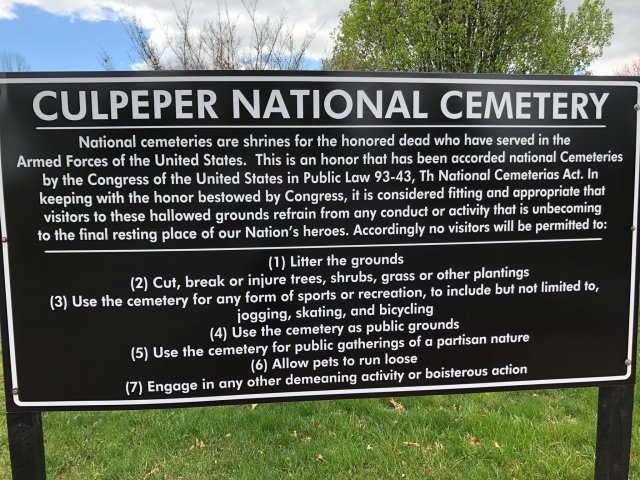
We also stopped by Culpeper National Cemetery. Originally established in 1867 as a burial ground for Union soldiers who were killed in the area during the Civil War, the cemetery is now the final resting place for over 7500 of our nation’s heroes.


Friday night, it was time to get down to the business of teaching and studying God’s Word. (Conference audio/video will be available on PBC’s website as soon as they’re able to get it processed and posted.)

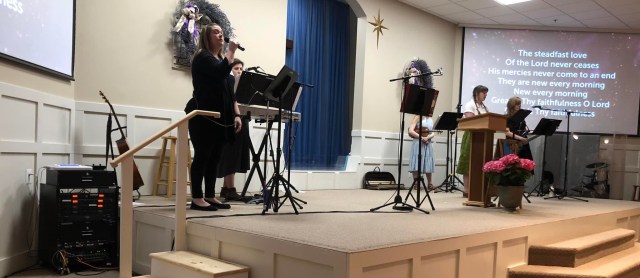
After check in and worship…

Check out what was in the ladies’ “swag bags”! I really liked the little packet of memory verses (about faithfulness, of course!) with the wooden card holder. What a great idea!
These ladies did a wonderful job leading us in song and prayer

…we kicked things off with Faithful to the Word, a teaching session on the basics of how to study the Bible.

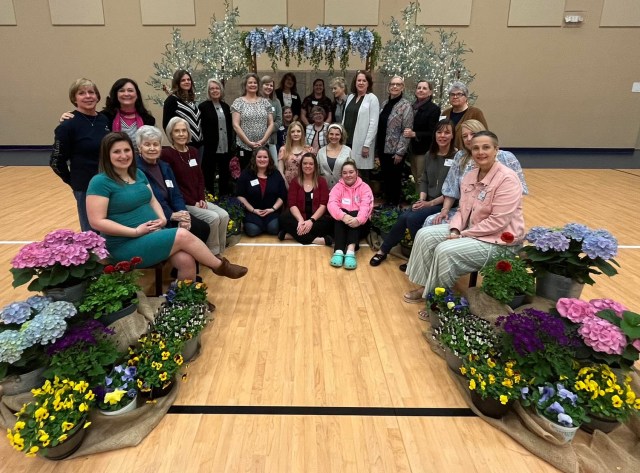
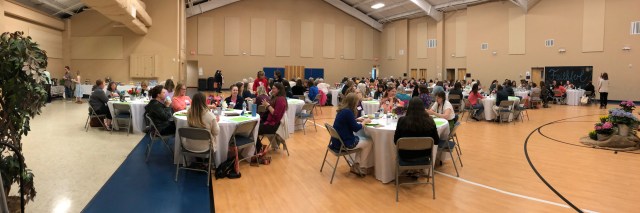
Next up was a hearty baked potato bar for dinner in the gym. Didn’t the planning committee do a fabulous job of decorating?

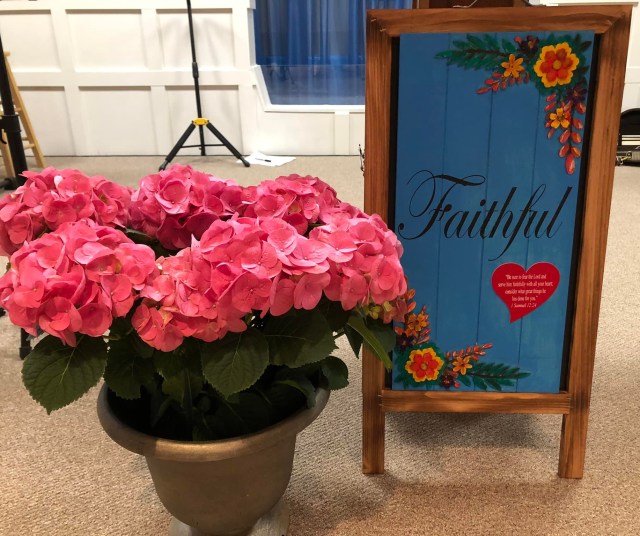
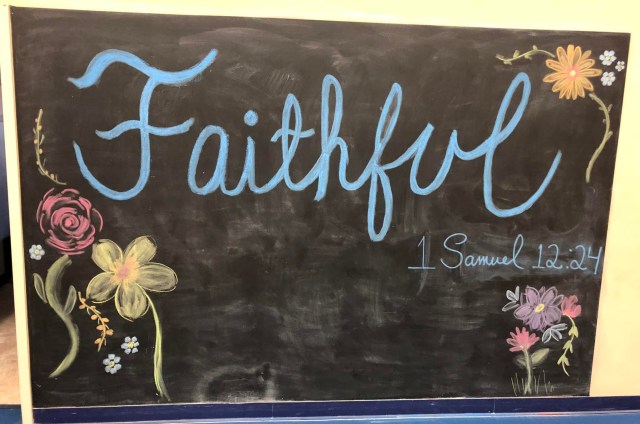
Don’t you love how all the flowers match the flower art on the Faithful materials (programs, PR materials, etc.)? I love continuity of theme, and these ladies did it spectacularly!

Isn’t this rough-hewn bench gorgeous? You can see it sitting under the arbor in the picture taking area in the photo above. Heather Edgecombe, wife of PBC’s pastor, Jarred, is the one who initially reached out to me last year to speak at the Faithful conference. A few months into planning, her cancer recurred, and, sadly, she was unable to attend the conference due to undergoing treatment for it. A husband and wife team created this masterpiece to raise money for Heather’s treatment. Y’all take a moment to pray for Heather, please.

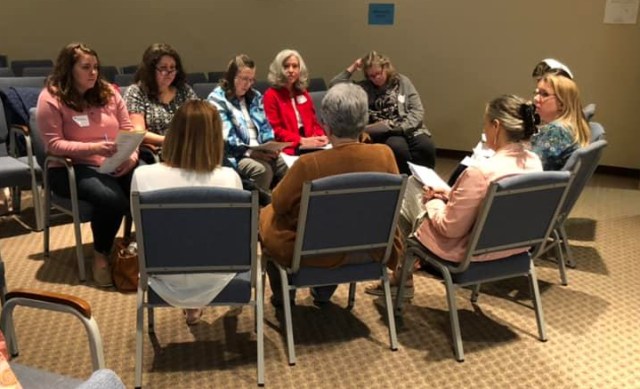
Our last session for the evening was Faithful to Our Roles, discussing the beauty of the biblical role of women in the home and in the church. The ladies then broke into discussion groups to talk over the material.

Saturday morning started bright and early with Faithful Discernment. What is discernment, and how can you tell if what you’re being taught matches up with Scripture? Faithful in Suffering was our final teaching session. As Christians, there’s a hero for our suffering, there’s hope in our suffering, and, in Christ, there’s a way to handle our suffering.

3
3
4

After teaching, the ladies rejoined their discussion groups to share what they had learned.

Our last gathering was a fun time of Q&A.

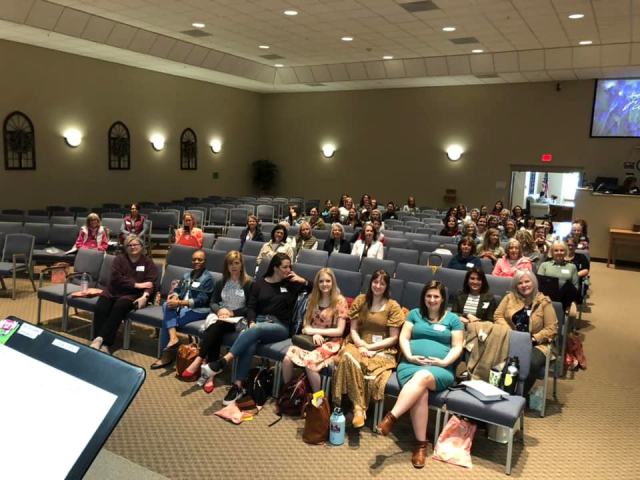
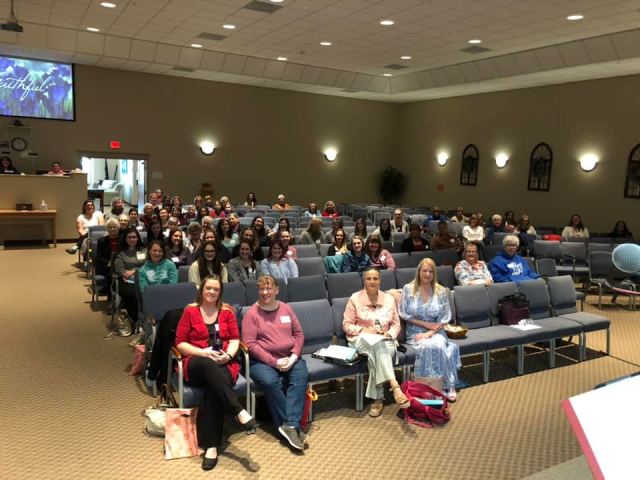
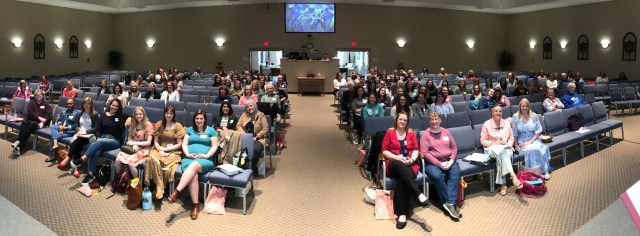
Ladies from all over Virginia and from as far away as Tennessee, Kentucky, New Jersey, Maryland, and North Carolina came out for Faithful! It was a great turn out!

Lunch and fellowship was a great way to end the day!

Just a bit more sightseeing before heading home – we passed by the Pentagon on the way to the airport. I was told this was the side of the building that the plane crashed into on 9/11. Sobering.


Many thanks to Heather, Julie, Lesley, Katie and Happy, Danielle and Rob, and all of the other ladies and gentlemen of Providence Bible Church who worked so hard to make Faithful a great conference, took care of all my needs, and made me feel so welcome. If you’re ever in the Culpeper area, be sure to stop in to PBC for a visit!


If your church or organization is ever in need of a speaker for a womenโ€™s event, Iโ€™d love to come share with your ladies as well. Click here for more information.


Photo Credits

Photo of Michelle in front of “LOVE” sculpture by Katie Hash.

Photos marked “1”- Photographer unknown (if it was you , let me know so I can credit you! :0)

Photo marked “2” by Melissa Morris

Photos marked “3” by Julie Smith

Photo marked “4” by Lesley Lezcano

All other photos by Michelle Lesley.

Psalm 119 Bible Study

Psalm 119: The Glory of God’s Word ~ Lesson 9

Previous Lessons: 1, 2, 3, 4, 5, 6, 7, 8

Read Psalm 119:113-128

Recall the things from the introductory lesson that you wanted to keep in mind as you study the text of Psalm 119.

Don’t forget to read in complete sentences instead of stopping at the end of each verse.

Recall the themes you’ve been noticing in Psalm 119. Watch for those themes to be repeated in today’s and future passages. You may wish to make a list of those themes to refer to throughout this study.

Questions to Consider

1. Review your notes from last week’s lesson. Does that passage relate to this week’s passage? How? Do you notice any repeated words, thoughts, or themes?

2. Describe the psalmist’s posture towards evildoers (113, 115, 118, 119, 126). When you think of people who live in unrepentant rebellion against God, do you tend to have the same posture toward them as the psalmist – righteous anger that they are enemies of God, and, consequently, your enemies as well? Or do you tend to have compassion and a “there, but for the grace of God, go I” posture toward them? Explain why both of these postures are biblical at their appropriate times. Why is it important – for our own hearts and when dealing with and witnessing to the lost – to have a biblically healthy, and appropriate to the situation and individual, balance between those two postures? What could be some of the negative results of having too much compassion for the lost? Of having too much of an “enemies of God” posture toward the lost? How would it impact a church that adopts an out of balance “compassion” posture or “enemies” posture toward sinners?

3. What does double-minded mean in 113? How does the psalmist contrast double-mindedness with God’s stable, secure, and sure law? How does the stability of God’s Word bring us hope? (114) What does the New Testament say about being double-minded? Sometimes we think of the full-throated atheist as the greatest danger to God’s people, but how might a double-minded “Christian” be even more of a threat to the church from within?

How can the double-minded and evildoers pull us away from our hope that’s a result of abiding in Christ and His Word (115-117), and how can they be a distraction and a discouragement from obedience?

4. In 118-120, how does the psalmist describe the way God will deal with evildoers? How does this create a healthy and biblically appropriate fear of God in the psalmist? What is the difference between being afraid of God as some sort of mean monster of indiscriminate wrath, and having a healthy and biblically appropriate fear of God? Considering everything you’ve studied in Psalm 119 so far, does the psalmist’s “obsession” with obeying God’s law seem to be motivated by love for God or being afraid of God? How does an appropriate fear and reverence for God’s power, holiness, wrath, etc., grow our love for Him?

5. Describe what is happening in the psalmist’s life in 121-125, and how he pleads with God. What does he ask God to do to help him? Why? Have you ever been in a situation like the psalmist’s in which you pled with God to intervene over a protracted period of time, and it seemed like He just wouldn’t budge? How does the psalmist’s statement in 126, “It is time for the Lord to act,” resonate with you? Why, in the second half of 126, does he say it is time for the Lord to act? Is it for selfish or personal reasons? Explain how the psalmist is reflecting God’s attribute of justice in this statement. When someone treats you unjustly (actual injustice, not just “I don’t like what you did”) are you more concerned with the pain or problems she is causing you, or the fact that she’s sinning against God by breaking His law?

How is the psalmist’s reflection of the justice of God a result of his loving, studying, and obeying God’s Word? Which godly character traits is God growing in you as you love, study, and obey God’s Word?

6. The psalmist has talked about suffering and being afflicted many times so far in Psalm 119. How is being the victim of injustice (121-125) another form of suffering? Name some godly character traits God grows us in as a result of suffering through injustice. How might growing us in those godly character traits be more important to God, and better for us, than rectifying the unjust situation right away?

7. What are the “therefores” in 127 and 128 “there for”? What do they refer back to? Explain 126-128 in your own words.


Praying Psalm 119

Have you ever tried praying the psalms? I want to encourage you to try praying part of Psalm 119 back to God each week of this study. (If you’re familiar with my other studies, this will take the place of the weekly “Homework” section.)

The psalms are uniquely suited for praying back to God, both verbatim and conceptually, because they are often written as prayers – as though the psalmist is talking to God. Did you notice that about today’s passage? In which verses?

What is a concept or thought for your own life that the Holy Spirit impressed on your heart or convicted you about from today’s passage? Is there a particular verse(s), or maybe the whole passage, that you would like to pray back to God verbatim? Whatever your “prayer point” from today’s lesson, pray it at least daily until we get to the next lesson.


Suggested Memory Verse

Complementarianism

Mythbusting Complementarianism: 4 Truths Egalitarians Need to Know About Complementarian Women

Originally published May 31, 2019

I am often frustrated in my role as a complementarianยน woman. I am not frustrated by what God teaches in the Bible about my roles in the home and the church. I am not frustrated in carrying out those roles. I am not frustrated by complementarian men.

I am frustrated by egalitarians – most of the ones who have crossed my path, anyway – because of the incorrect assumptions they make about me and other complementarian womenยฒ.

And it’s not just that the assumptions are wrong, it’s that the assumptions are often hypocritically, “log in the eye,” wrong. Then, they turn around and use these false assumptions as reasons to fight against complementarianism. But the reasons don’t exist. They’re shadow boxing. Fighting against a ghost. If you’re going to fight for something, your fight should at least be based on legitimate reasons.

I’m under no delusions that this article will change the hearts and minds of egalitarians, but if I could, here’s what I’d try to help them understand…

1.
It’s a spiritual issue.

I know this isn’t going to be popular. I know I’m going to be called judgmental and harsh and any number of other printable and unprintable names, but I’m going to say this anyway because this is the crucial element on which this entire complementarian vs. egalitarian argument rests.

This is a spiritual issue. It’s not an oppressors versus victims issue, it’s not about power or position or circumstances or legalism or casting off shackles. It’s not about any of those visible, tangible, surface level things we think it’s about. This goes beyond the earthly realm and has its foundation in the invisible, spiritual realm. The reason you hold the positions and opinions you hold as an individual is based on one thing – your relationship with God. This is a me versus God issue. Do you love and obey God as a genuinely regenerated Christian, or do you reject Him and rebel against His commands as someone who is still lost?

The Bible makes crystal clear from Genesis to Revelation that people who genuinely know and love God obey Him, and that if you don’t obey Him, you don’t know Him or love Him. Over and over and over again we see this through Israel’s countless cycles of idolatry and the prophets calling them to repentance in the Old Testament, to John’s near broken-record repetition of the theme in the New Testament. Scripture is clear. Love of God and obedience to God are inextricably and irreducibly intertwined.

And by this we know that we have come to know him, if we keep his commandments. Whoever says โ€œI know himโ€ but does not keep his commandments is a liar, and the truth is not in him, but whoever keeps his word, in him truly the love of God is perfected. By this we may know that we are in him: whoever says he abides in him ought to walk in the same way in which he walked. 1 John 2:3-6

Additionally, if you’re not saved – a “natural man” – the things of God are folly to you. It’s not that you’re smarter or enlightened or have a different opinion than those who obey Scripture. It’s that you’re spiritually incapable of accepting, embracing, and obeying what God has told you to do. That’s why you see those of us who do as fools.

The natural person does not accept the things of the Spirit of God, for they are folly to him, and he is not able to understand them because they are spiritually discerned. 1 Corinthians 2:14

Let me say it plainly. If your general trajectory in life is to consistently find yourself angered by, indifferent to, or unable to accept the plain meaning of Scripture, and your heart persists in fighting back against God’s Word even if you’ve been biblically corrected, you are almost certainly not saved.ยณ That’s not me saying that. That’s a whole lot of Scripture saying that. Regardless of how saved you feel. Despite what you may claim to be. No matter what people have told you about your salvation. God says loving Him equals walking with Him toward embracing, loving, and obeying His commands. And that includes His commands about the roles of men and women.

This is the fundamental reason most egalitarians disagree with most complementarians. It’s usually not that either side doesn’t understand what the other side stands for. It’s that both sides generally do understand what the other side stands for and they reject the other side’s view because of where they are, spiritually.

(Addendum: After I published this article, a few people responded who seemed to misunderstand what I’ve said in this paragraph. Let me see if I can clarify:

1) You’ll notice I’ve used words/phrases (“most egalitarians,” “general trajectory,” “almost certainly,” etc.) indicating that this is a broad, general principle, not something that is universally deterministic about every single individual who has ever had an egalitarian-esque thought cross her mind.

2) I am not saying that holding to an egalitarian viewpoint is what makes someone unsaved. Rejecting the gospel is what makes someone unsaved. What I am saying is that most people who are already false converts gravitate toward the egalitarian viewpoint as a fruit of the pre-existing condition of being unsaved. It is a logical fallacy to turn that statement around and assume I mean the converse to be true.

3) I certainly believe it is possible for genuinely regenerated Christians to have good faith, incorrect interpretations or understandings of Scripture – starting with me. When my husband and I picked out wedding vows 26 years ago, I flatly refused to use any set of vows that said I would “obey” him and only grudgingly agreed to a set that used the word “submit” instead. Embarrassingly, in our wedding video, you can clearly hear me hesitate before repeating that part of the vows. About 10-15 years ago I held a position of local denominational leadership that I’m only now beginning to see I probably, in some respects, shouldn’t have held. One reason for that is that on two or three occasions the position required me to speak to local congregations during their midweek services on a biblical topic which could not be properly addressed without explaining Scripture. Do I think I was unsaved because I thought those things were OK at the time? Of course not. But I’ll tell you this – over time, the Holy Spirit convicted me of those things and I repented. And as I’ve grown in Christ my rebellious attitudes and misunderstandings of those Scriptures and others have increasingly come under submission to God’s Word.

That’s the kind of thing we’re talking about here – the general biblical principle that saved people are on a trajectory of increasing holiness and Christlikeness. Lost people are on a trajectory of increasing disobedience and rebellion (and not strictly with regard to egalitarian ideas). It is possible to be a saved, simul justus et peccator, growing in holiness, desiring to please the Lord, Christian and get some non-soteriological things wrong along the way, in good faith, in the process of growing. What is not possible is for someone to be genuinely regenerated and live in a general attitude of heart-rebellion against God, His Word, and His ways (His ways in general, not strictly egalitarianism) in favor of doing life on her own terms. I don’t know how to make that more clear. That is what the Bible teaches.

4) I clearly made the statement that this article pertains to “most of the [egalitarians] who have crossed my path”. I guess what I did not make clear is that most of the egalitarians who have crossed my path have not been the small minority of genuinely regenerated Christians who have made a good faith error about Scripture’s teaching on the role of women as they’re growing in Christ. That might be your experience, but it has not been mine. Most of the egalitarians who have crossed my path have clearly been of the vast majority of egalitarians who have come to that position, as I explained above, as a result of being false converts. And it shows in their demeanor as they mock the authority of God’s Word in general, lash out in rage, blaspheme, swear, and slander, and generally display the opposite of the Fruit of the Spirit.

5) As I’ve stated many, many times in my articles, the Bible is our authority as Christians, not a pastor or Christian leader who holds a particular position, not your loved ones who are in error but you’re certain they love Jesus, not any church or denominational structure or position that conflicts with Scripture – the Bible. If you are going to argue against a biblical principle, you need to support your argument with rightly handled, in context Scripture, not examples of fallible human beings – however godly or well-intentioned they might be. Scripture is our standard, not people.)


2.
Complementarian women don’t feel
oppressed and downtrodden.

Obviously I can’t speak for every complementarian woman out there, but I can say that of the dozens of women I know personally and the thousands who have followed me online for the last eleven years, and speaking for myself, I have never met a single, genuinely regenerated, complementarian woman who felt diminished, held back, chained up, or walked all over by the role God lays out for us in Scripture.

Do we sometimes sin by thinking and acting selfishly? Yep. Have there been husbands, pastors, and other men who have sinned against us? Of course. Do we have a bad day from time to time? Naturally. But none of that changes our delight in our role itself. Even people who have their dream jobs have nightmare moments, but there’s still nothing on the planet they’d rather do. Nothing that makes them feel more alive and fulfilled. And that’s generally how complementarian women feel about our job – maybe even more so, because it’s not just a job, it’s a calling from God Himself. And nobody has a better Boss than we do.

We don’t need your pity, egalitarians, any more than a kid in a candy store needs to be pitied. And we don’t need to be rescued, just like you wouldn’t think of trying to rescue a child from Disneyland. We’re not sitting around saying, “Woe is me,” and feeling like we’re losing out on life. For us, keeping God’s commands about our role is a delight and a joy, because we love Him:

For this is the love of God, that we keep his commandments. And his commandments are not burdensome. 1 John 5:3

for I find my delight in your commandments, which I love. Psalm 119:47

No one is happier, more fulfilled, or more content in life than the Christian who is living in the will of God by obeying Him. No one is more miserable than a false convert who is trying to obey God through sheer force of will, or a genuine Christian living in disobedience to God’s commands.

And if all of that seems foreign or ridiculous, folly or foolishness to you, unfortunately, you’re bearing out the biblical truth I explained in section 1 of this article.


3.
Complementarian women aren’t brainwashed.

Probably the most hypocritical sexist viewpoint of egalitarians is that they assume that Christian women couldn’t possibly have come to the complementarian worldview via our own study, intellect, will, and choice. We must have been brainwashed into it by sexist, misogynistic, abusive complementarian men. But if we could somehow manage to understand the viewpoint delivered by our egalitarian saviors, we’d see the light, cast off the shackles, and be set free from all that’s holding us back.

I’m not making that up. That’s essentially the diatribe I received from one of Beth Moore’s followers recently (and I’ve heard it plenty of times before). Beth had said on Twitter that the reason she was receiving so much pushback from Christians following her announcement that she would be preaching the Sunday morning service at a local church was because sexist men were just trying to protect their positions and power. To which I responded, “What about the pushback you’re receiving from complementarian women? Are we sexist and trying to protect positions and power, too?” No, her follower angrily replied, you’ve just be brainwashed by those men.

If egalitarians can’t see how arrogant, hypocritical, and sexist it is to stand on a pedestal and declare that they’re the ones who will empower women, ensure that women are heard and valued for their independent ideas and unique contributions, and then turn around and condescendingly assume that women who have used those very independent minds they themselves tout to reach a non-egalitarian conclusion are brainwashed, I’m at a loss as to how to explain it. It’s like trying to prove water exists to someone who’s sitting in a lake while drinking a glass of ice water.

Complementarian women are not brainwashed into our worldview. We are convinced by the study of Scripture and our love for God that His plan for men and women is best, beneficial, and a blessing.


4.
Complementarian women aren’t
limited or lesser, we’re specialists.

Oh, that poor cardiologist! He’s so limited in his profession. If only he could be a General Practitioner!

I just feel terrible for that guy – he only practices civil law! He doesn’t know what he’s missing by not also practicing criminal, personal injury, estate, real estate, corporate, family, and malpractice law!

If you ever had the misfortune of hearing someone say something so ridiculous, you’d probably think she was a little off her nut. In the professional world, we normally regard specialty positions as more prestigious than more generalized positions (not that that’s right – general medicine, law, etc. are equally important). Specialists usually go to school longer and have a unique skill set for a unique segment of the population. General practitioners don’t have the luxury of focusing on a more narrow field of study. They have to be a jack of all trades – all things to all people.

But somehow, for egalitarians, that concept doesn’t translate to complementarianism. In the complementarian church, male pastors, elders, and teachers are the general practitioners. Women are the specialists. We specialize in discipling women and children, because we have a unique, God-given skill set for ministering to that unique segment of the population. God has given us the luxury and freedom to concentrate on this population He has called us to serve without the added burden of also having to teach, disciple, and oversee men.

It’s much the same in the complementarian home. The husband is like the CEO of the family. The buck stops with him. Every. single. buck. The house. The wife. The kids. The car. The yard. The bills. Everybody’s health. The extended family. The spiritual leadership. Church involvement. Provision. Decisions. Everything is ultimately on his shoulders. This leaves the wife free to specialize in being the COO of the family – day to day, boots on the ground operation of the household – an equally important position, which, again, she has a unique, God-given skill set for carrying out. While she and her husband certainly work together, God has given her the freedom and the luxury of passing everything that’s not under her purview up the chain of command for someone else to deal with. If she needs something in order to do her job, she has someone to turn to to provide it.

The egalitarian worldview looks down on women who specialize in discipling women and children in the church and being the chief operating officer in the home. Our teaching only has value if there are men in the audience, which reeks of sexism. As if men are the standard, the high bar to be set, the only ones whose mere bodily presence can validate a woman’s teaching and suddenly make it worthwhile. Who cares about teaching women and children? Men are the important ones. Our role at home is only a worthy and important one if we’re the ones calling all the shots at the macro level. Never mind that things actually have to get done and be overseen at the micro level in order for every member of the household, including the CEO, to live, grow, and flourish.

Specialties aren’t limiting or lesser. There’s an equally prestigious and necessary place for GPs and specialized medicine. For general law and specialty law. For CEOs and COOs. For complementarian men and complementarian women.

The egalitarian view does not value women as women. It only values women who are cheap knock-offs of men. Complementarians are the ones who value women as a separate, and equally significant, unique creation of God – not measured by how well we can imitate a man, but measured by how well we live up to all God created us to be as women. And we’re supposed to feel oppressed, limited, and lesser by that? We’d have to be brainwashed to love a worldview that values us for what we are, not for clawing and scraping toward some impossible standard and state of being God never created us to reach?

When you set men up as the standard and tell women they have to measure up to men to have any value, what you are is not egalitarian. What you are is sexist.

No thanks. I’ll take the complement.


ยนThanks to the advent of everything-but-the-pastoral-office “soft complementarianism” I should probably add an adjective, like “biblical complementarian,” but I’m not ready to concede the term yet. Complementarian means you embrace the full biblical teaching of the roles of women and men. If you compromise on that, you’re a functional egalitarian. We only need two terms.
ยฒEgalitarians make incorrect assumptions about complementarian men, too, the main one being that they’re sexist, misogynistic, even abusive. Please. I’ll let complementarian men speak to that themselves, or this article will be way too long.
ยณSometimes people who are genuinely saved worry that they’re not. If you’re concerned about your salvation, I encourage you to work through my study AM I REALLY SAVED?: A 1 JOHN CHECK-UPand make an appointment with your pastor if you need counsel.