Church

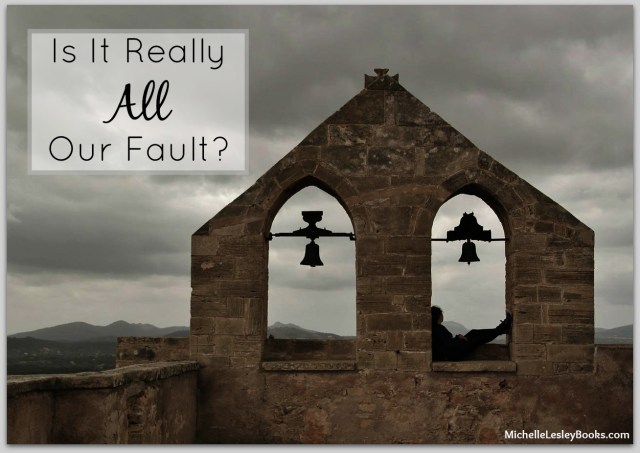
Is It Really All Our Fault?

all our fault

“If the church would just _________,
the world would flock to us.”

“The world is in the state it’s in because
the church has fallen down on the job.”

Over the past few years, I’ve been hearing and reading statements like these more and more frequently. But are they true? Is the world really in such sad shape as a result of the failings of the church?

Yes!…and…no.

It is absolutely true that the visible church – everything that wears the label “church” or “Christian,” whether or not it’s biblical Christianity – has a lot to be ashamed of. Westboro. TBN. Homosexual church leaders and members. Pastors caught in adultery. Child molestation scandals. Female “pastors.” All manner of demonic behavior masquerading as “worship,” blasphemously attributed to the “Holy Spirit.”

Even churches with an orthodox statement of faith – which, to onlookers, seem to be doing fine, biblically – water down the gospel in the name of being seeker sensitive, use materials produced by false teachers, invite false teachers to speak at their conferences, fail to evangelize, place women in unbiblical positions of leadership, have pastors and teachers whose main form of teaching is eisegesis and pandering to felt needs, fail to provide for the needs of their members and their surrounding community, focus on fun and silliness in their youth and children’s ministries instead of Scripture and holiness, allow members to gossip, backbite, and exercise selfishness, fail to practice church discipline, make their worship services into irreverent entertainment-fests, have “pastors” who are little more than stand up comedians, and have largely biblically ignorant congregations.

Some churches are spiritually healthier than others, but nobody’s getting out of this one with clean hands. Even the healthiest church is doing something wrong in some little nook or cranny. And as Christ’s bride, it is incumbent upon us, whenever we discover those nooks and crannies, to repent, set things right, and do things biblically as we move forward.

Christ loved the church and gave himself up for her, that he might sanctify her, having cleansed her by the washing of water with the word, so that he might present the church to himself in splendor, without spot or wrinkle or any such thing, that she might be holy and without blemish. Ephesians 5:25b-27

That’s Christ’s vision of the church. A vision all churches fall woefully short of. And when the church fails in any area, it does contribute to the downhill slide of the world, because it is not being the city on the hill Christ wants it to be, and it is producing individual Christians (or false converts) who aren’t being the salt and light Christ wants them to be.

But is it fair to lay all the world’s woes and sinfulness at the doorstep of the church? Is it really true that if we would just clean up our act in this area or on that issue that we’d magically see an influx of pagans begging, “Sirs, what must I do to be saved?”

No, it isn’t.

The world isn’t steeped in sin because of the failings of the church. The world is steeped in sin because of the Fall.

Look back over history. The world was vicious and depraved long before the church ever came on the scene. And, for that matter, long before God set apart and established Israel as His chosen people. (Hello? The ante-diluvian world? Sodom and Gomorrah? Ancient Egypt? Baal and Molech worship?)

Examine any era in the last two millenia when you think the church was doing a better job than it is now and take a look at the society that church was situated in. The New Testament church? It was surrounded by a world of war, oppression, torture, debauchery, sexual deviance, slavery, misogyny, poverty, famine, and child abuse.

The head of the church, Jesus Christ, spent over thirty years physically present on this earth. We know He conducted His ministry perfectly. Not once did He fail to preach the gospel or provide for people’s needs or fall short in any other way. He even went so far as to lay His life down for the sin of the world. And what impact did that have on His immediate society? Did all the Pharisees repent and temple worship was restored to godliness? No. Did Rome stop ruling the world with an iron fist? No. Did acts of sedition and perversion and persecution suddenly disappear? No. In fact, some of those things actually got worse during and after Jesus’ time.

Just like He prophesied.

You see, Jesus didn’t say, “Be more like Me and the world will come running,” or “The church can solve the ills of the world.” He said:

If you were of the world, the world would love you as its own; but because you are not of the world, but I chose you out of the world, therefore the world hates you. John 15:19

Indeed, all who desire to live a godly life in Christ Jesus will be persecuted, while evil people and impostors will go on from bad to worse, deceiving and being deceived. 2 Timothy 3:12-13

The more the church and individual Christians look and act like Christ, the more world will hate, persecute, and ostracize us.

The church is not going to fix all the evils of society. And it’s not fair to lay that burden of responsibility – one that even Jesus’ earthly ministry didn’t accomplish – on believers who genuinely love their Savior and want to serve Him. Holding out the stick and carrot of a utopian world to the church – if only we’ll get our act together – does nothing but breed hopelessness, despair, and futility in the pews.

Does the church have a lot of repenting to do? Yes. Are there right hands we need to chop off and right eyes we need to gouge out in order to facilitate obedience to Christ? You bet. Should we be exponentially more proactive and passionate about preaching the gospel and meeting the needs of a lost and dying world? Absolutely.

But we do not do those things because we’re failing the world. We do those things out of love for and faithfulness to Christ. Christ is our goal, not a changed world. Christ is the prize we’re to fix our eyes on, not a society that behaves itself. Christ is the finish line we press toward, not domestic tranquility and morality.

Christ.

Because if it’s the church’s job to set the world right, we’re doomed. The world sins because the world is made up of sinners. And the world will continue to sin – even if every church on the planet suddenly becomes perfect – because the world is made up of sinners. But if the church’s highest attainment is love for Christ, faithfulness to Christ, and obedience to Christ, then we are successful in God’s eyes regardless of what the world around us looks like.

Let’s be faithful and trust God to handle changing the world.

Wednesday's Word

Wednesday’s Word ~ James 4

james 4 4

James 4

What causes quarrels and what causes fights among you? Is it not this, that your passions are at war within you? You desire and do not have, so you murder. You covet and cannot obtain, so you fight and quarrel. You do not have, because you do not ask. You ask and do not receive, because you ask wrongly, to spend it on your passions. You adulterous people! Do you not know that friendship with the world is enmity with God? Therefore whoever wishes to be a friend of the world makes himself an enemy of God. Or do you suppose it is to no purpose that the Scripture says, “He yearns jealously over the spirit that he has made to dwell in us”? But he gives more grace. Therefore it says, “God opposes the proud, but gives grace to the humble.” Submit yourselves therefore to God. Resist the devil, and he will flee from you. Draw near to God, and he will draw near to you. Cleanse your hands, you sinners, and purify your hearts, you double-minded.Be wretched and mourn and weep. Let your laughter be turned to mourning and your joy to gloom. 10 Humble yourselves before the Lord, and he will exalt you.

11 Do not speak evil against one another, brothers. The one who speaks against a brother or judges his brother, speaks evil against the law and judges the law. But if you judge the law, you are not a doer of the law but a judge. 12 There is only one lawgiver and judge, he who is able to save and to destroy. But who are you to judge your neighbor?

13 Come now, you who say, “Today or tomorrow we will go into such and such a town and spend a year there and trade and make a profit”— 14 yet you do not know what tomorrow will bring. What is your life? For you are a mist that appears for a little time and then vanishes. 15 Instead you ought to say, “If the Lord wills, we will live and do this or that.” 16 As it is, you boast in your arrogance. All such boasting is evil. 17 So whoever knows the right thing to do and fails to do it, for him it is sin.


The Holy Bible, English Standard Version Copyright © 2001 by Crossway Bibles, a publishing ministry of Good News Publishers.


Questions to Consider:

1. Who wrote the book of James? What was his purpose in writing the book? To whom was it written? What type of literature (historical narrative, epistle, poetry, prophecy, etc.) is this book? Is James a mostly descriptive or prescriptive book?

2. In verses 1-10, what sin(s) does James indicate is at the root of our conflicts with others (1-2), problems in our prayer life (2-3), and rifts in our relationship with God (4-10)? How would you summarize this passage in one sentence?

3. What is “friendship with the world”? (4) Does this mean we can’t associate with lost people? Why does James call his audience “adulterous people”? (4) What Old Testament events or Scriptures might this term have brought to mind for James’ Jewish readers? Why does God make such a big deal about worldliness?

4. How do verses 11-12 fit with other New Testament passages on judging? Is it “speaking evil” of someone to lovingly call her to repentance?

5. In verses 13-16, is James saying we can never make plans in advance? What does this passage teach us about God’s sovereign control over the universe and our lives? What perspective should we have about our lives in relationship to God’s sovereignty, and how should this lead us to greater humility? How does verse 17 define the concept of a “sin of omission”?

1 John Bible Study

Am I Really Saved?: A First John Check Up ~ Lesson 3: Love and Hate

1 John Study

Am I Really Saved? A First John Check Up
Lesson 3: Love and Hate
Please Read: 1 John 2:1-17

Previous Lessons: 1, 2

(Helpful Hint: Using the cross-references {footnotes to related verses} provided in your Bible or in the Bible Gateway links I’ve provided will be very helpful as you study.)

Examine yourselves, to see whether you are in the faith. Test yourselves. Or do you not realize this about yourselves, that Jesus Christ is in you?—unless indeed you fail to meet the test!
2 Corinthians 13:5

1 John 1:8-2:2

The closing verses of chapter 1, as we saw in last week’s lesson, deal with whether or not a person walks in unrepentant sin. Lost people deny that they are sinners and continue, unrepentantly, in their sin. (1:8, 10) Saved people confess their sin and are forgiven through Christ. (1:9)

John continues his line of thought in the opening verses of chapter 2 (Remember, when he wrote this, there were no chapters and verses. It was just a letter like you might write today.). He’s not writing just to point out sin and how lost and saved people deal with sin differently. He’s writing so that people will not sin. (2:1)

But when Christians (“my little children” refers to John’s “children” in the faith), do sin, John reminds us, Christ has already paid the penalty for our sin. Verses 1-2 of chapter 2 encourage us to remember this, repent, and be forgiven.

And that’s not all. Look at those great little words at the end of verse 2: “but also for the sins of the whole world.” That means that if you examined yourself according to 1 John 1 and found that you are indeed a liar who walks in the darkness while claiming to belong to Christ (1:6), or someone who denies that she’s a sinner, or claims she’s not sinning when she does things the Bible clearly labels as sin (1:8, 10), and you’re grieved over that and want to repent, there is hope.

The perfectly sinless son of God, Jesus Christ, stepped between you and God (“advocate,” 2:1) and propitiated God’s wrath against you for your sin so that you could be reconciled to God. He offers this precious gift of salvation to anyone who will turn from her sin and place her faith in Christ. (2:2)

  • What did you discover last week when you examined yourself according to 1 John 1? Do you walk in the darkness or in the light? Do you agree with the Bible’s definition of sin and confess your sins, or argue against the Bible and continue in sin?
  • Has there ever been a time in your life when you came before God, confessed and admitted that He is right about your sin and you are wrong, asked His forgiveness, and placed your faith in Christ’s death, burial, and resurrection as payment for your sin? If not, I urge you to do so now.
  • If you are saved, this passage is also an encouragement to remember, when you sin – and you will – that Christ has already paid the penalty for your sin. Remember the hope you have in Christ. Repent and be forgiven.

1 John 2:3-6

Am I Really Saved? Checkpoint 3: Do I keep God’s commands?

And by this we know that we have come to know him, if we keep his commandments. 4 Whoever says “I know him” but does not keep his commandments is a liar, and the truth is not in him, 5 but whoever keeps his word, in him truly the love of God is perfected. By this we may know that we are in him: 6 whoever says he abides in him ought to walk in the same way in which he walked.

With this passage, we have to make sure we don’t get the cart before the horse. John is not, I repeat, not saying that you become a Christian by being a good person and obeying all of God’s rules. The Bible is exceedingly clear that salvation does not come from our good works but by grace alone, through faith alone, in Christ alone.

John is saying that people who have genuinely been born again keep God’s word out of a heart of love for Him. Apple trees just naturally grow apples because they’re apple trees. You could buy a bag of apples at the store and tie them to an oak tree, but that would not make it an apple tree. It would just be an oak tree with fake fruit hanging from it. See?

  • Examine your heart- do you desire to keep God’s commandments? Why? What is your motive for obedience to God’s word? Are you an apple tree growing apples or an oak tree trying to pass yourself off, with fake fruit, as an apple tree?
  • Verse 4 is very similar to 1:6. Do you claim to be a Christian while actively disobeying Scripture, justifying your sin, or giving no consideration to keeping God’s commands? What do 1:6 and 2:4 call people who do this? Is this the description of a saved person or an unsaved person?
  • What does it mean to “walk in the same way in which [Jesus] walked”? Are there any areas of your life that don’t match up with the way Jesus lived?

1 John 2:7-14:

Am I Really Saved? Checkpoint 4: Do I hate others? (9-11)

9 Whoever says he is in the light and hates his brother is still in darkness. 10 Whoever loves his brother abides in the light, and in him there is no cause for stumbling. 11 But whoever hates his brother is in the darkness and walks in the darkness, and does not know where he is going, because the darkness has blinded his eyes.

  • This passage talks about living a lifestyle of hate. Do you have an ongoing pattern of hate in your life? Do you hate a certain person? People who behave a certain way? A a certain racial group or class of people?
  • Compare this passage to 1:5-7. Which two words does John again use to draw a sharp contrast between sin and holiness? What does 2:9 say about people who claim to be Christians, yet whose lives are characterized by hate? What does 2:10 say about the one who loves his brother? Which characterizes the life of the Christian, love or hate?
  • Which three groups of people does John address in verses 12-14? What are the reasons he gives for writing to them?

1 John 2:15-17:

Am I Really Saved? Checkpoint 5: Do I love worldliness?

15 Do not love the world or the things in the world. If anyone loves the world, the love of the Father is not in him. 16 For all that is in the world—the desires of the flesh and the desires of the eyes and pride of life—is not from the Father but is from the world. 17 And the world is passing away along with its desires, but whoever does the will of God abides forever.

  • What does verse 15 mean when it says not to love “the things in the world”? How does verse 16 define this phrase? Can you give some real life examples of “the desires of the flesh”? “The desires of the eyes”? “The pride of life”? Why does verse 16 say these things are “not from the Father”?
  • What does verse 15 say about people who love the things of the world? If “the love of the Father is not in” a person, is that person a Christian? Instead of loving the world, what characterizes a Christian, according to verse 17? Which is temporary, the world, or the one who does the will of God? Which is eternal? (17)

This week, we are examining our salvation with three questions:

1. Do I keep God’s commands?

2. Do I hate others?

3. Do I love worldliness?

Christians, out of love for God, desire to obey Him, love others, and reject worldliness. Lost people may behave outwardly in a way that looks like obedience to God’s commands, but, because they have not been born again, there is no love for Him leading to true obedience and love for others. The lost person’s true love is the things of this temporal world.

Where do you stand in light of 1 John 2:1-17? Do you love the right things, such as God’s word, others, and the things of God? Do you hate the right things, like sin and worldliness? Prayerfully examine your heart, comparing your motives and actions to these Scriptures. Surrender your life to Christ if you find that you are not truly saved. If you are saved, repent of any sin God reveals to you and ask Him to help you “walk in the same way in which [Jesus] walked.”

Additional Resources:

1 John 2– Matthew Henry’s Commentary

Propitiation: How the Cross Affected God by Steve Lawson

True or False? A Study in 1 John– at Naomi’s Table (lessons 7-9)