I study false teachers pretty often. I watch their videos, listen to their sermons, and read their articles. And I’ve noticed that there are some common buzzwords that New Apostolic Reformation* and Seeker-Driven false teachers tend to use over and over again. Naturally, these words are just that: words. Just because you hear your pastor, Sunday School teacher, or favorite Christian celebrity utter one or more of them doesn’t necessarily mean he or she is a heretic. But if you’re constantly hearing these words and phrases, it could be a red flag that you need to vet the person you’re listening to more carefully and see whether or not his or her theology matches up to what the Bible says. So, here, in no particular order are 10 such buzzwords and some of the false teachers who are fond of them:
“Sometimes as I stand in the glory my hands and feet will begin to drip with supernatural oil, representing the miracle anointing of God.” ~ Joshua Mills
“I learned that even when we are in a place of obedience, we often have no way in the natural of knowing for sure whether we are right or wrong.” ~ Joyce Meyer
“Pray always and when you catch your mind trying to reason out a prophetic revelation, let your spirit man rise up and take control.” ~ Jennifer Leclaire
7. Holyspirit
A number of NAR personalities refer to the third Person of the Trinity as “Holyspirit” -as though that were His first name- instead of the Holy Spirit. For example, “Holyspirit said to me the other day…”
It is nearly impossible to isolate a text example of this as a) it is usually verbal and b) search engines always include the word “the” in search results.
“War in the heavenlies. We can battle against the enemy’s strategies through prayer and declaration of the Word. This wins the battle in the heavenlies before it hits the earth.” ~ Patricia King
“…the Bible states that God, before time, determined your zip code—that spiritual place and geographical location; when you get into that spot, everything around you will begin to come into alignment.” ~ Cindy Trimm
These are my notes from my ladies’ Sunday School class this morning. I’ll be posting the notes from my class here each week. Click here for last week’s lesson.
Through the Bible in 2014 ~ Week 30 ~ July 20-26
Hosea, Isaiah 28-43, Psalm 76
An Overview of Hosea
Hosea 1
Hosea was a prophet to the northern kingdom of Israel. God used his family life as a picture of what he was prophesying. Hosea married a woman, Gomer, who would later prove unfaithful to him. God also had Hosea give his children names that reflected God’s message to Israel: Jezreel, No Mercy, and Not My People. But the real story of the book of Hosea is not Hosea or his family, but the love, reluctant wrath, and forgiveness of God towards His unfaithful people.
2:8
Everything Israel gave away -as sacrifices to idols, as tribute to foreign potentates, as bribes for foreign armies to come to her aid- everything had been given to her by God.
4:17
When sinners persist in their sin long enough, God finally gives them over to what they want. (Rom. 1:18ff). Often sinners think the harshest thing God could do would be to try to stop them from participating in the sin that they love, but His wrath is most poured out when He gives them exactly what they want.
5:6, 15; 7:13-14
Seek the Lord while He may be found (Isaiah 55:6). God was calling Israel to seek Him before He gave them over to a hard heart and a reprobate mind. The Lord is always found by those with a soft heart whose desire is to repent and love Him, but He turns a deaf ear to those who continue in rebellion until it starts raining, only to beat on the door of the ark because they don’t want to die in the flood.
God is not interested in the worldly sorrow that is only grieved over the consequences of sin. That soul still has its eyes firmly fixed on self and how self is affected. The truly repentant heart has her eyes fixed on God and how her sin affects Him.
6:4,6
God doesn’t desire empty rituals, lip service, or going through the motions. He wants worship from the heart.
8:2, 5-6
God will not allow syncretism (the melding of unbiblical worship with biblical worship). He requires, not that He be first in our affections, but that He be ONLY in our affections.
It did no good for Israel to claim that she knew the Lord (2) because she was a) worshiping other gods besides the Lord, b) calling an idol (the golden calves) “God,” and c) not worshiping God in the way He had commanded. None of these were acceptable in God’s sight then, and because He is the same “yesterday, today, and forever” (Hebrews 13:8), it is still not acceptable to Him today.
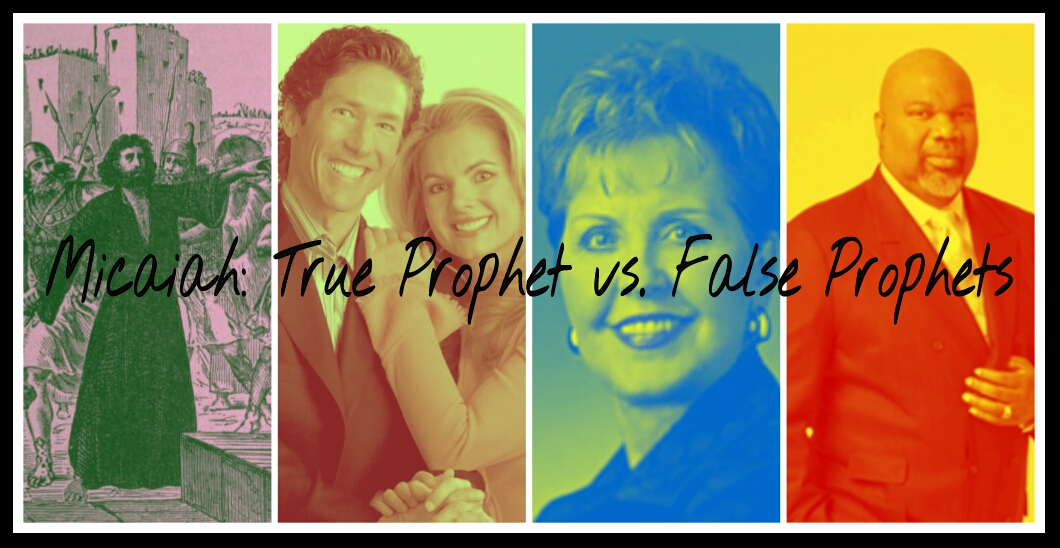
That’s why false teachers are so dangerous. People like Joyce Meyer, Joel Osteen, and TD Jakes may not be fashioning golden calves and calling them “Jesus,” but they are fashioning false gods with unbiblical words and ideas and calling them “Jesus.” This is what Matthew 7:21-23 is talking about when it says:
Not everyone who says to me, ‘Lord, Lord,’ will enter the kingdom of heaven, but the one who does the will of my Father who is in heaven. On that day many will say to me, ‘Lord, Lord, did we not prophesy in your name, and cast out demons in your name, and do many mighty works in your name?’ And then will I declare to them, ‘I never knew you; depart from me, you workers of lawlessness.’
9:1
Just as Gomer has betrayed and forsaken Hosea, Israel has betrayed the Lord. She has loved adultery and the fleeting pleasures (Hebrews 11:25) that go with it instead of the true and lasting treasure that comes from loyalty to the Lord (Revelation 11:18).
10:5-6
The golden calf Israel worshiped would be used to pay off Assyria in tribute. God is sovereign. He will ultimately destroy everything that is raised up against Him. Idols, ideas, individuals.
11:1-4
God is not a cruel taskmaster. He led and cared for Israel with “cords of kindness” and “bands of love” as a parent leads a toddler. They didn’t have to live in fear of Him if they were walking with Him. Not so with other gods. With other gods, they could never be certain where they stood. Had they offered enough? Pleased it enough? Would it bless them with fertility or rain for their crops?
With God, on the other hand, His love for Israel came first. It wasn’t a reaction to whether or not their actions pleased Him. His love for them was there even before they knew Him (1 John 4:15-19). It was because He loved them that He lovingly spelled out everything He wanted Israel to do in worship, in daily life, and in their hearts. He also went into great detail about the things they could expect from Him, and He kept His promises time and again. They didn’t have to wonder how He felt towards them or what He required of them or whether He would come through for them. They could know.
11:8-9
It grieved God to destroy Israel as he had destroyed Admah and Zeboiim with Sodom and Gomorrah. God is not a God who delights in executing His wrath, but, rather, does so with a broken heart and only as a last resort.
“Have I any pleasure in the death of the wicked, declares the Lord God, and not rather that he should turn from his way and live?” Ezekiel 18:23
“The Lord is not slow to fulfill his promise as some count slowness, but is patient toward you, not wishing that any should perish, but that all should reach repentance.” 2 Peter 3:9
13:4-6
When Israel was in Egypt and in the wilderness where she had nothing to depend on but God, she was loyal to Him, but once prosperity came, she left Him, just as Gomer left Hosea for something she thought was better.
It is often only when people have no other choice but to turn to Christ that they do so, but when they don’t “need” anything, they turn away from Him. This is why Jesus said “it is easier for a camel to go through the eye of a needle than for a rich person to enter the kingdom of God.” (Matthew 19:24).
By stripping away everything Israel had and sending her into exile, God was bringing Israel full circle to the neediness she had started out with in Egypt in order to bring her back to Himself.
14:1-9
God’s desire is, and always has been, for His people to repent and be reconciled to Him, and enjoy a loving, father-child relationship with Him. We see this in His post-Eden relationship with Adam and Eve, in His blessing of the earth after the Flood, in His bringing Israel out of Egypt, in bringing Israel out of exile, and in the most important way of all, in saving us out of our sin that we might be permanently reconciled to Him through the precious blood of Christ, to love Him and serve Him forever.
I will heal their apostasy;
I will love them freely, for my anger has turned from them.
Photos courtesy of cristoraul.com, TBN, Joyce Meyer Ministries, and TD Jakes Ministries
These are my notes from my ladies’ Sunday School class this morning. I’ll be posting the notes from my class here each week. Click here for last week’s lesson.
Through the Bible in 2014 ~ Week 27 ~ June 29- July 5 1 Kings 22-2 Kings 13, 2 Chronicles 18-24, Obadiah, Psalm 82-83 Michaiah: True Prophet vs. False Prophets
1 Kings 22:1-40
Setting the Stage
Ahab was one of the most wicked kings ever to sit on the throne of Israel. The previous chapter (21:25) says “There was none who sold himself to do what was evil in the sight of the Lord like Ahab”. He has just been confronted by Elijah for his numerous abominations, and has humbled himself and repented.
Getting back what’s mine (1-4, 20:34)
Israel had had peace for three years, but it was bothering Ahab that Syria still had control of the city of Ramoth-gilead, when Ben-hadad (Syria’s king) had promised to return all of the cities Syria had captured during his father’s reign as part of his terms of surrender (20:34). Ahab asked Judah’s king, Jehoshaphat, to join him in recapturing the city, and Jehoshaphat agreed.
Not just any prophet will do (5-12, 18:1ff, 20:26)
Jehoshaphat was a godly man and knew that the right thing to do would be to inquire of the Lord before going into battle. Why do you think Ahab didn’t suggest this? What do we know about Ahab’s walk with the Lord? We know from 20:26 that he was an idolator, from chapter 18 that he was a Baal worshiper and had led Israel into Baal worship, and that he also supported the golden calf worship centers that Jeroboam had set up. So, when Ahab summoned 400 of his favorite prophets in order to appease Jehoshaphat, do you think they were true prophets of the Lord, or false prophets of idolatry? They were false prophets.
Tell him what he wants to hear
Was Ahab’s desire to hear and obey the word of the Lord? Was it the desire of the 400 prophets to truly hear and accurately report the word of the Lord? We can answer a resounding “no” to both questions. Ahab’s desires were, a) to hear what would make him happy, b) to make Jehoshaphat happy by granting his request and calling up so called “prophets of the Lord” and c) for Jehoshaphat to hear that they wold be successful so that Jehoshaphat would agree to go into battle with him. The “prophets'” desire was to keep the king happy and thus stay alive and prosper in their positions.
How do you spot a false prophet?
The 400 prophets certainly seemed to be prophets of the Lord. They brought a positive, encouraging message and made Ahab happy. Zedekiah (11) even prefaced his message with “Thus says the Lord,” the same words all true prophets of the Lord used. And all the prophets predicted triumph and that the Lord would give the battle into the king’s hand, words spoken on many previous occasions to other kings by true prophets of the Lord. So, why would Jehoshaphat think these were not true prophets of the Lord?
1. Where they were coming from (Deuteronomy 13:1-5) Jehoshaphat knew that these guys were coming from a temple to a false god, even if they called those golden calves “God”. They were idolators so they were breaking God’s law in word and in practice. Deuteronomy 13:1-3a, 5a says:
If a prophet or a dreamer of dreams arises among you and gives you a sign or a wonder, and the sign or wonder that he tells you comes to pass, and if he says, ‘Let us go after other gods,’ which you have not known, ‘and let us serve them,’ you shall not listen to the words of that prophet or that dreamer of dreams…. But that prophet or that dreamer of dreams shall be put to death, because he has taught rebellion against the Lord your God,
When it came to the office of prophet, true prophets stayed true to the one true God of the Bible, and His word, in what they proclaimed as well as what they practiced in their daily lives and in their jobs as prophets (Isaiah and Jeremiah are good examples of true prophets). It did not matter how many times a person claimed to speak for God or used godly sounding terminology. If he led people to worship idols, he was a false prophet.
2. Whom they were prophesying for
Sometimes (but not always) the person the being prophesied for was an indication of whether or not the prophet was a true prophet. In this case we have Ahab, who we know was not genuinely seeking the Lord. Ahab was about Ahab, and nobody else. We can look at his life and see that he would not be seeking out the type of prophet who would be telling him the truth of God’s word. He was merely using the appearance of seeking the Lord to get what he wanted. False prophets are always happy to oblige such people.
3. Did the message come true? (Deuteronomy 18:21-22)
Deuteronomy 18:21-22 tells us:
And if you say in your heart, ‘How may we know the word that the Lord has not spoken?’— when a prophet speaks in the name of the Lord, if the word does not come to pass or come true, that is a word that the Lord has not spoken; the prophet has spoken it presumptuously. You need not be afraid of him.
If a prophet’s message did not come true, he was not to be believed, because he was a false prophet. He was also to be put to death. As we see later in this chapter, these prophets’ predictions of victory for Ahab did not come true.
Today’s false prophets
False prophets are not relegated to the Old Testament. We also find them in the New Testament and throughout history. We have many false prophets today. While some actually claim the title of “prophet,” most go by the title of “pastor,” “Bible teacher,” or “Christian author.” False prophets such as Joyce Meyer, Joel and Victoria Osteen, and TD Jakes, to name some of the most popular ones, preach encouraging messages to make people happy, use Bible verses (usually twisted and/or out of context) and other Christian sounding terminology, and tell you that you’ll be victorious over life’s problems, or that you’ll be successful or wealthy or healed. But how do they measure up against the false prophet test, above?
1. Where are they coming from?
Meyer, Jakes, and the Osteens (and numerous others) all preach the prosperity gospel in one form or another. They teach that it is never God’s will for you to be sick or poor, that if you are experiencing suffering it’s because of your lack of faith, and that because we are little gods, we have the same power God has to speak things (like health and wealth) into existence.
Additionally, TD Jakes is a modalist (a false view of the Trinity), Joyce Meyer has a number of false soteriological beliefs, and all of them, because they are teaching people to believe in a golden calf of their own making that they call Jesus, are leading people into idolatry.
2. Who are they prophesying for?
In most cases, people who follow false teachers today are not like Ahab. They think what they’re getting from these false teachers is biblical Christianity. Sometimes, however, what they’re really looking for isn’t Christ, but the “stuff” (happiness, encouragement, healing, a better life, money) they think Christ will give them. And when you look to Christ for stuff instead of looking to Christ for Christ, you’re probably going to end up following a false teacher, because that’s what they promise. 2 Timothy 4:3-4 says:
For the time is coming when people will not endure sound teaching, but having itching ears they will accumulate for themselves teachers to suit their own passions, and will turn away from listening to the truth and wander off into myths.
3. Does the message come true?
People like Meyer, Jakes, and the Osteens have millions of followers whom they promise health, wealth, and the realization of all their dreams and goals on a weekly basis. Out of all those millions of listeners, how many do you think are always healthy? How many get terminal diseases and aren’t healed? How many send in their “seed offering” and still can’t pay their bills? How many have failed businesses or never see their dreams come true? If one of these preachers promises anyone, even once, that “God says…” and it doesn’t come true, he is a false prophet.
Just because someone says what we want to hear (as the 400 prophets did for Ahab) doesn’t mean he is telling us the truth of God’s word.
Micaiah: True Prophet of the Lord (13-28)
A number of things tell us that Micaiah was a true prophet of the Lord:
True prophets don’t bow to what’s popular (13-14)
Do you find it interesting that Ahab didn’t want to summon Micaiah because he knew Micaiah’s message would be against him (8)? The messenger (13) also seemed to know this. Perhaps it was because Ahab (and the messenger) already knew he was living in constant sin and that the Lord’s hand was against him. The messenger, already sensing what Micaiah’s prophecy would be, tried to get him to go along with the crowd, but Micaiah would have none of it. He would only speak the truth of God’s word.
Today it’s popular to go along with the crowd that preaches that God wants everybody to be happy and successful, that you can have God and still hang on to your sin, etc. But today’s true prophet will only speak the truth of God’s word, even if it isn’t the popular thing to do.
True prophets speak the truth even when the truth is unpleasant (15-18) It would have been much easier for Micaiah to just parrot what the other prophets had said. He knew that what he had to tell Ahab was not going to be what Ahab wanted to hear and that he was risking his life by upsetting him, but Micaiah still boldly gave God’s entire message.
Today’s true prophets can be heard saying unpleasant things such as “Jesus is the only way of salvation,” “Homosexuality is a sin,” and “God uses suffering to make you more like Christ.” They might be risking their jobs, but they don’t leave out of their sermons the parts of the Bible that are uncomfortable for people.
True prophets warn people about, and confront, false prophets (19-25) It wasn’t enough for Micaiah just to speak the word of the Lord concerning the outcome of the battle. God, in yet another act of mercy towards Ahab, wanted Ahab to know that he was being lied to by these false prophets so that he could repent and believe the true word of the Lord.
Today’s true prophets don’t just proclaim God’s word, they warn fellow Christians about false doctrine and false teachers so that they can repent of their false belief and believe the true word of the Lord.
True prophets will risk everything for the truth of God’s word (26-28) Micaiah knew his life was on the line, but he knew something even more important. God’s word is true, and he was willing to stake his life on it. He would not compromise the truth or attempt to soften his message just to save his own skin.
True prophets of today, especially those who live in countries hostile to the gospel, stake their lives and their families’ lives on the gospel. Often, they are martyred for their faith, but they refuse to compromise the truth or soften God’s word just to save their own skin, their jobs, or anything else.
God will accomplish His word (29-40, 21:19) Ahab arrogantly tried to subvert God’s word by disguising himself, hoping that if a king were to die that day, it would be Jehoshaphat. But in the end, we see that God’s word always prevails. Not only did Micaiah’s prophecy come true, so did Elijah’s (21:19).
We can trust that God’s word — both the unpleasant parts and His glorious promises– will always be accomplished.
With the movie Son of God releasing in theaters tomorrow, February 28, for the past two Thursdays I’ve been rerunning a three part series I wrote on last year’s History Channel miniseries, The Bible. This is the final installment. Son of God is Roma Downey’s and Mark Burnett’s movie about Jesus that is drawn from The Bible’s scenes pertaining to His life and ministry, as well as deleted scenes that did not make it into the miniseries.
This is the third of a three part series on The History Channel’s The Bible miniseries*. You can find Part 1 here and Part 2 here.
5. The faulty theology of “The Bible’s” theological advisors is influencing and slanting the way God’s word is being presented.
Rick Warren’s twisting of Scripture to fit his “Purpose Driven” overview of God’s nature and character, Joel Osteen’s self esteem boosting and positive thinking, T.D. Jakes’ prosperity gospel and modalism (an unbiblical doctrine of the Trinity), and Roma Downey’s New Age spiritual psychology degree have crept into The Bible’s stories and subtly shifted the Scriptures’ real focus on sinful man’s need of God’s redemption to a “follow the leader and together we’ll change the world” paradigm.
Go back to the beginning of the series and watch it again, counting the number of times the word “leader” is used. Every major Old Testament character has been cast as a “leader,” and Israel’s prosperity or demise is portrayed as contingent on whether the leader was good or bad and whether or not Israel followed his leadership. This is not the message of God’s word. When Israel was obedient to God, she flourished. When she rebelled and chose idolatry, she crashed and burned. Kings, judges, and prophets had influence on the people, but it was Israel’s obedience to God Himself that was the hinge on which the nation swung.
It was especially disturbing to hear prophets such as Jeremiah and Daniel being cast as “leaders.” The prophet’s job was not to lead the people. The prophet’s job was to speak the words of God to the people and exhort them to submit to Him, just as pastors are supposed to do today. Leaders say, “Follow me.” Prophets say, “Follow God.”
Further, nowhere in God’s word does it say that Jesus came to “change the world,” or “change people’s lives,” nor does the Bible teach that Christians are to do these things. Jesus came to seek and to save the lost (Luke 19:10), to serve, and give His life as a ransom for many (Mark 10:45). Christians are exhorted, not to the lofty goal of “changing the world,” but to the abasing role of denying ourselves, taking up our crosses daily (Luke 9:23), being persecuted (2 Tim. 3:12), and making disciples (Matt 28:19-20).
Jesus did change the world, and He does change our lives, but this was a side effect of His life, death, and resurrection, not His goal. He was here to carry out God’s plan of redemption. The movie’s “change the world” mentality puts the focus on us. Scripture puts the focus on God’s sovereign redemptive purposes.
6. The glory has departed from “The Bible.”
From the beautiful picture of Jesus’ sacrificial death for us in the story of Abraham’s sacrifice of Isaac, to the overwhelming mercy and forgiveness of God after David’s sin with Bathsheba, to the awe-inspiring, God given faith in Shadrach, Meshach, and Abednego’s refusal to bow to an idol, the glory of God, which fairly drips from the Scriptures, is achingly absent from The Bible. To be fair, I don’t think any movie could ever completely capture the same revelation of God’s magnificence that a Christian experiences when he sits down and interacts with the Bible as the Holy Spirit moves in and among the living and active words. But there are movies that have come much closer than this one has. The Scriptures are not just a collection of stories meant to inspire us to emulate their heroes. Rather, they reveal to us who God is; a different facet of His glorious nature and character in each story we read.
As I conclude these six observations about History’s The Bible, it is my hope and prayer that the overall effect of the series having been telecast will be a positive one for the Kingdom. For those of us who belong to Christ, may we use it as a springboard to share the gospel with the lost and encourage discernment and study of God’s word for our brothers and sisters in Christ and for ourselves.
*Just a note for future readers: This article was written during the week between episodes 3 and 4 of the miniseries. Episode 3 wrapped up the Old Testament and introduced the New Testament, covering Jesus’ birth through the calling of Peter. As I write, I have not seen episode 4 or 5.