Discernment

Discernment IS Love

I’m often accused of being “unloving” for writing in a direct or firm tone against false doctrine and other unbiblical issues in the church.

I received another such accusation recently on one of my older articles, “Nine Reasons Discerning Women Are Leaving Your Church“. I thought I’d share my response to the reader with you, because it seems there’s a misunderstanding among Christian women as to the biblical definition of love. It ain’t always “sugar and spice and everything nice” y’all…

“I don’t think you have a complete understanding of the biblical definition of love. You seem to think that “love” is restricted to always being sweet and nice to people. That’s not biblical.

–Was Jesus being unloving when He cleared the temple? (Matthew 21)
–Was Jesus being unloving when He rebuked the Pharisees? (Matthew 23)
–Was Jesus being unloving when He instructed us to disfellowship unrepentant sinners from the church? (Matthew 18:15-20)
–Was Paul being unloving when he turned Hymenaeus and Alexander over to Satan so they would learn not to blaspheme? (1 Timothy 1:19-20)
–Was Paul being unloving when he anathematized anyone who preaches a false gospel? (Galatians 1:6-9)
–Was Peter being unloving when he described false teachers in 2 Peter 2?
–Was Jude being unloving when he wrote to the brothers warning them about the evils of false teachers instead of writing about the gospel?

Am I being unloving in writing this article? No. Reproof, rebuke, and biblical instruction are all part of godly love. I am demonstrating love for Christ, His Bride, and His Word by pointing out biblical error that needs to be corrected. I am demonstrating love for ignorant pastors and churches by explaining to them why their most spiritually healthy members are leaving. I am demonstrating love for the thousands of doctrinally sound Christians out there who long to attend a healthy church and can’t find one because so many churches are in error in the areas I mentioned. And, I am demonstrating love for you by helping you understand what God’s definition of love is.

Is this article loving? You bet it is.”

Additional Resources:

I Can’t Sit Down, Shut Up, and Play Nice

Discernment: What’s Love Got to Do with It?

Abuse, Suffering

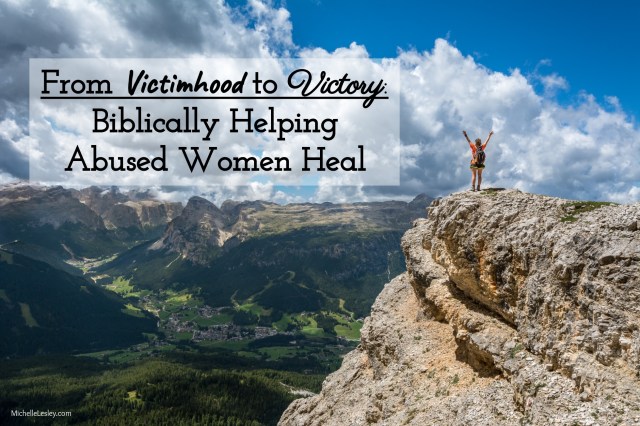
From Victimhood to Victory: Biblically Helping Abused Women Heal

Ever since the Me Too movement exploded on social media a couple of years ago, we’ve been hearing more and more heartbreaking stories of women who have experienced physical and sexual abuse. If anyone can help and should be helping victims of abuse, it ought to be the church. But, unfortunately, it seems that the people in the evangelical spotlight who are stepping up to advocate for victims are often popular false teachers.

In 2019, we saw Beth Moore take the lead at the Caring Well conference, which centered around helping abuse victims. Christine Caine is the founder and leader of A 21, an anti-human trafficking ministry. In 2018, Lisa Harper was the keynote speaker at the Pastors’ Wives Conference at the annual Southern Baptist Convention where she addressed the issue of abuse. And in addition to stepping out into the spotlight as champions for abuse victims, Beth Moore, Christine Caine, and Lisa Harper, as well as Joyce Meyer, Paula White, Lysa TerKeurst, Jackie Hill Perry – and many more, I’m sure – share their own personal stories of abuse at their conferences, in their books, and so on.

These are the people being showcased to the average Jane in the pew as those who care about abuse victims. These are the people who are actually (supposedly) doing something about abuse. By and large, we’re not seeing doctrinally sound men and women being put forth on the stage of the visible church as caring about abuse victims or doing anything about abuse.

And so, when an Evangelical woman is coming to terms with her abuse, these are the women she’s seeing, so these are the women and their resources that she reaches out for. And by the same token, because these false teachers are in the spotlight and have name recognition and resources available, and there aren’t very many well known doctrinally sound resources available, churches who want to help abuse victims are also reaching out and grabbing hold of false teaching to try to help the women in their churches.

So what we’re finding is that women who are victims of abuse are especially vulnerable to false teaching because they see these teachers as someone who has gone through the same thing they’ve gone through: “This teacher knows how I feel. She has experienced the same thing.” And that’s the primary reason victims seek out these false teachers, rather than seeking out someone who – regardless of whether or not he or she has experienced abuse – can help them to heal with rightly handled Scripture.

This is one reason I am purposely not disclosing in this article whether or not I have ever been abused. Because biblical healing from abuse isn’t about me or my personal experiences. It’s about what the Bible says. My experiences don’t change what God’s Word says. The Bible remains the same whether I’ve been abused or not. Scripture is our standard, not our personal experiences.

But, unfortunately in the church, and particularly in the realm of women’s Bible study, we have indoctrinated women with the idea that personal experience reigns, not Scripture. So what abused women get when they seek out these false teachers for help dealing with their abuse is exactly what I’ve said before is the problem with women’s Bible study in general: narcissism.

These victims of abuse don’t get taught how to biblically come to terms with what happened to them and how to biblically heal from it. They get a cheap, shallow compassion that teaches them to focus on their own pain and feelings, and to harbor bitterness against their abuser and everyone and everything else they can assign blame to for the abuse (some of those things supposedly being biblical complementarianism, sexism in the church, misogyny in the church, not enough women in positions of leadership in the church, as Beth Moore said at the Caring Well conference, etc.)

These women are being victimized twice.

And so these women are being victimized twice – once by the abuser, and once by false teachers who are not only not helping them to heal biblically, but are actually eroding biblical teaching and sound doctrine – for that woman personally and in the church in general – by saying that biblical precepts, such as leadership of the church being restricted to men, are at fault for their abuse. It’s really insidious, because what’s implied by this whole paradigm is that this mixture of focusing on your feelings and believing unbiblical teaching is the quick fix that will make them feel better right away. This is what will finally bring them healing and wholeness. They’re being sold a lie.

Praise be to God, there are lots of doctrinally sound Christians out there who are quietly, out of the spotlight, helping victims of abuse in a biblical way, one on one, in their own local churches. So, how are they doing it, and how should we be doing it? What are some biblical ways we can help abuse victims?

Genuine Compassion

Abuse is a horrible, despicable thing that no one should ever have to suffer. The pain that it causes doesn’t just magically disappear because it happened years ago. It is not something about which any woman should ever be told, “You just need to get over it and forget about it.”

And certainly no woman should ever be made to feel that it was her fault, or that if she had just done something differently it wouldn’t have happened. The sin of abuse lies with the abuser, not the victim.

The sin of abuse lies with the abuser, not the victim.

So when we disciple a woman who is just beginning the journey of healing from her abuse, it should be handled with biblical compassion every step of the way. It’s important, especially in the beginning, to do what Romans 12:15 says, and “weep with those who weep”.

Let her pour out her feelings of pain and anger, and sit there in that with her.

Yes, that was awful.

No, you didn’t do anything to cause it. It wasn’t your fault.

That man was evil and took advantage of you. It was his sin, not yours.

We need to have that same heart for her that God has in Psalm 147:3: “He heals the brokenhearted and binds up their wounds.”

A Biblical Perspective of Suffering

It’s imperative that we have a biblical perspective of suffering so we can teach it to abuse victims. Because one of the things you’ll notice about the way false teachers approach the issue of abuse is that this component is completely missing. Why? Because walking through suffering in a biblical way can be hard and scary and painful and messy. It’s much easier to just smile and exude sympathy and say, “Just listen to me and I’ll tell you how to feel better right now.”

And if we’re honest with ourselves, that’s what we all want, isn’t it? Our flesh doesn’t want to suffer, we just want to feel better now. And that’s what makes this a hard sell that false teachers don’t want to deal with. It doesn’t fit in with their ear-tickling paradigm. But if we want to offer victims true help and true healing in Christ, we have to address the issue of suffering, and address it biblically and correctly.

A biblical theology of suffering applied to the issue of abuse understands that…

Everyone suffers. You’re not the first person to suffer, and you won’t be the last. 1 Peter 4:12 says, “Beloved, do not be surprised at the fiery trial when it comes upon you to test you, as though something strange were happening to you.” When it comes to suffering, you’re not special, and neither am I. We don’t all suffer in the same way, but everybody suffers. It’s just the human condition resulting from the Fall.

Even Jesus suffered. Isaiah 53 tells us: “He was despised and rejected by men, a man of sorrows and acquainted with grief; He was oppressed, and he was afflicted,”

Abuse is not a special class of suffering that exempts you from dealing with it in obedience to Scripture. We’re kind of seeing this line of thinking with homosexuality- that it’s a special class of sin that people don’t have to repent of. That homosexuals can hold onto their sin, cherish it in their hearts, and maybe even live it out, and still supposedly be biblical Christians.

And that’s the same sort of mindset a lot of the false teachers espouse: Abuse is a special class of suffering that you don’t have to walk through in a biblical way. You get to wallow in your victimhood for the rest of your life and think and act and feel and express yourself however you want to because you’ve been hurt so deeply. That’s not right. Perpetual victimhood is not biblical, it doesn’t help you heal, and it doesn’t bring your abuser to justice. It makes God look impotent and uncaring. If He can’t or won’t transform someone from victimhood to victory, how could He have the power to raise Christ from the dead? If He doesn’t care about a victim of abuse, why would He care about anybody else’s problems?

I would never minimize the pain and suffering of abuse victims, but all Believers are required by Scripture to act in a godly way regardless of their particular kind of suffering. Believers who have terminal diseases have to deal with that in a godly way. Believers who have lost a child have to deal with that in a godly way. Believers whose spouses have cheated on them have to deal with that in a godly way. Believers who are being tortured and persecuted just for being Christians have to deal with that in a godly way. We all have to bear up and respond to suffering in a godly way, regardless of what kind of suffering we’re dealing with.

1 Peter 4:19: “Therefore let those who suffer according to God’s will entrust their souls to a faithful Creator while doing good.”

Jesus understands your pain and serves as your perfect example for responding to suffering. Go back and read Isaiah 53. Go back and read the gospel accounts of Jesus’ trials, flogging, and crucifixion. He knows what it feels like to be abused. And look at the way he handled it. He didn’t give up. He didn’t feel sorry for himself or lash out at his abusers or become bitter. He didn’t blame God or the church or anyone else or His circumstances.

Jesus knows what it feels like to be abused.

Jesus kept his eyes on the Father. He continued to walk out God’s plan for Him and didn’t let the abusers distract him from that plan. He continued to behave in a godly way. He forgave his abusers, even though it must have been extraordinarily difficult. Remember what He said on the cross: “Father, forgive them, for they know not what they do.”

You don’t have to suffer alone. If you are a Believer, the Holy Spirit dwells within you. He will enable you and empower you to suffer well. You are never alone.

“Pray without ceasing,” 1 Thessalonians 5:17 tells us. “My grace is sufficient for you, for my power is made perfect in weakness,” God says in 2 Corinthians 12:9. Ask God to carry you through the difficult times. Ask God to heal you, to help you forgive, to give you strength. Whatever you need, ask Him for it.

God has a purpose for your pain. The abuse you suffered was horrific, but in God’s economy, it wasn’t random and senseless. God can take what that abuser meant for evil and turn it around and use it for your good– to grow you and strengthen you. There are so many passages of Scripture that talk about this. One of my favorites is Romans 5:3-5:

Not only that, but we rejoice in our sufferings, knowing that suffering produces endurance, and endurance produces character, and character produces hope, and hope does not put us to shame, because God’s love has been poured into our hearts through the Holy Spirit who has been given to us.

Jesus didn’t save you for you to live in self-pity, bitterness, unforgiveness, and victimhood. That is not the abundant life He promised you in John 10:10. It’s no life at all. Christians are not weak, helpless victims. Jesus makes us victors. Yes, what happened to you was unspeakably evil and hurtful. But in Christ, that’s not where your story ends!

Jesus makes us victors.

As you walk with Christ – trusting Him, obeying Him, loving Him – day by day, He will bring you that peace that passes understanding. He will reveal Himself to you as hope of the hopeless. He will heal your broken heart and bind up your wounds. If you refuse to handle your pain biblically, you’re missing out on all of the good things God wants to use that pain for – the godly character He wants to build in you, the healing He wants to give you. If you refuse to handle your pain biblically, you’re choosing to give that abuser the power to continue to stand in the way of all those good gifts God wants to give you.

Your pain and suffering won’t last forever. Once Christ begins healing you, your pain will fade over time, and eventually He will wipe it out all together in Heaven. Consider these two wonderfully comforting and hope-giving passages:

2 Corinthians 4:17-18: For this light momentary affliction is preparing for us an eternal weight of glory beyond all comparison, as we look not to the things that are seen but to the things that are unseen. For the things that are seen are transient, but the things that are unseen are eternal.

Revelation 21:1,3-4: Then I saw a new heaven and a new earth, for the first heaven and the first earth had passed away, and the sea was no more…And I heard a loud voice from the throne saying, “Behold, the dwelling place of God is with man. He will dwell with them, and they will be his people, and God himself will be with them as their God. 4 He will wipe away every tear from their eyes, and death shall be no more, neither shall there be mourning, nor crying, nor pain anymore, for the former things have passed away.”

Your suffering has a time limit.

Your suffering has a time limit, and one day God is going to take it away forever. Rest in that hope.


How can we biblically help abuse victims move from victimhood to victory? We continually take them back to the truth of God’s Word and remind them of His goodness and grace, and the hope and healing He wants to bring them through Christ.


Additional Resources:

This article is excerpted from the A Word Fitly Spoken Podcast episode It’s Time for Sound Leaders to Talk About Abuse

Band-Aids vs. Chemotherapy: Why Suffering Women are Drawn to False Doctrine and 7 Things We Can do to Help 

Weeping with Those Who Weep 

Christ- the Suffering Servant 

Six Reasons to Rejoice that Christ is Enough in Our Suffering 

True or False: Is Your Theology of Suffering Biblical? 

God’s Good Purposes in Suffering

Favorite Finds

Favorite Finds ~ January 14, 2020

Here are a few of my favorite online finds…

“How can I know with certainty what the Bible is saying? How can I be certain what books really belong in the Bible? How can I be sure that my interpretation of any text is correct, and, still more, what its proper application is…?” Have you ever tried to explain a biblical principle to someone only to hear the retort, “But That’s Just Your Interpretation!“? D.A. Carson has some helpful words for us in the latest issue of Themelios.

 

“Pastors, I have a plea for you. Please, love your women enough to warn them against false teachers. It isn’t enough to simply teach the good stuff; if they don’t know what is out there that is not good and why it isn’t good? They will continue to fall for it.” Check out Amy Spreeman’s article, When Seemingly Solid Pastors Fail to Protect Women.

 

“Christianity is sexist!” “The Bible is patriarchal and just wants to keep women down!” We hear these tired arguments trotted out again and again, but are they really true? No, Eric Davis explains in his excellent article over at Cripplegate, 10 Reasons Why the Bible Regards Women Higher than All Other Systems, “The fact is…the Bible regards women higher than any other ideology, religion, philosophy, or system in history. Nothing teaches a higher view of women than biblical Christianity.”

 

Crossway has an interesting infographic for us on a study they conducted on prayer: “Over 14,000 people recently shared about various aspects of their prayer lives with us…we invite you to dig into the data, looking at established prayer habits, common pain points, and useful practices and tools for prayer.” Take a look at Infographic: How Is Your Prayer Life?.

 

Hermeneutics is the lens through which we view Scripture. Dr. Dane Ortlund helpfully explains some right and wrong lenses to use when studying Scripture in 6 Ways Not to Read the Bible (a brief excerpt from a longer seminar). Are you handling Scripture correctly?


The resources listed above are not to be understood as a blanket endorsement for the websites on which they appear, or of everything the author or subject of the resource says or does. I do not endorse any person, website, or resource that conflicts with Scripture or the theology outlined in the Statement of Faith and Welcome tabs at the top of this page.
Top 10

Top 10 Articles of 2019

I always enjoy the annual “year in review” articles and TV shows that run in abundance in late December, so I thought I’d contribute my own. Several Mailbag articles were among this year’s most popular, so I decided to make two separate lists, the Top 10 Mailbag Articles of 2019, and the top 10 non-Mailbag articles of 2019. Here are my ten most popular non-Mailbag blog articles from 2019:

Answering the Opposition:
Responses to the Most Frequently Raised Discernment Objections

There are also occasional comments and messages from women who are disciples of the false teachers I warn against, who take me to task for doing so. The same unscriptural accusations are raised again and again against me and against others who take a biblical stand against false teachers and false doctrine. Here, in no particular order, are the most frequently raised objections to my discernment work and my answers to them…


 10 Biblically Sound Blogs and Podcasts by Christian Women

False teachers. You can’t throw a rock out the window these days without hitting one. But are there any “good guys” out there who are getting it right? Discipleship, Bible study,and theological issues bloggers who rightly divide God’s word? You bet…


Christine Caine: Have No Regard for the Offerings of Caine

Unfortunately, Christine’s teachings and some of her actions do not meet even these basic biblical standards, and it is my sad duty to recommend that you not sit under her teaching for the following reasons…


 A Few Good Men: 10 Doctrinally Sound Male Teachers

Let me introduce you to a few of my favorite male authors of Bible studies
and other great Christian books and resources…


An Open Letter to Beth Moore – Timeline of Events

Since the discussion of the events and commentary surrounding the open letter have mostly taken place on Twitter, and many who have an interest in these events and comments are not Twitter users, this article is intended to be a timeline outlining the sequence of events, beginning with the publication of the open letter.


Living Proof You Should Follow Beth (No) Moore

For these reasons it is my sad duty to recommend that you not follow Beth Moore or receive any teaching from her or anyone connected to Living Proof Ministries.


Guest Post: Why I Left Elevation Church

I was part of Elevation Church for about six years. At the time, I thought it was the greatest church on Earth..


Going Beyond Scripture:
Why It’s Time to Say Good-Bye to Priscilla Shirer and Going Beyond Ministries

Should she repent in these areas in which she has broken Scripture and align herself with biblical principles, she would have no bigger fan than I, and I would rejoice to be able to point Christian women to her as a doctrinally sound resource. Until that time, however, it saddens me to have to recommend that Christian women not follow Priscilla Shirer or any materials or activities from Going Beyond Ministries for the following reasons…


 An Open Letter to Beth Moore

We as female Bible teachers ourselves write this letter to you in hopes of receiving clarification of your views on an important issue: homosexuality.


Leaving Lysa:
Why You Shouldn’t Be Following Lysa TerKeurst or Proverbs 31 Ministries

For these reasons, plus her habitual mishandling of Scripture, unfortunately, I must recommend that women not follow, support, or receive teaching from Lysa TerKeurst or Proverbs 31 Ministries(including any writers or speakers affiliated with Proverbs 31 Ministries)…


What was YOUR favorite article of 2019?

Discernment

Amanda Bible Williams and She Reads Truth

If you are considering commenting or sending me an e-mail objecting to the fact that I warn against certain teachers, please click here and read this article first. Your objection is most likely answered here. I won’t be publishing comments or answering emails that are answered by this article.


This article is kept continuously updated as needed.

I get lots of questions about particular authors, pastors, and Bible teachers, and whether or not I recommend them. Some of the best known can be found above at my Popular False Teachers tab. The teacher below is someone I’ve been asked about recently, so I’ve done a quick check (this is brief research, not exhaustive) on her.

Generally speaking, in order for me to recommend a teacher, speaker, or author, he or she has to meet three criteria:

a) A female teacher cannot currently and unrepentantly preach to or teach men in violation of 1 Timothy 2:12. A male teacher or pastor cannot allow women to carry out this violation of Scripture in his ministry. The pastor or teacher cannot currently and unrepentantly be living in any other sin (for example, cohabiting with her boyfriend or living as a homosexual).

b) The pastor or teacher cannot currently and unrepentantly be partnering with or frequently appearing with false teachers. This is a violation of Scripture.

c) The pastor or teacher cannot currently and unrepentantly be teaching false doctrine.

I am not very familiar with most of the teachers I’m asked about (there are so many out there!) and have not had the opportunity to examine their writings or hear them speak, so most of the “quick checking” I do involves items a and b (although in order to partner with false teachers (b) it is reasonable to assume their doctrine is acceptable to the false teacher and that they are not teaching anything that would conflict with the false teacher’s doctrine). Partnering with false teachers and women preaching to men are each sufficient biblical reasons not to follow a pastor, teacher, or author, or use his/her materials.

Just to be clear, “not recommended” is a spectrum. On one end of this spectrum are people like Nancy Leigh DeMoss Wolgemuth and Kay Arthur. These are people I would not label as false teachers because their doctrine is generally sound, but because of some red flags I’m seeing with them, you won’t find me proactively endorsing them or suggesting them as a good resource, either. There are better people you could be listening to. On the other end of the spectrum are people like Joyce Meyer and Rachel Held Evans- complete heretics whose teachings, if believed, might lead you to an eternity in Hell. Most of the teachers I review fall somewhere in the middle of this spectrum (leaning toward the latter).

If you’d like to check out some pastors and teachers I heartily recommend, click the Recommended Bible Teachers tab at the top of this page.


Amanda Bible Williams
Not Recommended

Amanda Bible Williams is co-founder and CCO (Chief Content Officer) of She Reads Truth (SRT), “a worldwide community of women who read God’s Word together every day. Founded in 2012, She Reads Truth invites women of all ages to engage Scripture through curated daily reading plans, as well as online conversation led by a vibrant community of contributing writers.” Amanda’s co-founder of SRT is CEO, Raechel Myers. Amanda and Raechel have co-authored two books and collaborated on the She Reads Truth Bible and the He Reads Truth Bible.

I first learned of Amanda and SRT a few years ago through my friend Elizabeth Prata’s excellent blog. Check out part 1 and part 2 of her article She Reads Truth, IF: Gathering, and Women Bible Teachers.

Though SRT’s “What We Believe” section boldly proclaims, “we believe God’s Word is Truth,” Amanda has disregarded the Bible’s truths about false doctrine and the biblical role of women in the church by inviting female “pastors” and false teachers such as Sharon Hodde Miller (more on Sharon here), Erin Rose, and Lisa Harper (more on Lisa here) to be SRT contributing writers.

Amanda has appeared at several of LifeWay Women’s Abundance Conferences alongside the likes of Christine Caine, Jennie Allen,  Lisa Harper, Lysa Terkeurst and Curtis Jones (Beth Moore’s son-in-law/pastor who allows her to preach on Sunday mornings) and others.

Amanda has been featured on IF: Gathering’s YouTube channel. Amanda’s and Raechel’s book, She Reads Truth, is sold on IF’s website.

On Twitter, Amanda has retweeted and/or shown public affinity for several false teachers including Beth Moore (tweet, tweet), Ann Voskamp (tweet), Eugene Peterson, and Rachel Held Evans.

In 2018, Amanda’s SRT partner, Raechel, was a featured speaker at the Inspired for Life Conference alongside an advocate for female pastors and a social justice activist. (See article on Raechel for more details.) Amanda both attended and helped promote the event on Twitter:

For someone with such a well known ministry, Amanda has a very small online footprint, so it was difficult to find pertinent information on her for this article. She doesn’t seem to have a blog or website separate from the SRT website (which has minimal information about her). She doesn’t post often on social media, and when she does, it’s usually about her family, which, frankly, I find charming and refreshing. But that means there’s scant information on events she speaks at or participates in and her ministry associations with others. This could be a positive sign. Perhaps we’re not seeing online evidence of her, for example, preaching to men, because she’s not. On the other hand, perhaps she is associating with or following far more false teachers than we know of but she isn’t posting about it on social media, so there’s no evidence of it. It’s simply impossible to tell.

With so little information available on Amanda, and with very little knowledge of her own theology and handling of God’s Word, I want to give her the benefit of the doubt and withhold the label of “false teacher” until such time as more evidence is available that would support that label. That being said, I believe there is enough evidence that Amanda is sorely lacking in discernment that it would not be wise to follow her, use her materials (and certainly not SRT’s materials, considering their contributors), or attend her speaking engagements.

Furthermore, consider her ties to female “pastors” and false teachers. As I said in the introduction to this article, it is reasonable to assume Amanda’s doctrine is acceptable to these female “pastors” and false teachers and that she is not teaching anything that would conflict with their doctrine. If she were, they would not associate with her. If she were, she would not associate with them.