Church

Is It Really All Our Fault?

all our fault

“If the church would just _________,
the world would flock to us.”

“The world is in the state it’s in because
the church has fallen down on the job.”

Over the past few years, I’ve been hearing and reading statements like these more and more frequently. But are they true? Is the world really in such sad shape as a result of the failings of the church?

Yes!…and…no.

It is absolutely true that the visible church – everything that wears the label “church” or “Christian,” whether or not it’s biblical Christianity – has a lot to be ashamed of. Westboro. TBN. Homosexual church leaders and members. Pastors caught in adultery. Child molestation scandals. Female “pastors.” All manner of demonic behavior masquerading as “worship,” blasphemously attributed to the “Holy Spirit.”

Even churches with an orthodox statement of faith – which, to onlookers, seem to be doing fine, biblically – water down the gospel in the name of being seeker sensitive, use materials produced by false teachers, invite false teachers to speak at their conferences, fail to evangelize, place women in unbiblical positions of leadership, have pastors and teachers whose main form of teaching is eisegesis and pandering to felt needs, fail to provide for the needs of their members and their surrounding community, focus on fun and silliness in their youth and children’s ministries instead of Scripture and holiness, allow members to gossip, backbite, and exercise selfishness, fail to practice church discipline, make their worship services into irreverent entertainment-fests, have “pastors” who are little more than stand up comedians, and have largely biblically ignorant congregations.

Some churches are spiritually healthier than others, but nobody’s getting out of this one with clean hands. Even the healthiest church is doing something wrong in some little nook or cranny. And as Christ’s bride, it is incumbent upon us, whenever we discover those nooks and crannies, to repent, set things right, and do things biblically as we move forward.

Christ loved the church and gave himself up for her, that he might sanctify her, having cleansed her by the washing of water with the word, so that he might present the church to himself in splendor, without spot or wrinkle or any such thing, that she might be holy and without blemish. Ephesians 5:25b-27

That’s Christ’s vision of the church. A vision all churches fall woefully short of. And when the church fails in any area, it does contribute to the downhill slide of the world, because it is not being the city on the hill Christ wants it to be, and it is producing individual Christians (or false converts) who aren’t being the salt and light Christ wants them to be.

But is it fair to lay all the world’s woes and sinfulness at the doorstep of the church? Is it really true that if we would just clean up our act in this area or on that issue that we’d magically see an influx of pagans begging, “Sirs, what must I do to be saved?”

No, it isn’t.

The world isn’t steeped in sin because of the failings of the church. The world is steeped in sin because of the Fall.

Look back over history. The world was vicious and depraved long before the church ever came on the scene. And, for that matter, long before God set apart and established Israel as His chosen people. (Hello? The ante-diluvian world? Sodom and Gomorrah? Ancient Egypt? Baal and Molech worship?)

Examine any era in the last two millenia when you think the church was doing a better job than it is now and take a look at the society that church was situated in. The New Testament church? It was surrounded by a world of war, oppression, torture, debauchery, sexual deviance, slavery, misogyny, poverty, famine, and child abuse.

The head of the church, Jesus Christ, spent over thirty years physically present on this earth. We know He conducted His ministry perfectly. Not once did He fail to preach the gospel or provide for people’s needs or fall short in any other way. He even went so far as to lay His life down for the sin of the world. And what impact did that have on His immediate society? Did all the Pharisees repent and temple worship was restored to godliness? No. Did Rome stop ruling the world with an iron fist? No. Did acts of sedition and perversion and persecution suddenly disappear? No. In fact, some of those things actually got worse during and after Jesus’ time.

Just like He prophesied.

You see, Jesus didn’t say, “Be more like Me and the world will come running,” or “The church can solve the ills of the world.” He said:

If you were of the world, the world would love you as its own; but because you are not of the world, but I chose you out of the world, therefore the world hates you. John 15:19

Indeed, all who desire to live a godly life in Christ Jesus will be persecuted, while evil people and impostors will go on from bad to worse, deceiving and being deceived. 2 Timothy 3:12-13

The more the church and individual Christians look and act like Christ, the more world will hate, persecute, and ostracize us.

The church is not going to fix all the evils of society. And it’s not fair to lay that burden of responsibility – one that even Jesus’ earthly ministry didn’t accomplish – on believers who genuinely love their Savior and want to serve Him. Holding out the stick and carrot of a utopian world to the church – if only we’ll get our act together – does nothing but breed hopelessness, despair, and futility in the pews.

Does the church have a lot of repenting to do? Yes. Are there right hands we need to chop off and right eyes we need to gouge out in order to facilitate obedience to Christ? You bet. Should we be exponentially more proactive and passionate about preaching the gospel and meeting the needs of a lost and dying world? Absolutely.

But we do not do those things because we’re failing the world. We do those things out of love for and faithfulness to Christ. Christ is our goal, not a changed world. Christ is the prize we’re to fix our eyes on, not a society that behaves itself. Christ is the finish line we press toward, not domestic tranquility and morality.

Christ.

Because if it’s the church’s job to set the world right, we’re doomed. The world sins because the world is made up of sinners. And the world will continue to sin – even if every church on the planet suddenly becomes perfect – because the world is made up of sinners. But if the church’s highest attainment is love for Christ, faithfulness to Christ, and obedience to Christ, then we are successful in God’s eyes regardless of what the world around us looks like.

Let’s be faithful and trust God to handle changing the world.

Sanctification, Throwback Thursday

Throwback Thursday ~ Jesus Wants You to Be a Hater

Originally published February 26, 2015

hater

Hater. It’s a word that gets tossed around a lot these days. If you disagree with someone, you’re a hater. If you believe the Bible when it says something is a sin, you’re a hater. If you vote pro-life or pro-marriage, you’re a hater. Gone are the days when a Christian could stand on her convictions without being accused of hating everyone else who does not hold those same convictions.

In fact, when you first read the title of this article, I’m betting that’s what you thought I was saying Jesus wants us to do: hate everyone who doesn’t agree with us.

And I hate that.

I hate the fact that Satan has sold the world the lie that those of us who love Christ with all our hearts hate the sinners He died for.

Did you know that the Bible actually tells us to hate certain things? Not people who disagree with us or people enslaved by sin- that’s the world’s definition of being a hater. Luke 6:27-28 tells us:

But I say to you who hear, Love your enemies, do good to those who hate you, bless those who curse you, pray for those who abuse you.

We are not to hate, but to love, do good to, bless, and pray for those who, because they are at enmity with Christ, are at enmity with us.

But as Christians, the Bible tells us there are certain things it is good and holy for us to hate. If we don’t hate them, we’re being disobedient to our Lord.

We are to hate evil:

The fear of the Lord is hatred of evil. Pride and arrogance and the way of evil and perverted speech I hate. Proverbs 8:13

We hate evil, pride, arrogance, and perverted speech because God is good and holy. Evil stands in rebellion against God’s person and in opposition to God’s purposes. Pride and arrogance exalt self over God, who alone is to have preeminence in all things. Dishonest, wicked speech can damage God’s beloved children and lead them away from Him.

We are to hate opposition to God’s word:

Therefore I consider all your precepts to be right; I hate every false way. Psalm 119:128

When we love the Lord and His ways, we will necessarily come to hate false ways and false doctrine which defy His word and lead us, and others, away from Him.

We are to hate our own sin:

For we know that the law is spiritual, but I am of the flesh, sold under sin. For I do not understand my own actions. For I do not do what I want, but I do the very thing I hate. Romans 7:14-15

While it is good to hate evil in the world, we must also hate the evil that lurks within us in the form of sin. Those who have been born again loathe their sin and continually and sorrowfully turn from it, flinging themselves upon the mercy of Christ for forgiveness.

We are to “hate” all things in comparison to our love for Christ:

If anyone comes to me and does not hate his own father and mother and wife and children and brothers and sisters, yes, and even his own life, he cannot be my disciple. Luke 14:26

Our devotion to Christ must run so deep that we are gladly willing to sacrifice any relationship -even with our closest family members- any worldly goods, even our lives, if required to by our Lord in His word. Our love for Him should so far surpass our affections for all others that any other love relationship seems like hate in comparison.

There is a time to love, and a time to hate. When we love Christ, we will hate what is evil and cling to what is good. The hatred of the things the Lord calls us to hate is evidence that we love Him and are having our hearts and minds conformed to His.

If you’re a Christian, by God’s definition, you’re a hater. And that’s not a bad thing.


THIS ARTICLE WAS ORIGINALLY PUBLISHED AT SATISFACTION THROUGH CHRIST.

Sanctification, Throwback Thursday

Throwback Thursday ~ Six Cliches Christians Could Can (Or at Least Re-think)

Originally Published March 29, 2014


Have you ever noticed we use a lot of expressions without giving much thought to their origin or what they really mean? For example, why do we use the phrase, “in a (pretty) pickle” to mean “experiencing a difficult situation”?

Here are six cliches we often use as Christians that could stand to be replaced or at least re-thought:

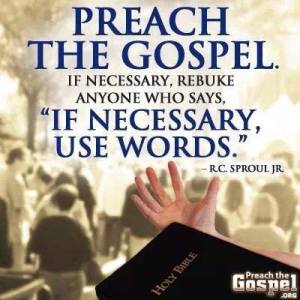
1795610_10153768796270386_733462403_n1. Preach the gospel. If necessary, use words.
It’s necessary. Use words. While our behavior should certainly prove out our testimony, nobody’s going to see us working at a soup kitchen or eschewing barhopping and somehow magically understand that he has broken God’s law and needs to repent and put His faith in Christ’s death, burial, and resurrection for the forgiveness of his sin unto eternal life. That has to be explained. Clearly. By us. From the Bible. With words.


tombstone-159792_6402. Rest in peace/God rest his soul
If the person who died was saved, he’s already resting in peace by the time you can get these words out. (2 Corinthians 5:6-8)

If the person who died wasn’t saved, unfortunately, he’s in a place of eternal torment and suffering, and no amount of asking God to rest his soul will give him a respite. Worse, when Christians say this about someone they know was not saved, they reinforce the false idea many lost people have that the dead are “resting” in some sort of spiritual coma, or that they simply cease to exist (annihilationism) , or that everybody automatically goes to Heaven (universalism).

Maybe “I’m praying for you,” or “I’m bringing you dinner,” would be better.

and speaking of which…


th3. Sending positive thoughts/energy your way.
Thoughts and energy are not things you can wrap up in brown paper, haul down to the post office, and mail to somebody. You can’t send them and the other person can’t receive them, and they can’t actually accomplish anything, and everybody knows this. But, commendably, atheists, New Agers, and other non-Christians wanted to have something compassionate to say to people who are hurting, and since they can’t say, “I’m praying for you,” this is the best they can do.

Christians, we’ve got something better. We can say, “I’m praying for you.” We have an open line to the almighty God of the universe who is listening to us and can actually do something about the situation. Pray for that hurting person. Put your arms around her. Listen to her. Do whatever you can to help. Show her Jesus, not empty words.


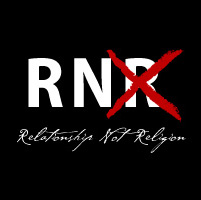
RNR084. Christianity isn’t a religion, it’s a relationship.
The only people running around today saying that Christianity is not a religion are Christians. Everybody else in the world considers Christianity a religion. And up until this little humdinger materialized, so did Christians.

Usually, what people mean by this is that true Christianity is not an institutionalized system of rote obedience to dead and meaningless rituals. It’s a reconciliation with the only true God by means of being redeemed by His Son, Jesus Christ, who propitiated and expiated God’s wrath against us in our sin through His death, burial, and bodily resurrection, and is, therefore, a dynamic and living interpersonal relationship.

But that’s too long to fit into a tweet or a hashtag.

Our relationship with God through Christ is our religion- the only true religion. And that’s not a bad thing.


ttgpt231112b5. Don’t judge someone just because he sins differently than you do.
I find this one confusing, but I think the sentiment behind this is something along the lines of, “I may be an adulterer, but you’re not any less of a sinner just because you only tell the occasional white lie.  Therefore, you have no right to call me to repentance.”

This is a lovely casserole of simultaneous truth and falsehood, and it all hinges on the word “judging,” which has been tossed around so much that even Christians scarcely know what it means anymore. No, we’re not to berate someone for his sin while pompously pretending we’re sin-free. All have sinned, after all, and if we say we have no sin, we lie. But does that mean we should never call anyone to repentance? Of course not! We’re to walk in repentance ourselves and seek to help the lost find forgiveness in Christ and help our Christian brothers and sisters who have fallen into sin to be reconciled to Christ. Scripture doesn’t say we can never call people out of sin because we have a log in our own eye. It says first remove the log and then help your brother.


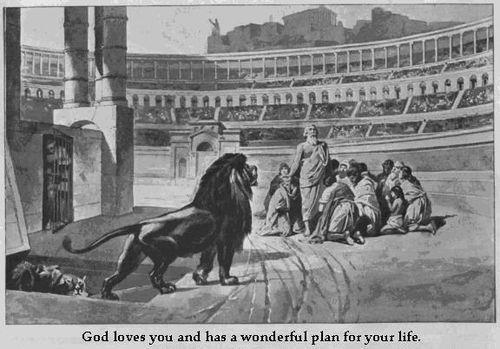
69475_10102578902186220_955102342_n6. God loves you and has a wonderful plan for your life.
This is actually true, it’s just that our idea of a “wonderful plan” doesn’t always match up with God’s idea of a “wonderful plan”.

Our desire is to be healthy, wealthy, and blissfully comfortable with never a family problem, fender bender, lost love, or bankruptcy. God’s desire is for us to be holy. He wants to root the sin out of our lives, show us how to be completely dependent on Him, lead us to trust Him more, build our character and endurance, give us boldness to share the gospel, make us kinder and more merciful, teach us what it means to extend grace and forgive. Most of those lessons are learned only through hardship and suffering. Just ask the apostles or the early church martyrs or our brothers and sisters being persecuted across the globe today.


What are some expressions Christians commonly use that you think we should replace or re-think?

Wednesday's Word

Wednesday’s Word ~ Hosea 1

hosea 1 10Hosea 1

The word of the Lord that came to Hosea, the son of Beeri, in the days of Uzziah, Jotham, Ahaz, and Hezekiah, kings of Judah, and in the days of Jeroboam the son of Joash, king of Israel.

When the Lord first spoke through Hosea, the Lord said to Hosea, “Go, take to yourself a wife of whoredom and have children of whoredom, for the land commits great whoredom by forsaking the Lord.” So he went and took Gomer, the daughter of Diblaim, and she conceived and bore him a son.

And the Lord said to him, “Call his name Jezreel, for in just a little while I will punish the house of Jehu for the blood of Jezreel, and I will put an end to the kingdom of the house of Israel. And on that day I will break the bow of Israel in the Valley of Jezreel.”

She conceived again and bore a daughter. And the Lord said to him, “Call her name No Mercy, for I will no more have mercy on the house of Israel, to forgive them at all. But I will have mercy on the house of Judah, and I will save them by the Lord their God. I will not save them by bow or by sword or by war or by horses or by horsemen.”

When she had weaned No Mercy, she conceived and bore a son. And the Lord said, “Call his name Not My People, for you are not my people, and I am not your God.”

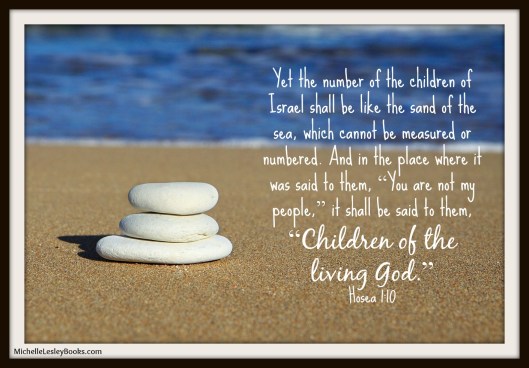
10  Yet the number of the children of Israel shall be like the sand of the sea, which cannot be measured or numbered. And in the place where it was said to them, “You are not my people,” it shall be said to them, “Children of the living God.” 11 And the children of Judah and the children of Israel shall be gathered together, and they shall appoint for themselves one head. And they shall go up from the land, for great shall be the day of Jezreel.


The Holy Bible, English Standard Version Copyright © 2001 by Crossway Bibles, a publishing ministry of Good News Publishers.


Questions to Consider:

1. Who wrote Hosea? What is the theme or purpose of the book? Which genre of biblical literature (wisdom, epistle, prophecy, history, etc.) is Hosea? What important background information about Hosea and this book can we glean from verse 1?

2. In verses 2-3 is God telling Hosea to commit a sin by marrying “a wife of whoredom”? (see interpretive challenges for help) Does this passage give Christians permission to sin in order to carry out God’s plans or proclaim His word?

3. How was Hosea’s marriage a picture of Israel’s sin? (2) Whom did Hosea represent in this picture? Whom did Gomer represent? What was the sin Israel had committed that God called “whoredom”? Do you see evidence of this sin in your life that you need to repent of? Do you see how God considers it “adultery” against Him?

4. Which attributes of God are portrayed in the names of the three children? (4-9) What was God saying to Israel through each of the names of the children? Do these attributes and messages conflict with other attributes we know to be true of God, such as mercy, forgiveness, compassion, and love?

5. Why does Paul quote from Hosea 2:23 and 1:10 in Romans 9:19-28? How does he tie the two passages together, and what is the point he’s trying to make?

Wednesday's Word

Wednesday’s Word ~ Ezekiel 18

For further study on the book of Ezekiel, try my study, Ezekiel.

ez 18 23

Ezekiel 18

The word of the Lord came to me: “What do you mean by repeating this proverb concerning the land of Israel, ‘The fathers have eaten sour grapes, and the children’s teeth are set on edge’? As I live, declares the Lord God, this proverb shall no more be used by you in Israel. Behold, all souls are mine; the soul of the father as well as the soul of the son is mine: the soul who sins shall die.

“If a man is righteous and does what is just and right— if he does not eat upon the mountains or lift up his eyes to the idols of the house of Israel, does not defile his neighbor’s wife or approach a woman in her time of menstrual impurity, does not oppress anyone, but restores to the debtor his pledge, commits no robbery, gives his bread to the hungry and covers the naked with a garment, does not lend at interest or take any profit, withholds his hand from injustice, executes true justice between man and man, walks in my statutes, and keeps my rules by acting faithfully—he is righteous; he shall surely live, declares the Lord God.

10 “If he fathers a son who is violent, a shedder of blood, who does any of these things 11 (though he himself did none of these things), who even eats upon the mountains, defiles his neighbor’s wife, 12 oppresses the poor and needy, commits robbery, does not restore the pledge, lifts up his eyes to the idols, commits abomination, 13 lends at interest, and takes profit; shall he then live? He shall not live. He has done all these abominations; he shall surely die; his blood shall be upon himself.

14 “Now suppose this man fathers a son who sees all the sins that his father has done; he sees, and does not do likewise: 15 he does not eat upon the mountains or lift up his eyes to the idols of the house of Israel, does not defile his neighbor’s wife, 16 does not oppress anyone, exacts no pledge, commits no robbery, but gives his bread to the hungry and covers the naked with a garment, 17 withholds his hand from iniquity, takes no interest or profit, obeys my rules, and walks in my statutes; he shall not die for his father’s iniquity; he shall surely live. 18 As for his father, because he practiced extortion, robbed his brother, and did what is not good among his people, behold, he shall die for his iniquity.

19 “Yet you say, ‘Why should not the son suffer for the iniquity of the father?’ When the son has done what is just and right, and has been careful to observe all my statutes, he shall surely live. 20 The soul who sins shall die. The son shall not suffer for the iniquity of the father, nor the father suffer for the iniquity of the son. The righteousness of the righteous shall be upon himself, and the wickedness of the wicked shall be upon himself.

21 “But if a wicked person turns away from all his sins that he has committed and keeps all my statutes and does what is just and right, he shall surely live; he shall not die. 22 None of the transgressions that he has committed shall be remembered against him; for the righteousness that he has done he shall live. 23 Have I any pleasure in the death of the wicked, declares the Lord God, and not rather that he should turn from his way and live? 24 But when a righteous person turns away from his righteousness and does injustice and does the same abominations that the wicked person does, shall he live? None of the righteous deeds that he has done shall be remembered; for the treachery of which he is guilty and the sin he has committed, for them he shall die.

25 “Yet you say, ‘The way of the Lord is not just.’ Hear now, O house of Israel: Is my way not just? Is it not your ways that are not just? 26 When a righteous person turns away from his righteousness and does injustice, he shall die for it; for the injustice that he has done he shall die. 27 Again, when a wicked person turns away from the wickedness he has committed and does what is just and right, he shall save his life.28 Because he considered and turned away from all the transgressions that he had committed, he shall surely live; he shall not die. 29 Yet the house of Israel says, ‘The way of the Lord is not just.’ O house of Israel, are my ways not just? Is it not your ways that are not just?

30 “Therefore I will judge you, O house of Israel, every one according to his ways, declares the Lord God. Repent and turn from all your transgressions, lest iniquity be your ruin. 31 Cast away from you all the transgressions that you have committed, and make yourselves a new heart and a new spirit! Why will you die, O house of Israel? 32 For I have no pleasure in the death of anyone, declares the Lord God; so turn, and live.”


The Holy Bible, English Standard Version Copyright © 2001 by Crossway Bibles, a publishing ministry of Good News Publishers.


Questions to Consider:

1. What is the book of Ezekiel about? Which genre (history, poetry, wisdom, etc.) is the book of Ezekiel? What is the overall theme of chapter 18?

2. How do verses 5-9 describe a righteous man? What kind of heart would such a man have to have in order to consistently live this way? (9)

3. Who is the “he” in verses 11 and 12 referring to? Is this man to be punished for the sins of his son? (13) If the sinful man (14) fathers a righteous son (14-17) is the righteous son to be punished for his father’s sin? (17-18) Which verse(s) in this chapter sum up the principle of individual responsibility for sin? How does this chapter refute the false teaching of generational curses?

4. What can we learn about repentance from verses 21-32? In which does God take delight, pouring out His wrath on the wicked or pouring out His forgiveness on the repentant? (23, 32) How does this passage compare to 2 Peter 3:9?

5. Consider this chapter in light of the gospel. Is any person truly righteous? Where does the Christian’s righteousness come from? How does the New Testament describe Jesus, the righteous Son, being punished for our sin? What effect does this have on verse 4 (“the soul who sins shall die”)?