Podcast Appearances

Podcast Guest Appearance – Contending for the Word

I once again had the pleasure of chatting with my friend Dave Jenkins on his podcast Contending for the Word, in an episode titled Exposing John and Lisa Bevere in Deliverance Ministry, Repentance, and Sanctification.

Listen in as Dave and I discuss the Beveres’ false doctrine and the way they twist Scripture on these issues, what the Bible really teaches, and more! Even if you don’t follow the Beveres, many other false teachers share the same beliefs, so you’ll want to give this a listen to educate yourself on the falsehoods flying around out there and equip yourself to help your friends and loved ones who believe them.

Be sure to check out Dave’s website, Servants of Grace, where you’ll find an abundance of great teaching, podcasts, and materials, as well as his social media links- and give Dave a follow!


Articles / resources mentioned or touched on in the episode:

John & Lisa Bevere

Popular False Teachers & Unbiblical Trends

Searching for a new church?

Speaking Engagements

A Word Fitly Spoken


Got a podcast of your own or have a podcasting friend who needs a guest? Need a speaker for a womenโ€™s conference or church event? Click the โ€œSpeaking Engagementsโ€ tab in the blue menu bar at the top of this page, drop me an e-mail, and letโ€™s chat!

Faith, Sin

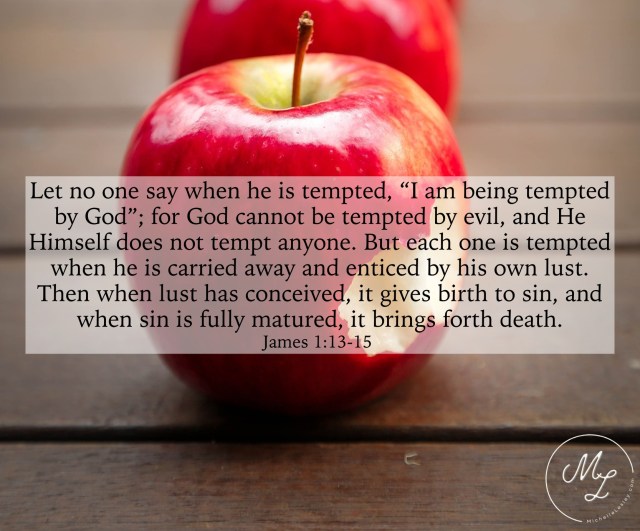
Throwback Thursday ~ The “Forbidden Fruit” Fallacy

Originally published February 20, 2015

You’ve heard the old adage: “forbidden fruit is sweeter.” When people use this phrase, what they mean is that if you tell someone he can’t have or do something, he’s going to want to have or do it all the more just because it’s forbidden.

I heard this little clichรฉ several times last week on blogs, on Facebook, in discussion groups, etc., in reference to the deluge (yes, I contributed to it) of Christian blog and press articles decrying the movie Fifty Shades of Grey, and discouraging Christians from attending. Apparently – and I can see where they’re coming from, a little, I guess – some folks felt that the strong, repetitive, and biblical stand against Fifty Shades turned it into a piece of forbidden fruit that a) actually informed Christians (who would have been otherwise oblivious) that this movie even existed (Really? People are tech savvy enough to be on Facebook, Twitter, and blogs, but they were completely unaware of this movie? Ok, I suppose it’s possible.) and b) made Christians want to go see the movie because of its verboten status. The implication was that, if Christians went to see this movie, it was the fault – at least in part – of Christian writers who had warned against it.

Seems reasonable, right?

Until, that is, you start looking at this line of thinking a little more closely through the lens of Scripture.

Pop quiz: What does the phrase “forbidden fruit” allude to?
a) prunes
b) Snow White’s poisoned apple
c) the fruit of the tree of the knowledge of good and evil in Eden

Please tell me you answered “c,” because, if you didn’t, I might have to sit down and cry. When God put Adam in the Garden way back in Genesis 2, He said, “You may surely eat of every tree of the garden, but of the tree of the knowledge of good and evil you shall not eat, for in the day that you eat of it you shall surely die.” (2:16-17) Fruit. Forbidden. Boom.

Notice that God is the One who forbade Adam from eating this fruit. God’s way, throughout the entirety of Scripture, is to warn the people He loves of the dangers and consequences of sin, not to remain silent and keep His fingers crossed that they don’t stumble into a pit. God didn’t stick the tree in the middle of the Garden and say to Himself, “Gee I hope Adam doesn’t notice this tree and eat from it, but I’m not going to mention it to him because I’m scared that I’ll make him aware that it exists, and that he’ll want to eat from it just because I said he can’t.” Uh uh. God pointed it out and said, “No.”

God’s way, throughout the entirety of Scripture, is to warn the people He loves of the dangers and consequences of sin, not to remain silent and keep His fingers crossed that they don’t stumble into a pit.

And let’s take a gander at something else in this story. What caused Adam and Eve to eat from the tree? Was it God telling Adam not to eat from it? No. If that was all it took, why don’t we find Adam eating the fruit immediately after God told him not to? Why didn’t Eve immediately eat from the tree upon learning from Adam of God’s prohibition against it?

Because the warning is not what led them to sin.

We don’t see Eve lay a finger on that fruit until Satan enters the picture. He tempted her, and she gave in to sin.

It wasn’t God’s fault for putting the tree there. It wasn’t God’s fault for warning them. It was Adam’s fault and Eve’s fault for being disobedient.

And giving in to sin is still our fault today. If you went to see Fifty Shades of Grey, it’s not God’s fault for allowing the movie to exist. It’s not some Christian blogger’s fault for making you aware of the movie or warning you not to see it. It’s your fault. You were tempted. You gave in to sin. (The good news is that if you will repent, God will graciously forgive you.)

As Christians we are to be imitators of God. “Whoever says he abides in him ought to walk in the same way in which he walked.” (1 John 2:6) That means that when we see sin that could easily ensnare our brothers and sisters, we don’t turn our heads. We don’t mind our own business. We don’t keep our mouths shut to be polite. We do the same thing God did time after time in the Bible. We run into the fray to rescue those we love.

When we see sin that could easily ensnare our brothers and sisters, we don’t turn our heads. We don’t mind our own business. We don’t keep our mouths shut to be polite. We run into the fray to rescue those we love.

And we are not to blame if there are those who choose to charge headlong into sin rather than heed the alarm we sound.

Forgiveness, Mailbag

The Mailbag: Can unforgiveness cause you to you lose your salvation?

Originally published August 19, 2019

Can unforgiveness cause me to lose my salvation?

Forgiving (or refusing to forgive) others as it relates to our salvation is such an important issue. I’m so glad you asked!

Let’s break this question down a bit.

Can you lose your salvation?

The first thing we need to tackle is whether or not someone whom Christ has genuinely saved can lose her salvation – for unforgiveness or any other reason. And the answer to that question is no.

Why? The short answer is that if God saves someone, and that person can subsequently “unsave” herself, that makes her more powerful than God, which, as we know, can’t happen. You can’t save yourself, and you can’t unsave yourself. Salvation is all of God.

You can’t save yourself, and you can’t unsave yourself. Salvation is all of God.

When God saves you, you are His new creation in Christ. You can’t “uncreate” your new spiritual life any more than you can “uncreate” your body, or a tree, or a planet. You can kill or do damage to those things, but you cannot reverse God’s creative process. To use another example, oh so relevant to today, God created you female. You can mutilate your body til kingdom come trying to appear male, but that will not change the fact that at your genetic level – the very essence of your being – you are female. And you can’t undo that because God created you that way, and you’re not more powerful than God. If you can’t even change God’s creation of your physical body, how in the world can you change God’s creation of your spiritual being?

The moment God saves you, He forgives all your sins, past, present, and future, and robes you in the righteousness of Christ.

In addition to the fact that you can’t uncreate the new creature God has created you to be, you need to remember that the moment God saves you, He forgives all your sins, past, present, and future, and robes you in the righteousness of Christ. That swear word you’re going to say next week? Already forgiven. That lie you’re going to tell five years from now? Already forgiven. And if you decide to commit the sin of refusing to forgive someone, that sin has already been forgiven too. (So since all our sins are already forgiven, we can just commit as much sin as we want and we don’t have to worry about it, right? Wrong.) We still need to confess those sins to God and be cleansed from them because they disrupt our fellowship with God, but in His accounting office, that sin debt has already been marked “paid in full”.

Furthermore, Jesus tells us plainly that if He’s got you, He’s got you:

My sheep hear my voice, and I know them, and they follow me. I give them eternal life, and they will never perish, and no one will snatch them out of my hand. My Father, who has given them to me, is greater than all, and no one is able to snatch them out of the Father’s hand. I and the Father are one.โ€

No one. That includes you and your sin. The power of your sin is not greater than God’s power to forgive that sin.

The power of your sin is not greater than God’s power to forgive that sin.

They will never perish. To say that a person about which Jesus Himself has said, “I give them eternal life,” can lose her salvation is to call Jesus a liar. He says that person “will never perish.” End of story.

Still not convinced that someone whom Christ has genuinely saved can’t lose her salvation? Try these passages on for size.

Now the reason it can look to us like someone can lose her salvation comes from two places: experience and misunderstanding the Bible.

The reason it can look to us like someone can lose her salvation comes from two places: experience and misunderstanding the Bible.

Experience:
It’s happened plenty of times in the past, but in the last few weeks, we’ve seen two high profile evangelicals “walk away from the faith,”: Joshua Harris and Marty Sampson. Maybe you know someone personally – a friend, a loved one, even a pastor – who gave every appearance of being a Christian and then suddenly left Christianity, and the church, behind.

How does this compute when the Bible teaches that genuinely born again Christians cannot lose their salvation? Well, we need to remember something else the Bible teaches that’s very important:

Not everyone who claims to be a Christian actually is one.

Some people consciously know they’re not really saved and are just trying to pull the wool over the eyes of others. But many (my guess is “most” – these days there’s not a lot of social cachet in calling yourself a Christian) are deceived into believing they’re saved. Maybe they heard some sort of unbiblical gospel presentation and have put their faith in a decision they made in response. Maybe they just assume they’re saved because they’re good church-going people and their church doesn’t teach them otherwise. Who knows? It could be a lot of things. But we know for sure that there are many people who call themselves Christians and believe they are Christians who aren’t. Why? Because the Bible says so:

โ€œNot everyone who says to me, โ€˜Lord, Lord,โ€™ will enter the kingdom of heaven, but the one who does the will of my Father who is in heaven. On that day many will say to me, โ€˜Lord, Lord, did we not prophesy in your name, and cast out demons in your name, and do many mighty works in your name?โ€™ And then will I declare to them, โ€˜I never knew you; depart from me, you workers of lawlessness.โ€™
Matthew 7:21-23

Many will say”…False converts are common, not few and far between. And it’s not just your average Joe or Jane in the pew, either. People who “prophesy…cast out demons…do mighty works” under the auspices of Christianity? They’re pastors, elders, deacons, Bible study teachers, seminary professors, “Christian” authors, evangelical celebrities. And Christ does not know them, because they don’t know Him. They talk the talk, and might even look like they walk the walk, but they’ve never truly believed the biblical gospel, repented of their sin, and trusted the Jesus of Scripture to save them. First John 2:18-19 puts it this way:

Children, it is the last hour, and as you have heard that antichrist is coming, so now many antichrists have come. Therefore we know that it is the last hour. They went out from us, but they were not of us; for if they had been of us, they would have continued with us.

People whom Jesus has genuinely saved may fall into sin for a season, but they do not fall away from the faith. Those who leave the faith were never part of it in the first place, despite appearances or their claims to the contrary. It might be difficult, but this is one of those occasions when we have to believe what Scripture says over what we can see.

Those who leave the faith were never part of it in the first place, despite appearances or their claims to the contrary.

Jesus also tells us in the parable of the sower that there will be be “rocky ground” folks who will appear to be Christians, but because they have no root, they “endure for a while, and when tribulation or persecution arises on account of the word, immediately they fall away.” Jesus follows up this parable with the parable of the wheat and tares which further drives home His point that there will be impostors in the visible church.

So even though we observe people who appear to be Christians “falling away from the faith,” through unforgiveness or any other sin, we know that what’s really happening is that a lost person got tired of pretending to be saved and went back to being a lost person. Second Peter 2:22 puts it this way:

What the true proverb says has happened to them: โ€œThe dog returns to its own vomit, and the sow, after washing herself, returns to wallow in the mire.โ€

If Christ has never fundamentally changed your spiritual nature from dog or pig into a new creature in Christ, you’re still a dog or a pig. And even if you manage to clean up on the outside you’ll eventually return to the vomit of being a dog and the mud of being a pig because that’s your nature.

Misunderstood Scripture
There are passages in the Bible that, when misunderstood, when taken out of their immediate context, or when taken out of the overall context of Scripture can seem to teach that a person can lose her salvation. But as we’ve seen, there are way too many rightly handledin context passages of Scripture that refute that idea.

Can you lose your salvation by refusing to forgive someone?

You mentioned in your original question that you believe unforgiveness can cause someone to lose her salvation because, “It is so clear in so many ways in Scripture, even parables that Jesus told.” But, you did not mention any of the Scriptures you think teach this. My guess is that one of the Scriptures you’re thinking of is Matthew 6:14-15:

For if you forgive others their trespasses, your heavenly Father will also forgive you, but if you do not forgive others their trespasses, neither will your Father forgive your trespasses.

In context, we can see that these two verses come at the end of the Lord’s Prayer. In verse 12, Jesus has just taught us to pray that God would “forgive us our debts,
as we also have forgiven our debtors,” and He’s giving us a little addendum on this in 14-15.

Remember, even though all our sins from birth to death were forgiven at the moment of our salvation, we still need to confess our sins in prayer and ask God to cleanse us from our wrongdoing to bring us back into right fellowship with Him. But if you’re willfully in the middle of committing the sin of unforgiveness against someone, you’re still actively sinning. You haven’t turned from that sin in order to be cleansed. You’re essentially rolling around in the mud and asking God to cleanse you while you have no intention of getting out of the mud. How is that supposed to work? It doesn’t make any sense. If you want to get cleaned up (“forgiven”), you have to get out of the mud (stop committing the sin of unforgiveness – “forgive”). Otherwise, you’re asking God to restore the fellowship you’re still actively damaging with your sin.

Another passage you might be thinking of is the parable of the unforgiving servant. The takeaway from this passage is not that God will rescind the salvation of Christians who commit the sin of unforgiveness. This passage doesn’t say that and we already know that idea conflicts with what Scripture teaches about the security of the Believer.

The takeaway from this passage is that God has forgiven us a sin debt that is incomprehensible. Knowing and having experienced that forgiveness, how could we not forgive some paltry little sin another human commits against us? First John 4:19 says, “We love because He first loved us,” and the way He loved us was to forgive us our sin. So we also forgive because He first forgave us. And if we can giddily and unrepentantly harbor unforgiveness in our hearts against someone else, we’d better start testing ourselves against Scripture to see if we’re really in the faith. Because that kind of unforgiveness is not the fruit of a redeemed life, it’s the fruit of someone who’s unsaved.

No, a genuinely regenerated Christian cannot lose her salvation by committing the sin of unforgiveness. But if she is genuinely regenerated, she will repent of that sin and forgive.

A genuinely regenerated Christian cannot lose her salvation by committing the sin of unforgiveness. But if she *is* genuinely regenerated, she will repent of that sin and forgive.

Additional Resources:

Walking Away from Faith? at A Word Fitly Spoken Podcast

The Mailbag: Must I reconcile with my abusiveย ex-husband?

Forgiving Like Kings and Servants

You Canโ€™t Love Jesus with a Heart Full of Hate: 7 Reasons to Love and Forgive Your Enemies

Am I Really Saved? A 1 John Check Up


If you have a question about: a Bible passage, an aspect of theology, a current issue in Christianity, or how to biblically handle a family, life, or church situation, comment below (Iโ€™ll hold all questions in queue {unpublished} for a future edition of The Mailbag) or send me an e-mail or private message. If your question is chosen for publication, your anonymity will be protected.


Forgiveness, Mailbag

The Mailbag: Can unforgiveness cause you to you lose your salvation?

Originally published August 19, 2019

Can unforgiveness cause me to lose my salvation?

Forgiving (or refusing to forgive) others as it relates to our salvation is such an important issue. I’m so glad you asked!

Let’s break this question down a bit.

Can you lose your salvation?

The first thing we need to tackle is whether or not someone whom Christ has genuinely saved can lose her salvation – for unforgiveness or any other reason. And the answer to that question is no.

Why? The short answer is that if God saves someone, and that person can subsequently “unsave” herself, that makes her more powerful than God, which, as we know, can’t happen. You can’t save yourself, and you can’t unsave yourself. Salvation is all of God.

You can’t save yourself, and you can’t unsave yourself. Salvation is all of God.

When God saves you, you are His new creation in Christ. You can’t “uncreate” your new spiritual life any more than you can “uncreate” your body, or a tree, or a planet. You can kill or do damage to those things, but you cannot reverse God’s creative process. To use another example, oh so relevant to today, God created you female. You can mutilate your body til kingdom come trying to appear male, but that will not change the fact that at your genetic level – the very essence of your being – you are female. And you can’t undo that because God created you that way, and you’re not more powerful than God. If you can’t even change God’s creation of your physical body, how in the world can you change God’s creation of your spiritual being?

The moment God saves you, He forgives all your sins, past, present, and future, and robes you in the righteousness of Christ.

In addition to the fact that you can’t uncreate the new creature God has created you to be, you need to remember that the moment God saves you, He forgives all your sins, past, present, and future, and robes you in the righteousness of Christ. That swear word you’re going to say next week? Already forgiven. That lie you’re going to tell five years from now? Already forgiven. And if you decide to commit the sin of refusing to forgive someone, that sin has already been forgiven too. (So since all our sins are already forgiven, we can just commit as much sin as we want and we don’t have to worry about it, right? Wrong.) We still need to confess those sins to God and be cleansed from them because they disrupt our fellowship with God, but in His accounting office, that sin debt has already been marked “paid in full”.

Furthermore, Jesus tells us plainly that if He’s got you, He’s got you:

My sheep hear my voice, and I know them, and they follow me. I give them eternal life, and they will never perish, and no one will snatch them out of my hand. My Father, who has given them to me, is greater than all, and no one is able to snatch them out of the Father’s hand. I and the Father are one.โ€

No one. That includes you and your sin. The power of your sin is not greater than God’s power to forgive that sin.

The power of your sin is not greater than God’s power to forgive that sin.

They will never perish. To say that a person about which Jesus Himself has said, “I give them eternal life,” can lose her salvation is to call Jesus a liar. He says that person “will never perish.” End of story.

Still not convinced that someone whom Christ has genuinely saved can’t lose her salvation? Try these passages on for size.

Now the reason it can look to us like someone can lose her salvation comes from two places: experience and misunderstanding the Bible.

The reason it can look to us like someone can lose her salvation comes from two places: experience and misunderstanding the Bible.

Experience:
It’s happened plenty of times in the past, but in the last few weeks, we’ve seen two high profile evangelicals “walk away from the faith,”: Joshua Harris and Marty Sampson. Maybe you know someone personally – a friend, a loved one, even a pastor – who gave every appearance of being a Christian and then suddenly left Christianity, and the church, behind.

How does this compute when the Bible teaches that genuinely born again Christians cannot lose their salvation? Well, we need to remember something else the Bible teaches that’s very important:

Not everyone who claims to be a Christian actually is one.

Some people consciously know they’re not really saved and are just trying to pull the wool over the eyes of others. But many (my guess is “most” – these days there’s not a lot of social cachet in calling yourself a Christian) are deceived into believing they’re saved. Maybe they heard some sort of unbiblical gospel presentation and have put their faith in a decision they made in response. Maybe they just assume they’re saved because they’re good church-going people and their church doesn’t teach them otherwise. Who knows? It could be a lot of things. But we know for sure that there are many people who call themselves Christians and believe they are Christians who aren’t. Why? Because the Bible says so:

โ€œNot everyone who says to me, โ€˜Lord, Lord,โ€™ will enter the kingdom of heaven, but the one who does the will of my Father who is in heaven. On that day many will say to me, โ€˜Lord, Lord, did we not prophesy in your name, and cast out demons in your name, and do many mighty works in your name?โ€™ And then will I declare to them, โ€˜I never knew you; depart from me, you workers of lawlessness.โ€™
Matthew 7:21-23

Many will say”…False converts are common, not few and far between. And it’s not just your average Joe or Jane in the pew, either. People who “prophesy…cast out demons…do mighty works” under the auspices of Christianity? They’re pastors, elders, deacons, Bible study teachers, seminary professors, “Christian” authors, evangelical celebrities. And Christ does not know them, because they don’t know Him. They talk the talk, and might even look like they walk the walk, but they’ve never truly believed the biblical gospel, repented of their sin, and trusted the Jesus of Scripture to save them. First John 2:18-19 puts it this way:

Children, it is the last hour, and as you have heard that antichrist is coming, so now many antichrists have come. Therefore we know that it is the last hour. They went out from us, but they were not of us; for if they had been of us, they would have continued with us.

People whom Jesus has genuinely saved may fall into sin for a season, but they do not fall away from the faith. Those who leave the faith were never part of it in the first place, despite appearances or their claims to the contrary. It might be difficult, but this is one of those occasions when we have to believe what Scripture says over what we can see.

Those who leave the faith were never part of it in the first place, despite appearances or their claims to the contrary.

Jesus also tells us in the parable of the sower that there will be be “rocky ground” folks who will appear to be Christians, but because they have no root, they “endure for a while, and when tribulation or persecution arises on account of the word, immediately they fall away.” Jesus follows up this parable with the parable of the wheat and tares which further drives home His point that there will be impostors in the visible church.

So even though we observe people who appear to be Christians “falling away from the faith,” through unforgiveness or any other sin, we know that what’s really happening is that a lost person got tired of pretending to be saved and went back to being a lost person. Second Peter 2:22 puts it this way:

What the true proverb says has happened to them: โ€œThe dog returns to its own vomit, and the sow, after washing herself, returns to wallow in the mire.โ€

If Christ has never fundamentally changed your spiritual nature from dog or pig into a new creature in Christ, you’re still a dog or a pig. And even if you manage to clean up on the outside you’ll eventually return to the vomit of being a dog and the mud of being a pig because that’s your nature.

Misunderstood Scripture
There are passages in the Bible that, when misunderstood, when taken out of their immediate context, or when taken out of the overall context of Scripture can seem to teach that a person can lose her salvation. But as we’ve seen, there are way too many rightly handledin context passages of Scripture that refute that idea.

Can you lose your salvation by refusing to forgive someone?

You mentioned in your original question that you believe unforgiveness can cause someone to lose her salvation because, “It is so clear in so many ways in Scripture, even parables that Jesus told.” But, you did not mention any of the Scriptures you think teach this. My guess is that one of the Scriptures you’re thinking of is Matthew 6:14-15:

For if you forgive others their trespasses, your heavenly Father will also forgive you, but if you do not forgive others their trespasses, neither will your Father forgive your trespasses.

In context, we can see that these two verses come at the end of the Lord’s Prayer. In verse 12, Jesus has just taught us to pray that God would “forgive us our debts,
as we also have forgiven our debtors,” and He’s giving us a little addendum on this in 14-15.

Remember, even though all our sins from birth to death were forgiven at the moment of our salvation, we still need to confess our sins in prayer and ask God to cleanse us from our wrongdoing to bring us back into right fellowship with Him. But if you’re willfully in the middle of committing the sin of unforgiveness against someone, you’re still actively sinning. You haven’t turned from that sin in order to be cleansed. You’re essentially rolling around in the mud and asking God to cleanse you while you have no intention of getting out of the mud. How is that supposed to work? It doesn’t make any sense. If you want to get cleaned up (“forgiven”), you have to get out of the mud (stop committing the sin of unforgiveness – “forgive”). Otherwise, you’re asking God to restore the fellowship you’re still actively damaging with your sin.

Another passage you might be thinking of is the parable of the unforgiving servant. The takeaway from this passage is not that God will rescind the salvation of Christians who commit the sin of unforgiveness. This passage doesn’t say that and we already know that idea conflicts with what Scripture teaches about the security of the Believer.

The takeaway from this passage is that God has forgiven us a sin debt that is incomprehensible. Knowing and having experienced that forgiveness, how could we not forgive some paltry little sin another human commits against us? First John 4:19 says, “We love because He first loved us,” and the way He loved us was to forgive us our sin. So we also forgive because He first forgave us. And if we can giddily and unrepentantly harbor unforgiveness in our hearts against someone else, we’d better start testing ourselves against Scripture to see if we’re really in the faith. Because that kind of unforgiveness is not the fruit of a redeemed life, it’s the fruit of someone who’s unsaved.

No, a genuinely regenerated Christian cannot lose her salvation by committing the sin of unforgiveness. But if she is genuinely regenerated, she will repent of that sin and forgive.

A genuinely regenerated Christian cannot lose her salvation by committing the sin of unforgiveness. But if she *is* genuinely regenerated, she will repent of that sin and forgive.

Additional Resources:

Walking Away from Faith? at A Word Fitly Spoken Podcast

The Mailbag: Must I reconcile with my abusiveย ex-husband?

Forgiving Like Kings and Servants

You Canโ€™t Love Jesus with a Heart Full of Hate: 7 Reasons to Love and Forgive Your Enemies

Am I Really Saved? A 1 John Check Up


If you have a question about: a Bible passage, an aspect of theology, a current issue in Christianity, or how to biblically handle a family, life, or church situation, comment below (Iโ€™ll hold all questions in queue {unpublished} for a future edition of The Mailbag) or send me an e-mail or private message. If your question is chosen for publication, your anonymity will be protected.
Church

Throwback Tuesday ~ Revive Us Again

I’m flip-flopping the blog schedule a tad this week.
Enjoy this week’s Throwback Thursday – on Tuesday!

Originally published August 12, 2009

Thirty three per cent of clergy and thirty six per cent of laymen
report having visited a sexually explicit web site.
Christianity Today survey, August 2000

The divorce rate of born-again Christians (32%)
is higher than that of atheists and agnostics (30%).
Barna Research Group 20081

Twenty per cent of women who have abortions
are born-again or Evangelical Christians.
The Alan Guttmacher Institute, 1996

We rarely find substantial differences between
the moral behavior of Christians and non-Christians.
George Barna, Founder, Barna Research Group

You are the salt of the earth; but if the salt has become tasteless,
how can it be made salty again?
It is no longer good for anything, except to be thrown out
and trampled under foot by men.
Jesus, Matthew 5:13

Once upon a time, when I was a little girl, my parents took my sister and me to visit some of our elder relatives. For the evening meal, the lady of the house set a beautiful, formal table, complete with lovely crystal salt cellars at each place.

Having attended approximately zero formal dinners in my decade-long, casual dining existence, I had never seen a salt cellar. Since it happened to be sitting next to my goblet of unsweetened iced tea, I presumed it was my own personal sugar bowl.

I was puzzled as to why the spoon was so tiny, but forged ahead in an attempt to sweeten my tea with spoonful after spoonfulโ€ฆof salt. After one swig, I realized my mistake, but to maintain decorum, I did my best to eat my meal while taking an occasional small sip of the tea-flavored salt water. It was a long dinner.

I have never been so thirsty for a fresh drink of water beforeโ€”or sinceโ€”that moment.

We, the body of Christ, are supposed to be salt. Look around. How are we doing? By and large, instead of the church making the world thirsty for the Living Water, we have become so worldly ourselves that we are in danger of losing our savor altogether.

The Western church, the American church, the local church, maybe even your churchโ€”is in desperate need of revival. Not a revival meeting. Revival.

Revival is not a special event to win the lost. It is a time when Godโ€™s people, both individually and corporately, humble themselves, cry out to God in repentance and return to a fresh, empowered, obedient love relationship with Him.

Arenโ€™t you tired of seeing statistics like the ones at the beginning of this article? Tired of the church having so little impact on a lost and dying world? Tired of simply going through the motions in your spiritual life and at church? Have you ever, as I have, taken a step back, looked at your walk and your worship, and said, โ€œThereโ€™s got to be more to the Christian life than thisโ€?

There is more. Much more. God desires that we have a full, exciting, vibrant, dynamic relationship with Him. But itโ€™s going to cost us. It will cost our pride, our time, our repentance, our obedience, and our priority. It will require that we become dissatisfied and uncomfortable with the status quo of complacency.

I think weโ€™re up for the challenge.

Turn away my eyes from looking at vanity,
and revive me in Your ways.
Psalm 119:37


1Take these statistics with a “grain of salt”. :0) Not everyone who claims to be a “born-again Christian” in a poll actually is one, the divorce stat has subsequently been proved false, etc. The idea is that the world has infiltrated the church, and the church has embraced the world, and therefore, the behavior of way too many professing Christians is worldly.