Uncategorized

The Word on Wednesdays

Hi ladies! I hope you enjoyed our most recent Bible study,ย 1&2 Timothy: The Structure and Spirit of the Church, which we wrapped up recently.

Iโ€™ve been taking a break on Wednesdays, getting ready for our new study. I hope youโ€™ll enjoy it and that it will edify you as you seek to grow in Christ and His Word. (The picture above does not mean we will be studying James. :0) I really had planned to start our new study last week, but I’ve had a family situation come up unexpectedly that I need to devote some time and attention to, and that has to come first. My new plan is to start our new study next week- August 28.

So, if you havenโ€™t quite finished with the 1&2 Timothy study, you can use this time to finish up, and Iโ€™ll also be posting some articles from the archives that I think youโ€™ll find helpful as we make our way toward our next study. Here is this weekโ€™s article:

sunday school

Sunday School: Chronological Study Lessons

During 2014, I led my ladiesโ€™ Sunday School class in a chronological read-through of the entire Bible. Each week I taught a lesson from that weekโ€™s reading and posted it here on the blog.

If youโ€™re using the chronological one year Bible reading plan this year, hereโ€™s the lesson that roughly corresponds with this weekโ€™s reading. (And even if youโ€™re not, I hope youโ€™ll enjoy this lesson anyway.)

Through the Bible in 2014 ~ Week 34 ~ Aug. 17-23
Jeremiah 35-50, Psalm 74, 79, 2 Kings 24-25, 2 Chronicles 36, Habakkuk
Idolatry: No Turning Back

idolatry

Background:
Israel is gone, carried off into captivity by Assyria. Judah has managed to hang on a little longer, due in part to Hezekiahโ€™s and Josiahโ€™s godliness, but, now, Nebuchadnezzar has besieged and overthrown the last of Judahโ€™s fortified cities, slaughtered the king and the nobles, and carried nearly all the citizens off to a 70 year exile in Babylon. Nebuchadnezzar left a small remnant of the poorest of the poor to continue living in Judah to work the land, and set up Gedaliah as governor over them. Gedaliah was subsequently assassinated by the Ammonites, and the remnant decided -against Godโ€™s clear instruction through Jeremiah- to go to Egypt, and to force Jeremiah to go with them. This is where we now find them in chapter 44…Continue reading.

Uncategorized

The Word on Wednesdays

Hi ladies! I hope you enjoyed our most recent Bible study,ย 1&2 Timothy: The Structure and Spirit of the Church, which we wrapped up recently.

Iโ€™ve been taking a break on Wednesdays, getting ready for our new study. I hope youโ€™ll enjoy it and that it will edify you as you seek to grow in Christ and His Word. (The picture above does not mean we will be studying James. :0) I really had planned to start our new study today, but I’ve had a family situation come up unexpectedly that I need to devote some time and attention to, and that has to come first. My new plan is to start our new study two weeks from today on August 28.

So, if you havenโ€™t quite finished with the 1&2 Timothy study, you can use this time to finish up, and Iโ€™ll also be posting some articles from the archives that I think youโ€™ll find helpful as we make our way toward our next study. Here is this weekโ€™s article:

Wednesday’s Word

Wednesday is Bible study day here on the blog. In myย Wednesday’s Word study, youโ€™ll find miscellaneous, one lesson Bible studies from each book of the Bible. One chapter of Scripture followed by study questions. This sampler series demonstrates that thereโ€™s nothing to be afraid of when approaching those โ€œlesser knownโ€ books and that every book of the Bible is valuable and worth studying.

Wednesday’s Word ~ Obadiah

obadiah 4


The vision of Obadiah.

Thus says the Lordย Godย concerning Edom:
We have heard a report from theย Lord,
ย ย ย ย and a messenger has been sent among the nations:
โ€œRise up! Let us rise against her for battle!โ€
2ย Behold, I will make you small among the nations;
ย ย ย ย you shall be utterly despised.

ย Keep reading…

Old Testament, Parenting

Bad Dad David?

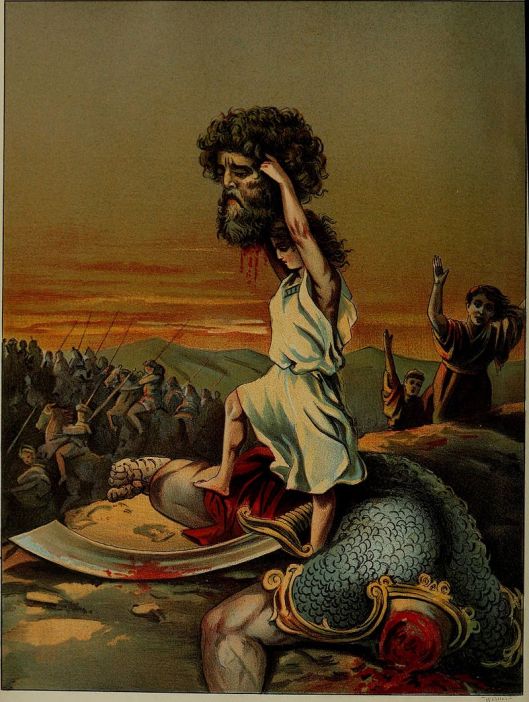
I recently finished reading through the life of David during my quiet time. When we think of David, the first thing to jump to mind is probably โ€œand Goliathโ€ or โ€œand Bathshebaโ€ or maybe that he was a king or a psalmist. But have you ever thought of David and the first thing to come to mind was โ€œlousy fatherโ€? I havenโ€™t. And the Bible doesnโ€™t explicitly tell us that he was a bad dad. And, letโ€™s face it, even the most godly parents in the world can have a kid or two who turn out to be prodigals. But if you look at how some of Davidโ€™s children turned out, you have to at least wonder about his parenting skills.

First youโ€™ve got Amnon โ€“ as disgusting a specimen of a human being as ever walked the planet. He makes himself physically ill lusting day after day for his half sisterTamar. Thatโ€™s a lot of lust. But at least โ€“ at least โ€“ he keeps it to himself. For a while, that is.

Amnonโ€™s got an equally disgusting cousin, Jonadab โ€“ who, instead of smacking him senseless when Amnon shamelessly confesses his dastardly daydreams โ€“ devises a scheme to help Amnon indulge his foul and festering flesh by tricking David into making Tamar available to him. David sends Tamar to Amnonโ€™s house, and Tamar pleads with him not to force himself on her.

(While Tamar is pleading with her pustule of a brother, she says something interesting: โ€œPlease speak to the king, for he will not withhold me from you.โ€ Now, arguably, itโ€™s likely she was just saying whatever she could think of in the moment to get away from Amnon and didnโ€™t really believe David would allow Amnon to marry her. But if she did believe that to be true, that definitely says something about David. Because, by that time in Israelโ€™s history, intermarriage between two people who shared a parent was big-time illegal with severe consequences for the offenders. And David and everybody else in the kingdom knew that. Did Davidโ€™s children think he would break the law for them and excuse them from punishment? And for such a nauseating reason?)

But Amnon ignores Tamarโ€™s heartbreaking pleas and forcibly rapes her. He rapes his sister. David finds out what happened and is understandably angry. But does he follow the law and have Amnon executed? Nope. (So we at least have our answer to the question of whether or not David would break the law for his children.) If David did anything about the situation, the Bible doesnโ€™t record it.

Fast forward two whole years. David has still not made his rapist son face the music, so Absalom, Tamarโ€™s full brother, metes out his own brand of justice, putting Amnon to death.

Fast forward a few more years and Absalomย thinks, โ€œI believe Iโ€™d make a better king than dear old Dad.โ€ So he sets about manipulating and stealing the hearts of his countrymen away from David and stages a bloodless coup. David ends up having toย flee for his life from his own son.ย Meanwhile, Absalom moves into the palace, sets up a love nest on the roof where everybody can see, and sleeps with Davidโ€™s concubines.ย Then, Absalom gathers up an army to hunt down David โ€“ his father โ€“ in order to kill him and secure his throne.

Davidโ€™s men fight valiantly for him, risking their own lives. Joab, the commander of Davidโ€™s army โ€“ perhaps considering Davidโ€™s command to โ€œdeal gentlyโ€ with Absalom as ludicrous after all Absalom has done โ€“ seizes an opportune moment, and kills Absalom. David flips out in grief, so much so that Joab has to rebuke him: all these men risked their lives to save you, David, and youโ€™re crying and moaning over this wretch who was trying to kill you! Snap out of it or theyโ€™re going to turn on you! Fortunately, David has the sense to listen to him.

After some more wars, some famine, and a โ€œsin-sus,โ€ Adonijah decides he can pull off the coup his brother Absalom so spectacularly failed at. David is old and sickly, and it should be easy for Adonijah to make a grab for the throne. And in the description of Adonijah, hereโ€™s what was said that initially got me thinking David wasnโ€™t Dad of the year:

His [Adonijahโ€™s] father [David] had never at any time displeased him [Adonijah] by asking, โ€œWhy have you done thus and so?โ€ 

Are you picking up what the author of 1 Kings is laying down? David was an indulgent father. He had never at any time questioned his sonโ€™s actions or intervened in a way that upset him. He let Adonijah run wild and do what he wanted to do. And the way Amnon and Absalom acted, itโ€™s reasonable to surmise that David raised them the same way, along with all the rest of his children. Itโ€™s a miracle Solomon turned out as well as he did (at least until his wives drew him away from the Lord into idol worship). Reading the first nine chapters of Proverbs, I canโ€™t help but wonder if Solomon observed Davidโ€™s parenting and was determined not to follow his poor example. Listen to my instructions, son. Get wisdom. Donโ€™t be a fool.

Sometimes Bible characters set a great example for us. David, a man after Godโ€™s own heart, set many. But sometimes God lets us see their poor and sinful behavior so we can learn not to follow their example. Moms and Dads, letโ€™s make sure we are men and women after Godโ€™s own heart when it comes to parenting our kids.

Happy Fatherโ€™s Day, yโ€™all.


If this article sounds familiar, it’s because you just read it in last Friday’s Random Ramblings, Ruminations, and Resources. A reader asked if I would make it a stand-alone article for easier sharing. :0)
Worship

God’s Not Like “Whatever, Dude,” About The Way He’s Approached in Worship

Social media is a strange universe to live in. There’s a lot of stupidity, but there’s also a lot that can be learned from various trending issues.

Such was the case recently when Christian social media was up in arms (and rightly so) about Cory Asbury’s worship song Reckless Love, and whether or not churches should use it in their worship services. Discussion centered around the use of the word “reckless” to describe God’s love for us and whether or not that was a semantically and theologically appropriate adjective. “Relentless” was suggested as an alternative lyric. “Reckless” was defended as an appropriate lyric. And then Cory Asbury’s explanation of the song came to light and did further injury to his doctrinal cause.

It was all a very interesting and helpful discussion, but, to some degree, it was a rearranging of deck chairs on the Titanic.

‘Cause we’ve hit the ice berg, folks. And the ship is taking on water.

Focusing on the word “reckless” missed the point – at least the big picture point. You see,ย Reckless Love was produced by Bethel Music. And Cory Asbury is a “worship leader, songwriter and pastor” with the Bethel Music Collective. Prior to joining Bethel, he spent eight years as a worship leader with the International House of Prayer (IHOP).

Why is this important? Because Bethel “Church” in Redding, California, and IHOP are, functionally, ground zero for the New Apostolic Reformation heresy.ย Heresy. Not, “They just have a more expressive, contemporary style of worship,”. Not, “It’s a secondary theological issue we can agree to disagree on.” Heresy. Denial of the deity of Christ. Blasphemy of the Holy Spirit. Demonstrably false prophecy that the head of IHOP, Mike Bickle, has publicly rejoiced inย (He estimates that 80% of IHOP’s “prophecies” are false.) And that’s just the tip of our metaphorical ice berg when it comes to the NAR.

IHOP and Bethel are, by biblical definition, not Christian organizations and certainly not Christian churches. They are pagan centers of idol worship just as much as the Old Testament temples of Baal were. The only difference is that, instead of being creative and coming up with their own name for their god, they’ve stolen the name Jesus and blasphemously baptized their idol with that moniker.

The point in this whole debate is not the word “reckless”. The point is that Christian churches should not have anything whatsoever to do with idol worshiping pagans as they approach God in worship. Yet Sunday after Sunday churches use Bethel music, Jesus Culture music, Hillsong music, and the like, in their worship of God.

And it’s not just that churches are using music from the temples of Baal in their worship services. We have women who usurp the teaching and leadership roles in the church that God has reserved for men – many even going so far as to preach to men and/or hold the position of “pastor”. We have men setting themselves up as pastors who do not meet the Bible’s qualifications. We have churches that let anyone – Believer or not – participate in the Lord’s Supper. We have pastors who welcome false teachers and their materials into their churches with open arms and castigate anyone who dares point out the false doctrine being taught. We have preachers who have forsaken God’s mandate to preach the Word and use the sermon time to talk about themselves, deliver self-help tips, or perform a stand up comedy routine.

And everybody seems to think God’s up there in Heaven going, “Cool! Whatever y’all want to do in the name of worship is just fine and dandy with Me. You do you.”

Well, He’s not.

God demands – and has every right to do so – that He be approached properly. In reverence. In awe. In holy fear. With clean hands and a pure heart.

Who shall ascend the hill of the Lord?
And who shall stand in his holy place?
He who has clean hands and a pure heart,
who does not lift up his soul to what is false
and does not swear deceitfully.
He will receive blessing from the Lord
and righteousness from the God of his salvation.
Such is the generation of those who seek him,
who seek the face of the God of Jacob.
Psalm 24:3-6

Let’s take a stroll through Scripture and be taught by those who learned that lesson the hard way…

Cain

Most of the time, when we read the story of Cain and Abel, we focus on the fact that Cain killed his righteous brother. But we tend to gloss over the event that precipitated the murder. Cain and Abel both brought offerings to the Lord. God accepted Abel’s offering but rejected Cain’s.

Scripture doesn’t tell us why God found Cain’s offering unacceptable. The Levitical laws delineating offerings and sacrifices hadn’t yet been given, and even if they had, grain offerings and other offerings of vegetation were perfectly appropriate if offered at the right time and for the right reason. Was it because Cain had a wrong attitude or motive when he gave his offering? Or maybe because he offered God leftover produce instead of his firstfruits? We don’t know. What we do know is that God had a standard of how He was to be worshiped, Cain violated it, and God expressed His displeasure.

Aaron and Israel

It’s shortly after the Exodus. The Israelites have seen God perform ten – count them – ten plagues on Pharaoh for his idolatry and failure to bow the knee to God’s command to let Israel go. They saw God destroy the entire Egyptian army in the Red Sea. And now, their fearless leader, Moses, has trekked up Mount Sinai and is late getting back. The people are worried and restless.

Does Aaron lead them to pray? Trust God? Be patient? Nope. He fashions an idol for them – a golden calf. And if that wasn’t bad enough, he wasn’t even creative enough to come up with his own name for this idol. He stole God’s character and work and blasphemously baptized the idol with that moniker. He led the people to worship the false god as though it were the true God. (Does that ring any bells?)

โ€œThese are your gods, O Israel, who brought you up out of the land of Egypt!โ€ When Aaron saw this, he built an altar before it. And Aaron made a proclamation and said, โ€œTomorrow shall be a feast to the Lord.โ€ And they rose up early the next day and offered burnt offerings and brought peace offerings.

Surely God gave them a pass, right? I mean, Moses broke the tablets of the Ten Commandments when he came down from the mountain before they even had a chance to read the first and second Commandments that prohibited what they were doing.

Uh uh. God told Moses to get out of the way so He could fire bomb Israel off the face of the Earth and start over with him. It was only after Moses pleaded with God to stay His hand that God relented and allowed for the lesser punishment of having the Levites kill 3,000 of them with the sword and sent a plague on the rest of them.

Doesn’t exactly sound like an “anything goes in worship” kind of God, does He?

Nadab and Abihu

Now Nadab and Abihu, the sons of Aaron, each took his censer and put fire in it and laid incense on it and offered unauthorized fire before the Lord, which he had not commanded them. And fire came out from before the Lord and consumed them, and they died before the Lord. Then Moses said to Aaron, โ€œThis is what the Lord has said: โ€˜Among those who are near me I will be sanctified, and before all the people I will be glorified.โ€™โ€ And Aaron held his peace.

Are you seeing a pattern here? God is so not OK with people approaching Him irreverently, via idol worship, or in any other way He deems inappropriate that He’s willing to kill them.

Saul

God sends Saul and his army on a mission to defeat the Amalekites. His instructions are simple: completely destroy everything. “Do not spare them, but kill both man and woman, child and infant, ox and sheep, camel and donkey.”

But Saul’s a smart guy, see? He knows better. He goes in and destroys all the worthless stuff, but saves the good stuff for himself. It’ll be OK with God, he reasons, because he’s going to take some of the really nice sheep and make a big, showy sacrifice. Like a rich man pitching pennies to an urchin shoeshine boy.

And when Samuel confronts Saul about his rebellion, “Why then did you not obey the voice of the Lord? Why did you pounce on the spoil and do what was evil in the sight of the Lord?โ€, Saul has the temerity to say, “I have obeyed the voice of the Lord.” Because he was going to perform an act of worship. And the fact that he was doing it his way instead of God’s way didn’t matter. In Saul’s mind, it was the outward act that counted and God should have accepted it.

God didn’t see it that way:

And Samuel said,
โ€œHas the Lord as great delight in burnt offerings and sacrifices,
as in obeying the voice of the Lord?
Behold, to obey is better than sacrifice,
and to listen than the fat of rams.
For rebellion is as the sin of divination,
and presumption is as iniquity and idolatry.
Because you have rejected the word of the Lord,
he has also rejected you from being king.โ€

God is not pleased with worship offered by hands dirtied with sin and rebellion. Saul paid the price: his throne and God’s favor.

Uzziah

Uzziah started off well as king of Judah. He listened to the counsel of Zechariah, obeyed God, and prospered. But after a while, prosperity can make you proud, and that’s just what happened to Uzziah.

He became so proud, in fact, that he took it upon himself to enter the sanctuary of the temple and offer incense to God on the altar. That was a position of leadership restricted to the priests. Uzziah had never been installed as a priest because he wasn’t biblically qualified to hold the office of priest, much like many who take on the role of pastor today.

Bravely, Azariah and eighty of his fellow priests stood up to the presumptuous king – at the risk of their lives, but in defense of proper worship as commanded in God’s Word – rebuked Uzziah, and kicked him out of the temple. “You have done wrong,” they said, “and it will bring you no honor from the Lord God.”

Well! Uzziah was hot with anger. How dare these mere priests stop him – the king whom God had blessed and prospered – from worshiping God any way he wanted to!

Guess who God sided with? The priests who were upholding His Word and His standard of worship. God struck Uzziah with leprosy for the remainder of his life, which exiled him from the palace and a royal burial, and effectively ended his reign.

The Pharisees

Hypocrites! Blind guides! Fools! Blind men! Greedy! Self-indulgent! Whitewashed tombs! Lawless! Serpents! Brood of vipers! Murderers!

How would you like to be dressed down like that by Jesus? You’re teaching the Scriptures. You’re tithing to the nth degree. You’re traveling over land and sea to proselytize. You’re behaving with outward righteousness. You’re memorializing the prophets. As far as you can tell, you’re doing pretty well with this holiness thing.

And here comes the Messiah – the One you’re (supposedly) doing all of this for – and He shames you. Publicly. He exposes your blackness of heart to the commoners you want looking up to you. All because God’s way is for you to worship Him in spirit and in truth, but you insist on doing it your way- for all your deeds to be seen by others, and because you love the place of honor at feasts and the best seats in the synagogues and greetings in the marketplaces and being called rabbi by others.

You’re approaching God in arrogance and selfishness, and He will have none of it. You won’t die to self, so He – if only temporarily – kills your pride.

The Corinthian Church

You’ve probably never seen a Lord’s Supper as messed up as the way the Corinthian church was doing it. Some people were going without while others were getting drunk. The “important” people got to go first while the poor and lower class went to the back of the line. People were using the Lord’s Table as an opportunity for selfishness rather than putting self aside and focusing on the fact that the purpose of this meal was to proclaim the Lord’s death until He comes.

That wasn’t acceptable to God. He didn’t want the church observing the Lord’s Supper just any old way. It was dishonoring to Christ and shameful to His church.

So God declared that “whoever eats the bread or drinks the cup of the Lord in an unworthy manner will be guilty concerning the body and blood of the Lord…For anyone who eats and drinks without discerning the body eats and drinks judgment on himself. That is why many of you are weak and ill, and some have died.”

“But all of that was back in Bible times!” you might protest. “God isn’t killing anybody these days for worshiping Him improperly. In fact, some of the worst violators of God’s Word are rich ‘Christian’ celebrities!”

That’s right, they are. Exactly like God said they would be: “teaching for shameful gain what they ought not to teach.” And woe betide them when they stand before Christ in judgment. Because judgment is coming for them:

โ€œNot everyone who says to me, โ€˜Lord, Lord,โ€™ will enter the kingdom of heaven, but the one who does the will of my Father who is in heaven. On that day many will say to me, โ€˜Lord, Lord, did we not prophesy in your name, and cast out demons in your name, and do many mighty works in your name?โ€™ And then will I declare to them, โ€˜I never knew you; depart from me, you workers of lawlessness.โ€™
Matthew 7:21-23

God is high and He is holy, and so are His standards for those who approach Him. He expects His people to obey His Word about how He is to be worshiped.

“I, the Lord, do not change,” God says in the Old Testament. The New Testament tells us, “Jesus Christ is the same yesterday and today and forever.” God hasn’t mellowed out or calmed down or gotten more tolerant. The God who poured out His wrath on those who blasphemed Him with unbiblical worship in the Old Testament is the same God we worship this side of the cross. Nothing escapes His notice. He doesn’t let sin slide. Whether in this life, or the next, or both, there will be a reckoning for unbiblical worship.

When it comes to worship, God is not a “whatever” kind of God.


Additional Resources:

Why Our Church No Longer Plays Bethel or Hillsong Music (or Elevation or Jesus Culture), and Neither Should Yours

Reckless Love, Reckless Theology at Matter of Theology

Doctrinally Sound Teachers, Old Testament

Ever Wondered About Old Testament Polygamy?

Have you ever wondered why so many of the “good guys” of the faith – like Abraham, Jacob, David, and Solomon – had multiple wives, but today, Christians consider polygamy to be a sin? I was wondering about that recently, so I asked my friend, Pastor Gabe Hughes of When We Understand the Text (WWUTT), and he was kind enough to answer my question on his podcast. WWUTT is a ministry I highly recommend, from Gabe’s daily Bible study podcastย (also available on iTunes) to WWUTT videos to Pastor Gabe’s blog. Be sure to check it out!

Listen here, starting at the 10:30 mark.
(Or, do yourself a favor and listen to the whole episode!)

Here’s the transcript of my question and Gabe’s answer:

Michelle:
We know from Gen. 2:18-25 that God’s plan for marriage is one man/one woman. It would seem that this concept is transcendent, or timeless, since God made this pronouncement in the Garden prior to the giving of the Law.

Genesis 2:24 sounds like imperative language. Is it a command, in that, taking multiple wives is a sin? If so, were men like Abraham, Jacob, David, and Solomon sinning by having more than one wife? If they were sinning, why don’t we ever see God calling them to repentance for the act of polygamy? (the act itself, not just its consequences- Deut. 17:17, 1 Kings 11:3-4)

Could 2 Samuel 12:8 be understood as God approving of polygamy?

Do Deut. 17:17 and 1 Tim. 3:2,12/Titus 1:6 allow for the idea that polygamy is not OK for those in leadership positions, but is OK for non-leaders?

If God did not consider polygamy to be a sin in the OT, but does consider it to be a sin in the NT (if that’s a correct way of viewing it), how does that fit with His immutability (Num. 23:19/Heb. 13:8)?

Gabe:
We tend to lump polygamy in with sexual immorality, but the Bible doesn’t. When you go through lists of sins that will keep someone from the kingdom of God (1 Corinthians 6:9-10, Galatians 5:19-21, etc.), notice that polygamy is never listed. That’s because sexual immorality is any sexual activity outside of the covenant of marriage, and polygamy is still sex within a marriage. So it is not in the same category as sexual immorality. It’s still sin because it’s against the law of God. It’s just not as grave a sin.

Polygamy is never directly confronted in the Old or New Testament, except to say that marriage is to be between one husband and one wife until death (Matthew 19:5, 1 Corinthians 7:39, 1 Timothy 3:2, etc.). In the requirements for an overseer of the church, the pastor or the elder is to be a husband of one wife. He is a mature Christian, and is to be an example for the saints under his care. Therefore, we know this is what Christ expects of his followers: for those who are married, it is to be one man and one woman for life.

So why is polygamy never directly confronted, in the Old Testament or New? This is conjecture on my part, but I believe the reason is so no one would be led to believe they need to divorce all their wives but their first. In Bible times (both Old and New), a woman who had sex — whether she had been married and divorced, or even raped and forced into sex against her will — was considered no good (hence the laws in Deuteronomy 22). Had a woman who was wife number 3 in a marriage been divorced because her husband had an attack of conscience, she would be forced into a situation that would leave her destitute, resulting in either slavery or prostitution (consider 2 Samuel 13:20).

Now, despite the fact that we often single out characters like Abraham and Jacob, David and Solomon, polygamy was not a common practice (and polyamory was practically non-existent). If it was practiced at all, it was among the rich. And it was either a sign of wealth, or it was considered a benevolent act. For example, David married Abigail when her bonehead of a husband died. Abigail would not have inherited Nabal’s household, as we think of in an American context — she would either have gone to live with family or become destitute. David took her as his wife to show appreciation for her kindness. In the case of Solomon, his wives were his possession, and his interests were divided between the God of his father and the gods of his pagan wives (as in 1 Timothy 6:

In Malachi’s rebuke against Israel, he said, “For the man who does not love his wife but divorces her, says the Lord, covers his garment with violence, says the Lord of hosts. So guard yourselves in your spirit, and do not be faithless” (Malachi 2:16). For those Israelites who had married pagan wives, they broke the law of God, but they weren’t to divorce their wives. Likewise, those who had taken multiple wives had broken the law of God, but weren’t to divorce their extra wives. Rather, they needed to remain faithful to their covenant vow, and teach their children what God intended marriage to be so not to repeat the sins of their fathers.

In countries today where polygamy is practiced, missionaries tell these husbands not to divorce their wives, lest their wives become destitute and their children fatherless. But they should teach their children that when they grow up and get married, they are to only have one spouse. The Bible explicitly says how God designed a marriage is to be, and that is sufficient.