Uncategorized

The Word on Wednesdays

Hi ladies! I hope you enjoyed our most recent Bible study, Living Stones: A Study of 1&2 Peter which we recently wrapped up.

I’m going to be taking a break on Wednesdays getting ready for our new study. I hope you’ll enjoy it and that it will edify you as you seek to grow in Christ and His Word. (The picture above does not mean we will be studying James. :0)

So, if you haven’t quite finished with the Living Stones study, you can use this time to finish up, and I’ll also be posting some articles from the archives that I think you’ll find helpful as we make our way toward our next study. Here is this week’s article:

Watching and Warning with Ezekiel

Through the Bible in 2014 ~ Week 36 ~ Aug. 31- Sep. 6
Ezekiel 16-34
Watching and Warning with Ezekiel

Well, Ezekiel is still prophesying (and he’ll still be prophesying until Saturday :0) God is still sending out the same message through him. Again and again, God chastises His people, trying to shake some sense into them so they will repent and turn back to Him… Continue Reading


Uncategorized

The Word on Wednesdays

Hi ladies! I hope you enjoyed our most recent Bible study, Living Stones: A Study of 1&2 Peter which we wrapped up last week.

I’m going to be taking a break on Wednesdays getting ready for our new study. I hope you’ll enjoy it and that it will edify you as you seek to grow in Christ and His Word. (The picture above does not mean we will be studying James. :0)

So, if you haven’t quite finished with the Living Stones study, you can use this time to finish up, and I’ll also be posting some articles from the archives that I think you’ll find helpful as we make our way toward our next study. Here is this week’s article:

A Weeping Profit

For years now, I have urged women to read through the Bible using the chronological plan. It’s especially helpful for getting all the historical events of Old Testament history in order so you can understand what precipitated what’s happening in whichever book you’re currently reading.

But there’s another reason it’s helpful. A reason that’s difficult to put into the right words, but one I think is equally important as understanding the historical order of events….Continue Reading


Prayer, Worship

Throwback Thursday ~ Great Expectations

Originally published February 6, 2014expectgreatthings-necklace (1)

Do we expect too much from God? Is that even possible?

No.

Yes.

Well, kinda.

You see, I’m not talking about expecting something and God being unable to deliver it. That’s just plain silly when talking about our omnipotent God. No, what I’m talking about is whether or not the expectations we come up with are grounded in biblical reality.

What do we mean when we talk about “praying expectantly” or coming to a time of corporate worship, study, or prayer, and “expecting God to do something”? Just what is it we are expecting God to do?

Could it be that He’s already doing something and we’re just not seeing it?

Sometimes, when we read God’s word, we expect God to do something just as “big” as He did in Moses’, Paul’s, or some other Bible hero’s life. We forget that the Bible is sort of like a “highlight reel” of the events in the lives of a handful of people that God drafted to be part of His visible activity at that moment in history.

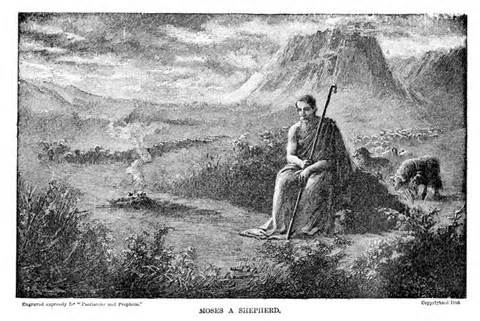
We focus on the moments Moses had at the burning bush or walking through the Red Sea, and that’s what we want, too. r643167_4468740But we forget that Moses’ life wasn’t like that every day. We forget about the eighty years he spent wandering around the desert, half in the day to day monotony of shepherding on the back side of Midian, the other half, wandering around the wilderness with the people of Israel.

Eighty years of nothing special. Day after day of ordinary. Week after week of God not “showing up” and doing something amazing. Eighty years. That’s a lifetime for most of us.

Was God any less at work in Moses’ eighty years of desert thwandering than He was when He gave Moses the Law or spoke to him face to face or sent manna? Of course not. During those days, God was protecting Moses from the heat and wild animals, providing food and shelter for him, blessing him with a wife and children, directing his steps, teaching him obedience and trust.

Just like He does for us.

Have you read a Bible passage this week that allowed you to see more of God’s glory? God is doing something. He’s revealing Himself to you.

Are you praying for someone’s salvation? God is doing something. He’s working on the heart of that person.

Did you have a place to sleep last night and food on your table today? God is doing something. He’s providing for your needs.

Do you leave church on Sundays having been fed the truth of God’s word by your pastor? God is doing something. He’s growing you to spiritual maturity.

Is it possible that we’re expecting God to do something in our lives that isn’t in His particular plan for us? You aren’t Moses, and neither am I. Neither were the million or so other Israelites Moses led out of Egypt, and neither have the billions of other people been who have inhabited earth since Creation. Moses was Moses. You are you. God doesn’t have the same plan for your life He had for Moses’ life.

And, by the way, have you ever noticed that most of the people in the Bible through whom God did something “big” were not expecting it or asking for it? Moses wasn’t expecting God to show up in that burning bush. David wasn’t asking God to do great things in his life when Samuel dropped by to anoint him as the next king. Both of them were hanging out with the sheep when God called them. Paul thought he was already an awesome servant of God when he got knocked off his high horse. Mary wasn’t expecting to be expecting. She was just a teenage girl growing up and learning how to run a household.

1 Thessalonians 4:10b-12 says:

But we urge you, brothers to do this more and more, and to aspire to live quietly, and to mind your own affairs, and to work with your hands, as we instructed you, so that you may walk properly before outsiders and be dependent on no one.

That’s what all of those Bible characters were doing when God chose them. Just regular people living regular lives doing regular work. Just like billions of other people through whom God has not chosen to do anything big and spectacular.

keep-calm-god-is-at-workBut that doesn’t mean God hasn’t been “doing something” in all of our lives. In fact, the vast majority of the work God does in our lives every single day goes unnoticed and unappreciated.

So, instead of setting our expectations on those very rare “wow factor” works of God that seem so appealing, maybe we should be asking Him to open our eyes to, and make us thankful for, all of the things He’s already doing in our lives. Instead of having great expectations of things that God has never promised us, maybe we should ask Him for, and expect Him to, do what He has promised:

Forgiveness for our sin

Christ-likeness

Provision for our needs

Endurance

The ability and opportunity to help others

Faithfulness

Humility

Patience

The opportunity to share the gospel

Because “all the promises of God find their Yes in him.” You can expect it.

Favorite Finds

Favorite Finds ~ ALL THE FREEBIES! ~ April 14, 2020


Here are a few of my favorite online finds…and this time, they’re all FREE!

Scripture TypeHave you worked all the jigsaw puzzles in the house and watched all the movies and listened to all the podcasts? How do you feel about coloring or painting? Scripture Type is offering lots of their beautiful Bible verses and Christian quotes in coloring page format (you can also download the full color originals as wallpaper/lock screen for your computer, tablet, or phone). Great for keeping the kids busy too!

Tell you what – let’s make this even more fun. You download one of the coloring pages and get crafty with it – color it, paint it, embroider it on a pillow, paint it on your car…whatever…and send me a decent quality picture of it, and I’ll feature it on my social media pages (let me know if it’s OK to include your name in the post). I can’t wait to see your creativity!


  But if you still have a hankering to watch a movie, you might consider giving RedeemTV a try. It is basically a “Christian” and family friendly Netflix (and yes, it’s really free!). I say “Christian” because, just having done a brief scroll through, I can already see that some of their offerings aren’t going to meet the biblical definition of Christianity. But I did notice several movies that look promising (I’ve watched some of the biographies of the Reformers, which were good, and I’ve heard nothing but rave reviews of the animated Pilgrim’s Progress movie.). You’ll need to have your discernment radar on high alert and ditch anything that doesn’t match up with rightly handled Scripture.
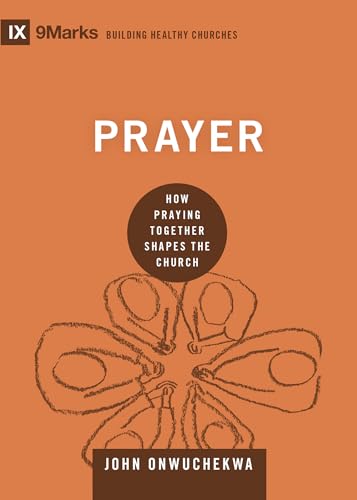
 

Prayer: How Praying Together Shapes the Church (9Marks: Building Healthy Churches): Onwuchekwa, John

Or how about a good book to read? Check out John Onwuchekwa’s contribution to 9Marks’ Building Healthy Churches series: Prayer: How Praying Together Shapes the Church.

And if you’d like to write a review of this book (or another one) as a guest post for the blog, drop me an e-mail, and let’s chat about it.


Trustworthy Bible Teaching and Discipleship Resources

Ligonier is going all out with the freebies! They are offering their entire library of teaching series available to stream and the study guides that accompany many of these series free “until at least June 30”. Dig in and get what’s probably the content equivalent of a seminary degree during quarantine!


How were people saved in the Old Testament? Ever wondered about that?


The resources listed above are not to be understood as a blanket endorsement for the websites on which they appear, or of everything the author or subject of the resource says or does. I do not endorse any person, website, or resource that conflicts with Scripture or the theology outlined in the Statement of Faith and Welcome tabs at the top of this page.
Bible, Bible Study

A Weeping Profit

For years now, I have urged women to read through the Bible using the chronological plan. It’s especially helpful for getting all the historical events of Old Testament history in order so you can understand what precipitated what’s happening in whichever book you’re currently reading.

But there’s another reason it’s helpful. A reason that’s difficult to put into the right words, but one I think is equally important as understanding the historical order of events.

I’ve read through the Bible a few times using the chronological plan, and I started it again this past January. It started out OK, like it always does. You’ve got Creation. You’ve got a bunch of godly patriarchs: Noah, Abraham, Isaac, Jacob, Joseph, Moses. You’ve got God rescuing His people from Egypt and bringing them into the Promised Land. And, of course, along the way, you’ve got instances of some pretty heinous sins committed by individuals. But the overall, visceral sense you get is that God is advancing His plan through godly people. He’s working to establish His people in their land and prosper them.

Then, along about the time Solomon’s wives turn his heart away from God and entice him into idolatry, you start getting this sense of foreboding. Things are changing. Something is about to happen and it isn’t going to be good. And that’s exactly what comes to pass. You get slammed with a bunch of evil kings. Oh sure, there’s the occasional bright spot of an Asa, a Hezekiah, a Josiah. But the bad kings keep coming more and more frequently, each one more and more depraved. And God’s people, led by these evil kings, plunge headlong into sin and idolatry that’s worse than that of the pagan nations God had them drive out when they entered the Promised Land.

You sit in the midst of the filth and rebellion of God’s people for months – knowing that, for them, it was actually centuries – feeling your skin crawl at the evil you’re reading about. You hear God cry out to Israel through the prophets, to turn around and come back to Him. You see Him pour out a little bit of His wrath on His people here and there. Just a taste of what’s to come if they don’t repent and return. You sit there, helpless and frustrated, knowing what’s going to happen to these people, aching for them to just stop it! Stop sinning. Humble yourselves. Rend your hearts and not your garments

But they don’t. No matter how many times you read the Old Testament hoping and pleading with Israel to change her ways so that there will be a happy ending, it never works out that way. God’s people continue to forge ahead, inventing new ways of doing evil. Whoring after idols of stick and stone. Abandoning the God who saved them and carried them.

By August (in the chronological reading plan) I’d been watching these people sink lower and lower into degradation and debauchery for the better part of a year. But then I started reading Jeremiah, and I realized another reason he’s often called “the weeping prophet”. Yes, he was probably lonely since God didn’t allow him to marry and have a family for support. Yes, he was grieved that his people wouldn’t turn back from their sin. But after reading the first three chapters of his book, I had to think Jeremiah had yet another reason for weeping. 

The words God put in Jeremiah’s mouth are the words of the broken heart of God:

I remember when you loved Me and were loyal to Me; how we enjoyed sweet fellowship. You trusted Me and I protected you. You followed me and I provided for you. You lifted up my Name, and I lifted up yours in the eyes of the nations.

You’ve never been able to say that I wronged you. I have never let you down. I have never failed you.

And despite all of My love and care for you, you have cast Me aside. You have chosen the sewer over your Savior. Evil over the Eternal One. Hell over Heaven.

I have called you back to Myself time and time again, but you keep running away from Me. Even now, if you will repent and come back to Me, despite everything you have done, I will forgive you. You can enjoy that sweet fellowship with Me once again. I want to tenderly care for you and give you every good thing.

I love you. Come home.

How could Jeremiah – how could we – not weep over the things that break the heart of our good and loving God? How can we not grieve over the things that grieve Him?

And that brings me back to why the chronological reading plan is so helpful. 

You need to not only understand the cold, hard historical facts that led up to this moment, you need to feel in your spirit, know in your heart the weight of sin, the blackness of evil, the depth of God’s love, compassion, patience, and righteousness. And you don’t get that by randomly parachuting into OT books. You have to walk with these people – live with them – and watch what they do over time. You have to sit next to God through His words and see with His eyes, understand how He feels about His people, and stand with Him as He acts in holiness and justice.

“Just the facts, ma’am,” is not enough when it comes to Scripture. We must live it, put it on and wear it, immerse ourselves in it, if we truly want to feast on God’s Word and know God’s heart.


I used the word “profit” intentionally in the title of this article as a play on words. Jeremiah is known as “the weeping prophet” and I believe it will “profit” us to study our Old Testament as I’ve outlined in the article.