Mailbag

The Mailbag: May Christian Women Wear Pants?

What are your views on women wearing pants?

For readers who are a little confused by this question, you may not be aware that there are various churches which require women and girls to wear skirts or dresses rather than pants. The local churches I’m familiar with which carry this requirement are Pentecostal and Independent Baptist, though there may be others. (Some of these churches also require women to have long hair and abstain from wearing makeup.)

The initial basis for this requirement is Deuteronomy 22:5…

A woman shall not wear a man’s garment, nor shall a man put on a woman’s cloak, for whoever does these things is an abomination to the Lord your God.

…along with the general desire to encourage God-given femininity for women and masculinity for men. Definitely a good idea these days.

But, since my opinion is of zero importance – it’s what God thinks that counts – let’s look at what the Bible says. Is it biblical for a church to make this requirement of Christian women, or, for a Christian woman to choose, on her own, not to wear pants?

Let’s tackle that last question first.

There’s nothing in the Bible that says women have to wear pants, so if you want to wear skirts and dresses all the time, you’re absolutely free to do that. What you may not do (biblically) is think, or say, that wearing skirts and dresses somehow makes you holier or more obedient to God than women who choose to wear pants- because there’s nothing about that in the Bible either.

But what about Deuteronomy 22:5?

Well, let’s take a look at that Scripture using good hermeneutical principles. We need to look at the context, culture, audience, and intent of this verse.

First we need to recognize that Deuteronomy is in the Old Testament. Right off the bat, we must keep in mind that, while there are many underlying, timeless principles in the Old Testament that still apply to Christians (usually because they are reiterated in the New Testament) the particular pronouncement of the Old Testament verse we’re reading may not apply.

Next, Deuteronomy 22 is smack dab in the middle of the Levitical law that was given as a part of the Mosaic covenant. The Mosaic covenant was fulfilled in Christ, which means its laws are no longer binding on us as Christians. We are under the New Covenant of grace through Christ. This is why you’re not sinning if you build a house without a parapet around the roof (verse 8), sow your vineyard, if you have one, with two kinds of seed (verse 9), wear fabric that’s a wool-linen blend (verse 11), or go tassel-less (verse 12). If you think Deuteronomy 22:5 prohibits women from wearing pants, a good question to ask yourself is: “Why would I feel required to obey verse 5 of Deuteronomy 22, but not verses 8-12?”

The next thing we need to look at is the actual wording of Deuteronomy 22. Does it say anything about pants or any other specific item of clothing? No. It says women are not to wear men’s clothes and men are not to wear women’s clothes. Now, keep in mind that the audience for this verse was Old Testament Israel, and that, at the time, in that culture, both men and women wore what we would technically describe today as a “dress.”
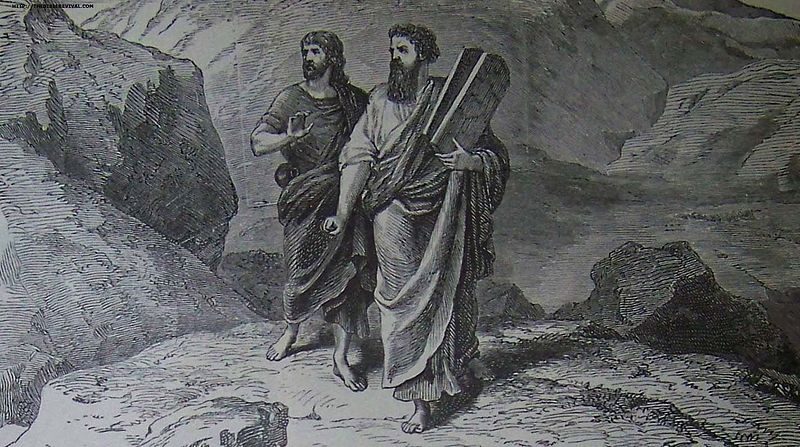
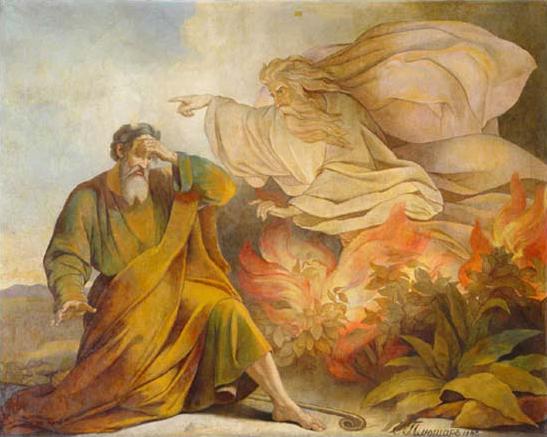
Were Moses and rest of the Israelite men – who were actually receiving this law from God at the time – sinning because they were wearing “dresses”? (And, let’s remember, Jesus dressed the same way.) Of course not. In our time and culture, they’re wearing dresses, and dresses are for women. In their time and culture, they’re wearing a garment designed for men. God has never said, “Pants are for men. Dresses are for women.” Pre-twentieth century western culture has said that. So if the men of the Bible weren’t sinning for wearing “dresses” designed for men, how could Christian women be sinning for wearing pants designed for women?

Deuteronomy 22:5 is not addressing the construction of specific garments. It’s addressing the intent of the heart. Since men and women of that culture both wore garments of similar construction (i.e. sleeves, an opening for the head, and a sheath for the torso and legs), there must have been differing accessories (veils, turbans, sashes, belts, cloaks, etc.) that clearly distinguished between male and female outfits. A woman could wear those male accessories and still be wearing a “dress,” but what would her motive for doing so have been? The only motive she could have had was to appear to others to be a man.

In other words, Deuteronomy 22:5 is not addressing American women wearing pants designed for women’s bodies, sold in the women’s department of the store, marketed to women, and purchased by women who have no intention of trying to impersonate, or appear to others to be, a man. It is addressing the sin of cross-dressing (transvestism).

And that is a prohibition that does carry over into the New Testament under the heading of sexual immorality. We are to respect and honor God’s perfect and holy decision to create us as women or men. We are not to alter our clothing, accessories, cosmetics, hair styles, gait, body language, speech patterns, lifestyles, or anatomy in order to appear to others, or ourselves, to be the opposite sex. To do so is to tell God that His decision to make you a woman or a man was wrong. That is rebellion.

So, if a church today really wants to correctly handle and apply Deuteronomy 22:5, it will do so in light of the New Testament passages on sexual immorality. The church should teach that God always makes the right decision to create someone male or female, and that to rebel against God’s perfect design by altering one’s appearance to impersonate the opposite sex is sin which needs to be repented of and forgiven by the shed blood of Christ.

Deuteronomy 22:5 is not about 21st century American women wearing pants designed for women. So, when a church prohibits women from wearing pants – even when done with the best of intentions to honor God – what they are doing is mishandling Scripture and making a law where none exists. Jesus wasn’t too happy when “church leaders” of His time did that, and our churches today shouldn’t be doing it either.

All of that being said, I’ve had the privilege of knowing and, on occasion, worshiping with some dear saints in an IFB church which required skirts for women. These folks truly loved the Lord and honored His word. Any time I attended one of their activities, I wore a skirt so as not to be a stumbling block or draw attention to myself. Churches which carry the requirement of skirts for women but are otherwise doctrinally sound should not be regarded as apostate.


If you have a question about: a Bible passage, an aspect of theology, a current issue in Christianity, or how to biblically handle a family, life, or church situation, comment below (I’ll hold all questions in queue {unpublished} for a future edition of The Mailbag) or send me an e-mail or private message. If your question is chosen for publication, your anonymity will be protected.
Sin, Throwback Thursday

Throwback Thursday ~ 9 Things that Are Still Sins Whether We Agree or Not

Originally published June 19, 20159 still sins


I do it all the time, Mother, and I’ve decided something-
it’s not a sin.

I heard this line several years ago on a popular sitcom, spoken by an adult daughter to her Christian mother about a behavior the Bible unambiguously calls a sin. I mean, it’s right smack dab in the middle of the Big 10; “thou shalt not” and everything.

It’s one thing to say, “I know it’s a sin, but I don’t care. I’m going to do it anyway,” but how depraved is the world when they think they – in God’s place – are the ones who get to define what sin is? And what’s even worse is that the church has begun to adopt this audacious depravity as well, whether approving of sin by fiat or by simply ignoring God’s word and letting sin slide without rebuke.

When it comes to what’s a sin and what’s not, God made up His mind a long time ago. And He’s not changing it, regardless of what you or I or Joe Politician or Jane Celebrity might think. Maybe we all need a remedial course in hamartiology, so let’s start with the basics. These things are all still sins whether the world and the church agree with God or not:

1. Homosexuality

Let’s just get it out of the way right up front. I don’t care how many celebrity “pastors” and “Christian” authors twist God’s word to say otherwise, or how many people declare themselves to be (unrepentant, practicing) “gay Christians,” or how many homosexuals declare that God made them that way, God’s word is clear: homosexual lust and behavior are sins.

2. Abortion

Abortion is the taking of an innocent human life. We don’t murder people because they’re small or sick or inconvenient or will hinder our sucess. God didn’t say, “You shall not murder, except when…” He said, “You shall not murder.” Period.

3. Extra-Marital (Heterosexual) Sex

Adultery, fornication, whatever form it might take, if you’re not legally married to the person you’re engaging in sexual activity – up to and including actual intercourse – with, you’re sinning.

4. Cohabitation

See #3. And don’t try to whitewash it by saying you’re living together but not sleeping together. A) The Bible says we’re to flee temptation, not move in with it, and B) we’re supposed to avoid every form of evil, even the appearance of it. If you call yourself a Christian and you’re shacking up, you’re living in sin (that’s why they call it “living in sin”). Repent and move out or marry up.

5. Divorce

Yep, still a sin, except in two cases: unfaithfulness or an unsaved spouse leaving a saved spouse. In those two cases the spouse who was wronged is not sinning and is free to marry again.

6. Swearing

The air is saturated with it. Foul language coming from our TVs, music, movies, social media, and the people we’re around all day. But expletives have no place in the vocabulary of a Christian. Is your potty mouth on Saturday the same one you praise God with on Sunday?

7. Taking God’s Name in Vain

It’s gotten to the point where we think so little of casually punctuating our sentences with, “Oh my G-d,”  or using the name of Jesus as an exclamation that pastors are even doing so from the pulpit these days. God’s name is high and holy and should be spoken only reverently and worshipfully. How can we look people in the eye and call them to repentance and faith in a Person whose name we use as a cuss word?

8. Gluttony

We have almost completely amputated gluttony from the spiritual realm by cordoning it off as merely a physical or medical issue. We’ve renamed it “overeating,” but that doesn’t change the fact that it’s a sin. God created good food for us to enjoy, but just as with all the other good gifts He gives us, He expects us to exercise Spirit-enabled self control when we receive it.

9. Female Usurpation

God makes it abundantly clear in His word that women are not to instruct men in the Scriptures or hold authority over them in the church. Women sin when they pastor churches, preach sermons in church, teach men in Sunday School classes, and hold other positions of authority over men in the church. Men, however, bear the primarily responsibility for this when they sin by failing to rebuke usurping women, or when women feel they have no other choice but to take on male responsibilities in the church because men are shirking their own duties before God.


We don’t get to decide what sin is. That’s God’s job. And all of us – whether we’ve committed one of these nine sins or not – are guilty of sinning against Him. That’s the bad news.

But, in Christianity, we never give the bad news without following it up with the good news. And, oh what wonderfully good news it is: forgiveness. Jesus paid for our sin at Calvary so that if we will only turn from it and trust Him, He will forgive us for all nine of these sins and countless others.

If we confess our sins, he is faithful and just to forgive us our sins and to cleanse us from all unrighteousness.
1 John 1:9

Homosexuality, Mailbag

The Mailbag: Should Christians Attend a Homosexual “Wedding”?

“Should a Christian attend the wedding of a homosexual friend or loved one?”

No, Christians should not attend homosexual weddings.

Attending a wedding tacitly says that you are in favor of the union, and no matter how much you love the person, Christ calls us to love Him more and not participate in or give approval to sin.

Often, the reason Christians will give for feeling they should attend a same sex wedding is that they are afraid declining to attend will cause the couple to cut off the relationship with them, closing the door to any future opportunity to share the gospel.

But if you’re close enough to the couple to be invited to the wedding, shouldn’t you have already shared the gospel with them? Do you not trust that God can save someone, either immediately or in the future, from one instance of sharing the gospel? This person’s salvation does not rest on your shoulders. It can only be accomplished by the Holy Spirit, and only in His timing.

And whether you have or haven’t yet shared the gospel with the couple, what could your attendance at the wedding accomplish other than creating confusion? How can you support their “marriage” by attending the wedding and then turn around later and tell them they need to repent of this sin?

Additionally, attending the wedding sends the message to your children, family, church, friends, co-workers and others that you approve of the sin of homosexuality. We all have people watching us to see whether we stand with Christ or with the world. It’s imperative that we set a godly example.

Yes, if you decline to attend the wedding, you might lose your relationship with that homosexual friend or loved one. But Christ calls us to separate ourselves from the world and be loyal to Him even if it costs us everything- including those we love the most:

Whoever loves father or mother more than me is not worthy of me, and whoever loves son or daughter more than me is not worthy of me.

Matthew 10:37

Regardless of your motives for attending, it appears to others and to the same sex couple as though you approve of their sin.

The gospel divides. And Christians are always called to stand on Christ’s side of the divide. We do not celebrate the sins that nailed Christ to the cross.

Christians should not be helping people celebrate their sin. That is what lost people do. We should be sharing the gospel with them so they can get saved out of their sin.

And speaking of lost people who celebrate the sins of others, Romans 1:32 says:

Though they know God’s righteous decree that those who practice such things deserve to die, they not only do them but give approval to those who practice them.

If it is an abomination to God for sinners to give approval to the sins of others, how much more abominable is it in His sight for Christians to give approval to the sins of others?

Additional Resources:

Basic Training: Homosexuality, Gender Identity, and Other Sexual Immorality

Should I attend the wedding of a gay friend or family member? by Denny Burk

Should Christians Attend Gay Weddings? Does It Matter Whether They’re Religious or Secular? by Randy Alcorn and Kevin DeYoung

Christmas Dinner with the Sexual Sinner at A Word Fitly Spoken

Pride, Pronouns, and Prodigals at A Word Fitly Spoken


If you have a question about: a Bible passage, an aspect of theology, a current issue in Christianity, or how to biblically handle a family, life, or church situation, comment below (I’ll hold all questions in queue {unpublished} for a future edition of The Mailbag) or send me an e-mail or private message. If your question is chosen for publication, your anonymity will be protected.

Sin

9 Things that Are Still Sins Whether We Agree or Not

9 still sins


I do it all the time, Mother, and I’ve decided something-
it’s not a sin.

I heard this line several years ago on a popular sitcom, spoken by an adult daughter to her Christian mother about a behavior the Bible unambiguously calls a sin. I mean, it’s right smack dab in the middle of the Big 10; “thou shalt not” and everything.

It’s one thing to say, “I know it’s a sin, but I don’t care. I’m going to do it anyway,” but how depraved is the world when they think they – in God’s place – are the ones who get to define what sin is? And what’s even worse is that the church has begun to adopt this audacious depravity as well, whether approving of sin by fiat or by simply ignoring God’s word and letting sin slide without rebuke.

When it comes to what’s a sin and what’s not, God made up His mind a long time ago. And He’s not changing it, regardless of what you or I or Joe Politician or Jane Celebrity might think. Maybe we all need a remedial course in hamartiology, so let’s start with the basics. These things are all still sins whether the world and the church agree with God or not:

1. Homosexuality

Let’s just get it out of the way right up front. I don’t care how many celebrity “pastors” and “Christian” authors twist God’s word to say otherwise, or how many people declare themselves to be (unrepentant, practicing) “gay Christians,” or how many homosexuals declare that God made them that way, God’s word is clear: homosexual lust and behavior are sins.

2. Abortion

Abortion is the taking of an innocent human life. We don’t murder people because they’re small or sick or inconvenient or will hinder our sucess. God didn’t say, “You shall not murder, except when…” He said, “You shall not murder.” Period.

3. Extra-Marital (Heterosexual) Sex

Adultery, fornication, whatever form it might take, if you’re not legally married to the person you’re engaging in sexual activity – up to and including actual intercourse – with, you’re sinning.

4. Cohabitation

See #3. And don’t try to whitewash it by saying you’re living together but not sleeping together. A) The Bible says we’re to flee temptation, not move in with it, and B) we’re supposed to avoid every form of evil, even the appearance of it. If you call yourself a Christian and you’re shacking up, you’re living in sin (that’s why they call it “living in sin”). Repent and move out or marry up.

5. Divorce

Yep, still a sin, except in two cases: unfaithfulness or an unsaved spouse leaving a saved spouse. In those two cases the spouse who was wronged is not sinning and is free to marry again.

6. Swearing

The air is saturated with it. Foul language coming from our TVs, music, movies, social media, and the people we’re around all day. But expletives have no place in the vocabulary of a Christian. Is your potty mouth on Saturday the same one you praise God with on Sunday?

7. Taking God’s Name in Vain

It’s gotten to the point where we think so little of casually punctuating our sentences with, “Oh my G-d,”  or using the name of Jesus as an exclamation that pastors are even doing so from the pulpit these days. God’s name is high and holy and should be spoken only reverently and worshipfully. How can we look people in the eye and call them to repentance and faith in a Person whose name we use as a cuss word?

8. Gluttony

We have almost completely amputated gluttony from the spiritual realm by cordoning it off as merely a physical or medical issue. We’ve renamed it “overeating,” but that doesn’t change the fact that it’s a sin. God created good food for us to enjoy, but just as with all the other good gifts He gives us, He expects us to exercise Spirit-enabled self control when we receive it.

9. Female Usurpation

God makes it abundantly clear in His word that women are not to instruct men in the Scriptures or hold authority over them in the church. Women sin when they pastor churches, preach sermons in church, teach men in Sunday School classes, and hold other positions of authority over men in the church. Men, however, bear the primarily responsibility for this when they sin by failing to rebuke usurping women, or when women feel they have no other choice but to take on male responsibilities in the church because men are shirking their own duties before God.


We don’t get to decide what sin is. That’s God’s job. And all of us – whether we’ve committed one of these nine sins or not – are guilty of sinning against Him. That’s the bad news.

But, in Christianity, we never give the bad news without following it up with the good news. And, oh what wonderfully good news it is: forgiveness. Jesus paid for our sin at Calvary so that if we will only turn from it and trust Him, He will forgive us for all nine of these sins and countless others.

If we confess our sins, he is faithful and just to forgive us our sins and to cleanse us from all unrighteousness.
1 John 1:9

Gospel, Homosexuality, Salvation, Sin, Throwback Thursday

Throwback Thursday ~ Cancer: A Love Story

Originally published April 7, 2013cancer love story

Cancer.

The dreadfulness of the word hung heavy in the air between Jana and her friend Denise.

“The doctor says it’s terminal,” Denise choked, “I’m so confused. I don’t know what to do.”

Jana’s heart broke as she envisioned the difficult emotional road ahead for Denise and watched the tears streaming down her face.

“I’d do anything to take that pain away,” thought Jana. “Anything.

For days after they parted, Jana’s thoughts were consumed with how she could help Denise accept and feel better about her condition. By the weekend, when they met for coffee, Jana was ready.

“Denise,” she began, “I’ve been giving it a lot of thought, and I think I know why you’re so uncomfortable with having cancer.”

“Oh? Why?” asked Denise.

“Well, first of all, you shouldn’t be fighting against the idea of having cancer. It’s a completely natural biological event. In fact, you were probably born genetically predisposed to cancer. It’s part of who you are. Accept it and embrace it as something that makes you unique and wonderful!”

Denise seemed skeptical, but Jana plunged ahead.Girlfriends Enjoy A Conversation

“You’re also worried about what other people will think of you. Maybe they’ll think you’re weak and try to help you with things that you’d rather do for yourself.”

“But maybe I’ll need some help,” Denise suggested quietly.

“Nonsense!” Jana retorted, “Having cancer doesn’t make you different from anybody else. It’s exactly the same as not having cancer. What we need to do is show that to the world. Maybe we should have a rally for cancer equality!”

“Jana, that’s great and all,” Denise whispered somberly, “but I’m going to die. That makes all the stuff you’re talking about seem a lot less important.”

Jana seems like a very loving and kind person, but does the “help” she was offering Denise seem…well…helpful?

What if I told you that during this entire scenario, Jana personally knew a doctor who had a proven cure for Denise’s type of cancer, and was giving it away, yet Jana never told Denise? How loving and kind does Jana seem now?

Now read back through this story and substitute “homosexuality” for “cancer”.

We live in a culture that tells Christians that we are to “love” our homosexual friends and loved ones by embracing homosexuality as good and natural. We even hear people who claim to be Christians saying this. But is this how the Bible defines love? Is this how Jesus loved people?

In this is love, not that we have loved God but that he loved us and sent his Son to be the propitiation for our sins. Beloved, if God so loved us, we also ought to love one another.
1 John 4:10-11

Think back over the encounters Jesus had with people, from the woman at the well, to Zaccheus, to Nicodemus, to the woman caught in adultery, to the rich young ruler, to anybody else Jesus ever interacted with.

Did Jesus ever “love” someone by telling him it was OK to stay in his sin?

No, He didn’t.

Jesus loved sinners by calling them to repentance, forgiveness, and a new life in Christ.

Why? Because it isn’t love to help the slave to embrace his chains. It’s love to set him free.

Christ loved us by going to the cross and becoming the propitiation –satisfying God’s wrath—for our sins. He laid down His life for our freedom.

And, Christian, if God so loved us, we also ought to love one another. We must lay down our opinions, our politics, our ideas of what we’d like the Bible to say, maybe even our actual lives, in order to help people know freedom in Christ. We have the cure for their spiritual cancer—the gospel—and it is not “love” to knowingly misdiagnose them or keep that cure from them.

Greater love has no one than this, that one lay down his life for his friends.
John 15:13

blurry-sky-cross
But as important as it is to rescue the perishing, there’s an even greater issue at stake here for those of us who claim the name of Christ.

For our sin, our Savior endured wrongful conviction, ridicule, mockery, and bullying.

For our sin, our Savior was slapped, punched, spit on, had His beard yanked out, and thorns and brambles mashed into His skull.

For our sin, our Savior had the skin flayed off His back, buttocks, and legs, whipped nearly to death until He was a bloody mess.

For our sin, our Savior, beaten, bloody, and broken of body, hoisted a heavy, splintery cross onto His shoulders and carried it through town and up the hill to His execution.

One nail.

Two nails.

Three nails.

For your sin. For my sin. For our neighbors’ sin.

How dare you, or I, or anyone spit in the face of our bleeding, dying Savior by saying that the sin that put Him on the cross is OK?

How dare we?

How can any of us claim to love Christ while celebrating the nails, the spear, the crown of thorns?

By this we may know that we are in him: whoever says he abides in him ought to walk in the same way in which he walked.
1 John 2:5b-6

Jesus walked the way of leading people to repentance from sin and to the beauty, the freedom of a glorious new life through faith in Himself. Will we, who say we abide in Him, love Jesus and our homosexual neighbor enough to walk in the same way in which He walked?

Mostloving