Christian women, New Testament, Sunday School

Well Aware ~ Sunday School Lesson ~ 10-12-14

well aware

These are my notes from my ladies’ Sunday School class this morning. I’ll be posting the notes from my class here each week. Click here for last week’s lesson.

Through the Bible in 2014 ~ Week 41 ~ Oct. 5-11
Matthew 4-8:13, 12:1-21, Luke 4-7, John 1:15-John 5, Mark 2-3
Well Aware

This week, we looked at the beginning of Jesus’ ministry. First, with Jesus’ baptism and temptation in the wilderness, we saw God prepare Jesus for ministry. Next, we saw Jesus call his disciples -all good Jewish boys- and train them for ministry. And, finally, we saw the disciples assisting Jesus as He minstered to both Jews and gentiles. This pattern:

God—>God calls and trains His people—>God’s people minister the gospel to others

was a great picture of where we’ve been (the Old Testament) and where we’re going (the church era). 

Where We’ve Been– In the same way Jesus’ ministry started with Jesus himself, the Old Testament starts with, “In the beginning, God…” (Genesis 1:1) Next, God makes Himself known to His chosen people (Israel), and trains them in His ways. In the New Testament, He uses His chosen people to minister the gospel to the gentiles.

Where We’re Going– As we get further into the New Testament, we’ll see that the way God deals with us is mirrored in the structure of the passages we read this week about Jesus’ early ministry. It all starts with God, who calls each of us out, saves us and prepares us for ministry. We then minister to both God’s people -through our service in the church- and to those who are outside of God’s family -through evangelism.

All of which brings us to where we are, a story that follows this same pattern. We are all on one side of today’s story or another: the people of God, or the people God is calling out to. The woman at the well, or the well woman. And, of course, everything starts with Jesus.

John 4:1-42

It All Starts with Jesus
1-3 (John 3:30)- Although John had just said, “He [Jesus] must increase, but I must decrease,” John’s ministry was still going pretty strong at this point, and Jesus’ brand new ministry was exploding. Two large and growing groups with unconventional ideas did not escape the notice of both the Jewish and the Roman officials, who would have been all too familiar with the Maccabean Revolt (as well as lesser uprisings). In order to ward off any official attempt to clamp down on either John’s or Jesus’ ministries to preclude a perceived impending revolution, Jesus took some of the heat off by traveling north to Galilee.

4-5 (2 Kings 17)– This is where knowing your Old Testament comes in handy. Do you remember anything about Samaria from the Old Testament?

When the nation of Israel split into the northern kingdom (Israel) and the southern kingdom (Judah), Samaria became the capital of the northern kingdom. Second Kings 17 describes how, due to Israel’s idolatry, God allowed the northern kingdom to be overthrown by Assyria, and most of Israel to be taken into captivity. Afterwards, “the king of Assyria brought people from Babylon, Cuthah, Avva, Hamath, and Sepharvaim, and placed them in the cities of Samaria instead of the people of Israel.” (2 Kings 17:24) Eventually, some of the exiled Jews (as well as some Jews who had been left behind in northern Samaria at the time of the exile) returned and intermarried with these gentiles. The “pure” Jews of the southern kingdom (Judah/Judea) considered the Samaritans unclean half-breeds. Judeans hated Samaritans, wouldn’t have anything to do with them, and even went out of their way, when traveling north, to go around Samaria instead of through it, even though that was a much longer route.

So, Jesus’ simple act of passing through Samaria on His way north was actually a fairly weighty statement that would have raised some eyebrows even among His disciples. He didn’t hate the Samaritans and didn’t consider Himself unclean for passing through their area.

6-7– “The sixth hour” was noon. Jesus and the disciples had likely been traveling -on foot, of course- since early morning when it was cooler, and stopped during the heat of the day to rest and eat. John indicates Jesus’ humanity here by telling us that He was physically tired.

7– Drawing water was woman’s work, but noon was an unusual time to draw. All of the women usually came out around the same time in the morning and/or early evening (when it was cooler), so it was a time to socialize as well as get a chore done. Maybe this woman was so ashamed of her lifestyle that she wanted to avoid the other women, or maybe she just needed some extra water that day. Whatever the reason, it was God’s perfect timing.

The Woman at the Well
7-27– This was a woman who knew which rung she occupied on the social ladder, and it wasn’t anywhere near the top. Not only did the Jews hate the Samaritans, and would sooner have died of thirst than drink water their dirty hands had handled, but Jewish men did not speak to women of any sort in public. Furthermore, a rabbi (or teacher of Scripture, which Jesus was considered to be) would never have defiled himself by conversing with an adulterous woman (which Jesus already knew her to be). So this woman probably jumped out of her skin when Jesus asked her for a drink. He didn’t hate her. He didn’t look down on her. He didn’t think she was untouchable. How many people in this woman’s life do you think treated her that way? Do we treat people the way Jesus treated her?

Never one to waste time on chit chat, Jesus immediately transitions (10) from His temporal, physical need, to her spiritual need. He might be thirsty, but she needs a Savior, and that’s more important to Him. Can we say the same as we interact with lost people from day to day?

Jesus begins to talk about spiritual things, but she’s still focused on the physical. “How can I get this magic water so I won’t be physically thirsty or have to come haul water anymore?” (15) She doesn’t get it. All she wants is for Jesus to make her earthly life better. She wants her physical needs taken care of and she doesn’t want to have to work. And that’s all many people today want, too, and what they’re promised by hucksters masquerading as Christian pastors and teachers. “Come to Jesus and you’ll be wealthy and everything will go your way,” they promise.

But that’s too small for Jesus. Does He provide for our needs? Yes. But, all too often, that’s where our desire stops. He wants infinitely more for us, just like He wanted for this woman.

There was one thing standing in the way of that, though. Her sin. Since she wasn’t grasping the water metaphor, Jesus goes for the direct approach and calls her on the carpet. She’s had five husbands, and it’s not because she’s been widowed five times. Now, she’s cohabiting with someone. Jesus just lays it out there and lets it hang in the air. Her secret from this stranger is out in the open. She’s convicted. She doesn’t know what to say. Why not change the subject to a religious debate? That doesn’t hit quite so close to home. But Jesus puts her questions in perspective and brings her back around to the real question at hand. Forget all these unimportant questions about which mountain is the right one to worship on. God wants true worshipers, and if you want to be one of them, you have to worship Him in your spirit -not just with outward actions- and in truth -in agreement with Scripture. (24) And what was the truth? She needed forgiveness and only He could offer it. She was a sinner, and He was the Savior. She got it.

The Well Woman
28-42– The woman at the well had been transformed. No longer sin sick, she was now a well woman. One of God’s chosen people. And what do God’s people do when Jesus makes them well? They go out and tell others so those people can be made well too. And that’s exactly what this woman did. She told them about Jesus.

And what did she tell them? Jesus made all my dreams come true? Everything in my life is going to be great now? No, she said, “Come, see a man who told me all that I ever did.” (29) What had He told her? He had told her about her sin, and here she was, boldly and shamelessly telling others about it. There’s only one way that sin has no more power to shame us, and that’s when Jesus sets us free from it. When we turn from our sin and trust that the death, burial and resurrection of Christ paid the penalty for our sin, we are clean before God, and there is no more reason to be ashamed. She had been set free, and she wanted others to be set free, too.

And this is exactly what Jesus was trying to tell the disciples. (31-38) Quit worring so much about food and other temporal things, guys! Open your eyes! Don’t you see that there’s a field full of souls out there -just like this woman- ready to receive the gospel and be harvested into the Kingdom? Let’s get to work!

So they did. The woman told the people about Jesus and brought them to him. For two days, He taught the people, assisted by the disciples. Many of them believed and were saved. And now we’ve come full circle, because, for these people, too, it all started with Jesus.

Well, Women?
This week we’ve seen Jesus minister to a number of people who were outcasts: a leper, the man with the withered hand, the paralytic, the demoniac, and the prostitute would all have been considered unclean people to avoid in Jewish society. The centurion was a hated Roman, a gentile. And here is an adulterous Samaritan woman. What is Scripture telling us as Jesus ministers to these people? Jesus loves the unloveable. He will touch the defiled, the untouchable. We don’t have to be clean before we come to Jesus. He cleanses us. We don’t have to be good before we come to Jesus. He gives us His righteousness if we repent and trust in Him. This is Scripture’s message to all the women at the well.

To the well women, the disciples, those who have trusted Christ and been forgiven, the message is GO. Boldly, unashamedly, tell everyone of the Savior who has the power to set them free from the shame of sin. Look around, the fields are white unto harvest. Go out and bring them in, that they, too, might be set free. GO.


Evangelism, Old Testament, Sunday School, Types and Shadows

Dem Bones ~ Sunday School Lesson ~ 9-14-14

Dem BonesThese are my notes from my ladies’ Sunday School class this morning. I’ll be posting the notes from my class here each week. Click here for last week’s lesson.

Through the Bible in 2014 ~ Week 37 ~ Sep. 7-13
Ezekiel 35-48, Joel
Dem Bones

And beginning with Moses and all the Prophets, [Jesus] interpreted to them in all the Scriptures the things concerning himself. Luke 24:27

The most beautiful thing about the Old Testament is that Jesus’ fingerprints are all over it. The imagery and symbolism displaying His life and the gospel pop out from the least expected places to surprise and delight us. And at the same time we see the “far,” New Testament application, of Old Testament passages, we can also see the “near,” or immediate application the passage has for the Bible characters the story is literally happening to. It’s like getting two lessons in one.

Ezekiel 37:1-14

Something Old
God sent this vision to Ezekiel the night before the messenger came with word of the fall of Jerusalem. The people of Israel were devastated and fearful, and this vision was meant to comfort and reassure them.

The valley (1) represented the areas of the world to which Israel and Judah had been (or would shortly be) exiled. As the skeletons were scattered all over the valley, so God’s people were scattered in various parts of the world.

The bones (2-3, 11) are a picture of death. With exile impending, Israel felt that all hope was dead and gone. The fact that the bones in the valley were “very dry” means that they had been there for quite a while, just as Israel would be in exile for seventy long years. It was the death of life as they knew it.

The prophecy (4-10, 12-14, Jeremiah 3:12, Isaiah 54:8, Psalm 30:5) this time, after so many prophecies of God’s coming wrath, was a prophecy of hope and restoration. God would breathe the breath of life and hope back into Israel. He would raise them up out of the grave of those pagan lands and resurrect them to a new life back in the Promised Land.

Go, and proclaim these words toward the north, and say, “‘Return, faithless Israel, declares the Lord. I will not look on you in anger, for I am merciful, declares the Lord; I will not be angry forever. (Jer.)

In overflowing anger for a moment I hid my face from you, but with everlasting love I will have compassion on you,” says the Lord, your Redeemer. (Is.)

For his anger is but for a moment, and his favor is for a lifetime. Weeping may tarry for the night, but joy comes with the morning. (Ps.)

What a kind and compassionate God! He justly executes judgment, but graciously forgives sin when His people repent.

Something New
The first layer of our lesson today was the “near” application– the literal, immediate application to Israel. From that, we’ve learned that God will not tolerate idolatry, that He is patient with His children, but does discipline them, and that He is merciful and forgiving towards Israel.

The second layer of the story is the “far,” or New Testament layer. It takes those attributes of God and redemption that we’ve just learned about in Israel’s story and shows us how Jesus “fleshed them out.”

The valley (1) could be anywhere. People are scattered over the whole earth just the way the bones were scattered across the valley.

The bones (2-3, 11, Ephesians 2:1-2a, John 15:16; 6:44, Hebrews 11:6, Romans 6:23) are people who are still dead in sin and have never come to repentant faith in Jesus Christ.

Let’s take a look at Ephesians 2:

And you were dead in the trespasses and sins in which you once walked.

Prior to salvation, we are spiritually dead. Just like a corpse can’t move, act, think, or decide, we can’t do anything to choose God (Jn. 15), or please Him (Heb.), or decide on our own to get saved (Jn. 6).

And not only are we spiritually dead during our time on earth, but eternal death awaits us when our earthly lives are over (Rom.). Without Christ, we are born dead, live dead, and die unto eternal death.

Gives you kind of a hopeless feeling (like the Israelites had) doesn’t it?

The prophecy (4-10, 12-14, Matthew 13:57, John 11:25-26; 3:6-7; 16:7; 20:22, 2 Timothy 3:16, Romans 6:4, Ephesians 2:4-7, 2 Corinthians 1:22)
Just like God sent the prophet Ezekiel -“Son of Man” (God calls him this 93 times)- to his people with the good news of the hope of new life, He sent His Son -also called the “Son of Man” (87 times in the New Testament)- the greatest prophet (Matt.), not just to proclaim the good news of new life, but to become that good news by giving His life on the cross so that we might not die, but live.

Verse 6 says: And I will lay sinews upon you, and will cause flesh to come upon you, and cover you with skin, and put breath in you, and you shall live, and you shall know that I am the Lord.”

At Lazarus’ tomb, “Jesus said to her, “I am the resurrection and the life. Whoever believes in me, though he die, yet shall he live, and everyone who lives and believes in me shall never die. Do you believe this?” (Jn. 11)

Just as Ezekiel prophesied to the bones (7-10) and they were born again from the dead, Jesus preached, “You must be born again.” (Jn. 3:7). And just as the bodies in verse 8 were fully fleshed out but had no spirit in them, Jesus said, “That which is born of the flesh is flesh, and that which is born of the Spirit is spirit.” (Jn. 3:6)

Ezekiel prophesied to the breath and it entered the dead bodies and brought them to life. You may have a footnote in your Bible on the word “breath” in verse 5, 6, 9, or 10 that says “or spirit.” The Hebrew (the Old Testament was written in Hebrew) word ruah is the same for “breath” or “spirit.”

In John 16, Jesus prophesied to His disciples that the Holy Spirit would come and fill them: “Nevertheless, I tell you the truth: it is to your advantage that I go away, for if I do not go away, the Helper will not come to you. But if I go, I will send him to you.”

And in John 20: “…he [Jesus] breathed on them [the disciples] and said to them, “Receive the Holy Spirit.”

Interestingly, the Greek (the New Testament was written in Greek) word pneuma means both “spirit” and “breath.” You probably recognize this Greek word as the root of our English word “pneumonia,” a disease of the lungs, or “breath.” The branch of theology that deals with the study of the Holy Spirit is called pneumatology. When 2 Timothy 3:16 says, “All Scripture is inspired by God…” the word translated “inspired” is theopneustos, or God (theo) breathed (pneustos). It is not until the Holy Spirit, the breath of life, enters us that we are “raised to walk in newness of life.” (Rom.)

As God said to Israel in verses 13-14, “And you shall know that I am the Lord, when I open your graves, and raise you from your graves, O my people. And I will put my Spirit within you, and you shall live, and I will place you in your own land. Then you shall know that I am the Lord; I have spoken, and I will do it, declares the Lord.”

so He says to us in Ephesians 2, “But God, being rich in mercy, because of the great love with which he loved us, even when we were dead in our trespasses, made us alive together with Christ—by grace you have been saved— and raised us up with him and seated us with him in the heavenly places in Christ Jesus, so that in the coming ages he might show the immeasurable riches of his grace in kindness toward us in Christ Jesus.”

“and who has also put his seal on us and given us his Spirit in our hearts as a guarantee.” (2 Cor.)

Something Borrowed, Just for You
We have seen the “near” application to the Israelites, and the “far” application to the gospel, so what is the “now” application for us? What can we “borrow” from this passage to do in our own walk with the Lord?

We are to follow in the footsteps of Ezekiel and Jesus and preach (share) the gospel of the resurrection to new life to dry, dead bones, and pray God to do His mighty work of raising sinners from the dead.

Can these bones live? Oh, Lord God, You know.

Evangelism, Gospel, Old Testament, Sunday School

Watching and Warning with Ezekiel ~ Sunday School Lesson ~ 9-7-14

EzekielThese are my notes from my ladies’ Sunday School class this morning. I’ll be posting the notes from my class here each week. Click here for last week’s lesson.

Through the Bible in 2014 ~ Week 36 ~ Aug. 31- Sep. 6
Ezekiel 16-34
Watching and Warning with Ezekiel

Well, Ezekiel is still prophesying (and he’ll still be prophesying until Saturday :0) God is still sending out the same message through him. Again and again, God chastises His people, trying to shake some sense into them so they will repent and turn back to Him. Not because He wants to exercise judgment on them but so “they will know that I am the Lord.” (That phrase is used 74 times in the book of Ezekiel.) No one could say God was unfair because He didn’t warn them of His coming judgment or that He hadn’t given them enough time or that he hadn’t been clear.

Ezekiel 33:1-16

What’s a Watchman?
As we’ve talked about in the past, large or important cities normally fortified themselves against their enemies by constructing a tall, thick wall (sometimes an inner and an outer wall as we saw with Jericho) around the perimeter. These are great for keeping the enemy out once they get there, but not so great for being able to see whether or not the enemy is coming in the first place. We’re talking low visibility. So they would often build high watchtowers at various intervals around the city wall (sometimes outside the wall in a field or on a hill, but fairly close to the city). A watchman would be stationed in the watchtower, and it was his job to alert the higher ups that the enemy was approaching, a messenger was arriving, etc. To be good at his job, he needed good eyes. He needed to be able to discern a messenger from an enemy. He needed to stay alert and vigilant. He needed to act quickly and decisively. He needed to be able to rapidly and clearly convey an urgent message to the right person at the right time. And if he failed even once in any of these duties, he could likely kiss his life goodbye.

33:1-9- Ezekiel: Israel’s Spiritual Watchman (Matthew 23:37a)

If we’ve learned anything from studying these prophetic books, we’ve learned that being a prophet was not some cushy job. Most of the time, God did not have good news for His people, and most of the time, the people did not want to hear it. Jesus even said,

“O Jerusalem, Jerusalem, the city that kills the prophets and stones those who are sent to it!” (Matt.)

But Israel needed a watchman, and God said, “Ezekiel, you’re it.” (7)

Every time God had a message of warning for the people, Ezekiel was to faithfully proclaim it without delay. He was not to hold back from speaking harsh truths to scary people just because he was afraid. If the person Ezekiel was speaking to chose to reject God’s message, that was on that person’s head (9). But if Ezekiel kept his mouth shut, he was being just like that watchman on the wall who didn’t do his job right, and God would hold him accountable for the death of the intended hearers, who would still die in their sin (8).

33:10- What Was the Warning? (Ezekiel 18:4)
What was the warning? It was the warning to repent before God’s coming judgment. Verse 10 gives us a small glimmer of hope that maybe, just maybe God’s message was getting through to a few people:

“Surely our transgressions and our sins are upon us, and we rot away because of them.”

EXACTLY. Israel’s sin and transgressions are bringing God’s wrath upon her. That is what has caused all this calamity and the continuing sermons of doom from His prophets. As God had already told the people back in chapter 18, “The soul that sins shall die.” (18:4). But the story doesn’t end there.

33:10-16- Good News!
Look at the people’s hopelessness in verse 10:

How then can we live?

Their sin has done them in, and now they’re coming to grips with a horrifying reality: they have transgressed a holy God. They recognize that they deserve any punishment God wants to dole out and that He will be justified in pouring out His wrath upon them. What hope could they possibly have?

They have the hope of a God who is not only perfectly just, but rich in mercy and forgiveness and grace. A God who has “no pleasure in the death of the wicked, but that the wicked turn from his way and live.” (11)

“Turn back, turn back from your evil ways, for why will you die, O house of Israel?” (11) He pleads with them. This God who pleads with them now, and has been for nearly 800 years, is not the cruel, selfish, and vindictive god some portray Him as, but the tender, compassionate Father who will move heaven and earth to keep His children from destroying themselves.

Turn away from your evil ways and turn to My mercy and forgiveness, and you will live, He says. “None of the sins that he has committed shall be remembered against him.”

But remember, it’s your repentance and reliance on my mercy that saves you, God tells them. Don’t think you can get by on your past good deeds. “…if he trusts in his righteousness and does injustice, none of his righteous deeds shall be remembered, but in his injustice that he has done he shall die.”

None of the people are so bad that God won’t save them and none of them are so good that they don’t need God to save them.

Following in Ezekiel’s Footsteps
Although we’re not prophets, God has given us a similar charge to the one he gave Ezekiel. We, too, who have the good news of the gospel are to be spiritual watchmen for all those in our circle of influence. We have God’s word, we know what it says, and He has commissioned us to carry that message to people. Like the watchman, we need to stay alert and vigilant for opportunities to share the gospel. We often need to act quickly and decisively to share the gospel before the moment slips away. We need to be able to clearly convey the urgent message of salvation to the right person at the right time. And we need to take this duty deadly seriously.

What? A Warning?
Sometimes when people present the gospel, they do it by using what salesmen call a “hook,” a promise of what the product will do for the person or how it will make his life better. “Want to go to Heaven when you die?” “Jesus will make your life awesome!” But that’s not our message. Jesus isn’t a product we’re trying to convince people to buy.

Like Ezekiel, our first job is to warn people that they have broken God’s law, and that the penalty for breaking His law is God’s wrath, an eternity in hell. God doesn’t just automatically forgive everybody when they die (that’s a false teaching called Universalism). And, just like Ezekiel told the people, you can’t get by on your own good deeds. The warning always has to come first. People don’t know they need to flee to safety if they don’t know they’re in danger.

Our Good News
But as soon as the person we’re sharing with begins to feel like the Israelites– Surely our transgressions and our sins are upon us, and we rot away because of them. How then can we live? (10) –we have the unbelievable privilege of telling them the beautiful news of God’s mercy and grace for sinners like you and me:

As I live, declares the Lord God, I have no pleasure in the death of the wicked, but that the wicked turn from his way and live; turn back, turn back from your evil ways, for why will you die? (11)

None of the sins that he has committed shall be remembered against him. He has done what is just and right; he shall surely live. (16)

How could we ever keep such wonderful news to ourselves?

Discernment, Entertainment, Evangelism, Gospel, Movies

Should Christians Boycott “Son of God”? Three Things to Consider ~ UPDATED

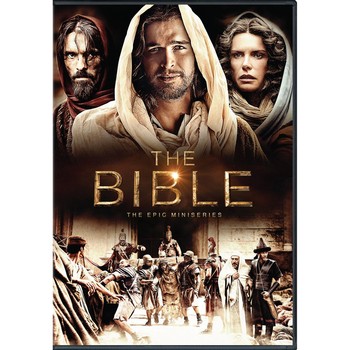
thWith the movie Son of God releasing in theaters on February 28, for the next three Thursdays I’ll be rerunning a three part series I wrote on last year’s History Channel miniseries, The Bible. Son of God is Roma Downey’s and Mark Burnett’s movie about Jesus that is drawn from The Bible’s scenes pertaining to His life and ministry, as well as deleted scenes that did not make it into the miniseries.

UPDATE: Click here to read Part 1, Part 2, and Part 3, of my article “Six Thoughts on History’s ‘The Bible'”.

During and after The Bible’s run last year, Downey and 0bc90ac98e8e3d20a24be1f335b5966aBurnett received quite a bit of criticism for the show’s inaccuracies and copious amounts of artistic license taken. It would give me great joy to discover that they took those critical reviews to heart and fixed in Son of God the rampant errors and faulty theology of The Bible, but since they are using scenes and deleted scenes pulled directly from the miniseries, it doesn’t sound like they’ve re-shot and corrected anything.

Since I have not seen Son of God, I’m not comfortable suggesting Christians boycott it, but I would like to throw a few things out there for your consideration as you make your decision about whether or not to see this movie:

1. Do you boycott products, organizations, restaurants, stores, actors, or political candidates who support abortion, the homosexual agenda, or any other sin?

Well, taking God’s name in vain, the third Commandment, is still a sin. A big one. And it’s not limited to saying “OMG” or boycottusing God’s name in an expletive. Far worse than those is attributing to God things that He has not said or that are not true of His nature and character. This happened a myriad of times in The Bible, and, unfortunately, I anticipate that the same will be true of Son of God.

Are you being consistent if you boycott Girl Scout cookies and Starbucks yet give your money to people who claim to be presenting the Jesus of Scripture but put words into His mouth that He did not say and philosophies into His teachings that He did not espouse and which conflict with God’s word?

2. If you do choose to see Son of God, or if you have friends stock-footage-african-american-friends-having-conversation-at-caf-x-ewho see the movie, make the most of the opportunity to start conversations for sharing the gospel and pointing people to the true Jesus of Scripture. God can use anything to draw people to Himself, but they can only be genuinely born again if someone tells them the truth of the gospel and they put their faith in the Jesus of the Bible.

3. Do your homework. If you choose to see the movie, read one or more of the gospels (Matthew, Mark, Luke, and John) before and afterwards. Did Jesus really say to Peter, “We’re going to bible-studychange the world,” as He does in the movie? If so, which verse says that? If not, what did Jesus actually say, and why? If you choose to see the movie, don’t just take for granted that what you see on the screen is true. Get your Bible out, dig through it, and sharpen your discernment skills. Be one of those Bereans Luke praised so much for comparing what Paul preached to what Scripture said.

~~~~~~~~~~

UPDATE: After the original publication of this article, Downey and Burnett announced that they would be removing all of the scenes from Son of God that contained the actor portraying Satan due to last year’s controversy over his striking resemblance to President Obama. 

A reader asked for my reaction to this announcement. My remarks to him were as follows:

Since I haven’t seen the movie, it’s hard for me to give a really fair comment on this, but I’ll take a stab at it. I am much more concerned about the theology of leaving out Satan than I am about the politics. 

When I read a statement like this (and granted, these are the reporter’s words, not Roma Downey’s words): 

Eager to avoid rehashing the drama, producers Roma Downey and Mark Burnett decided to leave the character out of their film…” 

it tells me they are more concerned with political fallout and controversy than they are with adhering to Scripture. (In my opinion, the bulk of The Bible miniseries bears out that they were not overly interested in adhering as strictly as possible to Scripture.)

When I read a quote like this from Roma Downey: 

“‘It gives me great pleasure to tell you that the devil is on the cutting-room floor,’ …’This is now a movie about Jesus, the son of God, and the devil gets no more screen time.” and, “For our movie, Son of God, I wanted all of the focus to be on Jesus. I want his name to be on the lips of everyone who sees this movie, so we cast Satan out.”

it tells me that she and Mark Burnett don’t have a full understanding of the meaning and implications of Christ’s life, ministry, death, and resurrection. The story of Jesus goes much deeper than just words on a page. Everything He said and did had eternal, omnipotent, prophetic, God-magnifying, salvific, miraculous foundations, impact, and effects. We’re not talking about an entertaining little story like The Three Bears or Gone With the Wind, here. The story of Jesus turns the universe inside out for every atom of everything that’s ever existed, including every single human being who has ever walked the planet. You can’t just cut a little here and cut a little there and sew the edges back together without the crippling the impact of the gospel.

To say that now that they have cut out the scene with Jesus being tempted in the wilderness (I’m assuming this is the main scene they’re referring to. I can’t remember which other scenes may have had Satan in them.), NOW this movie is all about Jesus just further demonstrates their lack of biblical understanding. Are they saying the wilderness temptation was not “about Jesus”?

That incident was not about Satan. It was about Jesus. It is one of the major incidents in which we see that Jesus is both fully God and fully man. It also encapsulates the main point of the entire Old Testament sacrificial system– that Jesus is the perfect Lamb of God without blemish or spot, the only sacrifice that could permanently take away our sin. He could not have been our sacrifice for sin had He given in to Satan’s temptations even once. Finally, it is a demonstration to us that Jesus understands the struggle with sin that we go through because He went through it Himself, personally (Hebrews 4:15).

To sum up, I think leaving Satan out has worse theological consequences than the political fallout for leaving him in.

~~~~~~~~~~

Should you see (and financially support) this movie? That’s between you and God. But whether or not you choose to see it, as with anything else in life, use it as a springboard for sharing the gospel and studying God’s word more deeply.

What do you think? Should Christians boycott Son of God?

Evangelism, Gospel, Homosexuality, Salvation, Sin

Cancer: A Love Story

cancer love story

Cancer.

The dreadfulness of the word hung heavy in the air between Jana and her friend Denise.

“The doctor says it’s terminal,” Denise choked, “I’m so confused. I don’t know what to do.”

Jana’s heart broke as she envisioned the difficult emotional road ahead for Denise and watched the tears streaming down her face.

“I’d do anything to take that pain away,” thought Jana. “Anything.

For days after they parted, Jana’s thoughts were consumed with how she could help Denise accept and feel better about her condition. By the weekend, when they met for coffee, Jana was ready.

“Denise,” she began, “I’ve been giving it a lot of thought, and I think I know why you’re so uncomfortable with having cancer.”

“Oh? Why?” asked Denise.

“Well, first of all, you shouldn’t be fighting against the idea of having cancer. It’s a completely natural biological event. In fact, you were probably born genetically predisposed to cancer. It’s part of who you are. Accept it and embrace it as something that makes you unique and wonderful!”

Denise seemed skeptical, but Jana plunged ahead.Girlfriends Enjoy A Conversation

“You’re also worried about what other people will think of you. Maybe they’ll think you’re weak and try to help you with things that you’d rather do for yourself.”

“But maybe I’ll need some help,” Denise suggested quietly.

“Nonsense!” Jana retorted, “Having cancer doesn’t make you different from anybody else. It’s exactly the same as not having cancer. What we need to do is show that to the world. Maybe we should have a rally for cancer equality!”

“Jana, that’s great and all,” Denise whispered somberly, “but I’m going to die. That makes all the stuff you’re talking about seem a lot less important.”
Jana seems like a very loving and kind person, but does the “help” she was offering Denise seem…well…helpful?

What if I told you that during this entire scenario, Jana personally knew a doctor who had a proven cure for Denise’s type of cancer, and was giving it away, yet Jana never told Denise? How loving and kind does Jana seem now?

Now read back through this story and substitute homosexuality for cancer.

We live in a culture that tells Christians that we are to “love” our homosexual friends and loved ones by embracing homosexuality as good and natural. We even hear people who claim to be Christians saying this. But is this how the Bible defines love? Is this how Jesus loved people?

In this is love, not that we have loved God but that he loved us and sent his Son to be the propitiation for our sins. Beloved, if God so loved us, we also ought to love one another.
1 John 4:10-11

Think back over the encounters Jesus had with people, from the woman at the well, to Zaccheus, to Nicodemus, to the woman caught in adultery, to the rich young ruler, to anybody else Jesus ever interacted with.

Did Jesus ever “love” someone by telling him it was OK to stay in his sin?

No, He didn’t.

Jesus loved sinners by calling them to repentance, forgiveness, and a new life in Christ.

Why? Because it isn’t love to help the slave to embrace his chains. It’s love to set him free.

Christ loved us by going to the cross and becoming the propitiation –satisfying God’s wrath—for our sins. He laid down His life for our freedom.

And, Christian, if God so loved us, we also ought to love one another. We must lay down our opinions, our politics, our ideas of what we’d like the Bible to say, maybe even our actual lives, in order to help people know freedom in Christ. We have the cure for their spiritual cancer—the gospel—and it is not “love” to knowingly misdiagnose them or keep that cure from them.

Greater love has no one than this, that one lay down his life for his friends.
John 15:13

blurry-sky-cross
But as important as it is to rescue the perishing, there’s an even greater issue at stake here for those of us who claim the name of Christ.

For our sin, our Savior endured wrongful conviction, ridicule, mockery, and bullying.

For our sin, our Savior was slapped, punched, spit on, had His beard yanked out, and thorns and brambles mashed into His skull.

For our sin, our Savior had the skin flayed off His back, buttocks, and legs, whipped nearly to death until He was a bloody mess.

For our sin, our Savior, beaten, bloody, and broken of body, hoisted a heavy, splintery cross onto His shoulders and carried it through town and up the hill to His execution.

One nail.

Two nails.

Three nails.

For your sin. For my sin. For our neighbors’ sin.

How dare you, or I, or anyone spit in the face of our bleeding, dying Savior by saying that the sin that put Him on the cross is OK?

How dare we?

How can any of us claim to love Christ while celebrating the nails, the spear, the crown of thorns?

By this we may know that we are in him: whoever says he abides in him ought to walk in the same way in which he walked.
1 John 2:5b-6

Jesus walked the way of leading people to repentance from sin and to the beauty, the freedom of a glorious new life through faith in Himself. Will we, who say we abide in Him, love Jesus and our homosexual neighbor enough to walk in the same way in which He walked?

Mostloving