Christian women, Church, Complementarianism, Ministry

Let Me Count the Ways: 75 Ways Women Can Biblically Minister to Others

Originally published September 1, 2017
I recently heard someone remark that, among complementarian Christians, there’s a lot of emphasis on the things women can’t do, biblically, when it comes to ministry, but not much has been written about how women can serve in ministry without violating Scripture.

There are some valid reasons for that.

First, the false teaching of egalitarianism (women can hold any position in ministry that men can hold) is running rampant through the church, even infecting traditionally conservative churches and denominations. It is imperative that Christian men and women who have a biblical understanding of the role of women in the church continue to teach loudly, boldly, and relentlessly against this doctrinal error.

Next, there are so many ways women can serve the body of Christ without violating Scripture that it would be impossible to list all of them. The prohibitions placed on women in ministry are comparatively infinitesimal and, therefore, faster and simpler to dispense with. In other words, it’s quicker and easier to say, “Women can serve in literally any scriptural position or function of ministry in the Body as long as they’re not instructing men in the Scriptures or holding authority over them,” than it is to list every particular ministry women can participate in without transgressing God’s word.

But sometimes our brains get stuck and we need some specific, real world examples to oil the gears and get our own thought processes moving. Especially when we hit that mental roadblock of “Ministry equals only preaching, teaching, and leadership positions. Period.” That’s not all ministry is. In fact, it’s only a tiny part of ministry. God uniquely gifts His people in a variety of ways for a variety of services. And Scripture is very clear that all members of the Body are essential regardless of the role God has called us to. Jesus was the best preacher, teacher, and leader of all eternity, and yet the pinnacle of His ministry was not a sermon, a Bible lesson, or position of leadership. The most important act of ministry Jesus ever performed was to humble Himself and to give His life for sinners. Let’s make sure we think about ministry the way Jesus thought about ministry:

…whoever would be great among you must be your servant, and whoever would be first among you must be slave of all. For even the Son of Man came not to be served but to serve, and to give his life as a ransom for many.” Mark 10:43b-45

Keeping that in mind, here are just a few of the ways women can freely serve God, their churches, and their neighbors without violating Scripture:

1. Pray for your church, your pastor and staff, your teachers and elders

2.  Teach a women’s Bible study or Sunday School class. (Remember, teaching isn’t the only avenue of ministry, but it is one of them.)

3. Teach a children’s Sunday School or Bible class.

4. Play an instrument in your church’s music ministry.

5. Sing in the choir or on the praise team.

6. Direct a children’s choir.

7. Run the Power Point for song lyrics during the worship service

8. Learn how to run your sanctuary’s sound system and board

9. Help set up and put away chairs for services or classes

10. Be the hero who gets to church early and has the coffee ready when people arrive

11. Serve as a greeter

12. Serve on the security or parking lot duty team

13. Serve in the nursery

14. Volunteer to help out in the church office

15. Serve as a chaperone for a youth trip, fellowship, or other activity

16. Open your home to traveling pastors or missionaries who need a place to stay

17. Volunteer your home for the next church fellowship

18. Organize a potluck dinner for your church or Sunday School class

19. Take some treats up to the church office during the week to encourage the staff

20. Serve in Vacation Bible School

21. Offer to help your pastor vet new Bible study and Sunday School curricula for doctrinal soundness

22. Go on and/or help organize a short term mission trip

23. Organize meals for a new mom or a church member who’s ill

24. Help clean the church kitchen after an activity or event

25. Visit hospitalized church members

26. Visit church members who are shut-ins or in nursing homes

27. Pick up someone who needs a ride to and from church

28. Nursing home residents often have no way to attend church. Organize a way for your church to take church to the nursing home.

29. Many people have difficulty attending church because they’re caretakers for an ill or disabled loved one. Set up a rotation of church members to be sitters so the caretaker can come to church.

30. Mow the church’s grass

31. Serve on a committee

32. Volunteer your IT expertise for the church’s computer system

33. Open your home to a college student who needs a place to live

34. Open your home to a woman in a crisis pregnancy who has nowhere else to go

35. Teach cooking, homemaking, or parenting skills to the younger women of your church.

36. Start an after school tutoring program at your church where kids get help with their homework and hear the gospel.

37. Volunteer at a Christian crisis pregnancy center

38. Organize and serve at a church work day (cleaning, painting, facility maintenance)

39. Donate money, gift cards, gas cards, or hotel vouchers to your church’s benevolence fund

40. Get trained in disaster relief and serve the physical and spiritual needs of those impacted by natural disasters

41. Serve in your church’s food pantry

42. Serve in your church’s clothes closet

43. Help organize fundraisers for missions, youth camp, disaster relief, church needs, etc.

44. If your church decorates the grounds for Christmas or other special events, lend a hand

45. Start a backyard Bible club (Bible lesson, game/activity, snack) at a park, apartment complex, school, or other gathering place near your church

46. Start a women’s prayer group with sisters at church

47. Organize a “mechanic ministry” – church members who can fix and maintain the cars of your church’s widows and single moms

48. Organize a “honey-do ministry” – same idea but for repair jobs around the house

49. Disciple a younger woman one on one

50. Invite new church members over for dinner

51. Be your Sunday School class’ secretary or fellowship organizer

52. Take food baskets to church members who are in need

53. Do baptistry duty (help those being baptized with robes, towels, etc.)

54. Set up a sewing or craft ministry, making items for the elderly, disabled, newborns, the homeless, or missions. This idea is one of my favorites (don’t forget to include the gospel, verbally or in print, with your ministry project items).

55. If your church is in a high traffic area, stand out front on hot days and hand out bottled water and tracts to passers by (be safety conscious). You can also put a sticker or label on the bottle with your church’s info or a web site that gives a gospel presentation.

56. Sit and talk – but mostly listen – to the elderly people in your church. You’ll minister to them, and they’ll minister to you.

57. Serve on your church’s wedding, funeral, or special event team

58. Volunteer to care for small children of wedding or funeral attendees in your church’s nursery during the event

59. Work in your church library, or set one up

60. Organize a Parents’ Night Out so church members with young children can have a couples’ night without the expense of a babysitter

61. Babysit your pastor’s children so he and his wife can have a date night

62. Clergy appreciation month is October. Organize gifts or other demonstrations of appreciation for your pastor, minister of music, associate pastor, youth director, etc. (Make sure none of your ministers are inadvertently overlooked.)

63. Teach an ESL (English as a Second Language) class to minister to church members and others who are learning English.

64. Write letters and e-mails of encouragement to the missionaries your church supports (send care packages too!)

65. Send texts of encouragement to your Sunday School class members

66. Start a birthday card ministry. Pray for each church member as you send out his or her card. In a year, you will have prayed individually for every member of your church.

67. If you’re a health care professional, volunteer to provide basic health or dental screenings to church members in need.

68. Minister to battered women at your local shelter by listening, sharing the gospel, and caring for their material needs.

69. Instead of Toys for Tots, organize a “Bibles for Tots” drive for Christmas. Give young readers Bibles to children at local schools, the mall, or a community event as a Christmas gift from your church.

70. Research and write a book about the history of your church.

71. Help set up for the Lord’s Supper

72. Do laundry duty. Take home towels and robes after baptisms, table cloths after church dinners, costumes after the choir’s musical, etc., launder them, fold them and return them to the church.

73. Go to the grocery store and run other errands for church members unable to do these things for themselves.

74. Run your church’s web site or admin your church’s social media accounts

75. Organize an abortion clinic sidewalk ministry team from your church

As I said, there are so many ways women can biblically participate in ministering to others that there’s no way to even think of all the possibilities. But I’d love to add more ideas to this list.

That’s where you come in!

What are some ways you, women at your church, or women you know at other churches minister to others without teaching or preaching to men and without holding authority over men in the gathered body of Believers? Leave a comment and let’s see how many more ways women can minister biblically!

Christian women, Complementarianism, Mailbag

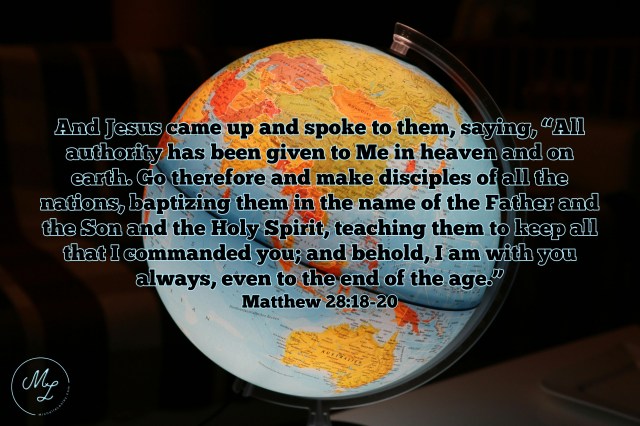
The Mailbag: Is it biblical for women to carry out The Great Commission?

Originally published June 18, 2018

Last week, I received some questions from a Facebook follower regarding my article Basic Training: The Great Commission. I thought they were very insightful and that other readers might have the same questions, so I’m sharing and expanding on my answers to her here. (I’ve edited/condensed the reader’s questions and comments {in bold type} for the sake of brevity.)

Given my understanding of what Jesus is commanding, and comparing it with other examples in the New Testament, it’s not for women to do the Great Commission. Our role is not to make disciples, teach, or baptize, but to keep the home, edify other women believers, etc. The Great Commission is for men, not women, to do because…

1. The Great Commission requires teaching and baptizing.

2. Jesus was speaking the Great Commission to His disciples, who were all male.

3. We don’t see any specific New Testament examples of women sharing the gospel with the lost through their own witness or example.

4. Because we don’t see any specific New Testament examples of women sharing the gospel or any explicit commands for women to share the gospel, it violates the regulative principle for women to share the gospel with the lost.

This reader’s questions really got me thinking and digging. I love questions that make me think hard and dig into Scripture and theology for answers!

First, let me briefly address the points of this issue that are not in dispute. As I understand her, the reader is in full agreement with Titus 2:3-5 and the example of Lois and Eunice. She agrees with the biblical principles of women training their own children in the gospel and discipling Christian women (already saved) inside the church. Her questions have mainly to do with sharing the gospel with the lost outside the church – evangelism.

Next, before we dive into the reader’s questions themselves, it is very important to distinguish between two types of Scripture:

Broadly speaking, there are two main types of Scripture: descriptive and prescriptive. Descriptive passages describe something that happened: Noah built an ark. Esther became queen. Paul got shipwrecked. These passages simply tell us what happened to somebody. Prescriptive passages are commands or statements to obey. Don’t lie. Share the gospel. Forgive others.

If we wanted to know how to have a godly marriage, for example, we would look at passages like Ephesians 5:22-33, 1 Corinthians 7, and Exodus 20:14,17. These are all passages that clearly tell us what to do and what not to do in order to have a godly marriage.

What we would not do is look at David’s and Solomon’s lives and conclude that polygamy is God’s design for marriage. We would not read about Hosea and assume that God wants Christian men to marry prostitutes. We would not read the story of the woman at the well and think that being married five times and then shacking up with number six is OK with Jesus.

Descriptive passages may support, but never trump, the clear instruction of prescriptive passages.¹

Now, let’s see if we can come to some biblical conclusions on her questions:

1. The Great Commission requires teaching and baptizing.

Teaching:
Often, when we’re looking at women’s roles in the church and being obedient to 1 Timothy 2:12, people conflate evangelism with teaching. Teaching Scripture to saved people inside the church gathering is not the same thing as sharing the gospel with lost people outside the church gathering. They are two separate, distinct things. First Timothy 2:12 (and other prohibitive passages) only prohibits the former, not the latter. The Great Commission, and the New Testament overall, commands the latter.

Teaching Scripture to saved people inside the church gathering is not the same thing as sharing the gospel with lost people outside the church gathering. They are two separate, distinct things.

As Christian women we want to be sure we keep these two things straight and carry out The Great Commission in the way God has prescribed for women to carry it out. May we share the gospel with a lost man or woman “as we are going”? Yes. If that person is a man, once he is saved is it biblically appropriate for a woman to teach and disciple him? No. If he is saved, he is supposed to be joined to a local church. Once inside the church body, he is to be taught Scripture and discipled by men.

As Christian women we want to be sure we keep teaching and evangelism straight and carry out The Great Commission in the way God has prescribed for *women* to carry it out.

Here are some resources which may be of further help:

Rock Your Role: Jill in the Pulpit

Rock Your Role FAQs (see #11 for using wisdom on sharing the gospel with men)

Basic Training: 7 Reasons Church is Not Optional and Non-Negotiable for Christians

Women Preaching the Gospel? at A Word Fitly Spoken (This is sort of the opposite {and unbiblical} argument: “Because the Bible says ‘preach the gospel’ -meaning, we’re to evangelize- that means women can preach in church, too!”. I thought you might find it interesting.)

Baptism:
When it comes to teaching inside the church, we have clear, prescriptive passages that specifically tell us what women are not to do. With evangelism, we also have clear commands in The Great Commission, and elsewhere, that disciples of Christ are to share the gospel.

But when it comes to baptism, we don’t have a clear “this or that person should or should not perform baptisms” passage, so we need to look at the principles and precedents surrounding baptism.

The people specifically named as personally performing baptisms in the New Testament were John the Baptist (who baptized Jesus), the twelve apostles, Philip the Evangelist, Paul and/or Silas, and Paul. All of these were men, and all held pastoral or pastoral/elder-type formal leadership positions in the embryonic or infancy stages of the church. All of them were commissioned, ordained, or set apart to their positions by God, Jesus, or the church. We do not see any New Testament instances of random church members – male or female – performing baptisms, only those in positions of church leadership.

Additionally, baptism is a formal, official, consecrated ordinance of the church, not a casual, personal, relational activity between individuals, friends, or loved ones. It should no more be administered by any church member who wants to do it than the Lord’s Supper should be. Both ordinances should be administered by an ordained pastor or elder of the church. That leaves out women as well as most men. Does the responsibility of pastors to baptize mean that men who aren’t pastors shouldn’t carry out the Great Commission? Of course not. We – men and women – share the gospel with someone, and if that person gets saved, part of our responsibility is to do what we can to get him plugged in to a local church where a pastor can baptize him. We don’t have to baptize him ourselves in order to be fulfilling The Great Commission.

Basic Training: Baptism

2. Jesus was speaking the Great Commission to His disciples, who were all male.
Yes, they were all male. They were all apostles, too. But first and foremost, they were all disciples – followers of Christ – just as Christians are today. Our identity in Christ – who we are, spiritually – trumps what we are, physically (male or female), and what we do (different roles and behaviors) as a result of who and what we are. Galatians 3:28 tells us:

There is neither Jew nor Greek, there is neither slave nor free, there is no male and female, for you are all one in Christ Jesus.

In Christ, there is only one type of being: Christian. There is only one kind of spiritual DNA. There’s no XX and XY. There’s just X. Ontologically, Christians are all the same kind of spiritual being.

The Great Commission is based on who the disciples, and we, are – followers of Christ – just as many of the other things that Jesus taught His disciples were. For example, when the disciples said, “Lord, teach us to pray,” and Jesus responded with the Lord’s Prayer, did Jesus mean that only the Twelve, or only men should use it as their model in prayer? When Jesus washed the disciples’ feet, did He mean that only the disciples or only men should serve one another in humility? When Peter asked Jesus how many times he had to forgive, did “seventy times seven” apply only to Peter, only to the disciples, or only to men? Of course not. Christ’s instructions to His followers apply to all who follow Him. It is in the way in which we carry these instructions out that Christ differentiates and delegates divergent and discrete responsibilities to men, women, and church leadership.

As disciples, we are to carry out The Great Commission. As Christian women, we carry it out in a different way from men and pastors.

As disciples, we are to carry out The Great Commission. As Christian women, we carry it out in a *different way* from men and pastors.

3. We don’t see any specific New Testament examples of women sharing the gospel with the lost through their own witness or example.
We don’t see any specific verses that say something along the lines of “Miriam shared the gospel with Simon, and he got saved,” that’s true. But how about these…

✢The woman at the well in John 4: “So the woman left her water jar and went away into town and said to the people, ‘Come, see a man who told me all that I ever did. Can this be the Christ?’ They went out of the town and were coming to him.” (28-30)

✢The widow (and townswomen) of Nain in Luke 7: “Fear seized them all, and they glorified God, saying, ‘A great prophet has arisen among us!’ and ‘God has visited his people!’ And this report about him spread through the whole of Judea and all the surrounding country.” (16-17)

✢The friends of Tabitha in Acts 9: ” And he gave her his hand and raised her up. Then, calling the saints and widows, he presented her alive. And it became known throughout all Joppa, and many believed in the Lord.” (41-42)

✢Lydia in Acts 16: “The Lord opened her heart to pay attention to what was said by Paul. And after she was baptized, and her household as well…” (14-15)

1 Corinthians 7:12-16: “If any woman has a husband who is an unbeliever, and he consents to live with her, she should not divorce him. For the unbelieving husband is made holy because of his wife…For how do you know, wife, whether you will save your husband?”

1 Peter 3:1-6: “Likewise, wives, be subject to your own husbands, so that even if some do not obey the word, they may be won without a word by the conduct of their wives.”

The first four examples imply that various women, to one degree or another, were pointing people to Jesus. But, again, these are descriptive passages. They lend a bit of support to the idea of women sharing the gospel with others, but we build doctrine on prescriptive passages like The Great Commission. The last two examples are prescriptive passages instructing women in sharing the gospel with their lost husbands. These passages are supportive of women sharing the gospel.

4. Because we don’t see any specific New Testament examples of women sharing the gospel or any explicit commands for women to share the gospel, it violates the regulative principle for women to share the gospel with the lost.
Well, as I mentioned above, we do see descriptive passages that at least hint at women sharing the gospel, and we also see prescriptive passages that explicitly instruct women in sharing the gospel with their lost husbands. But The Great Commission and other passages that are general commands to all followers of Christ to share the gospel are the strong and emphatic passages we draw doctrine from, not the more tangential passages. So even if the regulative principle did apply to evangelism, it would be supported by Scripture.

But the regulative principle doesn’t apply to evangelism as the full terminology – the regulative principle of worship – helps us to understand. The regulative principle applies to the corporate worship service, not evangelism, not marriage, not finances, not employment, not parenting, nor any other biblical issue. Just corporate worship.

Are women to carry out The Great Commission? Yes. We are to carry it out in the way Christ has prescribed for godly Christian women.

Are women to carry out The Great Commission? Yes. We are to carry it out in the way Christ has prescribed for godly Christian women.


¹Rock Your Role: Oh No She Di-int! Priscilla Didn’t Preach, Deborah Didn’t Dominate, and Esther Wasn’t an Egalitarian

If you have a question about: a Bible passage, an aspect of theology, a current issue in Christianity, or how to biblically handle a family, life, or church situation, comment below (I’ll hold all questions in queue {unpublished} for a future edition of The Mailbag) or send me an e-mail or private message. If your question is chosen for publication, your anonymity will be protected.

Complementarianism, Mailbag

The Mailbag: Women teaching men- Questions from a young reader

Originally published March 14, 2022

I received this very astute line of questioning from a young lady who left a comment on one of my articles. The comment and questions were rather lengthy, so I’ve broken it up into portions in order to answer it in an organized way. If you need to read the entire comment, uninterrupted, for context or ease of understanding, scroll down, reading only the portions in bold.


Hi! Just to let you know, though it may seem, I have no intention of being rude in this question, and genuinely want to know your response to this. I am only in 9th grade, so I have a lot to learn, and want to know what you think about my comment...Thank you, and I am very curious to find out what you think about my questions and things that I might have misunderstood or missed.

That’s awesome! I wish I had been thinking as deeply about these things as you are when I was in the ninth grade. And, rest assured, your questions didn’t seem rude to me at all. I’m so glad you want to learn! I hope you’ll understand that my answers aren’t meant to be rude either, although they may not be quite what you’re expecting or wanting to hear.

You didn’t mention whether or not you’re a Christian or what your church background, if any, is, so let me just start off by saying, if you’ve never been genuinely born again, my answers might not make much sense. I would encourage you, even if you’re pretty sure you’re saved, to examine the materials at the What must I do to be saved? tab in the blue menu bar at the top of this page before moving ahead.

I was just wondering, if women are not allowed to teach men, and you are a woman and this blog is public to men and women, then aren’t you technically providing biblical insight and evangelizing to whatever gender is reading this to inform them of the Bible?

Nope. I’ve answered that question in detail in my article Are Female Bloggers Violating Scripture by “Teaching” Men?

Additionally, “evangelism” and “teaching” (“providing insight” isn’t really a biblical category) are two different, separate things. You might find our podcast episode Women Preaching the Gospel? helpful for understanding the distinction.

Also, the book of Timothy, like you said, was a letter written from Paul to Timothy, so this was just the teachings that Paul gave to Timothy as instructions for the churches, and not necessarily coming from God.

I’m afraid that’s one of the things you’ve misunderstood. This wasn’t just a letter from one human being to another. The words in 1 Timothy, just like every word of every book of the Bible are from the very lips of God Himself. Second Timothy 3:16 tells us that “All Scripture is breathed out by God.” There aren’t some parts of Scripture that are from God and others that aren’t. It all comes from God, from Genesis 1:1 to Revelation 22:21.

First and second Timothy and Titus are what we call the pastoral epistles (“epistle” means “letter”). That means they are God’s instructions, written through His human instrument, Paul, to Timothy and Titus and every pastor who came after them, about how to run the church.

I know Paul was a prophet and one argument could be that he got this information from God,

No, Paul was not a prophet, he was an apostle. And, as I discussed above, the Bible says that all Scripture is breathed out by God, so “Paul got his information from God” is the only argument that can be made, especially for Christians. Because, for Christians, the Bible is our authority on what to believe, not human arguments, opinions, and ideas.

but even prophets (besides Christ) make mistakes in their instructions to others,

I’m afraid that’s also incorrect. There’s not a single prophet in the Bible who, when speaking as a prophet to people on God’s behalf ever made one iota of a mistake about what He said. There were false prophets (who received the death penalty for saying they spoke for God when God had not really spoken to them), but none of God’s true prophets – like Isaiah, Jeremiah, Micah, Habakkuk, etc. – ever got anything wrong or “made mistakes in their instructions to others” when speaking on behalf of God.

such as Abraham, who instructed people to be stoned for certain sins,

I think you mean “Moses” here. Abraham wasn’t a prophet, and I don’t recall any instance in Scripture in which Abraham “instructed people to be stoned for certain sins”. Moses didn’t either. God did. God gave Moses the law on Mt. Sinai, and Moses wrote it down and taught it to the people.

and you can see that it was unlawful in God’s eyes

I’m sorry, but that’s incorrect as well. Since God is the One who gave the laws about stoning people for certain sins, He would never have said that someone properly obeying His law was doing something unlawful. That would be like God saying He was wrong when He made that law. And, of course we know that God is never wrong.

and you can see that it was unlawful in God’s eyes when Jesus told the priests about to stone Mary of Magdala that they should not stone her because they have sinned as well and God sees all sins as the same.

I think you’re talking about the story of the adulterous woman in Luke 7-8, right? Again, I’m sorry, but there are many things that need to be corrected here:

  • Stoning a woman caught in adultery was not “unlawful in God’s eyes”. It was lawful. God is the one who gave this law. The scribes and Pharisees correctly cited the law in 8:5.
  • Jesus wasn’t speaking to the priests, He was speaking to the scribes – experts in the law (which was an important point of this passage) – and Pharisees.
  • The text does not say the unnamed woman was Mary Magdalene.
  • Look carefully at the passage. In which verse does Jesus say “they should not stone her”? Answer: He didn’t say, “Don’t stone her.”. On the contrary, He said that they could commence with the stoning as long as whichever one of them was without sin cast the first stone.
  • He also didn’t say they couldn’t stone her because “they have sinned as well”. Every lawful stoning that has ever taken place on planet earth was carried out by sinners, because (except for Jesus) every human being is a sinner.
  • The Bible doesn’t say that God “sees all sins as the same” (In fact, we can see in the way that God deals with various sins in various ways throughout Scripture that this isn’t true.), so Jesus would never have said this nor given it as a reason that these men should not have stoned this woman.

Jesus didn’t say the law against stoning an adulteress was wrong. That would have been equal to saying God was wrong for giving that law. He didn’t tell the men not to obey the law, either. The key to understanding this story is in verses 4-7:

4 they said to him, “Teacher, this woman has been caught in the act of adultery. 5 Now in the Law, Moses commanded us to stone such women. So what do you say?” 6 This they said to test him, that they might have some charge to bring against him. Jesus bent down and wrote with his finger on the ground. 7 And as they continued to ask him, he stood up and said to them, “Let him who is without sin among you be the first to throw a stone at her.”

They didn’t care about this woman or what happened to her. They didn’t care about the man who was sinning right along with her. They didn’t care that this sin wrecked the man’s and woman’s lives. They didn’t care that God’s law had been broken. They didn’t care that adultery grieves the heart of God. They didn’t care.

All of those things were just a means to an end for them. All they cared about was trying to get the advantage over Jesus. To trick Him into saying something they could use against Him so they could discredit Him or bring Him up on charges with the Sanhedrin (Jewish court). And they were using God’s precious and holy Word as a tool to accomplish this evil goal. They were blasphemously using God’s own Word against Him.

That is the entire point of this story. God’s Word is His representation of Himself to us. It is our lifeline to Him, because it is how we come to know Christ as Savior. It should be revered as high and holy, not twisted and abused for wicked purposes.

This is just one example of many things that God’s prophets have taught wrongly.

No, none of the things you’ve mentioned, nor the corrections I’ve given, have demonstrated that any true prophet of God has ever taught anything wrong when it comes to prophecy or commands of Scripture. Second Peter 1:20-21 tells us:

…knowing this first of all, that no prophecy of Scripture comes from someone’s own interpretation. For no prophecy was ever produced by the will of man, but men spoke from God as they were carried along by the Holy Spirit.

So, since times were different in the first century and women were not seen as important to men, couldn’t this have been something Paul told Timothy to do based off of his own understandings culturally?

No. Again, 1 Timothy is a passage of God-breathed Scripture, not Paul’s personal human opinion. It was not based on Paul’s human understanding (see 2 Peter 1:20-21, above), culturally, or in any other way. This is God’s command to pastors, based solely on God’s reasons.

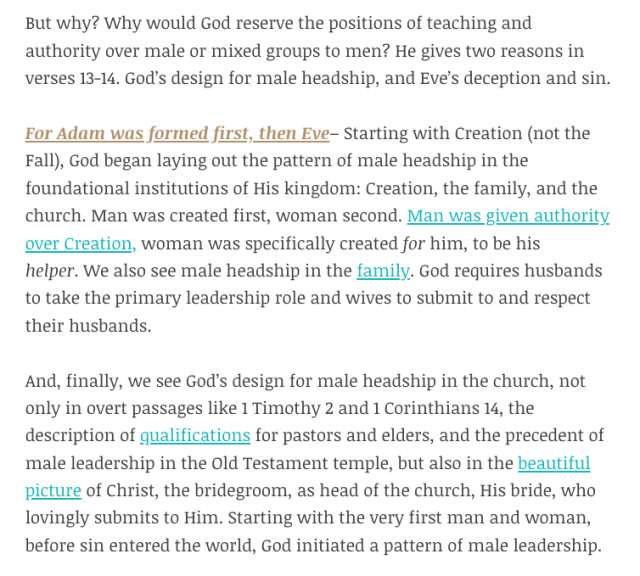
And God kindly shares those reasons with us in verses 13 and 14 of 1 Timothy 2:

11Let a woman learn quietly with all submissiveness. 12 I do not permit a woman to teach or to exercise authority over a man; rather, she is to remain quiet.

13 For Adam was formed first, then Eve; 14 and Adam was not deceived, but the woman was deceived and became a transgressor.

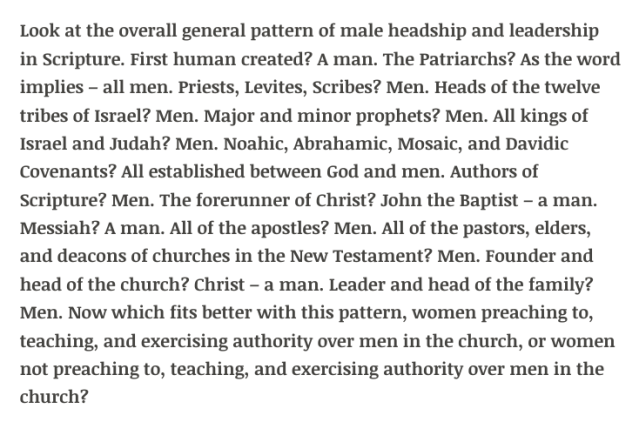
God gives us two reasons for His command that women are not to teach or exercise authority over men in the gathering of the church body: the creation order and pattern of male headship (13), and the fact that the woman was the one who was deceived into sin (14).

That’s why. Not culture, not Paul’s personal opinions, not because men didn’t value women at the time, not because the women in that particular church at that particular time were unruly or false teachers, not for any of the man-made theories that people have come up with. God tells us exactly why He made this rule for the church in verses 13-14. I’ve discussed this in greater detail in my articles Rock Your Role: Jill in the Pulpit and The Mailbag: Counter Arguments to Egalitarianism. Here are a few of the pertinent excerpts:

You’ve asked some really great questions here, and your reasoning skills are sharp. It was my pleasure to serve you by answering your comment. Keep asking questions, studying, and learning all God has to teach us through His authoritative, inspired, all-sufficient written Word.


If you have a question about: a Bible passage, an aspect of theology, a current issue in Christianity, or how to biblically handle a family, life, or church situation, comment below (I’ll hold all questions in queue {unpublished} for a future edition of The Mailbag) or send me an e-mail or private message. If your question is chosen for publication, your anonymity will be protected.

Podcast Appearances

Podcast Guest Appearance – Conversations with a Calvinist

Although you may be more familiar with him from his hilarious “churches/denominations” videos (check out a couple of my favorites here and here), my friend, Keith Foskey, also has a regular video podcast called Conversations with a Calvinist in which he tackles serious topics and interviews (mostly not about Calvinism, my non-Calvinist friends).

Listen in as Keith and I chat about an important topic that’s been making the rounds of late, Should Women Be Teaching the Bible? We know it’s unbiblical for women to teach men the Bible, but some Christians believe women shouldn’t even be teaching the Bible to other women. Is that biblical? What role do women play in the home, in the church, and in teaching other women?

You can watch and listen above or listen on Apple, Spotify, and other podcast platforms. And, be sure to join Keith’s Facebook group and follow him on Twitter and Instagram.


Articles / resources mentioned or touched on in the episode:

Do You MIND? : Five Reasons for Pastors to Mind What Their Brides Are Reading

A Word Fitly Spoken

Biblical Women’s Ministry (part 1) at A Word Fitly Spoken

Practical Women’s Ministry (part 2) at A Word Fitly Spoken

The Pew (May 2023) at A Word Fitly Spoken


Got a podcast of your own or have a podcasting friend who needs a guest? Need a speaker for a women’s conference or church event? Click the “Speaking Engagements” tab in the blue menu bar at the top of this page, drop me an e-mail, and let’s chat!

Podcast Appearances

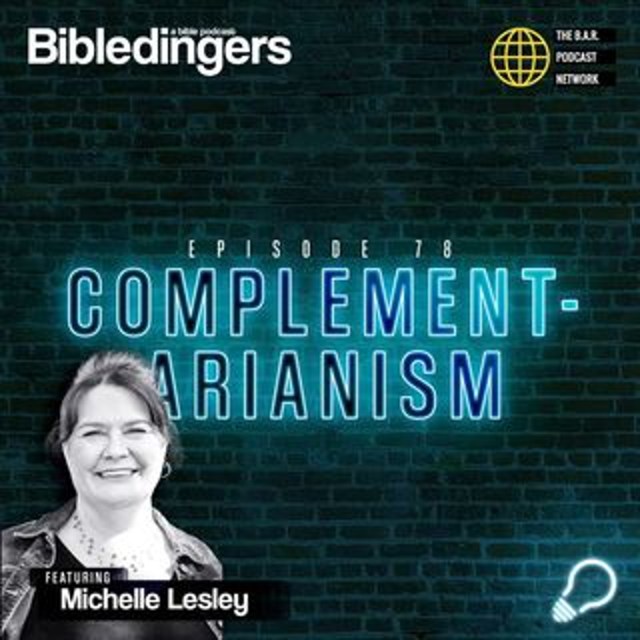
Podcast Guest Appearance – Bibledingers

Don’t worry, this episode was not about complementing Arians! :0)

It was so great to sit down and chat with my new friends Ryan and Nick over at Bibledingers recently!

We talked about all things complementarian – the biblical foundation for the complementarian position, the Scriptures egalitarians twist to try to justify their position, godly women in the Bible, and the crucial roles women play in the church and the home. The guys even had some great words of wisdom for all you husbands out there!

Listen in here or check out episode 78 of Bibledingers on your favorite podcast platform!

Be sure to visit the Bibledingers website for blog articles, videos, gear, and all the Bibledingers’ social media links. Subscribe and follow!


Articles / resources mentioned or touched on in the episode:

Rock Your Role: All Things Being Equal

Rock Your Role article series

The Mailbag: Counter Arguments to Egalitarianism


Got a podcast of your own or have a podcasting friend who needs a guest? Need a speaker for a women’s conference or church event? Click the “Speaking Engagements” tab in the blue menu bar at the top of this page, drop me an e-mail, and let’s chat!