Church

Church Leadership Qualifications: Biblical or Pragmatic?

leadership-1959544_1280

When it comes to leadership positions in the church we often get ourselves into unnecessarily sticky situations because we put practical considerations – who is available, who is most talented, who is willing, etc. – above biblical qualifications.
When we fill a position of leadership or responsibility at church we first go to Scripture to find out if the person we’re considering for the position is biblically qualified to hold it. Practical considerations come second. A few examples:

1.

An elder or deacon just died and the church needs someone to replace him. The first place you go is 1 Timothy 3 and Titus 1, and you start by weeding out the men who don’t fit those qualifications. It doesn’t matter how willing they are or how great of a job they would do or what kind of connections they have or how much money they could bring into the church, they have to meet the biblical qualifications first.

2.

Your church is located near a neighborhood full of Chinese immigrants, most of whom don’t speak English. Someone comes up with the commendable, Great Commission-honoring idea to start a Bible study to reach out to the men and women of this community. The only person in your church who speaks Chinese is a woman, so she’s the natural choice to teach the class, right?

Wrong. We start with the biblical qualifications for teachers, and one of them (1 Timothy 2:12) is that women are not to teach men. She could certainly teach (assuming she is able to teach – language alone doesn’t make someone a good teacher) a women’s class, or a male could teach the class in English and she could translate, or a man could take the time to learn Chinese before the church begins offering the class, or if there is a Chinese man in the class who is able to teach, he could teach the men and she could teach the women. But the woman doesn’t teach a co-ed class herself because Scripture forbids this.

3.

A young couple starts attending your church. After a few months, they step up and say they’d like to sing on the worship team. They’ve both got great voices and would radically improve the quality of the music on Sunday mornings. As you chat with them about joining the team, you find out they’re living together (unmarried). They’re both well aware that this is sin, but disagree with what the Bible says about adultery and fornication and have no intention of repenting, marrying, or moving out. Matthew 18:15-17 and 1 Corinthians 5:11-13 are quite clear that people who continue in rebellion after being called to repent are not even to be members of the church, let alone lead in worship.

Remember that the practical way is not always God’s way. Remember that God’s ways are higher than our ways (Isaiah 55:9). Remember that “There is a way that seems right to a man, but its end is the way to death.” (Proverbs 14:12). Remember when Saul did what was good in his own eyes instead of obeying God’s word (1 Samuel 15). Remember what happened to Nadab and Abihu when they conducted worship their own way instead of God’s way (Leviticus 10:1-6).

Obeying God’s word is not always easy, practical, or convenient, but it is always best, biblical, and blessed.

Movies

Movie Tuesday: Making Sure Kids Stay in Church as Adults

Children who sit with their parents in “big church” are more likely to
stay in church as adults than those who spend the
worship hour in children’s activities.

It’s more detrimental to youth to have a series of youth pastors than to have no youth pastor at all.

These are just two of the fascinating statistics included in Dr. Steve Parr’s recent seminar for the Louisiana Baptist Convention’s ReGroup small group leader training workshop. It’s great information for those in children’s, youth, or student ministry, and if you’re a parent with children still in the home, or a grandparent, you’ll definitely want to watch and give some thought to your church’s programs and how your own family worships.

(Disclaimer: I am not familiar enough with Dr. Parr to recommend or warn against following him. I screened him very briefly for associations with several major false teachers and did not find any with the exception that he quotes John Maxwell – whom I do not recommend – occasionally in his writing. The video above is the only material of Dr. Parr’s I have viewed. As always, please compare all media you consume to Scripture and reject anything that is out of line with God’s word.)

Mailbag

The Mailbag: How Can I Find a Good Church?

mailbag


I had to leave my old church (due to unbiblical teaching, because I moved, etc.). How can I find a new, doctrinally sound church?

I get this question a lot, and it’s one of my favorites, because it means the person is thinking about what constitutes a healthy, doctrinally sound church and seeking one out instead of going somewhere she can get her ears tickled. There are a lot of churches out there that have gone off the rails, but there are still a lot of good churches out there as well.

First, you need to know what makes a church doctrinally sound or unsound, which means you have to know what the Bible says about salvation, the Trinity, creation, sin, etc., all the major doctrines, well enough to know whether the church you’re considering believes and practices what the Bible says. I’m a little partial, but I think my denomination’s statement of faith does a decent job of succinctly outlining and giving an overview of the biblical position on the major doctrines, in case you need to study up a little (of course there are some finer points of doctrine you’ll want to take a look at, too).

In addition to what we would think of as the church’s main doctrines, there are some other vital things you’ll want to take into consideration when considering whether a church is healthy, such as whether the church is complementarian or egalitarian, what, if any, connection the church has with false teachers or their materials, whether the church is cessationist or continuationist, how the church handles the music portion of the worship service, and so on.

You can find information on all of these doctrinal issues and more by studying the resources under “What to look for in a church” at the “Searching for a new church?” tab in the blue menu bar at the top of this page.

Ready to start hunting for a new church home? Here are a few guidelines:

1. Pray. Ask God to give you wisdom as you search and to guide you to the right church for your family.

2. Ask around in person or on social media. Do you have friends or family in the area who could point you to a good church? If your current church is doctrinally sound (i.e. you’re only leaving it because you’re moving), ask your pastor for recommendations. Be sure the people you ask are trustworthy, doctrinally sound Christians.

3. Use the church “search engines” at the “Searching for a new church?” tab in the blue menu bar at the top of this page. Keep in mind that no church is perfect, and you may have to try a church that’s a different denomination than you’re used to, doesn’t meet all your preferences, or that is a bit farther away than you prefer.

4. If you have thoroughly exhausted all of the church search engines at the link above (#3) and none of your friends/family have any good suggestions, contact me, and I’ll be glad to ask around on my social media pages. I’ll keep your name confidential, but I’ll need to know the city and state/country where you’re looking for a church. (Please understand that if you aren’t able to find a church through the search engines or someone you know, it is unlikely that one of my social media followers will be able to come up with anything. This is a “last ditch effort” sort of thing. The search engines are your best bet.)

5. Found a church you think might be a good one? Examine its web site well. Does it have a solid statement of faith? Any female “pastors” on staff? Is the small group Bible study using a book by a false teacher? Are there pictures of members attending the latest gay pride rally? Are there sermons on the site you could listen to? Look for what the church is doing right and any areas that are red flags you should ask about (Be careful not to jump to conclusions, you could be mistaken about something. Ask.)

6. Did the church pass the web site test? Try it on for size. Visit a few times and see if it seems like a good fit.

7. If you’ve been visiting and think this church might be “the one,” schedule an appointment with the pastor (preferably during his office hours, if possible). Ask any questions you still have and ask how you and your family can get plugged in and serve.

Don’t forget- you’re not going to find the perfect church. Any church you join is going to have some problems. Our goal is not to find a place where we’ll be completely comfortable with never a ruffled feather and all of our preferences catered to. Our goal is to find the most doctrinally sound church we can, roll up our sleeves, and get to work serving, loving, and worshiping.


If you have a question about: a Bible passage, an aspect of theology, a current issue in Christianity, or how to biblically handle a family, life, or church situation, comment below (I’ll hold all questions in queue {unpublished} for a future edition of The Mailbag) or send me an e-mail or private message. If your question is chosen for publication, your anonymity will be protected.
Book Reviews

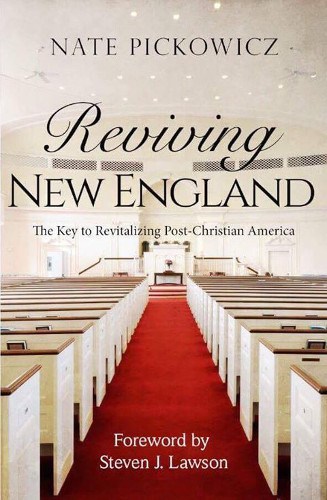
Book Review ~ Reviving New England

rnecover_330x500

I’ve said it dozens of times: I don’t write book reviews. But I’m fortunate that there are awesome, godly people out there who do, and who do a bang up job of it. So today I wanted to share a great review of the book Reviving New England. The review was written by my friend Rachel Williams over at danielthree18.com, and the book was written by my other friend, Nate Pickowicz, pastor, podcaster, and blogger extraordinaire. They are both lovely, doctrinally sound people I’m proud to know, so I’m certain you’ll enjoy both the review and the book.

Reviving New England 
(Why Women Ministry Leaders Should Read This Book)

by Rachel Williams

I ordered Nate’s book, Reviving New England: The Key to Revitalizing Post-Christian America, and I sit down to enjoy a treatise on the history of liberalism in New England, and what pastors in New England need to do today to turn the churches back to Christ.

Instead, I spent the majority of my time reading chunks of the books out loud to my husband, whispering, “YES!,” and underlining massive sections of it, realizing that every woman who leads women’s ministries across the United States (and beyond) needs this book.

Today.

Pickowicz does start the book with a brief history of the rise (and fall) of Christianity in New England. For those of you not students of church history, he does an excellent job of making this information relevant to today and fast-paced. (Trust me, I’ve heard my fair share of less-than-exciting lectures on this topic. He does a great job keeping your interest.) However, the history lesson is brief, and this is where the book becomes, in my opinion, necessary for women’s ministry leaders today.

The rest of the book is written for pastors and centers on how to preach the Word of God. He does a masterful job of navigating the problems in so many pulpits and offering real practical solutions to guiding the church back to sound biblical principles.

So why do I think women’s ministry leaders need this?…

Click here to continue reading.

Basic Training

Basic Training: Orientation

It’s an honor for me to be able to say that my family has a love of country and of military service. My dad served in the Army, as did his dad. My husband served in the Air Force. Our oldest is currently serving in the Air Force, and his younger brother is currently serving in the Navy. Numerous members of my extended family have served or are serving in every branch of the military.

If you’re close to someone in the military, maybe you’ve heard him tell heart-wrenching or horrifying tales of combat. But often, the more humorous stories are the ones that transpire prior to battle- while greenhorns are being transformed into soldiers, AKA: boot camp.

At boot camp, recruits undergo rigorous physical training, but they also learn the most basic of military customs, procedures, and protocol: how to stand in formation, how and whom to salute, how to march, how to properly wear their uniforms, and so on. Sometimes they goof these things up, and their drill sergeants…well…let’s just say their drill sergeants correct them in such a memorable way that the recruit won’t goof it up next time.

The military doesn’t expect civilians to know military procedure, which is why basic training exists. But they certainly expect seasoned soldiers, sailors, and airmen to know the fundamentals as well as they know how to breathe. We might chuckle at the story of a rookie confusing “attention” with “at ease,” but a lieutenant? A captain? We’d wonder what was wrong with him and why he hadn’t been properly trained.

Now, ladies, you and I may never march in the infantry, ride in the cavalry, shoot the artillery. We may never fly o’er the enemy, but we’re in the Lord’s army! Yes, sir! (A little VBS humor there for all you oldsters like me.) If God has been our C.O. for a while, we should know the basics of Christianity and the Bible.

But, sadly, I’m discovering more and more Christian soldiers who are clueless about some of the some of the most fundamental tenets of our faith. Not because they’re dumb. Not because they’re rebellious. Not because they don’t sincerely love the Lord. But simply because they’ve never had a drill sergeant who properly instructed them in these things.

Maybe that’s you. Maybe you’re a Christian who has spent most of her life in a church that was heavy on comfort and encouragement and light on doctrine. Maybe you’re a baby Christian who’s never darkened the doorstep of a church. Maybe you’ve been in a good church all your life and were out sick the day a particular subject was taught. We’ve all missed something along the way. Nobody has “arrived” yet. We’re all still learning, and we’re all in this together.

That’s why I’m starting a new blog series today that I’m calling Basic Training, and it’s for everybody, whether you’ve been saved for five minutes or fifty years. We’re going to cover several of the practical basics of church, the Bible, and Christian living. Things like…

  • Repeating a prayer doesn’t necessarily make you a Christian.
  • Christians are to join, and faithfully attend and serve, a doctrinally sound local church.
  • While Christians are not under the Old Testament law of the tithe, we are to generously, regularly, and cheerfully give offerings to our local church.
  • Homosexuals have to repent of their sin in order to be saved, just like everybody else.
  • Baptism is important and isn’t optional for a believer (not to become a believer).
  • Ditto the Lord’s Supper.
  • Being “led” by the Holy Spirit and studying and obeying the Scriptures He authored are not two separate and unrelated things.
  • Scripture prohibits women from preaching to, teaching Scripture to, and holding authority over men in the gathered body of believers.
  • Just because Jesus didn’t address a particular topic during His earthly ministry doesn’t mean we can do what we want to about it.
  • The Bible, not our own feelings or opinions, is to govern what we believe and what we do.
  • Cohabitation and sexual activity prior to or outside of wedlock are sins.

I probably won’t address every single one of those topics, and there are others I will address that aren’t included in the list above, but you get the idea: basic things you would expect someone who’s been a Christian for years to know and are surprised to find out she doesn’t.

Here’s where I need your help. As you can see, I’ve got a good list of topics started, but I don’t want to leave out something that’s important to a lot of people just because I didn’t think of it. What are some things you as a new believer, or someone who’s new to sound doctrine, need to know? If you’re older in the faith, what are some basic biblical teachings or issues you’re surprised to find other believers just aren’t aware of or knowledgeable about? Comment below and let me know. Let’s help each other out!