Mailbag

The Mailbag: Potpourri (Prayer quilts, Discouraged husband, Jesus Calling at the CPC…)

Welcome to another “potpourri” edition of The Mailbag, where I give short(er) answers to several questions rather than a long answer to one question. I also like to take the opportunity in these potpourri editions to let new readers know about my comments/e-mail/messages policy. I’m not able to respond individually to most e-mails and messages, so here are some helpful hints for getting your questions answered more quickly. Remember, the search bar can be a helpful tool!

In these potpourri editions of The Mailbag, I’d also like to address the three questions I’m most commonly asked:

“Do you know anything about [Christian pastor/teacher/author] or his/her materials? Is he/she doctrinally sound?”

Try these links: 
Popular False Teachers /
 Recommended Bible Teachers / search bar
Is She a False Teacher? 7 Steps to Figuring It Out on Your Own
(Do keep bringing me names, though. If I get enough questions about a particular teacher, I’ll probably write an article on her.)

“Can you recommend a good women’s Bible study?”

No. Here’s why:
The Mailbag: Can you recommend a good Bible study for women/teens/kids?
The Mailbag: “We need to stop relying on canned studies,” doesn’t mean, “We need to rely on doctrinally sound canned studies.”.

“You shouldn’t be warning against [popular false teacher] for [X,Y,Z] reason!”

Answering the Opposition- Responses to the Most Frequently Raised Discernment Objections


Wondering if you’ve ever commented on “Prayer Quilt Ministries” that some churches have. I was visiting a church recently that had an announcement in the bulletin for those interested to visit the lobby and “tie a knot in a prayer quilt”. On the church’s website the prayer quilt page says, “Gather to help press, pin, cut, sew or design prayer quilts. These are tied with prayer when given away to someone suffering from lengthy or devastating illness.” It’s probably a good work to make a quilt for someone who needs it, but what about the “prayer & tying of knots” issue?

Great question! I think it probably depends on the church’s theology. If it’s a New Apostolic Reformation type of church that believes that touching these quilts and praying while tying the knots in them will heal the recipients or somehow transport some sort of spiritual mojo to them in the warp and woof of the fabric, then that’s false doctrine and it needs to be done away with. That would be kind of like those magic “prayer cloths” that televangelists used to send out if you would only send them a “seed offering”.

However, if the church is doctrinally sound (which your e-mail indicated is the case), it’s very unlikely that it’s anything sinister like that. It sounds to me like the quilts themselves are just a kind ministry to hurting people. It reminds me of the story of Dorcas. “All the widows stood beside [Peter] weeping and showing tunics and other garments that Dorcas made while she was with them.”

The purpose of the knots is probably two-fold. First, it encourages church members to pray for the recipients of the quilts, and gives them a touchstone of having done so. Second, the recipient is probably told that every knot on the quilt was tied by someone who prayed for her. I think the knots are probably sort of like the stones we sometimes see Israel setting up in the Old Testament, or even baptism – a physical reminder of a spiritual moment. It’s an encouragement both to those who tie them and the recipients.

And if that’s as far as it goes, I don’t think that’s unbiblical. In fact, I think it is a great ministry for women to get involved in, it reaches out to people with the love of Christ, and if a Bible or gospel tract is included (I hope!), it’s a form of evangelism. All good and biblical things.


I am married and have a struggle with my wife about our roles. It’s been hard dealing with this. I get more respect from my Starbucks barista than I do at home.

The whole girl power thing is really not bad if it doesn’t come at the expense of men. But it’s gone too far, it’s kinda like idol worship now.

I’m going to be honest I know a lot of men that are tapping out. Young men don’t want to get married, older men can’t afford their wives’ lifestyles. Divorced men are ruined and spiraling down out here. It’s bad… Real bad.

You may never read this, but I hope you keep up the good fight. Not many people, much less women even look at us men as anything more than walking ATM’s and fix it guys. Thank you for making a bold move in the opposite direction. God be with you and keep you.

Every once in a while I get a heartbreaking e-mail like this from a husband. Sadly, there’s usually nothing I can do for them. Their wives are not the type who would care what I had to say even if I could talk to them.

But ladies, I’d like to ask you to do something for our friend here. Would you take just a moment and pray for him, his marriage, and his wife? And, if you wouldn’t mind, would you leave a comment under this article letting him know you’ve prayed for him and offering any words of encouragement you’d like? Thank you.


I volunteer at a Crisis Pregnancy Center that regularly gives away not only Bibles (good) but also Jesus Calling (bad!). I have been researching and note-taking a compilation of what you point out so that I can gently and lovingly bring this to the attention of the director of the center. I am not very confident however that she and others in authority will see the problem. It might be worth noting that my job at the center is strictly data input. I do not see any patients so therefore I myself do not ever have an occasion give a patient a Jesus Calling devotion. But should I not volunteer here if others continue to do so?

Way to be thinking theologically! This is the kind of thing we will all have to be thinking through more and more as the days grow darker, and it’s important that we think them through biblically.

Wow, it hurts my heart to hear that a CPC is doing this. These women are already in a difficult situation and instead of helping them with the truth of Scripture this CPC (and probably others out there) is feeding them false doctrine when they’re at their most vulnerable. 

Approaching the director kindly is the best first step, remembering that the vast majority of Christians simply don’t know what false doctrine is or the extent to which it has infected Christian materials. For most people, it never occurs to them that something sold at a Christian store might not be biblical. It’s my prayer that the director will listen and be convicted to stop using these materials in favor of doctrinally sound ones. When you go in to talk to her, you might want to have a couple of suggestions in mind for alternative materials. This tract from Living Waters might be a fit. Wretched has a great little gospel booklet called Don’t Stub Your Toe. Or you might contact Pre-Born! or another pro-life ministry you trust and ask for ideas.

But if the director brushes off your concerns, you’ll need to make a decision about whether or not to continue to work there. If you are married, the first thing you need to do is discuss this with your husband and find out what he thinks. If he tells you what he’d like you to do, you’ll need to abide by that. But even if he leaves the decision up to you, he will probably have some helpful wisdom and insight. You might also wish to bounce this off your pastor, an elder, or a godly friend.

Since you’re not the one purchasing the books or handing them out, I believe you could still work there – if your conscience allows. I would recommend that you pray about it and ask God to give you the wisdom to make a godly decision.


I need some direction. I’ve been teaching/sharing God’s Word at a nursing home for over two years on Sunday mornings. We have mostly women, but there are two men who join us. I was asked by the nursing home to lead our little church because they haven’t been able to find any men willing to do it. That’s my dilemma, I know Paul said he wouldn’t allow a woman to teach men, I don’t know how to handle this. I myself am not part of any other church, so I don’t have a pastor to help. I’ve reached out to some churches, but no one is getting back to me. Since we can’t find a man willing to lead, am I okay to keep doing what I’m doing? 

That is quite the dilemma! Let me see if I can help.

You started your e-mail by saying, “I need some direction,” so I hope you’ll be open to some direction that’s in a bit of a different direction than the one you’re asking about.

It’s wonderful that you’re wanting to help out at the nursing home and teach God’s Word. We need more women in mercy ministries like this, and I’m sure you’re a joy and a blessing to the ladies. But I’m afraid there’s a bigger issue you need to deal with than whether or not to be teaching at the nursing home.

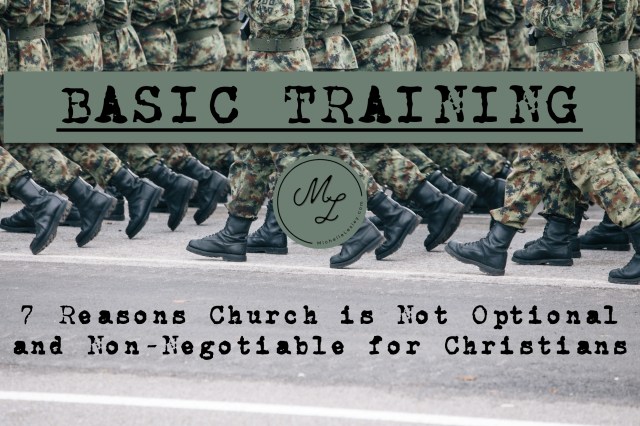
You need to find a doctrinally sound church, become a member of it, and attend and serve it faithfully. Church membership, fellowship, and service are not optional for Christians (Basic Training: 7 Reasons Church is Not Optional and Non-Negotiable for Christians).

The Bible knows nothing of unchurched Christians, and serving at the nursing home is not a reason not to be joined to a local church. You could always serve at the nursing home on Sunday afternoons after worshiping at your own church, or serve on another day. If you’re asking around at churches for someone to volunteer on Sunday mornings, this is why you’re not getting much of a response – you’re contacting churches. Pastors and their church members are supposed to be in church on Sunday mornings, not somewhere else.

I know you might be thinking that your group of ladies at the nursing home is your church because you called it “our little church”. It might be an awesome group of ladies with super close fellowship, but what you have there is a women’s Bible study class, not a church. It doesn’t have a pastor, elders, or deacons. It doesn’t have a membership, so there’s no mechanism for church discipline. Nobody is giving offerings or serving the Body. You’re not performing the ordinances of baptism and the Lord’s Supper (I hope). This is not a church.

Have you ever been on an airplane and noticed that when the flight attendant gives the safety instructions, she always tells you to put on your own oxygen mask first before assisting others with theirs? It’s good advice in this situation too. Right now, you’re disobeying Scripture by not being joined to a local church, so you’re setting a sinful example for your ladies while simultaneously teaching them that they need to obey God’s Word. Put your mask on first. Repent and join a local church. You also need to be sitting under good preaching and teaching at your own church so you’ll have something to give these ladies and to keep your own theology on track so you can make sure what you’re teaching them doesn’t veer off into false doctrine. Put your mask on first. You can’t help other people breathe if you’re passing out from lack of oxygen. Finally, joining a local church will fix the problem you mentioned of, “I don’t have a pastor to help.” If you’ll put your mask on first by finding a good church to join, you will have a pastor, elders, deacons, and lots of other men to help.

When we do things God’s way, in God’s order, most of the secondary things, like your dilemma about the men at the nursing home, tend to fall into place. Tell you what. You find a good church to join – maybe one of the ones you contacted for help (check out the “Searching for a new church?” tab at the top of this page if you need it) – get plugged in, and ask your pastor for some help with this. If he can’t or won’t help you, write me back, and we’ll go from there, OK? I’ll bet you won’t need to.


If you have a question about: a Bible passage, an aspect of theology, a current issue in Christianity, or how to biblically handle a family, life, or church situation, comment below (I’ll hold all questions in queue {unpublished} for a future edition of The Mailbag) or send me an e-mail or private message. If your question is chosen for publication, your anonymity will be protected.

Biblical Womanhood Bible Study

Imperishable Beauty: Lesson 6- The Beauty of Membership Identity

Previous Lessons: 1, 2, 3, 4, 5

Read These Selected Scriptures

In lesson 5, we learned about finding our identity in Christ. To find our identity in anyone or anything else is idolatry. Today, we’re exploring membership in the Body as part of our identity in Christ.

Questions to Consider

1. In previous lessons (see links above) we learned that we were created by God, in the image of God. We also learned that, as Believers, our personal identity – who we are at the deepest inner level of our own being, and how we see ourselves – is found in Christ. But there’s no such thing as an isolated Christian individual. (1 Corinthians 12:14) Read 1 Corinthians 12:27 and Romans 12:5 from today’s passages. What is another aspect of our identity in Christ?

2. According to the Colossians passages, what is another name for the “body”? Look up the word “church” in a concordance. What is the first verse in the Bible to mention the word “church”? Who spoke this verse? In what ways does this verse demonstrate that Jesus is the founder, builder, owner, and sustainer of the church?

3. There are two different ways the term “church” is most frequently used in the Bible and by Christians today: a) the church catholic (small “c”, not Roman Catholic) or universal, and b) the local church. What is the difference between these terms? Describe your membership as a Believer in both the church catholic and the local church.

4. How do you become a member of the church catholic? (1 Corinthians 12:13) Is this baptism at the moment of salvation visible or invisible? Spiritual or tangible? How does visible water baptism into membership in the visible local church outwardly symbolize your invisible baptism in the Holy Spirit into the invisible church catholic? Have you been baptized as your first step into local church membership? Why were you baptized, or why haven’t you been baptized?

5. Consider the metaphor of individual Christians as “body parts” (1 Corinthians 12, Romans 12) in terms of actual parts of a human body. Explain the metaphor in detail – how are the parts connected to the body? How/where do the parts get their nourishment? How do the parts know what to do and when to do it? How can the parts help or hinder other parts and the body as a whole? Who/what is the “command center” of the body?

6. What does 1 Corinthians 12:14-20 teach us about how we should view ourselves as a member of the body? What is God’s purpose in teaching us this view of ourselves – to build up our egos? Explain verse 18 as it applies to you and to other church members. What does 1 Corinthians 12:20-27 teach the church about how we should view individual members? What does it mean to be a church member who is “weaker” (22), “less honorable…unpresentable” (23)? What provisions does God – and do we – make for those members? (23-24) How does this contribute to unity in the church? (25-26)

7. Consider the 1 Corinthians passage and the Romans passage together with regard to how individual members contribute to the workings of the Body. Describe the heart attitude God wants us to have, and the approach He wants us to take as we serve the church. How do the concepts of unity, cooperation, and humility flesh themselves out as we work with fellow church members to serve the Body?

8. Sometimes we encounter a sister in Christ who is so passionate about her particular gifting or area of ministry that she pressures other church members to be as passionately involved in that ministry as she is, or she seems to look down on Christians who don’t have the same gifting she has. How would you use today’s passages to disciple her?


Homework

Is membership in the church catholic or the local church optional for Christians? If you answered yes to either, cite the Scriptures supporting your answer.

Give my article Basic Training: 7 Reasons Church is Not Optional and Non-Negotiable for Christians (and the articles in the “Additional Resources” section) a read. Explain in your own words why God wants Christians to be members of a doctrinally sound local church. Need to find a doctrinally sound church? Want to know what to look for in a healthy church? Explore the resources at the Searching for a new church? tab at the top of this page. (You can also recommend any doctrinally sound churches you have a personal connection with.)


Suggested Memory Verse

Now you are the body of Christ and individually members of it. 
1 Corinthians 12:27

Basic Training, Church

Basic Training: 7 Reasons Church is Not Optional and Non-Negotiable for Christians

For more in the Basic Training series, click here.

It’s a disturbing trend that’s spreading like the plague among evangelicals who claim to be Believers:

“I’m a Christian but I refuse to attend church.”

These aren’t people who can’t attend church due to health reasons, caring for an ill or disabled loved one, who have no other choice but to work some Sundays, or who live in an area with no reasonably doctrinally sound church to attend. They’re people who could get plugged in to a decent local church, but intentionally shun the body of Christ.

Usually, the decision to opt out of church boils down to one of two scenarios: a) a Believer who was hurt by a previous church and yet isn’t ready to risk being hurt again or b) someone (often a false convert) who doesn’t grasp the concept that being joyfully joined to a local body of believers is part of what defines someone as a Christian.

I can tell some of y’all have already fired up your e-mail programs or mentally formulated a corrective comment. Hang on, and please read what I’m about to say so we’re all on the same page here. I am not saying, have never said, and will never say that attending church, joining a church, serving at a church, or being baptized into a church is what saves a person, even in part. Going to church doesn’t make you a Christian. Everybody with me? Scripture is clear that salvation is by grace alone through faith alone in Christ alone, and that good works, such as church attendance, play zero part in a person’s salvation.

What I am saying is that one of the signs, or fruits, that someone is already saved is that she has a heartfelt love and affection for the things of God, which includes the gathering of the saints for fellowship, worship, encouragement, and edification. For a Believer, love for the bride of Christ is a natural extension of loving Christ, Himself. A Believer doesn’t have to be talked into attending church; there’s no place on earth he or she would rather be.

For a Believer, love for the bride of Christ is a natural extension of loving Christ, Himself. A Believer doesn’t have to be talked into attending church; there’s no place on earth he or she would rather be.

We’ve all been in difficult situations with difficult people at church that can hurt, sometimes deeply – believe me, I’ve been there – and can leave us in need of taking a few Sundays off to recover, or possibly the need to change to a healthier church. But if you’ve harbored antipathy toward the church, as a whole, for years, have never taken joy in fellowshipping and worshiping with fellow believers, don’t see any particular need for gathering with the Body, or are generally apathetic in your attitude toward church, you’re in a very dangerous place, spiritually, and you need to question your salvation. Those are symptoms of being lost, not fruit of being saved.

For Christians, being joined to a local church is not optional and non-negotiable. Why?

1. God Says So

Just in case the entirety of the Bible isn’t clear enough that God wants His people meeting together for fellowship, worship, and the Word, He says so very bluntly in Hebrews 10:24-25:

And let us consider how to stir up one another to love and good works, not neglecting to meet together, as is the habit of some, but encouraging one another, and all the more as you see the Day drawing near.

The HCSB puts it this way: “not staying away from our worship meetings, as some habitually do,” and NASB says: “not forsaking our own assembling together.” God says we are not to neglect, stay away from, or forsake, the meeting of the church body. For anyone who claims to be a Christian, that reason alone ought to be good enough. When God tells us to do something, we do it. Period.

2. The Church is God’s Plan for Christians

God doesn’t need or want your help devising the best methodology for your life and growth as a Christian. He already has a plan. He already established that plan. That plan is the church. There’s no plan B nor any cafeteria-style options. If you’re a Christian, God’s plan for you is to be a faithful part of a local body of Believers. The Bible never suggests that it’s OK for you to be a “Lone Ranger Christian.” There are no explicit statements to this effect, nor even one example of a New Testament Christian who lived life apart from the church. The New Testament assumes Christians will be part of a church. If not, the majority of Matthew through Revelation would be moot. If you reject membership in the local church, you’re rejecting God’s Word and His way in favor of your own way.

If you reject membership in the local church, you’re rejecting God’s Word and His way in favor of your own way.

3. Jesus Values the Church

You claim to love and follow Jesus, right? Well, Jesus founded the church. Jesus is the head of the church. Jesus loves the church. Jesus died for the church. Jesus is the Savior of the church. Jesus nourishes, cherishes, and sanctifies the church. How could anyone claim to love and follow Jesus and yet cavalierly toss aside something He values so much that He laid His life down for it? If you really love Jesus, you’ll value the things He values, and, clearly, He values the church.

If you really love Jesus, you’ll value the things He values, and, clearly, He values the church.

4. Being Joined to the Church Is an Indicator of Salvation

First John 2:18-19 makes no bones about it. Forsaking the church is an indicator that you’re not saved:

…now many antichrists have come…They went out from us, but they were not of us; for if they had been of us, they would have continued with us. But they went out, that it might become plain that they all are not of us.

Want to make it plain that you’re not of Christ? Step one is to leave the church.

5. The Church is the Dispensary for the Word and the Ordinances

The preaching and teaching of God’s Word. Baptism and the Lord’s Supper. In order to preserve their purity and sanctity, God established a hierarchical structure of ecclesiastical authority and placed the responsibility for administering Scripture and the ordinances with the church, not isolated individuals. Do we have women’s Bible studies and Sunday School classes? Of course. But only under the oversight of our pastors and elders, as an outflow of, and in keeping with, the preaching and teaching ministry of the church. Do we share the gospel with the lost we encounter during the week? You bet! Our churches enable us to do so by training us in the Word, and we bring new Believers back to our churches so that they may be discipled.

6. The “One Anothers”

Love one another. Comfort one another. Forgive one another. Serve one another. Bear one another’s burdens. Confess your sins to one another and pray for one another. Have you ever stopped to think which people “one another” is referring to? It’s easy to see when you look at these verses in context. It’s our brothers and sisters in Christ. All of the New Testament “one anothers” are written to the church. You need brothers and sisters to minister the “one anothers” to you, and your brothers and sisters need you to minister the “one anothers” to them. We cannot properly carry out the “one anothers” outside the church because they were meant to be practiced first and foremost within the church.

We cannot properly carry out the “one anothers” outside the church because they were meant to be practiced first and foremost within the church.

7. Sheep Need Shepherds

The Bible often uses sheep as a metaphor for God’s people. And since we know that God is the author of Scripture, we know God handpicked that metaphor to describe us. Ever notice that God never describes a sheep wandering off on its own as though that were a good thing?

All we like sheep have gone astray; we have turned—every one—to his own way;
Isaiah 53:6a

I have gone astray like a lost sheep; seek your servant,
Psalm 119:176a

When he saw the crowds, he had compassion for them, because they were harassed and helpless, like sheep without a shepherd.
Matthew 9:36

What do you think? If a man has a hundred sheep, and one of them has gone astray, does he not leave the ninety-nine on the mountains and go in search of the one that went astray?
Matthew 18:12

Sheep who leave the flock to make their own way in the world are in danger from wolves, the pitfalls of sin, and any number of other perils, especially the trials and tragedies of life. I can’t tell you how many e-mails I’ve received from distraught Christian women in dire personal circumstances who desperately need pastoral counsel. Sadly, when I tell them I’m not equipped to help them with such a complicated problem from so far away and that they need to make an appointment with their pastor for one on one, face to face counseling, the response is often, “I haven’t been going to church. I don’t have a pastor.”

We need the protection of the sheep pen, the brotherhood of the flock, and the leadership of our shepherds, our pastors, to help guide us. God knew we needed those things. That is one reason He established the church and created the position of pastor. Christ is our Good Shepherd, but until He returns, He has appointed godly men to watch over and protect the flock in His absence:

When they had finished breakfast, Jesus said to Simon Peter, “Simon, son of John, do you love me more than these?” He said to him, “Yes, Lord; you know that I love you.” He said to him, “Feed my lambs.” He said to him a second time, “Simon, son of John, do you love me?” He said to him, “Yes, Lord; you know that I love you.” He said to him, “Tend my sheep.” He said to him the third time, “Simon, son of John, do you love me?” Peter was grieved because he said to him the third time, “Do you love me?” and he said to him, “Lord, you know everything; you know that I love you.” Jesus said to him, “Feed my sheep.
John 21:15-17

And he gave…the shepherds and teachers, to equip the saints for the work of ministry, for building up the body of Christ,
Ephesians 4:11-12

So I exhort the elders among you…shepherd the flock of God that is among you, exercising oversight, not under compulsion, but willingly, as God would have you; not for shameful gain, but eagerly; not domineering over those in your charge, but being examples to the flock. And when the chief Shepherd appears, you will receive the unfading crown of glory.
1 Peter 5:1-4

You can’t shepherd yourself. That internet pastor you listen to – even the most doctrinally sound one – can’t shepherd you. You need to be part of a flock led by a shepherd who knows you and cares for your soul.

Do you take joy in gathering regularly with your brothers and sisters in Christ for worship, the Word, the ordinances, building one another up, and serving one another? If not, the solution is not to leave the church altogether. The solution is to examine your heart against Scripture to discover whether or not you’re truly saved, and then to find a healthy church you can pour yourself into. Christ has given believers the local church as a blessing and a benefit, not a burden and a bore. Love and embrace this precious gift He has lavished on you.


Additional Resources

Searching for a new church?

What the Bible Says About Church Membership

Six Ways Not to Forsake the Assembly 

7 reasons worshipers need the church at The Cripplegate

Mailbag #49: Home Groups Over Church at 9Marks

My Jesus, I Love You; Your Bride I Despise! at Reformation21

Why You May Be Tempted To Neglect Your Church by Tim Challies

Five Essential Reasons for Christians to Gather in Public Worship at Ligonier

Prioritize Your Church by Tim Challies

Is a “Churchless Christian” an Oxymoron? at Ligonier

The Plight of Churchless Christians at The Cripplegate

40 reasons to be part of a local church at The Cripplegate

Church Attendance Is Not Optional on the G3 Podcast

Is it Necessary for Me to Join a Local Church? at G3 Ministries

Church

Church Leadership Qualifications: Biblical or Pragmatic?

leadership-1959544_1280

When it comes to leadership positions in the church we often get ourselves into unnecessarily sticky situations because we put practical considerations – who is available, who is most talented, who is willing, etc. – above biblical qualifications.
When we fill a position of leadership or responsibility at church we first go to Scripture to find out if the person we’re considering for the position is biblically qualified to hold it. Practical considerations come second. A few examples:

1.

An elder or deacon just died and the church needs someone to replace him. The first place you go is 1 Timothy 3 and Titus 1, and you start by weeding out the men who don’t fit those qualifications. It doesn’t matter how willing they are or how great of a job they would do or what kind of connections they have or how much money they could bring into the church, they have to meet the biblical qualifications first.

2.

Your church is located near a neighborhood full of Chinese immigrants, most of whom don’t speak English. Someone comes up with the commendable, Great Commission-honoring idea to start a Bible study to reach out to the men and women of this community. The only person in your church who speaks Chinese is a woman, so she’s the natural choice to teach the class, right?

Wrong. We start with the biblical qualifications for teachers, and one of them (1 Timothy 2:12) is that women are not to teach men. She could certainly teach (assuming she is able to teach – language alone doesn’t make someone a good teacher) a women’s class, or a male could teach the class in English and she could translate, or a man could take the time to learn Chinese before the church begins offering the class, or if there is a Chinese man in the class who is able to teach, he could teach the men and she could teach the women. But the woman doesn’t teach a co-ed class herself because Scripture forbids this.

3.

A young couple starts attending your church. After a few months, they step up and say they’d like to sing on the worship team. They’ve both got great voices and would radically improve the quality of the music on Sunday mornings. As you chat with them about joining the team, you find out they’re living together (unmarried). They’re both well aware that this is sin, but disagree with what the Bible says about adultery and fornication and have no intention of repenting, marrying, or moving out. Matthew 18:15-17 and 1 Corinthians 5:11-13 are quite clear that people who continue in rebellion after being called to repent are not even to be members of the church, let alone lead in worship.

Remember that the practical way is not always God’s way. Remember that God’s ways are higher than our ways (Isaiah 55:9). Remember that “There is a way that seems right to a man, but its end is the way to death.” (Proverbs 14:12). Remember when Saul did what was good in his own eyes instead of obeying God’s word (1 Samuel 15). Remember what happened to Nadab and Abihu when they conducted worship their own way instead of God’s way (Leviticus 10:1-6).

Obeying God’s word is not always easy, practical, or convenient, but it is always best, biblical, and blessed.

Mailbag

The Mailbag: My “Christian” Family Member Bears Rotten Fruit

mailbag


I have a family member, *Fran, who claims to be a Christian, but follows several major false teachers, drinks, habitually lies, is very proud, boastful, and manipulative. She has been shown that these teachers are false but chooses to follow them anyway.

Should I treat her as though she were a sister in Christ by going to her and rebuking her and going through the “disciplinary” steps in hopes of reconciliation? Or should I go about it as if she weren’t a sister in Christ?  I have been praying for her and for wisdom for myself to handle this in a God honoring way.
(*Name changed)

It’s always difficult to watch a loved one choose sin over Christ and false doctrine over sound doctrine. Praying for Fran and for God’s wisdom and guidance are the first and best step.

You’ve asked about “going through the ‘disciplinary’ steps in hopes of reconciliation.” I believe what you’re referring to here is the process described in Matthew 18:15-17:

If your brother sins against you, go and tell him his fault, between you and him alone. If he listens to you, you have gained your brother. But if he does not listen, take one or two others along with you, that every charge may be established by the evidence of two or three witnesses. If he refuses to listen to them, tell it to the church. And if he refuses to listen even to the church, let him be to you as a Gentile and a tax collector.

This is the basic outline Christ has given us for disciplining sin in the local church. One thing to notice about that last step is that if the person sinning does not listen to the church, the church is to excommunicate (remove, or disfellowship) him from membership and regard him as someone who is lost and in need of the gospel. This brings us to the question of whether Fran is a member of your church or another church. A church obviously can’t excommunicate someone who isn’t a member of that church. This helps us to see that each local body is responsible for disciplining its own members.

If Fran is a member of your church, then, yes, the steps in the Matthew 18 passage should be applied. The wisest course of action, especially if you’ve never done something like this before, is to seek the counsel of your pastor or an elder as to the best way to approach Fran and handle the meeting. Set aside some one on one time to talk to Fran, and be sure you listen to her as well. Part of that one on one meeting is for you– to make sure you are correctly assessing the situation, not, for example, reacting to a rumor you heard, a misunderstanding of an incident, etc. Lovingly and humbly point her to the Scriptures she has transgressed. Pray with her if she is willing.

After that initial meeting, give her some time to consider what you’ve said and to respond to the Holy Spirit’s work in her heart. Check back in with her at a later date and find out if she has repented. If not, prayerfully gather two or three others Fran likes and respects and repeat the process. If she still doesn’t repent, take those two or three people, meet with your pastor or the appropriate elder, and seek his guidance on the next step to take.

You didn’t specify in your e-mail, but it sounded as though Fran is not a member of your church. In this case, you really don’t have any ecclesiological redress (i.e. excommunication) to back you up. What you have is a family member who appears to be a false convert because she is bearing the fruit of someone who is unsaved rather than the fruit of someone who is saved.

I would again encourage you to meet with your pastor, an elder, or a godly, older, spiritually mature woman at your church for counsel as to the best way to proceed. It might be possible to carry out the first two steps of the process simply as an act of love and concern, considering what steps you would take in your personal relationship with Fran if she refuses to repent. First Corinthians 5:9-13 is a good passage to study as you consider this situation:

I wrote to you in my letter not to associate with sexually immoral people— not at all meaning the sexually immoral of this world, or the greedy and swindlers, or idolaters, since then you would need to go out of the world. But now I am writing to you not to associate with anyone who bears the name of brother if he is guilty of sexual immorality or greed, or is an idolater, reviler, drunkard, or swindler—not even to eat with such a one. For what have I to do with judging outsiders? Is it not those inside the church whom you are to judge? God judges those outside. “Purge the evil person from among you.”

This passage is also written to the church body regarding church discipline, but we can glean from it, as well as from the Matthew 18 passage, that there is to be some noticeable degree of separation between Christians and individuals who call themselves Christians yet unrepentantly persist in sin.

As you mentioned, the whole point of lovingly confronting someone you care for about her sin is to – for the good of her own soul – point her back to Christ so that she may first be reconciled with Him through repentance and forgiveness, and then be reconciled with her church family and others. Two good Scriptures to remember and take to heart when we have no other choice but to approach a sinning sister are:

And as you wish that others would do to you, do so to them. Luke 6:31

For with the judgment you pronounce you will be judged, and with the measure you use it will be measured to you. Matthew 7:2

It can be difficult, painful, and embarrassing to hear someone tell you you’re in sin. Put yourself in that sister’s shoes. Treat her as kindly and mercifully as you would want someone to treat you. We never confront another in her sin with the motive of shaming, punishing, seeking revenge, or proving her wrong and ourselves right. That is not the gospel. It is not how Christ treats us when we sin. If she repents when you approach her, forgive and rejoice with her in the good work Christ has done in her heart.

Additional Resources:

What is Excommunication in the Bible? at Got Questions

What does the Bible say about church discipline? at Got Questions

A Church Discipline Primer at 9 Marks

In Order that You May Know at Grace to You


If you have a question about: a well known Christian author/leader, a Bible passage, an aspect of theology, a current issue in Christianity, or how to biblically handle a family, life, or church situation, comment below (I’ll hold all questions in queue {unpublished} for a future edition of The Mailbag) or send me an e-mail or private message. If your question is chosen for publication, your anonymity will be protected.