I’ve just been in a funk, lately. Nothing out of the ordinary is wrong, but it’s been raining for eleventy two days in a row, and the constant darkness and dreariness seems to have wormed its way into my psyche and, I noticed recently, even into my prayer life.
A couple of days ago, I started out my prayer time with a huge sigh followed by a bunch of wimpering and whining about nothing of consequence. I was just moody. And I didn’t feel like praying.
And then God graciously brought a lovely little snippet of Scripture to my mind:
give thanks in all circumstances; for this is the will of God in Christ Jesus for you. 1 Thessalonians 5:18
Want to know God’s will for your life? There it is: give thanks in all circumstances. When you get a new car. When you catch your spouse cheating on you. When you’re on a glorious vacation. When you get laid off from work. When you’re happy. When you’re sad. When you’re in the mood, and when you’re not in the mood.
Give thanks in – not necessarily for, but in – all circumstances.
Well, this was certainly a circumstance. Why not give gratitude a try? I was in the car headed to pick up my boys from school, and I decided to spend the entire twenty minute drive just thanking God for things.
I started with the big stuff: salvation, forgiveness for my sin, times when God has miraculously provided, specific answers to prayer…
How often do we forget to thank God for all the (in our eyes) tiny little unnoticed things He does for us every day?
I was starting to slow down and I still had about half the drive left. Surely there was more to be thankful for! And that’s when it struck me. How often do we forget to thank God for all the (in our eyes) tiny little unnoticed things He does for us every day? We thank Him for the miracles, but what about the mundane? What “little things” had I forgotten to thank God for?
1. Air conditioning. I live in the South. Enough said.
2. I know where my next meal is coming from.
3. Social media and e-mail. I can keep up with far off loved ones, and I’ve “met” some awfully nice people.
4. I can see. I can hear. I can think clearly. I can walk.
5. I live in a country where Christianity is not yet against the law.
6. Sunsets.
7. Cute baby animals.
8. I can read and write. That’s not the case for women, globally.
9. I was able to conceive and carry my children to term.
10. Warm quilts on cold nights.
11. The Bible is available in my native language, and I have several copies of it.
12. I have no fear of suicide bombers in my community.
13. The beach.
14. A crawfish boil with friends.
15. Reliable electricity.
16. Hearing my children sing when they think no one is listening.
17. My husband is a Believer and is good to me.
18. Mountains. I miss mountains.
19. Indoor plumbing and clean drinking water.
20. Laughing hysterically with my family.
21. Level-headed discernment ministries.
22. Peanut butter and chocolate ice cream.
23. A roof over my head.
24. Home schooling.
25. People who are kind (or crazy) enough to read my blog articles all the way to the end.
Well, that was my list, and I think I’ll keep looking for things to add to it. Thanking God for the “little things,” realizing they might be big things to others, and recognizing the pervasiveness of God’s blessings and provision cheered me up and was truly a worship experience.
We thank Him for the miracles, but what about the mundane?
Is your family getting ready for Advent? Loosely defined, Advent is the period of time leading up to Christmas when we commemorate Christ’s first coming and anticipate His second coming. And what better way to do so than by making Bible study and worship part of your family tradition? Here are some awesome Advent resources1 for young and old alike. Most of them are free, but the ones that aren’t, I’ve marked with a 💰.
December Advent!– Here’s an advent calendar, craft, and devotional all rolled into one! Naomi’s Table is a women’s Bible study resource that I highly recommend for sound doctrine and right handling of God’s Word. Have a listen to their daily Advent podcasts and make the Advent calendar that goes with them!
Need a good Advent playlist? I’ve created one on YouTube. Your favorite Advent (not Christmas) song isn’t included? Leave a comment and I’ll add it if appropriate.
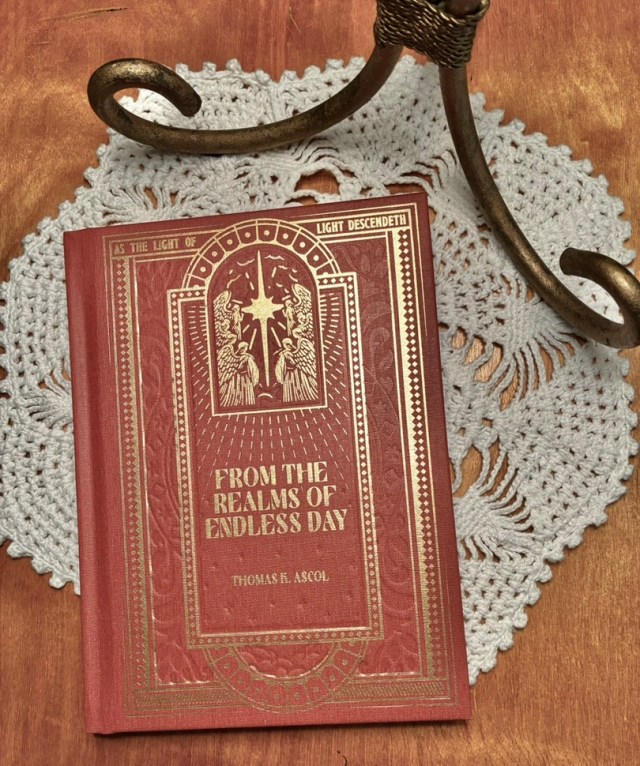
From the Realms of Endless Day by Dr. Tom Ascol. “This little book is meant to be used as a daily devotional guide throughout the Christmas season. It is broken into five sections of five devotions. Each section focuses on one passage of Scripture that is considered verse-by-verse.” Designed for family or individual use, with Scripture memory passages in each section and study questions at the end of each of the 25 lessons. Encouraging Christmas poetry from Dr. Tom Nettles is also sprinkled throughout the book.💰
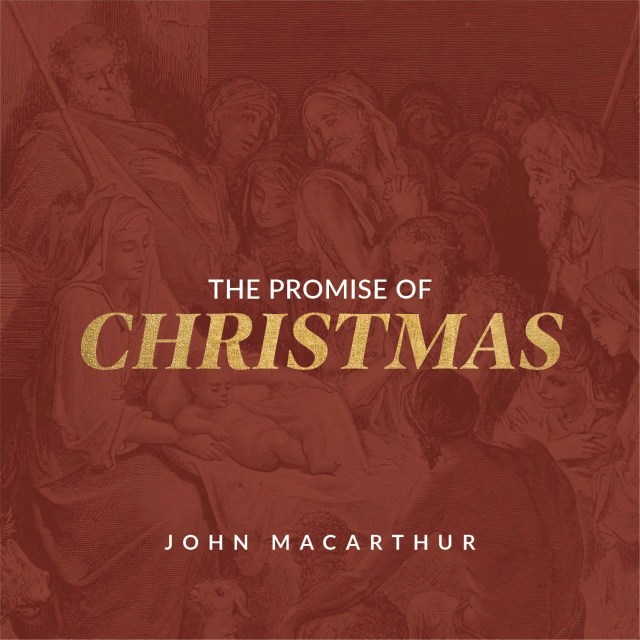
The Promise of Christmas by John MacArthur. “…What would it have been like to be in Bethlehem for the very first Christmas? Would you have been waiting for Jesus? What would you have been anticipating? Would you have expected the Savior, King, and deliverer promised in Scripture to arrive unheralded by men—born in a lowly stable, surrounded by animals and society’s outcasts?…In The Promise of Christmas, John MacArthur answers those questions and more as he takes you back in time to first-century Israel.” A series of six sermons.
Is observing Advent new for your family? Children are often “hands on” learners, and this Advent wreath craft could be a great way to explain the significance of Advent, the wreath, and each candle as they create it. Follow the step-by-step instructions here, using your own design, or subscribe to the email list to download the free printables.
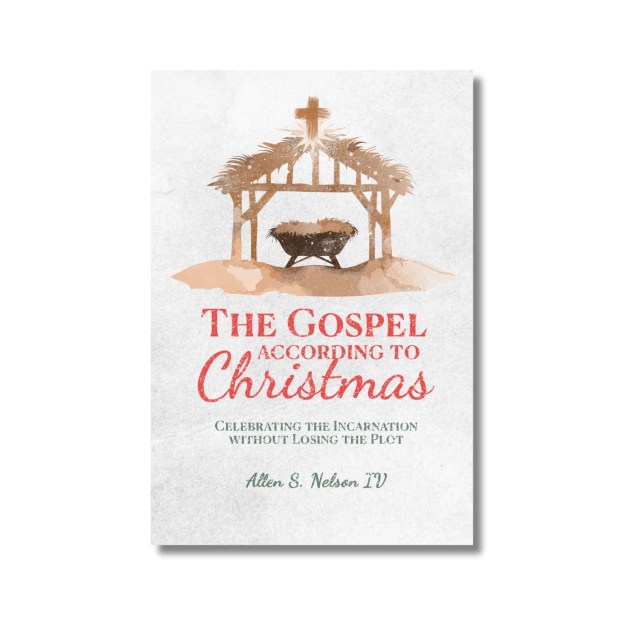
The Gospel According to Christmas by Allen Nelson. In a world where Christmas is often reduced to twinkling lights and fleeting sentiments, The Gospel According to Christmas is a clarion call to rediscover the holiday’s true heartbeat: the gospel of Jesus Christ. With pastoral warmth, Allen Nelson IV guides readers through 1 Peter 2:24 to unveil the staggering reality of Christ’s incarnation and sacrifice…Read it, share it, and let it rekindle your love for the Christ of Christmas. Reflection questions in each chapter make this book a perfect fit for group study or family devotions.”💰
The Jesse Tree– A charming precursor to the Advent calendar, the Jesse tree traces the story of Jesus from Creation to His birth. Using your Christmas tree or a crafted tree, hang an ornament each day that represents the Bible story for that day. This site has a free Jesse Tree tool kit with ideas for making your own Jesse Tree, the Scripture references for each day, and printable ornaments. (They also offer a family devotional and a individual devotional. If you’re considering using them, please do so carefully and discerningly. I read several of the family devotions and they seemed OK, but the Reformed Church in America {which sponsors this site} appears to have struggled with progressivism in their theology.)
Manger in Danger– This charming family devotional and game centering on the incarnation of Christ was created by Pastor Grant Castleberry and his wife, GraceAnna. “Manger in Danger is a fun, interactive family tradition that brings the Christmas story from the Bible to life in 25 days of family devotionals!”💰
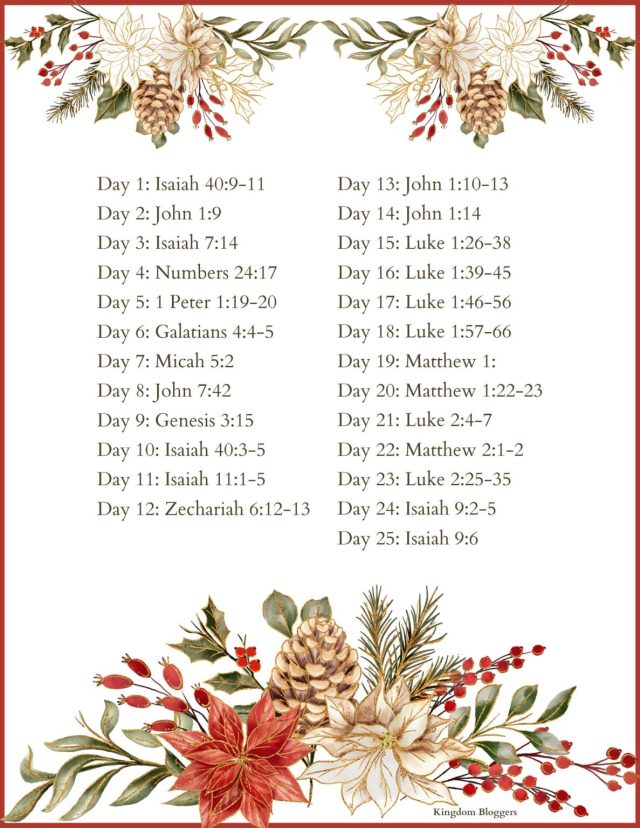
I thought this was a cute idea – an Advent Countdown Candle. Just grab a taper, make 25 marks down the side of it, and each night burn away one more day. Simple! You might even like to read one of these Advent Scriptures…
…every night by candlelight. Or use my Advent playlist above, and sing one of the hymns there as each day burns away.
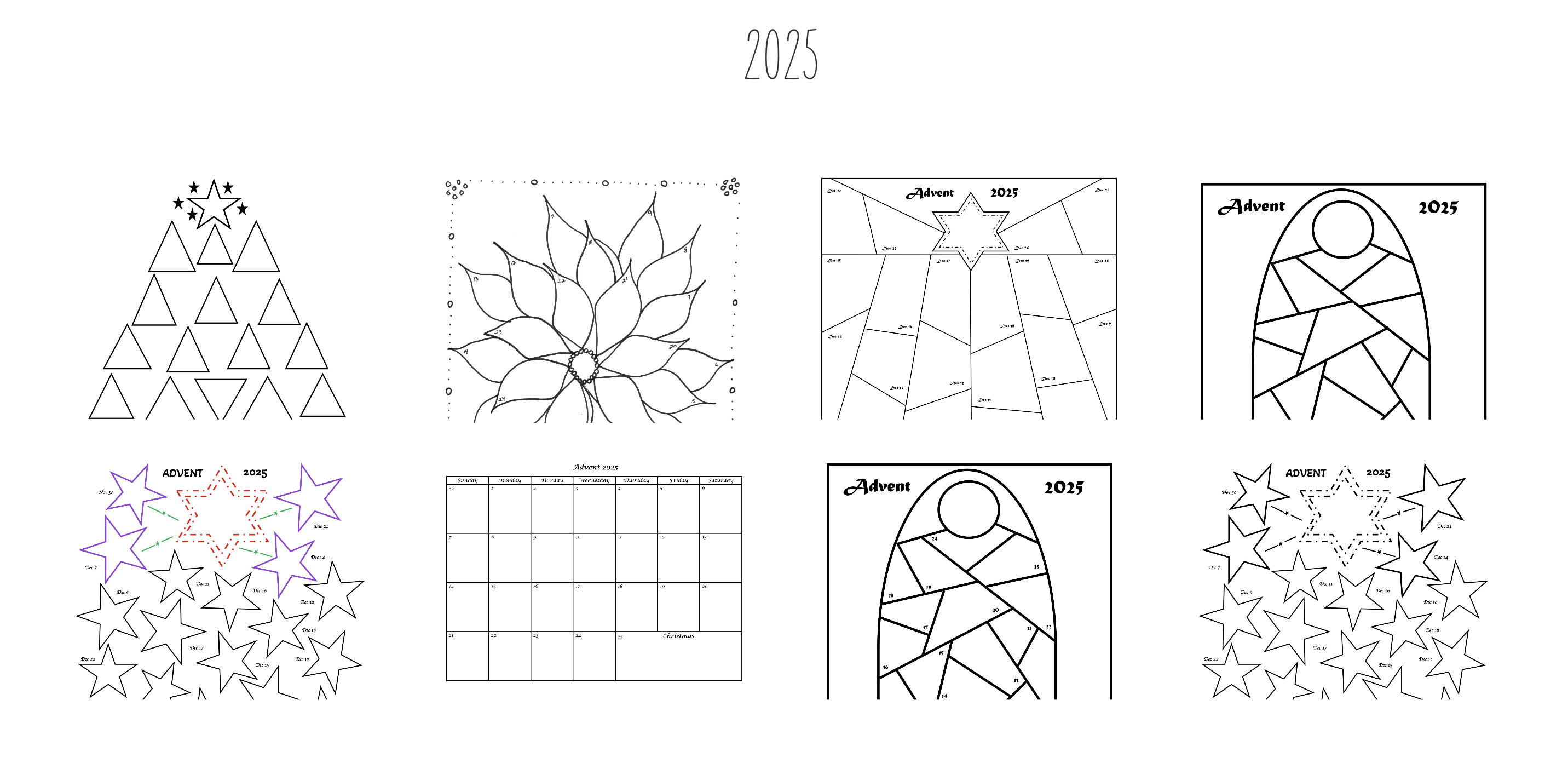
How about combining Advent and prayer with an Advent Prayer Calendar? Choose from dozens of designs, print out the one you like best, and color, decorate, or fancy it up any way you like. Each day, simply fill in the name of the person or ministry you’re praying for and spend a few minutes interceding for them. It’s a great way to start a habit of family prayer and count down to Christmas at the same time!
(This is a site1 where you’ll want to grab only the printable and leave everything else behind.)
Christmas Messages by R.C. Sproul- “In this set of Christmas sermons, Dr. R.C. Sproul examines the account of the Magi in the gospel according to Matthew and the relationship of David and Saul in order to unfold the significance of Christmas and the incarnation of Christ. With theological insight and attention to scriptural detail, Dr. Sproul demonstrates how these events and relationships contribute to our understanding of the person and role of Christ.”
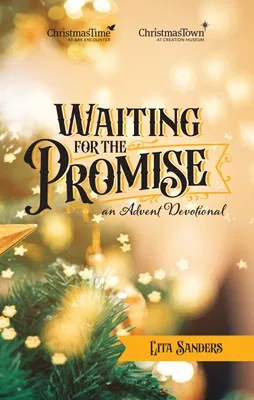
Waiting for the Promise from Answers in Genesis. “As you reflect through this devotional on the promises of God for 4,000 years before the birth of Christ, be reminded of his great love for you that he would send his only Son to offer salvation for sinners!”💰(Free sample chapters available)
What’s your favorite Advent resource?
1I do not endorse anything on any of these sites nor any of these creators who deviate from Scripture or conflict with my beliefs as outlined in the “Welcome” or “Statement of Faith” tabs at the top of this page.
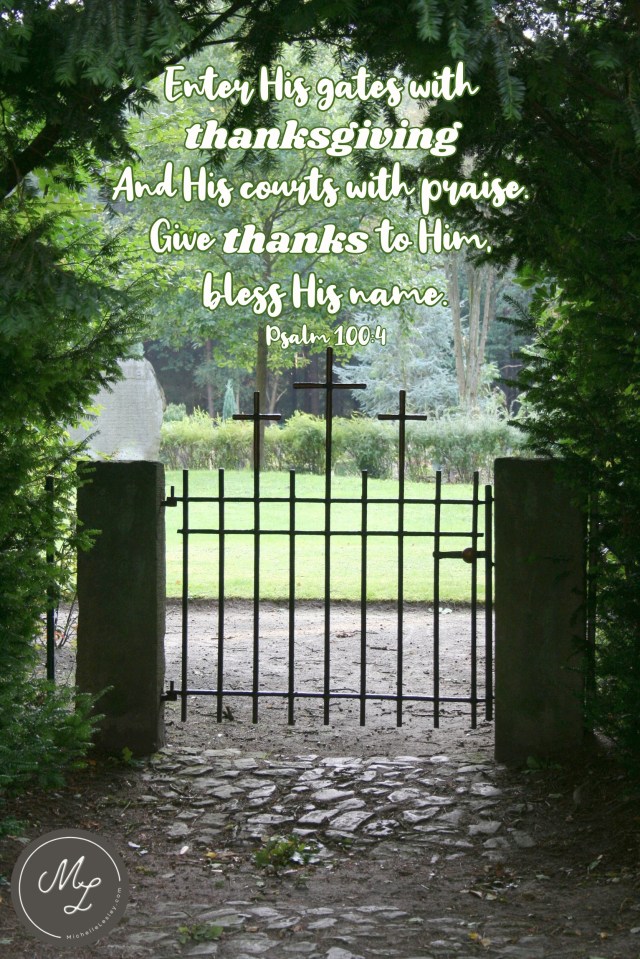
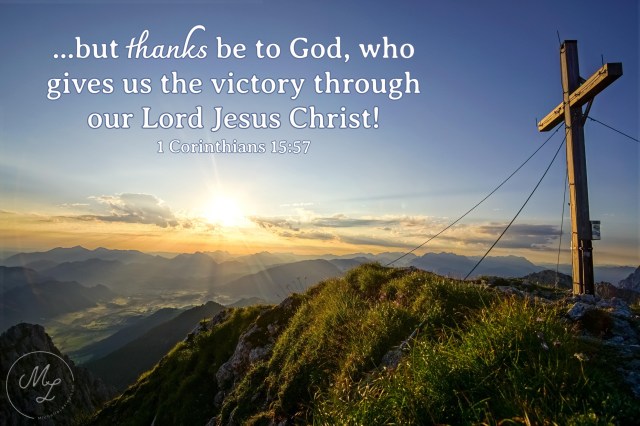
Next to Easter and Christmas, there’s no better holiday that Christians could celebrate than Thanksgiving. Scripture reminds us over and over that we have a precious Savior and innumerable blessings to thank God for. Here are ten of my favorite Bible verses about giving thanks. Feel free to share them around on social media or print them out to use in your Thanksgiving decor…
As place cards at the dinner table.
As tags on goody bags
Print out two copies of each, scramble them up face down, and let the kids play “Concentration” or “Memory” with them. (Each player takes turns flipping over two at a time until they find two that match.)
Have one person read part of his verse and see who can finish it. Or read the whole verse and see who can guess the reference.
I recently received the kindest e-mail from a sweet lady at a movie subscription service – sort of a “family-friendly” version of Netflix – asking me to write an article pointing my readers to the movie subscription service (hereafter: “MSS”) as a resource for whatever issue I was addressing in the article:
“I am hoping to hear your advice on some ways to relay valuable lessons to others in a post on your page. Maybe you have used a book or a movie to help someone better understand how to deal with bullying. Or maybe you have used parables from the Bible to demonstrate how to deal with a tough situation. We would love our movies to be a resource for your readers to utilize as a tool, since we have many relevant Christian movies and shows.”
This is a brilliant and creative marketing/publicity strategy, and I really admire whoever it was at the MSS who came up with and implemented this idea. It’s grassroots, it reaches their target audience, they get to harness the creativity and energy of the bloggers they contact, and it’s free. Very smart.
Nice people, smart marketing, a variety of attractive products, the desire to help others, a company built on wholesome morality- what’s not to endorse, right? And if they were selling hand cream or light bulbs or waffle irons, I’d agree.
The thing is, when you sell something, that product is supposed to correctly fill a need your potential customers have. You sell hand cream to people with dry hands, light bulbs to people wondering why they’re sitting around in the dark, and waffle irons to people who want to enjoy breakfast in their jammies rather than driving across town to IHOP.
But this MSS is not selling you the right tool for your problem. Though I’m sure they have the noblest of intentions, they’re attempting to sell you a waffle iron to rake your yard with: movies as theology.
Though I’m sure they have the noblest of intentions, they’re attempting to sell you a waffle iron to rake your yard with: movies as theology.
I like movies. I watch them all the time with my family (at home- have you seen the price of a movie ticket lately?!?!). But movies are for leisure time fun and entertainment, not for proper instruction on how to live a godly life or the way to solve personal problems, and certainly not for what to believe about God, as we’ve recently seen with The Shack debacle. When Christians have issues, questions, and problems, we don’t go to the movies, we go to the Bible.
When Christians have issues, questions, and problems, we don’t go to the movies, we go to the Bible.
God’s word is the primary source document for Christians. It is the authority that governs our thoughts, words, and deeds. It is the sufficient answer to any question we might have about life and godliness. Above any other advice, instruction, help, or input, we need the Bible, and we can rest assured that its counsel is always right and trustworthy since its words come straight from the lips of God.
But just for the sake of argument, let’s try it the MSS’s way. Let’s say you do have the problem of being bullied. And let’s say this MSS has a good movie about a character in similar life circumstances to yours who overcomes being bullied. So you watch it, hoping to get some advice on how to handle your own problem. You’re a Christian, so, by definition, you want to address the situation without sinning, in a way that pleases God, and, hopefully, in a way that is conducive to sharing the gospel with the bully.
How do you know whether or not the character in the movie overcame her bullying problem in a godly way? That’s right- you have to open your Bible, study it, and compare what she did in the movie with rightly handled, in context Scripture. So why not just go straight to the Source and spend the hour and a half you invested in the movie studying Scripture instead?
Another issue with watching movies to learn how to solve your problems or teach you how to live rightly is that doing so subtly trains you in poor hermeneutics. It trains you to follow the example of a character who is just as broken, sinful, and unwise as you are instead of looking directly to the perfect, holy, infallible instruction of God Himself. Which is often the way people incorrectly read the Bible.
As I’ve previously mentioned, there are two main types of Scripture: descriptive and prescriptive. Like a movie, descriptive passages describe something that happened: Noah built an ark. Esther became queen. Paul got shipwrecked. These passages simply tell us what happened to somebody. Prescriptive passages are commands or statements to obey. Don’t lie. Share the gospel. Forgive others.
If we wanted to know how to have a godly marriage, for example, we would look at passages like Ephesians 5:22-33, 1 Corinthians 7, and Exodus 20:14,17. These are all passages that clearly tell us what to do and what not to do in order to have a godly marriage.
What we would not do is look at David’s and Solomon’s lives and conclude that polygamy is God’s design for marriage. We would not read about Hosea and assume that God wants Christian men to marry prostitutes. We would not read the story of the woman at the well and think that being married five times and then shacking up with number six is OK with Jesus. All of which is the same reason we should not be watching movies – even “Christian” movies – as a resource for godly living.
“But,” the kind MSS lady would probably reassure me, “our MSS also has non-fiction videos of pastors and Bible teachers that could be helpful.” And indeed they do. There are a handful of documentaries on missionaries, some of the Reformers, current moral and societal issues, and Bible teaching that look like they could be solid. The problem is, they’re mixed in with the likes of Joyce Meyer, John Hagee, Henri Nouwen, Greg Laurie, a plethora of Catholic leaders, and even those who don’t claim to be Christians like Betty White, Frank Sinatra, and Liberace. The few videos with good teaching are combined with many that teach worldly ideas, signs and wonders, mysticism, Bible “codes” and “secrets,” false prophecy, faulty eschatology, and other false doctrine.
It’s a great example of why God tells Christians we’re not to receive false teachers nor to partner with them, as, sadly, this MSS has chosen to do. Mixing biblical truth with false teaching confuses people. A little leaven leavens the whole lump.
When a little bit of truth is mixed in with the false, how are we to know which is which? We have to do exactly what the Bereans did with Paul- examine the teachings against Scripture, accept what matches up and reject what doesn’t. Again, why spend the time and confusion searching for, hoping you’ve found, and watching a video you’re not sure will teach you biblical truth when you could simply pick up your Bible, study it, and confidently believe what God says about the issue instead?
There are some good, clean movies on this MSS that would make for an enjoyable evening of family fun, and there’s certainly nothing wrong with that. But for instruction in holy living and resolving the dilemmas of life in a godly way, we need to use the right tool for the job: the Bible.
Well, here we go again. Another child claims to have taken another trip to Heaven complete with another face to face conversation with Jesus. Oh, and the child’s mother has written a book about it which prosperity pimp, T.D. Jakes, has optioned for his second unbiblical “I went to Heaven” movie. (Heaven is for Real was the first one.)
The gist of the story is that this sweet little girl, Annabel, was climbing a tree when a branch broke, causing her to fall head first, thirty feet into a hollow tree, where she was stuck for five hours. It’s unclear from the reports I’ve read whether this was actually a near death experience, the reports mentioning only that she was “unconscious” at some point (this is when she supposedly “went to Heaven”), and that she was rescued without injury. Additionally, Annabel had suffered for years with a very serious intenstinal disease, and after her accident, became asymptomatic.
These are nice people. Sincere people. The kind of people I’d probably be friends with if they went to my church.
And they have nicely, sincerely, and with the best of intentions fallen into what I think is the number one theological error facing Christian women today, namely, believing and trusting in human experience over God’s Word.
It’s perhaps the number one theological error facing Christian women today: believing and trusting in human experience over God’s Word.
Now, I don’t doubt the facts of this story: that Annabel had a dangerous and frightening accident, that she lost consciousness and had some sort of experience before awakening, that she had a serious intestinal disease, and that, in God’s perfect timing, He chose to heal Annabel shortly after this tree accident.
And the reason I don’t doubt any of that is that it is all based in verifiable fact (unless someone comes forward with documented evidence to the contrary) and none of it conflicts with God’s Word.
But an actual “trip to Heaven”? That’s not based in verifiable fact and it does conflict with God’s Word.
If you feel upset with me right now for saying that, I’d like to ask you to examine why that is. Why are you upset? On what do you base your belief that this child (or anyone else outside of documented cases in Scripture) has actually made a real trip to Heaven and come back to tell about it? Her say so? This child was nine years old when this happened. Nine. Colton Burpo (Heaven is for Real) was three. Alex Malarkey (The Boy Who Came Back from Heaven– which Alex has been recanting for years) was six.
Have you ever spent any time talking to a nine year old, a six year old, a three year old? A lot of them will tell you they believe in Santa Claus and the tooth fairy, or that they have an imaginary friend, or that they’re a super hero. They’re very sincere and they aren’t lying, but they’re also very wrong because their beliefs are not based in fact and are strongly influenced by their immaturity. So why are we so quick to believe, based solely on their own say so, that the experiences these children had while unconscious were actual trips to Heaven?
For the same reason we love chick flicks and fairy tales and Hallmark movies, ladies. These stories appeal to our emotions. They make us feel good just like a rich piece of chocolate on a stressful day. And when you slap the “God” label on a story of childlike wonder coming out of a nice Christian family, our belief not only makes us feel good, we also feel justified in believing the story.
And God’s word says that kind of mindset is not for strong, discerning, godly women, it’s for weak women.
But understand this, that in the last days there will come times of difficulty. For people will be lovers of self, lovers of money, proud, arrogant, abusive, disobedient to their parents, ungrateful, unholy, heartless, unappeasable, slanderous, without self-control, brutal, not loving good, treacherous, reckless, swollen with conceit, lovers of pleasure rather than lovers of God, having the appearance of godliness, but denying its power. Avoid such people. For among them are those who creep into households and capture weak women, burdened with sins andled astray by various passions, always learning and never able to arrive at a knowledge of the truth.
2 Timothy 3:1-7
When we hold these “I went to Heaven” experiences (whether from children or adults) up to the light of Scripture, they crumble, from Hebrews 9:27, to the descriptions of God, Jesus, and Heaven that clearly contradict Scripture (and contradict the descriptions from other people who supposedly went to Heaven and came back), to the sufficiency of Scripture, to the stark difference between Paul’s and John’s scripturally verified trips to Heaven and the trips supposedly being taken today (interestingly, Paul was stricken with a “thorn” after his trip to Heaven “to keep me from becoming conceited because of the surpassing greatness of the revelations” while Annabel’s healing is being offered, in a whirlwind of publicity events, as proof that she went to Heaven), to the fact that the Bible doesn’t say anywhere that this kind of spiritual experience is valid or appropriate for Christians today.
The people who claim to have gone to Heaven had some sort of experience while unconscious, no doubt, but if they say that experience was an actual trip to Heaven, they are either mistaken or lying. It could have been a dream, a hallucination, an experience initiated by demons (let’s not forget that Satan was once an angel and continues to disguise himself as an angel of light), or a lie they’ve concocted, as was the case with Alex Malarkey. Yet, for some reason, Christian women, who, if asked point blank, would say that they believe the Bible is our ultimate authority for Christian belief, plunk down money for these books, movies, and other accessories, and eat these stories up with a spoon without ever engaging their brains and checking these supposed eyewitness accounts of Heaven against Scripture.
For some reason, women who would *say* they believe the Bible is our ultimate authority, eat these stories up with a spoon without ever engaging their brains and checking these supposed eyewitness accounts against Scripture.
But “heavenly tourism” stories aren’t the only area in which we’re choosing to believe someone’s experience over Scripture.
Do you follow someone like Joyce Meyer, Beth Moore, Priscilla Shirer, Christine Caine, Lysa TerKeurst, or Paula White? These women all say that God “called” them to do what they do, which includes preaching to and instructing men in the church setting. Do you believe them when they say God “called” them? If so, you’re believing their supposed experience over the crystal clear Word of God in 1 Timothy 2:11-3:7 (and plenty of other passages) which expressly forbids women from instructing men in the Scriptures or holding authority over men in the church.
And even putting aside the false and unbiblical doctrine these women teach, how many times have you heard one of them begin a sermon or teaching – not by reading God’s word and accurately teaching what the Bible says- but by telling a story about how God ostensibly “spoke” to them, acted in their lives in some way, or sent them a dream or a sign, and then basing their teaching on that experience rather than on God’s word? If you heed that kind of teaching, you’re believing their experience, not God’s Word.
What about when it hits a little closer to home? You know God’s Word says that homosexuality is a sin, but your 20 year old comes home and announces he’s marrying his boyfriend. So you just throw out that part of God’s Word in favor of a happy experience with your son. You defend your right to swear like a sailor despite what God’s Word says to the contrary. You “feel” that it was just fine for you to divorce your husband because you fell out of love with him, even though that’s not a biblically acceptable reason for divorce.
Ladies, if God’s word says it ain’t so, it ain’t so, no matter what you or I or anyone else experiences to the contrary.
Ladies, if God’s Word says it ain’t so, it ain’t so, no matter what you or I or anyone else experiences to the contrary. And it doesn’t matter how real or vivid or intense that experience was or how right or godly it seemed– God’s Word, and God’s Word alone defines reality, truth, existence, right and wrong. And we’d better get with the program and submit to its authority. If not, well, I guess we’ll prove the truth of what Paul said by choosing to be those women he talked about: weak, burdened with sins, led astray by our emotions, and always learning yet never able to arrive at a knowledge of the truth.
God doesn’t want you to be weak. He wants you to be a mighty woman of His word.