Yesterday, I saw several friends and organizations re-posting this article (and others like it) on Facebook. The gist of the article is about teaching the Gettysburg Address to students in a “stand alone” sort of way without teaching that it has anything to do with the Civil War.
As a teacher myself, this seems utterly ridiculous to me. How can students grasp the full meaning, depth, and impact of the Gettysburg Address without knowing the history and events that led up to it, who wrote and delivered it, the people to whom it was delivered, and why it was delivered?
Yes, a few things can be gleaned merely from the text itself, but is that all we want our students to learn about the Gettysburg Address? Are we satisfied for them to merely skim the surface of this document and leave with a superficial (and likely, incorrect) understanding of it, or do we want them to dig in and learn all they can about it?
And then it hit me: What many of us would not abide in the classroom, we embrace in the sanctuary.
What many of us would not abide in the classroom, we embrace in the sanctuary.
Week after week, many Christians sit under pastors and Bible teachers who fail to preach and teach God’s word in context. A verse from one book is thrown in here, a half verse from another passage, there, like so many sprinkles on top of an ice cream sundae.
No mention is made of the historical (pre-Exile or post-Exile?) or cultural (Was this written to Jews or Gentiles?) context of the passage.
Prescriptive (thou shalt/shalt not do X) passages are conflated with descriptive (here’s what happened to this particular guy) passages, leading to confusion over law, grace, and precisely what it is that God wants from us.
Promises that were never meant for 21st century Christians (because they were written only to a specific person/people at a specific time) are ripped away from their intended audience and plastered, bait and switch style, onto you and me. (I’ve always wondered why Jeremiah 29:11 is preached as applying to today’s Christians, but verses such as Jeremiah 29:17-19 are not.)
Pastors and teachers treat individual Bible verses and brief passages as “stand alone” items rather than showing how they fit into the immediate context of the surrounding passage and book, while simultaneously neglecting to show how those Bible tidbits fit into the broader, complete story of the gospel revealed across both Testaments.
Pastors and Bible teachers, myself included (and, believe me, I’ve failed many times in this area, too) are to care for those who sit under our teaching by doing our best to handle God’s word correctly (2 Timothy 2:15) and by preaching and teaching, as Paul put it, “the whole counsel of God” (Acts 20:26-27). May we as teachers not merely skim the surface of God’s word, but proclaim the Truth, the whole Truth, and nothing but the Truth. And may our hearers demand nothing less.
Welcome to our new study, Psalm 119: The Glory of God’s Word!
What does God’s Word teach us about…itself? Weighing in at a hefty 176 verses, Psalm 119 is well known as the longest chapter in the Bible, and is similar in length to Philippians and James. Over the next several weeks as we make our way through this lovely psalm, you’ll learn about loving God’s Word, the reliability of God’s Word, and the various ways Scripture helps us in our daily lives. But most importantly, you’ll learn about and increase in your love for the God of the Word.
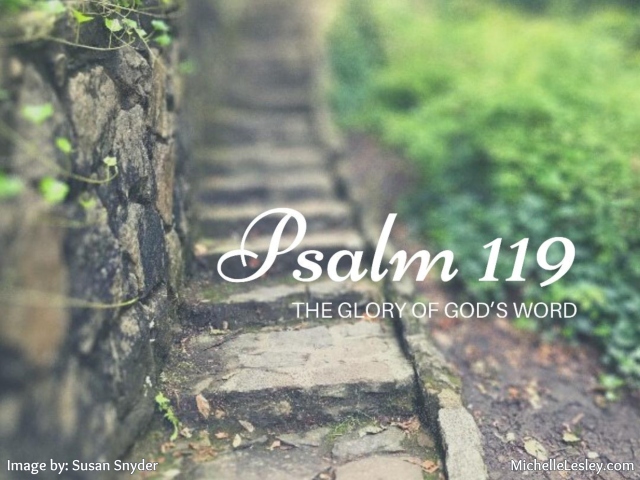
Our lovely title pic for the study was designed by Susan Snyder. The photo is her own, captured in beautiful Greenville, South Carolina. Susan says:
The psalmist loved God’s Word and wanted his life to reflect that love through obedience. The path of God’s commandments is delightful. I thought a nice-looking path might illustrate that thought…
Make me walk in the path of Your commandments, for I delight in it. Psalm 119:35
Many thanks to all of those who worked so hard on your entries for our title pic contest. You ladies were very creative and did some outstanding work!
There were too many entries to share all of them with you, but here are a few “honorable mentions”:
Krista Soroka
Melissa Morris
Renée
Robin Self
Kati Champlin
If you’re new to using my Bible studies, just a few housekeeping items and helpful hints:
The studies I’ve written (you can find all of them at the Bible Studies tab in the blue menu bar at the top of this page) are like “training wheels”. They’re designed to teach you how to study the Bible for yourself and what kinds of questions to ask of the text so that, when you get the hang of it, you won’t have to depend on other people’s books and materials – even mine – any more. To that end, I do not provide answers for the study questions in the studies I’ve written.
My studies are meant to be extremely flexible and self-paced so that you can use them in the way that works best for you. You can do an entire lesson in one day or work on the questions over the course of the week (or longer). You do not need to feel obligated to answer all (or any) of the questions. If the Holy Spirit parks you on one question for several days, enjoy digging deep into that one aspect of the lesson. If He shows you something I haven’t written a question about that captures your attention, dive in and study it! Those are ways the Holy Spirit speaks to us through His Word. This is your time to commune with the Lord, not a school assignment or work project you are beholden to complete in a certain way by a certain deadline.
I will post a new lesson on the blog every Wednesday, so there is nothing to sign up for or commit to. Simply stop by the blog each week, or subscribe to the blog via e-mail to have the lessons delivered to your inbox.
I use hyperlinksliberally. The Scriptures for each lesson will be linked at the beginning of the lesson and in the lesson questions. As you’re reading the lesson, whenever you see a word in a different color text, click on it, and it will take you to a Scripture, article, or other resource that will help as you study.
All of the studies I’ve written are suitable for groups or individuals. You are welcome to use them as a Sunday school or Bible study class curriculum (for free) with proper attribution.
You are also welcome to print out any of my Bible studies (or any article I’ve written) for free and make as many copies as you’d like, again, with proper attribution. I’ve explained more about that in this article (3rd section).
From time to time I receive inquiries from men about using my studies for their personal quiet time or for teaching a co-ed or men’s Bible study class. It is my personal conviction that it is more in keeping with the spirit (though not the letter) of 1 Timothy 2:12, Titus 2:3-5, and related passages for men to use Bible study materials authored by men rather than by women. Therefore, on the honor system, I would request that men please not use my studies for personal use, or when teaching a class with male members. (Vetting the studies for your wife, daughter, or the women of your church, is, of course, fine. Encouraged, actually.)
Introduction to Psalm 119: The Glory of God’s Word
Before we begin studying a book of the Bible, it’s very important that we understand some things about that book. But even though we’re not going to be studying the whole book this time, we still need to know…
Who the author was and anything we might be able to find out about him or his background.
Who the audience of the book is: Jews or Gentiles? Old Testament Israelites or New Testament Christians? This will help us understand the author’s purpose and approach to what he’s writing.
What kind of biblical literature we’re looking at. We approach books of history differently than books of wisdom, books of wisdom differently than books of prophecy, etc.
What the purpose of the book is. Was it written to encourage? Rebuke? Warn?
What the historical backdrop is for the book. Is Israel at war? At peace? In exile? Under a bad king? Good king? Understanding the historical events surrounding a piece of writing help us understand what was written and why it was written.
When the book was written. Where does the book fall on the timeline of biblical history? This is especially important for Old Testament books which are not always arranged in chronological order.
So this week, before we start studying the actual text of Psalm 119, we need to lay the foundation to understanding it by finding the answers to these questions.
Read the following overviews of the book of Psalms, taking notes on anything that might aid your understanding of the book, and, particularly Psalm 119, and answer the questions below:
The Greatness and Glory of God’s Word at Blue Letter Bible (I have vetted only the introduction of this resource, and I would encourage you to stop reading at the end of the introduction rather than continuing on through the commentary. That way you can begin the study of the text of Psalm 119 next week with no pre-conceived notions, ready for the Word of God itself to write on the blank slate of your heart.)
1. Who are some of the authors of Psalms? The author of Psalm 119?
2. Approximately when was Psalms written? What is the geographical setting of the book of Psalms?
3. Who is the original, intended audience of the book of Psalms? Describe the historical setting (historic events, politics, sociology of the time, etc.) of Psalms.
4. Which genre of biblical literature is the book of Psalms: law, history, wisdom, poetry, narrative, epistles, or prophecy/apocalyptic? What does this tell us about the approach we should take when studying from this book versus our approach to books of other genres?
5. What is the theme or purpose of the book of Psalms? Of Psalm 119?
6. What are some ways Psalms and Psalm 119 point to and connect to Jesus?
7. Describe the format and structure of Psalm 119. Why was it written this way?
8. What else did you learn about Psalms or the setting of this book that might help you understand Psalm 119 better?
Take some time in prayer this week to begin preparing your heart for this study. Ask God to grow your love for Him and His Word as we study Psalm 119: The Glory of God’s Word together.
Happy Wednesday, Ladies! It’s time to kick off our next Bible study:
…..with a fun title pic contest!
What does God’s Word teach us about…itself? As we make our way through this lovely psalm, you’ll learn about loving God’s Word, the various ways Scripture helps us in our daily lives, and the reliability of God’s Word. But most importantly, you’ll learn about and increase in your love for the God of the Word.
Weighing in at a hefty 176 verses, Psalm 119 is well known as the longest chapter in the Bible, and is similar in length to Philippians and James. Think you can memorize it? I challenge you to try!
Psalm 119 will be an “expositorially topical” (an expository deep dive into a short segment of Scripture) study, similar to The Sermon on the Mount and The Ten. Over roughly 14 to 18 lessons, we will examine, along with the psalmist, the attributes of the God who breathed out Scripture, and the way He uses Scripture to grow, strengthen, comfort, reassure, and equip us.
But before we get started studying next Wednesday, how about a little fun?
You’ve probably noticed that I design a title picture for each Bible study I write. Here are a few past title pics:
You can see the rest of them at the Bible Studies tab in the blue menu bar at the top of this page, if you like, to get a feel for my style and the general appearance I like my title pics to portray.
Y’all have sent in some beautiful and creative entries in our past title pic contests – indeed, the title pics for The Sermon on the Mount, The Women of Genesis, Living Stones, and Imperishable Beauty were all designed by readers – so, once again, I wanted to get some of you involved in the design process for our new study.
Do you enjoy and have a knack for photo editing? Know someone who does? If so, I’m accepting submissions for title pictures for the Psalm 119 study. If your submission is chosen it will be used each week of the study, and you’ll be credited (name or website) by watermark. I’d love to be able to offer a huge cash prize, but, hey, we’re small potatoes here. This is just for fun and maybe a little publicity for your site, if you have one.
Contest Guidelines
☙You must use images that don’t require attribution. Pictures you’ve taken yourself are fine, as are images from sources such as Pixabay, Pexels, Freely, Unsplash, StockSnap, or other free stock photo web sites. Please include the image source web sites you use along with your submission. (You cannot just grab and use any old picture off the internet. Photographers own their images and usually require permission, attribution, and often a fee, for their use.)
☙Title pics should be landscape (a horizontal rectangle) with a width of 1000-2000 pixels and proportionate height. I prefer JPG images, but PNG is fine, too, if necessary.
☙Your title pic must contain the full title of the study: Psalm 119: The Glory of God’s Word (Be sure to double check your spelling and punctuation. You can leave the colon after 119 out if “Psalm 119” and “The Glory of God’s Word” are not on the same line. See my image above.).
☙If your submission is selected, I’ll be glad to watermark it with your website address (please submit your picture without any watermarks) if you have one, as long as your web site doesn’t conflict with my statement of faith or my beliefs outlined in the Welcome tab.
☙Deadline for submissions is 11:59 p.m., Monday, January 31, 2022.
☙ E-mail your title pic submission along with your full name, web site address (if any), and the source(s) you used for your image(s) to MichelleLesley1@yahoo.com. You are welcome to submit as many images as you like.
☙Please don’t be offended if your submission isn’t selected. If I peruse all the submissions and I’m just not “feeling it,” I may still elect to design one of my own.
☙☙☙☙☙
Feel free to share this around with friends who have an interest in photo editing. If you want to take a whack at it for fun but don’t know where to start, play around with Be Funky, PicMonkey, or Canva and see which one works best for you.
Think about – maybe even read – Psalm 119 and try to capture in your image the theme of the chapter or a key truth expressed by a certain verse.
Sometimes we ladies fall for the mindset that if we’re going to pick up a Bible study book, read a blog, or listen to Bible teaching, it has to be from a female author or teacher. Not so! There are a lot of fantastic, doctrinally sound, male Bible teachers, pastors, and writers out there – far more males than females, actually – and you’ll really be missing out if you limit yourself to women teachers and writers.
I’ve recommended lots of my favorite doctrinally sound teachers at the Recommended Bible Teachers tab in the blue menu bar at the top of this page. Here are some more; and these lists are by no means exhaustive!
IMPORTANT REMINDER: Don’t take my (or anyone else’s) word for it that any ministry, podcast, book, or blog is biblical in its doctrine. You MUST do the work of comparing with Scripture everything you read and hear. If it doesn’t match up with God’s word (in context), chuck it.
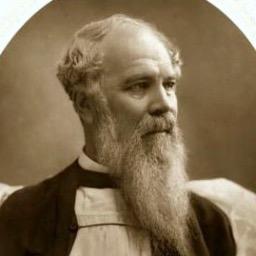
J.C. Ryle – One of my beloved, “old dead guys,” John Charles Ryle (1816-1900) was the first bishop of Liverpool and a 19th century English pastor, known for his solid preaching and defense of the faith. He was a prolific author of tracts and books, often based on his sermons, and he frequently taught on contemporary issues from a biblical worldview. Two of his better known books are Holiness and Practical Religion. My favorite book of Ryle’s, however, is The Duties of Parents. Many of Ryle’s works are available online for free. Download nearly 200 of Ryle’s tracts (booklets), read one of his books or sermons online, or add a volume or two to your library. FacebookTwitter
Conrad Mbewe – A man who wears many hats, Conrad is, first and foremost, pastor of Kabwata Baptist Church in Lusaka, Zambia. Conrad is also editor of Reformation Zambia magazine, Director of International Advancement and lecturer at African Christian University in Zambia (where Voddie Baucham serves as Dean of Theology), writes and preaches extensively, and is a sought after conference speaker. I first became familiar with Conrad when I heard his phenomenal teaching sessions at John MacArthur’s Strange Fire conference. Read Conrad’s blog, A Letter from Kabwata, listen to one of his sermons, or purchase one of his books. FacebookTwitter
Justin Peters – “Justin Peters Ministries is committed to communicating biblical truth through expository preaching and teaching resources designed to deepen the believer’s knowledge of God and, in turn, his love for God.” Justin is a beloved and popular conference speaker, most often on the topic of discernment. He is best known for Clouds Without Water, a seminar designed to educate the church on the history, growth, and danger of the Word of Faith and New Apostolic Reformation heresies. Watch a presentation of Clouds Without Water, order some of Justin’s materials, listen to his sermons, or subscribe to Justin’s podcast on YouTube or your favorite podcast platform. Facebook
Gabriel Hughes– Gabe serves as Associate Pastor of First Baptist Church, Lindale, Texas. An excellent writer, Gabe blogs on discernment and contemporary issues, but he is probably best known for his 90 second WWUTT (When We Understand the Text) videos which address a variety of biblical topics. Gabe also hosts the WWUTT podcast, a helpful daily study in the Word of God. You can watch WWUTT videos, download WWUTT podcasts, purchase Gabe’s books, and more, at the WWUTT website. FacebookTwitter
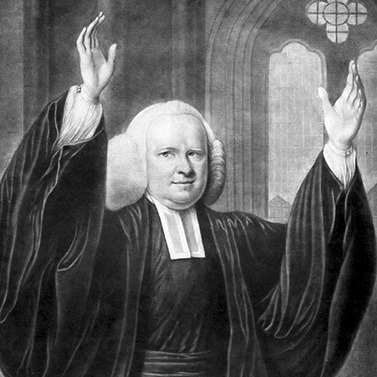
George Whitefield– George Whitefield (1714-1770) was a minister in the Church of England and, along with the Wesley brothers, was one of the founders and leaders of Methodism. Whitefield’s zeal for evangelism led him outside the four walls of the church, and it was not unusual to find him preaching to thousands and even tens of thousands in fields along the English countryside. Whitefield was also a well-known itinerant preacher and evangelist in the United States, and was an integral part of the Great Awakening. Many of Whitefield’s works are available on line including his sermons and tracts. I thoroughly enjoyed this brief biography of Whitefield by the aforementioned J.C. Ryle, and you’ll definitely want to get a hold of Steve Lawson’s book on Whitefield. FacebookTwitter
Nate Pickowicz – A heart for New England and a mind for the Puritans, Nate is the pastor of Harvest Bible Church in Gilmanton Iron Works, New Hampshire. He has authored and edited several books, including R.C. Sproul: Defender of the Reformed Faith,Reviving New England, Why We’re Protestant, and How to Eat Your Bible, an introduction to studying God’s Word, complete with a Bible reading plan Nate designed. Check out Nate’s books and articles, and give his sermons a listen. FacebookTwitterInstagram
Owen Strachan – Owen is Provost and Research Professor of Theology at Grace Bible Theological Seminary in Conway, Arkansas, and former president of the Council on Biblical Manhood & Womanhood (CBMW). Owen has authored and contributed to a truckload of books and journals on subjects as varied as biblical sexuality, Jonathan Edwards, and social justice. He also writes about theological issues and events at To Reenchant the World. Not just a sharp writer, Owen is also an articulate speaker, hosting his own podcast, The Antithesis, and speaking often at conferences. Listen in to the podcast, and check out Owen’s books. FacebookTwitterInstagram
Scott Aniol– Scott is “Executive Vice President and Editor-in-chief of G3 Ministries and Professor of Pastoral Theology at Grace Bible Theological Seminary. He is a teacher of culture, worship, aesthetics, and church ministry philosophy, he lectures around the country in churches, conferences, colleges, and seminaries, and he has authored several books and dozens of articles.” Scott’s heart for biblical worship -in the church and in the family – is clear in all of his ministry endeavors. Check out his podcast, By the Waters of Babylon, his books and other media, Religious Affections Ministries, and his G3 blog, By the Waters of Babylon. FacebookTwitterInstagram
You can always find these – and more great Christian men and women to follow – at the Recommended Bible Teachers tab in the blue menu bar at the top of this page.
Hi ladies! I hope you’re looking forward to our next new Bible study as much as I am. I’m in the middle of my second time through the text we’ll be studying, and I can hardly wait to introduce it to you! I think you’ll enjoy it and that it will edify you as you seek to grow in Christ and His Word. (The picture above does not mean we will be studying James. :0) Stay tuned to start soon, and keep an eye on the blog on Wednesdays.
In the meantime, I’ll be posting some Bible study articles and lessons from the archives that I think you’ll find helpful as we make our way toward our next study. (This week’s lesson is actually not from the archives, it’s new, but the Wednesday’s Word study {see below} it’s now part of is from the archives. Apparently, when I originally wrote the WW series, I took a break somewhere in the middle to write my Bible study on the book of 1 John, and I never went back and wrote a stand alone lesson from 1 John for the WW series. So I’ve remedied that with the lesson published today. Clear as mud, right? :0)
Here is this week’s lesson:
Wednesday’s Word
Wednesday is Bible study day here on the blog. In my Wednesday’s Word Bible study series you’ll find miscellaneous, one lesson Bible studies from each book of the Bible. One chapter of Scripture followed by study questions. This sampler series demonstrates that there’s nothing to be afraid of when approaching those “lesser known” books and that every book of the Bible is valuable and worth studying.
Beloved, do not believe every spirit, but test the spirits to see whether they are from God, for many false prophets have gone out into the world. 2 By this you know the Spirit of God: every spirit that confesses that Jesus Christ has come in the flesh is from God, 3 and every spirit that does not confess Jesus is not from God. This is the spirit of the antichrist, which you heard was coming and now is in the world already…Continue reading..