Basic Training

Basic Training: Baptism

For more in the Basic Training series, click here.
Baptism can be a very controversial topic, especially when Christians who passionately hold differing views get together to discuss it. So, just a few parameters and caveats before we dive in:

💧 I am convinced from Scripture that credo baptism (Believer’s baptism by full immersion) is the biblical understanding and method of baptism, so this is the view I will be presenting. I will not be argued out of this view and I don’t publish attacking comments. (Just trying to save you some time if you’re thinking of commenting in either of those veins.)

💧 I’m not going to attempt to present an explanation of any view of baptism other than my own. I prefer to leave that to others who hold those views, are more knowledgeable about them, and can present them better than I can. Please see the “Additional Resources” section at the end of this article.

💧 With the exception of baptismal regeneration, baptism is a secondary issue in biblical Christianity. It’s an important ordinance of the church, but should not preclude fellowship and cooperation between doctrinally sound Christians whose views differ.

💧 This article is a very general overview (this article series is called “Basic Training”) of baptism. I’m not attempting to cover every nuance of the topic. For more details about what your own church teaches about baptism, I encourage you to chat with your pastor or elders.


What is baptism? Why is it so important for Christians? What does getting wet have to do with being born again? There are lots of important things to understand about baptism.

The Bible on Baptism

When we want to learn about baptism, the first and best place to go is Scripture. Below are just a few of the passages that teach about baptism. (You can – and should – find and read more by searching baptize or baptism in a good concordance.) As you search the Scriptures on baptism, be sure to read them in context and ask these questions of the text: Who should be baptized? Why should someone be baptized? What is the meaning and significance of baptism? When should someone be baptized? How should someone be baptized?

Then Jesus came from Galilee to the Jordan to John, to be baptized by him. John would have prevented him, saying, “I need to be baptized by you, and do you come to me?” But Jesus answered him, “Let it be so now, for thus it is fitting for us to fulfill all righteousness.” Then he consented. And when Jesus was baptized, immediately he went up from the water, and behold, the heavens were opened to him, and he saw the Spirit of God descending like a dove and coming to rest on him; and behold, a voice from heaven said, “This is my beloved Son, with whom I am well pleased.”
Matthew 3:13-17

Go therefore and make disciples of all nations, baptizing them in the name of the Father and of the Son and of the Holy Spirit,
Matthew 28:19

And Paul said, “John baptized with the baptism of repentance, telling the people to believe in the one who was to come after him, that is, Jesus.” On hearing this, they were baptized in the name of the Lord Jesus.
Acts 19:4-5 

So those who received his word were baptized, and there were added that day about three thousand souls.
Acts 2:41

Then he brought them out and said, “Sirs, what must I do to be saved?” And they said, “Believe in the Lord Jesus, and you will be saved, you and your household.” And they spoke the word of the Lord to him and to all who were in his house. And he took them the same hour of the night and washed their wounds; and he was baptized at once, he and all his family.
Acts 16:30-33

But when they believed Philip as he preached good news about the kingdom of God and the name of Jesus Christ, they were baptized, both men and women.
Acts 8:12

Do you not know that all of us who have been baptized into Christ Jesus were baptized into his death? We were buried therefore with him by baptism into death, in order that, just as Christ was raised from the dead by the glory of the Father, we too might walk in newness of life.
Romans 6:3-4

Church Mindsets and Modes

Different churches and denominations have differing beliefs about water baptism and perform it in different ways. The two most common theological approaches to baptism are paedo baptism (infant baptism) and credo baptism (“Believer’s baptism”- being baptized after you’ve publicly confessed Christ as Savior). Baptism may be administered by sprinkling (“aspersion”), pouring (“affusion”), or immersion (dunking someone partially or completely under the water in a baptistry or other body of water).

Baptism by full immersion symbolizes Christ’s death, burial (going down into the water) and resurrection (coming up out of the water), as well as what has happened in the heart of someone who has been born again: we die to sin and are resurrected as new creatures in Christ. This is why you’ll often hear Baptist pastors say “buried with Christ in baptism” (as they immerse the person) “raised to walk in newness of life” (as they raise the person out of the water). Baptism by immersion is a visual picture of the gospel.

This is what a typical Baptist baptism (credo baptism by full immersion) looks and sounds like:

Why Get Baptized?

Much like saying the Pledge or belting out the Star Spangled Banner (although infinitely more significant and sacred) baptism is the way we publicly and unashamedly proclaim our salvation and allegiance to Christ and our intention to obediently follow Him. In the United States today, that may not seem so daring, but in New Testament times (as well as in many countries today where Christians are brutally persecuted), to be baptized was often to take a dangerous – even subversive – stand of loyalty to Christ.

Baptism is also our “initiation” into church membership – a statement that we wish to join ourselves to the church at large and to a local body of Believers. Many churches require that a person be baptized (or has previously been baptized into a church with biblical soteriology, or a church of the same denomination) before inviting that person into membership. Because baptism is a public declaration that one is a Believer, baptism is usually also a prerequisite for partaking of the Lord’s Supper (which should only be partaken of by Believers).

Every born again Believer should publicly declare her loyalty to Christ, her intention to follow Him obediently, and her identification with the local church by obeying Scripture’s command (see above) to be baptized. Baptism is neither optional nor trivial for Christians, and the New Testament knows nothing of unbaptized Believers. If you’re saved and reluctant to be baptized, examine your heart as to why this is the case, and talk to your pastor about it.

Why NOT Get Baptized?

💧 Don’t get baptized because you think it will save you, make you right with God, forgive your sins, or send you to Heaven. Baptism does not save anyone; the water doesn’t have any magic, holy, or salvific properties. Salvation is by grace alone, through faith alone, in Christ alone. 

💧 Don’t get baptized just to become a member of a particular church. Your motivation for getting baptized should be obedience and loyalty to Christ. Church membership is secondary.

💧 Don’t get baptized just because everybody else is doing it, because someone is pressuring you to, or in order to please someone. Baptism is your personal declaration of faith in Christ. It should be something you want to do to in your walk with the Lord.

💧 Don’t think you need to get re-baptized every time you sin. That’s what repentance is for. Unless you come to the realization that you weren’t saved the first time you were baptized, baptism is a “one and done” thing just like salvation is.

💧 Don’t get baptized if you aren’t saved. Baptism is for people who are already saved.

Trinitarian Baptism

Excerpted from Basic Training: The Great Commission

“Baptizing them in the name of the Father and of the Son and of the Holy Spirit” (Matthew 28:19b)

After salvation, baptism is the first step a new Christian takes on the road of discipleship. It is not optional. Baptism publicly identifies a person – to the church and to the world – as a Christian, and is a personal pledge to follow Christ obediently all the days of one’s life.

Being baptized “in the name of the Father and of the Son and of the Holy Spirit” carries several layers of meaning.

💧Again, pay careful attention to the language in this phrase. Jesus does not say “in the nameS” – plural. He says, “in the name” – singular. This is a boldly Trinitarian statement directly from two of its members: Jesus, who spoke these words to the disciples, and the Holy Spirit, who breathed them out through the pen of Matthew. This is God Himself telling us who He is. Jesus spoke these words to good Jewish boys who were born and bred on the shema: “Hear, O Israel: The Lord our God, the Lord is one.” There was to be no confusion for new Believers back then, Believers today, or to the onlooking world, as to who these Christians are following. They are not following three different gods. They are following the one true God in three Persons: God the Father, God the Son, and God the Holy Spirit – the whole ball of wax.

💧Names meant far more in biblical times than they do to us today. We see God changing people’s names – Abram to Abraham, Jacob to Israel, Simon to Peter, etc. – when He commissioned them for a new mission or phase of life. Being baptized “in the name of” the Father, Son, and Holy Spirit echoes that tradition of God changing people’s names. You are no longer your own, you are Christ’s. You are no longer “Sinner”, you are “Saint”. You no longer go forth in your own name, but in the name of the Father, Son, and Holy Spirit as their emissary, endowed with the power and authority of God to live for Him and to proclaim the gospel to a lost and dying world.

💧Because Christians are, by definition, Trinitarians, and because baptizing a Believer is commissioning her to go forth into the world as a representative of Christ, it’s appropriate for pastors to take this verse literally when performing a baptism and verbalize its words: “I baptize you in the name of the Father, and of the Son, and of the Holy Spirit.”

Who Should Perform Baptisms?

Excerpted from The Mailbag: Is it biblical for women
to carry out The Great Commission?

When it comes to teaching inside the church, we have clear, prescriptive passages that specifically tell us what women are not to do. With evangelism, we also have clear commands in The Great Commission, and elsewhere, that disciples of Christ are to share the gospel.

But when it comes to baptism, we don’t have a clear “this or that person should or should not perform baptisms” passage, so we need to look at the principles and precedents surrounding baptism.

The people specifically named as personally performing baptisms in the New Testament were John the Baptist (who baptized Jesus), the twelve apostlesPhilip the EvangelistPaul and/or Silas, and Paul. All of these were men, and all held pastoral or pastoral/elder-type formal leadership positions in the embryonic or infancy stages of the church. All of them were commissioned, ordained, or set apart to their positions by GodJesus, or the church. We do not see any New Testament instances of random church members – male or female – performing baptisms, only those in positions of church leadership.

Additionally, baptism is a formal, official, consecrated ordinance of the church, not a casual, personal, relational activity between individuals, friends, or loved ones. It should no more be administered by any church member who wants to do it than the Lord’s Supper should be. Both ordinances should be administered by an ordained pastor or elder of the church. That leaves out women as well as most men. Does the responsibility of pastors to baptize mean that men who aren’t pastors shouldn’t carry out the Great Commission? Of course not. We – men and women – share the gospel with someone, and if that person gets saved, part of our responsibility is to do what we can to get him plugged in to a local church where a pastor can baptize him. We don’t have to baptize him ourselves in order to be fulfilling The Great Commission.

💧💧💧💧💧

Baptism should be every Christian’s joyful celebration of his or her new life in Christ. Jesus was baptized. Jesus instructs His followers to be baptized. In baptism, we both follow Jesus’ example and obey His command. If you’re a born again Believer who’s never been baptized, what are you waiting for?


Additional Resources:

I would strongly encourage you to listen to this excellent sermon on baptism by Jim Osman, and his subsequent discussion on baptism with Justin Peters.

Understanding Baptism by John MacArthur

Waters That Unite: Five Truths About Water Baptism by David Schrock

What is the importance of Christian baptism? at Got Questions

Baptism at Theopedia

A Closer Look at Baptism by Bill Gordon (An overview of the Southern Baptist view of credo baptism by immersion.)

Going Public: Why Baptism is Required for Church Membership by Bobby Jamieson

Baptism at Christian Apologetics Research Ministry

A Review of Justin Peters’ “Do Not Hinder Them”

Explaining Baptism in Children’s Language at Reformed Answers (A simple explanation of the Reformed/Presbyterian view of covenental paedo baptism.)

Biblical Case for the Lutheran Doctrine of Baptism by Chris Rosebrough

A United Methodist Understanding of Baptism by The United Methodist Church

Does Baptism Save? with Keith Foskey and Jeremiah Nortier (A refutation of the heresy of baptismal regeneration found in the Church of Christ {denomination of the Robertson Family of Duck Dynasty}. Also explains the difference between baptismal regeneration and the Lutheran view of baptism.)
Book Reviews

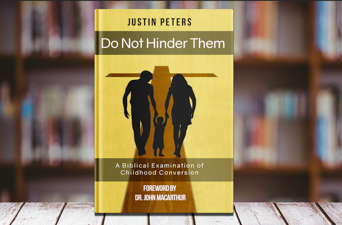
A Review of Justin Peters’ “Do Not Hinder Them”

As I’ve mentioned before, solicited book reviews are not part of my regular repertoire here at the blog. In fact, for a variety of reasons, I have a policy against writing them.

But when one of your heroes in the faith asks, you make an exception. And, for me, Justin Peters is one of those heroes in the faith (even more so because I’m sure he wouldn’t want me calling him that).

I introduced Justin this way in my article, A Few MORE Good Men: 10 Doctrinally Sound Male Teachers:

Justin Peters Ministries exists to preach the Gospel of Jesus Christ to the lost and to help equip the saved to ‘speak the truth in love’ (Ephesians 4:15). Great care is taken to preach and teach God’s Word in its proper context and simply let the text speak for itself.”

The first thing I ever noticed about Justin Peters is his striking example of biblical meekness. Justin is soft-spoken and peaceable, but firm in his gospel convictions and aflame with the desire for the lost to come to salvation. You must read Justin’s testimony of coming to know Christ after years in seminary and ministry as a false convert. What Justin is perhaps best known for is his teaching and discernment ministry exposing the Word of Faith movement. It started with a trip to a faith healer as a teen to have his own cerebral palsy healed and grew into Clouds Without Water, a seminar designed to educate the church on the history, growth, and metastasization of the Word of Faith heresy.

But Justin doesn’t limit himself to discernment ministry, and his new book, Do Not Hinder Them: A Biblical Examination of Childhood Conversion, opens the door to another of his theological interests- salvation and baptism, especially as they pertain to children.

A simple, yet fundamental, point of theology which needs to be understood in order to grasp the concept of the book is the difference between credo-baptism and paedo-baptism. Credo-baptism is also called “believer’s baptism.” This means that a new believer stands before the church, professes her faith in Christ, and is then baptized out of obedience to Him- to demonstrate that she has passed from death unto life and now wishes to be identified as a follower of Christ. Credo-baptists believe strongly that baptism is only to be administered to professing believers.

Paedo-baptism is infant baptism. It is administered to all babies and children (by definition, unable to profess faith in Christ) by a number of Protestant denominations as a symbol that a child has been born into a covenant (believing) family who will raise her in the nurture and admonition of the Lord and the knowledge of the gospel.

There’s an angst that Bible believing credo-baptist parents often experience, which, undoubtedly, is foreign to paedo-baptist parents:

My young child has come to me claiming to have asked Jesus into her heart and wants to be baptized. How can I tell if she’s really saved and that it’s right for her to be baptized at this age?

It’s a long standing dilemma for Southern Baptists like Justin…and me. My mother happened to mention in passing a few years ago that I had begged to be baptized when I was about six. It made sense because that’s about the time all of my little friends were being baptized, but, I was very surprised to hear this story because, as an adult, I had no recollection of it whatsoever, and I can guarantee you I wasn’t saved at the time. My parents wisely said no.

As parents ourselves, my husband and I have faced the same struggle. Five of our six children were baptized as young children. One is not currently walking with the Lord and two of them were re-baptized later at their own request when they realized they had not been saved the first go round.

This is the central issue Justin tackles in Do Not Hinder Them.

But don’t be fooled by the title of the book. While it’s a must read for Christian parents, pastors, and those who work in children’s ministry, you also need to read this book if…

…you’ve ever wondered if you’re really saved.
…you’re wondering if that loved one (of any age) who claims to be a Christian is really saved.
…you’re a paedo-baptist wanting to get a better grip on credo-baptist beliefs and struggles
…you’re brand new to the study of theology and are looking for a resource that will easily help you to “dip a toe in the water” (so to speak)

In other words, though Justin addresses the issue of genuine conversion as it applies to children seeking baptism, the question of “How can I know if I/my loved one is really saved?” is one we all face at some point in our walk with Christ. So, while there may be a few parts of this book that don’t apply if you’re not a pastor, children’s ministry worker, or parent, most of it is helpful for every Christian.

One of the foundational issues Justin cites as having gotten us into the muck and mire of baptizing unregenerate children, only to have them “walk away” from the Lord (though, indeed, they were never saved in the first place) as teens or young adults – sullying the name of Christ and His church – or to seek a second baptism once they realize they were unsaved the first time, is the fact that we have so watered down the gospel and the soteriology our churches subscribe to and practice. “Getting saved” has been reduced to parroting a sinner’s prayer, or mental assent to a simplistic set of facts that even the demons believe. There is little to no presentation of sin and rebellion, guilt before a holy God, God’s wrath toward the sinner, and the eternal punishment of sin. And when was the last time you heard a pastor urge someone contemplating following Jesus to count the cost of being His disciple? Instead, it’s, “Don’t you want to go to Heaven when you die?” or “Just believe A, B, and C, and you’re saved!” or “God loves you and has a wonderful plan for your life!” Rarely are young children mature enough in their thinking to be able to grasp the true nature and meaning of why they need a Savior and what repentance, regeneration, and discipleship really entail.

And that’s largely our fault. As Christian parents, we understandably want our children “in,” safe from an eternity in Hell. So we make it as easy as possible for them to complete the transaction. Instead of raising our children up to understand and attain to the high bar of the demands of the gospel, we lower the bar so far that even the youngest child can toddle right over it. In the end, the problem is not that we’re baptizing unsaved babes as our paedo-baptist brothers and sisters do, but that we’re presenting a false gospel that creates false converts who hang their eternity on having repeated a prayer and passed through the baptistry.

The second key issue Justin says has contributed to the epidemic of baptizing unregenerate children is the fact that we base our decision to baptize them solely on their verbal profession of faith rather than on the fruit of a changed life.

I remember all too well the worry over my own small children’s salvation in this regard. How could I tell if they were really saved or not? They had been in church and raised in a Christian home all their lives- they knew all the right answers to give when we questioned them about their salvation experiences.

As Justin wisely points out, this is often the case with “church kids.” They know how to repeat back what they’ve learned in Sunday School, and, because they’ve been raised in a godly atmosphere, they’re likely already good kids, outwardly behaving in what looks like a Christlike way. When they come to us and say, “I’ve asked Jesus into my heart,” how can we tell if it’s genuine saving faith?

Most of the time, the answer is- we can’t. Until, that is, that faith has been tested and their testimony proven true through the refining process of trial, temptation, and persecution. Until he is able to bear fruit in keeping with the repentance he claims. Does your child freely choose obedience to Christ over giving in to temptation? Does he cling to Christ during times of difficulty? Does he visibly stand for Christ when ridiculed for doing so by his peers? What five year old even faces such situations?

And that’s precisely Justin’s point. We rush our children through the baptismal waters as soon as they claim to have received Christ rather than waiting to see their faith prove out over the ensuing years. Your five year won’t face the temptation to use drugs or engage in sex. But your teenager will. It’s unlikely a gang of kindergartners will surround your child and mock his belief in Christ and biblical values. Sophomores and juniors do so gleefully. How does your young adult, who claims to be born again, handle these types of situations? When it’s his choice, not yours, does he consistently and unrepentantly go along with the worldly crowd or does he bear up and walk faithfully with Christ? Justin suggests, and I can’t help but agree, that the testing of our children’s faith that comes with age and independence, and the fruits of Christlikeness they bear – such as: godly sorrow over sin, personal holiness, hunger for the Word, and increasing discernment –  are a much more reliable barometer of their spiritual state than the “right answers” they are able to give as small children. It is for this reason that Justin suggests postponing baptism until the late teens or early 20s, while encouraging and nurturing our children’s faith as they grow and mature.

Do Not Hinder Them so effectively addresses these matters of concern to the church that I unhesitatingly recommend it to all Christians. Justin writes in a simple, unassuming style that even the newest believer would be comfortable with, and explains complicated theological terms and issues with ease. The book is chock full of helpful footnotes rife with Scripture references and supplementary resources, and is only 112 pages long, making it an easy evening’s read. Do Not Hinder Them is available in soft cover format (not available in e-book format at this time) and is endorsed by Dr. John MacArthur. You can purchase a copy at Justin’s web site or on Amazon.


All brown “pull quotes” in this article are taken from:
Peters, Justin. Do Not Hinder Them: A Biblical Examination of Childhood Conversion. Justin Peters Ministries, 2017.

Mark Bible Study

Mark: Lesson 2

Previous Lessons: 1

Mark 1:1-20

The beginning of the gospel of Jesus Christ, the Son of God.

As it is written in Isaiah the prophet,

“Behold, I send my messenger before your face,
    who will prepare your way,
the voice of one crying in the wilderness:
    ‘Prepare the way of the Lord,
    make his paths straight,’”

John appeared, baptizing in the wilderness and proclaiming a baptism of repentance for the forgiveness of sins. And all the country of Judea and all Jerusalem were going out to him and were being baptized by him in the river Jordan, confessing their sins. Now John was clothed with camel’s hair and wore a leather belt around his waist and ate locusts and wild honey. And he preached, saying, “After me comes he who is mightier than I, the strap of whose sandals I am not worthy to stoop down and untie. I have baptized you with water, but he will baptize you with the Holy Spirit.”

In those days Jesus came from Nazareth of Galilee and was baptized by John in the Jordan. 10 And when he came up out of the water, immediately he saw the heavens being torn open and the Spirit descending on him like a dove. 11 And a voice came from heaven, “You are my beloved Son; with you I am well pleased.”

12 The Spirit immediately drove him out into the wilderness. 13 And he was in the wilderness forty days, being tempted by Satan. And he was with the wild animals, and the angels were ministering to him.

14 Now after John was arrested, Jesus came into Galilee, proclaiming the gospel of God, 15 and saying, “The time is fulfilled, and the kingdom of God is at hand; repent and believe in the gospel.”

16 Passing alongside the Sea of Galilee, he saw Simon and Andrew the brother of Simon casting a net into the sea, for they were fishermen. 17 And Jesus said to them, “Follow me, and I will make you become fishers of men.” 18 And immediately they left their nets and followed him. 19 And going on a little farther, he saw James the son of Zebedee and John his brother, who were in their boat mending the nets. 20 And immediately he called them, and they left their father Zebedee in the boat with the hired servants and followed him.


The Holy Bible, English Standard Version. ESV® Permanent Text Edition® (2016). Copyright © 2001 by Crossway Bibles, a publishing ministry of Good News Publishers.


Questions to Consider

1. Briefly review the background and setting of the book of Mark from lesson 1 (link above).

2. What two titles does Mark ascribe to Jesus in verse 1? What does the word “Christ” mean, and why is it an important title for Jesus? What does it mean that Jesus is the “Son of God“?

3. How many times does Mark use the word “immediately” in chapter 1? How might the repeated use of this word have given Mark’s audience – first century Gentiles – a sense of urgency about Jesus’ mission and their need for salvation? Does it give you a sense of urgency about these things as you read?

4. What was John the Baptist’s mission as prophesied by Isaiah? (2-3) How did John “flesh out” that mission? (4) How did John’s message of repentance and the baptism of repentance help “prepare the way of the Lord” – “prime the pump” or get people’s hearts ready – for the gospel Jesus would preach? (5, 7-8) What can we learn about John’s character from this passage?

5. How does John’s message of repentance preceding Jesus’ message of the gospel demonstrate that repentance is a crucial aspect of saving faith in Christ? (1-15) Would God have sent John to preach the message of repentance if He did not consider it a vital part of salvation? What does Mark indicate was the theme of the message Jesus preached? (15) Some people say repentance is not necessary for salvation- that only belief in Jesus is necessary. Did Jesus consider repentance to be part of the gospel? (15)

6. Examine verses 9-11. Since Jesus was without sin, why did He take part in a baptism of repentance? How does Jesus’ baptism set an example for believers to follow Him in being baptized? How does this passage reveal the Trinity (God the Father, God the Son, God the Holy Spirit) to us? How does this passage refute the false teaching of modalism/Sabellianism and show us that God is one God in three Persons?

7. Who led Jesus to the place where He would be tempted by Satan? (12) Can we surmise from this that it was God’s plan for Jesus to undergo temptation? Why?

8. What two main characteristics did Simon and Andrew, and James and John, have in common? (16,19) Today, we might call them “blue collar” or “rednecks”- why do you think Jesus chose simple, uneducated fishermen as His first followers? (16-20) What message might this have sent first century Gentiles hearing, for the first time, about Jesus and His disciples? What did Jesus mean when He said He would make them “fishers of men”? (17) Considering what you know about them from the rest of the New Testament, did Simon, Andrew, James, and John become fishers of men?

9. What is the overall theme, purpose, or main idea of Mark 1:1-20?


Homework

Imagine yourself as a first century Gentile in a polytheistic society. You have little, if any, knowledge of the God of the Jews or the Old Testament, but you’re curious about this Jesus and why some of your Jewish and Gentile neighbors have begun to worship Him. Make a list of five to ten questions you’re going to want answered about Jesus so you can decide whether or not you want to worship Him, too.

Keep your list of questions handy as we study Mark. As you discover the answers to each question, write them down. Be reminded of who Jesus is and why He is worthy of your faith, worship, and obedience. Share what you’ve discovered with an unbelieving friend who needs to know Jesus.


Suggested Memory Verse

Now after John was arrested, Jesus came into Galilee, proclaiming the gospel of God, and saying, “The time is fulfilled, and the kingdom of God is at hand; repent and believe in the gospel.”
Mark 1:14-15

Wednesday's Word

Wednesday’s Word ~ Mark 1

For further study on the book of Mark, try my study, Mark: God’s Good News for the Gentiles, from which this lesson is excerpted.

Mark 1

1 The beginning of the gospel of Jesus Christ, the Son of God.

2 As it is written in Isaiah the prophet,

“Behold, I send my messenger before your face,
    who will prepare your way,
3 the voice of one crying in the wilderness:
    ‘Prepare the way of the Lord,
    make his paths straight,’”

4 John appeared, baptizing in the wilderness and proclaiming a baptism of repentance for the forgiveness of sins. 5 And all the country of Judea and all Jerusalem were going out to him and were being baptized by him in the river Jordan, confessing their sins. 6 Now John was clothed with camel’s hair and wore a leather belt around his waist and ate locusts and wild honey. 7 And he preached, saying, “After me comes he who is mightier than I, the strap of whose sandals I am not worthy to stoop down and untie. 8 I have baptized you with water, but he will baptize you with the Holy Spirit.”

9 In those days Jesus came from Nazareth of Galilee and was baptized by John in the Jordan. 10 And when he came up out of the water, immediately he saw the heavens being torn open and the Spirit descending on him like a dove. 11 And a voice came from heaven, “You are my beloved Son; with you I am well pleased.”

12 The Spirit immediately drove him out into the wilderness. 13 And he was in the wilderness forty days, being tempted by Satan. And he was with the wild animals, and the angels were ministering to him.

14 Now after John was arrested, Jesus came into Galilee, proclaiming the gospel of God, 15 and saying,“The time is fulfilled, and the kingdom of God is at hand; repent and believe in the gospel.”

16 Passing alongside the Sea of Galilee, he saw Simon and Andrew the brother of Simon casting a net into the sea, for they were fishermen. 17 And Jesus said to them, “Follow me, and I will make you become fishers of men.” 18 And immediately they left their nets and followed him. 19 And going on a little farther, he saw James the son of Zebedee and John his brother, who were in their boat mending the nets. 20 And immediately he called them, and they left their father Zebedee in the boat with the hired servants and followed him.

21 And they went into Capernaum, and immediately on the Sabbath he entered the synagogue and was teaching. 22 And they were astonished at his teaching, for he taught them as one who had authority, and not as the scribes. 23 And immediately there was in their synagogue a man with an unclean spirit. And he cried out, 24 “What have you to do with us, Jesus of Nazareth? Have you come to destroy us? I know who you are—the Holy One of God.” 25 But Jesus rebuked him, saying, “Be silent, and come out of him!” 26 And the unclean spirit, convulsing him and crying out with a loud voice, came out of him. 27 And they were all amazed, so that they questioned among themselves, saying, “What is this? A new teaching with authority! He commands even the unclean spirits, and they obey him.” 28 And at once his fame spread everywhere throughout all the surrounding region of Galilee.

29 And immediately he left the synagogue and entered the house of Simon and Andrew, with James and John. 30 Now Simon’s mother-in-law lay ill with a fever, and immediately they told him about her. 31 And he came and took her by the hand and lifted her up, and the fever left her, and she began to serve them.

32 That evening at sundown they brought to him all who were sick or oppressed by demons. 33 And the whole city was gathered together at the door. 34 And he healed many who were sick with various diseases, and cast out many demons. And he would not permit the demons to speak, because they knew him.

35 And rising very early in the morning, while it was still dark, he departed and went out to a desolate place, and there he prayed. 36 And Simon and those who were with him searched for him, 37 and they found him and said to him, “Everyone is looking for you.” 38 And he said to them, “Let us go on to the next towns, that I may preach there also, for that is why I came out.” 39 And he went throughout all Galilee, preaching in their synagogues and casting out demons.

40 And a leper came to him, imploring him, and kneeling said to him, “If you will, you can make me clean.” 41 Moved with pity, he stretched out his hand and touched him and said to him, “I will; be clean.” 42 And immediately the leprosy left him, and he was made clean. 43 And Jesus sternly charged him and sent him away at once, 44 and said to him, “See that you say nothing to anyone, but go, show yourself to the priest and offer for your cleansing what Moses commanded, for a proof to them.” 45 But he went out and began to talk freely about it, and to spread the news, so that Jesus could no longer openly enter a town, but was out in desolate places, and people were coming to him from every quarter.


The Holy Bible, English Standard Version Copyright © 2001 by Crossway Bibles, a division of Good News Publishers.


Questions to Consider:

1. What is the theme or purpose of the book of Mark? What is the historical backdrop for the book of Mark?

2. What two titles does Mark ascribe to Jesus in verse 1? What does the word “Christ” mean, and why is it an important title for Jesus? What does it mean that Jesus is the “Son of God“? How do verses 21-45 demonstrate that Jesus is, indeed, the promised Messiah, and that He is divine? How does Mark 1:1-20 “credentialize” Jesus and lay the foundation for what he does in verses 21-45?

3. How does John’s message of repentance preceding Jesus’ message of the gospel demonstrate that repentance is a crucial aspect of saving faith in Christ? (1-15) Would God have sent John to preach the message of repentance if He did not consider it a vital part of salvation? What does Mark indicate was the theme of the message Jesus preached? (15) Some people say repentance is not necessary for salvation- that only belief in Jesus is necessary. Did Jesus consider repentance to be part of the gospel? (15)

4. Examine verses 9-11. Since Jesus was without sin, why did He take part in a baptism of repentance? How does Jesus’ baptism set an example for believers to follow Him in being baptized? How does this passage reveal the Trinity (God the Father, God the Son, God the Holy Spirit) to us? How does this passage refute the false teaching of modalism/Sabellianism and show us that God is one God in three Persons?

5. What are the three main categories of ministry Jesus engages in in 21-45? Do you think Jesus would have preferred to be known more for His teaching or for His miracles? Why?

Gospel, Old Testament, Salvation, Sunday School, Types and Shadows

Joe & Moe: Delivery Boys (Part 2) ~ Sunday School Lesson ~ 2-9-14

 sunday school

These are my notes from my ladies’ Sunday School class this morning. I’ll be posting the notes from my class here each week. Click here for last week’s lesson.

Through the Bible in 2014 ~ Week 6 ~ Feb. 2-8
Exodus 10-29
Joe & Moe: Delivery Boys (Part 2)

Moses: Deliverance from Bondage  Last week we took a look at how Joseph was a type (symbol) of Christ: deliverance through forgiveness of sin. Just as Joseph was able to deliver his family from the famine to a new, abundant life through forgiving their sin, so Christ delivers us from the “famine” of the old life of sin by forgiving us of that sin and giving us a new and abundant life.

Today, we’re taking a look at another “delivery boy,” Moses, and examining how the events in his life demonstrate Christ’s delivering us from the bondage of sin, just as Moses delivered the Israelites from their bondage to slavery.

As Moses delivered Israel from the bondage of slavery, so Christ delivers us from the bondage of sin. Deliverance/redemption from bondage is not easy or lighthearted. It is a battle for the freedom of another person, and that freedom must be purchased with blood and struggle.

Exodus 11-12
Bondage: Before God sets us free.

11:7– God sets His people apart for His glory and His purposes. (Deuteronomy 7:6-8, Romans 8:29-30, 2 Corinthians 6:14-18)
This “setting apart” is called “consecration.” It wasn’t because there was anything special about Israel itself, but because God was keeping His covenant promise and working out His plan. God made a distinction between Israel and Egypt, and called them out of Egypt, and separated them from Egypt. So, God makes a distinction between unbelievers and those who will be saved, calls us out of the world’s system and ways, and separates us from the world in our identity and being.

11:9-10– Satan doesn’t willingly give up his slaves. (2 Timothy 2:24-26, 1 Corinthians 2:14) 
Look at everything that happened to Pharaoh, and yet he still, at this point, wouldn’t let go of the Israelites. In the same way, Satan holds people in bondage as slaves to himself, to sin. As a slave cannot resist his master, a slave to sin cannot resist his master- sin. Satan will not give his slaves up to Christ without a fight.

2 Timothy 2:24-26: The Lord’s bond-servant must not be quarrelsome, but be kind to all, able to teach, patient when wronged, with gentleness correcting those who are in opposition, if perhaps God may grant them repentance leading to the knowledge of the truth, and they may come to their senses and escape from the snare of the devil, having been held captive by him to do his will.

This is why we can’t expect lost people to act like Christians or tell them to clean themselves up. They can’t. They’re slaves. Only Christ can raise them from the “living death” of sin and set them free.

12:1– When God institutes a new covenant, He makes all things new.
God changed everything about Israel’s life, right down to their calendar. This was a completely fresh start: a new time, a new place (the Promised Land), and a new celebration (Passover) for a new covenant and way of life.

When Christ delivers us, we also get a new time (our new life starts at the moment of conversion, and we receive a fresh new future), a new place (Heaven instead of hell) and a new celebration (baptism and the Lord’s Supper) to mark the new covenant and way of life. Those celebrations were a reminder for Israel of how the Lord delivered them from bondage and slavery, and a reminder to us of how God delivers us from the bondage and slavery of sin.

The Key to the Shackles: How God sets us free: The Passover Lamb
Christ in the Passover:

12:5– A lamb without blemish (1 Corinthians 5:7, 1 Peter 1:18-19, James 2:10)
Jesus was to be the sacrifice for our sin. All sacrifices offered to God had to be perfect, pointing to Jesus’ sinlessness. Had he ever sinned, even once, He would not have been an acceptable sacrifice for our sin.

1 Corinthians 5:7b: Christ, our Passover lamb, has been sacrificed. 

1 Peter 1:18-19: you were ransomed …with the precious blood of Christ, like that of a lamb without blemish or spot. 

12:6– The lamb sacrificed at twilight (Luke 23:44-46)
The Passover lamb was sacrificed as the sun was setting. When Jesus died there was darkness over the whole land. Additionally, at the time of Jesus’ crucifixion the lamb was customarily slaughtered at 3 p.m., the same time Jesus died.

12:7,13– Blood on the doorposts and lintel (John 10:7, Romans 5:9,8:1)
Picture a vertical beam perpendicularly meeting a horizontal beam. Now picture the blood of a spotless lamb running down those beams. What comes to mind? The cross.

Jesus said, “I am the door. If anyone enters by me, He will be saved…” How do we enter in to and through Christ? We pass under and through the blood He shed on the cross. Anyone who has passed through the blood and is in Christ is not under the judgment of God.

Romans 5:9 “Since, therefore, we have now been justified by his blood, much more shall we be saved by him from the wrath of God.” 

12:8– Eating the flesh (John 6:53-55)
John 6:53-55: So Jesus said to them, “Truly, truly, I say to you, unless you eat the flesh of the Son of Man and drink his blood, you have no life in you. Whoever feeds on my flesh and drinks my blood has eternal life, and I will raise him up on the last day. For my flesh is true food, and my blood is true drink.

12:10, 46– Do not leave the remains until morning. Do not break any of the lamb’s bones. (John 19:31-36)
John 19:31-33,36: Since it was the day of Preparation, and so that the bodies would not remain on the cross on the Sabbath (for that Sabbath was a high day), the Jews asked Pilate that their legs might be broken and that they might be taken away. So the soldiers came and broke the legs of the first, and of the other who had been crucified with him. But when they came to Jesus and saw that he was already dead, they did not break his legs. For these things took place that the Scripture might be fulfilled: “Not one of his bones will be broken.”

11:5, 12:12-13, 29-31– Death of the firstborn son of the king. (Colossians 1:15,18; Romans 5:10)
Just as the firstborn son of the king had to die in order for Israel to be set free from bondage, so, Jesus, the firstborn Son of our King, the firstborn of Creation, and the firstborn from the dead, had to die to set us free from the bondage of sin.

Freedom
Now that Christ has set us free, we remember his sacrifice through the Lord’s Supper and celebrate our freedom from sin through baptism. The crossing of the Red Sea hints at baptism.

Exodus 14
The “Baptismal Waters” of the Red Sea (Romans 6:4)

God set the Israelites free from the bondage to Egypt and brought them out of Egypt into a new place. With their bondage and slave masters behind them, God brought them to the water and they passed through it. The old slave masters tried to follow them to recapture them, but God washed them away to their death. The Israelites started a brand new life on the other side of the water. It was a testimony of God’s glory to the Egyptians (14:4) and to the Israelites themselves that God is the Lord.

Christ passed through the waters of death- defeating the enemy and breaking his chains that keep us captive- and rose up out of those waters to life on the other side. So, “We were buried therefore with him by baptism into death, in order that, just as Christ was raised from the dead by the glory of the Father, we too might walk in newness of life.”

Our baptism is a testimony of God’s glory to Satan- that he is defeated, to ourselves- that we have passed from death unto life, and to others- that Jesus Christ is Lord.

Additional Resource:
What Does It Mean to Be a Slave to Sin? by GotQuestions.org