Discernment Bible Study

Choose What Is Right: A Study in Discernment- Lesson 5


Previous Lessons: 1, 2, 3, 4,


False Teachers, God’s View, Our Response

Read These Passages


Questions to Consider

Throughout this study we will be looking at various passages of Scripture rather than working our way through a book of the Bible verse by verse. Because of that, we will need to be extra vigilant to rightly handle these passages in context. I will always attempt to provide the context you need for understanding these passages correctly, but if you need more clarity please feel free to read as much of the surrounding text as you need to – even the whole book, if necessary – in order to properly understand the passage presented.

1. Examine today’s passages and answer these four questions about each (if applicable):

  • How does God describe false teachers in this passage?
  • What is God’s opinion of false teachers in this passage, and what consequences will they face?
  • How does this passage describe the way people respond to and/or should respond to false teachers?
  • What is God’s opinion of people who follow false teachers, and what consequences will they face?

Using your answers to the first two questions, write a character sketch of a typical false teacher.

Using your answers to the last two questions, write out a description of the way God is generally disposed toward those who follow false teachers and how He wants us to regard and respond to false teachers instead.

2. Considering the Isaiah passage alongside 2 Timothy 4:3-4, are people who follow false teachers innocent victims of these teachers? Why or why not, according to these passages? How do these passages describe people’s disposition toward God before they start following false teachers?

3. Examine the 2 Corinthians passage. Who do false teachers disguise themselves as? (13,15) Instead of “apostles,” “workmen,” and “servants,” what words or titles do we generally use for these people today? (Hint: Think of a popular false teacher. What position or title does s/he hold?) How do false teachers characterize their work or “ministry”? (12) Rather than serving Christ, who do false teachers really serve? (15) How does verse 14 connect to Genesis 3:1-5?

4. Compare the light/darkness, and the fruit/unfruitful motifs of the Ephesians passage to verses 17-19 of the Matthew 7 passage.

How does verse 11 of the Ephesians passage refute these ideas held by some professing Christians?

  • “I know Teacher X teaches some things that are false, but I just chew up the meat and spit out the bones.” (11a)
  • “You shouldn’t warn against false teachers, you should just pray for them.” (11b)
  • “I don’t name the names of false teachers in my sermons, I only preach sound doctrine. That’s the way people learn to recognize false teachers. After all, that’s how bank tellers learn the difference between counterfeit and real money, by only familiarizing themselves with real money.” (11b, see also verse 9 of the Titus passage- Consider this: If there were counterfeiters running around your town passing fake money, what do you think the police and news media would do to alert the banks and the public so they could catch these criminals, stop them, and mete out justice to them?)

5. In the Matthew 7 passage- explain in your own words what the sheep and wolves metaphor in verse 15 means. How do the examples in verse 16 relate to the sheep and wolves metaphor in verse 15, and also to the concept of false teachers disguising themselves in the 2 Corinthians passage?

In 17-19, who are the healthy and unhealthy trees? What is the good and bad fruit of these trees? Who is the fruit of a false teacher’s ministry, and how would you characterize them? Who is the fruit of a sound teacher’s ministry, and how would you characterize them?

Think about people you know who loyally and diligently follow false teachers. Are they growing in holiness as the Bible describes it? Forsaking sin more? Growing in spiritual maturity? Increasingly exhibiting fruit of the Spirit? Studying their Bibles (not the teacher’s books and materials, but the Bible) and praying better and more frequently? Increasing in their love for and service at a doctrinally sound church? Becoming more skilled at rightly handling, understanding, and obeying God’s Word in context? These things are the fruit of a teacher’s ministry.

Christians often wonder whether false teachers knowingly teach false doctrine and deceive people, or if they’re so deceived that they actually think they’re genuine Christians teaching biblical truth. Compare 21-23 with the 2 Corinthians passage. What do you think? Could there be some of each?

6. Think back to lesson 3 (link above) and the difference between antinomianism and legalism. In the Matthew 23 passage, is Jesus rebuking the Pharisees for being antinomians or legalists?

If your pastor preached Matthew 23 to or about a specific false teacher or group of false teachers and posted the video of it on social media, what do you think non-Christians would say about him? What do you think most professing Christians would say about him? Some professing Christians think it is mean, hateful, unloving, unkind, even unChristlike to call out a false teacher or even suggest that people shouldn’t follow a certain false teacher, no matter how gently and kindly it is done. Is that true? How do you know, based solely upon Matthew 23?

7. Examine the Titus passage. Who is “he” in verse 9 (see verses 5-8)? What two things does God require of pastors and elders in verse 9? If a pastor only preaches sound doctrine and never rebukes, preaches against, or warns against false doctrine and false teachers, is it fair to say he’s only doing half his job? Why or why not? (Support your answer from rightly handled Scripture, not emotion or personal opinion.)

Consider verse 11 alongside 2 Timothy 3:6-7. What is the impact on the family when women follow false teachers and bring their false doctrine into the home?

Note the word “rebuke” in verses 9 and 13? Why are pastors to rebuke false teachers and those who follow them?

8. Sometimes Christians wonder whether or not false teachers (at least some of them) are truly born again. In today’s passages, carefully examine together 2 Corinthians 11:15, Ephesians 5:6, Matthew 7:15, 19, 21, 23, Matthew 23:15, 33, Titus 1:15-16. What do these verses indicate is the answer to that question? Think about the way Scripture describes and characterizes the life and eternity of Christians. Do these verses about false teachers match Scripture’s description and characterization of Christians?


Homework

Read my article Answering the Opposition- Responses to the Most Frequently Raised Discernment Objections. Which of the Scriptures you studied today answer some of these objections? How? Are there other objections to discernment that you’ve heard that are not on the list, but are answered by today’s passages? Which objections would you add to the list, and how would you answer them from today’s passages (and others)?


Suggested Memory Verse

Mailbag, Southern Baptist/SBC

The Mailbag: Where can I get info on #SBC23?

Will you be attending the Southern Baptist Convention in New Orleans this year? I am interested in any news or updates on the Convention. Do you know where I can get reliable information?

The 2023 annual meeting of the Southern Baptist Convention will be held June 13-14 at the Morial Convention Center in New Orleans, Louisiana. The actual business and voting will take place Tuesday, the 13th and Wednesday, the 14th. Ancillary events and activities will take place Saturday June 10 – Wednesday, June 14th. (See the Convention website for more details.)

Yes, Lord willing, I am planning to attend, at least the 13th and 14th. I will probably do some pop up “meet and greets” at the convention center for anyone who would like to stop by and say hello. Those were a lot of fun last year, and meeting so many of you was one of the best things about the ’22 Convention. The timing and location of these will be impromptu, and I will announce them only on Twitter, so be sure to follow me to catch those announcements.

Over the past couple of years, I have written detailed articles (like this one, this one, and this one) in anticipation of the annual meeting to keep my readers informed on the issues and events, and to encourage them to vote biblically. Many thanks to those who have contacted me this year to ask about a similar article for 2023, and have kindly mentioned how helpful previous years’ articles were. For a variety of reasons, I’ve decided against writing an article about this year’s Convention. Other than this one, that is. ๐Ÿ™‚

I would recommend following these ministries, organizations, and accounts on Twitter (or wherever you can) for reliable information and a biblical perspective (except Baptist Press) about the latest happenings in the SBC:

I would strongly suggest following these accounts on Twitter rather than another platform because a lot of information comes out in interpersonal conversations rather than just in links to blog posts and such.

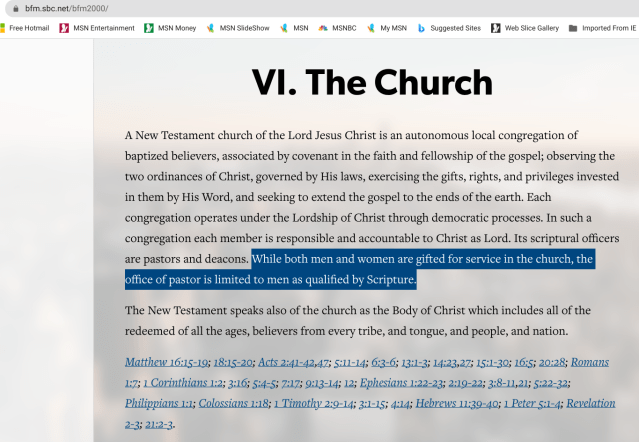
One item of business that is unfolding is a proposed amendment to the SBC constitution (not the BFM) that would exclude churches with women “pastors” from being in friendly cooperation with the SBC. This includes women who bear the title of pastor, even if they’re not functioning as pastors (e.g. “Women’s Pastor” “Children’s Pastor”) as well as women who are functioning as pastors even if they don’t bear the title of pastor (e.g. “Worship Leader” “Director of Education and Discipleship”). Churches with women in these positions or bearing these titles would not be allowed to “join” the SBC. If such a church is already a “member” of the SBC, it would be disfellowshipped (excommunicated) from the SBC.

At the moment, it has not been determined whether or not messengers will get to vote on this amendment. There is a letter of support pastors can sign, and you can get much more information at the SBC Amendment website.

The spotlight issue is going to be Rick Warren’s challenge of the Executive Committee’s decision to disfellowship (cut ties with) the “church” he “pastored” for over forty years – Saddleback, in Lake Forest, California. Saddleback currently has husband and wife “co-pastors” at the helm (appointed by Rick Warren prior to his retirement).

Earlier this year, the Executive Committee announced that Saddleback had been disfellowshipped for this reason, causing quite the stir among Southern Baptists in the know. Less than a year ago at the 2022 Convention, the head of the Credentials Committee, which is responsible for assessing whether or not a church seems to be in friendly cooperation with the SBC, proposed that messengers approve a year long study committee so the CC could figure out what a pastor is.

But apparently, they managed to figure it out without the study committee and quickly determined that Saddleback is, indeed, not closely enough aligned with the Baptist Faith and Message (the SBC’s statement of faith) to remain in fellowship with the SBC.

Conspicuously quickly, that is. Some have suggested that this was a strategic move designed to maneuver Rick Warren (or in collusion with him) into challenging the disfellowshipping. If he can successfully convince the messengers (voting attendees) to vote to overturn the decision (and judging from the standing ovation they gave him after his 6 minute, out of order, ode to himself last year, that’s very likely), the four other churches that were disfellowshipped at the same time as Saddleback can push to have their decisions overturned. And, assuming they’re successful, how much time and energy do you think the CC is going to put into any future complaints about other churches with women pastors? (None. That’s how much.) Not long after that, they’ll amend the BFM and remove the part above about women being pastors.

And that’s how the approval of women pastors is going to end up codified into SBC policy. It’s not a stretch. I think the first time I said that the SBC would affirm women “pastors” within five years was last year. Barring a certifiable miracle, I still believe that.

Now, just because that’s going to be the spotlight issue doesn’t mean that’s all you have to worry about. The whole abuse issue (Guidepost, the ARITF, etc.) is going to be another fairly major issue as well. Plus, there are going to be people who are counting on messengers being so distracted by Warrengate and the abuse advocacy grifters that they won’t be paying attention to any other issues. Keep your eyes and ears open, and pay attention. I’d bet my bottom dollar somebody’s going to try to pull a fast one with some sort of unbiblical issue while everybody’s out of the room.

So, if you haven’t already, talk to your pastor about becoming a messenger, get to New Orleans in June and…

  • Read or listen carefully to anything that’s up for a vote, make sure you understand it correctly, and vote according to Scripture.
  • Be in the room for every vote.
  • Vote against anything Rick Warren / Saddleback proposes
  • Vote for Mike Stone for president. (God bless him, he is not only godly but courageous and tenacious to boot.)
  • Support the constitutional amendment to disfellowship churches with women pastors (read it carefully before voting – sometimes items like this are re-worded from the original)
  • Don’t just blindly trust whoever’s at the podium or let them tug at your heartstrings. Listen, engage your brain, and think critically, biblically, and objectively about the issue.

…and prepare yourself to lose, and lose big time. I was prepared to lose every vote last year. And we did. And it still took a spiritual and emotional toll.

And it was worth it. I would do it all over again – which I kinda am, since I’ll be there again this year.

It’s worth it to know that one day I’ll stand before the Lord and say (speaking only for myself and my own conscience) about this moment, “Lord, by Your grace and strength, I didn’t give up. I did my best with what You gave me in order to honor and glorify You.”.

Won’t you join me in June in New Orleans?


If you have a question about: a Bible passage, an aspect of theology, a current issue in Christianity, or how to biblically handle a family, life, or church situation, comment below (Iโ€™ll hold all questions in queue {unpublished} for a future edition of The Mailbag) or send me an e-mail or private message. If your question is chosen for publication, your anonymity will be protected.

Discernment Bible Study

Choose What Is Right: A Study in Discernment- Lesson 4


Previous Lessons: 1, 2, 3,


False Teachers, God’s View, Our Response

Read These Passages


Questions to Consider

Throughout this study we will be looking at various passages of Scripture rather than working our way through a book of the Bible verse by verse. Because of that, we will need to be extra vigilant to rightly handle these passages in context. I will always attempt to provide the context you need for understanding these passages correctly, but if you need more clarity please feel free to read as much of the surrounding text as you need to – even the whole book, if necessary – in order to properly understand the passage presented.

1. Do you notice the similarities between 2 Peter 2 and Jude? Click here and read the second paragraph under “Author and Date”. What might be the reason for some of the similarities?

Make a two column chart. Examine Jude and 2 Peter 2 side by side, verse by verse. (You may want to do this with two Bibles, two devices, or a split screen on your Bible app or device.) List the verses or phrases that are strikingly similar in wording and concept. What does each mean? Why might God have emphasized a particular verse or phrase by placing it in Scripture twice?

2. To what general group of people are Jude’s (v.1) and Peter’s (1:1) letters addressed? What is Jude’s (3) appeal to the church? Why is he urging them to contend for the faith (Jude 4, 2 Peter 2:1-3)? What are some of the things that happen to a church when false teachers gain a foothold?

Do these epistles apply to you as a Christian, and to the church, today? Why? Have you (or your church) ever been urged by a pastor or teacher to contend for the faith? Why do you think that admonition is so lacking in the church and from Christian teachers today?

2. How does Jude (4a) describe false teachers entering the church? How does Peter (1) say false teachers will bring in destructive heresies? Compare this characterization to the way these passages say false teachers infiltrate the church and the home. What does this characteristic of sneakiness tell you about false teachers? Why aren’t they just open and honest with Christians and the church about what they want to teach?

3. What do Jude (4, 13) and Peter (3, 17) say is the final destiny of false teachers?

Examine 2 Peter 2:4-10. Who are the godly people mentioned in this passage and how did God deal with them? Who are the ungodly who are listed, and how did God deal with each of them? Do these ungodly people include false teachers (10, Jude 8)?

What does this tell you about how God views false teachers? How He views and protects His faithful children?

4. What are Jude (8-9) and Peter (10b-11) telling us about angels, blasphemy and the glorious ones? How does this reflect the pride and arrogance of false teachers?

What are Jude (10) and Peter (12) telling us about the ignorance of false teachers? Think about how the indwelling Holy Spirit illumines Scripture to the Christian. What might be one reason false teachers do not understand Scripture or how to properly handle it?

What is the significance of Jude’s (11) comparison of false teachers to Cain? Of Jude’s (11) and Peter’s (15-16) comparison to Balaam?

Consider the imagery in Jude’s (12-13) and Peter’s (17) comparative metaphors to false teachers. What are the characteristics of each metaphor mentioned, and how do they apply to false teachers?

5. In your own words, write a brief summary of the character of false teachers according to Peter and Jude. Do you know of any pastors or teachers who could be described this way? Who, and why?

6. What does Jude (17-23) say about how we should respond to the types of teachers he and Peter are describing?


Homework

If you’d like a little extra study on these passages, check out:

Wednesdayโ€™s Word ~ Jude

Living Stones: A Study of 1 & 2 Peter ~ Lesson 11


Suggested Memory Verse
Mailbag, Marriage

The Mailbag: What is submission?

How is biblical submission defined, with specifics?

It’s a great question that a lot of women wonder about. “Just give me a list of all of the things I need to do to be ‘doing submission,’ and I’ll do them!” Unfortunately, that’s not how this, and so many other biblical concepts, works.

“Just give me a list of all of the things I need to do to be ‘doing submission,’ and I’ll do them!” Unfortunately, that’s not how this, and so many other biblical concepts, works.

Asking “How is biblical submission defined, ‘with specifics’?” is kind of like asking someone to define “modesty” or “parenting” with specifics. A lot of those “specifics” are situation dependent and vary from family to family or person to person.

For example, you can’t make a law for Christians that a woman’s skirt must be a certain length, because the length of women’s legs vary, and the same length requirement will be modest on one woman and immodest on another. It’s the same idea with submission. It’s going to vary from marriage to marriage.

In a godly marriage1, a husband and wife come together and discuss how they’re going to handle various issues, chores, responsibilities, etc. If there’s agreement, great! But that’s not really submission because both spouses are getting what they want.

If there’s agreement, great! But that’s not really submission because both spouses are getting what they want.

When there’s an area of disagreement, both spouses offer their input. If, after discussing it, the husband comes to the conclusion that he was wrong or that it would work just as well to do things the wife’s way, then he leads the family to do things the way she has suggested.

But if, after hearing his wife out, he concludes that his way is the wisest way to do things, that’s where submission comes in. The husband is responsible before God for how he’s leading in this situation. The wife is responsible before God for maintaining a posture of heart that says, “I may think he’s wrong, but I’m going to trust God in this situation, and obey Him by putting my will aside and graciously doing things my husband’s way.” That is biblical submission whatever the specific circumstances may be.

I may think he’s wrong, but I’m going to trust *God* in this situation, and obey *Him* by putting my will aside and graciously doing things my husband’s way.

Obviously, that’s an ideal situation between a godly husband and a godly wife, but the same applies to a godly wife with an unsaved or not so godly husband. First Peter 3:1-6 and 1 Corinthians 7:12-16 are crystal clear that a wife’s godly submission can be instrumental in his salvation or sanctification.

Likewise, wives, be subject to your own husbands, so that even if some do not obey the word, they may be won without a word by the conduct of their wives, when they see your respectful and pure conduct.

For how do you know, wife, whether you will save your husband? Or how do you know, husband, whether you will save your wife?

2 Peter 3:1-2, 1 Corinthians 7:16

“But what if his way turns out to be the wrong way?” Sometimes you’re going to submit to your husband and he’s going to end up being wrong. He’s going to have to answer to God for that. You’re going to have to answer to God for whether or not you obeyed Him and submitted to your husband.

We don’t obey God only when we think that doing so will yield the results we want. We obey God’s commands every time, we leave the results up to Him, and we trust Him to carry us through and provide for us regardless of what happens. That’s called faith.

We don’t obey God *only* when we think that doing so will yield the results we want.

1If your knee jerk reaction to the word “submission” is to immediately reject this biblical command outright because there are men who abuse their wives (whether or not your husband is one of them), your attitude is not in line with Scripture. Abuse is a separate situation with a separate, biblical way of handling it that has nothing to do with biblical submission. Please note that this article is to be understood in the context of a godly (by definition, not abusive) marriage.

Additional Resources:

Why is submission so scary? at A Word Fitly Spoken

Toxic (Evangelical) Femininity

Imperishable Beauty Bible Study, Lesson 11- A Beautiful Wife

Godly Womanhood โ€“ Submission part 1  part 2

CBMW (type โ€œsubmissionโ€ into the search bar)


If you have a question about: a Bible passage, an aspect of theology, a current issue in Christianity, or how to biblically handle a family, life, or church situation, comment below (Iโ€™ll hold all questions in queue {unpublished} for a future edition of The Mailbag) or send me an e-mail or private message. If your question is chosen for publication, your anonymity will be protected.

Speaking Engagements

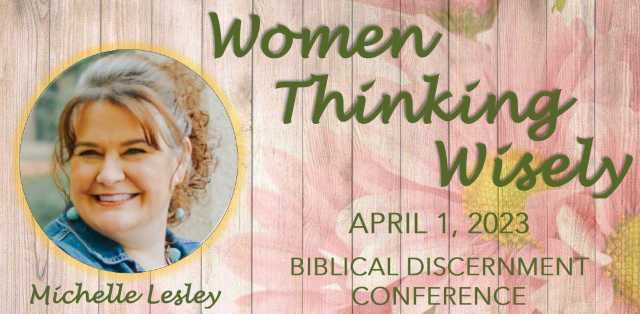
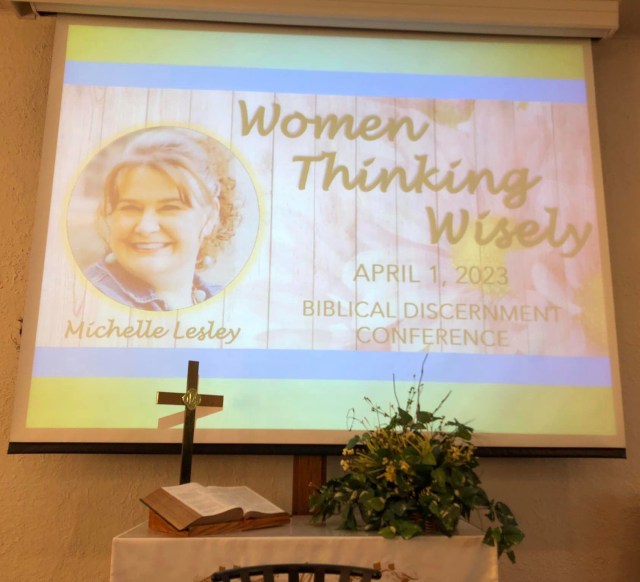
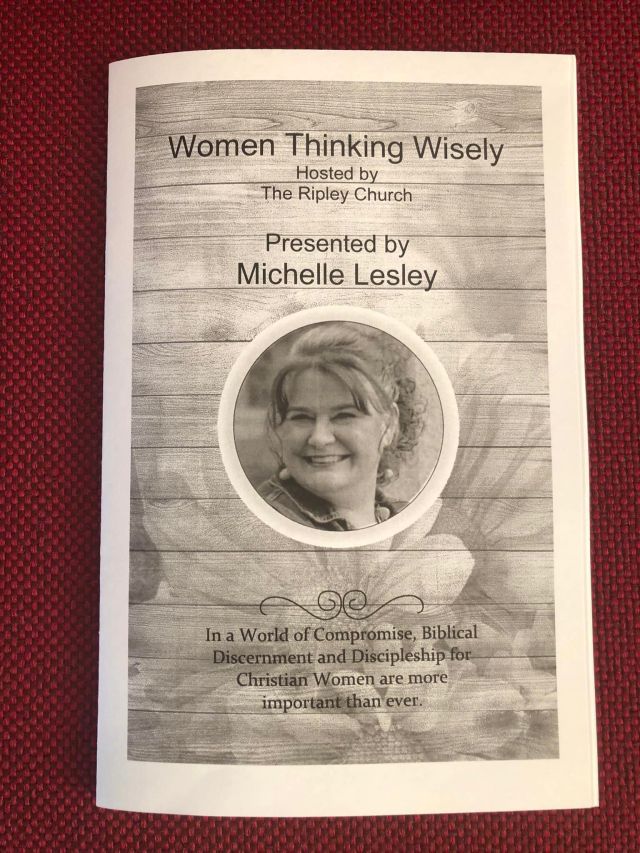
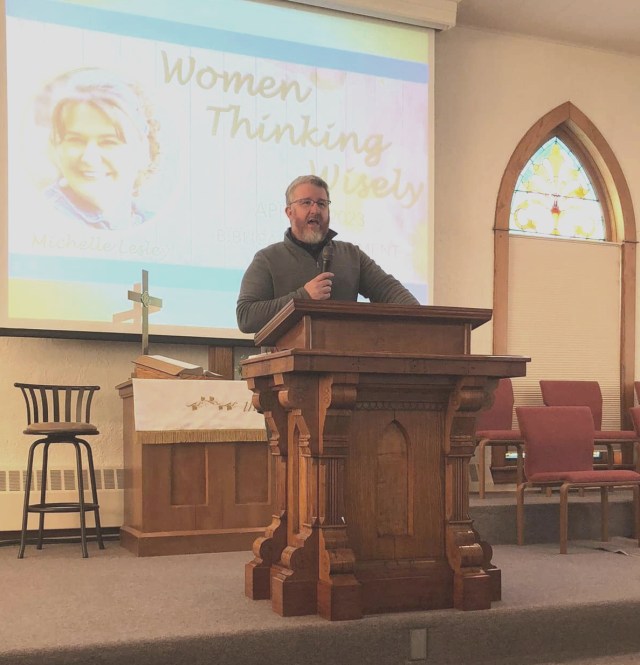
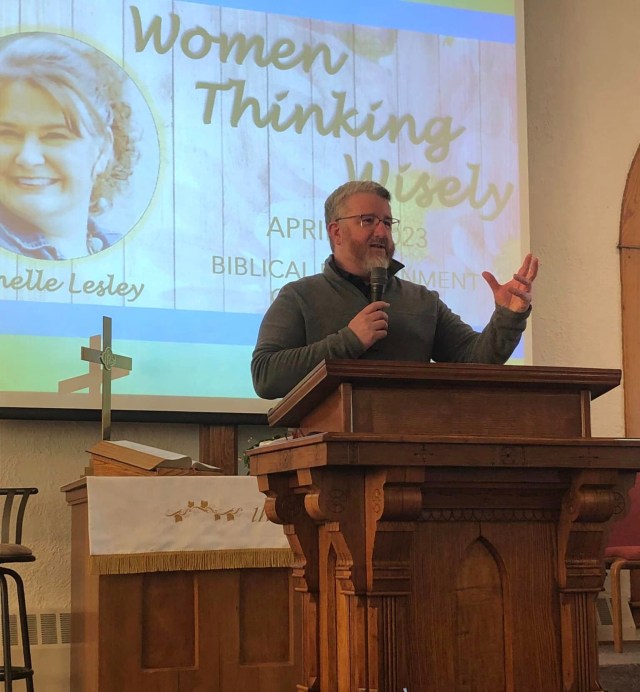
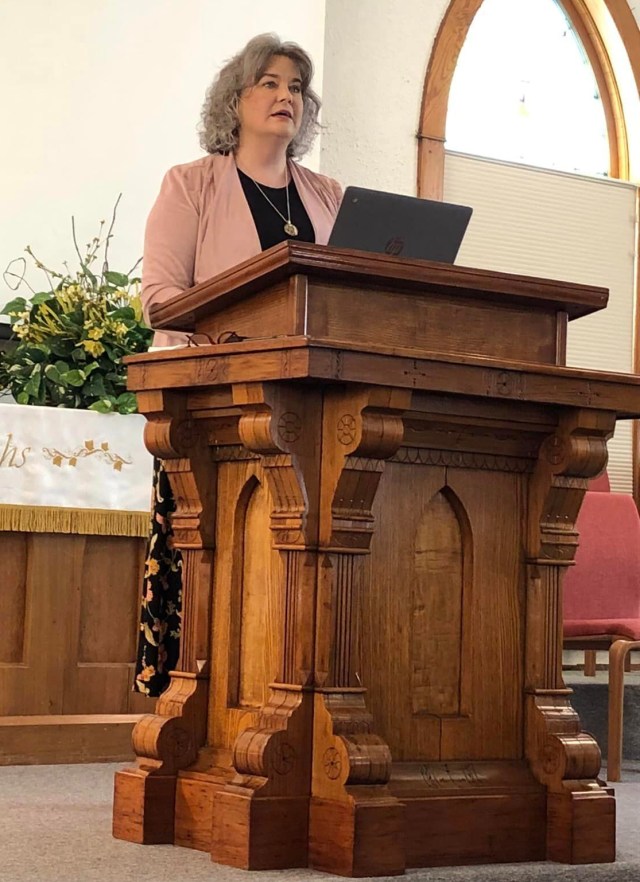
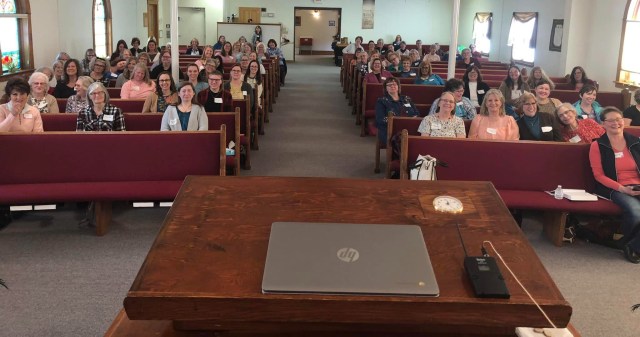
Report Back: Women Thinking Wisely Conference

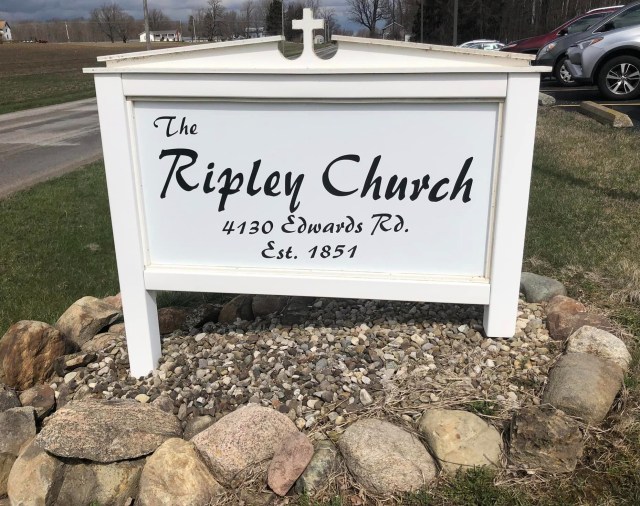
It was such a pleasure to share with the wonderful women of Greenwich, Ohio, and the surrounding area at The Ripley Church’s Women Thinking Wisely conference. TRC’s conference planning committee worked long and hard to make it a wonderful event that was enjoyed by all.

I landed in Cincinnati Friday afternoon and was whisked away to a charming little cabin by planning committee member, Jennie and her husband Bob.

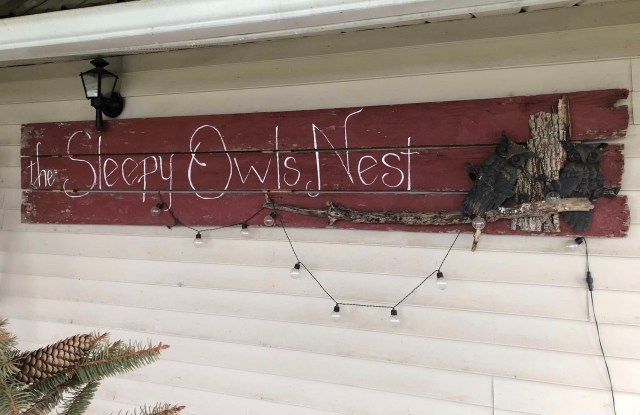
The Sleepy Owl’s Nest cabin is in Shiloh, Ohio, right in the middle of Amish and Mennonite country. I’m afraid this was the best picture of a horse and buggy I was able to capture in my brief time there!
The other members of the planning committee soon arrived at the cabin, and we had a wonderful time of fellowship around a phenomenal lasagna – one of my favorites!

At the bottom right is a picture of me with Kerri Sheldon of 4 Truth Ministry. Kerri was kind enough to write a guest post for me a few years back, and I highly recommend her book Resolute: An Unwavering Stance on the Truth of Godโ€™s Word, which she co-authored with her father, David, and on which her guest post was based. She also put together the awesome hostess bag I was honored with (bottom left) containing local favorites, Amish Country popcorn and Ohio buckeyes, and she hand painted the Ohio Christmas ornament herself! What a talented lady!

I am always amazed at the Providential ways God works through the conferences I speak at. Aside from the teaching and fellowship, sisters from the various churches represented make ministry connections and form friendships, sometimes their churches end up joining together in ministry, and sometimes attendees find the doctrinally sound church home they’ve been searching for.

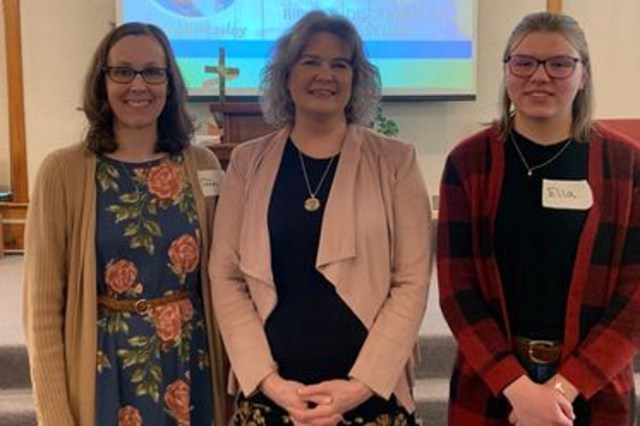
I was delighted to learn that this was the case for Kerri and her family. They had been looking for a solid church in their area to join, but were unaware of The Ripley Church until Kerri saw on my blog that I would be speaking at a conference there. They started attending, and by the time I got there, Kerri and her mom, Lynn (on the far left in the top left photo) were able to greet me, not only as members of TRC, but also as members of the conference planning committee. What a nifty thing God did!

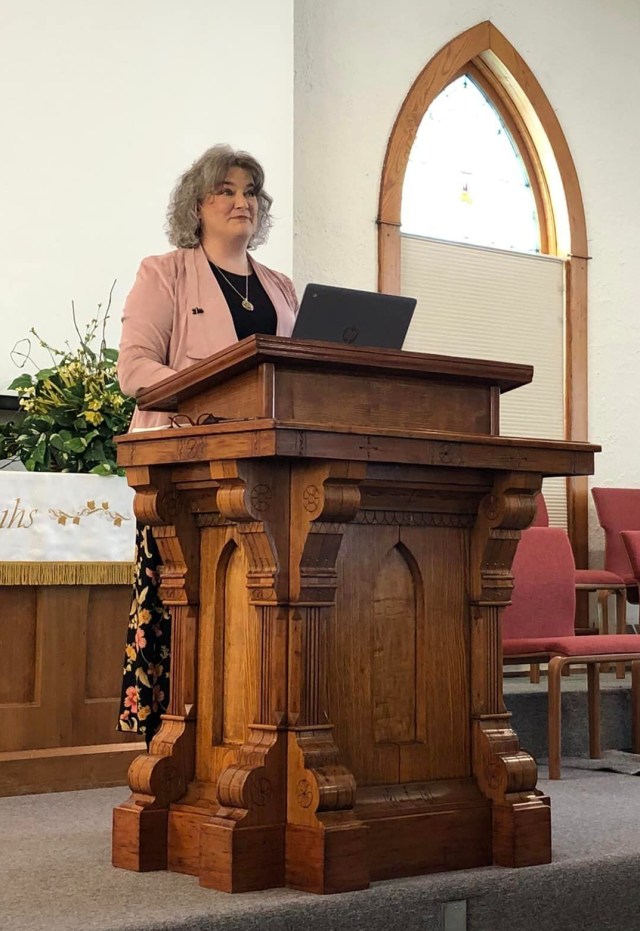
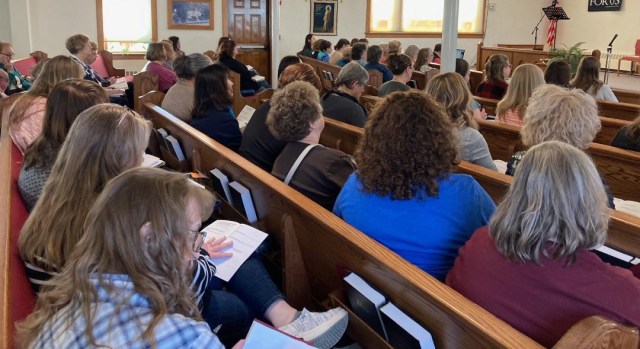
Saturday morning, it was conference time!

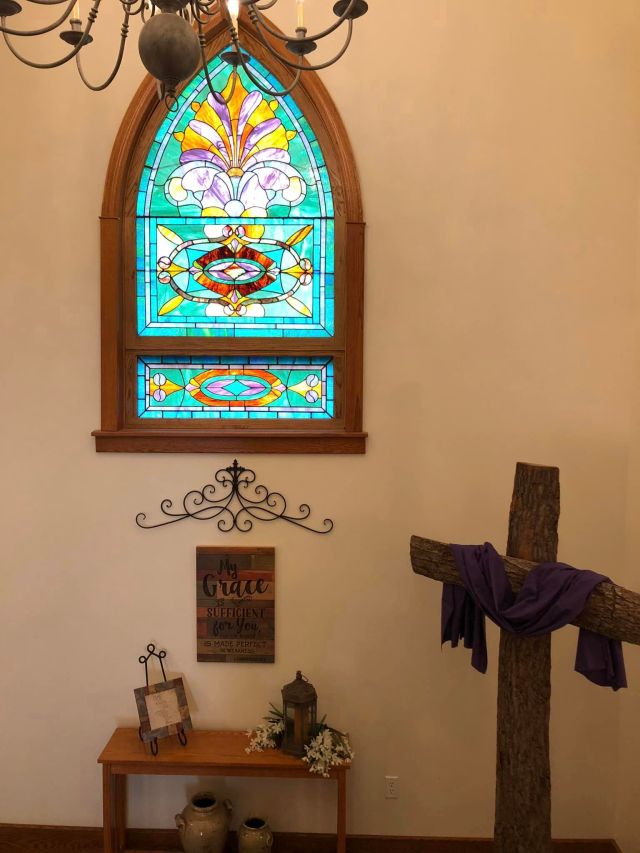
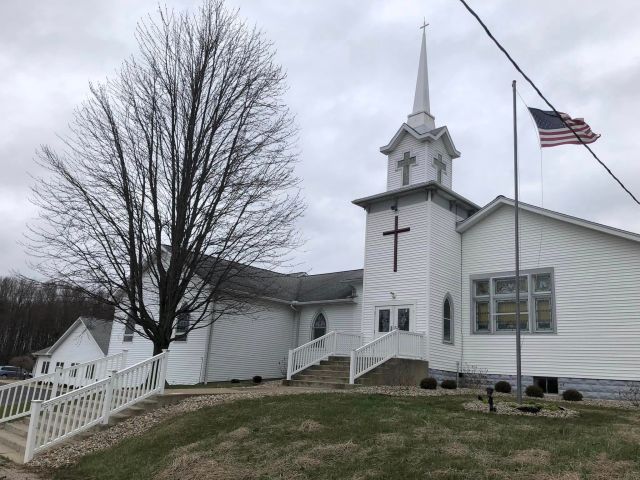
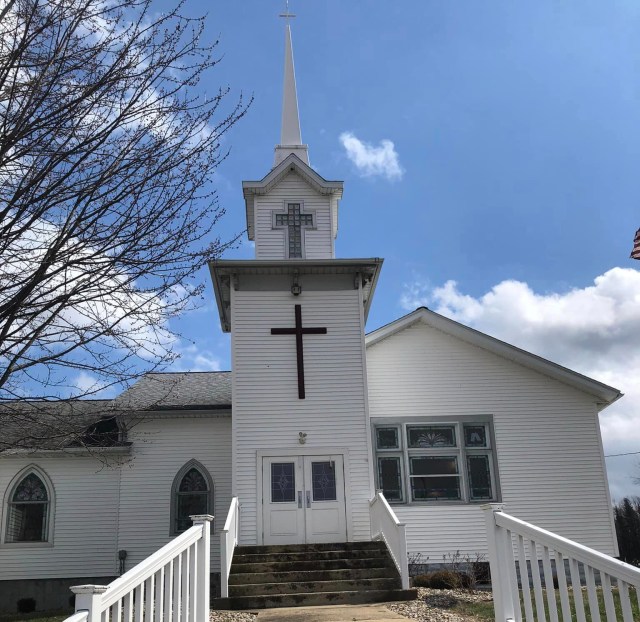
I have a special fondness for little white country churches, and The Ripley Church did not disappoint. Founded in 1851, part of the sanctuary is still the original building.

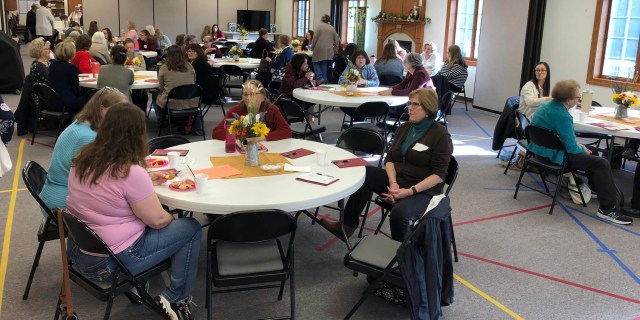
First up- check in and an energizing breakfast and fellowship time:

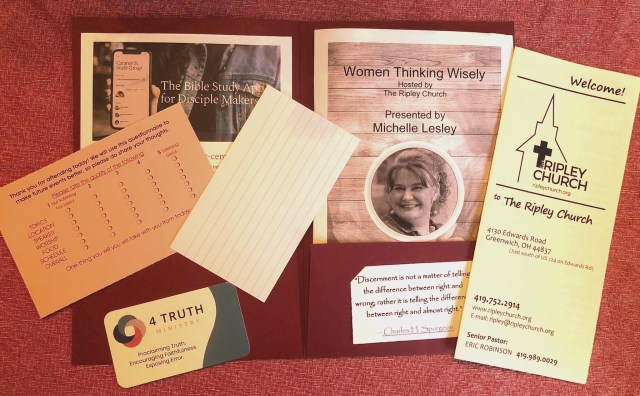
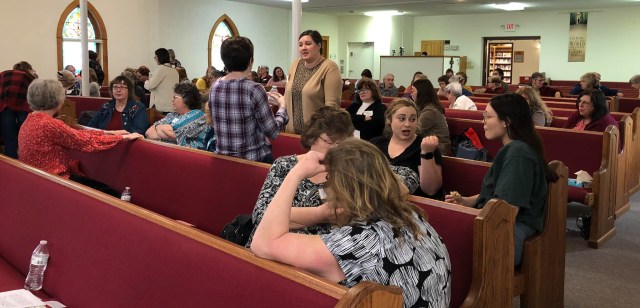
Lots of informative and themed materials greeted attendees as we moved into the sanctuary for teaching time:

I love the thought and care that went into these helpful conference info packets. I would never be able to think of all of this. When you’re planning a conference, be sure to harness the brains of those detail-oriented sisters!

Folders included info on 4 Truth Ministry, a Bible study app, a card with a quote from Spurgeon from my session on discernment, a program, a conference evaluation card, a TRC brochure, and an index card for writing down questions for the Q&A session.

Pastor Eric Robinson was so kind to welcome the ladies and open in prayer.

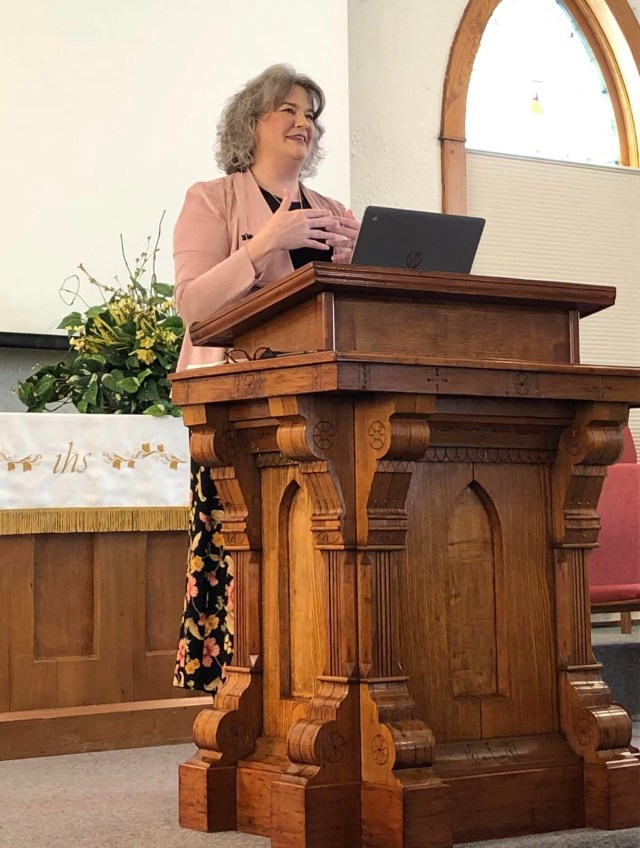
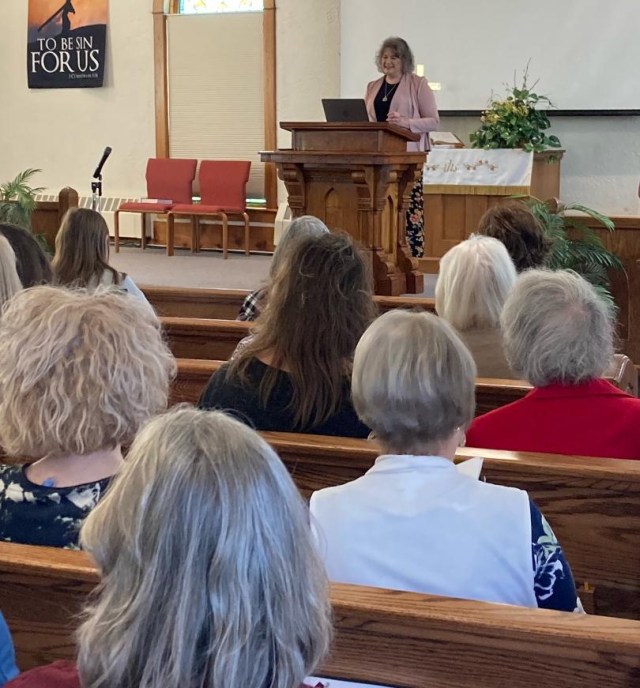
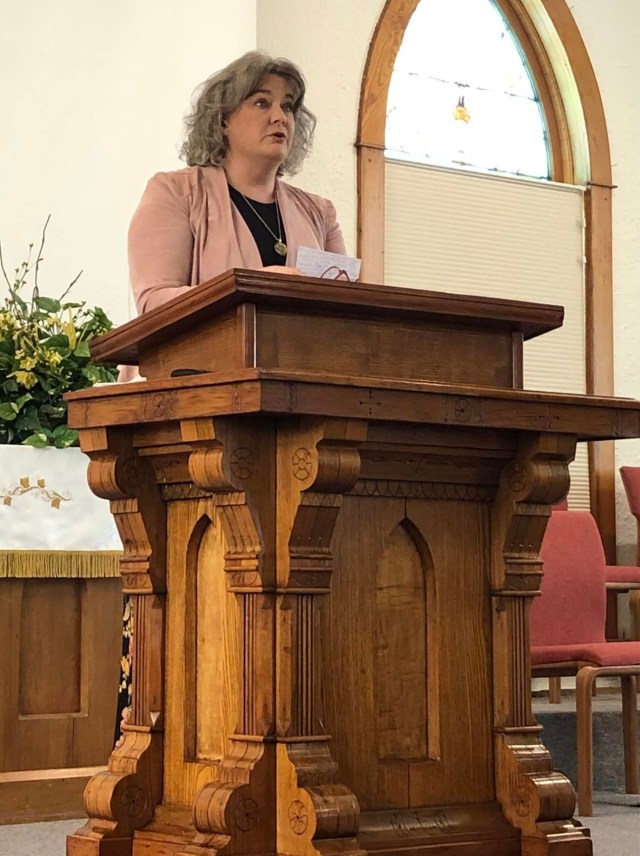
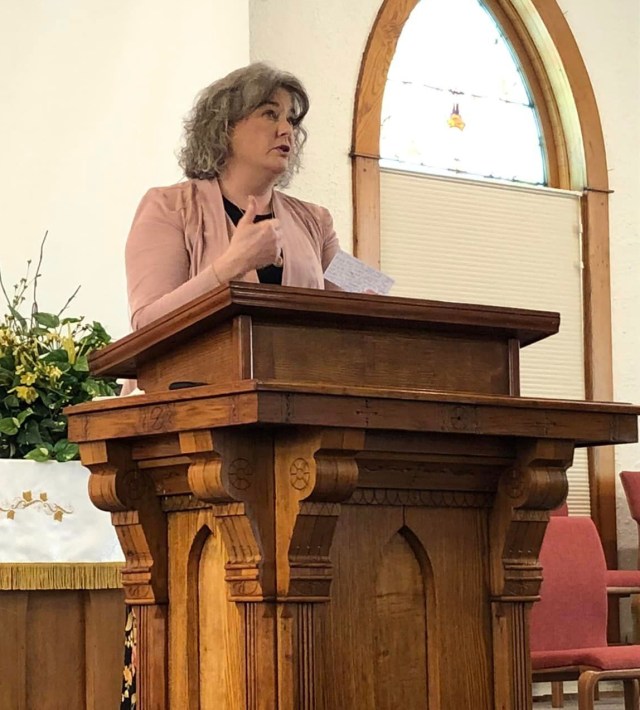
We kicked things off with Discernment 101: Learn to Discern. We talked about what discernment is, and how to use it โ€“ identifying false teachers and false doctrine โ€“ to the glory of God.

After a brief break, we moved on to session 2, Hooked on a Feeling: Living by Godโ€™s Word Instead of Our Emotions. Scripture is our authority as Christians, and we shouldnโ€™t let our feelings lead us around by the nose.

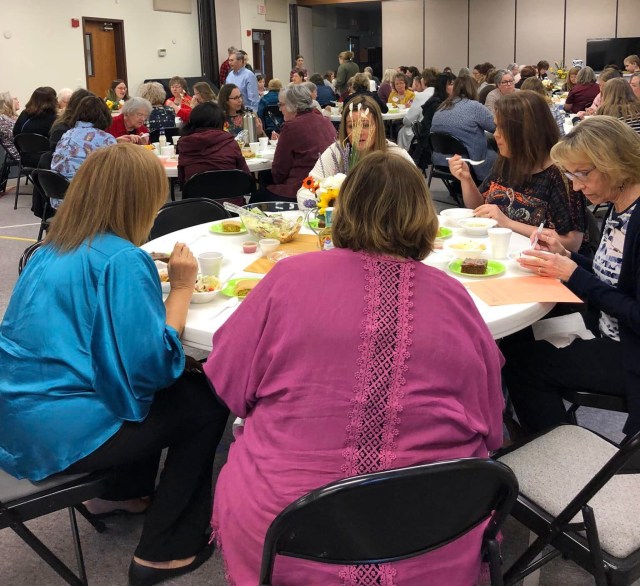
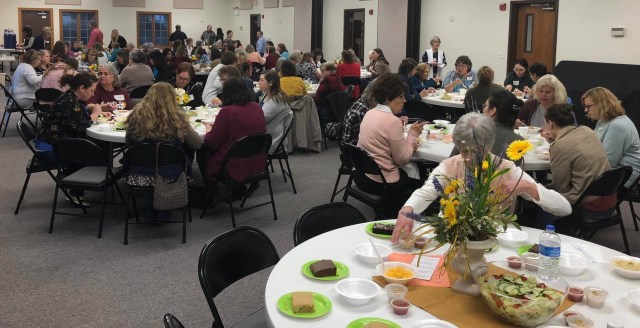
When session 2 was over, it was time for lunch: salad, a choice of hearty, delicious soups, and cake.

Between sessions, I had the luxury of a few moments of quiet relaxation time in Pastor Eric’s office. You can tell a lot about a pastor from his bookshelves, and I could tell – this is my kind of pastor! ๐Ÿ˜๐Ÿ‘๐Ÿ‘๐Ÿ‘๐Ÿ˜

With full tummies and fuller spirits we returned to teaching with Managing Mediaย โ€“ being wise and discerning with news, social media, movies and TV, and other media we consume.

At the end of the day, we closed things out with a stimulating Q&A session. These ladies asked some challenging questions!

It’s always great to see mothers and daughters attending together!

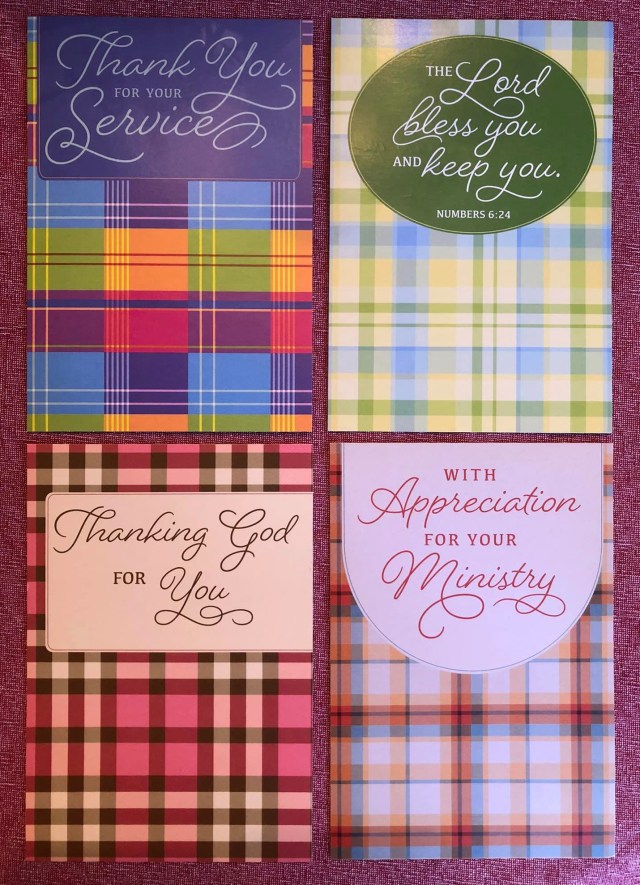
Another oh-so-thoughtful touch to this conference: the planning committee had all of the ladies sign these lovely cards to me. I cherish their kind and encouraging comments.

Once the conference was over, it was time for an early supper (so I could catch an early bedtime for my super early flight home the next day!). One of my favorite things to do when I travel is to sample the local fare.

East of Chicago Pizza got its start right down the road from Greenwich in Willard, Ohio, and is, as you might expect, billed as “the best pizza east of Chicago”. Now, I’ve had authentic Chicago pizza, so I feel safe in saying that if EoC pizza isn’t the best, it’s awfully close. Also delectable were Ballreich’s potato chips, made in nearby Tiffin, Ohio. Lemme tell ya- Ruffles ain’t got nothin’ on these babies.

All too soon, it was time to say goodbye. My deepest thanks to Bonnie, who spearheaded the conference, and who, with her husband, Don, picked me up at an unspeakable hour of the morning to drive me to the airport for my flight home. Thanks also to Jennie and Bob, Janna, the conference planning committee, and all the men and women of The Ripley Church who worked so hard to host a fantastic conference, took care of all my needs, and made me feel so welcome. If you’re ever in the area and need a good church to visit, make plans to spend the Lord’s Day with these wonderful brothers and sisters.


If your church or organization is ever in need of a speaker for a womenโ€™s event, Iโ€™d love to come share with your ladies as well. Click here for more information, or to find an upcoming event near you!


Photo Credits

Many thanks to Kerri, Bonnie, and other conference attendees who took most of the photos above. You may assume that if I’m in the picture or if it’s a good quality photo that I didn’t take it. The remaining photos were shot by me.