Book Reviews

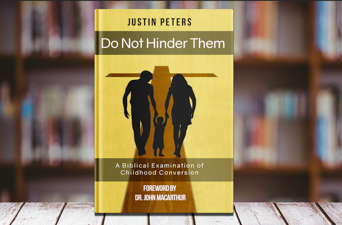
A Review of Justin Peters’ “Do Not Hinder Them”

As I’ve mentioned before, solicited book reviews are not part of my regular repertoire here at the blog. In fact, for a variety of reasons, I have a policy against writing them.

But when one of your heroes in the faith asks, you make an exception. And, for me, Justin Peters is one of those heroes in the faith (even more so because I’m sure he wouldn’t want me calling him that).

I introduced Justin this way in my article, A Few MORE Good Men: 10 Doctrinally Sound Male Teachers:

โ€œJustin Peters Ministries exists to preach the Gospel of Jesus Christ to the lost and to help equip the saved to โ€˜speak the truth in loveโ€™ (Ephesians 4:15). Great care is taken to preach and teach Godโ€™s Word in its proper context and simply let the text speak for itself.โ€

The first thing I ever noticed about Justin Peters is his striking example of biblical meekness. Justin is soft-spoken and peaceable, but firm in his gospel convictions and aflame with the desire for the lost to come to salvation. You must read Justinโ€™s testimony of coming to know Christ after years in seminary and ministry as a false convert. What Justin is perhaps best known for is his teaching and discernment ministry exposing the Word of Faith movement. It started with a trip to a faith healer as a teen to have his own cerebral palsy healed and grew into Clouds Without Water, a seminar designed to educate the church on the history, growth, and metastasization of the Word of Faith heresy.

But Justin doesn’t limit himself to discernment ministry, and his new book, Do Not Hinder Them: A Biblical Examination of Childhood Conversion, opens the door to another of his theological interests- salvation and baptism, especially as they pertain to children.

A simple, yet fundamental, point of theology which needs to be understood in order to grasp the concept of the book is the difference between credo-baptism and paedo-baptism. Credo-baptism is also called “believer’s baptism.” This means that a new believer stands before the church, professes her faith in Christ, and is then baptized out of obedience to Him- to demonstrate that she has passed from death unto life and now wishes to be identified as a follower of Christ. Credo-baptists believe strongly that baptism is only to be administered to professing believers.

Paedo-baptism is infant baptism. It is administered to all babies and children (by definition, unable to profess faith in Christ) by a number of Protestant denominations as a symbol that a child has been born into a covenant (believing) family who will raise her in the nurture and admonition of the Lord and the knowledge of the gospel.

There’s an angst that Bible believing credo-baptist parents often experience, which, undoubtedly, is foreign to paedo-baptist parents:

My young child has come to me claiming to have asked Jesus into her heart and wants to be baptized. How can I tell if she’s really saved and that it’s right for her to be baptized at this age?

It’s a long standing dilemma for Southern Baptists like Justin…and me. My mother happened to mention in passing a few years ago that I had begged to be baptized when I was about six. It made sense because that’s about the time all of my little friends were being baptized, but, I was very surprised to hear this story because, as an adult, I had no recollection of it whatsoever, and I can guarantee you I wasn’t saved at the time. My parents wisely said no.
As parents ourselves, my husband and I have faced the same struggle. Five of our six children were baptized as young children. One is not currently walking with the Lord and two of them were re-baptized later at their own request when they realized they had not been saved the first go round.

This is the central issue Justin tackles in Do Not Hinder Them.

But don’t be fooled by the title of the book. While it’s a must read for Christian parents, pastors, and those who work in children’s ministry, you also need to read this book if…

…you’ve ever wondered if you’re really saved.
…you’re wondering if that loved one (of any age) who claims to be a Christian is really saved.
…you’re a paedo-baptist wanting to get a better grip on credo-baptist beliefs and struggles
…you’re brand new to the study of theology and are looking for a resource that will easily help you to “dip a toe in the water” (so to speak)

In other words, though Justin addresses the issue of genuine conversion as it applies to children seeking baptism, the question of “How can I know if I/my loved one is really saved?” is one we all face at some point in our walk with Christ. So, while there may be a few parts of this book that don’t apply if you’re not a pastor, children’s ministry worker, or parent, most of it is helpful for every Christian.

One of the foundational issues Justin cites as having gotten us into the muck and mire of baptizing unregenerate children, only to have them “walk away” from the Lord (though, indeed, they were never saved in the first place) as teens or young adults – sullying the name of Christ and His church – or to seek a second baptism once they realize they were unsaved the first time, is the fact that we have so watered down the gospel and the soteriology our churches subscribe to and practice. “Getting saved” has been reduced to parroting a sinner’s prayer, or mental assent to a simplistic set of facts that even the demons believe. There is little to no presentation of sin and rebellion, guilt before a holy God, God’s wrath toward the sinner, and the eternal punishment of sin. And when was the last time you heard a pastor urge someone contemplating following Jesus to count the cost of being His disciple? Instead, it’s, “Don’t you want to go to Heaven when you die?” or “Just believe A, B, and C, and you’re saved!” or “God loves you and has a wonderful plan for your life!” Rarely are young children mature enough in their thinking to be able to grasp the true nature and meaning of why they need a Savior and what repentance, regeneration, and discipleship really entail.

And that’s largely our fault. As Christian parents, we understandably want our children “in,” safe from an eternity in Hell. So we make it as easy as possible for them to complete the transaction. Instead of raising our children up to understand and attain to the high bar of the demands of the gospel, we lower the bar so far that even the youngest child can toddle right over it. In the end, the problem is not that we’re baptizing unsaved babes as our paedo-baptist brothers and sisters do, but that we’re presenting a false gospel that creates false converts who hang their eternity on having repeated a prayer and passed through the baptistry.
The second key issue Justin says has contributed to the epidemic of baptizing unregenerate children is the fact that we base our decision to baptize them solely on their verbal profession of faith rather than on the fruit of a changed life.

I remember all too well the worry over my own small children’s salvation in this regard. How could I tell if they were really saved or not? They had been in church and raised in a Christian home all their lives- they knew all the right answers to give when we questioned them about their salvation experiences.

As Justin wisely points out, this is often the case with “church kids.” They know how to repeat back what they’ve learned in Sunday School, and, because they’ve been raised in a godly atmosphere, they’re likely already good kids, outwardly behaving in what looks like a Christlike way. When they come to us and say, “I’ve asked Jesus into my heart,” how can we tell if it’s genuine saving faith?

Most of the time, the answer is- we can’t. Until, that is, that faith has been tested and their testimony proven true through the refining process of trial, temptation, and persecution. Until he is able to bear fruit in keeping with the repentance he claims. Does your child freely choose obedience to Christ over giving in to temptation? Does he cling to Christ during times of difficulty? Does he visibly stand for Christ when ridiculed for doing so by his peers? What five year old even faces such situations?

And that’s precisely Justin’s point. We rush our children through the baptismal waters as soon as they claim to have received Christ rather than waiting to see their faith prove out over the ensuing years. Your five year won’t face the temptation to use drugs or engage in sex. But your teenager will. It’s unlikely a gang of kindergartners will surround your child and mock his belief in Christ and biblical values. Sophomores and juniors do so gleefully. How does your young adult, who claims to be born again, handle these types of situations? When it’s his choice, not yours, does he consistently and unrepentantly go along with the worldly crowd or does he bear up and walk faithfully with Christ? Justin suggests, and I can’t help but agree, that the testing of our children’s faith that comes with age and independence, and the fruits of Christlikeness they bear – such as: godly sorrow over sin, personal holiness, hunger for the Word, and increasing discernment –  are a much more reliable barometer of their spiritual state than the “right answers” they are able to give as small children. It is for this reason that Justin suggests postponing baptism until the late teens or early 20s, while encouraging and nurturing our children’s faith as they grow and mature.

Do Not Hinder Them so effectively addresses these matters of concern to the church that I unhesitatingly recommend it to all Christians. Justin writes in a simple, unassuming style that even the newest believer would be comfortable with, and explains complicated theological terms and issues with ease. The book is chock full of helpful footnotes rife with Scripture references and supplementary resources, and is only 112 pages long, making it an easy evening’s read. Do Not Hinder Them is available in soft cover format (not available in e-book format at this time) and is endorsed by Dr. John MacArthur. You can purchase a copy at Justin’s web site or on Amazon.


All brown “pull quotes” in this article are taken from:
Peters, Justin. Do Not Hinder Them: A Biblical Examination of Childhood Conversion. Justin Peters Ministries, 2017.

Mark Bible Study

Mark: Lesson 3

Previous Lessons: 1, 2

Mark 1:21-45

And they went into Capernaum, and immediately on the Sabbath he entered the synagogue and was teaching. 22ย And they were astonished at his teaching, for he taught them as one who had authority, and not as the scribes. 23ย And immediately there was in their synagogue a man with an unclean spirit. And he cried out, 24ย โ€œWhat have you to do with us, Jesus of Nazareth? Have you come to destroy us? I know who you areโ€”the Holy One of God.โ€ 25ย But Jesus rebuked him, saying, โ€œBe silent, and come out of him!โ€ 26ย And the unclean spirit, convulsing him and crying out with a loud voice, came out of him. 27ย And they were all amazed, so that they questioned among themselves, saying, โ€œWhat is this? A new teaching with authority! He commands even the unclean spirits, and they obey him.โ€ 28ย And at once his fame spread everywhere throughout all the surrounding region of Galilee.

29ย And immediately he left the synagogue and entered the house of Simon and Andrew, with James and John. 30ย Now Simon’s mother-in-law lay ill with a fever, and immediately they told him about her. 31ย And he came and took her by the hand and lifted her up, and the fever left her, and she began to serve them.

32ย That evening at sundown they brought to him all who were sick or oppressed by demons. 33ย And the whole city was gathered together at the door. 34ย And he healed many who were sick with various diseases, and cast out many demons. And he would not permit the demons to speak, because they knew him.

35ย And rising very early in the morning, while it was still dark, he departed and went out to a desolate place, and there he prayed. 36ย And Simon and those who were with him searched for him, 37ย and they found him and said to him, โ€œEveryone is looking for you.โ€ 38ย And he said to them, โ€œLet us go on to the next towns, that I may preach there also, for that is why I came out.โ€ 39ย And he went throughout all Galilee, preaching in their synagogues and casting out demons.

40ย And a leper came to him, imploring him, and kneeling said to him, โ€œIf you will, you can make me clean.โ€ 41ย Moved with pity, he stretched out his hand and touched him and said to him, โ€œI will; be clean.โ€42ย And immediately the leprosy left him, and he was made clean. 43ย And Jesus sternly charged him and sent him away at once, 44ย and said to him, โ€œSee that you say nothing to anyone, but go, show yourself to the priest and offer for your cleansing what Moses commanded, for a proof to them.โ€ 45ย But he went out and began to talk freely about it, and to spread the news, so that Jesus could no longer openly enter a town, but was out in desolate places, and people were coming to him from every quarter.


The Holy Bible, English Standard Version. ESVยฎ Permanent Text Editionยฎ (2016). Copyright ยฉ 2001 by Crossway Bibles, a publishing ministry of Good News Publishers.


Questions to Consider

1. In Lesson 2 (link above) we saw that Mark 1:1 introduces Jesus as theย “Christ” and the “Son of God.” How do verses 21-45 demonstrate that Jesus is, indeed, the promised Messiah, and that He is divine? How does Mark 1:1-20ย “credentialize” Jesus and lay the foundation for what he does in verses 21-45?

2. In Mark 1:1-20, Jesus is baptized, successfully endures the “trial by fire” of temptation, calls His first disciples, and begins His ministry. Where, and on which day, according to verse 21, does Jesus’ ministry begin? Is there any significance to the fact that Jesus began His ministry in aย synagogue on the Sabbath? What is a synagogue? Why would this have been a natural and appropriate place for Rabbi Jesus’ ministry to begin? Why did Jesus begin His teaching ministry by seeking out a Jewish audience? According to Mark 1:15, what was the central message of Jesus’ teaching that day?

As we study Mark, watch for the word “Sabbath,” the events that happen on the Sabbath, and their connection to Jesus’ deity, lordship, and authority.

3.ย What are the three main categories of ministry Jesus engages in in 21-45?

4. Examine Jesus’ preaching/teaching ministry in 21-22, 38-39, 45. Where did Jesus teach/preach, primarily? What was the people’s reaction to Jesus’ teaching? What does verse 22 mean when it says, “He taught them as one who had authority, and not as the scribes”? How does verse 38 indicate Jesus’ preaching/teaching was His primary focus in ministry?

5. Examine Jesus’ exorcising of demons in 23-27, 32-34, 39. What was the demon in 23-27 responding to? (21-22) How did this distract people from listening to Jesus teach? How did both Jesus’ teaching (21-22) and the first exorcism (23-27) demonstrate Jesus’ authority and divinity? When the demons testified about who Jesus was (24, 34), what was His response to them? (25, 34) Why wouldn’t Jesus allow them to speak even though what they were saying about Him was true? How did the people react to this miracle? (27-28)

6. Examine the healings Jesus performed in 30-31, 32-34, 40-45. Did Jesus heal Simon’s mother-in-law just so she would get up and serve them? (31) What do you think was her attitude of heart as she “began to serve them?” How did so many people (33-34) know to come to Jesus for healing? (28, 45)

What was the ceremonial statusย of a person with leprosy? How did being ceremonially unclean separate a person from the people of God and from the worship of God? Normally, a priest would be made unclean by touching a leper. But when Jesus, our great high priest, touched lepers, was He made unclean, or the leper made clean? (41-42) How does this healing point to Jesus’ mission to reconcile unclean sinners to a holy God? Compare Jesus’ obedience and submission to God’s word (44) with the former leper’s disobedience to Jesus’ word (45). How might his disobedience have caused difficulty for others who wanted to get to Jesus? (45)

7. Why was Jesus famous? (28, 33, 45) Returning to the last question in #4, do you think Jesus would have preferred to be known more for His teaching or for His miracles? Why?

8. What do verses 35-37 indicate about the importance of prayer to Jesus? Why do you think (28, 33, 45) He got up so early to pray?


Homework

Verses 35-37 give us an idea of how important prayer was to Jesus- so important that, even though He must have been exhausted from the hard work of ministry, He made sacrifices (like sleep) and cordoned off uninterrupted time for it.

Talking with the Lord as you go about the activities of your day is a wonderful way to “pray without ceasing,” but do you also follow Jesus’ example of cordoning off a regular, uninterrupted block of time specifically devoted to prayer, even if you have to make sacrifices to do so? If not, sit down this week, make a plan for your prayer time – when, where, what you’ll need to sacrifice – and implement it daily.


Suggested Memory Verse

Now after John was arrested, Jesusย came into Galilee, proclaiming the gospel of God,ย and saying,ย โ€œThe time is fulfilled, andย the kingdom of God is at hand;ย repent and believe in the gospel.โ€
Mark 1:14-15

Encouragement, Share Your Testimony

Testimony Tuesday: Stories from Several Sisters

On today’s Testimony Tuesday,
several sisters in Christ share their stories.

From Facebook:

Cheryl’s Story
Words are powerful, and when they are well intended, but off-base, they can cause massive damage.

About 25 years ago we lost two of our three babies to a genetic disease. When the second of the two was still with us, (they died 4 years apart), a well-intentioned person came to encourage us, and told us, “If you have enough faith, your baby will live”.

Those words were a hook that dragged me through years and years of torment. “If I have enough faith, then…” My baby died, so it became MY FAULT because I didn’t have sufficient faith. It also made God someone who couldn’t be pleased. How much faith DOES one need to get a miracle, and how do you get it?? It was a huge can of worms.

Two decades later, I broke down into a major depression that nearly ended my life, but God led me to safe counsel, and I was truly, finally healed from carrying that horrible guilt and grief all those years.

Words are powerful. Use wisdom because sometimes Satan uses well-intentioned words as bait that have lies wrapped in them.

Anonymous
I was going to a charismatic church and the pastor started promoting and giving Rick Warren’s book Purpose Driven Life out to all the new Christians. I was very concerned since I don’t agree with Warren’s teaching so I made an appointment to meet with the pastor and his wife (who is a co-pastor). They didn’t agree with my concerns at all and even mentioned during the conversation that they like Joel Osteen! I knew then that it was time for me to leave that church. I started attending a Baptist church and have left the Word of Faith doctrine completely. Feeling very blessed to be where I am now!

Comments from blog articles:

From The Mailbag: I โ€œfeel ledโ€ in a different direction from myย husband:

Deby’s Story
Submission has gotten a bad rap in our society. It is not being a doormat or being mentally or a physically abused submission. It is submitting as if to Christ. My husband was not a believer and now he is. It was hard for me not to nag him about things, I had to trust God and put my husband in Godโ€™s hands and his will. Sure I made some mistakes along the way but eventually in Godโ€™s timing not mine, he called my husband to the faith.

Catherine’s Story
When I was first married, I was the unsaved and my dearest husband was the Believer. You have no idea what that man of mine had to put up with in the first 2 years of our marriage before the Lord got a hold of my heart and I was made to look at my own depravity, sinful desires, and all-around foolishness. I am a fortunate woman that my husband stuck around for that conversion, and I know that too was part of a Sovereign Lordโ€™s plan and one that I cannot thank Him enough for. After 32 years of marriage, I have not โ€œarrivedโ€. I look back on those first couple years and Iโ€™m humbled by what the study of Godโ€™s Word and the sanctification that the Spirit works in a personโ€™s life has done to change me so completely.


Ladies, God is still at work in the hearts and lives of His people, including yours! Would you like to share a testimony of how God saved you, how He has blessed you, convicted you, taught you something from His word, brought you out from under false doctrine, placed you in a good church or done something otherwise awesome in your life? Private/direct message me on social media, e-mail me (MichelleLesley1@yahoo.com), or comment below. Try to be brief (3-4 paragraphs or less) if possible. Iโ€™ll select a few to share on the blog another time. Letโ€™s encourage one another with Godโ€™s work in our lives!

Mailbag

The Mailbag: Mailbag Turnabout- Readers Answer Fellow Readers’ Questions


Last Friday, I wrote an article about the blessings of social media for Christians. One of those blessings is thinktanking:

There are a lot of godly people out there who have read a lot of books, listened to a lot of teachers, know a lot of Scripture, and been through a lot of experiences. Harness their knowledge and share your own.

And I thought- what better way to demonstrate and make use of thinktanking than to enlist the help of my blog and social media readers to answer the questions of fellow readers that have me stumped or that I’m unable to research at the moment?

So today, I’m sharing a few of those questions and asking my readers to help answer them in the comments section. (I’ll chime in a little, but I’ll mostly be relying on your answers.)

To the “Askers”
Please keep in mind that I have readers from all sorts of doctrinal schools of thought, and varied levels of discernment and spiritual maturity, who may be answering your questions. While I’ll do my best to weed out any false doctrine/false teachers before posting their answers, youย must do the work of comparing everything to Scripture before believing it or using it as a biblically trustworthy resource.

To the “Answerers”
To answer a question, scroll all the way down to the bottom of the page and answer in the comment box. If you’re new to the blog or have never read the comment parameters in the Welcome tab, please do so before answering. Answers violating these parameters will not be published. Please make clear whichย question you’re answering.ย Helpful hint- more people will read your answer if you keep it fairly brief. Links to useful, biblical resources are encouraged. Your answer might be edited for length or doctrine.

All set? Here we go!

1. Do you know of any doctrinally sound resources for visually impaired people?

As far as books, descriptive videos, etc., I just don’t know. I can tell you that Bible Gateway has a page of audio resources, including audio Bibles (click the drop down- I’d recommend ESV, NASB, HCSB/CSB, or NKJV. You’ll want to avoid NIV and MSG.) and devotionals (listen discerningly, some of these may not be doctrinally sound).

Any readers out there familiar with biblical resources for our visually impaired friends?

2. Can you recommend any doctrinally sound “Christian living” (relationships, modesty, stewardship, suffering, etc.) books or materials specifically geared toward college-aged (late teens-early 20s) young adults?

Though I have no doubt they’re out there, I’m not familiar with any of the books/materials specifically written for this age group.

Which young adult books or materials would you recommend?

3. Do you know of any doctrinally sound books or resources in Russian or Latvian?

Bible Gateway has Bible translations in a variety of languages including Russian, but I cannot speak to how accurate any of them are. I know that prolific, doctrinally sound authors like John MacArthur and R.C. Sproul have had their books translated into many languages, so I would suggest checking the Grace to You and Ligonier online stores or possibly e-mailing them for more information. Beyond that, I have no idea.

Anybody experienced in Russian/Latvian or know a missionary in that area who could make a good recommendation?

4. Can you recommend a doctrinally sound church in any of the following areas:

Harrisonburg, Virginia
Wichita, Kansas
The United Kingdom
(this reader is also looking for “any faithful teachers, bloggers, charities, businesses in the UK.”)

Each of these readers has already been directed to the Searching for a new church?ย tab at the top of this page. It contains several good church search engines (including churches pastored by Master’s Seminary grads). This is a request for recommendations of churches, ministries, etc., you’reย personally familiar with.

5. “I home school, and we participate in Classical Conversations. I’ve noticed some problems with my CC group: unruly children/lack of discipline, and some concerning unbiblical beliefs and practices. Are these problems that are common in other CC groups?”

I home school, and, while I have friends who participate in CC, we don’t, and I’m not very familiar with it. My guess is that there are going to be similar problems inย any home school group (or, for that matter, any group that involves parents and children).

Home schooling readers- any input here?


If you have a question about: a Bible passage, an aspect of theology, a current issue in Christianity, or how to biblically handle a family, life, or church situation, comment below (Iโ€™ll hold all questions in queue {unpublished} for a future edition of The Mailbag) or send me an e-mail or private message. If your question is chosen for publication, your anonymity will be protected.

Social Media

9 Ways Social Media Is a Blessing to Believers

If you’re more of a listener than a reader, check out Sanctified Social Media at A Word Fitly Spoken, which was based on this article.

Porn. Foul language. Arguments. Hacking. Cyber bullying. Affairs. Frittering away your time. Coveting others’ seemingly idyllic lives. Living and dying by how many “likes” your post got.

I get it. There are a lot of ways social media can go wrong.

But there’s nothing intrinsically wrong with Facebook or Twitter, Instagram or Google+ (Does anybody even use G+ anymore? Am I over there all by myself?), or social media platforms in general. They’re tools. Like a steak knife. You can cut up your supper with it so you can eat- good – or you can puncture somebody’s tire with it – bad. It’s all in how you use it.

There have been lots of articles which have, rightly, discussed the problems with social media and the need to take a break from it every now and then. (Ironically, I’ve seen these articles posted on Facebook and Twitter.) And if social media tempts you to sin or the problems it brings into your life outweigh the benefits, then, by all means, you should disconnect. For thousands of years, people have been living very fulfilling and godly lives without sharing pictures of every meal they eat and watching videos of their third cousin’s cat.

But if you use the tools available to you to customize your news feed, your list of followers, and other aspects of your account, there are many ways social media can be beneficial to believers.

1. Close contact with your church family during the week
How is Susannah, in your Sunday School class, doing with that problem at work? Is Mrs. Bunyan still in the hospital? The water main is busted and we won’t be able to have midweek services? Social media makes it easy to keep up with your brothers and sisters from church- to serve their needs, pray for them, rejoice with them, and encourage them outside of worship service. We’re meant to share our lives with one another, and social media is just one way we can do that. It’s also a great way for churches to send out announcements, reminders, and prayer requests as they come up to keep members informed.

2. You don’t have to miss church when you miss church
Once, before livestreaming the worship service was a thing, and I’d had to miss church for a couple of weeks in a row due to having sick babies at home, I had my husband call me from the worship service right before the pastor started preaching and hold up the phone so I could hear the sermon. It was difficult to hear, we got disconnected a couple of times, and I had to keep things really quiet on my end. Now, lots of churches stream “Facebook Live” videos of their services. If you’re sick, out of town, or otherwise providentially hindered (video coverage is not an excuse to skip church for frivolous reasons)ย from being at church, you don’t have to miss worship. And, as a bonus, you can watch other churches’ services, too!

3. Supplementary preaching and teaching
Your pastor, elders, Sunday School, and Bible study teachers at your home church should always be your primary source of instruction in the Scriptures. Some churches make good use of social media by setting up a private group for church members to discuss Sunday’s sermon or what they’re learning in Bible study, and there are many excellent independent theology and Christian issues discussion groups on social media as well.

If you want to listen to additional good teaching during the week, social media is a great place to find it. Ask your doctrinally sound Facebook friends whose sermons they’d recommend. Follow good pastors, teachers, and podcasters on Twitter. You’ll soon have more good teaching queued up than you have time to listen to. And there are scads of excellent godly authors and bloggers to follow and learn from, too.

4. Evangelism
Social media is a great place for sharing the gospel! Write out a post of your own, share an evangelistic page, video (like this one or this one), or retweet an online tract. There may come a time when Christians or the Bible are banned from social media, but until that day comes, let’s get busy sharing the gospel online.

5. Fellowship

Online friendships are no substitute for face to face fellowship with your church family. But sometimes you’re in a church situation in which there are few sisters who understand a unique life circumstance you’re going through, who share an interest in the branch of theology you’re currently studying, and so on. On social media, you can “meet” like-minded brothers and sisters from all over the world and form sweet friendships with them- sometimes you can even experience the joy of meeting them in person!

6. Prayer and Encouragement
Need prayer or encouragement? In addition to asking your church family to pray for you or getting together with a Christian friend for lunch, your godly social media friends are always around to lift you up and intercede for you. And you can be a blessing to others by praying for them or offering a word of encouragement.

7. Thinktanking
“Does anybody know whether ______ is a doctrinally sound teacher?” “I’m researching Bible Topic X- what are some good resources?” “What’s that verse that says ____? I can’t remember the reference.” I can’t tell you how many times I’ve asked questions like this on social media and my friends have come through for me. There are a lot of godly people out there who have read a lot of books, listened to a lot of teachers, know a lot of Scripture, and been through a lot of experiences. Harness their knowledge and share your own.

8. Looking for a new church?
One of the things about social media that has brought me the most joy is helping people who are moving or who have to leave an apostate church to find a new, doctrinally sound church to join. Not only are there some great church search engines out there, but because of social media friendships and connections across the world, I’m able to get personal recommendations for good, solid churches. Not only can social media help you find a good church if you’re looking for one, you can help others by suggesting good churches you’re familiar with when they’re looking.

9. Current events in Christendom
What is the president of your denomination up to? Who’s the latest celebrity Christian to publicly support the homosexual lifestyle? Are there any good conferences coming up that would be helpful to your church members? Which sister churches in your state need some assistance?

Even more vital than being an informed citizen by following the local and international news, Christians need to be aware of what’s going on in the church- locally, nationally, and globally. Follow the pages of your denominational leadership, local churches, Christian news services, and so on, to keep abreast of current events. Outside of social media, you’ll probably never find out about the latest happenings until they happen in your own church and take you by surprise.


There’s no doubt that social media has the potential to cause a lot of problems, even the temptation to sin. But if you’re able to put it in its correct place so that it doesn’t steal time from God, your family, your church, or other vital relationships and ministries- using it, instead, as just one more tool to encourage yourself, and others, towards greater Christlikeness – social media can be a fantastic blessing.

Click here, and let’s be friends!


Additional Resources:

The Mailbag: Contending for the Faith on Socialย Media

A Biblical Theology of Social Mediaโ€“ Just Thinking Podcast