Bible Study, Church

4 Ways We’re Getting Women’s Discipleship Wrong, and How We Can Get it Right!

In the days leading up to Wednesday’s observance ofย Reformation Day, I directed your attention, in part, to the brave and godly women who played a part in the Protestant Reformation. A few days ago, I shared this post on my Facebook page…

…and asked:

Is the women’s Bible study you’re attending preparing you for something like this?

Of course, when I say, “something like this,” I don’t meanย only being executed for your faith. I mean something hard. Life-shattering. Devastating. The loss of your spouse. A stillbirth. Your adult child choosing the prodigal life. A terminal diagnosis. Losing your business or your job because you won’t compromise on Scripture.

And it isn’tย justย the big, life-altering things, either. What about “smaller” issues like humility, serving without resentment, gratitude, glorifying God instead of self, submitting to your husband, patience, and prioritizing your time in a godly way? What about daily life in general?

Praise God, many women can truthfully answer, “Yes,” to my question. Their churches are training them in the Scriptures and discipling them well so that they can face big or small issues in a godly, biblical way.

But if the best sellers shelf at LifeWay is anything to go by, far more women would have to answer, “No.” Something is wrong in women’s discipleship in the vast majority of evangelical churches. I see the product it creates every day: women who run their lives by their feelings instead of the Word of God, women who believe their own opinions and experiences over Scripture, women who attend every study, every simulcast, every conference, every women’s ministry activity, yet whose lives are devoid of the Fruit of the Spirit.

Our churches have far too manyย weak women, burdened with sins and led astray by various passions, always learning and never able to arrive at a knowledge of the truth. (2 Timothy 3:6b-7)

And if you’re consistently getting a defective product, you’ve got to trace the problem back down the manufacturing line to find out what’s wrong and fix it so your product won’t be defective any more.

So what’s going wrong on our discipleship assembly line, and what can we do to fix it?

1.
We’re creating false converts instead of true Believers

This is the main reason we see women who can’t or won’t deal with life’s issues – big or small – in a biblical way. They can’t because they’ve never been truly saved, despite what they may claim. And the reason many of them think they’re saved – because they’ve prayed a prayer, walked an aisle, or made a commitment to…something – is that their churches have not taught them the biblical gospel.

The biblical gospel isย not “Jesus is a nice accessory to add to your life to make it prettier, like a new purse or bracelet,” or “Jesus will heal you, give you the money you need, or do cool signs and wonders for you,” or “Jesus will help you accomplish your dreams,” or “You’re worthy. You’re enough. Jesus loves you.”

The biblical gospelย is raw and startling and offensive: You’reย not worthy because you’ve offended a holy God with your sin and rebellion. You deserve death and Hell for your crimes against the King, and there’s nothing you can do to assuage His wrath against you. It is right and good for you to feel guilty and hopeless about that. But because God is good, and worthy, and kind, and merciful, He, in the person of Jesus Christ, took the wrath and punishment you so richly deserve by suffering humiliation and dying on the cross. He endured all of that so you wouldn’t have to. Then He rose again to conquer death so you could live. So He could give you the gift of repentance and faith and credit His righteousness to your account to forgive your sin and make you right with God. You’re not enough. Jesus is enough. And praise God for that!

The Fix:

We need our pastors and teachers to fearlessly and unashamedly proclaim the hard edges of the gospel. We need to train church members to share the gospel correctly. We need to stop reassuring people living in unrepentant sin that they’re saved. If it walks like an unsaved duck and quacks like an unsaved duck, it’s most likely an unsaved duck. And that duck needs to examine herself against Scripture, maybe with the help of a mature sister in Christ, to find out where she stands with the Lord.

Basic Training: The Gospel

Am I Really Saved?: A First John Check Up

2.
We’re dealing drugs instead of fostering joy

If you look out across the landscape of evangelicalism today, you’ll notice the dynamic between women’s ministry and Christian woman bears an eerie resemblance to the dynamic between drug dealer and addict.

Women are hurting or bored or discontent or unsaved, so they bounce from women’s Bible study to women’s ministry activity to women’s fellowship to women’s retreat to get their next hit of Christianese-laced dopamine so they’llย feel better and maybe get a little escape from their circumstances. And Christian retailers, conferences, and often even local churches are right there to peddle the latest designer drug to women who can’t get enough.

Now, don’t get me wrong. There’s nothing intrinsically bad about any of those activities. In fact, assuming they’re doctrinally sound, they can all be very good things! But if we’re usingย the emotional high we get from them as a substitute for biblical joy, or if we think those things are the source of joy because that’s the dime bag we’re being sold, that’s spiritually pathological.

The Fix:

Real, biblical, satiating joy doesn’t come from an outward activity. It comes from the inner working, shaping, and sanctification of the Holy Spiritย – a concept we’veย got to get across to Christian women. Joy comes from gazing at Creation, the cross, the communion of the saints, and remembering – celebrating – all Christ has done, and will continue to do, for us and in us. Joy comes from repentance and forgiveness from sin. Joy comes from worshiping in spirit and in truth. Joy comes from unity with the brethren. Joy isn’t a temporary injection of happiness, it’s a congenital spiritual trait.

3.
We’re parking women in evangelical daycare
instead of giving them spiritual mothers

In most churches, “women’s discipleship” means the church has purchased a divangelista’s DVD and workbook package, and provided a room set up with chairs, a DVD player and monitor, and a woman to “facilitate” the class. It’s the spiritual equivalent of glorified babysitting. The kids might have some fun, be entertained, and enjoy spending time with their friends, but it’s not the same thing as having a mom.

Mom tucks you in at night. Mom listens to your stories. Mom makes you eat your vegetables. Mom kisses your bo-bos. Mom disciplines you when you’ve disobeyed. Mom pours her life into you. Mom isย there.

That Christian celebrity on the screen doesn’t even know the women of your church exist. She doesn’t know their names. She can’t comfort them when they’re sad or rejoice with them in their blessings or advise them when they need counsel. And yet, by continually feeding women a diet of celebrity studies, we teach them to idolize and become disciples of this woman they’ll never meet. They’ll never watch her serve in their church. They’ll never observe her walk through trials. They’ll never be able to pour their heart out to her over a cup of coffee or feel her arms in a warm embrace.

Christian women don’t need evangelical daycare, they need spiritual moms.

The Fix:

I know this is going to sound like a bombshell to a lot of people, but you can have a strong, healthy, thriving women’s discipleship ecology in your church without ever setting foot in a Christian bookstore. Without DVDs. Without curricula and workbooks. Because women’s discipleship isn’t about parking them in front of a TV and hoping they get something out of it.

What we need is older women who are trained to teachย the Bible and show other women how to study it on their own.ย Real life, flesh and blood, in-your-own-church spiritual moms who don’t have perfect hair and makeup and designer clothes or sparkle with charisma. Women with a few miles on them who know what it’s like to be broke or have a rebellious child or battle cancer or fight for their marriage, and can walk day by day with other women through their trials. Women who are spiritually mature and can set an example for their spiritual daughters of repentance, evangelism, servanthood, humility, prayer, and kindness. You know, the kind of womenย Titus 2:3-5 talks about?

McBible Study and the Famine of Godโ€™s Word

Women and False Teachers: Why Men Donโ€™t Get It, and Why Itโ€™s Imperative That They Do

4.
We’re teaching idolatry of self
instead of slavery to Christ

I don’t agree with that.” “That’s justย your interpretation.” “That teacher you’re calling a heretic has helped me so much!” “I don’t care what the Bible says, I like/dislike ___.”

I,ย I,ย I.ย Me,ย me,ย me. Sometimes it’s because they’re false converts. Sometimes it’s because that’s what the divangelista on the DVD is teaching them. Often, it’s a combination of both. Somewhere down the assembly line, we’re ratcheting up women’s self-esteem with how wonderful they are, that they’re God’s masterpiece, His princess, the pinnacle of awesomeness. By making them disciples of the celebrity they’re watching on the screen, we teach them to value worldly success and fame rather than humility, suffering, and serving. We appeal to women’s fleshly emotions, coddle their self-centered feelings, and in a total misunderstanding of Christian unity, validate their unbiblical opinions and experiences to make sure there’s no controversy or hurt feelings. Is it any wonder we have an abundance of Christian women for whom self reigns supreme? Who think their truth is the truth?

The Fix:

It’s totally natural for self to sit on the throne of an unsaved woman’s heart. If that’s the cause of her self-idolatry, the only solution is the gospel and God opening her heart to receive it.

But we’re doing genuinely regenerated Christian women no favors when we inundate them with homages to self. We already love ourselves too much. We don’t need the church encouraging that, we need the church to help us fight that. And the number one way the church can do that is to stop being afraid.

Stop being afraid of controversy. Stop being afraid to call the names of false teachers who are harming women. Stop being afraid to call sin, sin. Stop being afraid of hurting women’s feelings with biblical truth. Stop being afraid to correct unbiblical theology and opinions. Stop being afraid of an unscriptural definition of disunity and learn what good Christian factions are. Stop being afraid. Fear is not a Fruit of the Spirit nor an appropriate attribute of the church.

Teach women the biblical construct of being slaves of Christ, their good, kind, and merciful Master. Teach them that they are not entitled to any opinions other than their Master’s. They may not hold beliefs contrary to their Master’s Word. They may not think, feel, speak, or act in ways that displease their Master. They are to obeyย all that their Master has commanded them in His Word.ย He is the Master.ย Heย calls the shots.ย We are the slaves.ย We obey.

Basic Training: The Bible is Our Authority

Bad Fruit, Diseased Trees, and the Authority of God’s Word


There are so many ways we’re getting women’s discipleship wrong. These four points are just the tip of the proverbial ice berg. We’ve made women’s discipleship a pretty, pink tea party instead of the hard, bloody, call to die that it actually is.

Why aren’t supposedly Christian women prepared to die for Christ? We haven’t prepared them toย live for Christ.

And yet…we can! There is hope! We can fearlessly teach women theย whole gospel, theย whole counsel of God. We can rehab spiritual euphoria addicts and reorient them to biblical joy. We can ditch the DVDs and divangelistas and give women the Christian mothers in their local churches whom they so desperately need. We can devalue self-idolatry and shape and sharpen slaves of Christ.

We can. And it’s guaranteed to work, too. All we have to do is start trusting and obeying God’s Word over man’s methods, and we’ll be getting women’s discipleship right.

Biblical Womanhood Bible Study, Reformation Day

Imperishable Beauty: RefHERmation Day Bonus Lesson

Previous Lessons: 1, 2, 3, 4, 5, 6

Happy Reformation Day!

For those of us working through this study in real time*, today is Reformation Day. I recently commended (again) to my readers Rebecca VanDoodewaard’s excellent book, Reformation Women, and I thought, “What better way to celebrate Reformation Day and biblical womanhood than to combine the two?”. So, today, we’re going to take a look at some women in Reformation history and in biblical history who exemplified biblical womanhood by influencing others toward godliness.

(*If you’re behind in your lessons, it’s OK to use this week as a catch up week and save today’s lesson for another day.

*If you’re working through this study or teaching it to a class at a later date you may want to skip this lesson, use it as supplementary or bonus material, or leave it for the end of the study.)


Choose any of the women below and read their stories (click on their names). Then consider the following questions:

1. In what ways did this woman exemplify biblical womanhood in her culture, context, circumstances, family situation, or church?

2. Which godly character traits or Fruit of the Spirit were especially obvious in her life, words, and actions?

3. Which Scripture passages come to mind as you read this woman’s story? In what ways did she live these Scriptures out (or fail to live them out)?

4. Are there any instances of sin in this woman’s story? If so, how can you learn from what she did wrong and avoid this sin in your own life?

5. How does this woman set a godly example that you can apply to your own life?

6. In what ways did this woman point someone to Jesus, serve the Kingdom, or help God’s people?

Women of the Bible

Esther

Ruth

Abigail

Deborah and Jael

Miriam

Mary

Priscilla

Lydia

Dorcas

Women of the Reformation

Catherine dโ€™Bourbon

Jeanne Dโ€™Albret

Marguerite de Navarre

Katharina Schutz Zell

Anna Adlischweiler

Anna Reinhard

Katharina von Bora Luther


Homework

Think of some ways you can bloom where God has planted you to serve your family, your church, and the Kingdom as a woman of the modern day Reformation.

Biblical Womanhood Bible Study

Imperishable Beauty: Lesson 6- The Beauty of Membership Identity

Previous Lessons: 1, 2, 3, 4, 5

Read These Selected Scriptures

In lesson 5, we learned about finding our identity in Christ. To find our identity in anyone or anything else is idolatry. Today, we’re exploring membership in the Body as part of our identity in Christ.

Questions to Consider

1. In previous lessons (see links above) we learned that we were created by God, in the image of God. We also learned that, as Believers, our personal identity – who we are at the deepest inner level of our own being, and how we see ourselves – is found in Christ. But there’s no such thing as an isolated Christian individual. (1 Corinthians 12:14) Read 1 Corinthians 12:27 and Romans 12:5 from today’s passages. What is another aspect of our identity in Christ?

2. According to the Colossians passages, what is another name for the “body”? Look up the word “church” in a concordance. What is the first verse in the Bible to mention the word “church”? Who spoke this verse? In what ways does this verse demonstrate that Jesus is the founder, builder, owner, and sustainer of the church?

3. There are two different ways the term “church” is most frequently used in the Bible and by Christians today: a) the church catholic (small “c”, not Roman Catholic) or universal, and b) the local church. What is the difference between these terms? Describe your membership as a Believer in both the church catholic and the local church.

4. How do you become a member of the church catholic? (1 Corinthians 12:13) Is this baptism at the moment of salvation visible or invisible? Spiritual or tangible? How does visible water baptism into membership in the visible local church outwardly symbolize your invisible baptism in the Holy Spirit into the invisible church catholic? Have you beenย baptizedย as your first step into local church membership? Why were you baptized, or why haven’t you been baptized?

5. Consider the metaphor of individual Christians as “body parts” (1 Corinthians 12, Romans 12) in terms of actual parts of a human body. Explain the metaphor in detail – how are the parts connected to the body? How/where do the parts get their nourishment? How do the parts know what to do and when to do it? How can the parts help or hinder other parts and the body as a whole? Who/what is the “command center” of the body?

6. What does 1 Corinthians 12:14-20 teach us about how we should view ourselves as a member of the body? What is God’s purpose in teaching us this view of ourselves – to build up our egos? Explain verse 18 as it applies to you and to other church members. What does 1 Corinthians 12:20-27 teach theย church about how we should view individual members? What does it mean to be a church member who is “weaker” (22), “less honorable…unpresentable” (23)? What provisions does God – and do we – make for those members? (23-24) How does this contribute to unity in the church? (25-26)

7. Consider the 1 Corinthians passage and the Romans passage together with regard to how individual members contribute to the workings of the Body. Describe the heart attitude God wants us to have, and the approach He wants us to take as we serve the church. How do the concepts of unity, cooperation, and humility flesh themselves out as we work with fellow church members to serve the Body?

8. Sometimes we encounter a sister in Christ who is so passionate about her particular gifting or area of ministry that she pressures other church members to be as passionately involved in that ministry as she is, or she seems to look down on Christians who don’t have the same gifting she has. How would you use today’s passages to disciple her?


Homework

Is membership in the church catholic or the local church optional for Christians? If you answered yes to either, cite the Scriptures supporting your answer.

Give my articleย Basic Training: 7 Reasons Church is Not Optional and Non-Negotiable for Christiansย (and the articles in the “Additional Resources” section) a read. Explain in your own words why God wants Christians to be members of a doctrinally sound local church. Need to find a doctrinally sound church? Want to know what to look for in a healthy church? Explore the resources at theย Searching for a new church?ย tab at the top of this page. (You can also recommend any doctrinally sound churches you have a personal connection with.)


Suggested Memory Verse

Now you are the body of Christ and individually members of it.ย 
1 Corinthians 12:27

Random Ramblings Ruminations Resources

Random Ramblings, Ruminations, and Resources


Some days you wake up and you just don’t know what to write about, and it’s a beautiful fall day – which is rare as hens’ teeth in south Louisiana – and you just don’t feel like writing, anyway. Writer’s block: it’s the bane of a blogger’s existence.

I have a Google Docs file I’ve entitled “Scratch Pad”. Whenever I get a good idea for an article, I jot down the gist of it there. Then, when it’s one of those “meh” weeks when I’m not overwhelmingly passionate about anything in particular, I can thumb through those ideas for some inspiration.

It’s one of those “meh” weeks.

I started sifting through my scratch pad, and I noticed some of those article starters had been on the list for a while, mostly because they could really be addressed in a paragraph or two and didn’t need to be stretched out into a whole article.

(Are you bored, yet? I feel like you’re bored. I’m already bored and I’m the one writing this thing.)

So today is going to be a “clean out the fridge” day with some short random ramblings and ruminations on a variety of topics, with maybe a helpful resource thrown in here and there if I think about it. I’m just going to set it all out there on the counter and, hopefully, you’ll see something that looks appetizing.

This may or may not become a regular (monthly or every other month or whenever) feature. I don’t know. It depends on how often I wake up feeling “meh” and whether or not y’all like it, so shoot me some feedback on this one, and we’ll go from there.

Helloooooooo? Is anybody still with me?

I see that hand!

Here we go…

The apostle Paula

There’s this…lady…on Twitter. She’s very sincere and passionate about her theology – most of which seems to be pretty doctrinally sound. I have no doubt that she has the best of intentions with her tweets, and that she’s a sister in Christ, but…well, let’s just say she has some…um…issues…which, at this point, she’s not willing to be discipled out of. She’s kind of a Servus Christi meets Steven Anderson meets Westboro (so EVERYTHING SHE TWEETS IS IN ALL CAPS AND VERY EXTREME AND INTENSE) but with fairly decent theology.
A while back, she asked me something along the lines of (I forgot to bookmark her question to me) what I thought of the way she presented the gospel to the lost (which included a lot of in depth Reformed theological concepts). This was my answer to her, in case it might be helpful to you…

OK, everything you’ve said is technically biblically correct and that’s really good! But it’s not just about having the facts right. If you want to be an effective witness you have to have the facts right AND the right approach. And I know you want to be effective- also good!

If I could just offer you a few things to think about:

–Reformed theology is great. I believe it. I think everybody should believe it. But lost people aren’t going to get it (1 Corinthians 2:14). They aren’t going to understand terms like sheep, elect, justification, etc., and thatโ€™s OK. They can learn that after theyโ€™re saved. I would suggest finding a way to simplify – not water down – just explain things in a simpler way that even a child could understand: “God is perfect and holy. You’re not because you’ve sinned by lying, coveting, etc. The punishment for sin is an eternity in Hell. Jesus paid the penalty for your sin by His death on the cross, burial, and resurrection so you don’t have to spend eternity in Hell. If you turn sorrowfully from your sin and trust in His finished work on the cross, He will save and forgive you.” Something like that.

–It could just be the way you’re coming across on Twitter, and maybe you don’t sound like this in real life, but you’re coming across as judgmental and condemning rather than, “I love you and I can’t bear the thought of you continuing in this life or in eternity without Jesus.” Most people today are really looking for somebody to love them. Itโ€™s like the old saying goes: โ€œPeople donโ€™t care how much you know until they know how much you care.โ€

–I think it would be better to leave off the persecution partย [she had included something in the gospel presentation about how Christians should expect to be harshly persecuted], NOT because it isnโ€™t true, but because repentance and trusting Christ is overwhelming enough for the moment. Persecution is not something we hide and we definitely donโ€™t go the other way and tell people everything will be awesome if they get saved, but you donโ€™t want to put a fire hose up to the mouth of a baby who can barely handle a bottle, either.

She didn’t agree with me, said I was peddling a seeker-driven, watered down gospel that would send people to Hell, and decided she needed to harass me on a regular basis, so, unfortunately, I had to part ways with her. Eh, what can you do?ย ๐Ÿคท

A book report

My reading habits have been terrible over the past couple of years. I blame social media and TV. (Embarrassingly, that’s one of the main reasons that, with extremely rare exception, I don’t write solicited book reviews.)

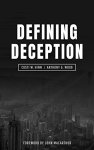
But I had been wanting to get my hands onย Costi Hinn’s and Anthony Wood’s book,ย Defining Deception,ย ever since it first came out. I finally got around to ordering it, I just finished reading it, and now I want to commend it to you.

It’s good. Get it. Read it.

If your church uses Bethel or Jesus Culture music, give a copy to your pastor and minister of music. (Actually, get all of your pastors copies anyway. It’s Pastor Appreciation Month, and I don’t know a pastor who doesn’t love a good book.)

First of all, it’s short. I mean, if it were any shorter, it would be a booklet, not a book. So even if you’re a reading schlub like me, you could finish it in under a week. Some of you book nerds could sit down and finish it in a couple of hours.

It’s basically a primer on the New Apostolic Reformation, using Bethel as the iconic NAR exemplar (which it is). You get a history of the NAR including key figures in its founding and growth, an explanation of the theological problems and heresies within the movement, a brief course in basic pneumatology, several appendices which answer more specific questions readers might have, and more. And it’s all helpfully written at a level any Joe or Jane in the pew without a seminary degree can understand.

This NAR garbage is making its way into average churches like yours. Read up and be prepared.

Hearing voices

Remember earlier this year when Vice President Pence had made some sort of comment about God speaking to him and The View’sย maven of mockery, Joy Behar, chortled:

“Itโ€™s one thing to talk to Jesus, itโ€™s another thing for Jesus to talk to you. Thatโ€™s mental illness…โ€

(I told you some of this stuff had been sitting in the hopper for a while.)

It pains me to have to say this because I despise everything Joy stands for, as well as her smug, derisive, self-righteous, condescending, supercilious, insulting attitude toward anything conservative or Christian, but unless Brother Mike was talking about God speaking to Him through Scripture…

…she was technically right.

Ouch. That hurt more than I thought it would.

Now, hang on before you start hurling those stones at me. I’m not saying that otherwise sane people who think they’re hearing God speak to them are mentally ill. They’re theologically wrong, but they’re not insane.

Here’s where she’s technically correct. In the era in which Joy came of age – before everybody and their dog started receiving extra-biblical revelation – if you were hearing voices in your head that nobody else could hear, whether you said it was God, or the devil, or Elvis talking to you, you were carted off to to a nice little institution and sedated. Heavily.

I happen to know this because when I was working on my bachelor’s degree in psychology (toward the end of that era), I did a lot of course work in abnormal psych (no idea where I was going with that, I just found it gruesomely interesting) and hearing non-existent voices telling you what to do was one of the criteria that pointed toward a formal diagnosis of schizophrenia or psychosis.

I don’t know if Joy or anybody else mentioned that, but that was my first impression of her comment about mental illness. I’ve been saying the same thing ever since I was in college- if Christians keep claiming they’re hearing God speak audibly to them, the world is going to start thinking they’re crazy. Because when it comes down to the price of eggs, there’s no outwardly demonstrable difference between observing a sane person hearing God tell her what to do and observing a schizophrenic hearing God tell her what to do. In the world’s eyes- why are we calling the first person a Christian and the second person insane?

Just one more reason to stick toย sola Scripturaย and the sufficiency of Scripture.

Is there an echo in here?

Sometimes I think social media has warped people’s brains.

Let me ask you something: If a pugnacious stranger knocked on your front door and started yelling at you, insulting you, and spewing all kinds of unbiblical garbage, would you welcome him into your living room with a humble smile on your face and put up with being treated that way on the off chance that you might learn something from his perspective on the issue, or to prove to others how open-minded you are?

Yeah, I wouldn’t either. In fact, I’d lock the door and probably call the police.

And yet those very people (and various SuperChristians who are apparently way more spiritually mature than I am, at least in their own opinion) demand that that kind of behavior be graciously tolerated and accepted on Twitter and Facebook, sneeringly accusing those of us who either refuse to engage with them, or block them, of living in a little “Christian bubble” or “holy huddle” or “echo chamber”.

Look, if you’re on social media for the purpose of verbally abusing people who think differently from you or to argue with strangers, I guess that’s your business (although if you claim to be a Christian you need to stop doing those things and repent), but that’s not whyย I’m on social media.

I’m on social media to keep up with far away friends and family, to promote my ministry, to help people I can help (who want to be helped), and to network and fellowship with like-minded Believers.

I’ve had lots of wonderful conversations with kind and polite people – Believers and unbelievers – who see things differently than I do, and I’m all for that.

But I’m not going to engage with rude, abusive people who are out looking for a fight. I’m just not. That would ruin the enjoyment I get out of social media. And if you want to call that “living in an echo chamber”, go right ahead. That doesn’t shame me in the least. I have nothing to prove about my level of open-mindedness and there’s nothing in Scripture that says I have to engage with people like that or subject myself to their abuse in order for God to consider me loving or tolerant or open-minded. The End.

A plea to the pastors

One of my recent Twitter threads:

Pastors- The women of your church need to be taught how to properly handle/study the Bible itself. Not Bible study books/DVDs – the Bible.

Many of them are so biblically ignorant I can’t explain to them why their favorite teacher is a false teacher because they have no frameย of reference for comprehending such a thing and therefore just assume I’m (or anyone else who warns them is) being mean and hateful. They believe anything the false teacher says, not because she’s biblical, but because they like her and she makes them feel good.

For. the. love. please stop depending on canned studies (even the few doctrinally sound ones out there) in your women’s Bible study/Sunday school classes and get someone to teach who actually knows how to teach God’s Word and can teach them how to study God’s Word for themselves at home.

They are falling for false doctrine either because no one has properly taught them the gospel and they’re false converts or because they don’t know enough of the Bible to know that what they’re hearing conflicts with God’s Word. I can’t even simply tell women to compare whatย they’re hearing to Scripture because they have no idea what that means, why they should do it, or how to do it.

Don’t just assume they know the gospel or know their Bibles or are getting what you’re preaching. Some of them are not. A lady I know recently told me howย excited she was about the new Joyce Meyer book she had just ordered. This was after three years of her faithfully sitting under doctrinally sound preaching. You’ve got to be intentional and proactive and make sure they are being properly trained in God’s Word.

I know I’m preaching to the choir with most of the pastors who follow me and are already doing a great job of training the women in your church. But if you could just double check to make sure. Please. We’re losing a generation of women to “feel-ology” and it breaks my heart.

McBible Study and the Famine of Godโ€™s Word

Bible Studies

Biblical Womanhood Bible Study

Imperishable Beauty: Lesson 5- A Beautiful Identity

Previous Lessons: 1, 2, 3, 4

Read The Selected Scriptures Below

In lesson 4, we learned that we were created by God, for His glory and His purposes. Today, we’re taking a look at our identity in Christ.

Questions to Consider

1. What does the phrase “our identity in Christ” mean? If the statement, “My identity is in Christ,” is the answer, what is the question?

2. These passagesย identify someone who is in Christ in what way? God chose the metaphor of Father and children to describe and define His relationship with us.ย Describe the relationship between an ideal earthly father and his child. What are some of the character traits of the father? Describe the dynamics of authority, obedience, protection, provision, and love in their relationship. In what ways does God perfectly embody those character traits (attributes)? In what ways do the dynamics of authority, obedience, protection, provision, and love play out in our relationship with God as Father and us as His children?

3. Part of our identity in Christ is that being God’s children also makes us what, according to these passages? What does it mean to be an heir of God and a fellow heir with Christ? What is our inheritance, and when will we receive it? Is there any part of our inheritance that we are receiving now, in this life?

4. How do these passages characterize someone who is in Christ? Read this brief description of first century slaveryย to help you understand the cultural context in which these passages were written. People who are only familiar with American slavery of the 18th-19th century might think the phrase “slaves of Christ” sounds scary, or that Christ is harsh toward those who serve Him. How would you explain to those people what it meansย to be a slave of Christ? How is Christ the ideal Master? What are our obligations to Christ as His slaves, and the benefits of being His slave?

5. The Bible describes us, positionally and functionally, as children of God, co-heirs with Christ, and slaves of Christ. What are some other ways the Bible describes who we are in Christ? Cite the Scriptures you draw your answers from.

6. What are some things women, even Christian women, find their identity in besides Christ? How is it idolatry to find your identity in something besides Christ? How do you identify yourself?

7. How does our identity in Christ inform how we feel, think, speak, and act? Is this statement true or false: “To feel, think, speak, and act contrary to who we are in Christ is sin.”? Why? Back up your answer with Scripture.


Homework

Earthly fathers make out a will describing the inheritance their heirs will receive. Sometimes fathers use the will, and the threat of cutting children out of the will, as a tool for manipulating their children or keeping them in line. Is this how God relates to His children with regard to our inheritance? If you have truly been born into God’s family, will He ever cut you out of His “will”? Explain how your behavior is connected to your inheritance and to your position as an heir of God. Use Scripture to support your answer.


Suggested Memory Verse

But to all who did receive him, who believed in his name, he gave the right to become children of God, who were born, not of blood nor of the will of the flesh nor of the will of man, but of God. John 1:12-13