Southern Baptist/SBC

SBC21: Aftermath, Thoughts, and Where Do We Go From Here?

Photo courtesy of sbcannualmeeting.net

Well, the fat lady has sung. And it was one doozy of a requiem.

The 2021 annual meeting of the Southern Baptist Convention ended Wednesday…

That’s not a list of everything that happened, but it’s a few of the more major dismal moments.

It was not good. It is not good. And I am gobsmacked and slack-jawed over the sunshine and rainbows comments I’m seeing and hearing from a few people about the wonderful progress and decisions that were made, and that the SBC’s brightest days are ahead.

Are you kidding me? Is it truly possible to be that blind to what’s going on around you and still be able to pull your socks on every morning?

So I had a few random thoughts I wanted to share to wrap things up and bring this whole ugly nightmare of a convention to an end.

Autonomy of the Local Church

If there were ever a time to remember the autonomy of the local Southern Baptist church and be thankful for it, this is it.

While the SBC president can certainly influence the churches and direction of the Southern Baptist Convention with his bully pulpit (which only extends as far as people actually listen to him), and he does make various decisions that may indirectly affect your church, he’s not the Pope. He does not have the power to hand down edicts that your church is obligated to obey. Ostensibly, with regard to his authority, you and your church can operate in 100% defiance of everything he stands for and still be in friendly cooperation with the SBC. The same goes for SBC resolutions, all of which are non-binding upon you and your church.

CRT/I, Racial Issues, and Resolution 9

This year, the big push among doctrinally sound Southern Baptists was to repudiate Critical Race Theory/Intersectionality.

Tom Ascol made an important motion to rescind 2019’s Resolution 9 which affirmed CRT as a “useful analytical tool” for dealing with issues of race. His motion was ruled procedurally out of order because previous years’ resolutions cannot be rescinded.

Disturbingly, the resolutions committee declined to present the Resolution on the Incompatibility of Critical Race Theory and Intersectionality with the Baptist Faith and Message – which was spearheaded by SBC presidential candidate, Mike Stone (and co-submitted by over 1300 other Southern Baptists who signed on) to the messengers to vote on. They also declined to present several other (at my last count, four) anti-CRT/I resolutions.

Instead, they put all of these into their resolutions committee Cuisinart and poured us a tall glass of watered-down Resolution 2, “On the Sufficiency of Scripture for Race and Racial Reconciliation“. Now, had this resolution been presented two years ago instead of Resolution 9, it would have been fine. Not super impactful, but fine. But in the wake of the past two years of dealing with the Resolution 9 debacle, it was a toothless, cowardly display of fence-sitting meant to placate those on the anti-CRT side and hopefully not offend those on the pro-CRT side.

And when messengers didn’t bow and scrape in thanks and obeisance to the resolutions committee for throwing them this moldy crust of bread from their royal table, but instead objected, resolutions committee chair (and former SBC president), James Merritt, went on an angry, condescending, insulting tirade.

“If some people were as passionate about the gospel as they are about [decrying] Critical Race Theory, we’d win this world to Christ tomorrow!” he shamefully bellowed.

And a significant number of messengers cheered.

Never mind that CRT is antithetical to the gospel. Never mind that it’s being taught in our seminaries and even some of our churches. And never mind that the majority of Christians most passionately against CRT are against it precisely because they are so passionate about the gospel.

If you’re a doctrinally sound Southern Baptist who sees the dangers and heresies in Critical Race Theory and you want it eradicated from the SBC, the message is clear: The leadership wants you to sit down and shut up about it. And so do a lot of your fellow Southern Baptists. They don’t care, and they’re tired of hearing about it.

Ignorance, Laziness, and
Liberalism by Default

I’m going to take a page out of James Merritt’s book and “just say this bluntly and plainly”.

Too many messengers are ignorant of the issues in the Southern Baptist Convention, the candidates for various offices, and, frankly, their Bibles, and yet they attend the annual meeting and vote in ignorance anyway, just blindly trusting whoever happens to be on stage at the moment.

Stop it.

You’re damaging the convention, and hurting your fellow Southern Baptists in the process, because you’re playing right into the liberals’ hand. They are using you – your ignorance and gullibility – to further their ungodly causes and ideologies. Because a lot of the people running this shebang aren’t biblically trustworthy.

They get up there and smooth talk you with the forked tongue of Eden’s serpent, and just like Eve – instead of planting both feet firmly on God’s Word, standing up to them and declaring, “Thus saith the Lord,” – you get suckered in and fall for it.

Stop it.

It is one thing to be ignorant1 about something. We are all ignorant about various things. But if you’re going to represent your church and your fellow Southern Baptists as a messenger, by gum, you’d better at least attempt to know what’s going on, whether or not what you’re voting on is biblical, and what the implications are going to be.

Some of you knew exponentially more about the candidates and their positions on the issues in the last U.S. presidential election than you knew about any of the candidates for president of the SBC. You wouldn’t think of going into a secular voting booth and casting a ballot for candidates or laws at the local, state, or national level without informing yourself. And when you attend your own church’s business meetings you ask questions, and you know the issues and the people you’re voting on.

Don’t you think your decisions on the issues, the president, and other leaders of your own denomination – the largest expression of the visible church in the world – deserves at least as much attention, study, and vetting as you give those other elections and issues? Is it really too much to ask that you take the responsibility of being a messenger seriously?

As I said, it’s one thing to be ignorant, but if you know you’re ignorant about a candidate or an issue, and you know you’ve been given the responsibility of representing your church and millions of other Southern Baptists by voting on that candidate or issue, and you choose not to lift a finger to inform yourself about them and what the Bible says about them, I’m sorry, but you’re being sinfully lazy.

Nowhere does the Bible ever hint that choosing to remain ignorant is a virtue. Rather Proverbs admonishes us:

The wise lay up knowledge…
Every prudent man acts with knowledge, but a fool flaunts his folly.
An intelligent heart acquires knowledge, and the ear of the wise seeks knowledge.

Proverbs 10:14a, 13:16, 18:15

You want to attend the convention mainly for the fellowship? Great. Have at it. Fellowship is important, and it’s one of my favorite parts of the many conferences I speak at and attend. But do it on your own dime, and don’t attend as one of your church’s allotted messengers. Give that slot to someone else who’s serious about the issues and about doing the Lord’s business at the convention.

There’s no excuse for showing up to vote at the convention without at least trying to be informed.

Just stop it.

We just need to get back to evangelism!”

Before, during, and now, after, the annual meeting, I’ve heard a lot of people say, “We just need to get back to evangelism in the SBC and stop dividing over all these other issues.”

If you think that, you’re missing a crucial point that you need to grasp:

We should not be evangelizing anybody with a false or adulterated gospel. And that’s what “all these other issues” are about…

NAMB (the North American Mission Board) is literally adding social justice to the gospel and requiring its church planters to teach a false gospel.

False teachers – promoted, endorsed, and financed by LifeWay – have been running rampant in the SBC for decades.

Critical Race Theory foments strife, bitterness, worldliness, and unforgiveness.

Women preaching and serving as “pastors” teaches the false doctrine that, “It’s fine for God’s people to ignore Scripture and do what’s right in their own eyes.”

Just as Priscilla and Aquila took Apollos aside and corrected him when he was preaching an incomplete, incorrect gospel, these issues, and many more, need to be biblically corrected before anybody attempts to evangelize.

As Ecclesiastes 3:1 says, “For everything there is a season, and a time for every matter under heaven.” And Matthew 7 tells us to build our house on the rock of Christ, of sound doctrine, not on sand.

It is time to correct sin and lies before evangelizing. We must have a sure foundation ourselves, first, before we implore others to build their house on that foundation.

Evangelizing with a false gospel just makes people twice as fit for Hell as they already are.

A time to mourn…

In dealing with the devastating results of the convention, I have appreciated the Barnabases out there who have encouraged us all to remember that God is sovereign, that the true church will prevail, and so many other precious truths and promises from God’s Word. That is right and good.

But let’s not miss or ignore the fact that there’s also “a time to weep” and “a time to mourn“.

This is that time.

Just as it is appropriate to encourage and be encouraged that God’s got this, it is also totally appropriate to take some time to mourn over the visible church throwing away sound doctrine with both hands and running after sin and false doctrine.

This “time to weep and mourn” is also right and good.

Now what?

From what I’m reading and hearing from scores of Southern Baptists and their pastors, a number of doctrinally sound churches are probably going to cut ties with the SBC within the next year. And who could blame them? They’ve been fighting to take the ship for years and now, they discern, there’s no ship left to take.

But many leaders in the conservative stream are urging against that, pleading with them to hang in there and fight. Rome wasn’t built in a day. After all, for how many hundreds of years did the prophets cry out to Israel to repent and return to God? Were they wasting their time?

Honestly, I think both sides make an excellent point, so I guess it’s a good thing God hasn’t called me to make the final decision on this for my tribe, my church, or my family.

So, church ladies, where do we go from here? Here’s my encouragement to you…

Should I stay or should I go?

I dealt with the question of leaving the SBC in Monday’s Mailbag article, When is it time to leave the SBC? and I still mean every word of it. If you haven’t yet read it, I urge you to do so and give the contents some prayerful consideration.

One thing I would add to that article is this: I heard from a lady who – before the convention was even over – told she was already beginning her search for a new, non-SBC church.

I would urge you not to react and make decisions out of emotionalism. If you’re in a doctrinally sound SBC church, don’t jump ship immediately. Take a bare minimum of several weeks to settle down, make an appointment with your pastor, and calmly and patiently talk to him about all of this. And, as I said in the article, make every effort to follow his leadership if at all possible.

Be prayerful and gracious.

Pray for your pastor, elders, church, and husband as they are all working through this issue. This is really going to be a tough one for pastors. No matter which way they lead their churches – to hang in there for a while and fight, or to leave immediately – somebody’s going to be upset with them.

If that somebody is you, be kind. Be patient. Be loving. If you absolutely have to leave your church, do so graciously, not making a big stink or showing your baser nature on the way out the door.

Inform, inform, inform.

Again, one of the primary weaknesses in the convention is that so many Southern Baptists are ignorant about the issues and the leadership. If you and your church decide to stay in and fight the good fight, one of the most helpful things you can do is to inform yourself and see if you can find a way to help inform others.

Ask your pastor if there’s any way you can help him or your church in that regard. You might also want to check with your local SBC association and (if he’s favorably disposed) ask the Director if there’s anything you can do (write a regular column in the newsletter, organize an informational event, etc.) to help Southern Baptists in your area get informed.

There are two organizations I would suggest you and your church follow and/or join to keep abreast of the issues: Founders Ministries and the Conservative Baptist Network. (Founders is more Calvinistic, and CBN is more traditionalist, but both are open to and friendly toward everyone.) And you should probably follow Tom Buck on Twitter, too.

What about the offering plate?

If your church is Southern Baptist, it is, by definition, contributing financially to the SBC at the national level. That’s a requirement for being “in friendly cooperation” (affiliated) with the SBC.

Most churches give a percentage of their offerings to the Cooperative Program, which is sort of like a “general fund” from which monies are disbursed to various entities of the SBC: IMB, NAMB, the six seminaries, the ERLC, Guidestone Finanacial Resources, and the Executive Committee.

Over the last few years, a significant number of churches decided they could no longer, in good conscience, financially support the ERLC due to its worldly stances and unbiblical actions. So instead of sending their offerings in to the Cooperative Program, they sent the money directly to SBC entities they felt more comfortable supporting.

But if you’ve been keeping up with the issues, you know that CRT is being taught in our seminaries, NAMB is attaching social justice to the gospel, I’d bet you dollars to doughnuts that there are unbiblical issues afoot at IMB (you’ll have to do the research on that one), and then there’s the ERLC.

Maybe you’re not comfortable with your family’s offerings going to the Cooperative Program or a particular entity(s). What to do?

First, you need to talk to your pastor or the head of your finance committee and find out exactly where your church’s offerings are going. If you learn they’re going to the Cooperative Program or to any entity you know is promoting something unbiblical, discuss your concerns with your pastor. He may not be aware of the issues (although he should be). Perhaps he will lead your church to alter its giving to the SBC in a way that aligns with your conscience.

If not, and your conscience will not allow you to financially contribute to the SBC at the national level the way your church has currently designated, ask your pastor for his advice about earmarking your family’s offerings to support your own church and other non-SBC ministries your church supports.

If your church is looking for an alternative to NAMB and IMB but still wants to support missions, may I suggest two?

The Master’s Academy International (TMAI) – TMAI originated with The Master’s Seminary (Grace Community Church / John MacArthur) and trains indigenous pastors to plant and pastor churches in their native countries. Not only is this ministry doctrinally sound, it is much more efficient and economical to train a pastor who already lives in the area, and knows the people, culture, and language, than it is to train and relocate an American to a foreign country.

Heartcry Missionary Society – Founded by Paul Washer, Heartcry’s approach is very similar to TMAI’s: training, supporting, and supplying materials to indigenous pastors and missionaries.

Be a pal

If you’ve already left the SBC, or were never in it, I need to let you know that angrily ranting and raving that doctrinally sound Christians should have left the SBC years ago, smug “I told you so’s,” and strutting how great your denomination or non-denominational status is, are not helping anybody.

Many of your Southern Baptist brothers and sisters are basically mourning the death of the only way of church life, polity, and ecclesiastical structure and connection they’ve ever known.

I’m not trying to exaggerate, here.

I’ve been a Southern Baptist since the day I was born, and I’ve been an active, invested member of one Southern Baptist church or another all of my 52 years. I grew up in GA’s and Acteens, taught Mission Friends, did my time in BYW and WMU, and faithfully gave to Annie Armstrong and Lottie Moon every year. I attended a Southern Baptist university, was a Southern Baptist minister of music’s wife, and my husband attended an SBC seminary. I served as our local association’s prayer coordinator, VBS music trainer, and discipleship conference planner and speaker. I helped plant a Southern Baptist church. I’ve provided the special music for our local associational meetings, and served as a messenger at both associational and national SBC annual meetings. And I’ve been doing everything I can for the past thirteen years of blogging, speaking, and podcasting to raise awareness about the issues in the SBC and call for a return to scriptural fidelity.

This has been my life. And it hurts. And I’m sure others feel the same way.

Yes, we know that local church life will go on – probably even better – after the SBC, that independent churches and other denominations are great, that God doesn’t need the SBC, yada yada yada.

But for crying out loud, give us a minute to grieve and gather ourselves.

Give a hug. A kind, supportive word. An “I’m praying for you…your church…the SBC.” Just…be a pal.

It’s been a rough week for the SBC and those of us still in it. Will the convention ever repent and return to obedience to Scripture? Only time will tell, and only God knows.


Additional Resources:

The “Get Out Now” Perspective:

SBC 2021: What Went Wrong and Can it Be Recovered? by Jon Harris on the Conversations that Matter podcast

8 Reasons to Leave the SBC by Jon Harris on the Conversations that Matter podcast

Russell Fuller on the State of the SBC by Jon Harris on the Conversations that Matter podcast

The “Stay In and Fight – Here’s How” Perspective:

The 2021 Southern Baptist Convention: What Just Happened? by Tom Ascol for Founders Ministries

Breaking Down the SBC Annual Meeting, Pastor Mike Stone Joins Us on Wretched with Todd Friel

How SBC Churches May Discriminately Support Convention Causes by Tom Ascol for Founders Ministries

Five Things Concerned Southern Baptist Churches Can Do Right Now by Tom Ascol for Founders Ministries

#SBC21 Shenanigans: Resolution 9, President Ed Litton, Whistleblowers and a Watching World on The Sword and The Trowel Podcast


1The word “ignorant” isn’t pejorative. It simply means you don’t know something. Again, we are all ignorant of a great many things in life, myself included.
Holidays (Other), Old Testament, Parenting

Throwback Thursday ~ Bad Dad David?

Originally published June 16, 2019

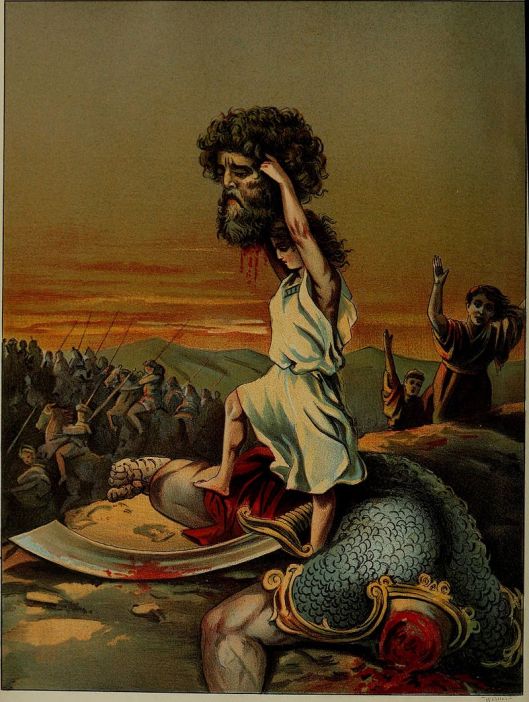
I recently finished reading through the life of David during my quiet time. When we think of David, the first thing to jump to mind is probably โ€œand Goliathโ€ or โ€œand Bathshebaโ€ or maybe that he was a king or a psalmist. But have you ever thought of David and the first thing to come to mind was โ€œlousy fatherโ€? I havenโ€™t. And the Bible doesnโ€™t explicitly tell us that he was a bad dad. And, letโ€™s face it, even the most godly parents in the world can have a kid or two who turn out to be prodigals. But if you look at how some of Davidโ€™s children turned out, you have to at least wonder about his parenting skills.

First youโ€™ve got Amnon โ€“ as disgusting a specimen of a human being as ever walked the planet. He makes himself physically ill lusting day after day for his half sisterTamar. Thatโ€™s a lot of lust. But at least โ€“ at least โ€“ he keeps it to himself. For a while, that is.

Amnonโ€™s got an equally disgusting cousin, Jonadab โ€“ who, instead of smacking him senseless when Amnon shamelessly confesses his dastardly daydreams โ€“ devises a scheme to help Amnon indulge his foul and festering flesh by tricking David into making Tamar available to him. David sends Tamar to Amnonโ€™s house, and Tamar pleads with him not to force himself on her.

(While Tamar is pleading with her pustule of a brother, she says something interesting: โ€œPlease speak to the king, for he will not withhold me from you.โ€ Now, arguably, itโ€™s likely she was just saying whatever she could think of in the moment to get away from Amnon and didnโ€™t really believe David would allow Amnon to marry her. But if she did believe that to be true, that definitely says something about David. Because, by that time in Israelโ€™s history, intermarriage between two people who shared a parent was big-time illegal with severe consequences for the offenders. And David and everybody else in the kingdom knew that. Did Davidโ€™s children think he would break the law for them and excuse them from punishment? And for such a nauseating reason?)

But Amnon ignores Tamarโ€™s heartbreaking pleas and forcibly rapes her. He rapes his sister. David finds out what happened and is understandably angry. But does he follow the law and have Amnon executed? Nope. (So we at least have our answer to the question of whether or not David would break the law for his children.) If David did anything about the situation, the Bible doesnโ€™t record it.

Fast forward two whole years. David has still not made his rapist son face the music, so Absalom, Tamarโ€™s full brother, metes out his own brand of justice, putting Amnon to death.

Fast forward a few more years and Absalom thinks, โ€œI believe Iโ€™d make a better king than dear old Dad.โ€ So he sets about manipulating and stealing the hearts of his countrymen away from David and stages a bloodless coup. David ends up having to flee for his life from his own son. Meanwhile, Absalom moves into the palace, sets up a love nest on the roof where everybody can see, and sleeps with Davidโ€™s concubines. Then, Absalom gathers up an army to hunt David โ€“ his father โ€“ down in order to kill him and secure his throne.

Davidโ€™s men fight valiantly for him, risking their own lives. Joab, the commander of Davidโ€™s army โ€“ perhaps considering Davidโ€™s command to โ€œdeal gentlyโ€ with Absalom as ludicrous after all Absalom has done โ€“ seizes an opportune moment, and kills Absalom. David flips out in grief, so much so that Joab has to rebuke him: all these men risked their lives to save you, David, and youโ€™re crying and moaning over this wretch who was trying to kill you! Snap out of it or theyโ€™re going to turn on you! Fortunately, David has the sense to listen to him.

After some more wars, some famine, and a โ€œsin-sus,โ€ Adonijah decides he can pull off the coup his brother Absalom so spectacularly failed at. David is old and sickly, and it should be easy for Adonijah to make a grab for the throne. And in the description of Adonijah, hereโ€™s what was said that initially got me thinking David wasnโ€™t Dad of the year:

His [Adonijahโ€™s] father [David] had never at any time displeased him [Adonijah] by asking, โ€œWhy have you done thus and so?โ€ 

Are you picking up what the author of 1 Kings is laying down? David was an indulgent father. He had never at any time questioned his sonโ€™s actions or intervened in a way that upset him. He let Adonijah run wild and do what he wanted to do. And the way Amnon and Absalom acted, itโ€™s reasonable to surmise that David raised them the same way, along with all the rest of his children. Itโ€™s a miracle Solomon turned out as well as he did (at least until his wives drew him away from the Lord into idol worship). Reading the first nine chapters of Proverbs, I canโ€™t help but wonder if Solomon observed Davidโ€™s parenting and was determined not to follow his poor example. Listen to my instructions, son. Get wisdom. Donโ€™t be a fool.

Sometimes Bible characters set a great example for us. David, a man after Godโ€™s own heart, set many. But sometimes God lets us see their poor and sinful behavior so we can learn not to follow their example. Moms and Dads, letโ€™s make sure we are men and women after Godโ€™s own heart when it comes to parenting our kids.

Happy Fatherโ€™s Day, yโ€™all.

Bible Study

The Word on Wednesdays

Hi ladies! I hope you’ve been enjoying The Word on Wednesday Bible study lessons and resources, and that you’re looking forward to our new study as much as I am.

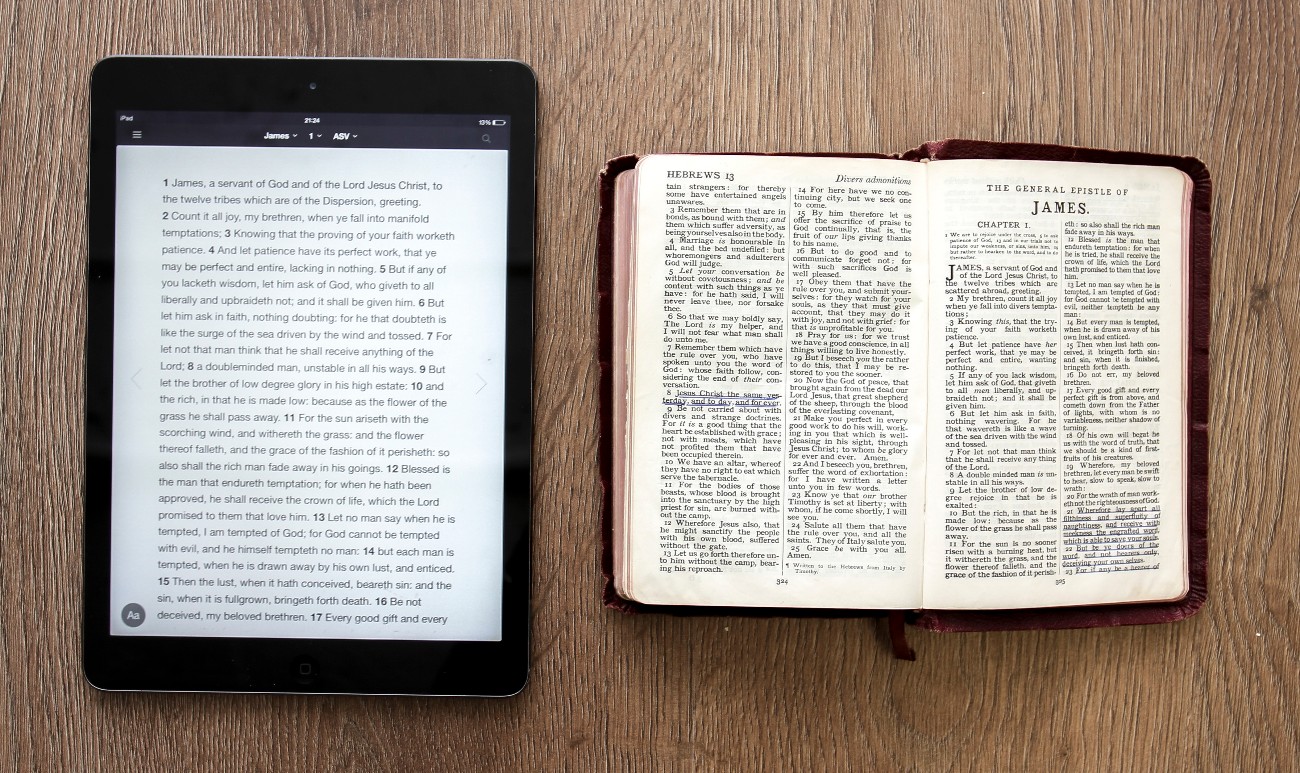
I’ve been taking a break on Wednesdays getting ready for our new study. I hope youโ€™ll enjoy it and that it will edify you as you seek to grow in Christ and His Word. (The picture above does not mean we will be studying James. :0)

Some may find the book of the Bible we’ll be studying to be an exciting challenge (a challenge I know you’re up for!), so I wanted to give you a heads up to start thinking about reference materials. You don’t have to buy or use any of these materials, but you may find them handy as you study.

If you have been considering investing in a good study Bible, this would a great time to do so, not just for our next study but to use for years to come. I personally use and highly recommend the MacArthur Study Bible (the ESV and NASB are good translations), and, although I haven’t tried it out myself, I understand the ESV Study Bible is also very good. (You might want to shop around for the best price. These are both available on Amazon and probably other retail sites as well.) If free is more in keeping with your budget, the Faithlife Study Bible app is phenomenal. It not only has very good and copious study notes, it also has maps, Bible dictionaries, articles, videos, pictures, and more. In fact I would recommend you download it as a supplementary resource even if you decide to get one of the aforementioned study Bibles – it’s that good.

If you have a good set of Old Testament commentaries, you may find those to be useful in our study. There are also a number of sites that offer free, online commentaries, Bible dictionaries, encyclopedias, and other study resources (most of these are available as apps):

Bible Gateway          Blue Letter Bible          Bible Hub

Bible Study Tools         StudyLight.org

And finally, you can always find great articles, sermons, devotions and other materials to aid your understanding of various topics and passages of Scripture at Grace to You and Ligonier.


I hope you’ll find these resources helpful as we begin our new study.

What is your favorite
study Bible, commentary, or other Bible study resource?
Share with others in the comments below!

Share Your Testimony, Uncategorized

Testimony Tuesday: An Anonymous Sister’s Story

Anonymous’ Story

I certainly never expected that I would fall into the trap of false teaching. I was raised in a Christian home with loving parents who took me to church, taught me Christian values, and even sacrificed to send me to a Christian school where I learned the Bible and practiced spiritual disciplines daily. I made the decision to follow Christ for myself at age 15 and never really went through the rebellious teenager stage. I have memorized Scripture and would estimate that I know probably 75% of the events that take place in the Bible. I married a Christ-following man after college and have continued to seek after the Lord and attend Bible-believing churches in the years since we have been married. I would have told you that there was no way I could have fallen into deception as far as what the Bible taught! And I would have been very wrong. Let me briefly tell you our story of becoming parents.

I would have told you that there was no way I could have fallen into deception…

My husband and I felt Godโ€™s leading to start the process to become foster parents as fresh, young 26-year-olds who had never been in the role of โ€œMom and Dadโ€ before. We had the willingness to parent kids from hard places, but very little experience.

As we embarked on the journey of being parents to our first little one, we realized that not only did we have an instant toddler, walking, talking, runningโ€ฆ(away from us in parking lots), we did not have the bonds that most parents and toddlers have who were biologically stitched together. We were getting a trial-by-fire introduction to parenting, and as most parents do, we needed some wisdom from those who had gone before us.

Through our church and social media pages, we kept hearing about taking classes which help parents raise kids who have come from traumatic situations. We signed up and took a class over the course of six weeks. The classes we attended and books we read were full of good ideas. They equipped us with different strategies to engage children of all ages to exercise self-control and practice calmness and thoughtfulness. The idea was that, over time, greater depths of discipline could be achieved as the child learned to operate inside a foundation built on trust and love for their parents- something that newborn babies all the way up to teenagers may not have experienced in their birth families.

The classes helped us understand brain physiology and develop empathy and compassion for what trauma and abuse can do to a person and how to be more patient in training our children who are in foster care. The classes in and of themselves were helpful and gave us some tools to address the behaviors and needs of our children that we hadnโ€™t considered before.

Since we found the class to be helpful, I began to surround myself with other trauma-focused women through church, friendships, social media, podcasts, etc. I loved my life as a foster mom and was eager to glean wisdom from these older, wiser ladies that had a lot to say about raising children from traumatic situations. This is where the problems began.

These older, โ€œwiserโ€ women, all of whom attended Bible-believing churches, many of whom were even pastorsโ€™ wives, never said anything to me about the Bible, other than to tell me that this way of parenting aligned to the Gospel. They never pointed me to the Scriptures or encouraged me to hold my children accountable for their sin. They never reminded me that only God could heal my children from their past abuse. They only pointed me to the โ€œreligionโ€ of trauma-based parenting and its ideologies.

They never pointed me to the Scriptures…

Admittedly, I even pushed my husband into these ideologies as we tried to bring a unified approach to parenting in this way, as was the case for most of the couples that I had contact with over the years who were also in these circles. These ideologies were not explicitly taught but were intrinsic to the conversations, the memes, and the discussions on podcasts, social media pages, and during Mom’s Coffee Night. Here are four of the most common ideas that I observed creeping into the minds and hearts of the women involved:

  1. You arenโ€™t modeling Godโ€™s love and grace if you are unyielding in your expectations for your childโ€™s behavior.
  2. Kids misbehave because of the trauma they have experienced, and if they could make a better choice, they would. Therefore they donโ€™t because they physiologically canโ€™t.
  3. If you donโ€™t subscribe to and practice nearly everything produced by these parenting programs, you are not helping your child heal from their trauma (and might be making it worse).
  4. You should identify your own โ€œtriggersโ€ from childhood that might be causing you to take offense to your childโ€™s wrong behaviors (you may never have known you had any triggers- getting counseling will โ€œrevealโ€ these to you.)

As you can see, these ideas are not without spiritual implications. What started out as the desire to teach and train my children in a way that is conducive to reshaping their past experiences, quickly morphed into an expected lifestyle. Those pushing these ideologies employ a worldview which blames the parentsโ€™ hidden character flaws for a childโ€™s misbehavior, places the weight of mental and emotional healing on the parentsโ€™ discipline efforts, and absolves kids almost completely of their sin simply because of their circumstances in life.

Though my husband and I didnโ€™t immerse ourselves fully in the practices that these โ€œleadersโ€ were pushing, as we continued to foster and eventually adopt, we regularly felt defeated in our attempts to parent the way we heard others in these circles were parenting. I tried to keep a mental checklist of what to do and what not to do based on the social media posts and heartfelt stories that I saw from those I thought were doing it โ€œthe right way.โ€ I berated my husband when he didnโ€™t handle something โ€œrightโ€, and beat myself up and felt like a terrible mother when I reverted back to the โ€œless loving and graciousโ€ way of parenting (which I did regularly).

Our kids didnโ€™t seem to really care about any of the non-punitive consequences that we attempted to enforce, and actually responded better to the way we were told not to parent, though we felt guilty for reverting back into some of these tendencies. We werenโ€™t seeing the results we wanted to and ultimately we felt powerless as parents.

Over the next couple of years, we started seeing that what we had considered to be resources, encouragement, and even discipleship were actually just lies. We unsubscribed from the social media, the podcasts, the church classes, etc. and ultimately unsubscribed our family from the ideologies making us weak, ineffective parents producing weak, excuse-filled children.

We have now been foster and adoptive parents for several years and have had over a dozen children in and out of our home, adopting several of them. Our children are very happy, healthy, and successful at home and school and love the Lord. My husband and I argue less about
the right way to handle something, we are more confident as parents, and we are able to delight in our kids instead of wondering if weโ€™re worsening their trauma.

I am forever thankful to the faithfulness of God to eventually help us see that we had strayed from what He says is the right way to view misbehavior and the discipline of our children. Now, it is my mission to make sure that other moms, whether they are foster and adoptive moms or not, see parenting programs for what they can be: God-given resources to equip us to be godly parents, and what they are never to be: the indoctrination of a different worldview, seeing children as inherently sinless or as a product of their circumstances who want to do the right thing but canโ€™t.

I am forever thankful to the faithfulness of God…

Let me be clear, the reason that I fell into this pattern of wrong thinking was not because I didnโ€™t know that the Bible said anything raising children. It is because I subconsciously did not consider Scripture to be the only valuable resource out there and I mistakenly placed my trust in the advice of women who marketed themselves as Gospel-centered trauma experts. Turns out their approach was very light on the Gospel.

When I started to really believe that Scripture was solely sufficient for all issues in life, I understood that what I had been following were very covert lies. And I began to see everything outside of Scripture as either deception or a resource that is only useful if you are using it within the bounds of what God says in Scripture.

Ladies, if you havenโ€™t recently read 2 Timothy 3, stop right now and go read it. In it, Paul has a lot to say about how people will think and behave in the last days. It warns women to not fall prey to people who โ€œhave the appearance of godliness, but deny its power.โ€ It tells us to stay away from those who โ€œcreep into households and capture weak women, burdened with sins and led astray by various passions, always learning and never able to arrive at a knowledge of the truth.โ€ Paul says that people who do this โ€œwill not get very far, for their foolishness will be plain to all.โ€

Second Timothy 3 also calls Christ-followers to โ€œcontinue in what you have learned and have firmly believed, knowing from whom you learned it and how from childhood you have been acquainted with the sacred writings, which are able to make you wise for salvation through faith in Christ Jesus.โ€ It reminds us that โ€œAll Scripture is breathed out by God and profitable for teaching, for reproof, for correction, and for training in righteousness, that the man of God may be complete, equipped for every good work.โ€

When we are vulnerable to believe anything that we see from leaders that claim to be Christians, without examining what theyโ€™re saying against the whole Word of God, we are these weak women. We want what is best for our children, but we are sinful because we are not trusting God with their healing or to guide us to appropriate discipline through the study of His Word and the knowledge He allows us to have through others who have gone before us.

Instead of taking useful strategies, thanking God, and applying them to what He has already told us to do, we are led astray by the leaders who have created entire movements based on a few good principles, turning instead to their social media pages, to their classes and teachings. We feel that we can never know enough about how to help our children because we do not believe that Godโ€™s system of discipline and instruction is sufficient. And as a result, our children are also carried away by excuses, in searching for what will make them whole. We have spent our lives looking for the solution to their trauma and as a result we have trained ourselves and our kids that God is not it.

In fact, God is the one who teaches us through His infallible Word that He is the solution for every circumstance that belies us. His Word is helpful for teaching and correcting our kids, for training our entire family in the way of righteousness, and to equip us for every good work, including raising our kids.

Our children can be complete by knowing God, knowing His Word and coming to salvation through Him. Any resources God brings to us from other humans, is simply that. A resource. Not a way of life. Not a worldview. Not a religion.

We have all we need in Christ.


Ladies, God is still at work in the hearts and lives of His people, including yours! Would you like to share a testimony of how God saved you, how He has blessed you, convicted you, taught you something from His Word, brought you out from under false doctrine, placed you in a good church or done something otherwise awesome in your life? Contact me, or comment below. Your testimony can be as brief as a few sentences or as long as 1500 words. Letโ€™s encourage one another with Godโ€™s work in our lives!

Mailbag, Southern Baptist/SBC

The Mailbag: When is it time to leave the SBC?

In the past, I’ve received some responses/comments on this issue from Christians who seem very angry that anybody is still in the SBC. While I share your righteous anger at the sin being committed in the SBC (and at those committing it), please don’t let your anger spill over onto your brothers and sisters who are still attempting to navigate this situation in a godly way in the context of their own families and local churches. Extend grace and patience and trust God to work in their hearts His way and in His timing.

At what point does one leave the SBC? I know there are other doctrinally sound churches where one could worship. When would “guilt by association” turn into a stumbling block for others?

How will you be handling the possible debacle with the SBC? We are so torn about this situation. Any advice or words of wisdom would be greatly appreciated.

These are just a couple of the “Should I stay or should I go?” questions and comments I’ve received about the current state of the Southern Baptist Convention.

There’s no denying there are, and have been for decades, serious problems in the SBC, mainly at the national leadership level. If you’re a regular reader of my blog, over the past several weeks, you’ve been reading about those problems, both old and new.

How do you know when it’s time to stand and fight to correct the problems, and when it’s time to declare it a total loss and walk away? How long until staying in the trenches, pleading with the SBC to repent becomes, functionally, being unequally yoked with unbelievers, when it becomes apparent they have no intention of repenting and we refuse to break fellowship with them? Indeed, how can we know when or whether it’s time to leave any church or denomination with such seemingly insurmountable biblical problems?

I don’t know.

But I can tell you there’s Biblical support for both staying (for now) and leaving. As Ecclesiastes might say, “A time to contend for the faith, and a time to shake the dust off your feet and leave.”

In the Old Testament, we see God bearing with Pharaoh’s stiff-necked rebellion through ten plagues. We see Him patiently calling Israel out of idolatry for hundreds of years.

But He did destroy Pharaoh and his army at the end of those ten plagues. And He did eventually send Israel into exile when the time for His forbearance came to an end.

But we also see Jesus leaving the ninety-nine and pursuing the one sheep that went astray. We see the father of the prodigal watching and waiting for his son’s return.

Jesus brought that sheep back. And the prodigal did return in repentance.

God knew whether and when they would all come back, and how long to persist with each. How can we?

The only way to know is to ask Him. This is something every individual Southern Baptist, every Southern Baptist family, and every Southern Baptist church needs to be praying about, asking God for wisdom to know what to do and when the time is right.

If any of you lacks wisdom, let him ask God, who gives generously to all without reproach, and it will be given him.

James 1:5

And the answer is probably going to look different between different churches, different members of the same church, even different members of the same family.

And that’s OK. Already, some godly churches, families, and individuals have cut ties with the SBC. And that doesn’t mean they didn’t have enough faith or enough patience. Some godly churches, families, and individuals have determined to stick it out until things turn around or until the bitter end, whatever form that may take. And that doesn’t mean they’re compromising or naive.

God works in different ways in different hearts and circumstances because He created us as unique people and placed us in varying situations. He does that for His glory and our good. It’s a testament to how big and capable He is and His special care for each of us as His “one of a kind” child.

But, in addition to the privilege of prayer and God’s promise of wisdom, there’s another blessing God has given us in this situation – the blessing of authority and structure.

God has given us a hierarchy of authority in the church and the home that, when followed, pools the wisdom He has imparted to individuals and prevents any one person from bearing the responsibility for making this decision alone.

As an individual, you pray and search the Scriptures earnestly about this issue. If you’re married and your husband is a Believer, the two of you bring your individual convictions to the table, and pray and study on it, and, hopefully, come to a consensus on it (and, if not, you’ll need to submit to your husband’s position), together.

Next, married or not, you, or you and your family will need to find out where your church leadership is on all of this, if you don’t already know. If your pastor and elders haven’t already come together and talked to the church body about staying in or getting out, and why, you’ll need to set up an appointment with whichever one of them is appropriate and ask about their thoughts and position. If the issue of leaving or staying isn’t even on their radar yet, it would be an appropriate time for you and your husband to share your concerns and ask when they might address this issue.

My encouragement to you would be that if you are in a doctrinally sound Southern Baptist church, with trustworthy pastors and elders who are trying to do the right thing, biblically, give strong, prayerful consideration to following their leadership on this issue, even if you don’t see exactly eye to eye with their position.

Obey your leaders and submit to them, for they are keeping watch over your souls, as those who will have to give an account. Let them do this with joy and not with groaning, for that would be of no advantage to you.

Hebrews 13:17

Pray fervently for your pastor and elders about this. Pray for your husband as he seeks to lead your family in a godly direction. If you’re married, submit to your husband’s decision about whether and when to leave. If you’re single, if at all possible, submit to your pastor’s and elders’ decisions about staying or leaving.

There’s not a “one size fits all” solution to this issue. You, as an individual have to seek the Lord and obey Him in your unique situation.

May our gracious Lord give all of us wisdom and humility, and carry us through this difficult time.


If you have a question about: a Bible passage, an aspect of theology, a current issue in Christianity, or how to biblically handle a family, life, or church situation, comment below (Iโ€™ll hold all questions in queue {unpublished} for a future edition of The Mailbag) or send me an e-mail or private message. If your question is chosen for publication, your anonymity will be protected.