Sanctification, Throwback Thursday

Throwback Thursday ~ Six Cliches Christians Could Can (Or at Least Re-think)

Originally Published March 29, 2014


Have you ever noticed we use a lot of expressions without giving much thought to their origin or what they really mean? For example, why do we use the phrase, “in a (pretty) pickle” to mean “experiencing a difficult situation”?

Here are six cliches we often use as Christians that could stand to be replaced or at least re-thought:
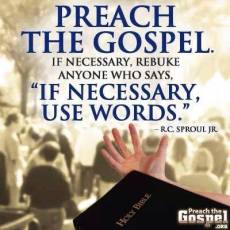
1795610_10153768796270386_733462403_n1. Preach the gospel. If necessary, use words.
It’s necessary. Use words. While our behavior should certainly prove out our testimony, nobody’s going to see us working at a soup kitchen or eschewing barhopping and somehow magically understand that he has broken God’s law and needs to repent and put His faith in Christ’s death, burial, and resurrection for the forgiveness of his sin unto eternal life. That has to be explained. Clearly. By us. From the Bible. With words.

 

tombstone-159792_6402. Rest in peace/God rest his soul
If the person who died was saved, he’s already resting in peace by the time you can get these words out. (2 Corinthians 5:6-8)

If the person who died wasn’t saved, unfortunately, he’s in a place of eternal torment and suffering, and no amount of asking God to rest his soul will give him a respite. Worse, when Christians say this about someone they know was not saved, they reinforce the false idea many lost people have that the dead are “resting” in some sort of spiritual coma, or that they simply cease to exist (annihilationism) , or that everybody automatically goes to Heaven (universalism).

Maybe “I’m praying for you,” or “I’m bringing you dinner,” would be better.

and speaking of which…

 

th3. Sending positive thoughts/energy your way.
Thoughts and energy are not things you can wrap up in brown paper, haul down to the post office, and mail to somebody. You can’t send them and the other person can’t receive them, and they can’t actually accomplish anything, and everybody knows this. But, commendably, atheists, New Agers, and other non-Christians wanted to have something compassionate to say to people who are hurting, and since they can’t say, “I’m praying for you,” this is the best they can do.

Christians, we’ve got something better. We can say, “I’m praying for you.” We have an open line to the almighty God of the universe who is listening to us and can actually do something about the situation. Pray for that hurting person. Put your arms around her. Listen to her. Do whatever you can to help. Show her Jesus, not empty words.

 

RNR084. Christianity isn’t a religion, it’s a relationship.
The only people running around today saying that Christianity is not a religion are Christians. Everybody else in the world considers Christianity a religion. And up until this little humdinger materialized, so did Christians.

Usually, what people mean by this is that true Christianity is not an institutionalized system of rote obedience to dead and meaningless rituals. It’s a reconciliation with the only true God by means of being redeemed by His Son, Jesus Christ, who propitiated and expiated God’s wrath against us in our sin through His death, burial, and bodily resurrection, and is, therefore, a dynamic and living interpersonal relationship.

But that’s too long to fit into a tweet or a hashtag.

Our relationship with God through Christ is our religion- the only true religion. And that’s not a bad thing.

 

ttgpt231112b5. Don’t judge someone just because he sins differently than you do.
I find this one confusing, but I think the sentiment behind this is something along the lines of, “I may be an adulterer, but you’re not any less of a sinner just because you only tell the occasional white lie.  Therefore, you have no right to call me to repentance.”

This is a lovely casserole of simultaneous truth and falsehood, and it all hinges on the word “judging,” which has been tossed around so much that even Christians scarcely know what it means anymore. No, we’re not to berate someone for his sin while pompously pretending we’re sin-free. All have sinned, after all, and if we say we have no sin, we lie. But does that mean we should never call anyone to repentance? Of course not! We’re to walk in repentance ourselves and seek to help the lost find forgiveness in Christ and help our Christian brothers and sisters who have fallen into sin to be reconciled to Christ. Scripture doesn’t say we can never call people out of sin because we have a log in our own eye. It says first remove the log and then help your brother.
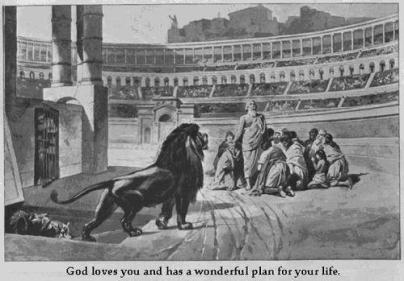
 

69475_10102578902186220_955102342_n6. God loves you and has a wonderful plan for your life.
This is actually true, it’s just that our idea of a “wonderful plan” doesn’t always match up with God’s idea of a “wonderful plan”.

Our desire is to be healthy, wealthy, and blissfully comfortable with never a family problem, fender bender, lost love, or bankruptcy. God’s desire is for us to be holy. He wants to root the sin out of our lives, show us how to be completely dependent on Him, lead us to trust Him more, build our character and endurance, give us boldness to share the gospel, make us kinder and more merciful, teach us what it means to extend grace and forgive. Most of those lessons are learned only through hardship and suffering. Just ask the apostles or the early church martyrs or our brothers and sisters being persecuted across the globe today.


What are some expressions Christians commonly use that you think we should replace or re-think?

Politics, Prayer, Throwback Thursday

Throwback Thursday ~ Not Gonna Bow: 5 Reasons Prayer in School Isn’t the Magic Bullet Christians Think It Is

Originally published August 29, 2014Prayer In School

“We need to put prayer back in school!” It’s a well worn mantra that many Christians have been shouting from pulpits, in PTA meetings, and now on social media since the early 1960’s when it was outlawed. No, we don’t need to put prayer back in public schools, and I think if Christians who think that the United States would revert to some idyllic 1950’s utopia by re-instituting classroom prayer would give it five minutes of serious thought, they would run as far as they could from the idea of prayer in public schools.

Now, just so there are no misunderstandings, when I say “prayer in public schools,” I’m not talking about things like a child saying the blessing over his own lunch, or a group of kids who want to pray together during free time, or an after school club that wants to include prayer. Those are all voluntary, private things that should, by all means, be allowed. When I say “prayer in public schools,” I’m talking about a teacher or a student or someone over the loudspeaker leading the entire class in prayer during class time. And we definitely do not want that. Why?

1. What’s good for the Christian goose is good for the Muslim/Mormon/Atheist gander.
There is no way in the current cultural climate –none whatsoever- that any court in this land will re-institute Christian prayer, and only Christian prayer, in the classroom. And even if some well meaning judge did manage to do so, his decision would be overturned faster than you could say “amen.” You want prayer in the public school classroom? You might get Christian prayer, but you’re also going to get Muslim prayer, Mormon prayer, atheist prayer, Hindu prayer, Satanist prayer, and any other sect that comes along and wants to do prayer in the classroom. Do you really want your six year old faced with the choice of participating in a Satanic prayer or trying to get permission to abstain? Neither do I.

2. Why is it so important that we have prayer in schools?
Assuming you don’t work at a church or ministry, does your workplace gather all the employees at the beginning of the day and start with prayer? No? Has that been deeply detrimental to you personally or to your workplace? No? Then why is it so important that schools have prayer?

3. Post hoc ergo propter hoc.
This nifty little Latin phrase means “after this, therefore, because of this.” It refers to the faulty reasoning people sometimes use by assuming that because two events occurred near the same time or seem to be related, one of them must have caused the other.

Time and time again, I have heard Christians bemoan the moral state of this country and wail, “It all started when they took prayer out of schools!”

Post hoc ergo poppycock

If the moral state of this country was so perfect before 1962, then how in the world did prayer ever get taken out of schools in the first place? No, things started going downhill in this country long before prayer was removed from schools. It was as a result of that moral decay that prayer was taken out of schools.

Saying that the removal of prayer from public schools created the mess our country is in today would be like someone sixty years from now saying, “When the Supreme Court legalized gay marriage nationwide, that’s when things started going bad for America.”

Because things are just so morally peachy right now.

4. It isn’t biblical.
It is not the job of a secular governmental institution or employee to monitor or lead our children in prayer, and no one could make the case from God’s word that it is. Scripture tells us that leading in prayer is the job of Christian parents and the church.

Neither would it be biblical for the sake of unsaved children in your child’s class that you’re hoping will somehow get saved by someone leading a prayer every morning. That’s not how people get saved. If you’re concerned about lost children, teach your child how to share the gospel. Befriend the children’s parents and share the gospel with the parents yourself. It’s free, it can be done immediately, without waiting for court decisions (that won’t be coming anyway) and it’s biblical.

5. It’s hypocritical.
It is often Christians who exclaim the loudest, and rightly so, that the government should back off and stop trying to control, regulate, and meddle in every square inch of our lives. Yet with regard to prayer in schools, Christians talk out of the other side of their mouths and practically beg the government to insinuate itself into an issue it has no business touching. (Not to mention that the government does such a bang up job of handling things like this.)

Will those very Christians complain if the government re-institutes prayer and then tries to regulate it just like they do everything else? And what about depending on the government for a handout of prayer when we are the ones who should be doing the work of teaching prayer and sharing the gospel? Isn’t that a sort of prayer “welfare” system? Putting prayer back in public schools would be a nightmare of false religions and government regulations.

We don’t need prayer in schools. We need prayer in homes and in churches. We need people sharing the gospel with their friends, fellow students, neighbors, and co-workers. We need Christians to be the salt and light Jesus called us to be in the world we actually live in rather than pining away for an imaginary ideal that will never come to fruition.


¹I only wish I were clever enough to have come up with this. Kudos to CHRIS ROSEBROUGH’S wife who coined the Phrase.
Prayer, Sanctification, Throwback Thursday, Worship

Throwback Thursday ~ Great Expectations

Originally published February 6, 2014expectgreatthings-necklace (1)

Do we expect too much from God? Is that even possible?

No.

Yes.

Well, kinda.

You see, I’m not talking about expecting something and God being unable to deliver it. That’s just plain silly when talking about our omnipotent God. No, what I’m talking about is whether or not the expectations we come up with are grounded in biblical reality.

What do we mean when we talk about “praying expectantly” or coming to a time of corporate worship, study, or prayer, and “expecting God to do something”? Just what is it we are expecting God to do?

Could it be that He’s already doing something and we’re just not seeing it?

Sometimes, when we read God’s word, we expect God to do something just as “big” as He did in Moses’, Paul’s, or some other Bible hero’s life. We forget that the Bible is sort of like a “highlight reel” of the events in the lives of a handful of people that God drafted to be part of His visible activity at that moment in history.

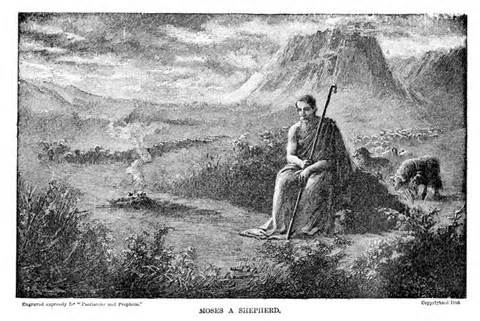
We focus on the moments Moses had at the burning bush or walking through the Red Sea, and that’s what we want, too. r643167_4468740But we forget that Moses’ life wasn’t like that every day. We forget about the eighty years he spent wandering around the desert, half in the day to day monotony of shepherding on the back side of Midian, the other half, wandering around the wilderness with the people of Israel.

Eighty years of nothing special. Day after day of ordinary. Week after week of God not “showing up” and doing something amazing. Eighty years. That’s a lifetime for most of us.

Was God any less at work in Moses’ eighty years of desert thwandering than He was when He gave Moses the Law or spoke to him face to face or sent manna? Of course not. During those days, God was protecting Moses from the heat and wild animals, providing food and shelter for him, blessing him with a wife and children, directing his steps, teaching him obedience and trust.

Just like He does for us.

Have you read a Bible passage this week that allowed you to see more of God’s glory? God is doing something. He’s revealing Himself to you.

Are you praying for someone’s salvation? God is doing something. He’s working on the heart of that person.

Did you have a place to sleep last night and food on your table today? God is doing something. He’s providing for your needs.

Do you leave church on Sundays having been fed the truth of God’s word by your pastor? God is doing something. He’s growing you to spiritual maturity.

Is it possible that we’re expecting God to do something in our lives that isn’t in His particular plan for us? You aren’t Moses, and neither am I. Neither were the million or so other Israelites Moses led out of Egypt, and neither have the billions of other people been who have inhabited earth since Creation. Moses was Moses. You are you. God doesn’t have the same plan for your life He had for Moses’ life.

And, by the way, have you ever noticed that most of the people in the Bible through whom God did something “big” were not expecting it or asking for it? Moses wasn’t expecting God to show up in that burning bush. David wasn’t asking God to do great things in his life when Samuel dropped by to anoint him as the next king. Both of them were hanging out with the sheep when God called them. Paul thought he was already an awesome servant of God when he got knocked off his high horse. Mary wasn’t expecting to be expecting. She was just a teenage girl growing up and learning how to run a household.

1 Thessalonians 4:10b-12 says:

But we urge you, brothers to do this more and more, and to aspire to live quietly, and to mind your own affairs, and to work with your hands, as we instructed you, so that you may walk properly before outsiders and be dependent on no one.

That’s what all of those Bible characters were doing when God chose them. Just regular people living regular lives doing regular work. Just like billions of other people through whom God has not chosen to do anything big and spectacular.

keep-calm-god-is-at-workBut that doesn’t mean God hasn’t been “doing something” in all of our lives. In fact, the vast majority of the work God does in our lives every single day goes unnoticed and unappreciated.

So, instead of setting our expectations on those very rare “wow factor” works of God that seem so appealing, maybe we should be asking Him to open our eyes to, and make us thankful for, all of the things He’s already doing in our lives. Instead of having great expectations of things that God has never promised us, maybe we should ask Him for, and expect Him to, do what He has promised:

Forgiveness for our sin

Christ-likeness

Provision for our needs

Endurance

The ability and opportunity to help others

Faithfulness

Humility

Patience

The opportunity to share the gospel

Because “all the promises of God find their Yes in him.” You can expect it.

Poetry, Sanctification, Suffering, Throwback Thursday

Throwback Thursday ~ Crafted Like Christ

Originally published July 2, 2013crafted like christ

“Lord, make me more like Jesus,” I prayed.
“Yes, Beloved. I will,” He smiled.
He began to lay out the tools of His trade,
A sculptor’s tools, for shaping His child.

“Oh no, Lord, not those,” I gently whined,
As chisel and mallet He took in hand,
“Use instruments of a softer kind,
To help me walk as faith demands.”

“See, over here, the tools I’ve laid,
To gladden my spirit and brighten my eye.
Surely, the velvet cloth of blissful days,
Will change my heart into one like Christ’s.”

“And here,” I went on, “Another I’ve brought,
A feathered brush of comfort and ease,
To keep at bay life’s dust and rot,
This will bring holiness, certainly.”

“At end, I’ve laid a pleasant salve,
Of bountiful health and silver and gold,
Take this, Lord; it’s yours to have,
To make me for the gospel bold.”

“Wish you to remain a stone?”
I heard my Master say,
“My tools are used to chip and hone
What looks not like Christ away.”

“The mallet of trial, the chisel of need,
The grind of suffering,
These in love and grace I wield,
To conform you to the likeness of your King.”

“Your implements will come, in time,
Velvet will dry the tears you weep,
Feathers brush off toil’s grit and grime,
Salve, your deepest pain will ease.”

“This will make me like my Lord?” I groaned in disbelief…
“Do not spurn my tools, my child” my God said, lovingly,
“For Christ was a Man of Sorrows, acquainted with grief,
And learned obedience through suffering.”

Parenting, Throwback Thursday

Throwback Thursday ~ The 10 Commandments of Parenting- 10

Originally published August 14, 200810 Commandments Parenting 10

10.
Thou shalt love.

Beloved, if God so loved us, we also ought to love one another.
1 John 4:11

Loving our children isn’t something that just happens. It also isn’t just a nice fuzzy feeling. It’s a duty. A responsibility. A command from the lips of God Himself.

“…if God SO loved us…” What does that “so” mean? It’s talking about the way God loves us.

By this the love of God was manifested in us, that God has sent His only begotten Son into the world so that we might live through Him. In this is love, not that we loved God, but that He loved us and sent His Son to be the propitiation for our sins. 1 John 4:9-10

God loved us enough to do what was best for us even though it cost Him that which He held most dear. He loved us sacrificially and unselfishly.

But God demonstrates His own love toward us, in that while we were yet sinners, Christ died for us. Romans 5:8

Even when we were living in outright rebellion against Him and didn’t care that he wanted what was best for us, God loved us.

For whom the LORD loves He reproves; Even as a father corrects the son in whom he delights. Proverbs 3:12

God loves His children too much to allow us to continue in our sin, so He disciplines us.

But God, being rich in mercy, because of His great love with which He loved us Ephesians 2:4
Be kind to one another, tender-hearted, forgiving each other, just as God in Christ also has forgiven you. Ephesians 4:32

But, even as God disciplines us, in His mercy he forgives us when we repent of our sin.

The steps of a man are established by the LORD; And He delights in his way. When he falls, he will not be hurled headlong; Because the LORD is the One who holds his hand. Psalm 37:23-24

God delights in our obedience to Him and our love for Him. And even when we fall, He’s right there holding our hand and helping us get back up.

He who has clean hands and a pure heart; Who has not lifted up his soul to falsehood; And has not sworn deceitfully. He shall receive a blessing from the LORD; And righteousness from the God of his salvation. Psalm 24:4-5

God rewards and blesses obedience to His word.

Do we love our children the way God loves us? Do we…

  • love them sacrificially and unselfishly?
  • love them enough to want what’s best for them?
  • love them enough tofollow through and do what’s best for them even if they fight us every step of the way?
  • love them enough to disicipline them?
  • love them enough to forgive them?
  • love them by delighting in them?
  • love them by blessing and rewarding them for doing well?

It’s a huge challenge. Our kids are going to drive us up the wall, rebel, pout, whine, and at times, break our hearts. Just like we do to God. But if He so loved us, we ought also to love our children.