
Mailbag

The Mailbag: Children’s Bible Recommendations

I continue to update this article as new
Bibles and information become available.

Do you have any recommendations for a trustworthy Bible for children? My son is almost 6 and still learning to read well. I’m looking for a Bible that he might be able to grow with and use until he’s 10 or so. We’d love to get him in the practice of bringing his own Bible to church. I saw you have a large family so I thought you might have some insight.

Getting your kids started on Bible ownership and reading at an early age is definitely something Christian parents should be doing, and finding a great Bible for young readers can take some searching.

I do have six kiddos, but my youngest is almost fourteen- a little above the age bracket you’re looking at. I couldn’t remember which kids’ Bible we had most recently used with our own kids, so I asked my almost fourteen year old and my fifteen year old. They both reported that we had given them the NIV Adventure Bible when they were around six or eight. Sadly, I cannot commend that children’s Bible to you today (see below).
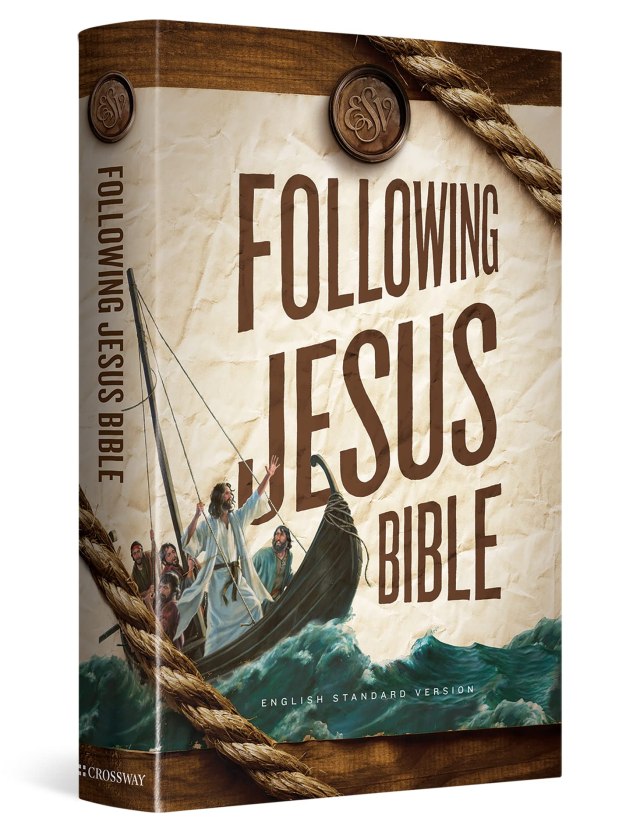
My friend Rachel over at danielthree18 recently wrote a helpful review of theย ESV Following Jesus Bibleย she and her husband bought their son for Christmas. It wasn’t available when we were Bible shopping for our own kids, but if it had been, it’s probably the one we would have chosen.
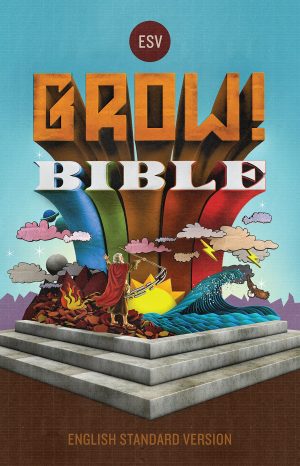
As I was gathering links for this article, I stumbled across a couple more kids’ Bibles that, while I haven’t read them, look like they might be worth checking out: the ESV Grow Bibleย and the ESV Children’s Bible. I can’t personally vouch for either of them, so examine them carefully, but ESV Bibles generally have a reputation for being trustworthy.
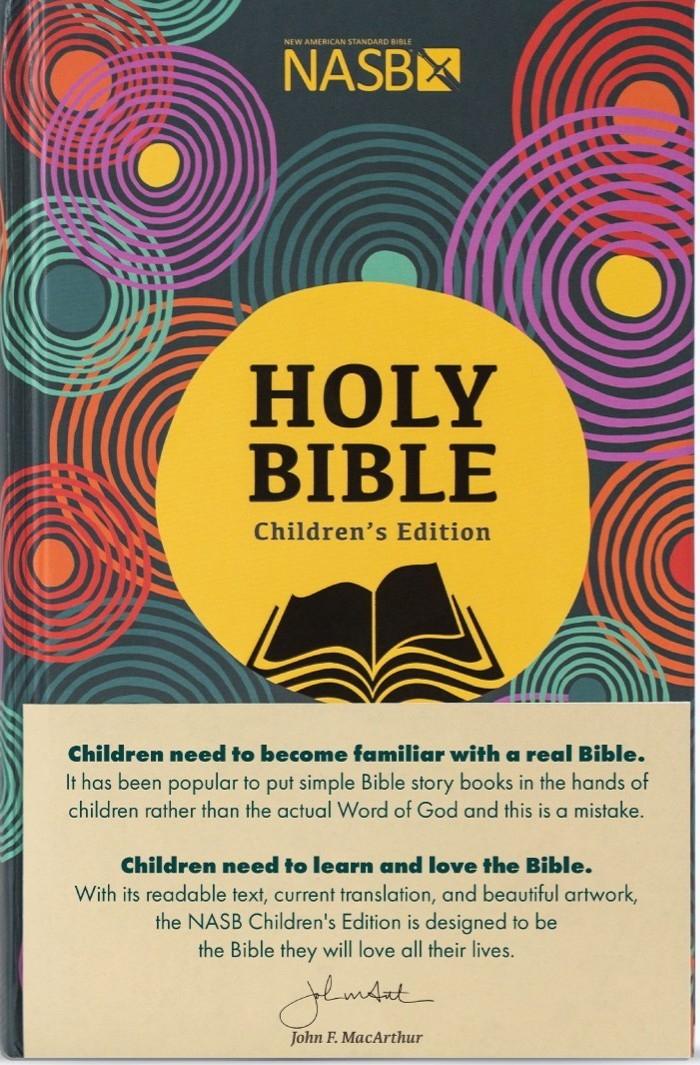
More recently, Steadfast Bibles and Three Sixteen Publishing released the NASB (New American Standard Bible) Children’s Edition. The NASB is one of the most accurate and reliable English translations of the Bible on the market today. I used the NASB as my primary reading Bible for over 20 years and highly recommend it. I have no doubt that the children’s edition is equally stellar. Read more about the NASB Children’s Edition here.

If you’d rather get your son a simple, non-child themed, no frills Bible, I’d recommend a regular old ESV. If you’d like to examine the translations I’ve mentioned here, or any others, you can “try before you buy” at BibleGateway.com. They have numerous Bible versions you can take a look at online for free. There’s even a side by side comparison feature:
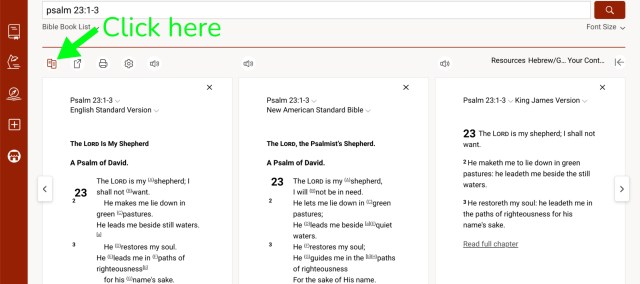
You can also check your church’s library or your local public library and examine their children’s Bibles to see what’s available out there, and what your child likes, before purchasing him a Bible.
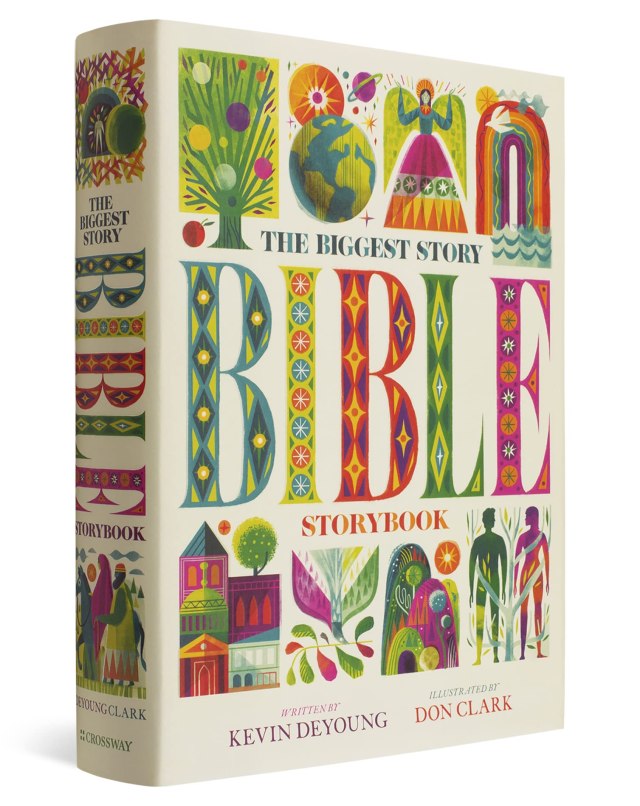
For our readers with smaller children, I’d like to suggest checking out (I haven’t read it) The Biggest Story Bible Storybook by Kevin DeYoung. Kevin has long had a reputation as a solid, trustworthy pastor and teacher of God’s word, not to mention a dad of young kids.

“Beginning in Genesis and ending with Revelation, DeYoung provides engaging retellings of various Bible stories, explaining how they fit into the overarching storyline. Each reading is coupled with beautiful illustrations by award-winning artist Don Clark and concludes with a reflective prayer. Perfect for bedtime stories or to read together as a family…”

While there are a number of good children’s Bibles out there, unfortunately, there are some that should be avoided. The following children’s Bibles and Bible storybooks are..

Not Recommended
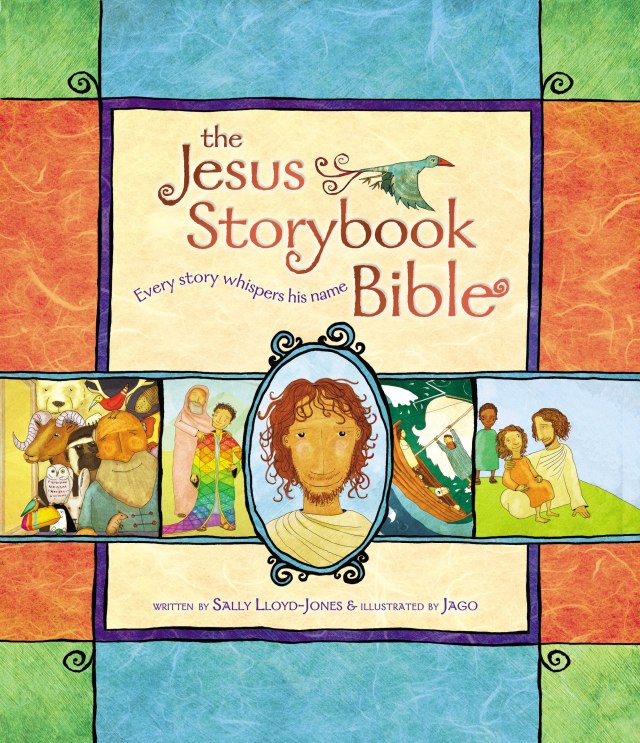
Though numerous doctrinally sound sources have recommended The Jesus Storybook Bible by Sally Lloyd-Jones in the past (including Tim Challies and me), I’m afraid I can no longer commend it to you.

The Jesus Storybook Bible was released in 2007. In 2018, Sally Lloyd-Jones released a children’s book entitled Goldfish on Vacation which included an illustration of a homosexual couple. When a homosexual man commended her for this on Twitter (the tweet has since been deleted) she had this to say:
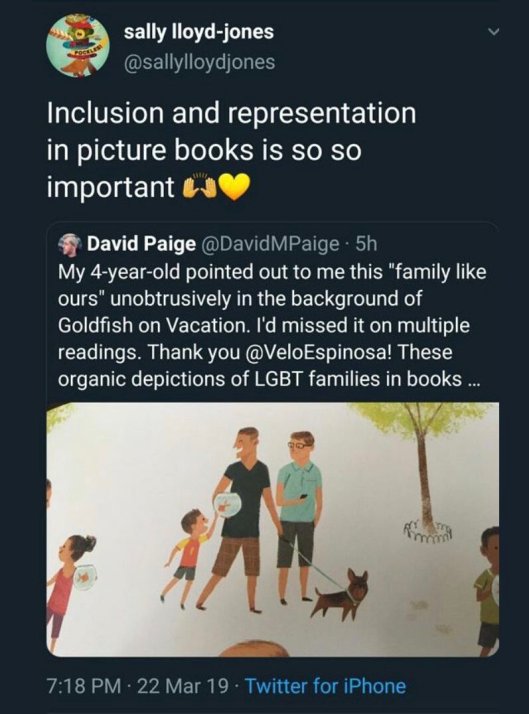
There are other issues with the Storybook Bible itself:
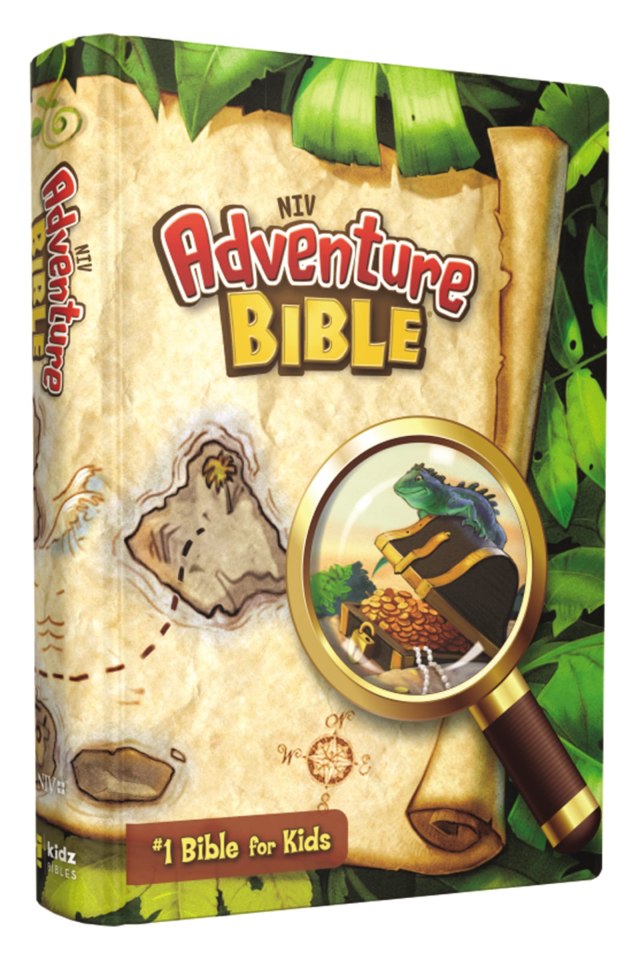
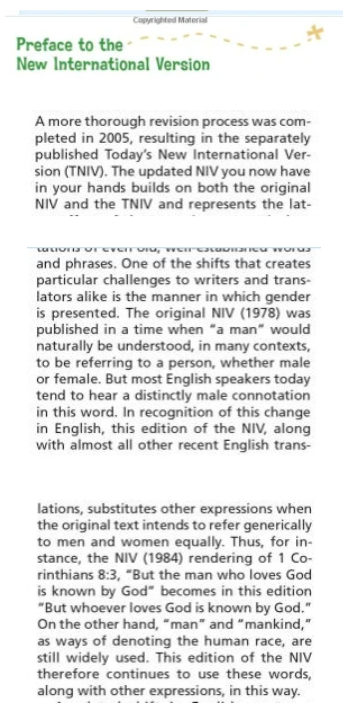
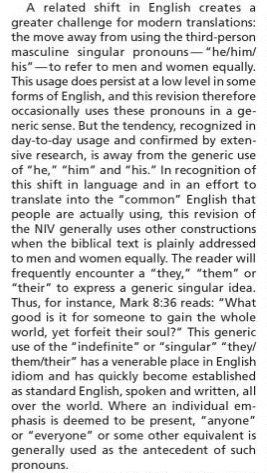
Though our own children used it, and I used to recommend it, I have retracted all previous recommendations of the NIV/NIrV Adventure Bible (and any other NIV or NIrV Bible). As you may be aware, in 2005, Zondervan revised the trustworthy 1984 translation of the NIV to include gender neutral/inclusive language. It was called the T(Today’s)NIV. In response to completely appropriate backlash from the Christian community, Zondervan again revised the NIV in 2011. Unfortunately, they did not revise out the gender neutral/inclusive language, but, rather, essentially merged the NIV with the TNIV, dropping the “T,” and simultaneously took the 1984 NIV and the TNIV out of print. The current editions of the NIV/NIrV Adventure Bible contain the 2011 gender neutral/inclusive text of the NIV.

For a better grasp of the problems with the gender neutral/inclusive verbiage of the 2011 NIV, please read: A fair analysis of the new NIV.

Here is an excerpt from the preface of the current edition of the NIV Adventure Bible. (Click on “look inside” at the upper left of the page for the entire preface.):
On a “wear and tear” note- we’ve purchased both soft cover (paperback) and hard cover Bibles for our elementary-aged kids, and both seem to get torn up pretty easily. (Or maybe my kids are just tough on Bibles!) With soft covers, the front and/or back cover can get ripped clean off, and with hard covers, the binding tends to detach. The only solution I can think of for this is to purchase a hard cover editionย andย some sort of case to keep it in (maybe one made of whatever those airplane “black boxes” are made out of). Perhaps training your child to keep his Bible in a certain place (on his dresser, the coffee table, etc.) whenever he’s not reading it might help. We neglected to do this and I often found Bibles on the floor, in the toy box, at the bottom of the closet, and other places conducive to Bible destruction. Anyway, keep the duct tape handy is all I’m saying.

The main thing, when you’re looking for a Bible for your kids is to find a good translation, avoid paraphrases, and be on the lookout for false doctrine, which has, unfortunately, trickled down into kids’ Bibles and devotionals (such as the kids’ versions ofย Jesus Calling). You might find my article Which Bible Do You Recommend?ย (for selecting an adult Bible) to be helpful.


If you have a question about: a Bible passage, an aspect of theology, a current issue in Christianity, or how to biblically handle a family, life, or church situation, comment below (Iโ€™ll hold all questions in queue {unpublished} for a future edition of The Mailbag) or send me an e-mail or private message. If your question is chosen for publication, your anonymity will be protected.

Mailbag

The Mailbag: A Lost Husband, a Saved Wife, and an Apostate Church

My husband is unsaved, so I’ve had to take on the spiritual leadership of our home. As I’ve been growing in my discernment, I’ve learned that the churches we have been attending are not doctrinally sound. Thus, we have changed churches several times. My husband will attend church with our family, but is comfortable at our current church and doesn’t want to change again. Unfortunately, our current church is also doctrinally unsound. I feel very uncomfortable here and want to find a new, doctrinally sound church, but I’m concerned: a) that I won’t be submitting to my husband if I insist we leave, and, b) that my husband will refuse to attend church any more if I insist we leave this one. What should I do?

This question is actually an amalgam of two e-mails I’ve recently received asking basically the same question, which leads me to believe there are many other Christian women out there in similar circumstances.

It is heartbreaking when a husband and wife, whose souls God meant to be knit together as one, are separated by the gulf of eternity. It’s an unavoidable situation when two lost people get married and one subsequently gets saved, but it is completely avoidable if you’re saved before you get married. Single ladies, please be wise and learn from the pain your unequally yoked sisters have gone through: do not marry, or even date, someone you aren’t certain (as certain as you can possibly be, anyway) is a believer.

Normally, this is the type of question I decline to answer because it’s a situation that’s best handled by pastoral counsel. I don’t know all the nuances of the situation, the personalities involved, the doctrine of the particular church, etc. However, the readers who have asked my advice have both indicated that they’re in doctrinally unsound churches, so I can’t, in good conscience, refer them to “pastors” who may do more harm than good with their counsel. So, the best I can do is provide some biblical food for thought for these ladies to consider as they make their decisions.

Pray
God is so gracious and kind to remind us that if we need wisdom to handle things and make decisions, He will give it to us. When you’ve asked God for that wisdom, trust Him to give it to you and to guide you.

Additionally, ask God to provide you with a godly friend, pastor, or counselor to help you walk through this situation. You may wish to seek out a doctrinally sound church and set up a counseling appointment with the pastor or an elder. You could also look for an ACBC certified Biblical Counselor in your area (not just a “Christian counselor/therapist”- ACBC counselors are trained to help you apply correctly handled Scripture to your situation in a doctrinally sound way).

Finally, don’t neglect to pray for your husband’s salvation, and that God would soften his heart to attend a doctrinally sound church.

Study God’s Word
If you’re a believer, this should already be part of your daily life. Stay in the Word to keep yourself spiritually nourished, to gain biblical wisdom, and to be led by the Holy Spirit. It may be of some comfort to you to know that in the early days of the church, many Christian women (and men) were going through the exact same situation- being married to an unbeliever. There are a couple of passages that address this situation which you may want to give some extra study:

Likewise, wives, be subject to your own husbands, so that even if some do not obey the word, they may be won without a word by the conduct of their wives, when they see your respectful and pure conduct. Do not let your adorning be externalโ€”the braiding of hair and the putting on of gold jewelry, or the clothing you wearโ€” but let your adorning be the hidden person of the heart with the imperishable beauty of a gentle and quiet spirit, which in God’s sight is very precious. For this is how the holy women who hoped in God used to adorn themselves, by submitting to their own husbands, as Sarah obeyed Abraham, calling him lord. And you are her children, if you do good and do not fear anything that is frightening.
1 Peter 3:1-6

If any woman has a husband who is an unbeliever, and he consents to live with her, she should not divorce him. For the unbelieving husband is made holy because of his wife, and the unbelieving wife is made holy because of her husband. Otherwise your children would be unclean, but as it is, they are holy. But if the unbelieving partner separates, let it be so. In such cases the brother or sister is not enslaved. God has called you to peace. For how do you know, wife, whether you will save your husband? Or how do you know, husband, whether you will save your wife?
1 Corinthians 7:13-16

Submission? As the 1 Peter passage above makes clear, biblical submission is one of the ways Christian women can prepare the way of the Lord in the life of an unbelieving husband. We should certainly submit to our husbands in anything that doesn’t conflict with Scripture. However, our first loyalty and submission are to Christ, so a Christian woman cannot “submit” to her husband if he is asking her to do something that Christ has clearly said not to do in His written Word (I’ve written more about the issue of submission in other situations here and here.).

As you consider submitting to your husband in the various aspects of this situation, study these passages regarding sitting under the instruction of false teachers. Do your husband’s desires about staying in a doctrinally unsound church conflict with what God’s word says? That’s something you will have to pray about, study about, and, if possible, get some godly counsel about.

Practical observations/suggestions
Here’s something to take into consideration: It doesn’t do any good for someone to go to a “church” that teaches false doctrine just for the sake of being able to say that person attends church. In fact, it may actually harden his heart to the truth of the gospel.

Regarding false converts (people who think they’re Christians but actually aren’t), it’s often said, “Before we can get them saved, we first have to get them unsaved.” In other words, we have to do the hard work of “undoing” the false doctrine they’ve been taught, which has convinced them they’re saved, so they can come to terms with the fact that they aren’t actually saved, in order to correctly teach them the gospel so that they can truly be saved. Consider whether, by continuing to attend a church that teaches false doctrine with your husband, you might be doing something right now that will be difficult to undo later. A garden variety lost person who doesn’t attend church is no more lost than a lost person attending a church that teaches false doctrine.

Would your husband be open to staying home from church on Sunday for several weeks or months while you visit churches alone until you find one you’re confident is doctrinally sound?

Many churches have midweek, Saturday, and Sunday evening services. Perhaps you could explore another church on your own during non-Sunday morning services for a time until you’re sure it teaches sound doctrine, and then ask your husband if he’d be willing to change to that church.

Your husband probably views his church attendance as something he’s doing for you or for the kids. Is there any kind of “deal” you could work out where he changes to a doctrinally sound church “for you,” and, in exchange, you do something for him (make his favorite meal every week, take over a chore he hates, etc.)? He might be more willing to change churches if he thinks there’s a benefit to him for doing so.


If you have a question about: a Bible passage, an aspect of theology, a current issue in Christianity, or how to biblically handle a family, life, or church situation, comment below (Iโ€™ll hold all questions in queue {unpublished} for a future edition of The Mailbag) or send me an e-mail or private message. If your question is chosen for publication, your anonymity will be protected.
Bible Study, Mailbag

The Mailbag: We Want Bible Study Answers


Why don’t you provide the answers to the questions you ask in your Bible studies?

If you’ve been around the blog for any length of time you’ve noticed (I hope) that Wednesday is Bible study day. We’ve been through several books, including Jonah, Colossians, Ezra, and our current study of Ruth. We’ve done two topical studies: one on the Ten Commandments (Exodus 20:1-17) and one on assurance (1 John). And there are 66+ (every book of the Bible and then some) one lesson stand-alone studies. If you’re looking for a Bible study for group or personal use, they’re allย here,ย and they’re all free (all I ask is that you don’t plagiarize).

The format I’ve developed for my studies is to present the biblical text, provide several study questions, and finish off with a homework assignment- action you can take to apply one of the truths of the passage to your own life.

But I intentionally refrain from providing a list of answers to the study questions. Why?

Because the purpose of my Bible studies is not for you to get the “right answers.” My goal is to demonstrate for you the kinds of questions you should be asking of any passage of Scripture you approach. The purpose is to teach you (or your small group)ย how to study the Bible on your own so you won’t need to depend on a “canned” study written by somebody else, even me.ย I’m trying to work myself out of a job. You know- teach a woman to fish rather than giving her a fish.

In my own private study time as well as in Sunday School classes and other small group Bible studies, I’ve found that diving into the text and studying it for myself – or with my group – is far more meaningful and memorable than looking at the passage through the eyes of a third party. Approaching Scripture without a “middle man” lends itself to an intimacy with God that just isn’t there otherwise. It’s the difference between a private, behind closed doors, conversation with your husband and a conversation with your husband while out on a double date with friends. You get that “double date conversation” every Sunday when your pastor preaches, but God is a personal God, and you need some time alone with Him during the week.

But I’m afraid that if I study on my own, I’ll get something wrong! What if I misunderstand Scripture and end up believing false doctrine?

Bible study is a skill. And just like every other new skill you learn, you’re probably going to make some mistakes when you’re first starting out. When you first learned to read, you pronounced some words incorrectly. When you were learning to ride a bike, you fell down a few times. But you didn’t let those mistakes stop you. You kept practicing until you learned the skill. Bible study is the same way. You probably will make some mistakes along the way. But God has provided a lot of “training wheels” to help you out:

His Goodness and Trustworthiness
God is a good God. Heย wants you to study His word, get to know Him, and grow in Christ. It would be evil and cruel of God to tell you this, and then lead you – His child, who wants to draw near to Him through the study of His word – into false doctrine. And God is not evil and cruel. He is good, He is a God of truth, and His word is truth. Trust Him as you open His word to study.

What father among you, if his son asks for a fish, will instead of a fish give him a serpent;ย or if he asks for an egg, will give him a scorpion?ย If you then, who are evil, know how to give good gifts to your children, how much more will the heavenly Father give the Holy Spirit to those who ask him!โ€
Luke 11:11-13

The sum of your word is truth, and every one of your righteous rules endures forever.
Psalm 119:160

Sanctify them in the truth; your word is truth.
John 17:17

The Holy Spirit
If you are a genuinely regenerated Believer, you are indwelt by the Holy Spirit, the author of Scripture. Because God does not contradict Himself and He does not lie, the Holy Spirit indwelling you will not lead you to believe what is contrary to the words of Scripture He inspired. Ask Him to give you wisdom and understanding as you study.

And I tell you, ask, and it will be given to you; seek, and you will find; knock, and it will be opened to you. For everyone who asks receives, and the one who seeks finds, and to the one who knocks it will be opened. What father among you, if his son asks for a fish, will instead of a fish give him a serpent; or if he asks for an egg, will give him a scorpion? If you then, who are evil, know how to give good gifts to your children, how much more will the heavenly Father give the Holy Spirit to those who ask him!โ€
Luke 11:9-13

When the Spirit of truth comes, he will guide you into all the truth, for he will not speak on his own authority, but whatever he hears he will speak, and he will declare to you the things that are to come. He will glorify me, for he will take what is mine and declare it to you.
John 16:13-14

Tools
God has blessed us with a number of helps for learning how to study His word, from instructions on handling the text to commentaries, Bible dictionaries, Bible atlases, and the like. Many are online and available for free. I’ve included some of those hereย (be sure to scroll down). And don’t forget your (doctrinally sound) pastor, elders, and Sunday School teachers as invaluable resources. I’ve never met one who wouldn’t be delighted to help someone understand a passage of Scripture.

Easter Eggs
If you’ve worked through any of my studies, you’ve probably noticed that, if you read carefully, Iย doย provide answers to some of the study questions.

Hyperlinks– If you see a hyperlink in a question, try answering the question on your own first. Then, click the link. It will take you either to related Scriptures that will help you answer the question or to an article or resource you can read for more information.

Follow Up Questions– Each study “question” is usually a series of questions. Try to answer them one at a time. But, if you’ll notice, I sometimes provide the answer to one question in a subsequent question. For example (from Ezra, Lesson 11):

What was Israelโ€™s hope? Compare Israelโ€™s hope for Godโ€™s mercy and forgiveness of sin in response to true repentance with 1 John 1:9.

God loves you and wants you to dive into the treasure chest of His word. Trust Him. Use the resources He has provided. And if you fall off your bike in the process, pick yourself up, dust yourself off, and keep practicing.


Additional Resources

Bible Study resource articles

Bible Studies by Michelle Lesley

10 Simple Steps to Plain Vanilla Bible Study

Youโ€™re Not as Dumb as You Think You Are: Five Reasons to Put Down that Devotional and Pick Up the Actual Bible

10 Bookmarkable Biblical Resources for Christian Women

Rightly Dividing: 12 Doโ€™s and Donโ€™ts for Effective Bible Study


If you have a question about: a Bible passage, an aspect of theology, a current issue in Christianity, or how to biblically handle a family, life, or church situation, comment below (Iโ€™ll hold all questions in queue {unpublished} for a future edition of The Mailbag) or send me an e-mail or private message. If your question is chosen for publication, your anonymity will be protected.

Mailbag

The Mailbag: May Christian Women Wear Pants?

What are your views on women wearing pants?

For readers who are a little confused by this question, you may not be aware that there are various churches which require women and girls to wear skirts or dresses rather than pants. The local churches Iโ€™m familiar with which carry this requirement are Pentecostal and Independent Baptist, though there may be others. (Some of these churches also require women to have long hair and abstain from wearing makeup.)

The initial basis for this requirement is Deuteronomy 22:5…

A woman shall not wear a manโ€™s garment, nor shall a man put on a womanโ€™s cloak, for whoever does these things is an abomination to the Lord your God.

…along with the general desire to encourage God-given femininity for women and masculinity for men. Definitely a good idea these days.

But, since my opinion is of zero importance – itโ€™s what God thinks that counts – letโ€™s look at what the Bible says. Is it biblical for a church to make this requirement of Christian women, or, for a Christian woman to choose, on her own, not to wear pants?

Letโ€™s tackle that last question first.

Thereโ€™s nothing in the Bible that says women have to wear pants, so if you want to wear skirts and dresses all the time, youโ€™re absolutely free to do that. What you may not do (biblically) is think, or say, that wearing skirts and dresses somehow makes you holier or more obedient to God than women who choose to wear pants- because thereโ€™s nothing about that in the Bible either.

But what about Deuteronomy 22:5?

Well, letโ€™s take a look at that Scripture using good hermeneutical principles. We need to look at the context, culture, audience, and intent of this verse.

First we need to recognize that Deuteronomy is in the Old Testament. Right off the bat, we must keep in mind that, while there are many underlying, timeless principles in the Old Testament that still apply to Christians (usually because they are reiterated in the New Testament) the particular pronouncement of the Old Testament verse weโ€™re reading may not apply.

Next, Deuteronomy 22 is smack dab in the middle of the Levitical law that was given as a part of the Mosaic covenant. The Mosaic covenant was fulfilled in Christ, which means its laws are no longer binding on us as Christians. We are under the New Covenant of grace through Christ. This is why you’re not sinning if you build a house without a parapet around the roof (verse 8), sow your vineyard, if you have one, with two kinds of seed (verse 9), wear fabric that’s a wool-linen blend (verse 11), or go tassel-less (verse 12). If you think Deuteronomy 22:5 prohibits women from wearing pants, a good question to ask yourself is: “Why would I feel required to obey verse 5 of Deuteronomy 22, but not verses 8-12?”

The next thing we need to look at is the actual wording of Deuteronomy 22. Does it say anything about pants or any other specific item of clothing? No. It says women are not to wear men’s clothes and men are not to wear women’s clothes. Now, keep in mind that the audience for this verse was Old Testament Israel, and that, at the time, in that culture, both men and women wore what we would technically describe today as a “dress.”

Were Moses and rest of the Israelite men – who were actually receiving this law from God at the time – sinning because they were wearing “dresses”? (And, let’s remember, Jesus dressed the same way.) Of course not. In our time and culture, they’re wearing dresses, and dresses are for women. In their time and culture, they’re wearing a garment designed for men. God has never said, “Pants are for men. Dresses are for women.” Pre-twentieth century western culture has said that. So if the men of the Bible weren’t sinning for wearing “dresses” designed for men, how could Christian women be sinning for wearing pants designed for women?

Deuteronomy 22:5 is not addressing the construction of specific garments. It’s addressing the intent of the heart. Since men and women of that culture both wore garments of similar construction (i.e. sleeves, an opening for the head, and a sheath for the torso and legs), there must have been differing accessories (veils, turbans, sashes, belts, cloaks, etc.) that clearly distinguished between male and female outfits. A woman could wear those male accessories and still be wearing a “dress,” but what would her motive for doing so have been? The only motive she could have had was to appear to others to be a man.

In other words, Deuteronomy 22:5 is not addressing American women wearing pants designed for women’s bodies, sold in the women’s department of the store, marketed to women, and purchased by women who have no intention of trying to impersonate, or appear to others to be, a man. It is addressing the sin of cross-dressing (transvestism).

And that is a prohibition that does carry over into the New Testament under the heading of sexual immorality. We are to respect and honor God’s perfect and holy decision to create us as women or men. We are not to alter our clothing, accessories, cosmetics, hair styles, gait, body language, speech patterns, lifestyles, or anatomy in order to appear to others, or ourselves, to be the opposite sex. To do so is to tell God that His decision to make you a woman or a man was wrong. That is rebellion.

So, if a church today really wants to correctly handle and apply Deuteronomy 22:5, it will do so in light of the New Testament passages on sexual immorality. The church should teach that God always makes the right decision to create someone male or female, and that to rebel against God’s perfect design by altering one’s appearance to impersonate the opposite sex is sin which needs to be repented of and forgiven by the shed blood of Christ.

Deuteronomy 22:5 is not about 21st century American women wearing pants designed for women. So, when a church prohibits women from wearing pants – even when done with the best of intentions to honor God – what they are doing is mishandling Scripture and making a law where none exists. Jesus wasn’t too happy when “church leaders” of His time did that, and our churches today shouldn’t be doing it either.

All of that being said, I’ve had the privilege of knowing and, on occasion, worshiping with some dear saints in an IFB church which required skirts for women. These folks truly loved the Lord and honored His word. Any time I attended one of their activities, I wore a skirt so as not to be a stumbling block or draw attention to myself. Churches which carry the requirement of skirts for women but are otherwise doctrinally sound should not be regarded as apostate.


If you have a question about: a Bible passage, an aspect of theology, a current issue in Christianity, or how to biblically handle a family, life, or church situation, comment below (Iโ€™ll hold all questions in queue {unpublished} for a future edition of The Mailbag) or send me an e-mail or private message. If your question is chosen for publication, your anonymity will be protected.

Mailbag

The Mailbag: Potpourri (Small groups, Furtick, Slander…)


Today’s edition ofย The Mailbagย is a tad different in format. Usually, I answer one reader’s question in a long form article. Today, I’m addressing various questions from several readers in a “short answer” format.

Please note: Due to theย recent change in my comments/e-mail/messages policy, I’m not responding individually to most e-mails and messages. Several of these questions could have been answered instantaneously if the search bar had been utilized.


I wanted to ask if you could suggest a study for mums with young children, all of whom need lots of support and encouragement, as well as one who is struggling with her faith at the moment.

While there may be a good, doctrinally sound study out there for moms of small children, I’m not personally familiar with any. Still, I would recommend simply choosing a book of the Bible and studying it from beginning to end. The best and most biblical support and encouragement comes right from Scripture. See my article:ย Youโ€™re Not as Dumb as You Think You Are: Five Reasons to Put Down that Devotional and Pick Up the Actual Bible.

For someone struggling with her faith, the book of 1 John is excellent. If you don’t feel equipped to teach a book of the Bible, get some training so you can. Untrained, undiscerning teachers are a major way false doctrine creeps into the church. See:ย McBible Study and the Famine of Godโ€™s Word.


What are your thoughts on: Rebecca Manly Pippert, Revelation Wellness, Liz Curtis Higgs,ย Heaven by Randy Alcorn, Dr. Caroline Leaf, Stephen Ministry, Jan Markell’s Olive Tree Ministries, Johanna Michaelsen, and Angie Smith?

Rebecca Manly Pippert, Revelation Wellness, and Stephen Ministry: I’m afraid I’ve never heard of them.

Dr. Caroline Leaf, Jan Markell, Johanna Michaelsen, and Angie Smith: I’ve heard the names in passing, but I don’t really know anything about any of them.

Liz Curtis Higgs: I’ve never read any of her stuff or heard her speak, but I know that, until it disbanded this year, she was a featured speaker for Women of Faith, alongside false teachers such as Sheila Walsh, Jen Hatmaker, Sarah Jakes Roberts (daughter of T.D. Jakes), and musician Nichole Nordeman (pro-homosexuality). Partnering with false teachers, even if your own doctrine is sound (and I don’t know whether or not Higgs’ is), is prohibited by Scripture, so for that reason alone, I would not recommend her.

Heaven by Randy Alcorn: I read most of this book, but it was probably ten years ago or more. I don’t remember any specifics from the book, nor was there any egregious false doctrine that sticks out in my memory. All I remember is that I quit reading it because it was way too long and because a lot of it was – while based on Scripture – speculation and extrapolation as to what Heaven would be like.ย Randy Alcorn is not someone I currently keep up with very closely. Although I have recommended him as a fiction author:ย The Mailbag: Christian Fiction Recommendations, I don’t often read his blog or other non-fiction work. From the little non-fiction of his that I have read, my impression of him is that he is generally doctrinally sound, but may not thoroughly vet the people he quotes and appears with.

For more information on checking out various teachers and ministries, see my article:ย Is She a False Teacher? 7 Steps to Figuring it Out on Your Own


How can I find a solid church and what are your feelings regarding small groups?

For recommendations on finding a solid church, seeย The Mailbag: How Can I Find a Good Church?

I’m strongly in favor of small group Bible studies and Sunday School classes as a supplement to sound preaching from the pulpit,ย ifย the small group teacher is able to teach (availability and willingness do not equal ability to teach) and has been trained in good hermeneutics, and if he or she is teaching the Bible. For more, read my articleย McBible Study and the Famine of Godโ€™s Word.


Do you have an opinion of Steven Furtick?

I have many opinions of Steven Furtick (“pastor” of Elevation “Church” in Charlotte, NC), none of them good. He mercilessly twists God’s word, he yokes with false teachers (including T.D. Jakes, Joel Osteen, Joyce Meyer, Christine Caine and others), and he allows women to preach from his pulpit (Including Lysa TerKeurst. Furtick is her pastor, which is one of the reasons I warn against her.) Additionally, Furtick has been immersed in Word of Faith false doctrine for years, and is now venturing into New Apostolic Reformation false doctrine. For more information, see Fighting for the Faith, Berean Research, Berean Examiner, and Apprising. I’ve also seen a number of YouTube videos from various sources explaining the doctrinal problems and scandals with Furtick (use the YouTube search bar).


The Bible says that women should learn in submission and not instruct men, however, The Great Commission is written to believers (which includes women). Therefore, if that is my aim to fulfill the Great Commission, in turn fulfilling God’s will, how am I sinning?

You’re not. Preaching to men, instructing men in the Scriptures, and holding authority over men in the church is not the same thing as evangelism and I have never claimed that it is.

I think a better grasp of the role of women in the church would be helpful for you. I’d recommend reading Rock Your Role: Jill in the Pulpit as well as the remaining articles in my Rock Your Role series. For more on women evangelizing men, read #11 in my article Rock Your Role FAQs.


I am wondering if you have ever done a post or topic on homeschooling? I have been praying for your conference.

I do home school, but I’m afraid I haven’t written anything on it. My friend Rachel over at Danielthree18ย sometimes writes about home schooling, as does Gospel Centered Mom. These ladies could probably better point you in the right direction for doctrinally sound home schooling blogs than I can. It’s just not something I read much about or have an interest in writing about.

Thank you so much for your prayers. I am leaving Thursday to speak at a Christian women’s retreat in Cape Cod, Massachusetts, addressing the topic of suffering.

Readers, if your church would be interested in having me come speak at a women’s event, please click on the “Contact…” tab at the top of this page.


What is the criteria for a woman in regards to not teaching a man?…I particularly like The Voice translation for this in 1 Timothy 2:12…I think the โ€˜women teachingโ€™ Scripture was more of a custom back in the day as is this Scripture about men and long hair.

I would recommend reading all of the articles in my Rock Your Role series, starting with Jill in the Pulpit. My article ย A Head of the Times- Head Coverings for Christian Women? will help answer your questions regarding men and long hair (since the two issues are in the same passage), particularly some of the articles in the “Additional Resources” section (I would start with the WWUTT video near the end of that section). Also, we always need to keep in mind that God is the author of these Scriptures, not Paul. These are not Paul’s ideas and preferences, they’re God’s.

I would strongly recommend you find a reliable translation of the Bible rather than using The Voice paraphrase, which had several false teachers and female “pastors” as contributors. More info. at The Mailbag: Which Bible Do You Recommend?


Lysa TerKeurstย (or Beth Moore, Priscilla Shirer, or anybody else I’ve warned against, I get this one a lot)ย should sue you for slander for the judgmental things you’ve said about her!

So you’ve obviously read my article aboutย Lysa TerKeurst. Did you happen to see and read the big, bold notice at the top of that article (and every other discernment article I’ve written) which says:

If you are considering commenting or sending me an e-mail objecting to the fact that I warn against false teachers, please click here and read this article first. Your objection is most likely answered here. I wonโ€™t be publishing comments or answering emails that are answered by this article.

Your objection is answered in detail in #5 of this article. However, I’d like to add a few things:

1. There’s not a single teacher I’ve ever mentioned on this site that could sue me for slander. Not one. Why? Because slander is about false and defamatoryย speech. What you’re talking about isย libel, which deals with false and defamatoryย writing. Get a dictionary and use your words.

2. In order to sue someone for libel, my understanding (maybe a reader who’s an actual lawyer could help out here) is that you have to prove that a) your reputation has been damaged (Anybody see people “Leaving Lysa” in droves? I don’t. Her “ministry” is, unfortunately, continuing to grow as far as I can tell.) b) that the allegations are untrue (The allegations I’ve madeย aren’tย untrue. I’ve taken Lysa’s own words and actions – from videos of her speaking, and from texts of her writing – and compared them with Scripture. If she’s able to demonstrate – from Scripture – that what I’ve said is untrue, she won’t have to sue me for anything because I’ll gladly repent and print a retraction. But, judging from the way she generally handles Scripture, she’s not going to be able to do that.) and c) that the writer acted with malice. (I’ve made very clear that my desire is for Lysa – and the others – to repent and teach sound doctrine so I can point women to them as solid resources. How could beingย for Lysa in this way, and wanting to help her ministry,ย be construed as malicious?)

3. If Lysa (or any of the others) did try to sue me for libel, she would only be further proving my point about her disobedience to Scripture, because Scripture instructs Christians not to sue each other.ย That’s not going to do a lot for her credibility in court.

Thanks for playing.


Why haven’t you answered my e-mail/social media message or posted my blog comment?

See:ย New E-Mail, Messages, and Blog Comments Policy

From the “Welcome” tab:ย As of March 2017, I will not be responding to (and often, not publishing) blog comments which require more than five minutes of my time to answer. While I love hearing from readers, it is simply taking too much time away from my family to engage in long, in depth, or teaching conversations in the comments section of my articles.


If you have a question about: a Bible passage, an aspect of theology, a current issue in Christianity, or how to biblically handle a family, life, or church situation, comment below (Iโ€™ll hold all questions in queue {unpublished} for a future edition of The Mailbag) or send me an e-mail or private message. If your question is chosen for publication, your anonymity will be protected.